
Karis Waters's Blog, page 4
December 2, 2016
DON’T WRITE EMOTION IN ALL CAPS
Have you ever had that happen to you? You’re going along, calmly minding your own business when *ding* you get an email or text message from your friend or relative. You grin, humming the tune to “You’ve Got Mail,” and click on the message.
HELLO!!!!! HOW ARE YOU?????!!!!!!


November 25, 2016
Home for the Holidays: Writing Family Roles in Fiction
There’s one in every family. You know who you are. (If you don’t know, it’s probably you). There’s always a black sheep of the family, just like there’s the quirky aunt who gives you horrible knitted sweaters for Christmas, or the grandparent who forgets you grew into an adult 10 years ago, or the screaming child who didn’t get the present they wanted under the tree.
Holidays can be absolutely wonderful. They are a special time to enjoy food, friends, and–most importantly–get together with family you might not see very often (sometimes intentionally). But they can also be incredibly stressful.
Why? Well, of course, there’s the stress of vacuuming those old M&M’s out of the couch and untangling stubborn strings of lights and buying a present for that relative who has absolutely everything.
But mostly, holidays are often stressful because families are complicated. They’re organic systems that can vary widely even among people from similar places and backgrounds. There are past histories and unresolved tensions and way too many cooks trying to burn a turkey in the kitchen.
I love getting to know my friends’ families. I think it’s fascinating, and I always come away learning something new about them as a person.If you’re an author, the same should be true of your characters. Your characters don’t exist in a vacuum. They have stories before your story that should include their families.
Often writers take the easy route, making their character an orphan, but in doing so they miss out on an invaluable opportunity to reveal their character by their interactions with their family and role in the communal dynamic.
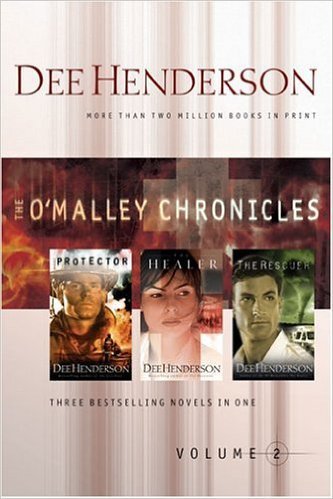 Growing up, I loved a romantic suspense series by Dee Henderson called the O’Malley series. The books are about a group of orphans who decide to change their last names and become a family when they become adults. They each have very interesting jobs (U.S. Marshall, hostage negotiator, Red Cross worker, fireman, paramedic, pediatrician) and help each other through a collection of hair-raising adventures.
But what sets these books apart from run-of-the-mill romantic suspense novels is the fantastic sibling dynamics. There’s Marcus, the protective oldest brother; Kate, the spitfire who is always marshaling her family behind some cause; Rachel, the softie who keeps a finger on the emotional pulse; Stephen, the cool kid who everyone loves anyway; Lisa, the uber-independent nerdy animal lover; Jack, the little brother and eternal prankster; and Jennifer, the sweet and beloved baby sister of the bunch.
Authentic family roles and relationships in fiction add a genuine feel of realism and a connection point with readers that is nearly impossible to achieve any other way.
Can you identify each of your characters’ role in their family? How has that shaped them? How does it differ from the way a reader would usually see them? For example, maybe a hardened, feared assassin goes home for the holidays and is bossed around by his big sister and yelled at for burning the mashed potatoes. That’d be interesting, right?
Not only are there the sibling birth order factors to consider (look it up–it’s a thing), there are also roles each person plays within the family. For example, usually there’s the joker, the peacemaker, the get-‘er-done bossy one, the problem child and the quirky lone wolf, just to name a few. There’s the helicopter mom and the workaholic dad and the aunt we don’t talk about and the passive-aggressive Susie Homemaker.
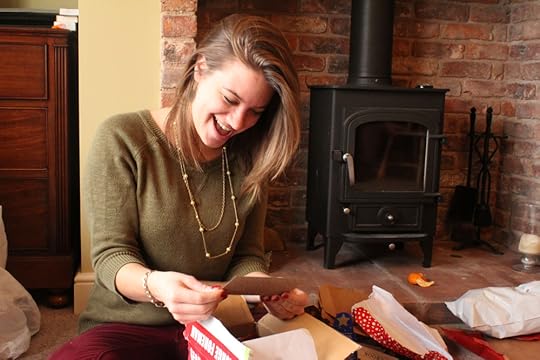 There’s that person who adores Christmas and goes into bake-and-decorate-all-the-things mode (me). And then there’s that person who puts both the Grinch and Grumpy Cat to shame (my brother).
You may love your family, you may hate them, or a little bit of both. But no matter how you feel about your family, they’ve still shaped who you are. They are part of your story.
Know your characters’ families as well as you know your own. Use them to reveal your character (or annoy the heck out of them). Allow them to bring chaos into your characters’ lives and then pull out the “all the feels” moment. With a bit of practice, your characters’ families can become your new best friends.


November 18, 2016
Mulan, dragons, and embracing your creative inner child
When I was growing up, every night before bed my dad would read to me, while I colored in my Audubon bird coloring book (yes, I was homeschooled). At first it was short chapter books, like the Whitey series and Hank, The Cow Dog. Then we graduated to longer classics, mostly historical fiction related to what we were studying in school. He even read the entirety of the Lord of the Rings trilogy to my siblings and me! (Yes. He gets a Gold Star Dad award).
One of my favorite holiday traditions was reading Christmas picture books with my mom on the couch by the tree (real, of course!), pointing out all the details in the beautiful illustrations and enjoying shameless flights of fancy.
Point is, read to your child. No, actually, the point is, I’m a total sucker for kid’s stories and Disney fairytales. Really anything that gives me a chance to indulge my inner child and engage my creative brain.
Real life is hard on child-like creativity. Creative business is even harder on it, ironically. So, here’s your permission. Indulge, even if you feel silly. Because creativity sparks innovation, which will keep your business moving forward.
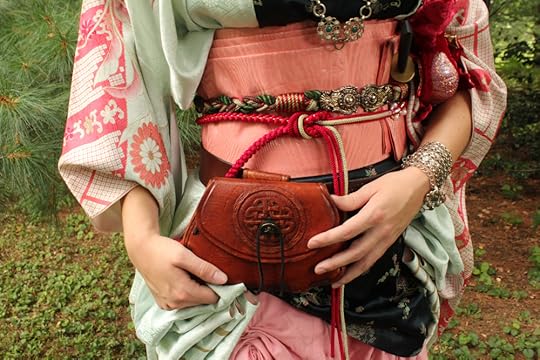 I’ve never been much of a costumer (we didn’t celebrate Halloween, and since childhood I’ve harbored a sensible fear of clowns, mascots, and basically anyone wearing costumes).
But a couple months ago my publishing house went to a writer’s conference that had a costume banquet. My colleagues and I agreed to go as steampunked Disney princesses. My favorite Disney movie is Mulan, followed closely by Belle (I mean, she has a whole library of books!). So, of course, I chose to go as Mulan despite being decidedly blond-haired and blue eyed. I even got to break out my photography skills and do a photo shoot of all the Disney princesses (we had Rapunzel, Belle, Merida, and, of course, yours truly).
And I managed to surprise myself how much I enjoyed the rare opportunity to engage my brain in a different way creatively and just play.
Have you ever wondered what makes children so incredibly creative? Have you read a children’s story and marveled at the colors and creativity just oozing from every page?
Personally, I think it’s because children are not bound by the way things “should” be (I.e. the sky is blue, therefore the sky in your picture “should” be blue) and because they play. A lot. All day long, in fact.
They experiment. They try new things. They mix it up, just to see what happens. They create beauty for the sake of beauty itself, completely unconcerned with whether others will like it or if it will sell.
There is a time and a place for business and the bottom line. But it’s equally important as a creative entrepreneur to let your inner child out to play once in awhile. Your creative brain will thank you, and so will your fans.





November 11, 2016
5 Autumn Staples for the Weary Writer
It’s that time of year again, the season of colorful leaves and walks in crisp fall air and bleary-eyed writers stabbing wearily at keyboards in a mad attempt to pound out a novel in a month.
The struggle is real, my friends. The struggle is real.
If you’re the unfortunate friend or family member of a writer burdened with glorious purpose (or perhaps the slightly deranged writer herself), here’s your handy-dandy list of must-have autumn staples to get you through to the season of sugar, sugar, and more sugar. Without further ado, number one on the list is…
#1. Coffee (and lots of it).
I’ll admit, I’m a recently converted coffee drinker and a bit of a coffee snob. I somehow managed to make it through three years of journalism school and two years working in a newsroom without liking coffee. Shocking, I know.
Alas, espresso-brewed Mexican Chocolate coffee from Spice Merchant (doctored with milk and honey) turned out to be my Achilles Heel. I’ve recently discovered two perfectly divine blends called Arctic Spice and Vermont Maple that are brought to another level with a dollop of honey and a splash of pumpkin spice eggnog instead of milk. So. Good.
#2. Tea.
 Because isn’t the whole point of autumn to have an excuse to binge-drink your warm beverages of choice? Last year I bought an adorable little green loose-leaf teapot with matching Japanese-style teacups (one for you, one for me). I’m so excited that the weather is finally cooling down and I can once again indulge in my afternoon teatime.
Fruity and herbal teas are my type of choice (Spice Merchant has a fabulous option called Feng Shui), but I do go for the occasional black tea like Ginger Peach. I also love chai teas (or any red tea, really, which are also great for colds!) with milk, honey, and a squeeze of lemon for a little kick.
#3. A fuzzy, cozy blanket or throw.
Can I just admit I have a problem? That’s the first step, right? I love cuddly throws. I collect them. At any given time, I have at least three or four laying around, just waiting for snuggles. My favorites at the moment are a light-weight knitted throw in duck egg blue (my fiance saw me eyeing it wistfully) and a sap green and cream geometric pattern throw from World Market, a.k.a. Can I Take The Store Home?
But, seriously. You can’t concentrate on writing if you’re cold. And nothing stirs up those creative juices like a cozy little snuggle on a rainy day. Amen? Amen.
 #4. A new book to read.
Even if you’re hard at work pounding out the next bestseller that will change the industry as we know, even geniuses need a break sometimes! Rest your brain and pick up some of the fabulous reads that have come out this year.
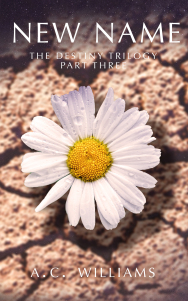
I just finished reading the beta version of that’s releasing December 1. It’s a fantastic, gritty adventure with engaging characters and real heart – plus, a pay-off for the trauma of the last book!
#5. Boots for a crisp, fall walk.
Let’s be real. Sooner or later, you’re going to hit writer’s block and need to escape from your creative cave, if only for a few minutes. Plus, it’s been shown over and over again that a short walk in nature will do wonders for your creative muse, not to mention your stress levels!
So strap on your boots, go jump in some leaves, regain your perspective and then tromp on back to the house for a good book, a cuddly blanket, and a mug of your hot beverage of choice.
Ahhhh. It’s good for the weary writer soul.


November 4, 2016
How to Find Inspiration in Everyday Life
What do you do when you’re not feeling inspired?
For me, lack of creative inspiration manifests in compulsive house cleaning (a revealing tell for my friends and family, as I hate cleaning), eating copious amounts of chocolate ice cream, and staring morosely at my computer screen.
Alas, these activities rarely produce the desired effect–brilliant, creative ideas sure to stun my readers and critics alike.
After a usually ineffective trial period, I’m forced to resort to more drastic (or at least intentional) methods for sparking creative inspiration. Every creative is different, but I’m happy to share some clever schemes that have worked for me.
Get outside. I find nature, in all its beautiful variety, tremendously inspiring no matter my current medium. I walk beside a stream and before I know it I’m concocting a short story about vengeful nymphs. I come to a particularly beautiful setting and suddenly the protagonist of my novel and her love interest are having a deep and meaningful conversation against the stunning backdrop.
Often, I’ll take my camera on a walk and determine to open my eyes and see the beauty all around me. Whether that’s a stunning Kansas sunset or a few fragile spring blossoms on a trellis, it never fails to inspire.

Phone a friend. I don’t mean literally (though that could work too). Borrow ideas and inspiration from other writers and creators. Read a new or favorite book. Watch a brilliantly-written TV show. Browse quotes or photography or pottery or art on Pinterest (though be aware of the time-sucking power of that particular black hole).
When you’re lacking creative inspiration, let others’ creative work inspire you. Maybe you can visit an art museum or a library, go on a field trip related to your book, or interview someone with your character’s profession or life experience.
Change it up.
Sometimes all that’s needed to keep the creative juices flowing is to change things up every once in awhile. Maybe you just need a change of scenery. If you’re struggling to get the words to come, try relocating to a coffee shop or even a park bench. Maybe you need to try writing the problem scene from another character’s point of view.
Whatever issue is causing writer’s block, try injecting it with a bit of change that can lead to a fresh, unique perspective.
Pick the low-hanging fruit.
This may sound like cheating, but hey, if it works! Struggling with a particularly difficult or emotional scene? Write a scene you’re confident will be fun or easy to bring together, and then come back to your problem child. Do the small things you know you can do to build your confidence back up and get the creative juices coming.
Once you’ve reminded yourself that you actually CAN write and your characters aren’t ALWAYS so difficult, you can go back to face your writer’s block scene with fresh encouragement and determination.
Go back to the plan.
Or maybe you don’t have one, and that’s why you’re stuck. If worse come to worse, go back to the bare bones of your story and remember what it’s all about. Clarify your premise, and remind yourself of your story’s message. Work on your story outline and fill in any plot holes that may be causing a mental block. Consider if you’re trying to make a character do something for the sake of the plot that is “out of character” for them.
Maybe it’s your life that isn’t organized and it’s bleeding over into your creative work. I know I can’t work as productively if there’s a mess sitting around. Sometimes I just need to sit down and make lists and tidy up my writing space (see compulsive cleaning mentioned above) before I can focus on the story.
There are as many ways to break writer’s block and regain creative inspiration as there are different types of writers. But you don’t have to go to extreme measures to find new inspiration. Often it’s just waiting in your everyday life.
What inspires you in your everyday life? How do you break writer’s block?


October 28, 2016
The Power of Story
I’ve always thought there had to be a pretty compelling reason Jesus told stories all the time. I mean, He was God. He had infinite powers, infinite understanding, infinite ability to say just the right words to make people do what He wanted them to do.
And He chose to tell us a story about an outcast who saves the life of his enemy. A story about a poor widow who gave everything she had to God. A story about a rebel son who ruins his life and is welcomed back by a loving father.
With everything at his disposal, Jesus chose to communicate the most important truths about God and His relationship with us by telling a story.
I was reminded once again this past week of the tremendous power of a simple story. Every fall my professional and personal life comes to a screeching halt as I pour my time and energies into a walk-through drama at my church known as Judgement House. Despite the name, it’s not a haunted house or anything of the sort. It tells the story of 2-3 individuals in the final hours of their life and follows them into their eternity, showing how their choices in this life affect their future in the next. This year’s script focuses on the horrible effects of bullying and the destructive power of thoughtless words.
 Cold pizza, caffeine, and exhausted expressions. The trademark look of Judgement House.
 I’ve been involved with Judgement House for over 10 years in various capacities, but the last three times I’ve taken on the daunting responsibility of being a tour guide.
Not only do I move the group from scene to scene, I also have to memorize around four pages of script that ties the story together between scenes. It’s extra special this year because I get to lead tours with my fiance. Praying and serving Christ together is an incredible experience!
On the one hand, it’s an unbelievable amount of time, work, and stress. I helped lead over 11 tours last week for a total of 14 hours (including eight hours on Sunday) and will pull even longer hours this second week. But each year thousands of people come through the doors of my church and hear the Gospel for the first time.
Watching people experience a simple story, identify with the characters, and for the first time truly understand who Jesus is, what He did, and how much He loves them, makes all the sore feet and long hours totally worth the struggle.
I can’t tell you how many times people have told us that they’ve known about Jesus their whole life, but never clearly understood how to have a relationship with him. Others didn’t know anything about Him at all, and were stunned to comprehend the sacrifice He made for them. Still others come away with a deeper appreciation for their faith and renewed passion to share about Jesus with others.
One of our tour guides, John, first met Jesus when another tour guide, a 75-year-old spitfire named Linda, took him through the Judgement House drama several years ago. This year his daughter brought several college friends to go see the drama, and each of them made decisions to accept what Jesus has done for them.
Words have the power to change us. Story has the power to change us.
Every year, people’s lives are transformed by this drama. Nearly every baptism service someone testifies that they prayed to accept Jesus after going through Judgement House. It’s not because it’s a particularly stunning presentation (all 400 people are volunteers). We know that.
It’s purely because once again Jesus is using a simple story to teach people who He is and how to connect with them.
So, this week I’m setting aside my to-do list. I’m letting the manuscripts screaming to be edited sit on my desk. I’m marking down my emails to be answered later. Why?
Because I know the power of a simple story. I know that I’m a part of telling a story that will change lives. I know that I’m helping write a chapter of the greatest story ever told.
And that’s more important than any job or to-do list.


October 21, 2016
Your Novel Check-Up (Part 2)
Welcome back to the novel doctor’s office! This week we’ll be taking a look at your story structure and whether it hits all the key notes.
Inciting Incident: What jump-starts your story and takes your character out of their normal into their not-normal? Terrorists attack a key government building. Harry receives his letter to Hogwarts/visit from Hagrid. Gandalf shows up on Bilbo’s doorstep.
Usually the inciting incident happens within the first chapter of the book and forces the character to choose an action that diverts from their present course.
Turning Point 1: What is your first turning point? This always involves a choice by your main character and is usually close to the inciting incident. This is the protagonist’s first chance to turn back and must involve an actual decision moment.
For example, in J.K. Rowling’s Harry Potter series, when Hagrid visits and tells Harry who that he’s a wizard, Harry must choose whether to stay with his (albeit uncomfortable) aunt’s family (the “normal”) or go with Hagrid to the wizarding school, the first step in embracing his greater destiny.
Turning Point 2: The plot has thickened thicker. Things have gotten more difficult.The protagonist is tempted to give up/turn back, to the point the audience would understand if they did. Again, this has to involve another actual decision moment.
In the first Lord of the Rings movie, The Fellowship of the Ring, this is when Frodo decides to go off on his own with the ring to keep it out of temptation for his friends.

The Point of No Return: This is the last chance for our hero to bail.
The reader is emotionally invested and wants your hero/heroine to continue on their journey, yet feels the angst and difficulty of them choosing to do so.
Often this point is brought about by the loss of a mentor or friend, or a serious setback. Again, using the Lord of the Rings movies as an example, the point of no return is when Frodo and Sam actually decide to enter into Mordor, knowing they probably will not be able to return home. This is the point of complete commitment, despite personal cost, and usually should occur 2/3 to 3/4 through your manuscript.
Climax: Everything in your book should build to this moment of ultimate struggle for your main character to achieve his/her goal. Frodo climbs up the fiery slopes of Mt. Doom to throw the Ring of Sauron into the volcano. Harry duels Voldemort in the halls of Hogwarts.
This is the point where “the quest stands upon the edge of a knife. Stray but a little and it will fail, to the ruin of all.” (Sorry, couldn’t resist. But it’s true).
Conclusion/Resolution: Your ending may or may not be happy, depending on the book, but it should satisfy the story and character arc.
Questions raised by the inciting incident should be resolved, even if new questions arise as a result of those answers (as is usually the case in a series).Your protagonist needs to achieve the goal set out at the beginning of the story, even if they achieve it in an unexpected way.
For example, Gollum stealing the ring and falling into Mt. Doom (Lord of the Rings); the leader of the white football players and the leader of the black football players becoming best friends and overcoming the racial divide through unexpected tragedy (Remember the Titans).
Your ending should include clear character growth and achievement that answers the reader’s unspoken question: “Was this worth my time?”
You want the answer to be a resounding, “Yes!”
So, there you have it. The skeleton of story structure that will support the depth and weight of a truly fantastic story. Naturally, there are exceptions to every writing rule, but following these guidelines will put you firmly on a path to writing a compelling story.
How did your novel do? What are you going to improve? Let us know in the comments below.


Your Novel Check-Up (Part 2)
Welcome back to the novel doctor’s office! This week we’re taking a look at storytelling and the three act structure. While there are exceptions to every rule, following the three act structure can ensure your novel has a strong story arc and a satisfying ending.
Ready? Here we go.
Inciting Incident: What jump-starts your story and takes your character out of their normal into their not-normal? Terrorists attack a key government building. Harry receives his letter to Hogwarts/visit from Hagrid. Gandalf shows up on Bilbo’s doorstep.
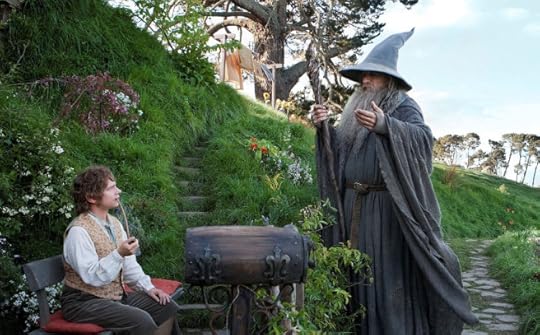
Usually the inciting incident happens within the first chapter of the book and forces the character to choose an action that diverts from their present course.
Turning Point 1: What is your first turning point? This always involves a choice by your main character and is usually close to the inciting incident. This is the protagonist’s first chance to turn back and must involve an actual decision moment.
For example, in J.K. Rowling’s Harry Potter series, when Hagrid visits and tells Harry who that he’s a wizard, Harry must choose whether to stay with his (albeit uncomfortable) aunt’s family (the “normal”) or go with Hagrid to the wizarding school, the first step in embracing his greater destiny.
Turning Point 2: The plot has thickened thicker. Things have gotten more difficult.The protagonist is tempted to give up/turn back, to the point the audience would understand if they did. Again, this has to involve another actual decision moment. In the first Lord of the Rings movie, The Fellowship of the Ring, this is when Frodo decides to go off on his own with the ring to keep it out of temptation of his friends.
The Point of No Return: This is the last chance for our hero to bail.
The reader is emotionally invested and wants your hero/heroine to continue on their journey, yet feels the angst and difficulty of them choosing to do so.
Often this point is brought about by the loss of a mentor or friend, or a serious setback. Again, using the Lord of the Rings movies as an example, the point of no return is when Frodo and Sam actually decide to enter into Mordor, knowing they probably will not be able to return home. This is the point of complete commitment, despite personal cost, and usually should occur 2/3 to 3/4 through your manuscript.
Climax: Everything in your book should build to this moment of ultimate struggle for your main character to achieve his/her goal. Frodo climbs up the fiery slopes of Mt. Doom to throw the Ring of Sauron into the volcano. Harry duels Voldemort in the halls of Hogwarts. This is the point where “the quest stands upon the edge of a knife. Stray but a little and it will fail, to the ruin of all.” (Sorry, couldn’t resist. But it’s true).
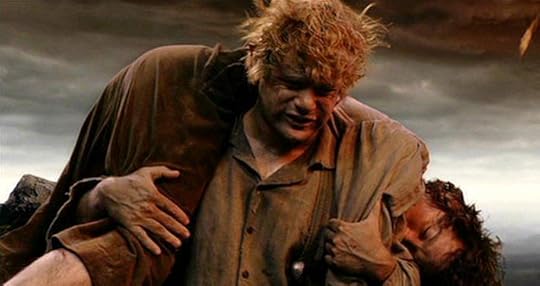
Conclusion/Resolution: Your ending may or may not be happy, depending on the book, but it should satisfy the story and character arc. Questions raised by the inciting incident should be resolved, even if new questions arise as a result of those answers (as is usually the case in a series).
Your protagonist needs to achieve the goal set out at the beginning of the story, even if they achieve it in an unexpected way. For example, Gollum stealing the ring and falling into Mt. Doom (Lord of the Rings); the leader of the white football players and the leader of the black football players becoming best friends and overcoming the racial divide through unexpected tragedy (Remember the Titans).
Your ending should include clear character growth and achievement that answers the reader’s unspoken question: “Was this worth my time?”
You want the answer to be a resounding, “Yes!”
So, there you have it. The skeleton of a novel, the building blocks of a great story. How did your novel do? Is it missing an arm or leg? Or is it pretty solid?
Don’t be discouraged if you discover you still have some more work to do! Just keep on writing and one day you’ll find that, just like our heroes, you’ve accomplished more than you ever imagined.
Where are you at with your novel? How are you going to improve it?


October 14, 2016
Your Novel Check-Up (Part 1)
What makes a great book? Is it the story? The characters? The age-old conflict between good and evil? Or, perhaps, the thrilling richness of escaping into a fantastical new world?
From a business stand-point, what is it about a book that makes an editor or publisher sit up and take notice (or yawn and pour another cup of coffee)? Every truly wonderful story has that elusive element, the “X Factor,” if you will. But there are also key elements that almost always must be in place for a story to be effective.
In this two-part series, I’m going to put on my very fine editor’s hat and let you behind the scenes to see what I always look for in a manuscript. A doctor’s “check-up” for your manuscript, if you will, to see if it’s missing an appendage or two.
This week, in Part 1, we’ll look at the big picture questions you must know about your story, and next week we’ll get down to the nitty-gritty of story structure and tension.
Elevator Pitch: Imagine you have 10-30 seconds between floors in an elevator to answer the question, “What’s your book about?” What can you say to “hook” the interest of a potential reader and make them say, “I want to know what happens to this character.”
(Editorial note: Do not try this in an actual elevator with an actual editor. Trust me. She just wants to finish her coffee and bagel).
Book Theme(s): What is the one, strong main theme of your story? No more than three, with a primary and two secondary themes. For example, the main theme of J.K. Rowling’s Harry Potter series is friendship.
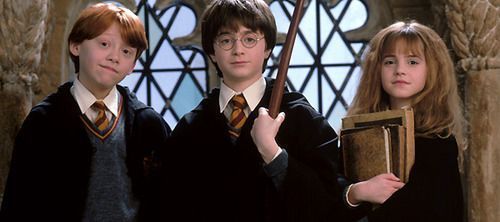
Book Message: Can you sum up your book’s message in a brief sentence? For example, the message of the Lord of the Rings books and movies is,”Even the smallest person can change the course of the future.”
The message of the Lightkeepers series, YA urban fantasy by Kimberly McNeil: “If the ending’s not happy, it’s not the end. Turn the page.” The primary message of books 1 and 2 in the Destiny Trilogy, a space opera series by A.C. Williams: “We don’t need to know who we are to be who we are” (Nameless) and “Even when everything goes wrong, we can still trust God’s plan.” (Namesake)
You must know what message you want to communicate and to whom if you want to write an effective and powerful story.
Book Premise: What inherent conflict drives the plot and character development in your book? A hobbit must undertake a dangerous journey to destroy a dark lord and save Middle Earth (Lord of the Rings). A shy boy discovers he’s a famous wizard destined to save the world from an evil wizard (Harry Potter) A physically weak soldier with great courage and heart is souped up thanks to science and helps turn the course of World War II and defeat Hitler’s schemes (Captain America by Marvel).
Your premise must contain strong inherent tension or conflict and be easily summarized in a single sentence. If you can’t do that, you don’t know your story well enough yet.
Character Arc: Character is King. Every reader wants to experience the journey with your characters, to empathize with their triumphs and defeats and to grow with them throughout the course of the book or series.
A character’s growth throughout your story is called a character arc. Every character in your book needs one (or, in rare cases, be defined by choosing not to grow, which is its own kind of character arc) and it must be especially clear for your main character(s).
Where does the character start out? Where are they by the end of the book? How have they grown? What aspect of their personality or character (or physical disability) do they need to overcome to reach their goal? (In The King’s Speech, it was a speech impediment). What setbacks will they encounter, both inner and outer conflict?
The character arc should correspond to the points in the plot structure. A general rule is that if you can’t lay out a character arc in 1-3 sentences, you don’t understand it well enough yet.
Villain: Your story is only as strong as your villain. Does your book have an effective villain who is in direct opposition to your main character’s goals? A looming threat can be useful (i.e. The Eye of Sauron/dark lord) but there also needs to be a direct and immediate threat opposing your heroes (ringwraiths, a corrupting ring, Wormtongue, the madness of Denethor, orcs).
Your villains should be close and personal and named, even if the story is on an epic scale. Even epic stories are composed of individual characters, and it will only be as strong as those individual characters, no matter how awesome the plot.
So, there you have it! A super-quick checklist to see where you’re at in your novel-writing journey and if the skeleton of your novel is strong and solid. Trust me. You’ll thank me later. If you’ve discovered that your baby is missing a rib or two, don’t despair. Just consider it an opportunity to fix the problem, and move on.
Next week we’ll be looking at story and plot structure, and how to know if your story’s got what it takes. In the mean time, pop down to the comments and let me know what you’ve discovered about your novel and how you’re going to fix it! Keep writing.


October 7, 2016
What does the Sorting Hat say?
I’m a total Potterhead. Unashamedly.
I love the Harry Potter series, with its fantastic characters, complex plot, and rich world building. I love the concept of the different personalities of the houses, and, as an INFJ, am acutely fascinated by differing personality types and quizzes like the Meyers-Briggs test.
Often writers tend to create characters with similar values and personalities to their own. While there’s nothing wrong with that, the inherent conflict between personality types (and that we see reflected in the Hogwarts houses) makes for great stories and character interactions!
A better understanding of your characters and how they are different – and alike – can be a great tool for a writer striving to make their characters even more real and dynamic. So, just for fun, I took the Sorting Hat quiz for each of my main characters!
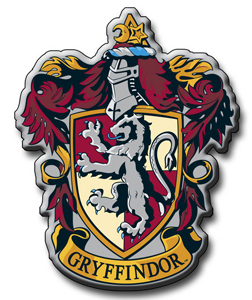 Savas, an ex-terrorist sniper and the focus character for book 2 in the Katiller series, came out as a Gryffindor (though I suspect he has some Slytherin tendencies). He’s got nerve and courage in spades, and not much fazes him. He never hesitates to say exactly what he’s thinking, usually in a very funny and sarcastic way.
Kenan, the wise-cracking protagonist from book 1 of the Katiller series, was also sorted into Gryffindor (probably for his complete fearlessness and brightly-colored, cheerful personality). I can only imagine what trouble he and Savas would get into at Hogwarts, those partners in crime. It would probably end in dragon fireworks and a dramatic exit.

By contrast, Jena, our female protagonist in book 2, was sorted into Hufflepuff, a house known for its dedication to the things (and people) they care about. Hufflepuffs are fair and kind, which sums up Jena pretty well! They are also known for excelling in the studies of plants and magical creatures, which makes sense since Jena was raised on a farm in rural Kansas!
Interestingly enough, Bener, the enigmatic Katiller squad leader, also was sorted into Hufflepuff. Though Bener is a fierce and capable warrior, he only fights when he must do so to protect his squad brothers, whom he views as his only family. He is calm, kind, and extremely loyal, making this a reasonable choice if , at first glance, a bit unexpected.
 Kris, our heroine from book 1 in the Katiller series, is a talented surgeon in the middle of her residency, so I suppose it’s no surprise she was sorted into Ravenclaw. Ravenclaw is famous for its intellectual pursuits,to the point where students have to successfully answer a riddle to gain entrance to the Ravenclaw common room. Students in Ravenclaw are known for their wit and intelligence, as well as their creativity and tendency to not follow the crowd. Kris never lets others’ opinions sway her from doing what she believes is right, so she’ll fit right in.
In an interesting twist of fate, Stef, the happy-go-lucky jokester of the Katiller’s eclectic family, was also sorted into Ravenclaw. While her wisdom is certainly dubious at times, her wit and intelligence can’t be argued with (well, you can try, but she’d win) and she definitely has the creativity and original, independent spirit needed to fit into Ravenclaw.
 Finally, Eser, the Katiller’s second-in-command tech genius, got mixed results between Ravenclaw and Slytherin. This isn’t surprising, as he combines the wit and intelligence of Ravenclaw with the cleverness, resourcefulness and edge characteristic of Slytherin.
Although Slytherin tends to get a bad rap (for good reason), thankfully good influences in Eser’s life have channeled his intelligence and cunning into a generally positive direction.
So, there you have it! A little bit of fun for your Friday. And while it may seem like a silly exercise (and maybe it is, a bit), using quizzes to explore your character’s personality types can help you solidify their similarities and differences, identify their strengths and weaknesses, and use their inherent conflict to create fascinating character dynamics.
What is your Hogwarts house? What about your characters?


