
Heather King's Blog, page 7
January 17, 2025
ART IS FOR INCREASING LIFE
Here’s how this week’s arts and culture column begins:
From a recent essay in “Salmagundi,” a literary journal published at Skidmore College, titled “Thirteen Ways of Looking at Art,” by William Deresiewicz:
“Art is for increasing life. That, I believe, after all the other purposes receive their due, is really what it’s for — why we revere it, why we give our hearts to it. What do I mean by increasing life?… Being fully present to the world, and feeling without reservation: the two things that making art requires and that experiencing it involves. … Art is one of the only times when life is anything like being in love. Attention, intensity. …”
READ THE WHOLE PIECE HERE.


January 12, 2025
WITH LOVE TO THE PEOPLE OF LOS ANGELES
This is a piece that originally appeared October 26, 1997, in the LA Times Sunday Magazine.
I no longer live in LA. I’m no longer married. The LA Times no longer has a Sunday magazine, nor does St. Basil’s have a daily 5 pm Mass. And as the collective human heart breaks for the devastation in LA, the piece seems as timely now as it ever was.
COPA DE ORO
The newscasters here focus on the rats in the palm trees, the model-murdering photographers, the houses sliding into the sea, but there is so much they don’t say about L.A. They don’t say that the names of the purple flowers alone make a kind of poem: jacaranda, sea lavender, lilies-of-the-Nile; lobelia, heliotrope, blue-eyed grass. They don’t talk about white stucco walls curtained with bougainvillea the color of lit rubies or the sound of eucalyptus leaves, rustling like the skirts of ball gowns, in a Santa Ana wind.
They leave out so much, especially when they talk about neighborhoods like mine. When Tim and I first moved to town, we didn’t know the Eastside from the Westside, the Valley from the South Bay. Culver City, where we first rented that boxy house with the camellias, had a few decent features–the Cuban restaurant Versailles, which served mouth-watering roast pork and garlic chicken; the tiny, tongue-in-cheek Museum of Jurassic Technology–but we never quite warmed to the blocks of bland suburban streets, the “shopping centers” that hadn’t changed since the Kennedy administration. Even worse, it was on the Westside, the core of which was Brentwood, Beverly Hills, Bel-Air; manicured, sterile, money in all its most depressing manifestations: Missoni, Niketown, Rodeo Drive.
It took us two years to get the lay of the land and as soon as we did, we moved to the Eastside: shabbier, funkier, more mixed, supposedly hipper. Silverlake, for instance, was cutting edge and arty, Hollywood was runaways and punk rock, West Hollywood was designer gay. No matter which way you cut it, however, Koreatown, where we moved, was not hip at all. Four miles west of downtown, it was filled with cut-rate massage parlors, pool halls, Mexican bakeries, Thai noodle joints, street vendors and people from all over the world who had not even the remotest grasp of such modern innovations as doorbells, sane driving or anti-littering laws.
K-town is infested with gangs, teeming with street vendors and overrun with children. People play soccer in the middle of the street, pour used motor oil down the storm drains, deal drugs. Under cover of night, a locust-like swarm of crack addicts, the mentally ill, the criminally inclined, spray paint graffitti on streetlight standards, strip cars of headlights, radios, antennas, seats, shoot off their guns when they get bored.
The newscasters are glad to tell that story, but they never tell the human tidbits that make it interesting. Though this is the city’s Korean commercial center, for example, most of my neighbors are Latino, and they are the most fun-loving folks imaginable. They set up makeshift bazaars on the sidewalk. They haul out a couple of tables and sell carpet sweepers, swamp coolers, telephones. They hang used clothing displays from security fences, and sell tools and tamales from the shade. They have Saturday night block parties that start, with a high-powered boombox and a few cases of beer, at two in the afternoon.
The children eat candy and ice cream and throw the wrappers in the street. One day I come across a horde of them writing on the front steps of our apartment building with hunks of colored chalk.
“Children, children!” I exclaim. “This is private property you’re defacing!”
They are pretty sure this is a joke, but for a few uncertain seconds, twenty brown eyes bore into mine and ten small mouths fall silent. Just then, the Aguilar Produce truck pulls up, blasting “The Entertainer” from its tinny loudspeakers. Jorge, a ragamuffin in shorts and a Dodgers cap who sometimes helps carry my groceries, executes a little bump-and-grind. I shimmy back. He swivels his hips and, with one hand, pretends he is rolling a lariat.
Next thing I know we are on the sidewalk holding our arms up like prizefighters and doing a modified version of the hula. The others surround us, hooting and clapping, until the truck pulls away, taking our music with it.
As I drive off, Jorge and his friends swarm back, chalk in hand, over the steps.
The newscasters make it sound as if nobody walks in Los Angeles–it’s too dangerous, too smoggy, too inconvenient–but this is not true. I walk almost every day. From Hobart and 9th, I walk north to Melrose, east to Vermont, south to Pico. I walk past the grand old apartment buildings: the Gaylord, the Talmadge, the Ancelle. They have slate roofs, scrollwork around the windows, friezes of Egyptian mummies around the top story. They survived white flight, then black flight and now they have blue banners slung across the corners that say in large block letters: Se Renta–$295.00. They are built close to the street. One basement wafts the fresh smell of laundry. The next emits the reek of a chicken coop.
From wheeled carts women sell elote–ears of corn dipped in an industrial-size plastic jar of mayonnaise–and men sell paletas, the Mexican version of Popsicles. Every yard, no matter how unkempt, has an hibiscus growing in it. The blooms are banana yellow or lipstick red, frilly as can-can skirts.
The building to the north of ours is filled with Korean families. We see them coming and going because our windows face their porch and the doors to their apartments.One morning the cat wakes me at 4. I turn on the light in the kitchen, feed her, and, in my nightgown, stare absently out the window. The door across the way opens and a man in a zippered jacket comes out. His balding hair is combed back wet and his shoulders are slumped with fatigue. He pauses at the top step, takes out a cigarette from his jacket pocket and strikes a match.
The flare illuminates his face and I see he is about my age. He looks over and our eyes meet. Afraid I have embarrassed or startled him, I am careful to keep my own face vacant. I expect him to turn stonily away. Instead, he smiles broadly and waves, his fingers gripping the cigarette. Its tip glitters like a tiny star.
Sometimes I drive the half mile to Hancock Park, where the rich people live, and walk from Norton to Highland, or up and down the wide, shady boulevards between 3rd and 6th: Irving, Plymouth, Rossmore, Muirfield. If the Mexican gardeners have just finished cutting the grass, the air smells like patchouli.
The houses have wide, emerald-green, perfectly-landscaped lawns, but there are never any people on them. In fact, besides the Westec security people who patrol in little white cars, there are hardly any people anywhere. There are only the big, elegant silent houses and the sprinklers spraying water on the flowers nobody seems to ever look at or play among or pick.
Perhaps the point is not that where I live is dangerous, but that nowhere else is safe either. Perhaps the point is not that some of us will steal and some of us will agonize over whether it is stealing to have more than we need when so many others have nothing. Perhaps the point is to realize that we are connected to one another so closely that everything we do and say and think radiates out, in some unimaginably mysterious way, to the whole world.
Back in my own neighborhood, I walk the half-mile to St. Basil’s on Wilshire for five o’clock Mass. When I come out, it is getting dark. Between the columns of buildings and the rows of swaying palm trees silhouetted in the dusk, the sun is setting in a blaze of gold. I walk south on Harvard, hedged with red bottlebrush, and turn right on 8th. They are turning on the neon signs in the sushi joints, the billiard halls, the clubs that advertise happy hours. They are turning on the neon signs that glow from the rooves of the grand old apartment buildings.
I head south and walk past one of them. Here, too, the lights are coming on. Each window is a frame, like a television set tuned to a different channel: a woman stands at an ironing board, a shirtless man shaves, children eat dinner. The air is heavy with the perfume of frying oil and chiles, onions, meat.
I am almost home now. My car is parked near the curb, the hood and spare tire chained down against thieves. There are dog droppings on the mangy strip of grass between the sidewalk and the street. There is litter–flyers for cheap auto insurance, an empty box of Cheez-Its, cardboard Big Gulp cups.
And up the street, in the midst of the crime, the filth, the decay, a bunch of girls are shouting and laughing. They have tied together pieces of the kind of white elastic that holds up pajama bottoms and stretched it around saplings and stakes. They are playing Chinese jump rope, and the knowledge that life is everlasting swells within me.
That is the real reason I continue to live here, because my neighbors give me faith that when we have finished shooting and starving and aborting each other, when there is nothing left to drink or snort or smoke or inject, when we have paved it all over and used it all up and nuked what’s left to kingdom come, out of the smoking rubble will rise a woman pushing a baby stroller, a man tinkering with an engine, a geranium growing on a windowsill in an old tin can.
I walk up my steps. Through the wrought-iron gate lies the courtyard with its box hedges and calla lilies and moth-eaten roses. From the standard of a carriage lamp, bamboo chimes clack delicately, like the bones of children. Our apartment is on the right hand side, in the back, upstairs. A light shines in the window. I walk toward it.
January 6, 2025
HANNAH’S CHILDREN
Here’s how this week’s arts and culture column begins:
Author Catherine Ruth Pakaluk, Harvard-trained economist and mother of eight, realized somewhere along the line that “in a two-child world, an eight-child choice begs for an explanation.”
The result is a book called “Hannah’s Children: The Women Quietly Defying the Birth Dearth” (Regnery Gateway, $24.99).
Pakaluk happens to be Catholic but she didn’t choose her family size because the Church decreed it. Our stance on abortion and birth control notwithstanding, as Pakaluk points out, “There’s no doctrine that it’s holier to end up with more kids.”
READ THE WHOLE PIECE HERE.
January 3, 2025
EPIPHANY
Heard a newcomer to recovery share the other day about his first sober holiday season. “Oh my God, it was HORRIBLE!” he heartily laughed. “HORRIBLE! No wonder we stayed blackout drunk the whole time!”
I laughed, too, for I knew exactly what he meant. In one way, life really is always kind of horrible, as in so seldom to our “specifications.” And then in another way, it’s always kind of great, if not glorious, precisely because it is so seldom to my/our specifications. Therefore, especially if you’ve been granted the wild, unmerited mercy of sobriety, you’re grateful, alwost always, no matter how horrible everything seems.
I have purchased a “global membership” to the Met Museum, which is for people who live more than 200 miles from New York and is therefore slightly discounted. This will help set my “vision” to spend more time in the city–I do plan to come back in the summer–and I am going to saunter up there today and spend some time exploring. Usually when I come it’s for a specific exhibit and as you may know, the place is simply gigantic. So I feel like I have a whole new resource and place of learning and sanctuary. I came across the Saint Nicholas of Tolentino painting above there last week, and the two below as well.
 PORTRAIT OF A WOMAN, QUENTIN MASSYS (ALSO SPELLED MATSYS),
 c 1520
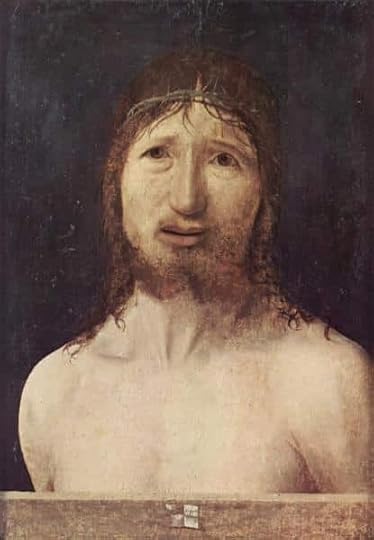 ECCE HOMO, ANTONELLA DA MESSINA, 1470
I’m deeply grateful for my warm coat and hat, as I walk quite a bit each day. Have attended Mass each day at St. Vincent Ferrer. They are having a solemn Epiphany Mass on Sunday with a Three Kings procession whatever that might be–I look forward!
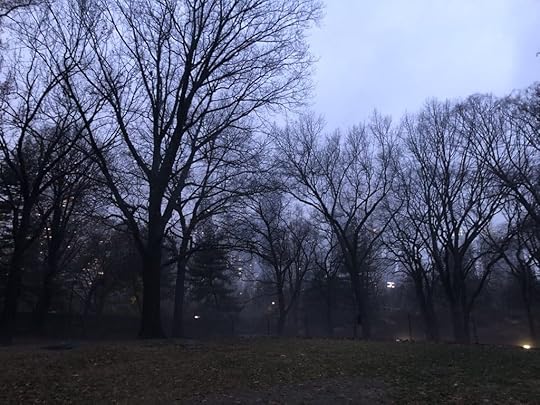
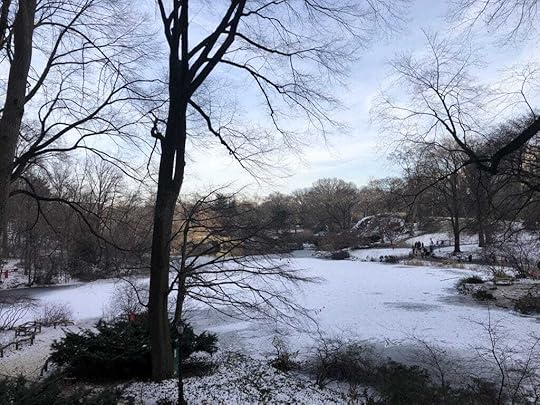
Then I go to the Poconos for a couple of days, and then home, if all goes well, next Wednesday. Yet another huge trip that, again, will require processing.
Meanwhile, here’s a little video I worked up to celebrate the manifestation of Christ to the Gentiles as represented by the Magi (Matthew 2:1–12)! (They do this in hte Archdiocese of New York this year on Sunday, January 5, though it may be celebrated in other parts of the country or world on January 6(?)
December 30, 2024
THE PERILS OF LINGUISTIC SUBTERFUGE
Here’s how this week’s arts and culture column begins:
One of the more disturbing aspects of contemporary life is the co-opting of language by political and cultural ideologues.
For those of us who subscribe to the Church’s teachings on marriage and family, for example, the twisting of certain concepts, words, and phrases land like chalk going the wrong way up a blackboard.
One glaring example would be the use of “they” as a singular pronoun, which is a corruption of reality and an egregious offense against those of us who love language, words, and clarity.
“Reproductive rights” is another such tortured phrase.
READ THE WHOLE PIECE HERE.
A relevant passage from a conversation with journalist Matteo Matzuzzi:
In so-called ‘public opinion’ we often hear it said that what the Church offers is anachronistic, especially in the fields of moral life and even bioethics. After all, people say, why should we say no to euthanasia if a person suffers? The easier road is the one that is more pleasing. The problem is that many representatives of the Church likewise ask, in the media, whether we haven’t to ‘change’ or ‘reform’ because the message does not find its way to the People of God. What is you opinion? How useful, or how risky, it is to listen to the Zeitgeist?
The Zeitgeist is a fickle thing! Of course, we must listen out for it: it breathes a message we must take into account. But to seek to follow it is self-defying. By the time we have arrived where it was a moment ago, it has shifted. The Church is by its nature slow-moving. There is a risk that we engage with what we assume are contemporary trends when there is nothing left but dying embers. So we go haplessly, and absurdly, from one extinguished bonfire to the next. It is surely more promising, interesting and joyful to hold fast to what endures. That is what will speak to human hearts and minds in our age as in any age. The Second Vatican Council was marked by the incentive to drink deeply from the sources. The best vitality of Catholic life in the twentieth century sprang from the exhilaration of uncovering forgotten wells, to find the water therein limpid, fresh. What has happened to the exhilaration? Why do we now feel we must abandon the wells in order to set up collapsible stands by vending machines?
December 28, 2024
THEN BE CONTENT WITH SILENCE
“The only really effective apologia for Christianity comes down to two arguments, namely the saints the Church has produced, and the art which has grown in her womb.”
–Cardinal Ratzinger
The day after Christmas, I crept in the cold up Fifth Avenue to the Met to catch the exhibit “Siena: The Rise of Painting 1300-1350.”
Spectacular. Simone Martini was one of the featured artists.
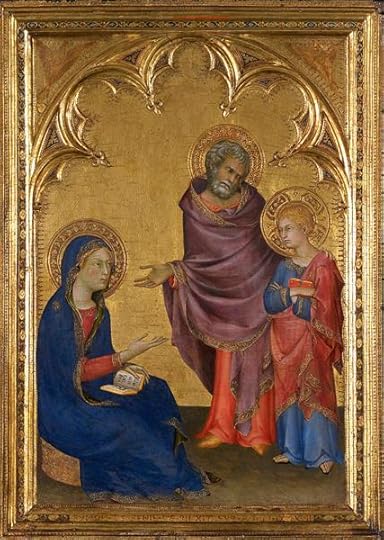 CHRIST DISCOVERED IN THE TEMPLE
SIMONE MARTINI, 1342
“DID YOU NOT KNOW I HAD TO BE ABOUT MY FATHE’RS BUSINESS?”
Beauty in and of itself doesn’t make us good, but it makes me, for one, want to be good.
I can’t possibly describe the joy, the treasure, of staying around the corner from St. Vincent Ferrer church. As a rule, I dislike taking photos in churches, but here’s one someone else took: a triforium (who knew?: a gallery or arcade above the arches of the nave, choir, and transepts of a church) view.
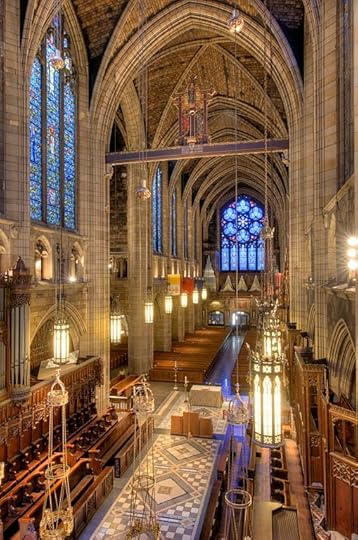 ST. VINCENT FERRER CHURCH, UPPER EAST SIDE, MANHATTAN
also I just relized their website has even better pix, but you get the idea
I attended the Christmas Day noon Mozart Mass there, and all through the Octave of Christmas their 6 pm daily Mass is sung. Today, Saturday, the Feast of the Holy Innocents, was celebrated at the 8 am.
The church is open from 7 am to 7 pm, so you can duck in there ANY TIME and outside of Mass times, there will be maybe 5 or 10 or 20 people tops scattered throughout this giant sanctuary with tons of gorgeous side chapels (St. Martin de Porres, St. T of Lisieux, and many more).
Also, daily Confessionis offered at 5:15 before the Rosary, Evening Prayer, then the 6 pm Mass. You walk up a set of steepish stone steps off Lexington Ave and inside is the faint smell of wax, incense, furniture polish, flowers, and at this time of year, evergreen boughs…Really, there is nowhere else on earth I belong than spaces like this, no matter how humble, no matter how grand…
Meanwhile, Fr. Donald Haggerty continues to provide rich daily sustenance and challenge:
“There can be strong, even profound, desires for God experienced in prayer, but what value to they have if they do not urge us to a more sacrificial life?”, for example, from Contemplative Enigmas.
He continues: “Contemplatives are often unknown figures in settings of social familiarity, and this includes communiities of religous life…[They] seem usually to show little need or interest in cultivating the contours and edges of a public personality in order to make it appealing to others. Even less are they protective and guarded toward something within themselves that might be walled-in and impregnable…In the best cases, they simply live their days in the shadows of self-forgetful obscurity. They are reaching a certain truth about the human person, while not aware of it, for exterior personality cannot be identified with the actual truth of self. These contemplative souls do not fight this discrepancy or seek to resolve it in some manner. There is no need to overcome this discordance, but only the need to live with it.”
Hmmmmmmmmmm.
He goes on to quote a passage from Thomas Merton from The Inner Experience: Notes on Contemplation:
“The true contemplative is a lover of sobriety and obscurity. He prefers all that is quiet, humble, unassuming…HIs inclination is to that which seems to be nothing, which tells him little or nothing, which promises him nothing. Only one who can remain at peace in emptiness, without projects or vanities, without speeches to justify his own apparent uselessness, can be safe from the fatal appeal of those spiritual impulses that move him to assert himself and ‘be something’ in the eyes of other men…He is quite content to be considered an idiot, if necessary, and in this he has a long tradition behind him.”
And back to Fr. Haggerty: “The true contemplatives seem always to find their corner, their niche, their way of living a hidden offering to God that ignores the external obstacle.”
Meanwhile, through the good Bishop Erik Varden, I’ve just learned of the late Scottish poet George Mackay Brown.
Mackay once wrote to a friend: “One feels desperate with solitude often; then it is salutary to know that one is not alone, but is involved with mankind. And that means, as I understand it, that whenever you are brave, enduring, uncomplaining, then the whole world of suffering is helped and soothed somehow. This is sacrifice, and fulfilment and renewal: an incalculable leavening.”
In a sense, he observed, “everyone is the writer’s concern. The whole of humanity is his family and he must participate in their joys and ennuis and sufferings, otherwise what he does would be as meaningless as an endless game of patience.”
Brown grew up poor, suffered from TB and ill health from his youth, and drank.
“Death, critics say, is a theme that nags through my work: the end, the darkness, the silence. So it must be with every serious artist, but still I think art strikes out in the end for life, quickening, joy. The good things that we enjoy under the sun have no meaning unless they are surrounded by the mysterious fecund sleep.”
His last published vserse, “A Work for Poets,” reads:
To have carved on the days of our vanity
A sun
A star
A cornstalk
Also a few marks
From an ancient forgotten time
A child may read
That not far from the stone
A well
Might open for wayfarers
Here is a work for poets —
Carve the runes
Then be content with silence
December 24, 2024
AND IN THE MORNING YOU WILL SEE HIS GLORY…
Blessed Christmas Eve!
I am safely arrived and settled in NYC for a couple of weeks.
Sunday, flight day, and Monday were the coldest days of the year to date. My bizarre faux-Cossack hat and super duper Arctic-worthy coat stood me in excellent stead! Yesterday I braved the cold and like a good tourist, made my way just for the heck of it (though had a goal in mind which was this Prints and Textiles exhibit at the NY Public Library) from 61st and Lex down Fifth Avenue to 42nd Street. HORDES of people. At the library, HORDES of people. At St. Patrick’s Cathedral, where I stopped in a for a blessed respite, HORDES of people.
Once or twice a year, I can kind of get into that type of scene. A carnival atmosphere prevailed, with rollicking Christmas pop tunes, massive displays of mutantly ginormous red bulbs, wreaths, trees, and bows, esp on the facades of upscale department stores. Older gals with heavy makeup and sexy Santa suits rang their Salvation Army bells, held out baskets, and sang “Rockin’ Aound the Christmas Tree” karaoke-style. At each intersection, HORDES of swarming people would grind to a reluctant halt, pool in a squirming mass, and when the light turned green, slither between the massive cluster of cars that had gotten caught in the middle of the intersection over to the other side of the street.
Through this midst walked many many dear young women with baby strollers and carraiges. And amazingly, the crowd inevitably, somehow, good-naturedly give them the right of way.
I had a free hour or so after the library and a brief stop at Muji (where I wanted to buy a small $3 notebook but realized I’d have to stand in line at the cashier for at least 30 minutes, and so left) and, making my way back up Fifth Avenue conceived of the brilliant idea of stopping in at St. Patrick’s Cathedral.
Where, as I said, there were HORDES of people. It was like getting into a VIP-only nightclub and, once inside, the hordes of people had fanned out into the aisles and pews and were madly chatting, filming themselves, holding selfie sticks aloft, trooping up to the altar as if expecting to see something exciting, like a corpse, and all around the sanctuary children were shouting, arguing with parents, doing gymnastics, and slobbering candy.
I couldn’t decide whether to laugh or cry. It seemed very much like the crowd that would have gathered to watch the Crucifixion–fun! an execution! did you bring your camera?–with so very little sense of reverence or holiness or any kind or cognizance that we were in a church.
And on the other hand–“they were like sheep without a shepherd.” To bring your four kids to NYC for Christmas–to HAVE four kids–is not a gesture. It’s a whole-life 24/7 effort that I, for one, can barely imagine. They’d at least come to a church, which many people wouldn’t, even if to cross another item off the must-see list, seemed cause for celebration. Maybe the mothers and fathers and all kinds of other people, like me, just desperately wanted someplace to sit for a minute. “Many people were coming and going, so there was no time to eat. He said to the apostles, ‘Come by yourselves to a secluded place and rest for a while.'” Matthew 6:31)…
Anyway, I found a spot and got out my rosary and to the non-stop accompaniment of an 8-year-old girl who appeared to be high on amphetamines and did not once the whole time stop shrilly talking, prayed the Joyful Mysteries. During which time I realized that little girl was me–over-stimulated, vaguely unsettled by the high ceilings, the altar, the gold, the sense that this was a place set apart but not exactly knowing what or why and thus…let’s not be quiet and feel…let’s just talk, and talk and talk…how many times in my life have I done just that? And if not exteriorly, then interiorly.
In retrospect-there was the miraculous birth, right there. Never what you expect. Never what you think you want. That may well turn out to be the high point of my whole two weeks…that holy interlude in the midst of the throng at St. Patick’s.
After that I met my dear old friend Patrick in an Asian food court and I had a delicious heap of noodles from Prawnaholic, and we shoved our way afterward past the Rockefeller Plaza tree (more HORDES of people!) and he walked me up Park Ave to St. Vincent Ferrer, where I made the 6 pm Mass with two minutes to spare.
Perfection.
 MERRY CHRISTMAS FROM MID-TOWN MANHATTAN MADNESS!
 Wonderful reflection from Caryll Houselander in today’s Magnficat about Christ being born in the empty, broken, poor place in our heart and how if we want the whole world to love Christ as we do, where do we think that movement will start but with us? In each individual person’s own heart…
I will be at the 4 pm Vigil Mass at St. Catherine of Siena this afternoon…
Finally, independent journalist Matt Taibbi has been a light these past years–an old-school liberal who never bought into the totalitarian groupthink, and who’s a husband, a father, and a deep-down optimist who insists on celebrating family, common sense, and as in this article wishing one and all a Merry Christmas (and while remaining a resolute nonbeliever (or so he says: raised Catholic and as we know, once a Catholic..), the eternal realities… (Did that sentence have one, or maybe two, too many independent clauses?) As in kids’ eyes will always shine as they open their presents on Christmas morning, husbands and wives will always want to get old together…but read the piece yourself. It doesn’t take much but somehow Matt, too, often makes me cry.
December 22, 2024
GOLDEN GIFTS FOR ALL
Had a new bed delivered a couple of days ago (a story in itself). Two guys pulled up in the truck–I welcomed them, showed them where to set it up, and went into my office to get out of their hair. “All set,” the one guy, Latino, 25 or so, called after a while. I went into the bedroom, said, “Wow, it looks great.”
And then, glancing around the room–which is adorned with a large picture of Our Lady of Guadalupe, a crucifix, a Tree of Life, several small retablo and prayer cards, and a portrait of St. Martin de Porres–he asked: “Are you Catholic?’
“Heck, yeah!” I confirmed.
“My wife is Catholic,” he continued. “She’s teaching me all kinds of stuff. LIke…Christmas is when the baby Jesus was born!”
He hadn’t known.
“We approached our last house high up on the hill, the place of Joseph the farmer. For him we had chosen a special carol, which was about the other Joseph, so that we always felt that singing it added a spicy cheek to the night…
Crossing, at last, the frozen mill-stream–whose wheel in summer still turned a barren mechanism–we climbed up to Joseph’s farm. Sheltered by trees, warm on its bed of snow, it seemed always to be like this. As always it was late; as always this was our final call. The snow had a fine crust upon it, and the old trees sparkled like tinsel.
We grouped ourselves round the farmhouse porch. The sky cleared, and broad streams of stars ran down over the valley and away to Wales. On Slad’s white slopes, seen through the black sticks of its woods, some red lamps still burned in the windows.
Everything was quiet everywhere was the faint crackling silence of the winter night. We started singing, and we were all moved by the words and sudden trueness of our voices. Pure, very clear and breathless we sang:
As Joseph was a walking
He heard an angel sing;
”This night shall be the birth-time
Of Christ the Heavenly King.
He neither shall be borned
In Housen nor in hall,
Nor in a place of paradise
But in an ox’s stall…’
And two thousand Christmases became real to us then; the houses, the halls, the places of paradise had all been visited; the stars were bright to guide the Kings through the snow; and across the farmyard we could hear the beasts in their stalls. We were given roast apples and hot mince-pies, in our nostrils were spices like myrhh, and in our wooden box, as we headed back for the village there were golden gifts for all.”
–from Cider with Rosie, by Laurie Lee
December 20, 2024
READING TIPS FOR THE SEASON
Here’s how this week’s arts and column begins:
People often ask for reading suggestions this time of year. One book I always recommend as we approach Christmas is “The Prison Meditations of Father Delp” (Herder & Herder, $22.98).
A Jesuit priest, Father Alfred Delp (1907-1945) wrote with his wrists manacled, largely during Advent, while awaiting execution by the Nazis. A sampling:
“Life means waiting, not Faust-like grasping, but waiting and being ready. … Anyone who remains stuck, waiting in fearful expectation just to see whether or not he will survive, has not yet laid bare the innermost strata. For the fearful expectation was sent to us in order to remove our false sense of security and behind it is this other metaphysical waiting that is part of existence.”
READ THE WHOLE PIECE HERE.
December 17, 2024
FINAL BENEDICTINE OBLATE PROMISES CODA
Welp, I am back in Tucson from St. Andrew’s Abbey and am now officially a Benedictine Oblate.
The experience was huge, partly because it represents a more radical consecration of life and intention; partly because my faults and failings and wounds were revealed to me in a new way, along with what I am obligated to do to insofar as possible correct/amend them; and partly because, also in a new way, I saw the power of prayer and the communion of living saints.
Here, for example, is the email I received from the good Br. Sixtus at Portsmouth (Benedictine) Abbey in Rhode Island:
“Good morning, Heather,
Hoping that everything went well this week for your retreat at Valyermo, culminating in your oblation yesterday to the abbot of St. Andrew’s. Abbot Matthew asked me to let you know that he offered his Mass for you Thursday morning. I just got back Thursday evening from NYC and, before I went to Penn Station for my lunchtime train back to RI, I attended the 7 a.m. Mass at Holy Innocents Church on W. 37th Street. You may know of it, but Servant of God Dorothy Day made her first Promise of Oblation in that very church on April 26, 1955…
I offered up my own Mass Thursday morning for your intention. Later that evening, as the monks were gathered in the Calefactory for recreation after dinner and before Compline, I added your intention to the intercessions prayed for by the community. Lastly, on Sunday, December 1, the Portsmouth Oblates and Friends gathered on campus for an Advent Day of Recollection. I gave a presentation on next year’s Jubilee Year of Hope and the opening of the Holy Doors in Rome and elsewhere. I began by letting them know of your connection to Portsmouth and of your big day on Dec. 12, and we offered a prayer together for you. All in all, there has been a river of prayers heading your way!”
My friend Rita was praying for me from Rochester, New York. My old friend Lucy from St. Francis in LA, I believe she is 87, and will fly back to her beloved Phillippines on Dec 26th, and has suffered long and deeply from a variety of physical ailments, and watches EWTN Mass every day as she is now largely homebound, was offering fervent prayers from Silver Lake.
Dear friends Tensie and Dennis from the Guadalupe Catholic Worker drove 4 hours to spend the night before and to be at the monastery for the big Mass, and my brother Ross took the day off from his job as a teacher in Victorville, CA, to join us also. I can’t possibly say how much it meant to me to have the three of them there.
I also saw during my week there how, as an introvert, I tend to hang back. I’ve been going to the Abbey for 24 years, for example, and really only had contact during that whole time with one priest, Fr. Francis. Who died this year! I “know” the monks by name and bio, and have seen many of them every single time I’ve gone on retreat there over the decades, and they are therefore dear to me in an obscure way, and yet I never “interpose” myself. It’s true I dislike “intruding,” especially on people of prayer, but on the other hand, I will then notice that another retreatant is friendly and chatty with the monks and become judgmental and loathe as I am to admit it, jealous.
So THAT’S what I noticed. I can’t have it both ways. Plus I am now seriously pledged to join myself spiritually to the monks. So–I made contact with the new Oblate Director and said a bit about myself and went to Confession with him. I made sure to chat with a couple of fellow Oblates who live in the vicinity and volunteer at the Abbey, and to chat with Julie, who is lovely and schedules the retreats, and I pitched myself to give a retreat there possibly in 2026, and I approached one of the monks who gives spiritual direction and asked if it would be okay to write to him (huge quiet beneficient smile–“Of course it would”). And altogether just opened my heart and person in way I hadn’t quite there before.
We all have these kind of personality tempates that get put in place early on, and then life events conspire to cement them in place, they become the sea we swim in, and…we forget sometimes that we can change, and that we’re called to be at least open to change. If you’re the sensitive type who has experienced, or perceive yourself ot have experienced, a certain amount of rejection and abandonment, you can develop a whole persona that protects or purports to against more of the same. And the telltale sign that something is off is if you then start feeling sorry for yourself because no-one notices you, or validates you, or sees your questing, fragile heart, ravenous for God, and accommodates, connects with, and reinforces you!
You see the problem. Where is the desire and determination to accommodate, connect with and reinforce SOMEONE ELSE??
St. John of the Cross points out that God is concealed, and that if we want to meet Him, we must be concealed, too. Must forget ourselves, lose ourselves, hide ourselves in a way.
So: How can I surrender? How can I serve? How can I share?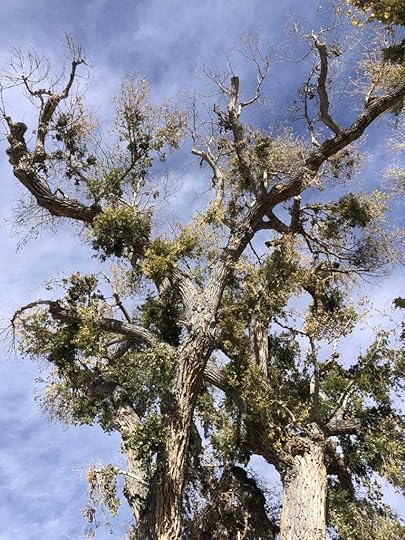



 SAVE ME A SPOT!
 Meanwhile, I’m flying to NYC Sunday for Christmas in Manhattan. Good news is I am already half-packed from St. Andrew’s. I’m so grateful to be in my beautiful house, strung with vintage mercury glass bulbs, lights, candles and cards for the week, as we begin the O antiphons at Evening Prayer tonight.
Today I have a “fun” day planned–taking off at 7 am to drive to my dentist in Nogales, Mexico! That’s right. A couple of fillings, no doubt yet another piece of the dire news I seem to get every time I visit the tooth doctor. Big deal. A small sampling of humanity reminds me of the burdens and crosses of the rest of the world and I am humbled. A mother of a wheelchair-bound, deeply autistic daughter, and another newborn who is herself, the mother, trying to get clean and sober. Lucy, who has terrible back pain and will endure a 17-hour flight to the Phillippines to be with her people. The refugee, the homeless in winter, the war-torn. The lonely, the lost, the rageful, the depressed, the addicts of every stripe so dear to my heart.
I will pray for us all as I drive through the desert this morning. Blessed Third Week of Advent.
AN UPCOMING EVENT IN DENVERFEBRUARY 1, 2025:
KEYNOTE SPEAKER: MAGNIFICAT OF DENVER LUNCHEON, 11 am-2 pm
TITLE OF TALK:“My Conversion Story”
Venue: St. Thomas More Church, 8035 South Quebec Street, Centennial, CO 80112
Organizer: Celia Kulbe, (303) 884-3902, magnificatofdenver@heather
REGISTER HERE.


