
Heather King's Blog, page 58
April 24, 2020
MARY GANDSEY, RESTORER OF WOOD
Here’s how this week’s arts and culture column begins:
Native Angelena Mary Gandsey was born in Long Beach and moved to Altadena in 1984.
She earned a BA in Psychology from UCLA in 1968, did a few odd jobs, had a child, and needed to go back to work shortly afterward. “As a kid, I used to help my dad with little projects around the house. I’m a person who needs to move in my work. So I decided that I really wanted to do something in construction, maybe a carpenter.”
A neighbor’s mother, a realtor, was hiring people to do some painting on a spec house. Around 1981, Gandsey ended up being part of that first crew.
Her next job was at an 1868 Victorian on Huntington Drive originally owned by the Rose family, after whom the city of Rosemead is named. The new owners hired Gandsey to do some of the paint removal. “I learned a lot from the wife, along with some of the others there who were doing wood stripping and refinishing.”
From thereon in, she more or less trained herself. If she had a question she’d ask at the paint store. The owner of the Rose family house knew the owner of the Charles Greene house, of the iconic American Arts and Crafts architecture firm Greene & Greene.
One thing led to another. Gandsey had found her vocation.
READ THE WHOLE PIECE HERE.


April 22, 2020
POUSTINIA
A poustinia is a small sparsely furnished cabin or room where one goes to pray and fast alone in the presence of God. The word poustinia has its origin in the Russian word for desert. One called to live permanently in a poustinia is called a poustinik.
I first became familiar with the concept through the writings of Catherine de Hueck Doherty, who wrote a book called Poustinia.
This is from another book of hers that I’ve gone back to during this time when we’re all being called inward. This one is called Strannik: The Call to Pilgrimage for Western Man.
“In the resurrection, God handed you and me the key to the goal of our pilgrimage. We call it the doors of paradise, but there are many ways of explaining it. Still bloody from the wounds inflicted by his crucifixion, he hands you the key of reconciliation. It is the key of reconciliation between God and man. That was the price of sobernost. [Sobornost (Russian: Собо́рность, IPA: [sɐˈbornəstʲ] “Spiritual community of many jointly living people”].
Now would you please meditate on sobornost? The meditation is so tremendous that we need to go apart, away, in solitude if possible, at least in the solitude of our hearts.
Christ the Reconciliator. Christ the Salvation of Mankind. Christ the Victim. Christ Triumphant. Christ in our midst. Christ always present. Christ the Keys to the Father.
This requires some thinking in a poustinia–the poustinia of the heart, the poustinia of the heart, the poustinia of a shack, the poustinia of a room–it makes no difference, but it requires meditation, deep and profound contemplation. This is the key. Sobornost is the key to the survival of this planet, believe it or not. If we are united with God we will survive. If we are not, we won’t. So sobornost must be meditated upon, contemplated upon in the poustinia. “
April 20, 2020
MY NEW WRITING WORKSHOP
Hope you can make it!
Flyer designed by my uber talented downstairs neighbor Erika Verik. She’s a very reasonably priced photographer and graphic designer and would be glad to take on your project, too!
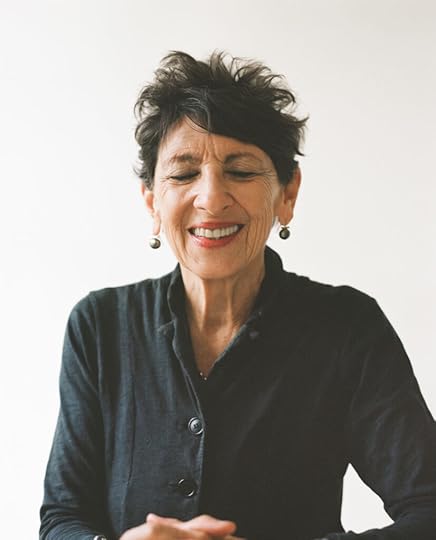 HEADSHOT BY ERIKA VERIK
April 16, 2020
RENEW THE FACE OF THE EARTH
We hear a lot lately about renewing the Church, about change, about starting over. If we’re serious, I would submit that the very first thing we can do is stop watching the news.
The media inevitably paint things in the direst possible light, with generally zero correlation to–I can only speak for myself here–what is going on in my own life and heart.
How can we expect to discern the true from the false, the authentic from the fake, the interesting from the banal if we allow secular newscasters to make those calls for us?
The withered imagination, mummified emotional life and loneliness generated thereby, as opposed to allowing ourselves to be animated the teachings of Christ, strike me as tragic.
I find true crime stories, ’60s horror movies, and film noir way more compelling than the news.
Recently, for example, I re-watched Samuel Fuller’s The Naked Kiss, and realized that in a bizarre way it’s actually a “pro-life” movie–with a violent ex-prostitute and her pedophile fiancé as protagonists. Put that on your picket signs!
No but seriously, what does it mean to be pro-life, which is to say for life, in all its exuberant nuttiness, paradox and mystery? Have we become so trapped in our narrow little circles of acquaintances and friends, categories, routines, that we’ve become followers of Christ in word only? Are we so asleep that we’ve lost all hope of being interested, intrigued, challenged, moved, freed from our own idols, addictions and attachments?
I believe we have a responsibility as Catholics (among other things) to educate ourselves in literature, music, painting and film. We don’t have to become art critics, but we’re called to learn to discern what is good, beautiful, and true. We’re called to be able to recognize a compelling story, to in some rough way articulate why a book or painting moves us, why and how we identify with morally conflicted or outright villainous characters.
But most of all, perhaps, we need the curious, trusting hearts of children.
If we want to renew the Church, we can’t sit around waiting for someone else to do it. We ARE the Church.
“Nearly every child is inarticulate about that which concerns him most deeply–when he reaches an age in which he has emotional responses to other people he is almost totally unable to express them, especially in words. About that which causes him to suffer, and about the vague yet terrible fears which invade him in secret, he is usually dumb.
With a young child then, art (in this case I mean drawing pictures, or making things in putty or some such substance) is as truly as it was to primitive men, a means of communication and of liberation…
Not it is a necessity to all human beings to reveal the secrets of their soul–to express their inmost love, their secret joy, to externalize their hidden, and often unformulated fears.
To do this is the simplest and most primitive use of art…
When the craftsman lays his hands upon the material into which he can most easily pour his own secret life, his touch is a caress; it is the touch of love. He will know at once that this is the substance that can receive his dream, this it is that shaped by his hands will be the shape of his shapeless longing, and will contain that which is within him and yet his heart cannot contain.
A man is never really whole until he has found that material which is for him the potential substance of his dreams.”
–Caryll Houselander, from an essay about her work with war-traumatized children called “The Power to Heal,” found in Essential Writings
” ‘Why have I not dreams?’ I feel like people who do not eat or sleep enough, who are always hungry or tried, and this might be one of the reasons why I make films. Maybe I want to create images for the screen that are so obviously absent from my head at night. I am constantly daydreaming, however.
My honest belief is that the images in my films are your images, too. Somehow, deep in your subconscious, you will find them lurking dormant like sleeping friends. Seeing the images on film wakes them up, as I am introducing to you a brother whom you have never actually met. That is one reason why so many people around the world seem to connect with my films. The only difference between you and me is that I am able to articulate with some clarity these unpronounced and unproclaimed images, our collective dreams…[60]
I truly feel there is something dangerous emerging here. The biggest danger, in my opinion, is television because to a certain degree it ruins our vision and makes us very sad and lonesome. Our grandchildren will blame us for not having tossed hand grenades into TV stations because of commercials. Television kills our imagination and what we end up with are worn-out images because of the inability of too many people to seek out fresh ones.
As a race we have become aware of certain dangers that surround us. We comprehend, for example, that nuclear power is a real danger for mankind…We have understood that the destruction of the environment is another enormous danger. But I truly believe that the lack of adequate imagery is a danger of the same magnitude. It is as serious a defect as being without memory. What have we done to our images? What have we done to our embarrassed landscapes? I have said this before and will repeat it again as long as I am able to talk: if we do not develop adequate images we will die out like dinosaurs. Look at the depiction of Jesus in our iconography, unchanged since the vanilla ice-cream kitsch of the Nazarene school of painting in the late nineteenth century. These images alone are sufficient proof that Christianity is moribund. We need images in accordance with our civilization and our innermost conditioning, and that is why I like any film that searches for new images no matter in what direction it moves or what story it tells. One must dig like an archaeologist and search our violated landscape to find anything new. “
—Werner Herzog, from Herzog on Herzog, Chapters 2 and 3
April 14, 2020
A JOURNEY ROUND MY BATHROOM
From The Public Domain Review:
“In 1790, Xavier de Maistre was 27 years old, and a soldier in the army of the Sardinian Kingdom, which covered swathes of modern-day Northern Italy and Southern France. An impetuous young soldier, he was placed under house-arrest in Turin for fighting an illegal duel; there is no record of what happened to the other guy. It was during the 42 days of his confinement here that he wrote the manuscript that would become Voyage autour de ma chambre.
Inspired by the works of Laurence Sterne, with their digressive and colloquial style, de Maistre decided to make the most of his sentence by recording an exploration of the room as a travel journal. Like a modern teenager cataloguing their daily routine in a series of finely-tuned Instagram posts, de Maistre’s book imbues the tour of his chamber with great mythology and grand scale. As he wanders the few steps that it takes to circumnavigate the space, his mind spins off into the ether. It parodies the travel journals of the eighteenth-century (such as A Voyage Around the World by Louis de Bougainville, 1771), and could be read today as an early take on the modern vogue for “psychogeography” — each tiny thing that he encounters sends de Maistre into rhapsodies, and mundane journeys become magnificent voyages:”
But you must not let yourself think that instead of keeping my promise to describe my journey around my room, I am beating the bush to see how I can evade the difficulty. This would be a great mistake on your part. For our journey is really going: and, while my soul, falling back on her own resources, was in the last chapter threading the mazy paths of metaphysics, I had so placed myself in my arm-chair…
In that spirit, I offer….
April 12, 2020
THE RESURRECTION: MY URBAN GARDEN
“If you have a garden and a library, you have everything you need.”
—Cicero, 1st century B.C.
Isak Dinesen had a farm in Africa at the foot of the Ngong Hills. I have a native plant garden in Pasadena.
Unlike Dinesen (“Out of Africa”), however, I don’t “own” my garden. It’s behind the Craftsman where I rent one of eight apartments.
I started it at the age of 64. I’m 67 now.
The garden brings me satisfaction, beauty, astonishment, joy.
The garden also requires an inordinate amount of worry and work.
When I started out, I thought simply to put my creative energy into arranging a bunch of plants. I didn’t know the garden would overtake my life.
I didn’t know the garden would help teach me how to order my day, pray, let go, love my neighbor, die.
Speaking of resurrection, I’d love to hold another online meeting reflecting on the subject. If you’d like to join, leave a comment and I’ll add you to the mailing list. All are welcome!!
Happy Easter!
April 10, 2020
WERE YOU THERE WHEN THEY NAILED HIM TO THE CROSS?
This morning I prayed the Stations of the Cross with the monks at Portsmouth Abbey on the coast of Rhode Island.
The men were outside in what sounded like a gale-force wind. You could hear the cries of the seagulls.
Straining to hear, my ear practically laid against my laptop out here in California, it came to me that we have been straining to hear all this Holy Week, and in fact since the quarantine began.
Straining to hear through spotty wifi, endlessly buffering vimeos, broken links, bilingual liturgies, staticky zoom gatherings, live-streaming Masses with people blabbing on the sidebar, a litany of the Sacred Heart led this morning by LA’s own Archbishop Gomez that I simply could not watch because of the distracting stream of virtual hearts someone had launched and that were floating up from the bottom to ruin the screen.
Still–the hunger, the tears of gratitude, the desperation to be close to Christ as today he walks the Via Dolorosa, is scourged, crowned with thorns, nailed to a cross, and gives up his spirit.
Consummatum est–“It is finished”–and even in this pale, seemingly pathetic imitation of solidarity and communion, let me be there with Him.
Sneaking a snack, looking at my phone, sweeping up around my desk, I won’t even be a repentant thief–just, as usual, a thief. Who he died for.
Whispering my name.
April 8, 2020
FOOL FOR CHRIST
in the town of Kowata
there were horses for hire
but I loved you so much
I walked barefoot all the way
–Kan’ami, Japanese Noh actor, author, and musician during the Muromachi period (approx. 1336-1573)
I’m reflecting this Holy Week that Christ’s whole path to Calvary–the Agony in the Garden, the Scourging at the Pillar, the Crowning with Thorns, the Carrying of the Cross, and the Crucifixion–consisted in his loving us so much that he walked barefoot all the way.
He could have done it differently.
He could have said no, just as Mary could have said no to the angel Gabriel. But the “yes” that “registers,” bears eternal fruit, arises from total freedom–and in freedom he said yes.
He could have returned violence for violence. But though on the point of death by a from of humiliating gruesome, drawn-out, ritualized public torture–he didn’t: “Then said Jesus unto him, Put up again thy sword into his place: for all they that take the sword shall perish with the sword” [Matthew 26:52].
He could have called down the powers of heaven as Judas, backed by the civic and ecclesial authority of ancient Rome–betrayed him for thirty pieces of silver: “Thinkest thou that I cannot now pray to my Father, and he shall presently give me more than twelve legions of angels?” [Matthew 26:53].
But he didn’t.
He could have “lorded it over” his whole life, but he didn’t: “[T]hough he was in the form of God, [Christ] did not regard equality with God something to be grasped at. Rather, he emptied himself, taking the form of a slave, coming in human likeness; and found human in appearance, he humbled himself, becoming obedient to death, even death on a cross” [Philippians 2:6-8].
Last night I “attended”, via zoom, a Reconciliation service at Holy Family in South Pasadena, CA. Monsignor made the beautiful point that at its depth, sin consists not so much in breaking a law as in breaking a relationship.
What is it about truth, not factual truth but ecstatic truth, that makes us want to cry?
Several of us gathered on zoom earlier this week to share our experience, strength and hope. In addition to people from the LA area, friends from around the U.S., Ireland, Germany and Croatia were able to participate.
The time was rich. I’m still pondering and processing. “When did we see you hungry, naked, in prison, Lord?” Thank you all for ministering to me.
April 6, 2020
TODAY’S GATHERING!
Quick PUBLIC SERVICE ANNOUNCEMENT re our Holy Week gathering today at 1 PST.
As of yesterday, zoom is strongly suggesting a password for each meeting to discourage hackers.
I already emailed all the people who commented on my post of last week, indicating that they’d like to join.
Anyone who didn’t comment and would like to join, please email me at hdking719@gmail.com before 1 Pacific.
After a short quiz on the saints and the meaning of the Trinity (kidding!), I will get the correct info to you.
Looking forward!
April 5, 2020
LOCKED DOWN IN ASSISI
Here’s how this week’s arts and culture column begins:
Lori King, Professor of Theology, is a U.S. citizen living in Assisi, Italy. She’s been confined to her home home since Sunday, March 8, at 9 pm.
We connected recently via phone.
“Even before the lockdown, Mass had been suspended. I’d gone to 6 pm Mass at the Cathedral of San Rufino, my home parish. When I came home, a letter inside the door from the Bishop announced that all Masses and public liturgical functions were being suspended until April 3.
“I felt as if the wind had literally been knocked out of me. I thought, This can’t be happening.”
But by the next day she’d settled into a different rhythm. The lack of social opportunities and work obligations freed her to devote herself fully in prayer to the crisis at hand.
“I’m very privileged to be here during this. I’ve always said that in any kind of major world crisis, I’d want to be in Assisi. And here I am.”


