
Gary Vaynerchuk's Blog, page 13
February 24, 2021
10 Ways To Get More Followers on Instagram: How To Guide
I know a lot of people who follow me would like more followers. On Instagram, on TikTok, wherever; we know it’s important to understand social media. Why? Because there is no “social media” anymore, there’s just “media” and social is a part of that.
If “media” is the content and the culture we all consume, then “social” is community; it’s connections and insight. With this in mind, it is so necessary for brands and marketers to understand Instagram. It’s one of the largest social media platforms to date. It’s a source of great learnings and offers an immense opportunity to build community and legacy, both for an individual’s personal brand and a large company. Keep reading to learn how to navigate this social media platform–and how to get more followers.
1. Have a strategyFirst of all, it’s necessary to understand that building a community is more important than the amount of followers you have. Your community should be the foundation of every piece of creative you produce, it should be the cornerstone of your entire strategy. Remember: if you want to win, you have to make it about “them” because business is a “them” game. Now, taking that aside, here are some tactical things you can do to grow your Instagram presence.
The $1.80 Strategy Familiarize yourself with the $1.80 strategy. I’ve written about this, in depth, a few years back. To summarize, this is all about finding hashtags/content that’s relevant to your business, and commenting on that content. If you leave thoughtful comments, aka your .02 cents, on 9 posts for 10 hashtags–that’ll add up to $1.80.Your .02 cents should never be spam. Rather, they should be small drops you make into each “bucket” of karma, community, and your own personal brand.
2. Define Your Target AudienceNow that you have a strategy in place, it’s time to think about who you want to target. Start with the macro, the basic psychology of your target audience, then add layers. What is your brand, who do you represent? Study the slang they use, their style, and (of course) the hashtags they use. The last piece is important because hashtags can help you narrow down your audience. They can also help you identify communities and gain insights into the behaviors of that audience.
3. Be Authentic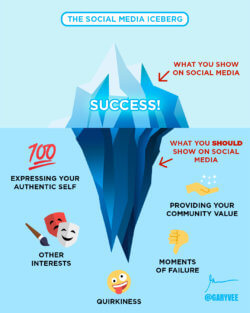
Authenticity is important. I’ve spoken it about it a few times, but to summarize everything: don’t put on a show. Be authentic and real in categories you’re willing to be authentic and real in. What I think many people are missing is, you don’t have to be in every conversation. There are people who don’t even do social media because they say ‘Gary, I don’t want my business out there’–okay, so don’t.
Personally, I don’t go into convos where I feel like I don’t know what I’m talking about or I don’t want to share with the world. I stay very narrow and that’s it.
Your content should be about what you want, and you should be honest about your experiences and expertise. It’s possible to get away with being inauthentic for a while, but it’s no fun, and you could lose the community you’ve built.
4. Content, Content, Content (that’s relevant and consistent)Now it’s time to put out content. Your content should be relevant and consistent. It should speak to your community. A good way to do that is to follow the 79/21 rule and look at how your community behaves on other platforms. Once you have that down, you’re ready to post.
Something to keep in mind, don’t worry if the content is “good” or not. Good is subjective. Just post it!
5. If Content Is King, Context is CountryAs important as content is, context is even more important. Just think about it, you wouldn’t post something for LinkedIn on TikTok. Everything you post has to be contextual to that platform. People forget that great content is predicated on context. If you want a more tactical overview, check out a blog post I wrote about this topic.
6. Promote Your Instagram AccountThere are two ways to promote your Instagram page. One of the best ways is through organic reach. This is where the $1.80 strategy comes in. If you’re posting thoughtful comments under relevant hashtags and content, your content is more likely to come generate likes, views, and appear in search.

Another way to promote your account is to pay for it. There are tons of ways to partner with influencers and community groups–just reach out. Sponsor some of their content and ask what their rates are if they were to promote your page/products. Some influencers are underpriced and some influencers are overpriced, so it’s important to do your research.
As always, avoid fake followers. They offer no value to your brand. Although it might seem easier to buy followers, the new bots only lower your page’s credibility–who wants to visit an inactive page with tens of thousands of followers? Bots don’t like, share, or engage with your content and they’ll likely get cleaned up when Instagram does a sweep. Just avoid them.
Even if they’re not the most important thing, follower counts and likes matter. They are an important metric, especially for those of you who are growing your business. Still, you know what’s even more important?
The comments. The shares. The amount of people who save your post. In a world of fake followers and inflated likes, your actual engagement rate matters so much. If you want people to engage with your posts, thoughtful content matters.
I know it’s easy to say “build community” but what does this look like in practice? You can start by following relevant accounts and influencers. Think about how they add value and what gaps aren’t being served within the community you want to reach. Reach out and ask if they’d like to collaborate or partner on a project.
Use the comments to figure out what your community wants. When you do choose to run a contest or start a series on Instagram–make sure it’s something that provides value to them.
This is another gem from the 79/21 strategy. It’s clear that someone who follows you on Facebook may act differently than someone who follows you on LinkedIn. However, if the same person follows you on both platforms look at how they behave. Your Instagram followers may be unlikely to ask you for resume tips–but if you know a lot of your followers are about to enter the workforce, and you’ve seen many of them ask for resume tips on LinkedIn, use that to inform your Instagram content.
Maybe host a Live Q&A, where you take questions from your followers and video chat with them in real-tip about resumes? This feature is unavailable on LinkedIn, so you could also drive some of your followers from there to your Instagram. Overall, listen to your community, no matter what platform they choose to speak on.
Arguably the most important part, you have to enjoy the process. Instagram, and social media in general, can be a long game. It’s important to remember that and not be discouraged when you have less followers than someone else. Also, never ever compare yourself, your progress, and your process to anyone else.

Try some of these tips and let me know what worked for you. As always, if you liked this article, be sure to share it on Twitter.
The post 10 Ways To Get More Followers on Instagram: How To Guide appeared first on GaryVaynerchuk.com.


February 19, 2021
Clubhouse App: The New Audio-Chat Social Network
Who’s ready for the ultimate guide to Clubhouse App?
I’ve been tasting and exploring the app for months now. Therefore, I’ve got a pretty good idea of what it is, so far. I know a lot of you have questions about the app although for some of you, the app isn’t available in your country. So, I took note of your most common questions and made this guide. Feel free to bookmark this page and come back after you’ve secured your first Clubhouse App invite.
Clubhouse App OverviewIs Usage Free?Yes, but you’ll need an invite to join.
Is The App Available On Both iOS And Android?No, so far it’s iOS only. That may be because there are more Android users than iPhone users worldwide and the app wants to scale slowly. Initially, there were only 1,500 Clubhouse app users and they were only allowed one invite at a time. Even with these restrictions, the app now has over one million users. If the founders were to open Clubhouse up to Android users, that would more than double their potential user base. An event like the Elon Musk interview would have crushed their servers–and not in a good way. But, we’ll get back to that later in the guide.
How to Use Clubhouse AppIf Twitter is the town square, Clubhouse is the dinner table. The Guardian has called it, “A way for people to socialize amid the pandemic. [It’s] A social networking app based on audio chat. Part talkback radio, part conference call, part Houseparty.” Those are a few different comparisons so I’ll break it down a little more.
What Does The App Offer?We all know the pandemic has been hard, so the social aspect of the app is a given. Yes, it’s similar to the app houseparty but it’s also similar to an everyday houseparty. It’s a social network in the purest sense of the word. Using Clubhouse is like walking around a party, or an event conference. You can hear the live conversations of others, and/or join a conversation that you find interesting. Also, nothing is saved on Clubhouse, it is literally “drop in audio”, which adds to its FOMO element. If you don’t log in one day, you could potentially miss out on some interesting conversations.
To break down the “talkback radio” comment (especially for the readers from later generations), Clubhouse app is similar to calling into a radio station where you can ask someone you admire a question. Or, maybe confront someone you think isn’t a good role model.

Breaking this down further, a lot of celebrities use the app. This makes some outlets label the app as having a “pretentious, clout-chasing” atmosphere; saying it’s primarily for, “people who like to talk and miss having an audience—like needy celebrities—or lurkers who want to be the fly-on-the-wall near interesting conversations”. However, the reality is much more nuanced than that.
It’s rare for a celebrity like Kevin Hart or an entrepreneur like Elon Musk to get to have a conversation with thousands of people, all at the same time. Of course, they could give a magazine an interview or address their fans directly via Instagram Live or Twitter, but Clubhouse offers them a platform to speak with fans and critics alike instantly. In that way, it’s like an instant, smaller version of iHeartRadio or the Breakfast Club. If they walk past a Clubhouse room where they are the topic of discussion, they can join the room and take center stage themselves. Or, they can host and moderate their own Q&A and bring out/interview guests of their own. Kevin Hart and Elon Musk, respectively, did that–and that is the power of Clubhouse.
How Many People Can Be In A Conversation?Up to 5,000 can be in a single room at any given time. The capacity can be increased for a special event, like the Elon Musk Q&A. Of course, the more people in a room the more difficult it would be to talk. Think of it like the difference between joining a conversation between two people versus trying to get a question answered at a 2,500 person conference. Both experiences are possible with Clubhouse. The difference is, Clubhouse is pure audio chat and you can have these conversations from the comfort of your own home.
How To Invite People To The App/ To ChatHow do you get on Clubhouse? The short answer is: know someone who is already on the app. You see, initially, existing users were given one invite (now it’s two or three) to share with a close friend or someone they were sure could really benefit from the app/social network. That’s still true, but existing users are also given more invites as they continue to engage with the app. This means that it’s likely some people now have a surplus of invites–so, don’t be afraid to network on social media in order to see who might have an extra invite for you. Since the app is still in beta, it’s still invite only, which means there isn’t really a way around needing to know someone with access to the app or networking with someone you follow on social media. But, as with all parties, there is a back door.
Let’s say you do know a lot of friends who are already on the app, but they’ve already given out all of their invitations. If that is the case, click on the website, and add your phone number to the waiting list. Then, download the app so you can reserve your username. Depending on how many of your friends are existing users of Clubhouse, they might receive a notification telling them that you’ve reserved your username and that you’ve downloaded the app. When this happens, they’ll get the option to wave you through, giving you access to the app, even if they don’t have an official invitation to send.
Also, this option allows existing users to save their invitations for someone who might not have access to the “back door” feature of the app because it doesn’t use up invitations they already have. So, if your friend has one invite and is trying to decide between you and her cousin in Idaho, if you already have a few friends on the app, she can open up the “back door” for you and save the invite for her cousin.
Clubhouse Profile SetupOkay, so now you’re in Clubhouse. You’ll soon find out there’s space for everyone: Silicon Valley VCs, influencers, celebrities, marketers, entrepreneurs, environmentalists, journalists, creatives, and everyone in between. As this is one of the first social media platforms that’s solely based on audio chat, you may wonder what or how to set up your profile. Our friends at Social Media Examiner have compiled this handy guide, but I’ll break it down a little more.
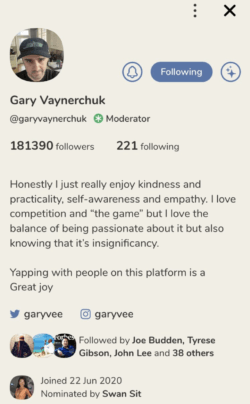
Of course, you should have an interesting profile picture. Don’t worry too much about it being “professional” or “creative”, just make it authentic to you (and make sure it’s sized correctly). Then write your bio. You could make it funny or serious, depending on what your goals are. However, if you prefer to be straightforward, the first three lines (about 125 characters) are super important. Those are the first three lines someone will see in their preview window when you click on their profile.
While there is no character limit, Clubhouse will send you a notification if your bio is too long. So, keep these words clear and concise.
You can link your Instagram account and Twitter profile to your Clubhouse profile. It’s a pretty straightforward process if you’re used to social media platforms, but check out the guide linked above if you’d like a step by step breakdown.
How To Build Your Brand/Business With ClubhouseHere’s the big question, can you build a brand with Clubhouse? Is it a feature or is it a platform? Does it have staying power? My answer? I think clubhouse is incredible and I’m very bullish on this format.
Twitter is already testing a competitor and I predict Facebook and Instagram are going to re-create this “audio drop in” format as a feature. Clubhouse could possibly become the next TikTok or LinkedIn. Therefore, it’s wise to get familiar with how to navigate the audio landscape.
If you’re asking those questions from the perspective of, “Is this worth my time”, let me explain, right now, that this app/social network has a lot of attention as well as a lot of very intriguing people in the community (more on that later). It’s a good use of your time whether Clubhouse is huge in a year or not, because the time you spend there, right now, while it’s hot, is valuable. Most people worry about it going away but everything goes away eventually. It’s about maximizing attention, building reputation and community, while it’s hot.
How do you do that? Well, if you have the app, are you listening or are you contributing? You have to taste all sides of it to figure it out. Don’t let your ego get in the way. So many of you have so much value to add to a conversation. I’m pushing you, as a friend, to contribute to one room. It’s not just about passive listening (although that’s valuable too). If I had the time, I would spend every minute I could on Clubhouse–building community. It is the platform to engage and Clubhouse gives everyday people access to those they normally wouldn’t have met otherwise.
It’s no secret that many celebrities and influencers are fans of the app and social network. Everyone from Jared Leto to Tiffany Haddish to Drake has a Clubhouse profile and that’s part of the app’s appeal. In fact, Clubhouse is notable for popularity among Black celebrities, with Tiffany Haddish being one of the first celebrities to hit one million followers on the app and Buzzfeed news calling it the “place to be” for Black creatives. Although the app has recently been banned in China, the app’s international reputation has grown there as well as Korea, the United Kingdom, and Mexico. Below is a small list of every celebrity that reportedly has used Clubhouse app:
Madonna, 21 Savage, Meek Mill, Drake, Kevin Hart, Tiffany Haddish, Jared Leto, Zendaya, Virgil Abloh, Ashton Kutcher, Oprah Winfrey, Estelle, Kanye West, Horan, Mino, Gong Hyo-jin, (and many many more).
Overall, Clubhouse app is here and it’s changing social media. Right now it’s invite only, but I’m excited to see how it changes as it scales to fit the consumer appetite. It’s clear there’s so much attention on the app right now. Whether or not you’re able to day trade on that attention will be up to you.
Thanks for reading! If you’ve enjoyed this article, it would mean a lot to me if you shared it on Twitter!
The post Clubhouse App: The New Audio-Chat Social Network appeared first on GaryVaynerchuk.com.
February 16, 2021
3 Tips For Hiring Top Talent In 2021
We’re in the middle of a few things here in the US, and hiring season is one of them. I constantly get DMs and emails about how to attract and retain great talent. I’ve spoken about hiring a lot over the past ten years and while some thoughts evolve, others stay the same. Keep reading to learn my three top tips for hiring professionals in 2021.
Big Egos Lose TalentFirst up, when it comes to hiring, you have to put aside your ego. I promise you, indecisiveness, debate, and pontificating is ultimately–ego. That’s what’s stopping so many people from being successful. I promise.
Everyone wants to be someone that’s good at hiring and that’s one of the biggest flaws in companies today. I implore you to look at what your team needs as a company, what skills you lack as a leader, and where a new hire could fit into what you’re trying to build–rather than look at subjective measures of success. For me, if someone on my team tells me they went to an Ivy league school, and another tells me they went to community college, I look at them the same. If anything, I aim for people who like “dirt” because I know they don’t let their pride make them insecure. It’s all about where your new hire fits and it’s short-sighted, and incredibly micro, to wrap your pride around how “good” your hires are.
Let me tell this story. I feel like my EQ and people skills are off the charts. Yet, I am baffled by how many horrible hires I’ve made in the last 20 years. They just weren’t a good fit. So, when I think about my intuition and ability, then deploy that against the masses, I know a lot of you have made huge amounts of hiring mistakes. Therefore, I don’t worry about what you think about me. I’m very comfortable and excited about admitting that I was wrong.
I quickly hired around 300 people when I first started my company because I was willing to admit when I was wrong and make changes when necessary. I don’t like to fire, but as long as it’s handled with empathy and respect for the person you’ve hired, you have to accept it as a part of running your business.
Most people sit on new hiring mistakes for a year or two, because they don’t want to be exposed as having made a wrong decision. In that time, enormous amounts of bad stuff happens to your business. If I can convince one person reading this to admit to themselves that they made a hiring mistake, I will have written a successful article.
Because I’m not afraid to be wrong, I’m not afraid to hire. If anything, I always overhire, always because I’m anticipating growth and that’s how you grow. I think a lot of this comes down to knowing yourself first of all. So I’ll give you a very good piece of advice (I genuinely believe this): hiring people for things you don’t want to do is unbelievably powerful.
I couldn’t be more bullish on it. If all of you right now just truly take a step back and say, what do I do every day that I don’t want to be doing and hire for that, I couldn’t be more proud.
Redefine potential.When we had just hired our first chief creative officer, I had spent six months prior trying to find the person with what mattered to me the most: emotional intelligence.
This might upset you, but I don’t respect talent, not to the degree that most people do. It’s stunning when I run my business how secondary pure talent is to people skills.

This notion that some creative people are so special that they can be impersonal, and bully everyone else is the exact opposite of how I run my business. I’m very unpopular in tech-land because I don’t want to run a business where being mean brings the best out of people. I don’t care if you’re a creative genius; act like a normal person or leave.
Second, I believe continuity trumps everything. It’s just like sports. A team that stays together usually beats a team with superstars that were put together for one season. I believe that and I love continuity at Vayner. We have enormous continuity for a young company and I want to keep it forever.
Hiring is guessing. Firing is knowing.When it comes to hiring, I look for intent. I look for intent and I look for a lack of insecurity. I think insecurity leads to disproportionate worst behavior. Also, I look for somebody who compliments me or has a communication style that works for me because I hate to micromanage. I’d rather pick people I believe in and empower them. I want to provide flexibility. That’s humility.
Still, hiring is guesswork and it’s okay to admit that. It’s okay to admit when you’ve made a mistake. I know no one likes to do this, but if hiring is guessing, then firing is knowing.
Hiring and firing, you need to do that because it’s a part of every business. In a way, firing is more important to company culture because it sets the tone for the culture. You can’t be afraid to fire someone who’s cancerous in culture. It builds your credibility, it says, “No matter how talented you are, you have to treat people with respect.” It says, “I don’t care how I know you or how long you’ve been here–we reward people based on merit.” This is why self awareness is so important; it helps your company, your community, and ultimately, it helps you.
The post 3 Tips For Hiring Top Talent In 2021 appeared first on GaryVaynerchuk.com.
February 12, 2021
The Top 3 Wines For Valentine’s Day!
We are two days away from Valentine’s Day, do you know what that means? It means that now is the perfect time to tell your friends, family, and co-workers just how much they mean to you. It’s always a good idea to lead with empathy and kindness, but on Valentine’s Day, take some extra time to show people you care.
Of course, I’d be remiss not to mention it’s the premier holiday for romance. If you have someone special in your life, keep reading to find out the top 3 wines to pair with three classic meals.
Wine 1: Pinot GrisThis one’s kind of like Pinot Grigio but you can get it from Oregon. It’s spicy, racy, and great with a seafood dish. Try this one from WineLibrary!
Wine 2: BaroloIt’s a smooth, silky red for all the Pinot Noir lovers, but with a little Italiano romance. Check out this one!
Wine 3: Late Harvest RieslingNow we’re talking dessert, sweet, cake–this wine will get you a little tipsy as you’re heading into your night. We have a few great ones at Wine Library, but this one is sure to bring a smile.
The post The Top 3 Wines For Valentine’s Day! appeared first on GaryVaynerchuk.com.
February 9, 2021
3 Ways To Become A Better Leader
First up, it’s important to define what a leader is. A leader, especially in a post-Covid world, is someone who has a clear vision and is able to rally her or his community to achieve that goal. The greatest job of a leader, whether that leader is a parent, a CEO, or a counselor–is to find a way to build self esteem without crossing into delusion. That means, in a business setting, it’s important to remember that you work for your employees, they don’t work for you. Your job is to build your team, provide value, and give them space to grow while holding them accountable.
With that out of the way, there are so many leaders and managers who want to be better. Sure, they want to accomplish their own desires but they want to accomplish them in a way that helps them sleep at night. No one is trying to run a dictatorship (I actually fled one, so I’m especially mindful of the feelings and needs of my employees) but so many leaders are confused. They don’t know how to build a business and meet their goals without being a real obstacle to their employees and team members. Some leaders may have great relationships with their employees, but they want to be better about meeting goals and finding the balance between empathy and ambition. If either of those sound like you, or you fall somewhere on the spectrum of those two leadership types, this article is for you. Below are three, tactical methods to become a better leader.
1. Remember: you work for your team.I know I said this in the intro, but the number one thing you have to remember is that if you’re a leader, you work for your team–they don’t work for you. As a CEO, it’s ludicrous to expect your employees to work as much as you do. It’s your business; of course, your employees don’t “love it” as much. So much of life is a “them” game and entrepreneurship is no different. If you want to be an effective leader you have to give, give, and then ask.
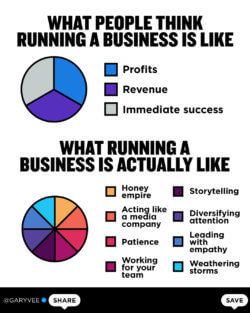
The biggest mistake people make, and why they can’t build scalable businesses, is that they have selfish expectations of their employees. You may be a hard worker, you may have fought to get to where you are–but that’s it, it’s your business, not theirs. They have no reason to be as invested as you are, even if you think you’ve given them a reason to be. You can’t ask an employee to work as hard as you because you believe you compensate them well. That’s like asking someone to love your child as much as you do; it’s not natural.
You’re going to have much more successful interactions if you set expectations and give your team the means to reach them.
Now, what does that look like in practice? A lot of leaders have arbitrary expectations about how new hires should perform and act. This affects their growth in a big way. Here are two tips to keep in mind when hiring new employees:
a. Give trust easily.I give trust a lot easier than most CEOs. To me, it’s just faster. I blindly trust all my employees. If they prove themselves to be incapable, I’ll put restrictions around them. I genuinely believe that the phrase: “Trust is not given, it’s earned” is slow and egotistical.
B. Don’t compare your hires to yourselfThis is where a lot of leaders get caught. They measure candidates against themselves, and then inflate their egos by finding ways candidates don’t match up. For this reason, I don’t hold employees to the same standard that I hold myself. On the contrary, for me it’s all about offense. I don’t care if my hires don’t perform as well as I would because they’re freeing up my time. Even if they’re not performing at “100”, that’s okay because they’re allowing me to go on the offense in other ways.
Keeping these two things in mind will help you become a better leader because it’ll train you to really internalize that you work for your employees (not the other way around), and then things start to change. Ultimately, they’re reminders to be grateful.
2. Stop micromanaging and teach your team how to swim.
If you have trouble structuring your business, if you go through rounds of hiring and firing–listen to this. If you have trouble finding the “right” team members…the problem may be you. This may be tough to accept but I know good leaders can handle the truth. I’m not trying to be impractical, but as I said before, good leaders don’t caste judgement on their employees.
Good leaders don’t yell and scream, or try to watch their employees’ every move. Good leaders are supportive and ask how they can help. Instead of being upset that their employees are drowning, they teach them how to swim.
3. You must build a strong company culture.After you’ve internalized that you work for them, it’s time to establish what sort of legacy you want to leave behind. What does it mean for someone to say they’ve worked at your company? What do you want it to say on your tombstone? For this reason, among others, I call Vayner X my “honey empire”.

The way to build great culture is not in words that are written on the wall, but in your actions. You have to make every one of your employees and team members understand that you care about them more than you want them to care about you. I know that sounds impossible, but you can’t be crippled by the task. It’s tough. But, if you do it, you will build a great culture. If you do not, every day that you work will take you further and further away from that culture.
You have to practice this everyday. It means not being afraid to fire your top salesperson because they’re also not a nice person…it means knowing who your employees are, what drives them, and if their needs have changed. It also means promoting and compensating people based on how hard they work, not on how well you know them. A great work culture is one that “works” for everyone. It should work when things are easy and it should work when, God forbid, tragedy occurs.
The second you slack on your culture is the second you lose. Meritocracy is important, empathy is more important, and knowing the culture that fits you and your employees is the most important thing of all.
Remember, my words mean nothing if you don’t listen to them and internalize them, so they’re a part of your everyday life. So, what do you do now? Share it with a leader you admire or someone you know that is actively trying to become a better leader. While you’re at it, tweet me your biggest takeaways. Oh, and of course, practice, practice, practice doing these things yourself.
The post 3 Ways To Become A Better Leader appeared first on GaryVaynerchuk.com.
February 8, 2021
Is It Too Late For Dropshipping In 2021?
Who’s ready to talk about dropshipping? I’ve gotten so many questions about it. Mostly, people want to know if it’s too late for them to start. Look, while it’s no secret that I think it’s never too late to start something you’re passionate about–there is a secret variable when it comes to making an impact in a certain space. Keep reading for my thoughts on dropshipping, timing, and talent!
For those of you who don’t know, dropshipping is a simplified version of retail where the seller accepts a customer’s orders but does not keep the goods sold in stock. Put another way, when a store sells a product using the dropshipping model, it purchases the item from a third party and has said item directly shipped to the customer. Therefore, you, as a seller, don’t have to handle the product directly. It’s been a popular form of retail for over ten years and it’s continued popularity makes some emerging entrepreneurs nervous. The question I’m asked the most is, “Do you think it’s too late for me to start dropshipping?
Here’s something many people are unaware of: the timing on something that works is not the variable, it’s your talent.

People say, “dropshipping is dead” and “you’re too late for dropshipping” and that’s just not true. The reason it’s not dead is: most things don’t die. It’s hard for things to die. Sure, it may be harder to make an impact, but it’s not impossible. There is always a supply and demand issue on things in society.
Breaking through on social media, say on Youtube, is harder today than it was when I did it. It’s harder to break out on Clubhouse today than it was even seven months ago. Years ago, I could have told people that think they’re OG dropshippers now (because they’ve been doing it for 5 years) that they were too late. I could have taken it further, made fun of them, and said they were 10 years too late.
Again, timing is not the variable, it’s your talent. You see, when you’re not as talented but you’re good at finding things early on–it doesn’t take as much talent because you have so much more arbitrage. Later, as more people begin to do something, it’s harder and requires more talent. That’s the difference; it’s not dead, it’s just more challenging.
As time goes on, your success is more predicated on your skillset. There were a lot of people that looked like social media “experts” on Twitter in 2007. A lot of them are gone now, because it got harder. More people had opinions, more platforms came up– but I wasn’t afraid in 2007 and I’m not afraid in 2021. I won’t be afraid in 2031 either.

Something else to keep in mind, even if you don’t make any money doing it, you’re gaining skills. You’ve already won. Don’t think of anyone else’s process besides your own. The second you look at somebody else, you’re already vulnerable. When you start that comparison convo it’s not good. I see _____ doing ____ is the worst way for anyone to start a sentence.
So, if you’re interested in dropping shipping or just passionate about entrepreneurship, just start. I guarantee there is value in the process.
View this post on InstagramA post shared by Gary Vay-Ner-Chuk (@garyvee)
The post Is It Too Late For Dropshipping In 2021? appeared first on GaryVaynerchuk.com.
Dropshipping Article
Who’s ready to talk about dropshipping? I’ve gotten so many questions about it. Mostly, people want to know if it’s too late for them to start. Look, while it’s no secret that I think it’s never too late to start something you’re passionate about–there is a secret variable when it comes to making an impact in a certain space. Keep reading for my thoughts on dropshipping, timing, and talent!
For those of you who don’t know, dropshipping is a simplified version of retail where the seller accepts a customer’s orders but does not keep the goods sold in stock. Put another way, when a store sells a product using the dropshipping model, it purchases the item from a third party and has said item directly shipped to the customer. Therefore, you, as a seller, don’t have to handle the product directly. It’s been a popular form of retail for over ten years and it’s continued popularity makes some emerging entrepreneurs nervous. The question I’m asked the most is, “Do you think it’s too late for me to start dropshipping?
Here’s something many people are unaware of: the timing on something that works is not the variable, it’s your talent.
People say, “dropshipping is dead” and “you’re too late for dropshipping” and that’s just not true. The reason it’s not dead is: most things don’t die. It’s hard for things to die. Sure, it may be harder to make an impact, but it’s not impossible. There is always a supply and demand issue on things in society.
Breaking through on social media, say on Youtube, is harder today than it was when I did it. It’s harder to break out on Clubhouse today than it was even seven months ago. Years ago, I could have told people that think they’re OG dropshippers now (because they’ve been doing it for 5 years) that they were too late. I could have taken it further, made fun of them, and said they were 10 years too late.
Again, timing is not the variable, it’s your talent. You see, when you’re not as talented but you’re good at finding things early on–it doesn’t take as much talent because you have so much more arbitrage. Later, as more people begin to do something, it’s harder and requires more talent. That’s the difference; it’s not dead, it’s just more challenging.
As time goes on, your success is more predicated on your skillset. There were a lot of people that looked like social media “experts” on Twitter in 2007. A lot of them are gone now, because it got harder. More people had opinions, more platforms came up– but I wasn’t afraid in 2007 and I’m not afraid in 2021. I won’t be afraid in 2031 either.
Something else to keep in mind, even if you don’t make any money doing it, you’re gaining skills. You’ve already won. Don’t think of anyone else’s process besides your own. The second you look at somebody else, you’re already vulnerable. When you start that comparison convo it’s not good. I see _____ doing ____ is the worst way for anyone to start a sentence.
So, if you’re interested in dropping shipping or just passionate about entrepreneurship, just start. I guarantee there is value in the process.
View this post on InstagramA post shared by Gary Vay-Ner-Chuk (@garyvee)
The post Dropshipping Article appeared first on GaryVaynerchuk.com.
February 2, 2021
Top GaryVee Quotes! 2021 Edition
Need a little extra motivation and insight? You’ve come to the right place. Even though only about 30 days have passed since this year began, Gary Vaynerchuk–serial entrepreneur, author, and CEO of VaynerX–gave us so many good moments, learning lessons, and fire quotes that we had to do a recap. Below are the top quotes of 2021 from our empathic leader, GaryVee! Hopefully, you can take them with you as you cultivate a more positive and optimistic outlook for the year ahead. Read through the list and let us know, on Twitter, which one is your favorite!
Check back at the end of every month to see which new quotes made the list!
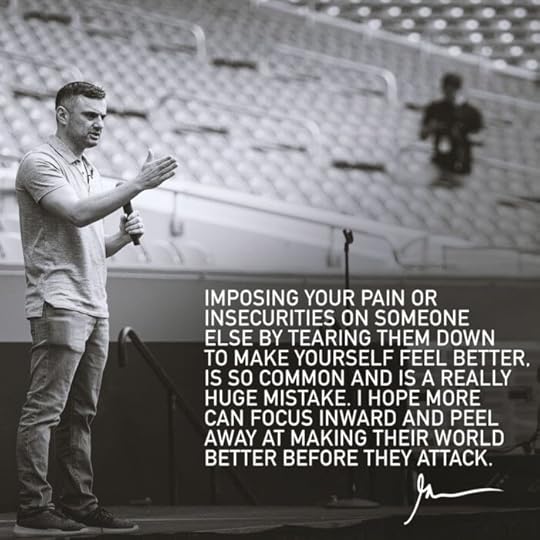
 Every minute you spend trying to cut someone else’s tree down, is a minute you spend on not growing yours.
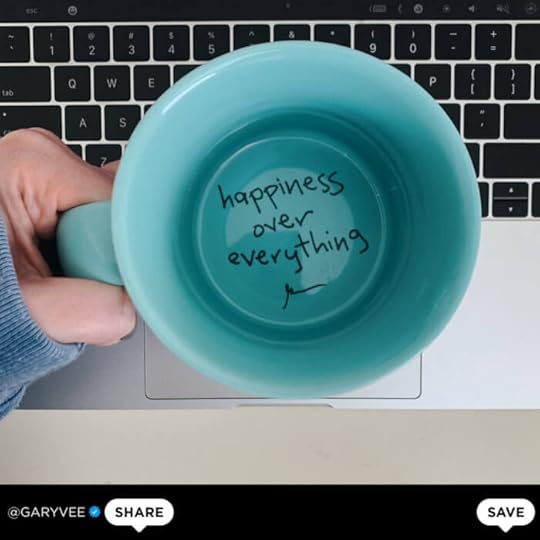
  Don’t conform to doing something that doesn’t make you happy.
 The easiest way to be unhappy is to compare yourself to somebody else.
 You believe in something? Talk about it. Forever. Constantly. With everything from your fucking soul.Stop debating. Start making.
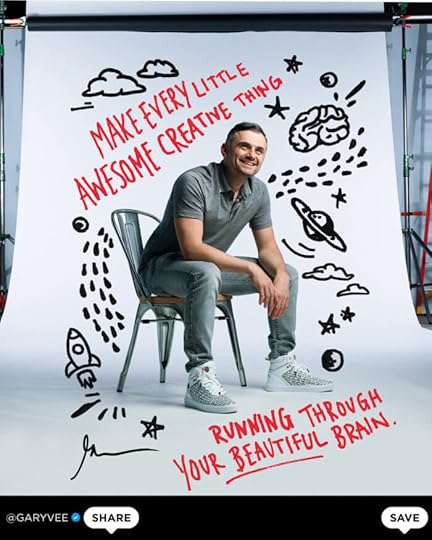 Don’t beat yourself up. I was 30 years old before I made a single piece of content.
  What you listen to and who you listen to is what you become.Start by helping one person.
 Challenge yourself, come up with ideas, don’t be scared of showing different parts of your life.Pain is temporary and we beat ourselves up for not being productive or motivated during these cloudy days.There’s so much opportunity and happiness in front of you.Keep speaking your truths my friends – so many of you have great intentions and have something to share, don’t worry if at first people aren’t “clicking” sometimes it just takes them time. It’s amazing to have goals and ambitions but I see so many people “beating themselves up” with unrealistic expectations. Love yourself!
The post Top GaryVee Quotes! 2021 Edition appeared first on GaryVaynerchuk.com.
January 29, 2021
How does Clubhouse Voice Chat Work?
By now, a lot of us know what Clubhouse app is. People often ask, “What’s next?”. I’m not psychic but I do think voice is the next feature to look out for. This is why Clubhouse is having a moment of cultural relevance and is capturing all of our attention. With this in mind, let’s take a look at it’s Voice Chat feature and the future of voice app technology.
Why Clubhouse Voice Features MatterNot to get too heavy on all of Clubhouse’s features (we did that before in another blog) but, Clubhouse is a social, audio driven app. It has had tremendous success and that is not surprising. Why? I believe that similar to what the iPhone and the Andriod did to our society, voice devices have the potential to do, at scale, over the next decade.
For example, I believe there will be an Alexa skill built into the technology that is so phenomenal it catches virality. It’ll make everybody go, “Oh crap, I need that.” If you think back to the iPhone, a social network, Spotify, or iTunes itself–they had features that made people say, “Oh crap…”. MySpace did that for social networks and Tinder did that for dating. This happened before the 2000s as well. I remember eBay was looking for wide awareness in the late 90s and it was Beanie Babies that put so many people on eBay.
I will say this though, or I’d be remiss: although I do believe in the emerging voice technology, I think it’s still too early for anybody reading this to run home and build an Alexa skill–thinking that’s gonna change their business. People need to be thinking about how their brand plays in a voice AI environment, and a media/technology landscape that has reliance on voice features and capabilities.

You can make impactful decisions now if you want to be a part of the conversation; tap into the sonic tag for your business or brand. We need to make sonic branding, how does it engage, and how to build at scale, a part of the conversation at a briefing.
After spending the last couple of weeks understanding and tasting the platform, these are my thoughts. I like it a lot and I think it has potential for many people. I’m excited to see what it looks like when you open it up at scale; the product itself is already incredible. The lack of friction, the walkie-talkie nature, it feels like you’re sitting around a dinner table.
It reminds me of my favorite South by Southwest jam sessions, where I would sit with other entrepreneurs and just chat about random cultural events and debate which trends have staying power. It sits in a different place as a utility that has potential to evolve into a consumer product but time will tell.
What Makes Clubhouse AttractiveNow let’s talk about the psychology of users–not just on Clubhouse, but users of voice devices and voice apps in general. User psychology is important any time you’re looking to create content or position your business as a brand. If you look at the cellphone, and you look at technology, and the integration of those things in our lives, what do you think is the next step? Drones, flying cars, nanobots?
Think about it. Every single person reading this values health, the well being of their family, and time. As we become more busy, time becomes a valuable resource. Therefore, when you’re looking at a video, that is actively taking up your time. Audio, meanwhile, is incredibly passive. Think about that word–passive.
Everybody kind of passively consumes. Listening to something in the first five minutes of you waking up and getting ready, for example, that information is being passively consumed. You’re not looking at your phone because you’re in the shower. Voice app technology takes this further by allowing you to save time and passively consume. Imagine brushing your teeth in the morning. Suddenly, you remember that you need socks, so you say, “Hey Google. Hey Apple. Hey Alexa. Hey Facebook”, or whatever else has come out, “Buy me socks.” The next search engine is voice.
It’s all about saving time. Uber won because it saved you time. Amazon Prime wins because it saves you time. Anything that saves us time, we like, right? We want everything right now, always, and fast. Slow internet is devastating, right? We’ve become addicted to speed and I think voice is speed. Even if you have your phone next to you…if you can say Alexa, or Google, or Apple..What is my schedule today? Now, the house is talking to you.. it’s just faster than turning on your phone.
We hate friction. Alexa and voice is the future of a frictionless world. It is going to explode.
So, what does all this mean for Clubhouse? Why has it become more relevant in culture compared to Houseparty or Discord? The answer is Clubhouse embodies speed, real life, and passive consumption. It mirrors real life and also allows people to be a fly on the wall and listen to the conversations of others. It’s the most successful voice app we’ve seen so far because of things you might overlook. Like everything that has happened over the last 15 years with consumer apps, a couple of tweaks on the product, positioning, design, the initial community that started using it– these are all factors into the serendipity that is a successful app.
By the way, it’s no different than what happens with restaurants and clubs. Sometimes people might ask, Why did this restaurant do better than this one that opened down the street nine months ago? They were so similar...the difference of a matradee, the first 100 people that went to the restaurant, a little tweak at the bar, the product selection of the wine; these little, subtle things matter.
Additionally, I believe Clubhouse can still maintain its appeal after it’s been opened to the public and even after the pandemic. Why? Because it filters by room. It’s not like everybody on the app hears everything. So, by the filter of the rooms, I can go into the 21 Savage room or I can go into the Mark Cuban room, or the How To Save The Environment Room–I’m in control. It’s no different than what Facebook Groups do today. Or any other social network, for that matter.
The Future of Voice App TechnologyI want to be clear: voice app technology isn’t Clubhouse’s only appeal. The real appeal is that it replicates real life. In real life it is very uncommon for you to just roll up to someone and start talking to them. That is very rare and that is what Chatroulette (and other voice apps) offered. Clubhouse is more similar to having a conversation at a dinner. It’s closer to a conference, or an event like the Grammy’s; you know the person, or you’re aware of the person, and you observe that person having an open dialog. Or, you could join in. Clubhouse is successful for the same reason every social platform is successful, it’s replicating an actual human truth.
In the next three years, Clubhouse will either be one of the top ten social apps in the world or overly affected by Facebook Inc, LinkedIn, Twitter, and the other platforms. By that I mean feature copying may slow down it’s macro growth and have it become a little bit more in the middle of the pack within the hundreds of top apps. Or, it’ll be integrated into one of the companies that I just mentioned through an M&A deal that happens within the next year and a half.
After all this, what does this mean for the future of voice app technology? As I’ve been screaming, yelling, screeching, preaching,pontificating, roaring, and crusading for the past however many years: voice is a passive consumption product. It is why the car radio was remarkably powerful. You could listen to it while you did something else. Humans are now multitasking at a level that makes our great-grandparents headspin. This makes voice an incredibly important pillar of human society and I believe that it will continue to grow in importance.
The post How does Clubhouse Voice Chat Work? appeared first on GaryVaynerchuk.com.
January 26, 2021
Advertising Through The Years: The Evolution of Attention
Traditional advertising has done one thing really, really well over the past 70 years. It’s stolen attention. What I mean by that is, advertising was created to take time away from content consumption and shift it to brand/product awareness. Think of it this way: back when we used to watch cable TV, what would happen every 7 minutes or so? A slew of television commercials that lasted for 4 to 6 minutes.
As you were reading an article on Forbes.com what would happen as you scrolled down? A thumb stopping ad for BMW that took up your entire computer screen. If you were reading an interview in Sports Illustrated magazine 25 years ago, what happened as you turned the page? A full page ad that took your attention away from the content you were consuming. The same thing happened if you were in your car 30 years ago, listening to Howard Stern. Suddenly, you’d hear an ad for prime ribs–even though you were a vegetarian. We used to encounter countless ads from various places that had varying degrees of applicability to our lives. But social media and streaming services have started the process of changing the game entirely.
Think about it. How much cable television do you currently watch? Can you name even one close friend who doesn’t subscribe to a video streaming service? Studies show that close to 70 percent of US households have a TV/movie subscription, so even if you have a friend that uses cable, it’s likely he or she is using Netflix as well.
Don’t believe it? This year, Netflix racked up more views on their platform than viewers of cable and satellite TV combined. Although I haven’t done the research myself, I live by common sense and by paying attention to culture. The growth potential of HBO MAX, Disney Plus, Amazon Prime, etc and Hulu is alarming or exciting depending on what side you sit on. Conservative estimates show that up to 30 percent of households were “cord cutters” ,meaning they turned away from cable altogether, in 2017. That was in 2017, now let’s think about that number in 2021.
What does all this mean? It means that television commercials are in major friction against the market. Collectively we’re watching less TV and we’re spending more time on our phones. Entertainment has continued to evolve, and with it, so has human attention. With this in mind, it’s key to understand a few pieces of information.
Number 1, this is not a childish phenomenon. Yes, the pandemic accelerated cord-cutting, but this isn’t a new trend. Social media isn’t just for teenagers–in fact, there is no “social media”. There’s just media–a media landscape that has changed rapidly. Today, more than 80 percent of each generation uses social media. Meaning, your GenZ kid is just as likely to have a social media presence as her grandma. The internet doesn’t care if you believe me or not, it doesn’t care if you’re not willing to learn its language. It will move on without you. Therefore, your marketing strategy needs to evolve.
Number 2, influencers are the new editors in chief. You, as a marketer or business leader, cannot underestimate the importance of internet culture. That doesn’t mean that the traditional way of advertising has died, and you should forget about old methods that may have worked in the past. It does mean that you can’t afford to write off these new creators who are disrupting your space. DoggFace208 is a perfect example of this. Through the years, Ocean Spray has spent millions upon millions of dollars to grasp less attention and cultural relevance than DoggFace208 garnered in 1 minute. Side note, kudos to Ocean Spray for jumping on to that attention and adding to the narrative (I’ll go further in depth on that cultural moment in a later article).

As I mentioned before, traditional advertising steals attention from what the consumer actually wants to consume. Advertising execs do this with the hope that the consumer might want to buy or be aware of what he or she is selling. Take that and flip it, now you’re giving time to a consumer who you know will want more information about what you’re offering. Look at the big picture and understand what’s happening in social media. Most platforms give us a single stream of feed dynamics. People are consuming content from many different parties (individuals, brands, publications, etc.). If a brand were to understand how to make content or how to team up with influencers to create far more native and contextual content for that stream, they would have a far greater upside.
When a TV show goes to a commercial, you can feel it. When you integrate a marketing campaign, whether you’re doing it yourself or you’re working with an influencer, it can be a little more seamless. That is the point. What does this look like in real life? Collaborations and sponsorships with influencers; supporting the things and people adjacent to the target audience you want to reach.
Above all, you have to realize that the market decides what’s impactful now, not executives in a boardroom. Customers have always decided what they like, but television commercials and radio ads haven’t given advertising execs a feedback loop. They did not provide quant and qual metric. These metrics, created immediately within a social media environment, shape insights for social media marketers that can be used to educate brands and produce more effective messaging. The comments section matters, which leads me to my next point.
Number 3, you might want to hire a post-creative strategist. You need someone who is willing to understand everything: the platform, the target audience, and how it relates to what you want to do. This person is going to be a key member on your team, the one who informs your content strategy. The PCS is a person that recognizes where the attention is and where it could go.
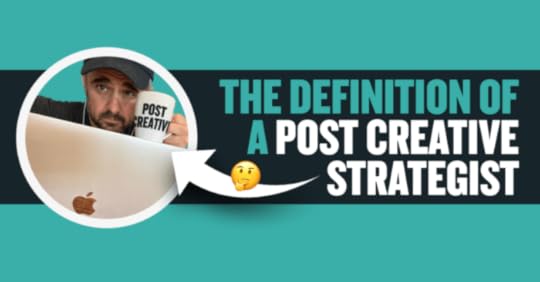
Post creative strategists pay attention to the comments from the creative that you put out. This allows for 20 percent of everyone’s creative team to just be creative. Now, they can create solely to receive insights from the consumer. Whether it’s strategic and you made the content specifically to get insights about questions you have, or if it’s the serendipity of a volume of comments that you read when the intent was to just build awareness around your product–you now have this rich feedback loop. Somebody whose business is about being ears for your brand is completely imperative. We live in a world today where the majority of brands focus on their mouth, i.e. what they say. Using social media as a consumer insights tool is imperative, hence why the PCS matters so much. However, 99 percent of marketers aren’t thinking about this role.
Ultimately, it’s important to remember that the media landscape is constantly evolving.
Effective social media strategies aren’t built overnight. They take patience, humility, and an abundance of empathy. You have to give something back to your community, find value in providing entertainment or information–you have to give something of value in exchange for the time that you’re taking away. For example, I’m very stressed with making sure this was a valuable 7 minute read for you. To summarize, you have to ask/earn their attention, rather than demand it.
This might sound scary, and counterintuitive to everything you’ve been taught. But, you’ve got to make it about them. Once you approach your content strategy with the mindset of giving, rather than taking, you’ll be ready to provide so much value to your end consumer.
If you liked this article, be sure to share it on Twitter!
The post Advertising Through The Years: The Evolution of Attention appeared first on GaryVaynerchuk.com.


