Cynthia Harrison's Blog, page 28
May 15, 2016
Compelling Minor Characters
Lily White, the protagonist of my WIP, lives in Detroit and works as a P.I. She used to have a very different life, in Blue Lake, my fictional tourist town on Lake Huron in northern Michigan. Lily started as a minor character in my first Blue Lake novel, Blue Heaven. Even in that book, she threatened to take the story over. She was a little brat, just 17 years old, a damaged runaway. The way I tamed Lily for that story was to tell her someday she’d have her own turn.
Then I forgot Lily until I began writing Love and Death in Blue Lake. Searching for a subplot, I thought, wouldn’t it be fun to bring Bob and Lily back after they’d graduated college? I wanted to see what would happen to them. I kind of figured they’d get their happy ending. Sometimes plots don’t go the way you plan, but I was pleased with the way Love and Death ended. It felt right somehow. Lily got into a whole lot of trouble, and she settled some old scores. When she rode out of Blue Lake leaving a broken-hearted Bob behind, I had no idea where she’d end up.

Sorry for the spoiler about Bob, but it is a very minor one. He gets his own story in my upcoming (November 2016) release Blue Lake Christmas.
Lily of course couldn’t let Bob have his own story without demanding a bigger, better one of her own. Well, to her it’s a bigger city, Detroit, and a better mystery, because she’s the one solving it. I’ll be working on Lily’s story for the next several months. If not years. Lily has layers and I’m taking my time uncovering them.
And yes, she’s already insisting that she should have her own series. I’m not sure about that, but what I do know for sure is compelling minor characters can take your stories further than you’d ever imagined.
Tagged: Lily White, minor characters, PI, plotting, series








May 8, 2016
Down With Diets
Ten days ago, I started doing a few of the practices in a book that promises to increase emotional intelligence, especially around eating. I’ve known for years I’m an emotional eater, but I’d never really figured out what to do about that, how to change it. Eat Q showed me how. There are many more practices than I can list here, but the two that did me the most good were “Pause” and good old journaling.
“Pause” is just that. Whenever I wanted to eat anything for any reason, I paused a few seconds to figure out what kind of hunger I was feeling. At first, it was hardly ever actual hunger. Mostly it was cravings. I followed the cravings back to how I was feeling in that moment. That was the tricky part because I tend to avoid feeling my feelings when I eat. I just eat. So journaling helped me explore the feelings thing.
Frequent food emotions were a vague anxiety, or sadness, just a little bit, lonely, too, or bored, even happy, and often feeling like I wanted to treat myself. Because I deserved it. Over the course of ten days I tuned into and recorded all these feelings and more every single time I wanted to eat. I figured out very quickly that my emotions were really running the show and I determined I’d put them in their place, deal with them in healthier ways than with chocolate, potato chips, or cookies.

I learned that “healthy eating” consists of a plate of food that is half high health, like fruit, vegetables and protein. Then a quarter of the plate can be medium healthy, like whole grains or good dark chocolate. The final quarter of the plate can be any number of less healthy foods like crackers or a hamburger bun or even a handful of potato chips.
I decided I wanted to eat healthy more than I wanted to soothe my emotions with food. With that decision, I took the last step in the “Pause” sequence. I thought about the consequences of emotional eating, I gauged my actual hunger level, and I made the healthy choice. I got it right 28 out of 30 times. And the few times I did eat less healthy, it was only a little bit, and I didn’t feel guilty, I didn’t binge, and I got right back on track.
Losing weight was not part of my plan–I just wanted to be in control of my emotions instead of mindlessly letting them rule my diet and my life. It was surprising how very easy it was to do most of the time. The first few days I had cravings, but soon enough, as I gave myself time to figure things out, the cravings stopped. I found myself going from three hours between meals to four and even five hours. I never felt deprived. Instead, I feel proud of myself for sticking with that sometimes tedious “Pause” and journaling process. And even though it wasn’t planned, I lost weight while eating lasagne.
Tagged: craving, Eat Q, emotional eating, healthy eating







May 6, 2016








May 1, 2016
Slow Food
Gone are the days when I could tuck two toddlers under my arms and head off to the grocery store, then shop for the week without list or having looked through a cookbook. Oh and then come home to feed them lunch, bathe them, and whip up a lasagne for dinner. However did I have the energy? And didn’t all that pasta pack on the pounds?
My secret was cigarettes. Yes I know, seems scandalous now, doesn’t it? Back then, nobody minded. We smoked in cars, houses, and restaurants with wild abandon. Ah for the good old days. Because the minute I quit smoking I (of course) gained weight. And I’ve been struggling with it and writing about that struggle ever since.
Recently I decided to stop struggling and get more mindful about the whole eating and weight issue, and just not judge myself so much. If I want lasagna for dinner, I’ll have lasagne. I’ll just do it mindfully: Day 1: Shop. Day 2: Simmer sauce. Day 3: Make casserole.
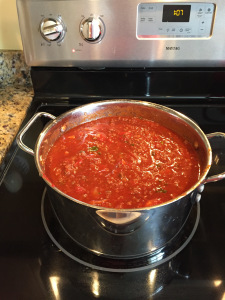
Walking the winding mindfulness path, I remember something I learned about myself and food in Weight Watchers. I’m an emotional eater.
When I had cigarettes to soothe my frantic, sad, angry, lonely overwhelmed self, I was fine. After I quit, the feelings got shoved down with food. If I gained too much weight, and I did, often, I went on a mindless diet. I cut calories or fat or meat or carbs or sugar. I didn’t have to think about it, I only had to be brutally strict with myself until I lost the weight and the cycle started again. Most of the diets I’ve been on worked very well for a year or two, which is when the emotional eater would burst from the confines of the latest diet and wail Why can’t I have lasagna?
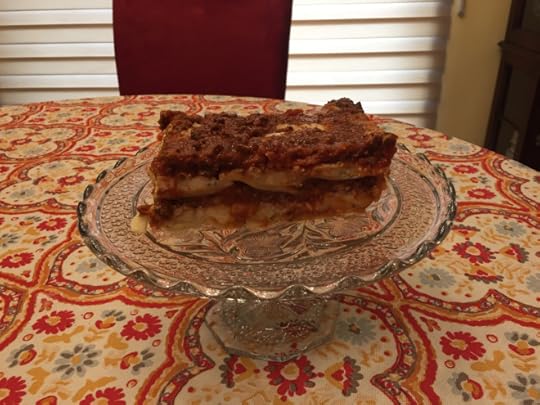
The thing about knowing you’re an emotional eater is it doesn’t help you lose weight. In Eat.Q Susan Albers says dealing with emotional eating means upping your emotional intelligence. Huh. I always thought I had a pretty high EQ. I read other people really well. I’m tuned in and sensitive, mostly. I know myself. Turns out just not as well as I thought. For example, for most of my life I have been willfully clueless about how to effectively guide my emotions around food. That’s changing. I’ll keep you posted.
Tagged: diet, emotional eating, emotional intelligence, food choices, mindfulness, Weight Watchers







April 22, 2016
Secrets & Passions
Scorpio Full Moon this weekend is complicated by several planet retrogrades, some already here, others moving into retrograde within the week. What this means to me, to everyone really, is that it is time to take the passionate engagement, even the fiery argument, inside. We would all do well to take a look at our unconscious motivations and deeper longings, the ones we keep hidden, even from ourselves.
This plays in several areas of my life right now, and of course, yours too. What did you start at the new moon? What ended, and for good? Well, I had one big ending, as I discussed last post. It was pretty public, well, I made it so, as did the rock band next door. Now, with the retrogrades, it’s time to focus that passion and energy inward. So you caused a ruckus with the new moon ending…it’s time to silently contemplate how those endings are helping you with new beginnings.
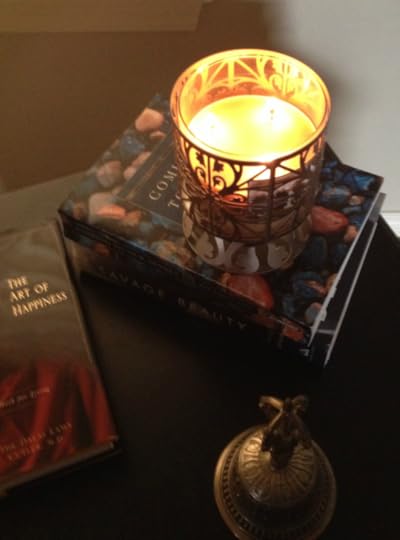
I made inroads in several areas with the new moon energy. Most dramatically with writing. My creativity burst out in a totally different kind of novel, not something I’ve ever attempted before. I was shockingly pleased with the result. We’ll see what those New York editors think about it. Meanwhile, not just writing got a make over with the new moon. I ended my rigid diet program–it was just not working. Instead, I recommitted to meditation, determined to eat more mindfully, and promised myself I would actually pop that walking video in and even use it a few times a week.
All of that, and more, started out well, but when my inner and outer worlds collided in the most rude way (new moon energy isn’t always nice) everything took a nosedive, including my heath. Nothing serious just ongoing issues with my back–I need to walk!– and migraine–I need to meditate and not stress so much.
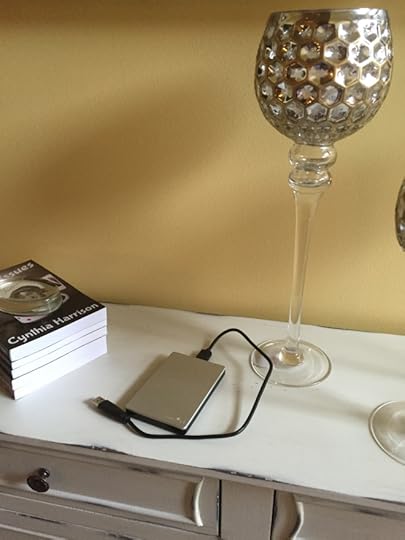
I can make this Scorpio Full Moon with mega-retrograde work for me by taking a step inward. Not backward, but inward, recommitting to everything I’ve started with the Aries new moon. For writing that always means it’s a time to revise, and just as important, a time to back up the writing. I’m pulling out my external hard drive for the duration of the retrogrades.
And I’ll be keeping my secrets and passions to myself for a change. The whole world doesn’t need to know every bit of it all the time.
Tagged: Inner work, Mars Retrograde, meditation, mercury retrograde, Revision, Scorpio Full Moon







April 18, 2016
The Rock Band Next Door
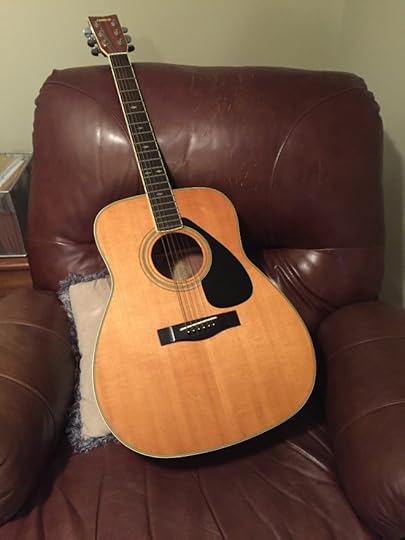 I need quiet time alone to work. No music, no people in and out of my writing room, just me and the words and images in my head. I sense this makes me kind of strange. My neighbor Mr. X is also creative. I like X. He’s a nice guy. He writes, he plays guitar, he has a band. When the band plug in their electric guitars and turn up their microphones to practice in his basement, I can hear them in my writing room at the front of the house. I know the set list and the words to every song.
Listening to a band practice is not like going to a concert in the park. A band rehearses the same song or the same difficult part in a song over and over. Like writing, it takes practice to get it right. Unfortunately, the other day, the band shattered my concentration right in the middle of a big rewrite due that day. Usually the band doesn’t start playing until after I’ve finished writing, so I was confident I’d get my work done. But they started a couple of hours early. And I barely got my work finished. It was the first time, in writing ten published books and countless other material, that my concentration was broken so totally.
Band practice stressed me out. A lot.
When I moved from my house into a condo, I did so knowing it was a small community of mostly retired older folk. That suited me fine. I enjoy the quiet even when I’m not writing. Like most writers, I read all the time, and I meditate daily, too. When I retired from teaching to focus on writing a year after we moved into this rural paradise, I looked forward to enjoying a quiet retirement.
I bet X also looked forward to enjoying his retirement. Sadly, our two pictures of the perfect retirement are out of sync. X likes to stay up late building things with hammers and nails, and he plays in a rock ‘n roll band. My husband has not retired yet, so we rise early. We did discuss the late-night hammering with X, who said he was finishing his basement but he’d stop hammering by our bedtime. Mostly, he has stuck to his word. Mostly, not completely. But hey, what are a few nights of lost sleep between good neighbors, right?
And wanting to be good neighbors, when X asked if his band practice bothered us, we said the same thing: as long as they stopped playing at a reasonable hour for a working man and his writing wife. X said to let him know if it ever became a problem. I knew I had to tell him that with the morning start time, band practice was turning into a really big problem. And maybe it doesn’t help that I’m not sleeping all that well. A couple of weeks ago, I woke at midnight terrified, hearing extremely loud discordant noises, thinking the house was falling down, or there was a tornado touching down, only to figure out, finally, that X was inexplicably throwing great loads of lumber around his basement, letting it crash to the floor.

I waited a day after band practice, because I was so stressed that first day I wasn’t sure I could be nice about it. Except the next day, X’s house was closed up tight and I didn’t see or hear a hint of him at all. The next morning, I sent him an email message. It’s really awkward to tell someone they are annoying you, and you wish they would shut up and quit throwing lumber at midnight. Also could their band perhaps practice without the amps turned way up? I took the easy out with the email, I know. Not that I have heard anything in reply. In fact, it has been eerily silent next door. (Did I say we share a roof? And the wall our bed is up against?) Almost a week later, having searched the internet for the best noise cancelling headphones available, I still feel bad about complaining.
I also resent having to deal with this. I don’t like headphones. Not even the kind that cost $300. Maybe especially not the kind that cost $300. I resent feeling as if I have to describe my daily activities, and beg X for quiet so I can get on with my writing schedule and sleep time. I want to be fair, but I’m stuck between a hammer and a hard place, hoping for a resolution we can both live with. Maybe he can find a way to still rock and hammer, but quieter. Like maybe his next project can be building a soundproof room.







April 9, 2016
What’s Not Working
A few days ago, the new moon in Aries prompted me to look at my life and say “What’s not working?” and then let go of those things, making way for something new. At first I thought of little things. The colonial kitchen chairs that belonged to my grandmother and did not fit my newish contemporary home. That empty foyer I had painted last summer, and, except for the Christmas tree last winter, has sat empty, waiting for a special piece of accent furniture. The jeans that no longer fit, the clothes hanging in my closet I never wore.
I did a bit of shopping and redecorating and reorganizing my closet and all that stuff was easily handled. What else? Well, I’d been growing out my hair for several months. And it was shaggy and long to the point that I had to pull it up in a twist half the time. Clearly, that wasn’t working. I got a haircut and wow what a difference. No more mullet!
There’s one more thing that isn’t working for me, but it’s a tough one. After years of managing pretty well on a low-GL (glycemic load–it’s all about the sugar levels) diet, I’m seriously stalled. Despite eating well, avoiding the white stuff that shoots my blood sugar to the moon, I’m gaining weight. Why this diet worked so well for so long and then suddenly stopped working is a mystery.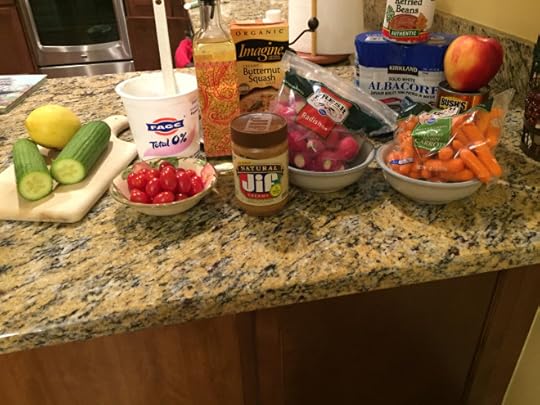
Just avoiding foods that spike my sugar is clearly not working anymore. I can’t lose a pound, and in fact am gaining, and all without pizza or potato chips. I checked out my portions, and they were fine too. I don’t drink much wine these days, so it’s not that either. But after investigating deeper, I acknowledged there was still something I could improve eating-wise. I could stop eating mindlessly. That is, eating in front of the television or while reading a book.
When I started paying attention to the taste of my food, when I stopped eating mindlessly while watching television or reading, when I stopped doing anything but eating, focusing on the taste of my food and savoring it, I realized something big. I didn’t much like what I was eating. I had been eating these same foods, protein, dairy, veggies and fruit, in a somewhat limited repertoire (salad, yogurt, chicken, burger without a bun, apples, peanut butter, cheese, eggs) for years.
I cook dinner every night using the low GL cookbooks, I have had every salad combination, every stir fry, every casserole, every sort of meat and fish accompanied by broccoli, cauliflower, carrots, beets, even berries and apples. I’m not a real fan of cooking, but it was looking like I’d need to start cooking breakfast and lunch as well as dinner if I was going to get food I wasn’t bored to tears eating. I realized that’s why I ate watching television. It was so much easier to plow through another endless salad if I didn’t have to taste the sameness of it.
Mindful eating was causing me a problem. I wondered if I needed to alter my diet, since clearly it wasn’t working for me anymore. So I made a couple of small changes. I started making pizza for lunch with low carb tortillas. Yum. I went ahead and had burritos too. As long as you stick to ONE low carb tortilla a day, you’re good with the sugar. Pasta is something else with a low glycemic load, but in moderation, and done al dente. So I had a little pasta with my cheese and meat. Flavor!
Finally, I tried the low sugar ice cream with only 4 carbs for a 1/2 cup, which is not really enough for me. I don’t think I’ve had one scoop of ice cream ever. Also the artificial sweetener gave me indigestion. So out went the ice cream. Sigh. It’s really good with some nuts, a little bit of chocolate sauce, bananas or strawberries (or both!) and whipped cream. If I can ever get to the point of eating a half cup serving maybe I’ll try it again this summer.
Still, I wish I could lose the extra weight. It’s not working for me being this size. What else can I do? I know that this is the diet that works best for my health, so I don’t want to abandon it for calorie counting or one of those diets with pre-packaged meals. I’ve done the food journal to the point that I pretty much know how many calories I put in my mouth. I can do that math in my head. And calorie consumption is not the problem.
What can it be?
Well, there is the one thing I have not been doing…I have not been exercising much this past winter. I clean house and stretch out my back and walk around doing errands and shopping, but that’s it. There’s something in the GL literature that talks about the slow twitch muscle. It’s actually an important component of the low GL diet. Basically, the theory says, that in addition to diet, we need to flex our low twitch muscles for at least 30 minutes a day three times a week. Very doable.
Low twitch muscles are the muscles you use without exerting too much energy. Like walking at a leisurely pace. Studies show that health improves and weight is lost just as efficiently walking at a steady pace for 20-30 minutes three times a week as it is doing a complicated gym routine for two hours or walking fast or even running. You don’t have to exert a whole lot of energy to engage the slow twitch muscles, but you do have to get moving. After a long winter spent writing, and resting the knee I reinjured last fall, I understand this is what I need to do.
But it’s still snowing in Michigan. At least this week. So I ordered a walking DVD. No excuses, I’m going to start firing up the slow twitch muscles. It might be the solution I’ve been seeking to this stubborn pound problem. It’s not as easy or as fun as buying new dining room chairs, but this Aries new moon invites us to let go of whats not working and embrace the new. So that’s what I’m going to do.
What’s not working for you anymore? New moon energy is such that even if you don’t drop it, it’s going to end, and that’s for the best. Now the challenge is to find something new (and fun!) that does work.
Tagged: cleaning closets, decorating, diet, exercise, mindfulness, new moon







April 2, 2016
How To Color a Character
When I first started sending my novels around to publishers and agents, I often heard that my main character was not very fun/nice/likable. “He’s no hero” and “she’s got too many issues” were typical comments. This perplexed me for a number of reasons. I liked my characters, for one. They were human and real to me. They were often based on, well, me. Or on Men I Have Known. They sort of wrote themselves. So how could they be wrong?
As it turns out, writing for publication is a business. And the business model says that a heroine should not have too many issues and a hero needs to be more heroic than a real man. I quickly learned that if I wanted to play this game, I’d have to learn the craft. In fact, one kind editor said exactly this to me. “Your writing is fine. You just need to learn your craft.”
Really? There’s a craft to it? What exactly is craft? And where do I get it?

I got mine in Ohio. This is where I traveled to take a week-long intensive with bestselling novelist Jennifer Crusie. Jenny said a couple of things about character that were key to my novelist education. One was that a hero needs to be more heroic than any actual man I may have met (or married) in real life. The other was that readers want to cheer for a main character. They want to see someone worthy work hard, get knocked down, but finally, win the prize.
So I went home and proceeded to make up a character. What I’d done previously was simply write whoever showed up on the page (some version of me and an ex) and whatever they did. Now I was a writer who knew a thing or two about the theory (if not execution) of craft. It was time to execute. Kill my darlings. Reshape them into people with whom readers might want to spend time.
 Now I start every novel with the idea that my main character is going to work very hard. She is not afraid of hard work. She will do whatever it takes to get the job done. After six published novels, it’s like second nature to me. Having practiced my craft, I understand hard work. So I get it. But at first it was difficult to go in and reshape these beings.
Give them better qualities, like a work ethic or heroic heart. You have to figure out ways to show this. What’s their job? Show them doing it. Avoid being boring. This part of writing, the planning and firmly putting character is the place you want them to be, is different than writing.
When I write, I hit a stream and flow. When I step back and plan, it’s more like being the person I am in daily life. I am not in the fictional trance. I’m present, with a problem, or maybe just dinner to make, that same sort of mindset. I cut the fat, choose the spices, make sure not to burn my hand. And thus, my character becomes something of my deliberate creation, something of which readers of popular fiction might make a meal.
Tagged: Characters, craft, editing, hero & heroine, Writing Process







March 28, 2016
Trust Your Process
Lee Child writes one draft per book. He does not plan, plot or outline in advance. He does not revise significantly. This process works for him. He consistently finished a book a year this way for the past 20 years. For some time, those books have landed in the #1 NYT bestseller sweetest-ever spot.
Reading about Child’s process made me trust my own more deeply. I’d only read about writers (particularly writers of mystery) who painstakingly plot their novels in advance. These writers advocate character sheets and detailed outlines and other things I never do. A part of me always wondered: is this why my novels aren’t reaching a wider audience?
Not that I’d change anything. It just wouldn’t be as fun the other way. And writing every day for hours and hours all alone in a room needs all the fun it can get. For some writers, plotting in advance is probably their idea of fun. Just like for some people, beer is the best alcoholic beverage on the planet. Neither are for me.

I think as writers we all develop our own processes, book by book. We try lots of stuff and we keep what works for us. I took a ton of workshops and attended many conferences and read a load of books about the writing process. I tried lots of stuff, and some of it stuck. But the way I start a book developed pretty early, before I’d read anything about process or taken any craft classes.
I begin each book with no clear picture of anything except for maybe a vague theme or a shadowy character.
I have written directly into the laptop and I have started with a Dr. Grip gel pen and a top spiral bound notebook. About longhand: I love writing this way. It absolutely shakes loose the story for me. But I hate transcribing all those pages from a notebook into my computer. I solved this process predicament by typing directly into my laptop every day after free-writing morning pages. My morning pages let me have that pen to paper experience without pressure. I write about everything, including where I’m at in the particular manuscript of the moment. What problems do I need to solve that day? What’s working, what isn’t, why and what I can do about it.
I love my process even more since I’ve figured out how to merge morning pages and novel writing. It really works–for me. The other thing I do is write freely without much of a plan for the first half of the book, maybe a little less. I tend to “know” when it’s time to read over the pages and begin to plan. Yes, I’m a pantser/planner. Neither one or the other, but both.
 At about 25K words, I read everything I’ve got straight through, jotting notes to myself along the way. Do I need more characterization? Does the plot fall flat in the middle? Is the beginning too weighed down by backstory? After six published novels, with another on the way, I have a whole list of problems easily spotted. Writing a book about writing, and teaching creative writing for a number of years, helped me to recognize these problems in a days’ work. It takes a little longer to figure out the solutions, but it does happen while the book is still a work in progress. It happens every morning when I wake up, into that first cup of coffee with the writing pages, all through the day as thoughts and answers come to me, even at night in my dreams.
Tagged: beginning a novel, Lee Child, planning a novel, Writing Process







February 29, 2016
Crisis of the Writing Soul
When I cut 140 pages of my most recent manuscript, I had a crisis that led to a startling revelation. I’d been revising for awhile and knew the problem with the manuscript was a really boring subplot. At first, unwilling to do the necessary radical surgery, I tried to fix it. Much cutting and pasting later, I realized I was mostly deleting those subplot scenes while layering in a new point of view character.
Excited about the new character and what she brought to the story, I decided to chuck the rest of the draft. It had been helpful to write, but trying to fix it was becoming tedious. I gathered up my courage and cut. I didn’t trash those pages, I just put them in their own document. I knew I couldn’t use them, but saving them felt less radical than sending them to hell where they belonged.
The next day I had a crisis of the writing soul. I wondered if maybe the whole book had been a mistake. If it was simply one of those manuscripts that didn’t quite come together and should thus be abandoned. The idea of abandoning a story I’d grown quite attached to made me miserable. I was scared. Unsure. Defeated? Not quite. I couldn’t give up. I had to try a little longer.
I had a deadline. It was a firm deadline if I wanted a book out in 2016, and I did. That I wanted it so much was a revelation. Writing has always been a vital part of my life, but why, now, did it feel so much bigger? Why did my life, in the day-to-day sense, seem like a huge blank without writing and publishing? That writing has taken on such importance is a scary thing to admit, but there it is. Writing and I had a nice friendship for a really long time. Now writing wants my soul. Without realizing, I already handed it over.
I love my family and friends. But my current situation is this: my family are, for the most part, unavailable in real time. My kids live across the country and my husband works every day, even weekends. I see him maybe two or three hours a day. I see my kids maybe two or three times a year. Maybe once or twice a week, I have lunch with friends. I volunteer a bit. I cook dinner and do the homemaker thing. Lunch and shopping and cooking and cleaning and being a Good Wife take maybe half my time. The other half, now that I don’t teach, is invested in writing.
Once I realized and accepted that writing is the joy that takes the biggest chunk of my time, I felt a bigger responsibility toward it. Like, I can not let it down. I cannot let the opportunity to publish this book this year pass. Even if it doesn’t happen, I need to know I did my part to make it so.
The crisis was not about giving up, but more wondering if I had it in me to pull off this particular book this particular time. And the only way to know was to try. So I did. I took it bird by bird and rewrote that long section of the book. I finished a few days ago. Yesterday I read the completed manuscript. It was good. I will meet my deadline. Crisis averted.

PS After four months of intense work, I’m due for a break. Happy to say my husband agrees and we’re leaving snowy Michigan for a nice, long vacation in sunny Florida. I’ll even being seeing my son, who will be there for work! Will post a new entry (maybe I’ll hear from my editor) when I return.
Tagged: creative process, deadlines, publishing, revising, writing