Susan Piver's Blog, page 4
May 8, 2025
What does it mean to take the refuge vow?
If you’re not sure about taking the Refuge Vow but you’re curious, I encourage you to listen to a talk I’ve offered in the past about why one takes this step and what it would mean (and of course, remember that this is in no way a requirement to practice together).
Whether you have a passing interest or something more decisive, you are warmly invited to listen to the talk and find out for yourself how you feel about taking refuge. In the video, I talk about what happens during the ceremony, how to know if the timing is right for you, and what the next steps might be.
Much love,
Susan
The post What does it mean to take the refuge vow? appeared first on The Open Heart Project.


May 4, 2025
Heartbreak as Spiritual Practice (Part 3)
Dear, wonderful Open Heart Project,
I have three basic suggestions for how Buddhist wisdom can help with heartbreak. Two weeks ago, we talked about the first step which involves figuring out how to work with your racing or clouded mind. Last week, I made suggestions for working with the overwhelming energy of the heart. This week, I share some thoughts about how heartbreak can introduce us to a deeper way of viewing life that leads to more vitality and a greater capacity to love.
Thoughts? I love to hear from you!
With love,
Susan
The post Heartbreak as Spiritual Practice (Part 3) appeared first on The Open Heart Project.
April 27, 2025
Heartbreak as Spiritual Practice: Part 2
Dear, wonderful Open Heart Project,
I have three basic suggestions for how Buddhist wisdom can help with heartbreak. Last week we talked about the first step which involves figuring out how to work with your racing or clouded mind. This week, I make suggestions for working with the overwhelming energy of the heart which, when shattered or upset, overflows with heat and intensity. It turns out that these qualities, while in no way pleasant, have great utility for meeting your own pain and the pain of others with love.
I hope you will find this of benefit. Please let me know what you think–it is always so valuable to hear from you.
With love,
Susan
The post Heartbreak as Spiritual Practice: Part 2 appeared first on The Open Heart Project.
April 20, 2025
Heartbreak as Spiritual Practice
Dear, wonderful Open Heart Project,
Many years ago, I wrote a book called The Wisdom of a Broken Heart about how Buddhist wisdom helped me with my own broken heart. I get emails and messages about the impact of this book more than anything I have ever written. I am gratified to know it is useful. (Last year, I updated the audiobook version because I own those rights. I wanted to update the book with some of the things I’ve learned over the last decade and also include some meditations. You can find it here if you’re interested.)
I have three basic suggestions for how Buddhist wisdom can help with heartbreak. Of course, no one has to be a Buddhist to derive benefit from them. In this video, I share some thoughts about the first suggestion (the subsequent videos over the next couple of weeks will contain reflections on the other two).
I hope you will find this of benefit. Please let me know what you think—it is always so valuable to hear from you.
With love,
Susan
PS For more on the power and possibility of allowing sadness please have a look at my recent Substack article, “Sadness is a Super Power“. Please subscribe, share…as you wish!
The post Heartbreak as Spiritual Practice appeared first on The Open Heart Project.
April 15, 2025
Inexplicable Magic, an info session on April 15
Thanks to all who registered for this info session on my new upcoming course, Inexplicable Magic.
To learn more about the course and apply, visit here.
I hope to see you there.
With love,
Susan
The post Inexplicable Magic, an info session on April 15 appeared first on The Open Heart Project.
April 13, 2025
How to take enlightened action in a troubled world (4 ways to respond to everything)
I know we are all thinking about what we can do to help the world. I mean, what else could possibly be worth thinking about? The crazier the world gets, the more I feel both ashamed of my personal concerns and also cling to them as particularly meaningful. Because the world is so incomprehensible, I take refuge in what I think I can control. Sometimes I become so full of despair!! I don’t need to list all the reasons to be sad, angry, and scared, we all know what they are. Now what? And how on earth could meditation be helpful?
When I encounter the sorrows of this world, I most often take one of three responses, none of which are very useful.
One, I collapse into depression and anxiety. UNHELPFUL. But sometimes necessary.
Two, I try to shut it all out and go about my business like, “well, what can I do about all this, I’m just one person and plus I’ve got problems of my own.” TRUE. But also complete bullshit.
Three, and perhaps most dangerous, I allow myself to be filled with rage and then minimize all ordinary concerns (my own as well as yours) as juvenile, naive, not worthy of concern and the only thing that matters is how hard I am fighting the power. On some days, this is true. But it often compels me to divide the world into two very dangerous categories. The first one is called “us” and the second one is called “them.” Such divisions are behind all forms of violence, whether personal, societal, or planetary. Think about it.
How can I respond effectively? How can I avoid becoming hopeless, hopelessly self-centered, or, worse, adding to the aggression that created the problems of racism, injustice, intolerance, and climate calamity in the first place?
According to Vajrayana Buddhism, there are four enlightened actions we can take to create true transformation. They are usually best done in order but sometimes they seem to all happen simultaneously.
These four actions (also called the Four Karmas) are:
Pacify.
Enrich.
Magnetize.
Destroy (or Let Go, if you prefer).
Today, let’s focus on the first karma, to pacify.
To begin with, pacifying has nothing to do with calming down, reframing problems as so-called opportunities (vomit), or even trying to find a way to settle your heart by arriving at a particular conclusion, whether hopeful or hopeless. (Sometimes thinking “WE’RE SCREWED” is the only calming thought. For some strange reason.)
Pacifying begins with opening. Feeling. Sensing. Allowing. Seeing clearly. We all have problems (big and small) that we’d rather avoid. Tremendous energy goes into such avoidances. I speak from personal experience. The more I turn away from my heart, the more exhausted I become. The less energy I have for good work. The more hopeless I feel. However, when I take even the smallest internal step to acknowledge the truth of how I feel, while the first moments may be weighty and terrifying, almost immediately they are followed by a return of energy. I am in truth. Integrity. Alignment. Whatever crazy word you prefer. Shit gets real and real is always preferable.
So, the first step is to soften and allow circumstance to touch us in a way that provokes a genuine, deeply felt response. But, you may be thinking, this is dangerous. You will see the terror of this world, there is no question. It is correct to feel afraid.
So why risk it?
Because an open heart also means this:
You can be touched and therefore see clearly.
You are receptive to others and can help them.
You are able to help from the energy of your heart, not your mind/theories/best practices.
For everyone, everyone, it is the act of helping that creates a meaningful life. Everything else is fleeting, only being of service creates meaning. That’s how it works. I have no idea why.
But before we get all martyr-y, let’s look at what “helping” actually is. It sounds like it is committing to a life of sacrifice and drudgery. It isn’t. It’s the opposite. Committing to a life of service is committing to a life of joy, wakefulness, and love.
This looks different for everyone. We each have our unique mission of helpfulness. There is something that only you can do for this world. Do you know what it is?
It may look like showing up during disasters with money, food or clothing.
It may look like being the one person in your family or community that everyone can turn to for advice, solace, or support.
It may look like caring for all the animals in this world—or even just one.
It may be working to fight climate change in the world and/or your own backyard.
It may look like becoming a parent, priest, teacher, social worker, therapist, body worker, or any other kind of being who connects directly with individuals to make their lives happier or support them to overcome adversity.
It may look like devotion to anything you take on as an art form—be it painting, writing, gardening, knitting, cooking, playing music, cutting hair, or any other work that depends on opening to inspiration and being guided by it. Your art form may be leading an organization, heading a department, practicing law or waitressing or accounting. It’s all in the way you open to it.
It may look like practicing the art of any science to the depth of your capacity, whether it’s medicine, astronomy, software development, engineering, architecture, and so on and so on.
And so on.
The amazing thing is this: What you do that turns out to be most helpful for others is also your unique gift and thus most helpful to you as well. What you do to help is synonymous with discovering your gift and thus it is your path. And, as we know, whether it’s been a good or a bad day, when you’re on your path, you are joyful. Engaged. Authentic. Open.
So, be yourself. Offer what you already possess as deeply as you can and that will turn out to be the best possible thing for this world. And then keep doing it. Do it more. You could start right now. You could make a plan every single day for how you will offer your gift. Big ways. Small ways. Just always is the key.
For now, ask yourself: What opens my heart? Pay attention throughout your day to what touches you and what shuts you down. What does it feel like or how do your thoughts change when your heart is open? When it slams shut? Don’t try to change anything at first…just notice. You will figure it out. And remember: If you want to change the world, open your heart. That is why this is called “The Open Heart Project”, by the way. It has basically nothing to do with new age bullshit or being positive (double vomit). It is actually the path of warriorship and it begins with pacifying (aka opening). With this as a start, we can move on to enrich (add something of value), magnetize (draw advantageous circumstances), and, my personal favorite, destroy (let go, conclude, move on to what is more powerful).
And in the meantime, contemplate the 7 Signs of Open Heartedness (made up by me).
The sorrow of other people touches you. So does their joy, equally.Inspiration knows how to find you and you are not a stranger to enthusiasm.You are polite to everyone yet are not a doormat.You know yourself without shame (“I suck”) or aggression (“I deserve to feel this”).You see the sadness. You cry a lot.You see the humor. You laugh a lot. You understand the importance of balance and can actually see what is funny, ridiculous–most especially about yourself. You have figured out the difference between taking care of people vs caring about people. (This is a big one, y’all.) (Actually, they’re all big.)Feel free to add to this list (and, if you do, share your thoughts with me).
And please note: The support for opening your heart is the practice of meditation. It teaches us to slow down. Open. Receive. See beyond preconceptions. Feel. Don’t take my word for that. Or anything. Try it for yourself and make your own discoveries. Here is more on the 4 karmas and a 10-minute sit for you to use right now.
Audio only version is here
Meditation begins at 7:40
For more on the Four Karmas, please listen to this short talk from Her Eminence, Mindrolling Jetsün Khandro Rinpoche.
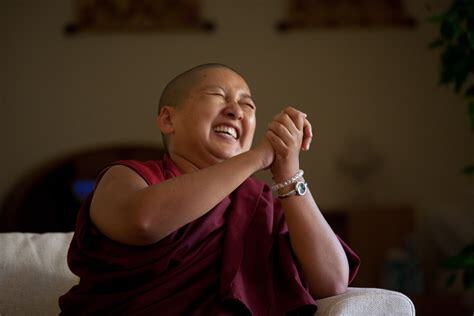
PS: Once, long ago, I was going to attend a talk Khandro Rinpoche was giving but as I sat waiting for it to begin, I realized I was getting a terrible migraine and would have to leave, regrettably. I walked down a narrow staircase that I knew led to the outside. Just as I was walking down, she was walking up. She locked eyes with me for the merest moment and it was strangely one of the most terrifying and joyful experiences I’ve ever had. It was the first time I experienced what, I think, it is like to be in the presence of someone who is actually awake. Terrifying Joyful. (I guess I just heard her talk, I thought to myself.)
Please remember: to change the world, open your heart.
“The times are urgent; let us slow down…Slowing down is losing our way—not a human capacity or human capability. It is the invitations that are now in the world-at-large, inviting us to listen deeply, to be keen, to be fresh, to be quick with our heels, to follow the sights and sounds and smells of the world.” –Bayo Akomolafe
I hope this is of benefit to you.
Love,
Susan
The post How to take enlightened action in a troubled world (4 ways to respond to everything) appeared first on The Open Heart Project.
April 6, 2025
How and why to have a meditation shrine
Hello, wonderful Open Heart Project. I hope you are well and I send you my love.
Before today’s sit, I share some thoughts about creating a shrine and why they are important. I also explain a bit about what is on mine and offer a few suggestions for creating your own, should you wish to.
Stay strong! Stay beautiful!
With love,
Susan
The post How and why to have a meditation shrine appeared first on The Open Heart Project.
March 30, 2025
How do we fight aggression without aggression?
Hello, Open Heart Project. This email is text-only, as you can see. I’ve been feeling more and more drawn to writing from a personal perspective about Buddhist teachings that help, inspire, confuse, or delight me. Some do all of the above. There will certainly be more videos! More meditations! But for the meantime, here are some thoughts about how to work with the very difficult energies of this time.
This was also posted on my new substack newsletter, Buddhism Beyond Belief. I like substack so far! It’s fun! A whole world! I mean, you never know what it will become, but so it seems now. Also, it’s free and I’ve been posting my podcast episodes there. I also have a new podcast. WHO KNEW. I hope you enjoy these new ways of staying in touch.
In my last post, I mentioned two teachings from my Buddhist training that were helping me during this time of vast injustice, insane gaslighting, and sick power grabs. Since I only mentioned one of them (because I wrote more than expected and didn’t want to overstay my welcome), I’m going to pick up the thread here with suggestion number 2.
Note: neither help me feel better about what is going on (impossible!!) but they have supported me to remain connected to my inner strength, you, and this world where I so long to be of benefit.
The first, the Four Reminders (or Four Thoughts that Turn the Mind to the Dharma), help by showing me (in their own crazy way) how to fan the flames of appreciation/awe, respect, thoughtfulness, and inspiration when such things can seem so far off. You can read more about them here.
Note 2: zero of the four reminders are about bypassing, transcending, or seeing challenges as opportunities or any other such BS. You could say they are about doing the opposite: leaning deeply in, staying here, and the willingness to feel as a path to skillful action. As I’ve been trained, these are hallmarks of a good (though not easy) spiritual journey, one that is as fierce as it is gentle.
Now onto the second thing, an aspect of Buddhist cosmology called The Six Realms of samsara.
There are those who say these are actual places where you could end up in a future life or visit in dreams or, well, probably other ways, but I don’t know what they are. In all cases, each realm holds a different kind of samsaric suffering and while some sound better than others (because they are), you will continue to wander through them (“samsara” means wander) until you break the wheel of death and rebirth, aka become enlightened. (How?! Another post, perhaps. First I have to figure it out. You may have to wait awhile.)
You could also look at the realms as six psychological or spiritual landscapes, each with its own possibilities and perils. When you read the descriptions below, you’ll see what I mean.
Whether or not these places are “real,” we visit them regularly. Sometimes I visit each in a single day.
THE GOD REALM
The god realm is a place where everything goes perfectly without obstacles and whatever you wish for, you immediately have. You can fly. You’re psychic. You’re gorgeous. That may sound great but there is a downside: a long, long lifespan culminating in an extended and painful death with very little hope of enlightenment. You’re going to have to come back and try again. There is not enough suffering to compel one to practice and study the dharma so one is still bound to the cycles of samsara. There is no opportunity to learn how to care for others because everyone is just dandy. True wisdom and compassion are simply not needed.
In each realm the Buddha takes a different form, always trying to do something helpful. In the god realm, all the Buddha can do is hang out and play a musical instrument. There is almost no point in trying to teach because there is no interest.
If you’ve ever had a day (or a moment) in your life when everything fell into place effortlessly, this can give some idea of what it feels like to enter the god realm. Celebrity and influencer culture is really good at pretending to depict the god realm and suggesting outfits, face creams, day planners, gut biome solutions, and financial strategies to help you get there.
It seems that some people really do live there! At least by outward appearances. They’re rich, beautiful, accomplished, beloved. There actually are such people.
THE JEALOUS GOD REALM
This realm is inhabited by beings who are also quite powerful and well-resourced but whatever they have is NOT ENOUGH. They are angry at being only jealous gods, not full gods and are obsessed with more power, more wealth, and more influence, all of which they already have in endless supply. Still, they do not believe that they have their fair share and so wage war to get what the other jealous gods have. The warfare never ends because there is never a moment deemed a win. There is always another battle to wage.
Here too there is almost no likelihood of becoming liberated from samsara because all the focus is on filling one’s own coffers in order to conquer and own samsara instead.
Hmmm. Can we think of any people who fit this description?! More on that below.
THE HUMAN REALM
This is where we, you and I, actually reside. This is the lucky realm, y’all. It is the only one with a workable ratio of suffering:ease. Although we certainly experience devastation and rage and extraordinary loss here in the human realm, we also have what is necessary to study the dharma; the basics: a place to live, food to eat, and some sense of support. We are not fighting every single day for survival, although some days (weeks, months, years) it may feel and be that way. Still, we have the right ratio, or at least experience times where this is true. Too much pain, and we can’t focus on our journey. Too much ease, and we feel no inspiration to do so. Out of all the realms, it is this combination that gives us the best chance to pass through the door of complete liberation—and thus be able to help others to do so as well.
In this realm, the Buddha appeared as a fellow human and gave teachings directly.
THE ANIMAL REALM
There is a beautiful, long-haired, grown-up stray black cat who lives in my neighborhood and often visits my backyard, possibly because I leave food and water for them (not sure of preferred pronouns). I adore this cat. I long to pet this cat. I can tell that this cat wants to be loved but has no idea how that even happens. He gives me long looks and rubs against the door frame but runs off when I get too close. I desperately wish he could come into the human realm where there would be so many snacks, so much petting, and a choice of cozy places to sleep safely. (It makes me cry each time I feel that I just cannot accomplish this.) When he eats the food I put out, he takes a bite, looks frantically around, takes another bite or two, looks frantically around, etc, etc, repeat, repeat. Of course. In this world, vigilance is the mechanism of survival.
The animal realm is a place of fear and incessant watchfulness. Good days are when you can just space out and stare into space. So there is only being afraid and not being afraid. With so few options, there is no vision or capacity to understand the what, where, why, how of reality.
I have no doubt that we all know what this realm feels like. I think I was there several times this morning.
THE HUNGRY GHOST REALM
This realm is said to be inhabited by beings with teeny-tiny mouths, narrow necks, and enormous bellies which can never, ever be filled because the means of entry are just not up to the job. There is perpetual hunger and dissatisfaction. If you’ve ever felt that no matter how much you eat, how much love you receive, how many likes your posts get, or how much money you earn, you will never be satiated, then you know what it feels like to be a hungry ghost.
THE HELL REALM
This is the place of only suffering, nothing else. We taste the hell realm (or realms, because this cosmology depicts a variety of hells) when our hearts are shattered, great disasters occur, or we cannot escape our own rage.
NOW WHAT?
Okay, what does this all have to do with the rage and anxiety so many of us feel in the face of the Trumpist takeover? Why is it so hard to gain any sense of traction in the fight against hatred, stupidity, patriarchy-related entitlement, short-sightedness, self-righteousness, maniacal institution smashing, and obvious cruelty? I mean, it seems clear that these are the forces at work.
The realms do not necessarily explain how to quell our fear and outrage (both of which are quite well-placed) but they do offer some insight into the forces at work and what we might do to counterbalance. Note 3: It’s a dharma marathon, not a dharma sprint.
It seems we are witnessing a battle of jealous gods. The only thing that matters is so-called “winning.” Every idea, every day, every moment is a battle, a win or a loss, simply another chance to wage war through weapons of domination, aggression, and destruction. Each jealous god will insist on your fealty.
My friends. Let us not fall for choosing sides between them. They do not care about you or me. Instead, let us choose ourselves and each other. (Cue a jealous god who will tell you how naive and stupid this is. It is not.)
Note 4: The red flag that we’ve fallen into the delusion of the jealous gods’ offered choices should be when we feel that we know something that others do not; that our side is the right one and everyone else is wrong, or that we are simply victims without recourse; and, of course, in any circumstance where murder and mayhem seem justifiable. Please do not enter this realm.
We cannot fight jealous gods with human realm weapons. Such weapons include legislation, marches, activism, academia, common sense, relationship skills, superior verbal prowess, and logic. These may be extremely valuable, but they don’t play in the jealous god realm.
So now what? How do we refrain from entering? How do we relate to the vast sorrows? Through mindfulness-awareness. Through clear-seeing. Turning within and feeling into the extraordinary heartbreak that arises from acknowledging the human condition. Through choosing wakefulness again and again by becoming as consistent as possible in our meditation practice. This opening to ourselves and others helps us remain human and, right now, to remain human—open hearted, clear headed, grief stricken, music loving, loving-loving, powerful, laughing, sobbing, dreaming; committed to this world and each other—is of tremendous importance.
This is a view no jealous god would ever espouse and when we are tempted to pick up their weapons (propaganda, warfare, rage, cornering influence), we can be dissuaded and thus stay focused on deeper values. They cannot.
Household by household, neighborhood by neighborhood, conversation by conversation, we can strengthen the human realm. We can work with our hearts and minds, not at the expense of the suffering that is being caused right now but to hold ourselves steady to fight the good fight with power and discernment, to be of benefit, and to share our sanity with others.
You may guess what I’m going to say next because it’s basically my favorite thing to say: don’t take my word for this. Or anything. Think about it yourself and see what you discover. The teachings only come to life when you bring them into your unique inner world and weigh them against your actual experience. You must draw your own conclusions.
During more conventional times, I would say that simply having a steady (or steady-ish) meditation practice is enough. It will rouse the more common results of meditation: stress-reduction, becoming more patient, less easily triggered, nicer, and so on. These are great things. But these are not conventional times and more is needed–more magic, more auspicious coincidence, more depth, more mystery, more life force, and less conventionality: the esoteric fruits of a deepening practice.
It is not just about sitting on the cushion for 5 or 10 or 45 minutes and then going into your life. Please do sit for 5 or 10 or 45 minutes; it will enrich your life. But also begin to dismantle any barriers between what you do on the cushion and what you do everywhere else. Bring the mind of meditation with you. We are seeking to discover all the ways in which our homes, relationships, jobs, money, and art are practice; everything from the way we keep house to the way we express our love to each other. In this way, we focus, not only on defeating enemies but on strengthening allies.
Living this way is called the path of the householder. My intention with these writings and the Open Heart Project altogether is to explore this path further with you as I discover it myself.
Love you, Susan
PS Please consider joining the Open Heart Project sangha to keep the conversation going.
The post How do we fight aggression without aggression? appeared first on The Open Heart Project.
March 26, 2025
Recording for an info session on what to expect on a meditation retreat
Thanks to all who registered for the info session on March 26th with Susan Piver about what to expect on a meditation retreat.
To learn more and register for the upcoming meditation retreat at Drala Mountain Center, visit here.
The post Recording for an info session on what to expect on a meditation retreat appeared first on The Open Heart Project.
March 23, 2025
Introducing a new way to connect (via Substack)
I’ve started posting on Substack. It will be a space for me to share personal stories about Buddhism IRL, trying to write things, my love of music, enneagram musings, things I worry about, and why is it so hard to love?! Please head on over to subscribe and receive all future posts. I’d love to see you there. No paywall, everything is free.
I hope my stories will be of benefit to you. I’m still trying to figure out how to use it but here is the first essay in Buddhism Beyond Belief.
Some years ago I was talking to a friend, a spiritual practitioner in a Hindu tradition. For years, we have had an ongoing discussion about the vagaries of the spiritual journey. My admiration for his devotion and commitment is total. For close to 30 years, he and his wife have practiced daily for three hours: an hour of meditation, an hour of yoga, and an hour of pranayama. It’s serious.Even though our paths and practices differed (for example, on no days other than in retreats did I practice for three hours), I valued his perspective enormously. He had been through all the highs and lows of the journey—and when it comes to spiritual practice, both can be quite confusing.I told him that I now found myself in an unfamiliar position regarding my own practice. For years, I had followed the instructions of various brilliant teachers to read certain texts, learn this or that practice, deepen my understanding of compassion, and so on. Their advice, it turned out, was impeccable.
Yet at this point, I told him, when I checked around for next steps, there were none. I could not find the next set of instructions. I had turned the page of the spiritual seeker manual and it was blank. With trepidation, I realized: No one can tell me what to do anymore.
“In my spiritual tradition,” he said, “we have a name for this part of the journey. It’s called stupefaction.” Stupefaction! Of course!
Familiar teachers have given you all they can. You’ve listened and absorbed and suddenly there is no longer anyone to listen to. You are on your own.
Or maybe not. In Vajrayana Buddhism, (the esoteric branch of the Buddhadharma and the source of my training), it is said that teachers arise in three ways. The outer teacher shows up as an actual being to learn from, whether in person or through encountering their work in books or videos. The inner teacher is your own inherent wisdom which is complete and full. The secret teacher is…I don’t know. It’s a secret? I don’t mean to say I know the secret but can’t tell you. I literally don’t know what it is. All I can posit is that the secret teacher encompasses all of phenomena, beyond duality, beyond even secrets. Whatever that might mean.
I once heard the great Khandro Rinpoche say that the job of the outer teacher is to introduce you to the inner teacher. The job of the inner teacher is, you guessed it, to introduce you to the secret teacher.
If the handoff is not made, someone has fallen down on their job.
Apparently, stupefaction occurs when the outer teacher has introduced you to the inner teacher, but you can’t quite make out what they’re saying. The secret teacher can also be felt lurking about, approximately 45 degrees away. When you turn to look, they move again.
It’s quite confusing.
And liberating.
Stupefying.
May we swim together to meet the outer, inner, and secret teachers.
With love,
Susan
The post Introducing a new way to connect (via Substack) appeared first on The Open Heart Project.