
Jim Wilson's Blog, page 41
January 26, 2022
Your Neighbor's Stuff

"
You shall not covet your neighbor’s house. You shall not covet your neighbor’s wife, or his manservant or maidservant, his ox or donkey, or anything that belongs to your neighbor" (Exodus 20:17).Coveting often precedes purchasing, borrowing, stealing, and cheating. The success of free enterprise and capitalism is largely based upon it. God is not opposed to free enterprise or capitalism, but He is opposed to coveting.
This commandment to not covet is very close to the First and Second Commandments:
"You shall have no other gods before me. You shall not make for yourself an idol in the form of anything in heaven above or on the earth beneath or in the waters below. You shall not bow down to them or worship them; for I, the LORD your God, am a jealous God, punishing the children for the sin of the fathers to the third and fourth generation of those who hate me, but showing love to a thousand [generations] of those who love me and keep my commandments" (Exodus 20:3-6).
What is the connection? Look at Colossians 3:5: "Mortify therefore your members which are upon the earth; fornication, uncleanness, inordinate affection, evil concupiscence, and covetousness, which is idolatry."
Coveting is idolatry.
*Excerpted from Being Christian. To purchase, visit ccmbooks.org/bookstore.
How To Be Free From Bitterness and other essays on Christian relationships

January 19, 2022
Principles of War: Economy of Force, part 2 of 2
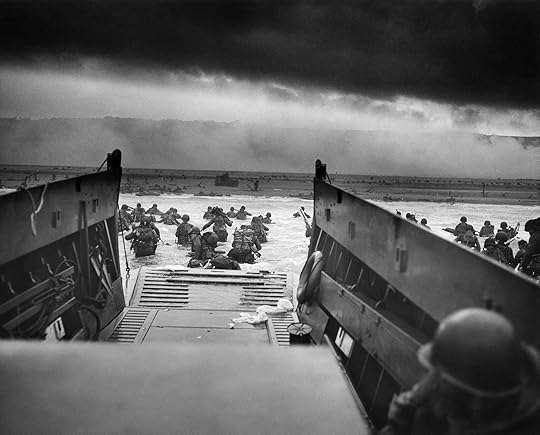
Because Christians have a tendency to concentrate at non-decisive points, it may be difficult to get more than a few away from places of mislocated concentration to points where decisive battles are being fought. These few may not be enough for effective concentration, but their proper deployment is a step in the right direction, a step toward economy of force. Not to send them to the decisive points would violate several principles of war; economy of force uses what is available to do the job.
When there are many decisive points and the Christians are congregated away from the front, we ought to plead with God for economy of force: “And I sought for a man among them who should build up the wall and stand in the breach before me for the land, that I should not destroy it; but I found none” (Ezek. 22:30).
Concentration in a noncombatant area is legitimate for training, to receive power or to prepare to attack, but if concentration remains after training has been accomplished or if we dilly-dally around in the rear, we will never be ready for war. This is a waste of force!
The Lord Jesus Christ said to His disciples:
“Thus it is written, that the Christ should suffer and on the third day rise from the dead, and that repentance and forgiveness of sins should be preached in his name to all nations, beginning from Jerusalem. You are witnesses of these things. And behold, I send the promise of my Father upon you; but stay in the city, until you are clothed with power from on high” (Lk. 24:46–49).
The primary objective was “all nations.” Jerusalem was the place where power was to be received and from which the early believers were to start after they had received the power. However, they stayed in Jerusalem a prolonged period of time after the coming of the Holy Spirit at Pentecost. Their failure to move out was disobedience to orders. But God finally forced them to leave by allowing persecution. Concentration in the wrong place is not economy of force.
When these principles are combined with an offensive at a decisive point, we are practicing economy of force. In biblical history the greatest example of these principles combined in one military battle is Gideon’s victory over the armies of Midian and Amalek described in Judges 7 and 8. In his God-directed use of economy of force, Gideon sent 31,700 men home and won the battle with 300 men.
The much-needed application of this principle is that we must send people who are willing and ready to go to the decisive points. As it was with Gideon, it may be that 22,000 are afraid to go and another 9,700 are not ready to go. Perhaps only three hundred men are willing and ready to go with the message of Jesus Christ.
It was not God’s plan to invite the Midianites and the Amalekites one and two at a time to the Israelites’ home towns where the 31,700 soldiers could take them captive. Nor is it His plan to invite non-Christians one and two at a time into an overconcentration of Christians at non-decisive point where the believers preach the gospel at each other. It is God’s plan to attack the decisive points with victory in mind. There are so many places and so few willing to go that we must economize our force.
Jesus said, “The harvest is plentiful, but the laborers are few; pray therefore the Lord of the harvest to send out laborers into his harvest” (Lk. 10:2). This is imperative. Jesus Christ tells us to pray that God would send workers. He commands us to do it and tells us why: the harvest is too much for the few reapers. Let us pray for economy of force.
*Excerpted from Principles of War. To purchase, visit ccmbooks.org/bookstore.
How To Be Free From Bitterness and other essays on Christian relationshipsJanuary 17, 2022
Principles of War: Economy of Force, part 1 of 2

"The more the concentration can be compressed into one act and one moment, the more perfect are its results."
—Carl von Clausewitz, On War
"And the three companies blew the trumpets, and brake the pitchers, and held the lamps in their left hands, and the trumpets in their right hands to blow withal: and they cried, the sword of the Lord, and of Gideon. And they stood every man in his place round about the camp; and all the host ran, and cried, and fled."
—Judges 7:20–21
Economy of force is efficiency in fighting, effectiveness in warfare. If our objective is the annihilation of the enemy army, we will take the offensive at the decisive point. In order to do this effectively, the combined application of all the principles of war is necessary. This statement by General Erfurth mentions of most of these principles:
“To concentrate overwhelmingly superior members at the decisive points is impossible without strategic surprise. The assembly of the shock-group must be done as quickly as possible in such a way that all units can attack at one and the same time” (General Waldemar Erfurth, Surprise, trans. Dr. Stefan T. Possony and Daniel Vilfroy [Harrisburg: The Military Service Publ. Co., 1943], 157).
Each of the following principles applied separately works toward economizing force. When they are applied in unison, real economy of force is achieved. Let us look at how this happens, realizing that the principles are interdependent:
Objective: The greatest incentive for economizing is to know where you are going and then go there.
Offense: “Going” economizes forces; it takes less force to mount an offense against one point than to defend all points.
Security: If the enemy does not know what we are going to do, we can do it with less force. If he knows, he will be prepared, and we may not be able to do it at all, even with a much greater force.
Surprise: This principle certainly allows a commander to do the job with less force.
Mobility: Mobility economizes force by increasing, in effect, the numbers of men and arms. “A leader who aims at mobility should not be afraid to strain his troops to the limit in order that they may reach the battlefield in time. Many victories were made possible by forced marches. Mobility equals increase in numbers” (Erfurth, 196).
Cooperation: When allied forces advance in unity and with a common objective, they can attain victory with fewer men than if they had acted independently.
Concentration: This may seem to be, but is not, the opposite of economy of force. To use one’s force in driblets here and there may only result in consistent defeat; but if we concentrate at the decisive points, we are using economy of force.
Over-concentration in places that are not decisive points violates economy of force. “Consequently, the fronts where no decisions are being sought, should be manned with a minimum of force” (Erfurth, 163). It is better to have one’s force scattered in driblets at decisive points than to have it concentrated at a non-decisive point.
As we apply the various aspects of the principle of economy of force to the spiritual war in which we are engaged, we can say that any concentration of Christians where there are few non-Christians is an overconcentration at a point that is not decisive. To have a concentration of Christians where paganism is thick and rampant is compatible with the principles of war.
*Excerpted from Principles of War. To purchase, visit ccmbooks.org/bookstore.
How To Be Free From Bitterness and other essays on Christian relationshipsJanuary 14, 2022
Spiritually Struggling

I would like to talk about two “Christian” expressions which are not Christian. The first is “I’ve been struggling.” This expression would be a fine one if it were used biblically:
"For our struggle is not against flesh and blood, but against the rulers, against the authorities, against the powers of this dark world and against the spiritual forces of evil in the heavenly realms" (Ephesians 6:12).
We are in a struggle. That is a fact. However, when people use the phrase today, what they mean is, “I am losing the struggle, and there is no way to win it.” They have fallen into sin, and they are trying to make a “spiritual” excuse for their defeat.
The second expression is similar: “It was a real learning experience.” That also sounds spiritual, but it really means, “The whole thing was a spiritual loss.”
We come out of both situations discouraged because both the “struggle” and the “learning experience” were sins that needed to be confessed. We give them spiritual names because we are not willing to call them sins. As a result, we are not forgiven, and we do not learn from them.
Do you need help and/or encouragement? We recommend How to Maintain Joy, Thankfulness and Confession: The Way to an Overflowing Heart, and How to Be Free from Bitterness, available at ccmbooks.org.*Excerpted from Being Christian. To purchase, visit ccmbooks.org/bookstore.
How To Be Free From Bitterness and other essays on Christian relationshipsJanuary 12, 2022
How Are You on the Inside?

"Woe to you, teachers of the law and Pharisees, you hypocrites! You clean the outside of the cup and dish, but inside they are full of greed and self-indulgence. Blind Pharisee! First clean the inside of the cup and dish, and then the outside also will be clean. Woe to you, teachers of the law and Pharisees, you hypocrites! You are like whitewashed tombs, which look beautiful on the outside but on the inside are full of dead men’s bones and everything unclean. In the same way, on the outside you appear to people as righteous but on the inside you are full of hypocrisy and wickedness" (Matthew 23:25-28).
"Woe to you, teachers of the law and Pharisees, you hypocrites! You shut the kingdom of heaven in men’s faces. You yourselves do not enter, nor will you let those enter who are trying to. Woe to you, teachers of the law and Pharisees, you hypocrites! You travel over land and sea to win a single convert, and when he becomes one, you make him twice as much a son of hell as you are" (Matthew 23:13-15).
One of the first things I notice about Jesus’ speech in Matthew 23 is that a hypocrite is someone who pretends to be cleaner on the outside than he is on the inside. He spends more effort in appearingclean than he does in actually beingclean. Most people do this. Hypocrites are everywhere. Churches may be full of them, but so are prisons and homes. Very few people want to be known as they are on the inside. These people do not define themselves as hypocrites. They do not think of what they do as acting a part; they think of it as real and right. There are a few who say, “At least I’m not a hypocrite.” What that means is, “I’m dirty on the inside and on the outside.” True, they are not hypocrites, but they are no better than the hypocrites. Jesus said the way to avoid hypocrisy is “first clean the inside of the cup and dish, and then the outside also will be clean.”
The second thing I notice about these passages is that Jesus said these things to the hypocrites, not about them. People generally talk about hypocrites in the third person. They do not name the hypocrites. That would not be “polite.” It also takes courage to do. Jesus was specific. He said “you hypocrite,” and He gave the reasons.
For many decades I have listened to people talk about hypocrites, saying that churches are full of them and that is why they themselves do not go to church. What did Jesus have to say about this?
"Then Jesus spoke to the multitudes and to His disciples, saying: 'The scribes and the Pharisees sit in Moses’ seat. Therefore whatever they tell you to observe, that observe and do, but do not do according to their works; for they say, and do not do'" (Matthew 23:1-3).
There is no virtue in avoiding church. The presence of hypocrites is no excuse.
When there are only a few hypocrites in a fellowship of saints, they have a hard time keeping up the act. Some churches are not fellowships of saints with a few hypocrites among them. They are fellowships of hypocrites with a few saints. They are play actors, and they are not saved. They do not know it.
Here are few examples:
· Liberal churches with unsaved pastors and church members who have not heard or believed the gospel.
· Evangelical churches whose members are second- and third-generation “Christians” who are not saved but who have “heard” the gospel.
· Legalistic churches that have replaced faith with works in an otherwise “sound” doctrinal framework.
· Cult churches like the Church of Christ which emphasize one biblical truth above all others in such a way that it becomes an untruth.
These hypocritical churches have several things in common:
· They do not have the fruit of the Spirit.
· They have false teaching.
· The witness of the few Christians in them is compromised.
Jesus told us, "Watch out for false prophets. They come to you in sheep’s clothing, but inwardly they are ferocious wolves. By their fruit you will recognize them. Do people pick grapes from thorn bushes, or figs from thistles? Likewise every good tree bears good fruit, but a bad tree bears bad fruit. A good tree cannot bear bad fruit, and a bad tree cannot bear good fruit. Every tree that does not bear good fruit is cut down and thrown into the fire. Thus, by their fruit you will recognize them" (Matthew 7:15-20).
*Excerpted from Being Christian. To purchase, visit ccmbooks.org/bookstore.
How To Be Free From Bitterness and other essays on Christian relationshipsJanuary 10, 2022
Sent & Sanctified

"I have given them your word and the world has hated them, for they are not of the world any more than I am of the world. My prayer is not that you take them out of the world but that you protect them from the evil one. They are not of the world, even as I am not of it. Sanctify them by the truth; your word is truth. As you sent me into the world, I have sent them into the world. For them I sanctify myself, that they too may be truly sanctified" (John 17:14-19).
Not “of” the world but “in” it. “Sent” and “sanctified.” Although we are not of the world, we can handle being in it because we have already been sanctified, set apart. Because we are not of the world, the world hates us. Jesus prayed that the Father would protect us from the evil one, and we are to also pray that He would “deliver us from the evil one” (Matthew 6:13).
We have a problem. We do not want to be hated by the world. How do we prevent it? Easy: compromise.
*Excerpted from Being Christian. To purchase, visit ccmbooks.org/bookstore.
How To Be Free From Bitterness and other essays on Christian relationshipsJanuary 7, 2022
Principles of War: Pursuit, part 2 of 2
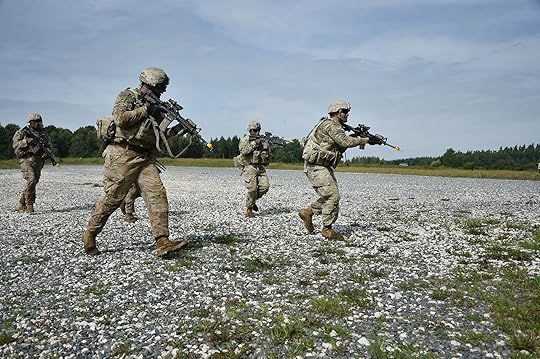
The most effective way to pursue the beaten enemy in physical war is to hit him from his unprotected flanks. If a direct pursuit is carried out, the victors run into the deadly sting of the rear guard and into many roadblocks and blown bridges, and so the retreating enemy gets away. To avoid these, the victors should travel a parallel path, outrun, and intercept the retreating enemy. To continue direct pursuit after the battle is won is to lose the retreating enemy. In order to effect an interception in the pursuit, mobility is needed. If immediate pursuit is undertaken, as many more captives as were taken in the battle can be secured.
Prior to the Megiddo battle in September 1918, Allenby promised his cavalry thirty thousand prisoners of war. His staff thought he was presumptuous. In reality he ended with fifty thousand prisoners, having reduced the Turkish Seventh and Eighth armies to a few columns.
Let us consider how to do spiritual pursuit. First, we must be convinced that many people are ready to receive Christ and will receive him if they are cut off and confronted with their sin and the Savior. When a man begins to run away, he is ready to be captured. This does not mean that he will not put up a last desperate struggle or will not continue to run. Thus it is important to cut off his retreat.
To outrun fleeing, convicted sinners, God-directed mobility is required. As in Gideon’s case, it might take a small, well-disciplined, courageous group to make a breakthrough in the spiritual conflict for souls. Once the breakthrough has been made and many have received Christ, many others will be convicted of sin, righteousness, and judgment, and will begin to flee. Then we will need more than our hard core of trained men. We will need, like Gideon, all of the Christians who were not prepared for the battle but who are necessary in the pursuit. If we depend only on the core of Christians who seek to follow hard after Christ, we will win many battles, but there will be no complete rout. There will be successful evangelistic campaigns, but no awakening. If pursuit is practiced, every successful evangelistic campaign is a possible prelude to a general awakening.
If we study spiritual awakenings from Pentecost to the Welsh Revival of 1901 and the Korean revival of 1905, we notice the battle and the breakthrough centered around one man or a small group of men. This was only the start. After that, many Christians witnessed and testified of saving grace, and more people were converted. Christians got right with the Lord and entered the chase. The whole church was in the awakening. Evan Roberts was not responsible for the seventy thousand new Christians in Wales; he was only the leader. God’s revivals may start with God-picked people, but they continue only if every Christian, weak or strong, joins in the pursuit.
It is the responsibility of the leader not only to make the breakthrough in the battle with his picked men, but also to call in all of the reserves for the rout. Our greatest mobility is in the quantity of Christians who can testify of the saving grace of Jesus Christ. At that time, every Christian should testify to everyone he or she meets.
Another means of mobility in pursuit is literature distribution—blogs, audiobooks, booklets, tracts, books, and Scripture portions—all of them on the judgment and love of God. The literature may be offered without charge and distributed via apps, the internet, at meetings, through personal contact, or by direct mail.
A third factor essential to effective pursuit is the manner and content of our appeal. In preaching Christ to the people just prior to the breakthrough, it is possible to be somewhat removed from one’s audience. But in pursuit, we must be clearly identified with the people. Let there be compassion and understanding in our approach.
Furthermore, an ultimatum should be used in our message, citing the judgment of God on the unrepentant. This is the only effective means that will cause a fleeing man to surrender to Christ. Judgment is the reality he cannot escape if he persists in fleeing from Christ, and therefore, it has great force in causing a fugitive to stop in his flight. Yet our warning should be given in love and joy.
The church in Thessalonica witnessed to their countrymen in the true sense of pursuit. True, they were not established Christians like those of Ephesus. They did not have two years of Bible school with Paul as the teacher. They had heard the gospel only three Sabbath days. Nevertheless, Paul writes to them a few weeks later:
“For from you sounded out the word of the Lord not only in Macedonia and Achaia, but also in every place your faith to God-ward is spread abroad; so that we need not to speak any thing” (1 Thess. 1:8).
Will we follow their example? We must if we are to win!
*Excerpted from Principles of War. To purchase, visit ccmbooks.org/bookstore.
How To Be Free From Bitterness and other essays on Christian relationshipsPrinciples of War: Communication, part 3 of 3

It is mandatory in the war with Satan that we have daily communication with our source of supply. We must receive from the Lord via the Word enough for all of the day’s needs, and we must store up provisions of the Word of God in our hearts and heads for any future time when we have a prolonged engagement with Satan.
Daily time with the Lord is far more than our line of communication for the battle. Fellowship with him is really our objective. We were created and redeemed to walk with God. In fact, this is the reason why we are engaged in war, so that others may be brought into fellowship with him. “That which we have seen and heard declare we unto you [proclaim also to you], that ye also may have fellowship with us: and truly our fellowship is with the Father, and with his Son Jesus Christ” (1 Jn. 1:3).
Our lines of communication can be overextended as well as cut. In Korea it seemed more important to implement the principle of pursuit than to keep in touch with supplies; this would have been right if the Chinese Communists had not entered the war. It may seem more important to be out witnessing or attending meetings than it is to spend time with our source of supply, the Lord Jesus Christ. These activities are legitimate means of combating the enemy, but they cease to be effective when we run out of spiritual power. Scripture and sound military principles warn us that decisive defeat may be the end result. If we are fortunate, friends may be standing by to help us evacuate and keep us from defeat.
In Luke 10:38–42 is a story that illustrates this principle: “But Martha was distracted with much serving; and she went to him and said, ‘Lord, do you not care that my sister has left me to serve alone? Tell her then to help me.’ But the Lord answered her, ‘Martha, Martha, you are anxious and troubled about many things; one thing is needful. Mary has chosen the good portion, which shall not be taken away from her.’”
Notice this: Martha was not far from the Lord, nor was He far from her. The line of communication was short, but she had still overextended herself. She had received nothing. She was too busy serving to receive: if we are too busy to spend time with the Lord, then we are too busy.
We are never far from him. The Second World War extended lines halfway around the world; we have not such a problem in distance, for He said, “I am with you always” (Mt. 28:20). We can pray to Him at any time and place. We can receive from Him through His Word all the supplies, strength, and wisdom needed for daily combat. It is not the length of our lines of communication that is important—just the use of them!
Use your line of communication by joining the To the Word Bible Reading Challenge here.
*Excerpted from Principles of War. To purchase, visit ccmbooks.org/bookstore.
How To Be Free From Bitterness and other essays on Christian relationshipsJanuary 5, 2022
Principles of War: Communication, part 2 of 3

God’s means of communication with us is the Word of God. Any other spiritual communication is subject to test by this authoritative standard. He first spoke to men through the prophets and later through His Son, and then through the apostles. We have these communications in the Bible, comprising all of our orders for the war with Satan.
But the Bible is more than that. It is our complete source of supply. It is our spiritual food. Job said, “I have esteemed the words of his mouth more than my necessary food” (Job 23:12). Jeremiah said, “Thy words were found, and I did eat them; and thy word was unto me the joy and rejoicing of mine heart: for I am called by thy name, O Lord God of hosts” (Jer. 15:16).
The Word of God is our weapon: “For the word of God is living and active, sharper than any two-edged sword, piercing to the division of soul and spirit, of joints and marrow, and discerning the thoughts and intentions of the heart” (Heb. 4:12).
By the Word God develops faith, love, hope, and strength in us. In His Book, He sets the standards of conduct. Through it He communicates His requirements of humility and absolute obedience, as well as many details and principles of the conduct of an army at war. He sets the bounds of fellowship among those within the camp and those without. It is the most telling and effective weapon in setting captives free from the power of Satan: “You have been born anew, not of perishable seed but of imperishable, through the living and abiding word of God” (1 Pet. 1:23).
Even this portion of our two-way line of communication can be cut, and again it is sin that severs. With unconfessed sin in his life, the Christian has no desire to read, hear, study, or meditate upon the Word of God. He now neither communicates with God nor receives from him. It may have been a minor sin that severed the lines of communication, but once severed and not immediately restored, a man is set up for a decisive defeat by Satan.
Keep up your lines of communication by joining the To the Word Bible reading challenge here.*Excerpted from Principles of War. To purchase, visit ccmbooks.org/bookstore.
How To Be Free From Bitterness and other essays on Christian relationshipsJanuary 3, 2022
Principles of War: Communication, part 1 of 3

Napoleon expressed the principle of communication very well. He knew that a front-line army without food and ammunition cannot fight or move, and invites defeat. Napoleon himself lost two armies, one because he neglected this principle, and the other because the English severed his line of communication.
The official definition of lines of communication is: “All the routes, land, water, and air, which connect an operating military force with its base of operations, along which supplies and reinforcements move” (U.S. Joint Chiefs of Staff, Dictionary of U.S. Military Terms for Joint Usage, s.v. “lines of communication”). Adequate supplies must continue to move along these routes until a campaign is over. If an army is in pursuit, its supplies must move all the faster and farther. The principle of communication is violated whenever an enemy is allowed to cut off supplies or when an army advances too far and too fast for adequate supplies to keep up.
Napoleon was defeated on both counts. In the closing years of the eighteenth century, he invaded Egypt. The French fleet in the Mediterranean provided the lines of communication. Militarily speaking, Egypt was an easy conquest, but the English got word of this movement and Lord Nelson went after the French fleet. He found and sunk it near the mouth of the Nile, stranding Napoleon’s army in Egypt.
Years later, having conquered most of Europe, Napoleon invaded Russia. In the middle of winter he found he had disastrously overextended his line of supply. Another army was lost through violation of the principle of communication. It is no victory to defeat the enemy tactically and then freeze and starve to death.
In the fall and winter of 1950, the United Nations forces pursued their defeated enemy up the Korean peninsula faster than adequate food, winter clothing, ammunition, and engineers could follow. The victorious army arrived at the Yalu River thinned out in supplies and unprepared for winter. In this state they were caught by the Chinese Communist Army, which crossed the Yalu River supplied and winterized. The hitherto victorious army now retreated to the 38th parallel. Great numbers were overrun, surrounded, and captured; only the amphibious evacuation at Hungnam saved most of a surrounded army. This principle of war may not be the most important, but it still must be practiced. Without it, victory is temporary, defeat ultimate.
So it is in the war with Satan. Spiritual defeat is the only reward for those who overextend their lines of communication or allow them to be severed. We in the Army of the Lord must maintain communication with our commander in chief. He is the source of supply for spiritual food, ammunition, information, and orders. We have two-way communication with God: prayer and the Word of God. Prayer is our means of communication to him. Via prayer we make our needs known; through intercession we ask help for cooperating forces. By prayer we praise him for victories won and confess our defeats.
In 1 Thessalonians 5:17 we are told to “pray constantly.” Spiritual communication must not be broken. The enemy endeavors to cut our supply line by the simple device of temptation. If we yield, sin results, and sin severs. The presence of sin suppresses the desire to confess defeat. We do not praise God, thank him, or intercede for others. Confession is the only means of restoring communication.
*Excerpted from Principles of War. To purchase, visit ccmbooks.org/bookstore.
How To Be Free From Bitterness and other essays on Christian relationships

