Linda Watson's Blog, page 8
August 10, 2019
Good Tomato Sauce Many Ways
Use this template recipe to make a quick, healthy tomato sauce that packs loads of nutrition and flavor. Homemade tomato sauce tastes so much better than the bottled kind. With just a few minutes of cooking, you can avoid the added sugar, oil, and citric acid found in most commercial sauces. We eat a variation of this sauce about five times a week. Usually I toss it with whole wheat noodles. For a change, ladle it over quinoa, barley, or baked potatoes.
Good Tomato Sauce costs just $1.51 per serving using organic ingredients, without the mix-ins suggested below. Pay even less if you catch the crushed tomatoes on sale or buy them by the case.
The Evolution of a Recipe
My core tomato sauce recipe has changed a lot since I started the Cook for Good project. I used to use a tablespoon of oil to saute the vegetables. That was too expensive for my budget of $5 a day per person, so I dropped it to 2 teaspoons. Next I realized that 1/4 teaspoon was enough to keep the vegetables from sticking. Now I know that a tablespoon of water will do the same thing, essentially for free!
Not only does this sauce have no added fat, but it also now has:
Red onions instead of yellow onions for more phytonutrients
Chopped mushrooms for extra umami and cancer-fighting power
Turmeric to fight inflammation
Good Tomato Sauce Many Ways
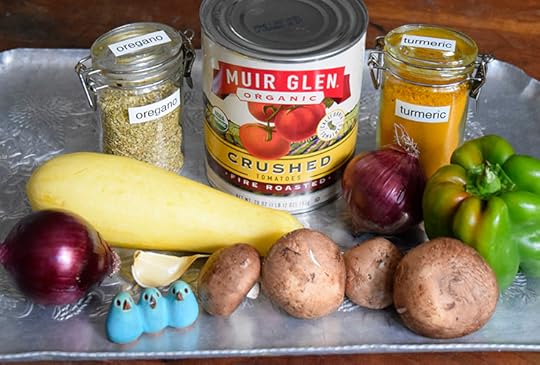
Serve this healthy, spicy tomato sauce as is or with mix-ins for delicious meals year-round. The fire-roasted tomatoes, smoky chipotle pepper, and mushrooms add deep flavor without compromising your health or values. Depending on the mix-ins you use, it may take 5 or 10 minutes longer to make. Vegan, gluten-free, oil-free, and Nutritarian.
CourseMain Dish
CuisineItalian
Servings4 servings
Prep Time10 minutes
Passive Time10 minutes
Ingredients
1clove
garlicminced
1medium
red onionchopped
4ounces
white button mushroomschopped
1tablespoon
water
1/2teaspoon
dried ground chipotle powder
1/2teaspoon
dried ground turmeric
32ounces
fire-roasted crushed tomatoes
1/2teaspoon
dried oregano
Instructions
Mince garlic and set aside. Decide what mix-ins you want to use if any (see notes below). Put chopped red onion and chopped mushrooms with water in a large skillet or medium pot. If using fresh greens, pull or cut the stems from the leaves. Add chopped greens stems, bell peppers, or summer squash if using. Cook until softened, stirring occasionally, about 5 minutes.
Not using fresh greens? Skip to the next step. Otherwise, chop leaves. When onions are tender, top them with chopped greens leaves but don't stir. Cover and let leaves steam on low until tender, about 10 minutes.
Stir garlic, chipotle powder, and turmeric into vegetables. Add tomatoes, oregano, and other mix-ins. Bring sauce to a boil over medium heat, then reduce heat to low. Cover skillet and simmer for about 5 minutes, until sauce is hot and flavors blended.
Serve Good Tomato Sauce hot tossed with hot whole-wheat noodles or ladled over quinoa, barley, or a baked potato. Garnish with toppings if desired. Refrigerate any extra for up to a week or freeze for up to a year.
Recipe Notes
Mix-Ins for Tomato Sauce
Enjoy the base sauce as it is or add one or more of these mix-ins.
1/4 cup chopped walnuts and 1/4 cup raisins
1 cup chopped bell pepper
1 cup chopped summer squash
1/2 cup chopped or sliced olives
1 cup chopped and steamed eggplant
1 cup frozen chopped greens
2 cups fresh greens, such as kale, collards, or mustard
3/4 cup roasted butternut squash
1/2 cup cooked black lentils
Consider adding one of these toppings:
Fresh basil ribbons
Nutritional yeast, which I use instead of Parmesan cheese
Toasted bread crumbs, walnuts or almonds, and garlic pulsed briefly in a food processor to make another Parmesan substitute
Roasted plant-based sausage. My Taster and I like to split a Field Roast Italian Sausage on Friday nights. It's the weekend, Baby!
Nutritional Information for Good Tomato Sauce
The nutrition label is for one serving without mix-ins or any base, such as pasta. Nutritional information is for supporting members and donors. If you don't see it below, log in or join today! Log in to comment, too.


August 4, 2019
My Breast Cancer Story
Dear Readers, I came down with a bit of breast cancer in October. I was shocked because I’m vegan and I eat mostly organic, homemade food with loads of beans and greens. I exercise and keep my weight down. These choices reduced my risk and may have delayed the cancer, but they didn’t offer 100% protection.
This post describes why I am sharing my story now, how I found out that I had breast cancer, the treatment path I took, and thoughts on why I got cancer. (I had a lot of those thoughts!) The good news is eating a whole foods plant-based diet may have slowed down the growth and certainly led to a quick recovery. Also see my related post How to Prevent Breast Cancer or Slow It Down.
If you have questions or comments, please log in to share them below or send me a private message through the contact form.
Why am I sharing the news that I had cancer?
Until now, I’ve only told a few close friends about my situation. I’m uncomfortable discussing personal medical issues and get woozy at the sight of blood. I also wanted to keep my mind clear while recovering and deciding on a course of treatment.
I’m sharing now because:
We are in the same tribe. I heard last month from a reader who is waiting for test results about “the Big C.” If my experience can help her or you, I want to speak up.
What you eat affects your risk of cancer and how fast it grows if you do get it. You may have noticed that the recipes and menus here at Cook for Good have been even healthier than before. (Fat-free hummus anyone?) There’s still room for some indulgence, but even desserts can contain superfoods like blueberries.
I’m angry that we can do so much to reduce the risk of cancer but get so little information or support to do so, even if we are at-risk or already diagnosed.
I’m angry that organizations serve dangerous food and tempt us to buy it, make it hard to exercise, and expose us to toxins.
I’m worried about you and yours. I’ve thought I could avoid or delay tests because this wouldn’t happen to me. I’ve heard others imply at conferences and online that eating a plant-based diet is enough to ward off cancer, heart disease, diabetes, and more. You may be skipping crucial screening tests or protective measures because you think the broccoli will protect you. Please get checked. Early detection saves lives, misery, and loads of money.
I’m inspired by sister food blogger Susan Voisin (Fatfree Vegan Kitchen), who shared her breast-cancer story. I’ve felt a fair amount of shame and dread about how people would react. But she helped me, and I hope I can help some of you.
Getting bad news and good treatment
I got the dreaded call while checking in for an eye appointment in early October. I didn’t answer my cell phone because I was next in line. The radiologist who was trying to reach me could tell from my online record that I should be at the optometrist. She called there and asked them to hand me the office phone. Over the counter in the waiting area! She told me my mammogram had not been normal and asked if I could come in for another mammogram right away. Like on my way home from the eye doctor. Yikes! (Note to medical schedulers: this is not the ideal way to break bad news.)
I had a second mammogram the following day. When those results confirmed the problem, I updated my will and health-care directive (living will). Then I spent the winter holiday season having a biopsy, a lumpectomy, and fifteen radiation treatments. I avoided parties so I wouldn’t get sick and have to delay treatment. I also avoided parties because hugging hurt. The surgery was bad enough, but then the radiation gave me something like a bad sunburn.
During this time, my beloved Aunt Evelyn reached the end of her ninety-six years. She spent the last four months in the hospital or in rehab but finally died at home on February 3rd. I feel so lucky that she was in my life and miss her terribly. Aunt Evelyn cheered me on all the way through radiation. The wonderful Ace of Vase florist included the photo above of my radiation graduation with the last flowers I was able to send her.
I tried to keep helping you, dear readers, save money, eat well, and make a difference. I skipped a few newsletters and ran some encore recipes. My bigger Cook for Good projects went on the back burner. Thanks to all of you who stuck with me during this.
I think my healthy lifestyle let me breeze through this more easily than many. The radiologist told me the day of my last treatment that I would feel worse every day for seven to ten days before I started feeling better. In fact, my worst day turned out to be the day before. Within five days, I felt energetic enough to take long, hilly walks.
The physicians and nurses looked visibly surprised when they saw how well my skin did, both at the end of radiation and at a checkup five weeks later. In the beginning, I had to wrangle with them to be allowed to use plant-based moisturizers. They finally approved pure petroleum jelly and organic aloe-vera lotion. Between these moisturizers and my lifestyle, my skin suffered minimal damage. Now, except for two fading scars that I prefer to think of as racing stripes, I’m back to normal.
After the radiation, my oncologist offered me a prescription for Tamoxifen, a drug that blocks the effects of estrogen in the body. It would slightly reduce the chance of recurrence but comes with side effects. Some are serious (blood clots, stroke, and uterine cancer) and others draining (pain, nausea, and depression). No thanks. Instead, I’m discouraging the growth of any stray cancer cells through diet, exercise, and lifestyle changes. Estrogen blockers or other treatments might be the right path for other people, though, especially when combined with eating well, staying active, and avoiding toxins to the extent possible.
Why did I get breast cancer? I was doing everything right!
Of course, I read up on what increases the risk of getting cancer and wondered why it happened to me. After attending three Plant-Based Prevention of Disease Conferences and getting a certificate in Plant-Based Nutrition, I thought I was shielded from this and the other diseases of affluence. After all, going vegan made me feel fifteen years younger. It made my arthritis, knee problems, breathing problems, and migraines vanish.
The more I learned, the angrier I got. Why hadn’t any doctor ever mentioned that two glasses of wine a day was risky, especially with my family history? Why do all the official exercise recommendations say to aim for just 150 minutes of exercise a week when 60 minutes a day may reduce your risk of breast cancer by 12%? Yes, the studies show that any physical activity helps, even if you have never exercised before, but why understate the possibilities? Why does the food at so many restaurants, meetings, and events promote cancer?
Please note I don’t think getting cancer is “my fault.” If you or someone you know has it, I don’t think it is your fault or anyone’s fault either. Yet I find it helpful to look back to see what might have started it so I can think about how big a battle I’m fighting.
Here are my seven top reasons:
As my geneticist said, “Cancer can just be something we get for being women on the planet.” All the good lifestyle choices in the world can’t shield you from gamma rays and X-rays from space and the Earth. On the other hand, we do know that radiation exposure is more dangerous the younger you are.
My maternal grandmother died from cancer at fifty-three and my mother had breast cancer in her fifties. My father died in his late eighties from multiple types of cancer that he’d suffered from for years. Fortunately, my genetic test came back clean. I don’t have a BRCA1 or BRCA2 mutation like Angelina Jolie or a host of other scary genetic mutations.
Pilots used to spray my childhood neighborhood with pesticides (DDT?) to control mosquitoes. At least once my friends and I managed to run under a plane and get sprayed. Wheeee! Until recently, I had piles of BPA-laden grocery store receipts on my desk to help analyze the cost of recipes. Plastic, fire retardants, and other environmental toxins are everywhere.
I lived with smokers for my first thirty years. My mother probably smoked and drank while she was pregnant. Why not? It was the 1950s, y’all. Fortunately, I’ve only smoked a handful of cigarillos myself.
I drank younger and more heavily than what the Centers for Disease Control now recommends: not at all until you are 21 years old and only up to one drink a day for women. Fortunately, I quit drinking all together about eight years ago.
My Taster and I used to love barbecue, bacon, and grilled meat. I’ve eaten a lot of cheese, especially during the fifteen years that I was vegetarian. Fortunately, I went vegan seven years before I was diagnosed. Organic, home-cooked food took the majority role on our plates, starting in 2007.
I rarely exercised an hour a day, the amount recommended to reduce the risk of breast cancer. My “thirty-minute walk” turned out to take just twenty-three minutes when I timed it. I’ve had long stretches where I could barely exercise at all due to work overload, back problems, shingles, or injuries from a truck accident. I walked nearly every day during my cancer treatments, though, and take a long and hilly route now, trying for a daily hour. I don’t always make it, particularly in the hot summer, but that’s my goal. Walking before breakfast helps.
On the Bright Side
The wonderful radiologist spotted my lump while it was still very small. The test results were mostly good news given the situation. My Taster supported me 1000% through the ordeal. My friends who knew brought food and cheered me on. I bonded with the other patients in the radiation waiting room. The medical team was competent and kind, even if the radiation treatment area was so frelling cold. You can see in picture above that I wore a hat and gloves to stay warm. I pinned the Chinese New Year tassel to my hat for my “graduation” on the last day, so I could move it from one side of my hat to the other as I left the radiation room, I hope for the last time. A nurse rang a bell and gave me a certificate. They did their best to make us all feel upbeat and comfortable.
I felt great within a few weeks after the end of radiation therapy. This scare increased my sense of purpose to help people, animals, and the planet.
I’ve signed up to be part of the Nutritarian Women’s Health Study that tracks the health of women eating super-healthy diets based on Dr. Joel Furhman’s plan. Maybe this will encourage physicians to counsel patients about food and exercise.
Every day is pure gravy. I’m so fortunate to be alive on our beautiful planet with you!
If you read this far, you may be interested in subscribing to my newsletter. You’ll get delicious recipes and food news, including how to stay healthy. And don’t miss the related post on How to Prevent Breast Cancer or Slow It Down.
How to Prevent Breast Cancer or Slow It Down
After I found out I had breast cancer, I dove into the research on what I could do. The good news is that you can greatly reduce your risk of getting breast cancer or having it come back by eating the Cook for Good way: home-cooked food made from organic fruit, vegetables, whole grains, nuts, and seeds. I’m going to enhance that program now that I know more about how to eat to reduce the risk of getting breast cancer again. I hope that even if it does come back, any lump grows so slowly that it doesn’t matter during my lifetime. Read on for my strategies of what to eat, what not to eat, and other actions to take. Most of these steps will protect you from other diseases of affluence too, such as other cancers, heart disease, and diabetes. Also see the related post My Breast Cancer Story.
Note: I have a certificate in Plant-Based Nutrition, but I’m not a Registered Dietitian. The information here comes the linked peer-reviewed articles and two essential books: Dr. Joel Fuhrman’s Super-Immunity and Dr. Michael Gregor’s How Not to Die. Also see Dr. Gregor’s excellent website Nutrition Facts for short videos that walk you through the peer-reviewed research on many topics, including breast cancer. You can also search PubMed for scientific papers on this and other health topics, which is run by the US National Institutes of Health.
How to eat to prevent breast cancer
Here are a few figures that blew my mind. The risk reduction below is for what you eat every day unless otherwise noted. Reduce your risk of breast cancer by:
62% if you eat mostly plants, limit alcohol, and maintain a normal body weight (source)
44% if you eat at least five servings of fruit and vegetables a day and exercise the equivalent of 30 minutes of walking six days a week (source)
64% if you eat a cooked mushroom a day (source)
89% if you drink green tea and eat a cooked mushroom every day (source)
40% to 50% if you eat orange and yellow vegetables for carotenoids if you have dense breasts (source)
30% if you eat soy foods while young to protect against getting cancer and having it grow (source)
25% if you eat soy foods after a diagnosis of breast cancer to reduce recurrence and growth (source)
I’m also eating plenty of:
Apples, red grapes, citrus fruit, and other fruit
Celery, onions, garlic, and other vegetables, especially cruciferous vegetables such as kale, collards, broccoli, cabbage, Brussels sprouts, cauliflower, and bok choy
Whole grains
Ground flaxseed and other seeds
Spices and herbs, particularly turmeric, cinnamon, and oregano
What Not to Eat Unless You Want Cancer
Animal protein, particularly red meat, processed meats like bacon, hot dogs, and baloney, and grilled, barbecued, or smoked meat
Fast food and ultra-processed food
Fruit juice or sweetened drinks
Too much alcohol. Max out with one drink a day for women or two for men. If you do drink, choose red wine. Better yet, skip it altogether. The World Health Organization says:
This might not be the answer people want to hear, but there is no safe level for drinking alcohol.
How to live to prevent breast cancer
Encourage your body’s production of melatonin, the hormone that helps you sleep, by not looking at your phone or other screens within an hour of going to bed, sleeping in a dark room, and timing your meals.
Don’t smoke or be around others who are smoking. Second-hand smoke is dangerous too.
Reduce your exposure to the plastics BPA and BPS which are found in store receipts, the lining of food cans, and many plastic drink bottles. I use a metal water bottle and usually store my food in glass jars instead of plastic containers.
Avoid antiperspirants that contain aluminum, especially right after shaving. The National Cancer Institute says studies show mixed results, so this may or may not matter. This video from Dr. Gregor convinced me to switch to natural deodorant.
Get checked. Depending on who you are, this might include monthly breast exams, a mammogram, a pap test, a prostrate check, or a colonoscopy. Early detection doesn’t prevent cancer, but it can catch it earlier, saving lives, misery, and money. Far better to get a lumpectomy than a mastectomy!
Get checked early in the year if you can. If you live in the US, your insurance probably has an annual deductible and an annual out-of-pocket maximum like mine. We paid the maximum amounts for two years instead of one because my treatment extended over the New Year. Thank you, President Obama, for ObamaCare! Without that, we could have run through our retirement savings and been denied future health insurance because I now have a big pre-existing condition. Yet even with ObamaCare, one of the other women in the radiation waiting room worried about whether she could afford to get all the treatments her doctor recommended. To make matters worse, her husband was soldiering on with an injured knee until more money came in. We both needed Medicare for All.
Support candidates who support Medicare for All, preventive medicine, and healthy living. It’s cruel that people in this wealthy country suffer without proper care. It’s outrageous that what you pay depends on the time of year that you get sick. It’s cruel, outrageous, and short-sighted that people don’t have access to enough tasty organic food, places to walk and play, clean water, fresh air, and healthy surroundings. It’s twisted that doctors and hospitals make money giving patients more treatment, but not helping them stay healthy. It’s immoral that the insurance industry profits by charging the highest rates it can while delivering the least care possible. Use this online calculator to see how much you and your employer could save with Medicare for All (BernieCare).
Be an active part of your medical team
At some point in your life, no matter what you do, you are likely to get sick. If you can, be an active part of your medical team. All the doctors, nurses, and technicians who helped me seemed caring and competent in their specialties. But they weren’t much help on other ways to avoid and reduce cancer.
What you eat matters. The American College of Nutrition advocates personalized dietary guidance to disrupt cancer, saying in a report about its 2017 annual meeting on the topic:
The importance of identifying dietary interventions cannot be overstated.
The notebook I received when starting treatment came with a booklet on nutrition. It said to eat lean protein, including beans, plus plenty of vegetables, fruit, and whole grains. But the example menu had egg whites, tuna, lots of dairy, fruit juice, and lean protein.
The notebook also came with a letter from the staff Registered Dietitian offering to help us cope with side effects and any other nutrition concerns. I asked her opinion about eating turmeric and soy, especially during radiation treatment. (You don’t want to interfere with the radiation’s ability to kill cancer cells.) She said it was fine to eat soy, turmeric, and other spices as food but not to take them as supplements. I wish she had encouraged me to eat soy because later I found that it could reduce the chance of the cancer coming back by 25%. I asked my oncologist to review the list of diet and lifestyle changes I was making. She approved but didn’t offer any additions. No one mentioned the power of other superfoods like mushrooms, green tea, and sweet potatoes.
But because of my background, good fortune, and the sources mentioned above, I ate meals practically vibrating with nutrition. I exercised nearly every day and took the other steps that let me recover quickly and fully.
You have a lot of power!
I found it encouraging that I could avoid or delay so many medical conditions that could make me uncomfortable or worse. Many of these steps are wildly affordable and delicious. For example, I now put chopped mushrooms in many recipes. Better flavor, better health! As cooks, we can make a big difference in our own lives and the lives of the people we feed.
If you read this far, you may be interested in subscribing to my newsletter. You’ll get delicious recipes and food news, including how to stay healthy.
July 28, 2019
Holiday Menu: Summer Fiesta
Summer is a perfect time for a Mexican-themed party. Celebrate ripe tomatoes and being together! Make everything yourself or ask guests to bring a dish. This menu has gluten-free options and non-alcoholic beverages that even adults will enjoy. I don’t need to tell you to add a pitcher of margaritas or some good Mexican beer if you want to.
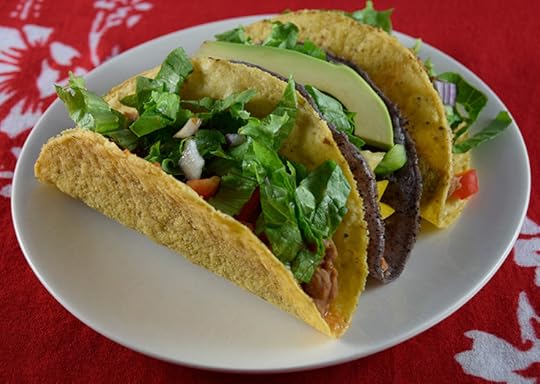
Main Course: Taco or Burrito Bar
Let everyone make their own. Let work for you, more choices for them.
Skillet Fajita Veggies
Instant Pot Pinto Beans or
Cuban Black Beans
taco shells or tortillas
salad fillings: chopped tomatoes, shredded cabbage, chopped green onions, cilantro
guacamole
salsa
cantaloupe
Beverages
Watermelon Agua Fresca
Organic Horchata
Dessert
Mexican Grilled Peach Sorbet
Watermelon Agua Fresca
Do you try to eat local? Enjoy drinking local too! In the summer, I make homemade agua fresca, the “fresh water” beverage popular in Mexico. My version uses just watermelon, lime juice, and mint. This healthy alternative to sodas or powdered drink mixes also makes quick work of extra watermelon.
Watermelon-and-Mint Agua Fresca Summer Drink
Blend up a refreshing watermelon drink in a flash. Lime juice and mint add sparkle. Multiplies well to serve a crowd. Vegan and gluten-free.
Coursebeverage
CuisineMexican
Servings2 servings
Prep Time5 minutes
Ingredients
4cups
watermelon chunksany dark seeds removed
2tablespoons
lime juicejuice from 2 small limes
1tablespoon
fresh mint leavesplus two sprigs for garnish
Instructions
Put all ingredients except garnish in a blender or food processor and process until smooth.
Strain through a fine sieve into glasses, using the back of a spoon to press the juice out of the fruit pulp. Add ice cubes and mint sprigs and serve cold.
July 12, 2019
July Menu
Local food peaks in July, making menus easy. Much of what you’ll find is best eaten raw and simple. Give cherry tomatoes and blueberries a quick rinse. Slice cucumbers and larger tomatoes for salads and sandwiches. Go wild and sprinkle salt on a wedge of cantaloupe.
Enjoy set-and-forget main dishes like this month’s Cuban Black Beans by using a slow cooker or electric pressure cooker. It’s a simple and forgiving recipe on the stove too.
July Menu
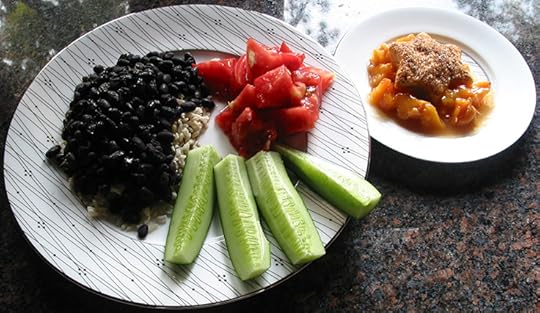
Cuban Black Beans
Brown rice
optional toppings: chopped bell peppers, chopped tomatoes, Creamy Cilantro Dressing
Sliced cucumbers
Slow-Cooker Peach Sauce, optionally with cashew or vanilla nice cream, or Potluck Pride Peach Cobbler from Fifty Weeks of Green (shown above)
Cuban Black Beans
Enjoy Cuban Black Beans as a change from tomato-based bean dishes. After the aroma invites you to try a bite, you’ll never want to settle for canned beans again. They are easy to make on the stove or in a slow cooker. See the notes below for using an Instant Pot or another pressure cooker too.
Cuban Black Beans cost just 57 cents a serving using organic ingredients.
This flexible recipe is one of our favorites, even after years as a go-to meal. Reader Amy B. wrote that her family “absolutely adores” Cuban Black Beans, including her children, aged four and two. She serves beans with steamed vegetables, avocado, and fresh tomatoes, saying:
We call them yum bowls.
Reader Jocojack wrote to say:
Tried these and everyone loved them, especially my 17-year-old son who asked that I save some for his school lunch the next day. Took some to work and three co-workers insisted on the recipe; my best friend– a definite carnivore– loved them. Did manage to save some for soup tonight. I am happy that I have enough for lunch tomorrow. Great recipe.
Cuban Black Beans
Enjoy these flavorful black beans over rice, grains, baked sweet potatoes, or wrapped in a burrito. Blend to make soup. Top with chopped fresh vegetables and herbs as desired. So much better than canned beans! Gluten free, dairy free, and vegan.
Servings10 servings
Prep Time25 minutes
Ingredients
1pound
dried black beans1 3/4 cups dried or 4 cups cooked
1tablespoon
salt
6cups
water
1medium
red onion
4cloves
garlic
4medium
bay leaves
2teaspoons
dried ground cumin
3/4teaspoon
dried crushed oregano
3/4teaspoon
dried ground chipotle or cayenne
2medium
bell peppers
tomatoes or bell peppersdiced, optional topping
Creamy Cilantro Dressingoptional topping
hot sauceoptional topping
Instructions
Pick through beans, removing any stones or twigs, and rinse well. Put beans, salt, and water in a slow cooker or a medium pot on the stove, stir, and cover. Soak beans for up to twelve hours if you have time. Soaking for even a few hours saves cooking time and energy. Add onion, garlic, and spices just before you turn on the heat. You can add the bell peppers now too if you like, but I wait so they keep their shape better. See my master recipe and video on how to cook dried beans to find the right mix of cooking styles and soaking to fit your schedule.
About an hour before the beans should be done, bite a few to check for tenderness. When beans give but are still crispy, stir bell peppers into beans. Cover and simmer for another hour, until beans and peppers are tender.
Remove bay leaves. Serve over rice or sweet potatoes, wrap in a burrito, or whirl into a soup. Optionally, top with diced tomatoes, peppers, Creamy Cilantro Dressing, or salsa. Keeps refrigerated for a week or frozen for a year.
Recipe Notes
You can cook Cuban Black Beans in a pressure cooker too, with or without soaking. Put beans and all other ingredients in the pressure cooker. Cook following the manufacturer's instructions for dried beans. After releasing pressure, go to step 3 above.
Always count bay leaves when you put them in so you know how many to take out, especially if you will be making soup or serving children or the visually impaired.
This recipe is an updated version of one from my book Wildly Affordable Organic . I've upped the quantity of beans so this recipe now makes a pound at a time, switched to red onions, tinkered with the spices, simplified the instructions, and added the nutritional information. Yum either way!
Nutritional Information
The nutrition label is for one serving.
Nutrition Facts
Cuban Black Beans
Amount Per Serving
Calories 151
Calories from Fat 4
% Daily Value*
Total Fat 0.4g
1%
Saturated Fat 0.1g
1%
Polyunsaturated Fat 0.1g
Monounsaturated Fat 0.1g
Sodium 579mg
24%
Potassium 129mg
4%
Total Carbohydrates 33g
11%
Dietary Fiber 8g
32%
Sugars 3g
Protein 10g
20%
Vitamin A
29%
Vitamin C
129%
Calcium
8%
Iron
18%
* Percent Daily Values are based on a 2000 calorie diet.
June 30, 2019
What Does a Slice of Pie Cost?
How much are you paying for pie? That depends on how many slices you cut. (See the chart below.) Yesterday I noticed that my Sneaky Wheat Pie Crust recipe and the recipes in Wildly Affordable Organic say twelve, this week’s Blueberry Pie recipe serves eight, and my Apple Pie used to feed just six — all using the same nine-inch pie plate!
Yikes! When I realized that, I changed the recipes for the crust and apple pie so they both serve eight and adjusted the cost and nutrition. I also swapped the Earth Balance Buttery Sticks for organic Miyoko’s Vegan Butter, which wasn’t available in my area when I first wrote the recipe for pie crust.
Chart: Cost of Homemade Pie Per Slice
Here’s a chart showing the change in costs depending on the number of slices and whether you use Miyoko’s Vegan Butter or Earth Balance Buttery Sticks. The cost of the fruit can vary widely too, from nearly free if you grow your own to big-city prices for local organic fruit.
# of slices
6
8
12
whole pie
blueberry with Miyoko
$3.06
$2.30
$1.53
$18.37
blueberry with EB
$2.63
$1.97
$1.31
$15.77
apple with Miyoko
$1.64
$1.23
$0.82
$9.83
apple with EB
$1.21
$0.90
$0.60
$7.23
crust with Miyoko
$0.94
$0.71
$0.47
$5.65
crust with EB
$0.51
$0.38
$0.25
$3.05
How Many Slices Should Be in Your Pie?
It depends. Cut enough to serve everyone who wants a slice. Make them small enough to fit your diet, budget, and desire not to waste food. Make them large enough so people feel like they’ve had some pie. Smaller pieces work best if some people might have seconds or more than one type of dessert, say at a pot luck or picnic.
If $2.30 for a piece of organic homemade pie seems too much, consider that one of my favorite local restaurants serves pie made with conventional ingredients for $8 a slice. That’s $64 to $96 for the whole pie, not including tip and sales tax. Cooking at home is wildly affordable, even with the best ingredients.
June 28, 2019
Blueberry Pie
Blueberry pie made with fresh berries is one of summer’s finest desserts. My updated version is dairy-free so more people can enjoy it. Wrap the luscious filling in my Sneaky-Wheat Vegan Pie Crust.
My Blueberry Pie costs just $2.30 a slice using organic ingredients if you cut it into eights or $18.37 for the whole pie, including the crust. That’s using ripe, local blueberries and top-quality Miyoko’s Vegan Butter. If that sounds expensive, consider that a slice of pie at one of my favorite, not-too-fancy restaurants costs $8, and that’s without a tip and the prepared-food tax.
My tip for you? This pie is worth the effort!
Blueberry Pie
Tuck this classic blueberry filling in a pie crust, like my Sneaky-Wheat Vegan Pie Crust for a stellar blueberry pie. The time if for the filling alone. To make a whole pie, it takes 1 hour and 52 minutes if freezing the dough and 2 hours and 12 minutes if refrigerating it.
Vegan.
CuisineAmerican
Servings8 servings
Prep Time15 minutes
Ingredients
4cups
blueberries1 quart or 600 grams
1/2cup
sugar100 grams
1/3cup
white whole wheat flour40 grams
1/2teaspoon
cinnamon
1tablespoon
lemon juice
2tablespoons
vegan butter
Instructions
Make Sneaky Wheat Vegan Pie Crust through step six. While dough chills, put sugar, flour, and cinnamon in a medium bowl and stir to blend.
Pick through blueberries, rinse, and drain well. Stir into flour mixture. Roll out bottom layer of pie crust and put it in a 9-inch pie plate. Add blueberries, sprinkle with lemon juice, and dot with butter. If you are working in a warm kitchen, refrigerate filled pie to keep bottom crust firm.
Roll out top crust, cover pie, and slash to allow steam to escape, as described in step 7 of the crust recipe. Refrigerate pie for 30 minutes or freeze for 10. Heat oven to 425 degrees F with a rack in the center position.
After pie chills, put strips of aluminum foil around the edges to keep crust from burning. (I save these strips and use them for years on pie after pie.) Bake pie for 30 minutes, remove foil, and bake for another 10 to 17 minutes until crust is golden and juices start to bubble through slits in crust.
Let pie cool to room temperature before serving so the apple juices can firm up, about an hour. Pie will cool faster on a trivet or the burner on a gas stove that lets air flow beneath the pie pan. Cut pie into wedges and serve. The crust is best the day it is made, but Blueberry Pie keeps covered at room temperature for 2 days or refrigerated for 4 to 5 days.
Recipe Notes
Nutritional Information for Blueberry Pie
Information for one eighth pie, filling only. (The crust recipe has its own nutrition label.) Supporting members, please log in to see the nutritional information. If you aren't a supporter, learn how to join today!
June 22, 2019
Serving What People Can Eat
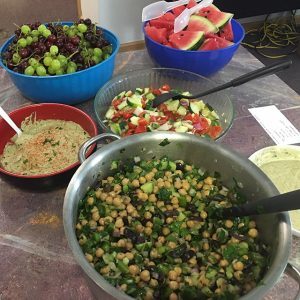 It’s hard to think about what other people can and will eat when planning an event. I fumbled the ladle a little this week when I made a crunchy Greek Chickpea Salad for people who are homeless or at risk of becoming homeless. Many of them didn’t even want to try the salad. I asked the director why afterward. She said, “It’s unfamiliar. And about eighty percent of our people are missing teeth.” Ouch!
Fortunately, other people had signed up to bring hummus, baba ganoush, and other soft foods. The tossed salad and watermelon were popular too. It wasn’t wrong to bring a crunchy salad because it provided variety for folks who could eat it. But I was glad that there were lots of other options for people who had trouble chewing.
Earlier today, I read two scenes in The Calculating Stars that brought this home. A family has taken in the heroine when she can’t go home. The first night, Elma declines the ham in a sandwich.
Mama said it was always better to get the conversation over with. “We’re Jewish.”
The next morning, Elma smells bacon frying and wonders if she’ll have to have the conversation at every meal. She opts for eggs and toast but realizes the eggs had been fried in bacon fat.
I felt something like her frustration at the Raleigh Environmental Awards recently. I’m on the Environmental Advisory Board but not on the planning committee for the awards. Still, they’d heard me talk many times about how eating plants is good for the environment. Just before I joined the board, I requested its support in making a change to Raleigh’s Comprehensive Plan to require serving plant-rich food at events and reducing food waste. Surely they’d at least have some hummus!
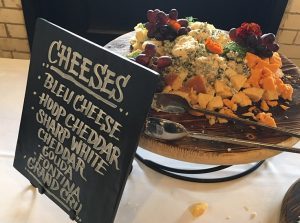
Nope. At the awards ceremony, the only ingredient labels were for a tower of cheese. I flagged down a server to ask her to find out from the chef if any of the dips or desserts were safe. She broke the bad news as I was talking with a city councilor. His plate was full of baked filo-wrapped cheese, pimento-cheese crostini, yogurt dip, tiny fruit tarts, and a brownie. I wound up with plain, raw fruit and vegetables and water to drink.
According to the Environmental Working Group, cheese has more embedded greenhouse gases than pork. A green gathering should not feature a tower of cheese. Really, no event should. Many people avoid dairy for ethical, environmental, and religious reasons. According to Forbes, four percent of Americans 30 to 49 years old are vegan and eight percent are vegetarian. Many others are simply lactose intolerant. As the CDC reports:
Approximately 65 percent of the human population has a reduced ability to digest lactose after infancy. Lactose intolerance in adulthood is most prevalent in people of East Asian descent, affecting more than 90 percent of adults in some of these communities. Lactose intolerance is also very common in people of West African, Arab, Jewish, Greek, and Italian descent.
The prevalence of lactose intolerance is lowest in populations with a long history of dependence on unfermented milk products as an important food source. For example, only about 5 percent of people of Northern European descent are lactose intolerant.
The beverages were wine, beer, and caffeinated iced tea. Many of the attendees were children, who probably should not drink caffeine, particularly after dinner. Some adults don’t drink for religious or health reasons. Some don’t want to drink and drive. The Methodist Church asks its members not to drink, so the award winners from the Highland United Methodist Church were drinking water or tea too. Offering lemonade, apple juice, sparkling cider, or herbal teas would have allowed more people to toast with a festive glass.
It could have been worse! At the Raleigh Citizens Advisory Council holiday dinner, I had raw vegetables and dry pita bread while everyone else had meatballs, cake, cheese cheese cheese, and more. I’ve been to many events where I don’t dare eat a bite, often because I don’t know what’s in the food being offered.
If you want to welcome people and have them come back, think about what they can and will eat. Offer options in textures, ingredients, and intoxicants. List the ingredients of dishes where it’s not obvious. That’s more helpful than categories such as vegan, vegetarian, and gluten-free because the definitions aren’t fixed or well known. See my tips on how to eat vegan and vegetarian if you want to check your understanding or get started. If you don’t know what to serve, check out my free recipes for inspiration. You can’t foresee every special diet, but you can try to include most people.
Do you have any tips or experiences to share? Please log in and post a comment below.