Jamie Parsley's Blog, page 74
March 15, 2015


March 8, 2015
March 1, 2015
2 Lent
 March 1, 2015
Mark 8.31-38
+ On Friday, the Episcopal Church lost a very great man. Canon Malcolm Boyd died in Los Angeles. If you do not know who Malcolm Boyd was, you should. He was, to say the least, a well-known Episcopal priest and writer and poet. He was most famous for his best-selling book of prayers, Are You Running With Me, Jesus? which was published fifty years ago this year.
I met Malcom Boyd once. He was the co-editor (along with Bishop Chester Talton) of an anthology of prayers, Race and Prayers, in which was included one of my poem/prayers “A Prayer on the Feast Day of Jonathan Myrick Daniels.” One time when I was in Los Angeles for a meeting, I got to meet him. I remember being impressed with the life and light that he had in his eyes. He was a man not only fully alive, but was also one who spiritually charged, shall we say.
Malcom was a true prophet in the Church. As a gay man and a priest, he spoke out as far back as the 1960s on the issue of full-equality of Gay and Lesbian people in the Episcopal Church.
 But, in his most famous book, Are You Running With Me, Jesus—and in fact in all of his writing—he spoke honestly of what it means to follow Christ. And it was clear from those prayers and from his other writing that, for him, following Christ was not some easy thing. It was hard. And it meant following him into places he didn’t want to go. It meant being brutally honest with himself and about himself. It meant, for him, not compromising. It meant standing up strongly and firmly and speaking out loudly and clearly. Malcolm Boyd was a true disciple of Jesus.
 And in today’s Gospel, we find Jesus explaining to us in very blunt words what it means to be a disciple. For him, being a disciple, means being a follower. A follower of him. And Malcolm Boyd was a definitely a follower of Jesus. As we all are, as Christians.
Hopefully, those of us who have gained any sort of maturity as Christians have come to the realization that being a Christian—being a follower of Jesus—means that we are being led into a unique life. Being a follower of Jesus doesn’t mean closing ourselves up intellectually. It doesn’t mean we get to stop thinking. Trust me. I know too many of these kind of Christians. These are the people who think being a Christian means not having to think anymore. Just believing that all will be well and there aren’t any problems.
I think we all, at times, found ourselves lulled into a false sense of what it means to be followers. We think that being a follower of Jesus means that everything was going to be happy-go-lucky and wonderful all the time. We think that following means not really having to think about things anymore. It’s easy, after all, a lemming.
But that isn’t the kind of following Jesus wants us to do. The kind of follower Jesus wants us to be is hard.
For me, personally, I am not a comfortable follower. It’s hard to have someone else’s standards essentially be my standards, even if it is Jesus’ standards. It can be depressing. Now that doesn’t mean we shouldn’t be joyful in our following of Jesus.
Yes, we should be filled with a deep and sincere joy. But, as the old song goes, no one promised us a rose garden. Nowhere in scripture have we been promised that life is going rosy and sweet all the time. Being a follower is not always so much fun. Being a Christian means not always strolling around in comfort and joy in a rose garden.
As we are reminded in this season of Lent and especially in that week preceding Easter, being a Christian means following Jesus wherever he goes. And where he goes is not to the rose garden. It is to the garden of Gethsemane—to that place where he too would be feeling anguish, where too would sweat blood, where he too would cry out to God. Following Jesus means essentially being like him. And being like him, means having the same relationships he had.
And when we look at the relationships he had, we realize they were not normal relationships. His relationship with God was intense. For Jesus, God was a parent. God was “Father.” But the relationship was even more than that. It was also almost like lovers. Jesus loved God. God loved Jesus. And that, too, is what our relationship with God should be like, as followers of Jesus. We should love God. Because God loves us. Deeply and intensely.
But it doesn’t end there. There is also the relationship Jesus had, because of his intense and deep love of God, with others. Jesus loved others. Intensely. Deeply. He cared for them. And because he did, so should we.
In everything we do as followers of Jesus, we should let love always be our driving force. It is that love that makes us feel the anguish he feels. It is that love that makes us suffer with him. It is that love that makes us bleed with him. It means following Jesus not just through the moments of teaching ministry, not just through the miracles he performed. It means following him through the dark days of his last week, through the blood and excruciating moments of his dying. It means that, like him, our love for him causes us take up our crosses and follow him wherever he might go.
Jesus knew, as we find in our Gospel reading for today, that there were certain things he had to do. He had to “undergo great suffering,” He had to be killed. He understood that fully. He in turn tells us that we too must realize that we will have to bear our share of suffering in this life. We too will have to take up our own crosses.
Now, to be fair, this statement about taking up our crosses needs to be examined a bit. The cross being referenced here might not be what we instantly think it is. Reginald Fuller, the great Anglican theologian, believed that the Greek word used for cross here—stauros—actually might not necessarily have meant the cross on which one was
 executed. Rather, he believed that it might actually mean the tau (the T) and chi (the X) that was used as a sign of ownership to brand cattle. This adds a very interesting dimension to this scripture. The brand of the cross that we must bear becomes God’s seal upon us. And when we look beyond the events of Good Friday, we realize that the cross on which Jesus died truly does become the brand we must bear upon ourselves as followers of Jesus.
Even the thought of a brand is not a pleasant thought. Brands are painful, after all. Brands really hurt. And brands cannot be undone. They mark us forever.
That is exactly what the cross does to us. The cross is the reminder to us that following Jesus doesn’t just mean following him through the rose gardens of our lives. It means, following him all the way to that cross. It means taking up our own crosses and staggering with him along that path. It means sweating with him in the garden of Gethsemane. It means crying out with him in anguish. It means feeling with him the humiliation and loneliness of being betrayed—yes, even by one’s friends or own followers.
But, it also means following him to the very end. Just as the cross is a symbol of death and torture and pain—it is, for us Christians, also the symbol of the temporal nature of those things. The cross is the doorway through those awful things, to the glory that awaits us beyond the cross. The cross is the way we must travel, it is what we must carry, it is what we must be marked with, if we wish to share in the glory that awaits us beyond the cross.
I said earlier that no one promised us a rose garden in scripture. I should revise that. While we might not have been promised a rose garden, we have been offered glory. Glory comes to us, when we follow Jesus. It comes to us when we let our love for God and others lead us through the dark and frightening places this world can throw at us. If we let that love guide us, if we let ourselves be led by Jesus, we will find true and unending glory awaiting us.
So, as we encounter the crosses of our lives—and we will—as we allow ourselves to branded with the cross, as we allow our love for God and others to lead us into places we might not want to go, let us do so with the realization that glory has been offered to us. Just because we have been branded with the cross, we know that, in our branding, there will be no shame for us. But that, one day, was seems to be a brand, what seems to us a symbol of pain and loss and failure, will be transformed. It will be transformed into jewels, into a crown upon our heads. And, on that day, there will be joy replacing our pain and sorrows.
February 22, 2015
February 18, 2015
Ash Wednesday
 February 18, 2015
2 Corinthians 5:20b-6:10; Matthew 6.1-6,16-21
+ Occasionally, I find myself obsessed about certain news stories. I think we all do this at times. We find ourselves trying to find out any and every aspect of a particular news story, waiting for emerging details. Well, I’ve recently been obsessed about such a story. Many of you know about it all ready. It’s been going on since December.
In December, on Dec. 27, actually, the newly-elected Bishop Suffragan (or Assisting Bishop) of the Episcopal Diocese of Maryland, Heather Cook, was involved in a horrific car accident. She struck a cyclist, a husband and father. He struck the windshield of her car. She then drove away from the scene. The cyclist died at scene. Forty minutes later, she returned and was arrested for DUI and manslaughter. It was discovered that she had a blood alcohol level equivalent to ten drinks. Now, that in of itself is horrible and terrible. But, it seems, she was arrested for DUI in 2010, also with an even higher blood alcohol level, as well as possessing marijuana paraphernalia. This DUI was not revealed to the Diocese of Maryland when she was elected last fall.
It seems that every few days new details of this horrendous story comes out. The fact that her boyfriend, a defrocked Episcopal priest, paid a portion of her $2,000,000 bail. The fact that the Bishop of Maryland revealed that she was actually drunk at her consecration s Bishop in September. That fact that the Presiding Bishop probably knew about her being drunk and still consecrated her. The fact that the Standing Committee of the Diocese has called for her resignation (which still has not happened). The fact that Presiding Bishop has now restricted her as Bishop. Etc etc.
It’s an ugly story. This story speaks to us in a particular way as we enter Lent. When we look at the shortcomings and failings of others, sometimes—I know we hate to admit this—I hate to admit this—but sometimes, sometimes, we sort of, very secretly, delight in these things.
We say things like, “Oh, how the mighty have fallen!”
Or, “Mmmph, I guess Bishops aren’t perfect after all.”
Or, what I’ve had to hear ad nauseum in the days afterward from several clergy, “There but for the Grace of God go I,” a phrase about which Sandy Holbrook and I had an interesting discussion once after I used that same phrase referencing another situation.
We delight in the shortcomings of others partly because it makes us feel a little better about ourselves. But, that begs the question then: how should we feel? How should we feel about this situation? We, of course, should feel horrible. We should feel anger. We should feel sorrow for that poor man who died and for his family. But we should also feel pity too.
Yes, it’s easy to demonize Bishop Cook. It’s easy to set her up as an example of all we dislike about the Church or the policies of the Church or whatever grudges any of us might have toward Bishops and clergy (yes, let me tell you, there is a lot of anti-clericalism in the Episcopal Church, which does run counter of the inclusiveness of our Church). But underneath it all, Heather Cook is a human being like all of us—a human being with a horrible illness—an illness that killed a person and could easily have killed Bishop Cook and others. That’s not an excuse. I am making no excuses for what Bishop Cook did. But it is a fact.
We are all fallible. We all fail—and fail miserably—at times in our lives. And when we do, it is painful. It hurts. And others get hurt too.
This time of Lent is a time for us to face those failings in our lives. I think that’s why some of us kind of resist Lent when it comes around again. But, recognizing our failures—and other’s failures, as well—for what they are is a way forward. We are all fallible human beings. We will continue to fail at times. We will never, on this side of the veil, be perfect. And if perfection is our goal, we have already set ourselves up for failure. But failure too should not be the goal.
Striving to learn from our failures is the goal. Changing and growing and moving beyond our failures is our goal. A successive evolution from failure to redemption is our goal.
Lent is a time for us to think about our failures, to ponder them, but not to revel in them. And it certainly is not a time to beat ourselves up over them.
Tonight, Ash Wednesday, is a time for us to think about that ultimate moment in our lives, that puts all of our failures into keen perspective. Tonight is the night to think about the fact that we will all, one day, die. In this service we are reminded in no uncertain terms that one day each every person in this church this evening will stop breathing and will die. Our bodies will be made into something that will be disposed of—either by being cremated and being buried in the ground. But, all of this can—and more importantly, should—be something in which we find ourselves opened up to a new understanding and new perspectives on the world and our relationships with God.
That essentially is what Ash Wednesday and the season of Lent are all about. It is a time for us to stop, to ponder, to take a look around us and to take a long, hard, serious look at ourselves, our failures, and our relationship with God. It isn’t easy to do. It isn’t easy to look at where we’ve failed in our lives in our relationship with others. It isn’t easy to look at ourselves as disposable physical beings that can so easily be or burned to ashes or buried. It isn’t easy to imagine there will be a day—possibly sooner than later—when life as we know it right now will end. It isn’t easy to shake ourselves from our complacent lives. Because we like complacency. We like predictability. We like our comfortable existence.
However, we need to be careful when we head down this path. As we consider and ponder these things, we should not allow ourselves to become depressed or hopeless. Remembering our failures is depressing and can trigger depression or despair. Our mortality is frightening. Yes, it is sobering and depressing to think that we, at this moment, find so normal and comfortable will one day end.
But this season is Lent is also a time of preparation. It is a preparation for the glory of Easter. It would be depressing and bleak if, in the end, all we are known for our failures.
My prayer for Bishop Cook is that this accident, this death, is not what she will ultimately be known for. In the midst of this horrendous situation, Bishop Cook’s story is not over. There are opportunities, as impossible as they might seem in this moment, for her to rise above this horrendous situation. One day, when she passes from this world, there will be references made to the horrible events of December. But hopefully, there will also be references made to how she rose above it, how she overcame her illness, how she found redemption in her own life and how she was ultimately sustained by the love and compassion of her God.
That is my hope. Yes, maybe I am the eternal optimist. But that’s also what it means to be a Christian, even in the midst of Lent. Yes, we will hear, in a few moments, those sobering words,
“You are dust and to dust you shall return.”
And those words are true. But, the fact is, ashes are not eternal. Ashes are not the end of our story. Ashes are temporary. Resurrection is eternal. Our life in Christ is eternal. Our failures are temporary. Our life is eternal in Christ. All we do on this Ash Wednesday is acknowledge the fact that we are mortal, that our bodies have limits and because they do, we too are limited.
There is a beautiful poem—one of my all-time favorites-written by probably one of my favorite poets, Robinson Jeffers. In many ways it has a very healthy attitude to the body and the death of one’s body. Jeffers wrote this following the death from cancer of his wife, Una, in September of 1950. The poem is titled “Cremation”
It nearly cancels my fear of death, my dearest said,
When I think of cremation. To rot in the earth
Is a loathsome end, but to roar up in flame — besides, I am used to it,
I have flamed with love or fury so often in my life,
No wonder my body is tired, no wonder it is dying.
We had a great joy of my body…
“We had great joy of my body.”
Hopefully, we can say the same of our bodies when the time comes for us to put our bodies aside.
So, it’s not a matter of denying our bodies or seeing our bodies as sinful, disgraceful things. The same can be said of our failures. Our failures make us who we are. We are not defined by them. But we are formed in the fires of our failures and shortcomings. It is not a matter of dwelling on our failures in this life. Rather, it is a time for us to look forward, past our failures, to resurrection, to renewal, to rebirth.
As we head into this season of Lent, let it truly be a holy time or preparation for resurrection. Let it be a time in which we recognize the limitations of our own selves—whether they be physical or emotional or spiritual. But more than anything, let this holy season Lent be a time of reflection and self-assessment. Let it be a time of growth—both in our self-awareness and in our awareness of God’s presence in goodness in our life.
As St. Paul says in our reading from this evening: “Now is the acceptable time.”
“Now is the day of salvation.”
It is the acceptable time. It is the day of salvation. Let us take full advantage of it.
February 1, 2015
4 Epiphany
 February 1, 2015
Mark 1.21-28
+ This past week, in our confirmation class, we had a very in-depth discussion on several topics. We talked about death and I had the students plan their funerals, which was interesting. We talked about heaven, reincarnation and…we talked about hell. I said something regarding that kind of shocked our students.
I said, “I don’t know if I really believe in hell.”
Then I had to make myself clearer, because that is quite the statement after all.
I said, “I should say that I’m not saying there’s no hell. There could be. But my hope—my real, deep and abiding hope—is that is it exists, I hope it is empty and will remain so.”
This was not good enough of a statement for our confirmation students.
“What about terrible people?” they asked. “What about Hitler? What about people who do bad things?”
I then went into one of my sermonettes on examining the reasons why we do things. Do we do good because we fear hell and punishment, or do we do good things because doing good things is…good? It brings about good.
They really got that.
But then, I started thinking about it and realized I needed to revise what I said about hell. I do believe hell exists, actually. In fact, just this past week, we heard about hell.
On Tuesday, many people observed the seventieth anniversary of hell being liberated. On
 that day, January 27, 1945, Auschwitz was liberated. Hell on earth was liberated. And, as we all know, there are hells right here on earth.
There are hells existing right here in our midst at any given moment. We, each of us, are often, at times, existing in our own personal hells.
And, as far as the question of bad things like Hitler that the confirmation students were asking about, I believe fully and completely that yes, evil no doubt does exists in this world. But that evil is not something that God cannot defeat. I’ll get into that a bit later.
We get evil today in our Gospel reading. But first, before the evil, we get a bit of glory. In the beginning of our Gospel reading for today, we find Jesus in a place, at first, in which he is being marveled at. People are amazed by his teaching. It is certainly a high point for those early followers of Jesus. It is a moment in which the decision they made to follow him has been, in some very real way, validated. And then, in the midst of that adulation, in the midst of that wonderful, high moment, those followers find themselves confronting evil. There, in the middle of all that praise, comes a person possessed by an evil spirit. It was, no doubt, an unpleasant moment. Just when things seem to be going well, there’s a crazy, possessed person in their midst.
For us we have been confronted with things like this as well. Well, maybe not crazy, possessed people. Or maybe…crazy, possessed people.
But, let’s face it, we do know a few things about evil. For all the grand and glorious things we see on occasion as followers of Jesus, we are also reminded that there is still injustice and oppression and sexism and homophobia and racism and a multitude of other really horrible things going around us in the world and in our society. Some of us have even seen the effects of violence in our own personal lives.
We see evil. We know evil. We are confronted with evil on a regular basis, and especially in those moments in which we really don’t want to confront evil. But, what Jesus’ encounter with the evil spirit shows, however—and, again, as we all know here—is that evil is not quite what we thought it was.
Yes, evil has much power in this world. But it does not have ultimate power. Evil does not—nor does it ever—win in the end. History has shown this again and again.
Auschwitz, that seemingly impenetrable fortress of evil and death and horror, was liberated. It was ended. Nazism was destroyed. Hitler was defeated.
And, in following Jesus, when we confront evil and injustice and oppression and discrimination, we know full well that these things will all one day be cast out. They all will be quieted. And goodness will triumph ultimately in the end. We know this as followers of Jesus. We know this because we know that’s what it means to follow Jesus.
For us, when God’s blessings flow and we can feel that Presence of ultimate goodness at work in our lives, we like those people who witnesses Jesus casting out the evil spirit, are amazed. We wonder and we marvel at what is happening. And hopefully, like those first followers, we are motivated. We are motivated to continue following Jesus, wherever he leads us. We are motivated to continue to stand up and speak out against evil when we are confronted with it.
That is what we have always done here at St. Stephen’s and that is what we will continue to do here. We do this, because that is what followers of Jesus do.
But, being followers of Jesus also means facing evil full-on, knowing full-well that evil ultimately has no control over us. Evil—which may come to us in many forms—whether we confront it in the daily news in the form of ISIS or North Korea or stories of horrendous violence in our own communities—or whether we are dealing with various forms of evil in our own lives, with discrimination or abuse or even things like illness and death, which are their own types of evil, we know that ultimately evil and hell will be defeated. We know that, following Jesus, these things will not win out.
Yes, we know that in following Jesus, he isn’t always going to lead us through sun-lit fields full of easy pathways. He leads us again and again down paths in which we are forced to confront ugly things. We are led down path in which we must not only face, but confront evil. We are led down paths that we don’t want to go down, at times.
Certainly, as we journey through our Church year toward Lent, we know that following Jesus means following him on the Way of the Cross, a path that goes through a place of darkness and violence and evil. But if we keep following, we will realize, again and again, that none of those dark evil things triumph in the end. The path we follow Jesus upon leads us ultimately to sun-lit fields ahead somewhere. That path to the cross leads us also beyond the cross.
We know good always wins. That is what we are celebrating this morning and every Sunday morning. The fact that, yes, we have been through those dark moments. We have been through those lean years in our lives. We have been through moments when it seems as though Jesus was leading us through desert wastes and arid lands.
But this morning, in this moment, we know—we are reminded: he is leading through a verdant land. And as we follow, we will continue to see amazing things. And it isgood.
So, let us rejoice and be thankful today and always, even when evil seems to triumph Let us be thankful for all that we have been given in this past year. And let us look with joy into a future of unlimited possibilities. God is at work in the midst of us this morning and always. And on this morning we can truly say that it is wonderful and glorious. What more can we do on this beautiful Sunday, but rejoice?
January 25, 2015
3 Epiphany
 January 25, 2015
Mark 1.14-20
+ I now I’ve shared this with you before—many several times. But years ago—back in my carefree late teens and early 20s—I became a bit disillusioned with the Church—capital C. I sort of floated away from church for several years. I questioned many things. And I became a bit of an agnostic. Actually, I’m still a bit of an agnostic. On some things. I think we all are to some extent, if we are honest with ourselves.
An agnostic is essentially anyone who “doesn’t know.” And in this sense, we don’t know about God and the greater mysteries. Let’s face it—we don’t know. We can hope. We can have faith. But, ultimately, as long as we are on this side of the veil, we don’t know for certain.
Nor should we. Because we don’t know, our faith becomes more vital to us. And that’s a good thing.
Last Wednesday, one of those people who helped the agnostic twenty-something old Jamie come back to the Church and have a deeper faith in Christ, died. Marcus Borg was—and still is—a very important theologian. Of course, I could relate to him to some extent. He was raised Lutheran in North Dakota. So was I.
And his Lutheran upbringing was important to him. He wrote often about Lutheran theology (though not always positively about Lutheran theology). He attended Concordia College in Moorhead. He later became Episcopalian. His wife is an Episcopal priest. His theology, although liberal, was very non-abrasive.
Many of us so-called liberals often found agnosticism and heady theology about the validity of the “historical” Jesus, although intellectually stimulating, a bit lacking in an applicable way. A lot of liberal theology did not do a very good job of comforting one when one was diagnosed with cancer, for example, or mourning the death of a loved one. In those moments, I hate to say, it really didn’t is Jesus actually said, “I am the Resurrection and the Life,” or if it was something his followers attributed to him. Borg knew that. And what Borg did for people like me was he brought back a faith-centered Jesus for us, without us having to sacrifice our intellectual mindset on things.
For me, when I first read his book, Meeting Jesus again For the First Time—a truly
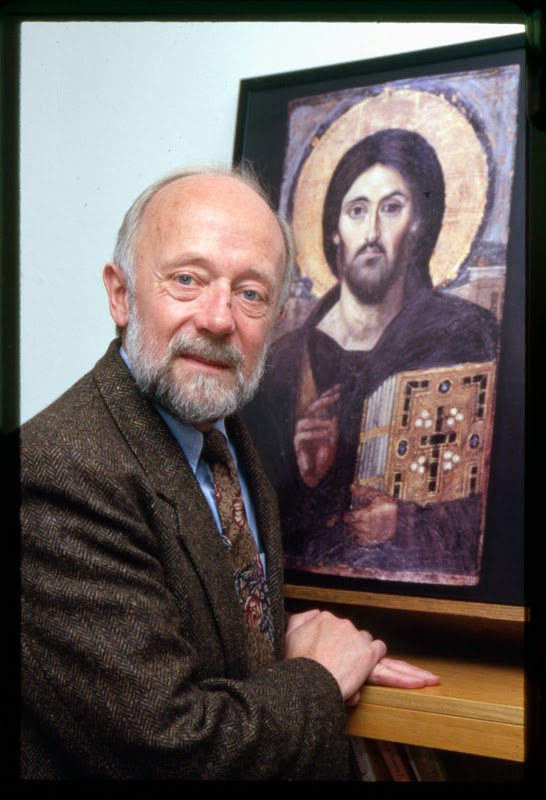 radical book in many ways—I was blown away. This was the book I needed at that time in my life.
 Especially his writing on the so-called “pre Easter” and “post-Easter” Jesus. It was a book that essentially gave me back Jesus, at a time when I needed Jesus. And yet I still could be a “liberal” Christian.
I essentially could talk about Jesus and pray to Jesus and believe in Jesus, no matter how “true” or “factual” much facts were from the Historical Jesus theologians. There are many people—several who are here at St. Stephen’s this morning—who are Christian to this day because of Marcus Borg. There are people here today who love Jesus and for whom Jesus is a reality in their lives because of Marcus Borg. And for that, I am grateful.
Diana Butler Bass, another important theologian in the Church today, wrote on her Facebook page this past week, that she was “hoping fr an experience of the post-Easter Borg. I like that.
What Borg’s books did for me anyway was helped turn me around theologically and spiritually.
And in today’s Gospel we find Jesus essentially doing the same thing. And he does it with one little word.
“Repent.”
I think in our contemporary Christian society, we have found this word hijacked by some of the fundamentalist-minded people in our churches. Repent is often seen as a shaming word. We seem to hear it only in the context of “repenting” of our sins. Certainly that’s a correct usage of the word. When we turn from our sins—from all the wrongdoings we’ve done in life—we are repenting.
But I think it’s a good thing to examine the word a bit closer and see it in a context all of its own. The Greek word we find in this Gospel is μετανοειτε, which means to change our mind. But the word Jesus probably used was probably based on the Hebrew word, Shubh, which another great theologian who also influened me, Reginald Fuller, translates as “to turn around 180 degrees, to reorient one’s whole attitude toward Yahweh in the face of the God’s coming kingdom.”
When we approach this word with this definition, all of a sudden it takes on a whole new meaning and attitude. What is Jesus telling us to do? Jesus is telling us we must turn round and face this mystery that is God. We must adjust our thinking away from all the worldly things we find ourselves swallowed up within and focus our vision on God. Or, rather, we should adjust our thinking, our vision of the world, within the context of God.
However you want to look at it, is about seeing anew. It is about changing the way we think and see and do things. As you can imagine, this kind of command isn’t a popular one. We don’t like change of this sort. We are a complacent lot for the most part. We enjoy our predicable, daily lives.
I certainly am the most guilty of this. I find a certain comfort in my daily schedule. It’s not very exciting. But it is comfortable. And it’s easy. In those complacent moments, I don’t find myself thinking too deeply about God…or anything else for that matter.
This of course brings up probably our biggest point. For the most part, we don’t think. We don’t have rational, concentrated thoughts about our faith or the world. We are usually thinking about what is right before us right now. We are thinking about what we are going to do next, what we are going to eat or drink for lunch or supper. We think about what our children are doing or not doing or about what our spouses are doing or not doing, or about the work at hand. We are thinking about what needs to be thought about at that moment.
In that crush of thoughts, thoughts of God don’t come up so easily. What Jesus is telling us in today’s Gospel, when he tells us to repent, is, essentially, this:
He is telling us to mindful. Be mindful of God. Be mindful of the good news. Be aware.
As some of you know, I have had a deep interest in Zen Buddhism since my early 20s. For me, Zen is more than just a religion. It is a philosophy—it is a perception, a way of seeing things.
A very popular image in Zen Buddhism is that of a fish. A fish is seen as something that never sleeps. It is always awake. As such is held up as symbol of a truly enlightened person. It is a symbol of the goal of what one does in Zen. Like a fish, one should always be awake and aware.
What we find here is a very simple lesson in how to live fully and completely. Essentially, this is what Jesus is telling us as well.
Repent.
Wake up.
Turn around and see.
God is here.
Jesus is saying to us, Stop living foggy, complacent lives. Repent. He is saying, Quit being drones, mindlessly going about your duties.
Wake up and think.
Open your eyes and see.
God has come among you.
God is here, speaking to you words of joy and gladness.
He is saying, Listen. Hear what God is saying.
Look. See God walking in your midst.
And when we see God, when we hear God speaking to us through Jesus, we find that we too want to do what those disciples in our Gospel reading for today did.
We want to follow after him. We want to be followers of Jesus. Being followers of Jesus means that we are awake and we see.
People like Marcus Borg have helped us to wake up and see, even if we are a bit agnostic about it all.
So let us truly follow Jesus in our lives. We don’t need to do it in a flamboyant fashion. We can truly follow Jesus by striving to be spiritually awake. We can follow Jesus by allowing ourselves to spiritually see. And when we hear and see, when we become, in a sense, fish—awake, aware, not sleeping spiritually—it is then that we can become truly effective fishers.
January 18, 2015
January 16, 2015
The Memorial Eucharist for Rick Holbrook
 The Memorial Mass for
Rick Holbrook
(Aug. 9, 1940-Jan. 7, 2015)
Jan. 16, 2015
+ I am going to brutally honest with you this morning. I don’t want to be here. None of us want to be here. I hate the fact that I have to be here this morning, saying goodbye to Rick Holbrook. And I can say, in all honesty, I’m angry.
I am angry at an illness like ALS. I am angry and frustrated over the fact that there is an illness like this. And I am very angry that ALS is what took Rick. I can be angry. I can say I don’t want to be here. I know many of you are angry. And I know Rick was angry about this disease.
But, as Rick showed in his life, and we should all learn from his lesson, we can’t let our anger get the better of us. Anger did not get the better of Rick.
And as frustrated as I am over his disease, as sad as I am this morning about the fact that Rick is not here with us, I am able to take consolation, as we all are. Our consolations might seem few and far between in this moment. But they are there. We find consolation in the fact that Rick did not have to suffer more than he did. There were much harder days ahead. Rick knew that. Sandy knew that. We all knew that. And Rick was spared those harder days.
We also find consolation today in our faith—a faith that Rick certainly held close to him, even in these last months. For Rick, his faith was strong. He was committed. His faith, in many ways, was like him. He didn’t make a big deal about it. But quietly, strongly, firmly, it was there.
As Sandy and I discussed this service, we went through our scripture options which the Book of Common prayer suggests to us. And none of them seemed right, as least our Gospel readings didn’t seem right for this particular occasion.
Finally, after all of our discussion of Rick’s deep passion or birding, I thought of the Gospel we actually heard this morning from Deacon Charlotte. It’s a great Gospel reading. It is Jesus the Poet as his poetic best (he sounds almost like Walt Whitman):
“Therefore I tell you, do not worry about your life, what you will eat or what you will drink, or about your body, what you will wear. Is not life more than food, and the body more than clothing? Look at the birds of the air; they neither sow nor reap nor gather into barns, and yet your heavenly Father feeds them. Are you not of more value than they?”
Rick definitely understood this scripture. He saw it lived out in his own life. He saw those birds, who were fed, who were provided by their loving God. And, ultimately, we can say, that Rick was provided for. He was taken care of. And all of us here, this morning, know that his value to all of us was truly great.
Rick was a strong, independent person, to say the least. We saw it in his life. And he was saw it in his death. We can be angry about his death today. We can say, it was unfair. Because it was.
But what we can’t say this morning is that the ALS was somehow victorious in all of this. Because it wasn’t. It didn’t win out. The fact that Rick is beyond all of that—beyond the disease, beyond the suffering, beyond the steady, consistent loss of that disease—that is the true sign of victory. ALS was not victorious.
Who is victorious? Christ was and is victorious. And Rick, in Christ, bolstered by his faith in Christ, is victorious as well. In this moment, and Rick has no losses. But only gain. Glorious, wonderful gain.
See, that Gospel reading is right on. Do not worry about this life, and all that this life can throw at you. Even if it is illness, and loss, and death. Don’t worry. Because we are provided for. We are cared for. We are loved—and loved deeply. Because, to our God, we are valuable.
That is the lesson we take away from today. That is the lesson Rick is teaching us , even now, in this sad moment.
One of the thing I loved about being an Episcopalian, is our great liturgy. The words of our worship services really do a great job of getting right to heart of the matter. And this funeral service is no exception to that rule.
At the end of this service, we will hear those wonderful words of defiance in the face of death.
All of us go downto the dust; yet even at the grave we make our song: Alleluia,alleluia, alleluia.
Now those words might seem archaic to some people. We’ve heard those words so many times probably that they don’t mean anything anymore. But, if you listen closely, they are words of defiance. They are words of victory. They are words that say, for us, we are cared for, and provided for and loved, just as Rick was. Those words speak to us and tell us that, even in the face of all this, we can, like Rick, carry ourselves with integrity, bolstered by our faith.
Even in the face of whatever life may throw at me, we can almost hear Rick say, I will not let those things win. I will not let ALS win. I will not let even death win.
“…yet even at the grave we make our song: Alleluia,alleluia, alleluia.”
Even you, death, will not win out over me. Even in the face of these awful things, I will face you with strength and a sense of victory. And, because I have faith, because I am loved and I have loved, you will not defeat me.
Today, all that Rick Holbrook was to us—that man of quiet strength and integrity—all of that is not lost. It is not gone. Death has not swallowed that up. Rather all of that is alive and dwells with us who will miss him. And it dwells in Light inaccessible. Rick dwells in a place of peace and joy, where sorrow and pain are no more, neither sighing, but life everlasting. And for us who are left, we know that it awaits us as well.
See, Rick is still showing us the way forward. He is showing us by his very life and faith, and even his death, how to face these hardships life throws at us. He is even showing us how to meet these days ahead—these days in which we now must struggle with a life in which Rick is not here with us physically any more. He is showing us to face it all with our heads held high, bolstered by our faith and our integrity. He is showing us that, in the midst of all of these hardships, we must do so with class and dignity and strength.
So, today, yes we are sad. Yes, we are in pain over this loss. Yes, we ache deeply in our hearts and in our souls. But we are also thankful today. We are thankful for this man whom God has been gracious to let us know. We are grateful for all he has given us in our own lives.
See, even we too, today, are defiant. We too are loved, and taken care of. We too know that we are of great value and, like the birds of the air, we will be cared for. There is no need to worry. Nothing this life throws at us will defeat us.
But rather, with all this sadness, with all this pain, we can still, like Rick, hold ourselves in strength, Yes, even now, even here at that grave, here in the face of sadness and loss, we sing victoriously:
Alleluia!
Alleluia! Alleluia!
The Requiem Eucharist for Rick Holbrook
The Requiem Mass forRick Holbrook
(Aug. 9, 1940-Jan. 7, 2015)
Jan. 16, 2015
+ I am going to brutally honest with you this morning. I don’t want to be here. None of us want to be here. I hate the fact that I have to be here this morning, saying goodbye to Rick Holbrook. And I can say, in all honesty, I’m angry.
I am angry at an illness like ALS. I am angry and frustrated over the fact that there is an illness like this. And I am very angry that ALS is what took Rick. I can be angry. I can say I don’t want to be here. I know many of you are angry. And I know Rick was angry about this disease.
But, as Rick showed in his life, and we should all learn from his lesson, we can’t let our anger get the better of us. Anger did not get the better of Rick.
And as frustrated as I am over his disease, as sad as I am this morning about the fact that Rick is not here with us, I am able to take consolation, as we all are. Our consolations might seem few and far between in this moment. But they are there. We find consolation in the fact that Rick did not have to suffer more than he did. There were much harder days ahead. Rick knew that. Sandy knew that. We all knew that. And Rick was spared those harder days.
We also find consolation today in our faith—a faith that Rick certainly held close to him, even in these last months. For Rick, his faith was strong. He was committed. His faith, in many ways, was like him. He didn’t make a big deal about it. But quietly, strongly, firmly, it was there.
As Sandy and I discussed this service, we went through our scripture options which the Book of Common prayer suggests to us. And none of them seemed right, as least our Gospel readings didn’t seem right for this particular occasion.
Finally, after all of our discussion of Rick’s deep passion or birding, I thought of the Gospel we actually heard this morning from Deacon Charlotte. It’s a great Gospel reading. It is Jesus the Poet as his poetic best (he sounds almost like Walt Whitman):
“Therefore I tell you, do not worry about your life, what you will eat or what you will drink, or about your body, what you will wear. Is not life more than food, and the body more than clothing? Look at the birds of the air; they neither sow nor reap nor gather into barns, and yet your heavenly Father feeds them. Are you not of more value than they?”
Rick definitely understood this scripture. He saw it lived out in his own life. He saw those birds, who were fed, who were provided by their loving God. And, ultimately, we can say, that Rick was provided for. He was taken care of. And all of us here, this morning, know that his value to all of us was truly great.
Rick was a strong, independent person, to say the least. We saw it in his life. And he was saw it in his death. We can be angry about his death today. We can say, it was unfair. Because it was.
But what we can’t say this morning is that the ALS was somehow victorious in all of this. Because it wasn’t. It didn’t win out. The fact that Rick is beyond all of that—beyond the disease, beyond the suffering, beyond the steady, consistent loss of that disease—that is the true sign of victory. ALS was not victorious.
Who is victorious? Christ was and is victorious. And Rick, in Christ, bolstered by his faith in Christ, is victorious as well. In this moment, and Rick has no losses. But only gain. Glorious, wonderful gain.
See, that Gospel reading is right on. Do not worry about this life, and all that this life can throw at you. Even if it is illness, and loss, and death. Don’t worry. Because we are provided for. We are cared for. We are loved—and loved deeply. Because, to our God, we are valuable.
That is the lesson we take away from today. That is the lesson Rick is teaching us , even now, in this sad moment.
One of the thing I loved about being an Episcopalian, is our great liturgy. The words of our worship services really do a great job of getting right to heart of the matter. And this funeral service is no exception to that rule.
At the end of this service, we will hear those wonderful words of defiance in the face of death.
All of us go downto the dust; yet even at the grave we make our song: Alleluia,alleluia, alleluia.
Now those words might seem archaic to some people. We’ve heard those words so many times probably that they don’t mean anything anymore. But, if you listen closely, they are words of defiance. They are words of victory. They are words that say, for us, we are cared for, and provided for and loved, just as Rick was. Those words speak to us and tell us that, even in the face of all this, we can, like Rick, carry ourselves with integrity, bolstered by our faith.
Even in the face of whatever life may throw at me, we can almost hear Rick say, I will not let those things win. I will not let ALS win. I will not let even death win.
“…yet even at the grave we make our song: Alleluia,alleluia, alleluia.”
Even you, death, will not win out over me. Even in the face of these awful things, I will face you with strength and a sense of victory. And, because I have faith, because I am loved and I have loved, you will not defeat me.
Today, all that Rick Holbrook was to us—that man of quiet strength and integrity—all of that is not lost. It is not gone. Death has not swallowed that up. Rather all of that is alive and dwells with us who will miss him. And it dwells in Light inaccessible. Rick dwells in a place of peace and joy, where sorrow and pain are no more, neither sighing, but life everlasting. And for us who are left, we know that it awaits us as well.
See, Rick is still showing us the way forward. He is showing us by his very life and faith, and even his death, how to face these hardships life throws at us. He is even showing us how to meet these days ahead—these days in which we now must struggle with a life in which Rick is not here with us physically any more. He is showing us to face it all with our heads held high, bolstered by our faith and our integrity. He is showing us that, in the midst of all of these hardships, we must do so with class and dignity and strength.
So, today, yes we are sad. Yes, we are in pain over this loss. Yes, we ache deeply in our hearts and in our souls. But we are also thankful today. We are thankful for this man whom God has been gracious to let us know. We are grateful for all he has given us in our own lives.
See, even we too, today, are defiant. We too are loved, and taken care of. We too know that we are of great value and, like the birds of the air, we will be cared for. There is no need to worry. Nothing this life throws at us will defeat us.
But rather, with all this sadness, with all this pain, we can still, like Rick, hold ourselves in strength, Yes, even now, even here at that grave, here in the face of sadness and loss, we sing victoriously:
Alleluia!
Alleluia! Alleluia!