Jamie Parsley's Blog, page 29
January 10, 2021
1 Epiphany/Baptism of Our Lord
January 10, 2021
Genesis 1.1-5; Mark 1.4-1
+ So, as you may know, I was under the weather this past week.
It wasn’t Covid or anything contagious.
So, I’ve been out of the loop.
So…did anything interesting happen in the news last week?
No big deal.
You guys can fill me in later.
I’m sure I couldn’t have missed out on THAT much, right?
Actually, yes, I actually have been keeping up with what has been happening.
And if you follow me on any of my social media, you know I’ve been quite outspoken this week.
And my Twitter account hasn’t ben permanently suspended.
As this past week shows, we are living in a very bizarre and contentious time.
A very scary time.
Now, whatever side you may be on the issue, we all have to admit: Wednesday was a dark day for us as a nation.
And the terrorists—they are not patriots, they are terrorists, domestic terrorists—who did this are not faceless people anymore.
We all I do know is this:
In the end, 5 people are dead.
And suddenly all the talk, all the rhetoric, all the bravado changed.
And changed quickly.
It all came home.
And those who allowed this happen, those who stirred all this up, who threw gasoline on the smoldering ashes of the mess we are in in the country,—well, their day of reckoning has now dawned.
Do you remember what I say again and again from this pulpit?
I said it several years and I say it again today.
The chickens always come home to roost.
And this week, the sky was black with roosting chickens.
The fact, as Jesus tells us clearly, we reap what we sow.
And it is harvest time.
There are consequences to our actions.
And that is why, as followers of Jesus, we need to be careful—very carefully—about our actions.
And our actions are not just do with our hands.
Our actions are what we say with our mouths.
Our actions are the choices we make in this life.
Our actions are who we chose to follow, who we choose to side with, who we choose to claim as our leaders.
Our actions are the tweets and the Facebook messages and the memes we share.
I’m guilty of it too.
I do it.
But the fact is, we need to be better than this.
We need to rise above this.
We can’t keep supporting this kind of behavior.
Because there are consequences to those things we support as well.
Sometimes there are hard choices—more difficult than any of us can possibly understand.
But those choices we make have consequences.
Hopefully we make choices in which consequences are for our good and the good of others.
And we all reap those rewards.
But when we make choices that are not for our good, or for the good of others, we still must reap those consequences as well.
And through it, we all know this, God sees.
God knows.
And yes, God forgives.
But God’s forgiveness does not preclude the fact that we must still reap whatever harvest we have planted.
Now, this past Wednesday, this dark, ugly day for our country, was also the Feast of the Epiphany, ironically.
Epiphany is a beautiful feast.
A feast that deals with the Christ Child, the Magi, the star of Bethlehem.
In the Eastern Orthodox Church, January 6 is Christmas for them.
Epiphany is a very important day for us Episcopalians too.
For us, we do weird Episcopal things Proclaim of the Date of Easter and bless chalk which we then take home to bring blessings upon our homes.
If this was a normal time, we could be gathering after Mass today for coffee hour, wherein we be eating Three Kings Cake.
I have never missed Three Kings Cake more than I have this year.
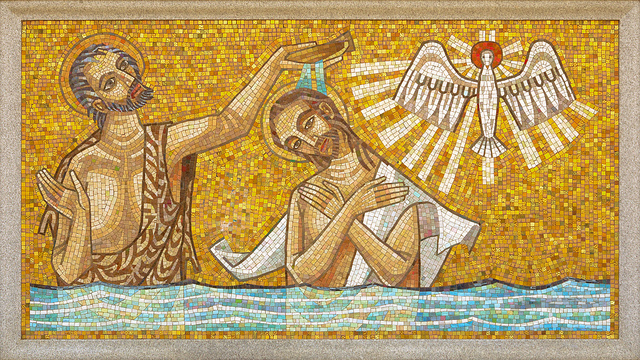
Today is the Sunday in which we commemorate the Baptism of Jesus in the River Jordan.
It is another important Sunday in our Church Year.
In our Gospel reading for today, we find a very clear example of God’s reaching out to us.
We hear it in the Voice of God proclaiming to Jesus as he is baptized in the River Jordan,
“You are…my Beloved; with you I am well pleased,”
We find God reaching out to us in this baptism of Jesus.
And we find God reaching out in the Holy Spirit descending as a dove upon Jesus.
It is an incredible event—in the lives of those first followers and in our lives as Christians as well.
Here the standard is set.
In this moment, it has all come together.
In this moment, it is all very clear how this process is happening.
Here the breakthrough has happened to some extent.
For us it’s important because we too are still experiencing the benefits of that event.
This is more than Jesus’s baptism we celebrate today.
We are actually celebrating what happened at our own Baptism today.
What was spoken by God to Jesus is spoken to us as well in our baptisms:
“You are my Beloved; with you I am well pleased.”
Yes, I know: I preach a lot about baptism.
And I don’t just mean that I preach a lot about how much I like doing baptisms.
I preach often about how important each of our baptisms are to us because they are important.
Baptism is more than just a sprinkling rite we do here.
It’s more than just a christening we do of babies.
It is a radical event in our life—a life altering event.
In Baptism we are essentially adopted by God as one of God’s children.
We are made members of the Church (we become Christian).
And, as children of our God, we become inheritors of God’s Kingdom.
But even more than just that.
After the Baptism, when the priest traces a cross on the newly baptized person’s forehead, she or he says, “You are sealed by the Holy Spirit in Baptism and marked as Christ’s own for ever.”
This is essential to our belief of what happens at baptism.
And you’ve heard me peach about this over and over again because, in my estimation, it is so essential.
In baptism, we are all marked as Christ’s own.
For ever.
It is a bond that can never be broken. We can try to break it as we please. We can struggle under that bond.
We can squirm and resist it.
We can try to escape it.
But the simple fact is this: we can’t.
For ever is for ever.
No matter how much we may turn our backs on Christ, Christ never turns his back on us.
Not even when we become violent and try to overthrow democracy and the government.
No matter how much we try to turn away from Christ, to deny Christ, to pick Christ apart and make Christ something other than who he is, Christ never turns his back on us.
Christ never denies us.
What Baptism shows us, more than anything else, is that we always belong to Christ.
It shows us that Christ will never deny us or turn away from us.
When we realize that, we also realize that Baptism is THE defining moment in our lives as Christians.
What Baptism shows us, more than anything else, is that we always belong and are bound to a truly loving God.
It is shows us that God will never deny us or turn away or be separate from us.
Each of us is accepted and loved and equal to each other as children of a loving, living God.
But Baptism—just like our entire Christian life—is more than just feeling warm and fuzzy about our faith.
It’s more than Jesus and me.
Baptism is also about getting up and doing our baptism in this world.
It is also about standing up against evil and violence and hatred.
In our Baptismal Covenant, which we will renew here in a few moments, we promise a few things:
Celebrant
Will you seek and serve Christ in all persons, loving
your neighbor as yourself?
People
I will, with God's help.
Celebrant
Will you strive for justice and peace among all
people, and respect the dignity of every human
being?
People
I will, with God's help.
Will you strive for justice and peace among all peoples?
Will you respect the dignity of every human being?
You know what that means?
That means not being violent.
That means not killing people.
That means not swarming the streets and trying to overthrow the government because people have fed us lies about votes being stolen.
That means not being racists, and waving the confederate flag and the swastika—the very symbols of hate and oppression and fascism—through the Capitol building of the United States of America.
That means knowing that racism is an offensive sin against our God.
It’s a sin because when we are racist we are not seeking and serving Christ in all people, nor are we loving our neighbor as ourselves.
That means not ostrasizing people from the Church and calling them Pariahs
You can serve Christ and still deny Christ in the faces of others.
As people sealed by the Holy Spirit and marked as Christ’s own forever, we cannot do these things.
Because by doing so, we not only reap what we sow.
We also deny Christ.
See, baptism isn’t some sweet little christening rite after all.
It is radical.
It is life-altering.
The action of our baptism has life-long consquences.
The action of our baptism has eternal consequences.
We are all loved children of our God.
Christ will never be separated from us.
We are ablaze with the fire of the Holy Spirit.
Knowing that, let us go now from where we are to share God’s love and peace and acceptance with one another.
Let us love, full and completely.
And let us listen for those words—those beautiful, lulling words—that are spoken to each of us, with love and acceptance:
“You are my Beloved; with you I am well pleased.”
Let us pray.
Holy and loving God, we are grateful today that we are your children, and that through the waters of baptism and the cross, we are bound to Jesus with an unbreakable bond. Help us as strive to live out our baptism in this often dark and violent world. In this world in which the fires of fear and hatred are stoked and those in authority seek their own purposes and not the purposes of all of us, help us to see that you are constantly bringing down the mighty and raising up the lowly, because that is the very essence of your Kingdom. In Jesus name, we pray.


January 3, 2021
2 Christmas
January 3, 2021
Matthew 2.13-15,19-23
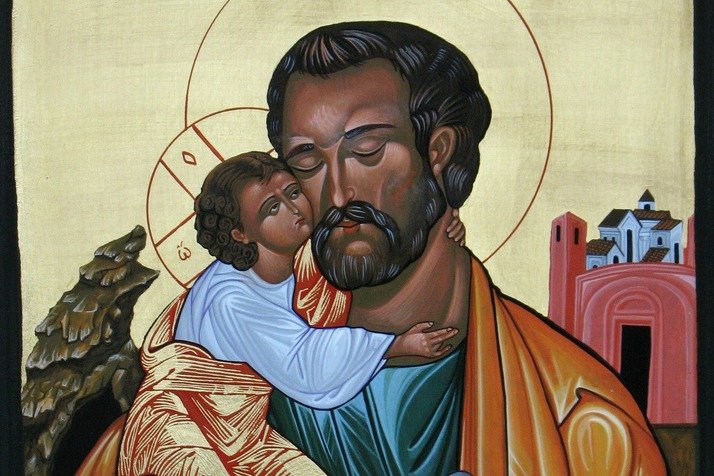
+ Every since I was a teenager I always had a special devotion to St. Joseph.
I don’t know why I did.
But just liked St.Joseph.
He is kind of the quiet saint.
We don’t hear a lot from him in scripture.
But when we do, he packs a punch!
He just simply does what God tells him to do and just goes with the flow, despite how strange that flow sometimes is in his life.
And his life was a strange one!
Well, this morning, in our Gospel reading he is kind of the star of the show
It’s actually a pretty terrifying story.
An angel warns poor St. Joseph to get up, to take his wife and the child that was born to her, and to flee to a foreign land because the King wants to kill the child.
It kind of sounds like The Mandalorean.
And what does he do?
He does just that.
He once again hees the words of an angel, places all his trust in God, he takes up his family, and he goes.
This is why I like St. Joseph.
He never questions God.
He doesn’t complain or cry to God.
He just heeds God’s call in his life and does what God wants him to do.
Which is the reason St. Jopeph is so popular as a saint.
And for a quiet, obedient saint who doesn’t appear very often in scripture, we will be hearing a lot about St. Joseph this coming year.
As some of you might know, Pope Francis has declared this year—2021—the year of St. Joseph.
I think that is wonderful thing to do.
I think we should think of and ponder St. Joseph and his life.
Because we can learn a lot from him.
And he is a good example to all of us on how to be faithful to God, even when faced with extraordinary hardship.
For example, look at him the days following Jesus’ birth.
Already he has to deal with his fiancée becoming pregnant, dreams of divine beings who tell him what to do, a child (which is not his) being born under incredible circumstances.
And now, this.
Someone wants to kill this child!
Obviously, the child is special.
Certainly, as we put behind us that strange and difficult year of 2020, as we head into the great unknown of this new year of 2021, we find ourselves feeling somewhat like Joseph and Mary.
We too have feared for our own lives this past year.
But we know that as we go forward, like them, we are led by God.
God is calling us forward, calling us into our future, calling us to venture into the unknown.
We are also being called to do so with absolute trust in God’s mercy.
In this story, we find examples abounding of trust in God.
Mary also is a wonderful example of wholehearted trust in God.
She seems, at first glance, to be kind of a peripheral character in the story.
No more poetry is coming from her mouth as it did when she sang the Magnificat to God when the angel announced to her that she would be bearing this child Jesus.
There are no words at all from her in this story.
Why? Because she’s no doubt busy caring the Child Jesus.
But what we do find is that she is living out, by her very life, the “yes” she made to that angel when it was announced to her that she would bear this Child that she now holds close to her.
Mary is an example to us that, occasionally, when forces beyond our understanding begin to work, all we must do at times is simply and quietly heed God’s command.
There are times for poetry and there are times when poetry just isn’t needed.
When the Child—God’s own Son—was formed in her womb, how could she not sing out with beautiful poetry?
Now, with kings seeking to actually kill her child, she simply sits in quietness and awe—holding Jesus close to her.
We too should do the same as we enter into this uncertain new year.
There will be more living with this pandemic ahead of us.
But we know in our own lives, in this time in which everything seems to uncertain and up-in-the-air, we can go forward either in fear or in quiet confidence, like Mary.
We can do so, holding Jesus close to us, against our beating, anxious hearts.
Like her, we have choices.
We can go into that future, kicking and screaming, our heels dug in.
Or we can go quietly and with dignity, holding our greatest hope and joy to us as we are led forward.
We are hopeful as we put this long, difficult year of 2020 behind us and look forward to a hopefully much better year of 2021.
We know that it is not an easy future ahead of us.
It is not a future without pain and hardships and much more work to do, more miles to cover.
There are long days and equally long nights lying before us.
But that same future contains, also, joy and fulfillment and loved ones.
It contains resuming a normal way of life again.
That future contains laughter and moments of exquisite beauty.
That future contains love, in whatever ways it may come to us.
That future that contains the rest of this long, cold winter, also contains the spring thaw and a glorious summer.
So, like Joseph and Mary, let us get up and go where we must go, even into an uncertain future.
Like Joseph, let us heed the calling to also go wherever God leads.
Like Mary, let us be led into that future with quiet dignity.
Let us go, with hope and trust in our God leading the way.
And with God leading us, the future, we know, is more glorious than we, in this strange, uncertain time, can even begin to understand or appreciate.
Let us pray.
Holy God, like St. Joseph, may we heed what you speak to us, even when we are the midst of upheaval and uncertainty; like Blessed Mary, may we continue to say “Yes” when you call, and may we, like her, bear your Word within us; may we do what call us to do and may we follow Jesus, your Word made flesh, wherever he leads; in his whose name we pray. Amen.
December 27, 2020
St. John the Divine: An Asexual Saint??

December 27, 2020
John 21.19b-24
+ Today is the feast of St. John the Divine.
St. John is believed to be the author not only of the Gospel bearing his name, but three epistles we find in the New Testament, AND the book of Revelation.
Now, I’ll be honest. I had never really considered St. John much before.
Of course, I knew his story.
Jesus’ “beloved disciple,” the one who remained with him until the very end, standing at the foot of the cross, comforting Jesus’ mother.
I knew it was to him that Jesus commended his mother as he died—an important act in that time and place, wherein a woman without a male protector of some sort would have been a non-entity.
But recently, I started wondering about who St. John the Divine actually was.
And my interest was especially piqued by the traditional view the Church has taken of him.
There is a very interesting view of St. John that the Church has traditionally taken.
We get a clue of this from the traditional antiphons for Morning Prayer on his feast day.
The first antiphon for this feast day goes like this:
“John, the apostle, an evangelist, a virgin chosen by the Lord, was loved by the Lord above all others.”
And the second one is this:
“To the virgin John, Christ, dying on the cross, entrusted his virgin mother.”
Those antiphons no doubt jar us a bit.
This is not language we use very often anymore.
It seems so antiquated.
That word, “virgin,” is an especially strange one outside of the usual Church context we have—the Blessed Virgin Mary.
Of course the word “virgin” packs so much (mostly negative) meaning in our age.
But we have to understand that in earlier generations, a virgin would often just be defined as someone who eschewed sex for whatever reasons.
Or maybe even just a young, innocent person.
In our own day this has taken on even deeper meaning.
“Virgin” as a term is often seen as archaic or even misogynistic, since it is almost used in reference to women.
It is a term that is now often synonymous with sexual repression and frigidity.
But in the Church that was not necessarily how the word was understood.
At our
Wednesday night masses at St. Stephen’s, we often commemorate one of the heroic “virgin-martyrs” of the Church.These were young women who refused to follow the accepted role they had in society; essentially to marry, or to be given in marriage to men they had no real desire for.
For them, “virginity” was simply a symbol of their commitment to Jesus, and an eschewing of society and all that was expected of them as women.
As I have always seen then, these women were pretty radical and amazingly independent and fierce.
For us, though, these words don’t quite have the same meaning.
Terms we use now are words like “chastity” and “celibacy.”
Of course, we all know that in the Church celibacy (a refraining from sexual activity) is not seen as bad thing by any sense of the word.
It is seen as something that is commended and even encouraged among unmarried Christians.
But celibacy can also be seen as restrictive and coercive.
In recent years, the Roman Catholic Church and other denominations have promoted celibacy as the only “viable” option for gay and lesbian Christians.
In this case, celibacy is not a choice, but rather something that is forced upon individuals because of their sexual orientations.
As you know, I am of the firm conviction that celibacy should be a choice one makes on one’s self (hopefully through prayer and reflection) and not something that should be forced upon them.
Celibacy can be seen as something positive.
In my own upbringing, both when I was a teenager longing to be a Roman Catholic priest and even later in Anglo-Catholic tradition of the Episcopal Church, celibacy was as an important aspect for ordained ministry.
For example, in 1999, when I first went before Bishop Andy Fairfield, then-Bishop of North Dakota, who was known for his adamant opposition to homosexuality in the Church, he made very clear to me that, as an unmarried aspirant for ordination, I was to remain celibate.
He never asked if I was gay or straight.
He just said this was the way it was if I wanted to be ordained in the diocese.
“No sex outside of marriage” (which was, of course, then recognized in the Episcopal Diocese of North Dakota as only between a man and a woman.)
Despite all the political aspects of that connotation, I actually had no issue with remaining celibate so I very willingly went along with the rule of the day.
After all, for my entire teenage and adult life, I always said (only half-jokingly) that I was a “natural celibate.”
(More on all of that in moment)
But I do need to repeat something: despite my own “natural celibacy,” I want to be clear that celibacy is, by definition, a choiceone makes to refrain from sex.
And there have been many great leaders in the Church who have chosen this route.
Who knows?
Possibly St. John the Divine was celibate.
We’re pretty certain St. Paul the Apostle was celibate.
However, over the last 20 years or so, a movement has been at work especially in the United States.
Essentially beginning in about 2000 with a young man named David Jay, the so-called Asexual movement has grown and flourished among the small percentage of people who identify as Asexual.
Now for many of us, the term “asexual” is a strange one.
The first time I heard it, I thought of asexual reproduction.
I thought of something essentially meaning genderless. However, asexuality,

according to the website for the online community David Jay founded, The Asexuality Visibility and Education Network (or AVEN), is defined as such:
“An asexual person does not experience sexual attraction – they are not drawn to people sexually and do not desire to act upon attraction to others in a sexual way. Unlike celibacy, which is a choice to abstain from sexual activity, asexuality is an intrinsic part of who we are, just like other sexual orientations. Asexuality does not make our lives any worse or better; we just face a different set of needs and challenges than most sexual people do. There is considerable diversity among the asexual community in the needs and experiences often associated with sexuality including relationships, attraction, and arousal.”
(https://www.asexuality.org/?q=overview.html)

So, unlike celibacy, asexuality is not a choice.
It is a sexual orientation, just as straight or gay or bi or Trans are seen as sexual orientations.
Unlike celibacy, it is not something one chooses in one’s life. One simply is.
There are of course many layers and nuances to what it means to be asexual, but these are basics.
Which brings us back to my own story.
Over the last few years or so, I too have found myself learning more and more about asexuality and have realized, after much personal struggle, that I too am asexual.
Back in my teenage years, the Priesthood and its promise of celibacy was a wonderful relief for me from all the peer pressure to date and form romantic relationships.
The fact is that I never had any desire to date be in any kind of romantic relationship with anyone.
Later, with Bishop Andy and even later with Bishop’s Andy’s successor Bishop Michael Smith, in which celibacy for unmarried clergy was the norm, it was the easiest way for me to explain to people why I didn’t date and why I had no interest in being in a relationship.
Only after I studied and learned about asexuality and how distinct it is from celibacy, was I fully able to recognize that my “natural celibacy” was, in fact, asexuality.
And when I realized that I was asexual, I have to say I felt a huge weight lift from my shoulders.
The only way to describe how right it felt was to say that it felt like putting on a comfortable sweater that fits just right.
So, for me, when I read about St. John, this beloved disciple of Jesus, I am able to
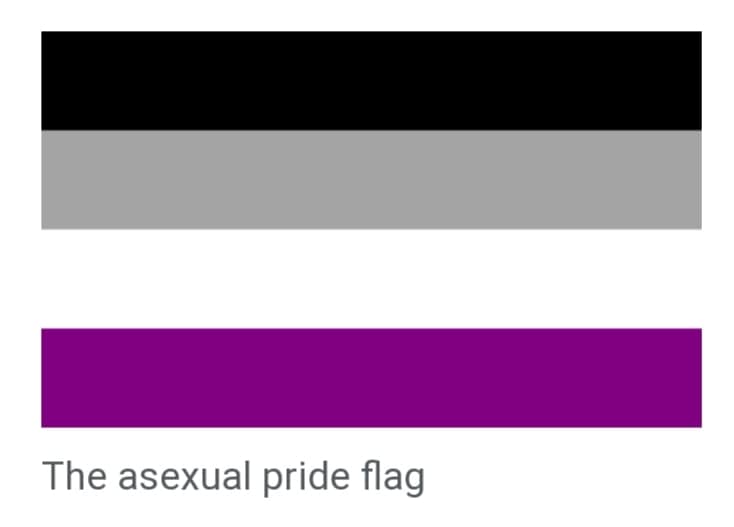
see in him a kind of patron saint of asexual (or “Ace” as the popular term now used) people like myself.
It’s important to stress that being asexual does not mean that an Ace person cannot feel real intimacy with another person.
Which brings us back to dear St. John.
As we have established, yes, St. John was probably celibate.
But could St. John have been asexual?
I think that is very much a real possibility.
I also think it is a very real possibility that St. Paul himself was probably asexual as well.
Celibacy in Judaism at that time, as it is even now, is something alien to a culture and religion that is primed to be “fruitful and multiply” so that the religion and race can flourish.
So, for a Jewish male to remain single was unique, to say the least
So, no doubt, it was strange for those early Christians to hear St. Paul himself write in his First Letter to Corinthians:
“To the unmarried and the widows I say that it is well for them to remain unmarried as I am.”
And some people, especially myself, could definitely interpret Jesus’ statement in Matthew Chapter 19 as something very meaningful to their own struggle:
“For there are eunuchs who have been so from birth, and there are eunuchs who have been made eunuchs by others, and there are eunuchs who have made themselves eunuchs for the sake of the kingdom of heaven. Let anyone accept this who can.”
For me, personally I have pondered this scripture many times since I came to the realization that I am asexual.
I definitely see it anew through this new lens.
In fact, when I was discussing this all with my friend Jordan on Christmas day, he made the observation that he believed Jesus himself may have been asexual.
I have not had time to ponder or process that, but it did open my eyes in a new way to who Jesus was on this earth.
But I will definitely be wrestling with this idea in the future no doubt.
For now, seeing scripture through this new lens has opened it up to me in so many ways.
In fact, I see the whole concept of eunuchs in scripture anew as I look it as an asexual person.
Similar to our understanding of the term “virgin” in scripture, so we can have a new understanding of eunuchs in scripture as well.
Eunuchs are not necessarily seen as just men who were physically castrated (which was very much a reality in Jesus’ world).
Eunuchs can also be seen as a person who simply not interested ins ex for whatever reasons.
Our new understanding of eunuchs in scripture helps us to realize that eunuchs were definitely one of the first recognized sexual minorities.
And in this way, asexual people, as well as a gay, lesbian, bisexual and transgender people, also relate, no doubt.
But this scripture from Matthew speaks loudly to me and no doubt to other Ace people.
For us, we can hear Jesus saying to us, Some are without sexual desire, some are simply made that way, and some renounce sex for the Kingdom of heaven.
What many asexual people hear in this scripture is an affirmation of who we are.
And we hear from Jesus himself that we are not broken, that there is not something inherently wrong with us, as so many sexual people have felt.
As I myself so many times thought.
Which brings us back once again to St. John.
I have also found myself pondering over that passage in today’s reading from St. John’s Gospel:
“Peter turned and saw the disciple whom Jesus loved following them; he was the one who had reclined next to Jesus at the supper…”
The beauty of this intimate action of St. John’s is that it is an action we ourselves should be imitating.
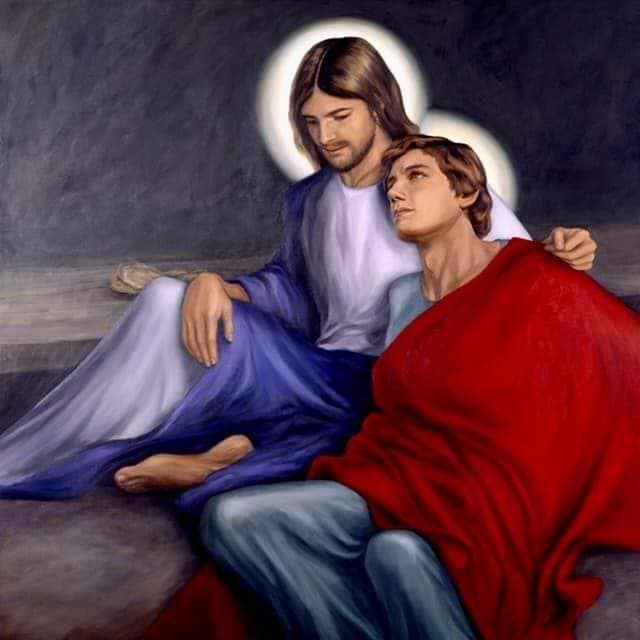
St Bonaventure said, “There [in that moment] our Lord fed [St. John] on the mysteries of his Divine wisdom, abundantly, uniquely, wholesomely, profitably.”
We, like St. John, should also be fed abundantly, uniquely, wholesomely, and profitably.
We should find our consolation, our joy, our absolutely gladness in that place, reclining alongside Jesus.
And more than just reclining.
We too should find ourselves in that place of complete trust.
We too should lay our heads—full of our sorrows, our troubles, our pains, our angers, our fears—we should lay our muddled heads against the breast of Jesus that contains his love-filled Heart.
There, in that place so near to the source of his love, acceptance and affection, we should find our shelter, our refreshment, the place we have longed to be spiritually and actually.
All of us can experience this love, no matter who we are.
That is the truly liberating aspect of Jesus’ love for us.
Each of us is loved just as John is loved.
Each of us is the “beloved one” of Jesus, no matter if we are asexual, straight, gay, trans, non-binary or whatever.
That love he feels for us is just as intimate and beautiful and life-altering as it was for John.
St. John truly is the model saint for all of us, not just the 1% of the population who are asexual.
Like him, we too should strive to be the one Jesus loves.
That love should be the only goal in our lives.
Let us pray.
Holy God, you blessed your Son’s life on this earth with loved ones who cared for him; bless us also with friends who love us and care for us. And help us to embrace who we are in this world—whether as gay or straight, bisexual, transgender or asexual—so that we may bless you and this world in which we live with our authentic selves; and in doing so may be see ourselves as beloved in your sight; in the name of Jesus our Beloved savior, on whose breast we long to lay our heads. Amen.
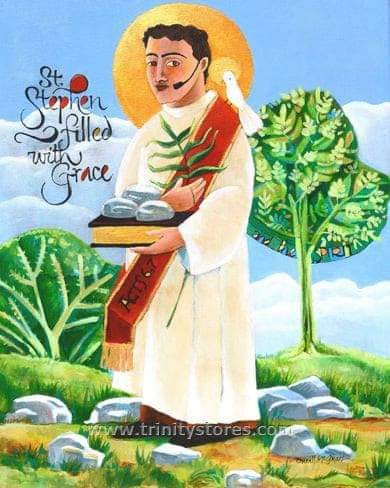
St. Stephen
December 26, 2015
+ I know.
You’re wondering, why are we commemorating St. Stephen today?
His feast day was yesterday, after all.
It’s the First Sunday after Christmas.
Usually on this Sunday, we hear the Gospel reading from the first chapter of John, which, as you may know, I love!!
Usually this Sunday is a white Sunday—all the white paraments are usually up for this Sunday.
But, today, everything’s red.
Well, sometimes we can transfer feasts like this, especially when it’s a feast that honors a parish’s patron saint.
So, we are celebrating St. Stephen for the very important reason that he is our patron saint of course.
So, we transferred his feast from yesterday so we could all enjoy St. Stephen.
After all, we very proudly bear his name.
I’ll get into all of that in a moment.
But, there’s another important reason we’re commemorating him today.
We have transferred his feast from yesterday because I really do think it’s important to remind ourselves how important St. Stephen is to all of us.
And…
I would like to, at this time, officially open our 65th year.
I christen it, shall we say?
Today, we officially begin our 65th year as a congregation.
This is something very important to commemorate.
65 years of amazing ministry in the Diocese of North Dakota.
Those first founders of church were a smart bunch.
They were a prophetic bunch.
Naming our church after St. Stephen was a smart thing.
Of course, the reason they came to this name was because St. Stephen’s Episcopal Church in Casselton, ND had just closed in 1953.
And we inherited many of their furnishings.
But St. Stephen was a great saint for us to have as our patron.
In the Orthodox and Roman traditions of the Church and even in our own Anglo-Catholic tradition, the patron saint of a church is viewed as more than just a namesake.
They are seen as special guardians of that parish.
And so, it is especially wonderful to celebrate a saint like St. Stephen, who is our guardian and who is, no doubt, present among us this morning, with that whole communion of saints, who is always present with us at worship.
St. Stephen, of course, was the proto-martyr of the Church
“Proto” is the important word here.
Proto means, essentially, first.
He was the first martyr of the Church.
He was the first one to die for his open proclamation of Christ.
He also is considered a proto deacon in the church.
That is important because of course this past year we celebrated our own proto-deacon.
This past year, we celebrated the ordination of our first deacon in our congregation, Deacon John.
And today he is wearing the red dalmatic in honor of St. Stephen.
The dalmatic is a vestment that deacons wear.
And often when we see paintings or icons of St. Stephen, he too is wearing a dalmatic, though he probably never actually wore one in real life
St. Stephen is a special patron saint of deacons—and of all people who share a ministry of servitude to others.
But St. Stephen is meaningful in other ways too.
One of the things I really appreciate about him is the clear vision he gives us of heaven and what awaits us afterward.
For most of us, heaven seems like a vague kind of thing—some cloudy other-world that awaits in the far reaches of existence.
But through St. Stephen’s eyes, we have a very clear vision of what it is like.
What does he see there?
He sees the throne of God in majesty.
And seated in honor and majesty at the right hand of God is Jesus.
We see this same vision in the writings of the saint who’s actual feast day is today, St. John the Evangelist or St. John the Beloved.
In his book of Revelation, he too gives us a very clear image of the same throne, with God seated there, and the Jesus as the Lamb at God’s right hand.
I love that imagery.
I love it because it all makes sense.
And I love it because I too can see it.
So, dear St. Stephen is more than just a proto-martyr and a patron of deacons.
He is also a visionary and prophet.
What better saint can we claim as our patron that St. Stephen?
He was the first to do many things.
Just like we, as a congregation, have been the first in doing many things.
St. Stephen, in his stance on a few issues, was not popular always obviously.
There is a reason they dragged him out and stoned him.
Well, neither are our opinions and our stances on some issues.
The stance we have made for full and equal inclusion of women and LGBTQ+ people has been VITAL for us.
And making the stance we have in the past and the reaction we have received from others, let me tell you, we can relate to St. Stephen.
So, again, talk about a perfect saint for us.
So it’s appropriate that this congregation that has been the first to do many things, is named after St. Stephen.
When we look back at our 65 year history, just think for a moment about all those people who came through the doors of this church, have sat in these pews.
Think about how many of those people who have come here after being hurt by the Church.
Think about how many have come here who were frustrated with the Church.
And more often than not, their relationship with God has suffered for it.
But have came here searching.
Searching for true religion.
Searching for a welcoming, open and inclusive community.
I can say that I was one of those people.
I came to St. Stephen’s in 2008 as a new but very Church-weary priest.
I had already experienced some of the worst the Church can do to people.
And I can say that if it hadn’t been for St. Stephen’s—if it hadn’t been for all of you—I’m not sure that I still be in the Church.
I thank you all for that.
For me, St. Stephen’s personifies in many ways, what true religion is.
The Church should be like a dinner to which everyone is invited.
And St. Stephen’s has always been the place that knows this one blunt fact: The only thing there is no room for in true religion is for those who cannot love each other.
St. Stephen’s is a place very much like a family.
We don’t always choose the people God has brought into our lives, but we always—ALWAYS—have to love them.
So what is true religion?
True religion begins and ends with love.
We must love one another as God loves us.
True religion begins with the realization that, first and foremost, God loves each and every one of us intimately.
When we can look at that person who drives us crazy and see in that person, someone God loves wholly and completely, then our relationship with that person changes.
We too are compelled to love that person as well.
Love is the beginning and end of true religion.
Certainly, St. Stephen’s has always been a place of love.
Love has never been a stranger here.
Love has been offered to God not only on this altar, but among the pews and in the undercroft and in the entryway and in the parking lot.
And most importantly in the lives of our members out in the larger world.
That love that God has commanded us to share has went out from here into all the world.
We who are gathered here have been touched in one way or the other by the love that has emanated from this place and these people.
We are the fortunate ones—the ones who have been transformed and changed by this love.
We are the lucky ones who have—through our experiences at St. Stephen’s—been able to get a glimpse of true religion.
But our job now is not to cherish it and hold it close to our hearts.
Our job now is to turn around and to share this love with others, even isolated as we are by the pandemic.
Our job is take this love and reflect it for everyone to see.
So, in a very real sense, we, at St. Stephen’s, are doing what that first St. Stephen did.
We have set the standard.
We have embodied who and what St. Stephen the Martyr stood for.
Even when it was not popular.
Even when people felt it wasn’t time.
Even when people said, “wait. There’s no rush. Why do this now?”
We have stood up again and again for what we have felt is our mission to accept all people in love.
We have journeyed out at times into uncharted territory.
And most importantly, we have, by our love, by our compassion, by our acceptance of all, been a reflection of what the Church—capital C—is truly capable of.
This is how we begin our 65th year.
We begin it by doing what we have always done.
We do it as St. Stephen’s did it—with our eyes firmly set on God, on Christ at God’s right hand, with our lips singing and praying, with our head held high, with love in heart, even if stones and rocks are falling around us.
We do so affirmed in our many ministries.
We do so, thankful for the ordained ministries of our new deacon who serves here.
We do so thankful or our continued place in the Episcopal Diocese of North Dakota and in the Episcopal Church.
We do so thankful for our uniquely Anglo-Catholic expression of Anglicanism here in Fargo and North Dakota.
It is an amazing time to be at St. Stephen’s, even if we’re not really AT St. Stephen’s right now.
Those poor founders of our church would only be amazed at what this congregation they envisioned in 1956 would one day be.
As we begin this 65th year, let us do with gratitude to God and one another in our hearts.
Let us shake off the negativity and those nagging doubts that have plagued us.
And let us, like St. Stephen, be strong and firm in our faith in God and our convictions of serving others in love.
And may our God—that source of all love, that author and giver of all good things—continue to bless us with love and goodness.
May we continue to flourish and grow.
And may we continue to venture bravely forward in all that we continue to do here among us and throughout the world.
Let us pray.
Holy and gracious God, when St. Stephen looked up, he saw you, seated in glory and majesty on your throne, with Jesus you Son seated at your right hand; we are grateful for Stephen and the vision he gives us of what awaits us in your Kingdom. Help us to embody St. Stephen’s spirit of strength and vision as we do the ministry you call us to do in this world, and let us, like him, come to that heavenly Kingdom that you have allowed us to see today. We ask this in Jesus’ holy Name. Amen.
December 24, 2020
Christmas Eve

December 24, 2020
+ I hope this doesn’t come as a huge surprise to many of you, but I am a HUGE church nerd.
Now, you may think: of course he is.
He’s a priest.
He should be a church a nerd.
Ah…you’d be surprise how many priests and pastors I know who are not church nerds.
For some priests, this is just another job.
But not for me.
I love being a priest.
I love being in church.
I spend most of my day doing church things, literally.
Literally, from the moment I get up in the morning to the moment I got bed at night, I am usually doing one sort of church thing or another.
Because I actually love doing it.
Even when I don’t love doing it.
If that makes sense.
And, while some clergy may complain about the fact that they have to work on Christmas Eve and Christmas Day, I definitely do not complain about such things.
I LOVE celebrating this Christmas Eve Mass, even now, in this pandemic, when these pews, which are normally packed full on Christmas Eve are now empty.
Actually, I don’t like that aspect of it at all.
Even now, I love this Mass.
(I also really love celebrating the Christmas Day Mass tomorrow)
Because, let’s face it: here it is.
This is what it’s all about.
This is why we celebrate.
This is why we do what we do at Christmas.
This is what we hope for.
And we are celebrating, even though we’re not “really” together.
It might be dark right now—it might not really feel like Christmas—but here, tonight, we celebrate Light.
And that is what I really love about this night!
We celebrate Jesus, who is God’s Light that has come to us wherever we might be in our lives.
We celebrate Jesus who breaks through into our darkness, in the darkness we might have in our own lives.
We celebrate the Light of Christ that has come to us when we’ve been sad or frustrated or fearful.
And as it does, no doubt most of us are feeling two emotions tonight—the two emotions Christmas is all about: hope and joy.
Hope—in our belief that God has sent Jesus to us as a glorious and wonderful gift.
Hope that what divides us from each other right now is only a temporary things.
Hope that next year, we will all be together, here, in these pews, celebrating this Light in person with each other again.
And Joy—at the realization of that reality.
And we celebrate the mystery of it too.
We will never fully understand how or why God in Jesus has come to us as this little child in a dark stable in the Middle East, but it has happened and, because it happened, we are…different.
We are better as a result of it.
God has reached out to us.
God—this God who truly does love us, who truly does know us, who truly does care for us---has reached out to us.
Just think about that for a moment.
God loves us enough to actually reach out to us.
And by doing so, we know tonight—without a doubt—that we are loved, we are accepted, we are truly known by our God.
Knowing that, what do we feel?
Hope!
And joy!
Because of Jesus, we know that God truly does know us, love us, accept us, and because of Christ’s presence with us, our lives are different because of what happened that evening when Jesus came to us as a sign of that love and acceptance.
Yes, I know.
This past year we may have known fear, we have known dread, we have feared for our lives and the lives of our loved ones.
It has been scary.
But tonight, as we gaze upon the face of the Child Jesus we are reminded that the same God who sent Jesus is the same God that is so close and so near, and because of that, everything we feared and dreaded is not so terrible.
This Child calms out fears.
This Child drives away our anxieties.
This Child gives us purpose again to go on.
This Child reminds us that God is in control and everything is going to be all right.
When we look at it from that perspective, suddenly we find our emotions heightened.
We find that our joy is a joy like few other joys we’ve had.
We find that our hope is more tangible—more real—than anything we have ever hoped in before.
And that is what we are celebrating this evening.
Our true hope and true joy is not in brightly colored lights and a pile of presents until a decorated tree.
Our true hope and joy is not found in the malls or the stores.
Our true hope and joy does not come to us with things that will, a week from now, be a fading memory.
Our hope and joy is in a God who has sent us our Savior, our Messiah in the person of this seemingly vulnerable Baby whose very presence causes us to leap up with joy at his very presence.
Our hope and joy is in that almighty and incredible God who would come to us, not on some celestial cloud with a sword in his hand and armies of angels flying about him.
Our hope and joy is in a God who reaches out to us right now, where we are, who sends us our Redeemer, our Messiah in this innocent child, born to a humble teenager.
Our hope and joy is in a God who gives us love in very concrete terms—love that has a face like our face and flesh like our flesh—a God who allows love to be born, like we are born.
Our hope and joy is in a God who comes to us and accepts us and loves us for who we are and what we are—a God who does not leave us alone in our hurts and our pains.
God loves us.
God knows each of us by name.
Each and every single one of us.
We are each precious and loved by our God.
That is what this night and this season of Christmas is all about.
This is the real reason why we are joyful and hopeful on this beautiful night.
This is why we are feeling within us a strange sense of longing.
God is here.
God is in our midst.
God is so near, our very bodies and souls are rejoicing.
So, let greet our God tonight with all that we have within us.
Let reach out to the God who is reaching out to us.
Let us welcome the Christ Child with true hope and true joy.
And let us welcome this holy Child into the shelter of our hearts, so that we can share God with others.
And let us rejoice in the fact that although it might seem dark and lonely right now, our God—the God of hope and love—will always restore us and fill us again with true hope and true love.
Let us pray.
Holy God, this glorious night is full of your glory, full of your joy. We truly rejoice tonight in the birth of Jesus. Fill us all with the Light you have brought us into the world on this holy night. Let it burn brightly within us. And may we reflect this joy in all we do and say. We ask this in Jesus’ holy name. Amen.
December 22, 2020
Christmas Letter
Advent-Christmas, 2020
My Friends at St. Stephen’s,
I think we all agree that this Christmas is not like any Christmas we have ever experienced. Most of us are physically separated from each other and from many of our loved ones. Of course, we gather virtually through Livestream and Zoom, but as we all know, these are sad replacements for real communion with one another.
As we near the birth of Jesus and prepare to celebrate all that that birth means to us, we do so looking with hope to our future. The vaccine is now out, and will hopefully finally bring an end to this long and arduous journey we have been on for these last nine months.
I may be optimistic (I try to be anyway), but my hope is that we will be returning to “normal” worship possibly by the spring. By the latest, I hope we will be able to gather to worship, to have coffee hour, to actually greet each other in person by Pentecost. Don’t hold me to this. But it is a goal in which I am hoping
For now, however, we must simply do what is expected of us to make sure we keep one another safe. Sadly, St. Stephen’s remains closed to public worship for now. Christmas Eve and Christmas Day Masses will be offered, as they have been, through Livestream. All our Masses will be uploaded to our website and to our YouTube pages. Please do join us for these masses. We now averaging about 77 people joining us for our virtual Masses. I am grateful for all those who are joining us.
For me, serving as St. Stephen’s continues to be one of the most fulfilling experiences of my priestly life even during these difficult times. I will admit: I despite preaching to an empty church. I miss your presence in the church. I miss our time of fellowship at coffee hour. I miss all of you, plain and simple.
As we move forward together into this future full of hope and potential reunion, I ask for your continued prayers for St. Stephen’s and your continued presence at our virtual liturgies.
Please know that I pray, as always, for each of you individually by name over the course of each week in my daily recitation of the Daily Office (Morning and Evening Prayer). Also know that I also remember all of you at the altar during celebration of the Mass. Above all, know that I give God thanks every day for the opportunity to serve such a wonderful, caring and loving congregation of people who are truly committed to loving God and others, to growth and to radical hospitality.
My sincerest Christmas blessings to all of you and to all those you love during this season of joy, love and HOPE.
PEACE always,
Advent- Christmas, 2020
at St. Stephen’s
Thursday December 24 - Christmas Eve
7:00 pm – Holy Eucharist
friday December 25 – Nativity of Our Lord
10:00 am Holy Eucharist
Sunday December 27 –Transferred Feast of St. Stephen
11:00 am – Holy Eucharist
Sunday December 27 –1 Christmas
11:00 am – Holy Eucharist
Wednesday December 30 –
6:00 pm - Mass of the New Year
All of our Masses are Livestreamed at our Facebook Group:
Facebook group: facebook.com/groups/52039214842
They are posted later to our Website: Ststephensfargo.org
And to our YouTube Channel; Youtube.com (“St. Stephen’s Fargo”)
December 20, 2020
4 Advent
Dec. 20, 2020
Luke 1.26-38
+ As you all know, I am a pretty solid and very proud Anglo-Catholic.
It’s just a part of who I am.
And I love my Anglo-Catholicism.
I am very unapologetic about it.
And I can tell you this: the specifically Anglo-Catholic expression of my Christian faith has been a very sustaining force in my life.
It has help me through some particularly hard times.
Now, I know for some people here at St. Stephen’s, these beliefs and practices have been…well…at times a bit frustrating.
For many others, it has been a relief knowing that Catholicism like this can still be lived out.
But for the most part, everyone has been supportive.
And, as we know, as St. Stephen’s has leaned more and more Anglo-Catholic over these last 12 years, we have been in the unique position of attracting many former Roman Catholics to our parish.
And we get to claim the unique claim that we are the only Anglo-Catholic parish in several hundred miles.
We proudly hold that distinction closely.
Of course, we were not always that kind of a parish.
Former Senior Warden Steve Bolduc once told me a story about how many years ago, long before I came here, there was a regional meeting at St. Stephen’s.
One of the priests of the diocese was overheard to say: “aww, St. Stephen’s. A parish so low it should be called MR. Stephen’s.”
Well, we ain’t that parish anymore!
All you have to do to realize that is either just take a look around here now, or step in the door and take a deep whiff of the lingering incense.
Now, I personally have been an Anglo-Catholic Episcopalian for at least 25 years.
And so, you know that I went to a very Anglo-Catholic seminary, Nashotah House.
It was kind of a good thing for me.
I learned a lot there.
I also learned some interesting Anglo-Catholic practices at my seminary.
At Nashotah House something happened three times every single day.
Three times every single day the big bell in the bell tower—named Michael—would chime, once in the morning before Morning Prayer, once at noon and once in the evening before Morning Prayer.
Whatever one was doing at that moment, they were expected to pause and quietly pray as the bell chimed.
The traditionally thing to do was to pray the Angelus as the bell rung.
The Angelus consists of three Hail Mary’s—the prayer based, yet again, on our Gospel reading from today—interspersed with vesicles also from our Gospel reading today. It begins with:
V. + The angel of the Lord announced unto Mary.
R. And she conceived by the Holy Spirit.
Say the Hail Mary
V. Behold the handmaid of the Lord.
R. Be it unto me according to thy Word.
Another Hail Mary
V. And the Word was made flesh .
R. And dwelt among us.
Another Hail Mary
Then we would say:
Pray for us, O Holy Mother of God, that we may be made worthy of the promises of Christ.
Then it ends with a wonderful collect that summarizes the Incarnation of Jesus for us:
Pour thy grace into our hearts, O Lord, that as we who have known the incarnation of thy Son Jesus Christ announced an angel to the Virgin Mary, may, by his cross + and passion, be brought to the glory of his resurrection; through the same Christ our Lord. Amen.
The Angelus has a long tradition in the church.
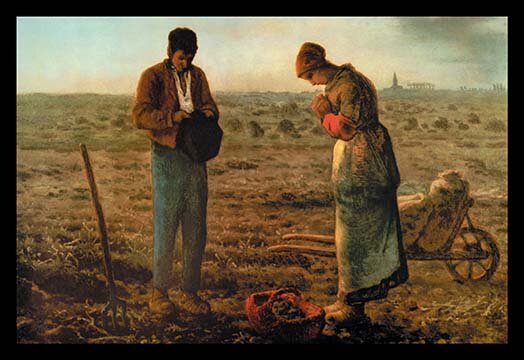
No doubt you’ve seen the very famous painting called “The Angelus” by Jean-Francois Millet of the farmers pausing in the midst of their field work to bow their heads in prayer as they hear the Angelus bell from the church in the nearby village.
Now this practice of praying that Angelus has stuck with me.
I don’t pray it three times a day anymore, sadly.
But I do pray it every morning when I wake up, and, if I’m not too exhausted, I pray it each night before I go to bed.
I deeply love the Angelus, because in a very real, it is a theological microcosm of what we will be celebrating this coming week.
And it is an important week on which we are about to embark.
Today, of course, is the last Sunday of Advent.
We will put away the Sarum blue for another year after our Wednesday night Mass this week.
The big Day—Christmas—is now almost agonizingly close.
On the surface level, we, hopefully, are as prepared as we can be.
Presents are hopefully bought.
Cards have been sent.
Menus have been prepared.
I hope you’re planning on being safe and not planning huge gatherings.
It’s going to be a very different Christmas that any we have ever celebrated before, with so many of us still separated by the pandemic.
But spiritually, where are we prepared?
This time of Advent was a time for us to prepare ourselves spiritually for this glorious event.
Has it been worthwhile?
Are we prepared spiritually for this big day that is about to dawn?
The truly honest answer to that question can only be another question: are we ever truly prepared?
Or maybe even more honest would be the question: what exactly are we preparing ourselves for?
The answer to the first question finds its answer in the second question.
What are we preparing ourselves for?
What do we believe about this day that is about to dawn upon us?
Do we believe it is just another holiday full of trinkets and caroling?
Or do we believe that this Day is an awesome Day—a Day in which, truly God draws near to us.
And not just that! That God comes to us, is here with us!
And there, I think, is the gist of it all.
This day we celebrate this coming week is not some sweet, gentle little holiday, just involving a smiling, bright-faced baby in a barn.
Not for us, anyway, who called ourselves Christians.
This day is about God coming to us.
God, in the form of this baby.
That is what we are hearing about in today’s Gospel reading with the Angel Gabriel coming to Mary and that is what we are celebrating this coming week in the birth of Jesus.
In the Gospel reading, we are looking back roughly nine months from now.
We are looking back to that moment when God came to us, when God moved—and it all happened because Mary said “yes” to the Angel.
Incarnation—God with us and among us—is at the heart of what we as Christians believe.
For us, Jesus isn’t just some nice teacher like the Buddha.
(and to be clear, I greatly respect the Buddha)
But Jesus isn’t like the Buddha or any other great teacher.
For us, in Jesus God has come to us.
It is the defining belief among us.
It is what makes us different than our Jewish brothers and sisters.
Yes, we believe in the same God.
But we believe that this same God has taken on human flesh and come among us.
It is also what makes us different than our Muslim brothers and sisters.
Again, we believe in the same God.
Yes, they revere Jesus as a great prophet and Mary as a truly holy servant of God, but they cannot quite accept the fact that God has become flesh in the person of Jesus, that God would have a child.
We, as Christians, do believe this.
We profess it every week in our Creed.
We celebrate it in our scripture readings.
And we partake of this belief in a very tangible way at the altar when we share Holy Eucharist with each other—either in person or spiritually.
And certainly it also a major part of our outreach and ministry.
Because God has come to us in Jesus, we now see God present in those we serve.
Every person—no matter who or what they are—is holy and special because of this event, this Incarnation.
And we can even see God present in own selves.
Everything we do as Christians proclaims the fact we believe that, in Jesus, God has come among us.
The fact is, most of us probably haven’t given this whole idea of God-with-us a whole lot of thought.
Even the early Christians struggled with this belief and defined it in various ways.
For us, though, as Episcopalians, we do believe in this remarkable fact.
And we celebrate it at every opportunity we can.
Certainly every Sunday we celebrate it—here at the altar.
Our Eucharist is a remembrance of the fact that, yes, God continues to come to us, in this bread and this wine.
In Jesus, God has become present with us.
He also encompassed everything we longed for and hoped in.
He was—and is—God.
In Jesus, we know that our God is not just some vague and distant being “out there” somewhere.
In Jesus, God is right here, with us.
In Jesus, we find God breaking through to us.
In Jesus, God has come among us and dwells among us as one of us, speaking to us as one of us.
And although many of us are still resisting it, those of us who recognize it and see it, realize that God has truly broken through to us.
It’s all, of course, a mystery.
It is beyond our understanding and our rational thought that God could do this.
But at the same time, for those of us who have faith in God, we can just easily ask the question: why not?
Why couldn’t God do just this?
Why couldn’t God come among us and dwell with us as one of us.
Certainly this is the reality we face this coming Thursday night and Friday.
For those of us who have been preparing ourselves spiritually for this day, this is what we are forced to examine and face.
Our faith might not be quite at that point that we believe all of it.
But what our faith does tell us is that, whatever happens on that day, it is God breaking through to us in some wonderful and mysterious way.
And all we have to do is not be stubborn or close-minded and cold-hearted.
Rather, all we have to do is be open to that breaking through to us.
The Word was made flesh.
And dwelt among us.
Our response to that Word should be the words of Mary when this incredible mystery descended upon her.
Let it be with me according to your word.
God has broken through to us.
Let us meet God at that point of breakthrough rejoicing.
And let us come away from that breaking through to us with God’s Word being proclaimed in our own voice.
Let us pray.
+ The Angel of the Lord did announce to Mary. And she did conceive by the power the Holy Spirit. Let us behold the handmaid of the Lord. Let it be to us, O Lord, according to you Word. For the Word was made flesh and dwelt among us.
Pour your grace in our hearts, O Lord, that we who have known the incarnation of your Son Jesus, which was announced by the Angel Gabriel to the Virgin Mary, whom you have blessed for all generations, may by his Cross + and Passion, be brought to the glory of his resurrection, through the same Christ our Lord. Amen.
December 13, 2020
3 Advent
Gaudete Sunday
December 13, 2020
Isaiah 61.1-4, 8-11;1 Thes. 5.16-24; John 1.6-8, 19-28
+ Today is, of course, Gaudete Sunday.
Or Rose Sunday.
It is always a special Sunday here at St. Stephen’s and for the Church as a whole.
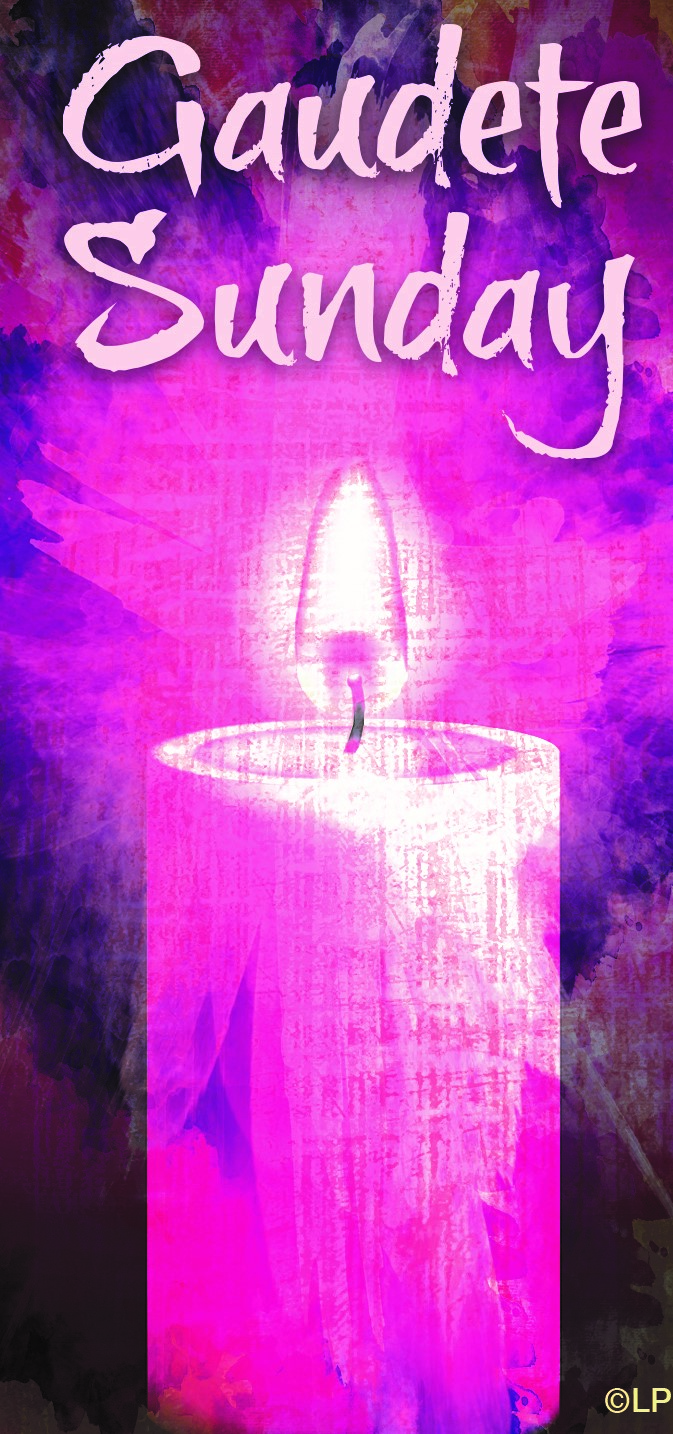
Traditionally, on Gaudete Sunday, we light the pink candle on the Advent wreath.
Lighting the pink candle is a sign to us that the shift has happened.
Now there are more candles lit than are unlit on the wreath.
The light has won out and the darkness, we are realizing, is not an eternal darkness.
But most importantly, Gaudete means “rejoice.”
And that is exactly what we should be doing on this Sunday.
We should rejoice in the light that is winning out over the darkness.
We should rejoice in the fact that darkness has no lasting power over us.
We should rejoice in all that God has done for us and continues to do for us in our lives, in our ministries and here particularly at St. Stephen’s.
This Sunday sets a tone different than the one we’ve had so-far in Advent.
We find this word—rejoice—ringing out throughout our scriptural readings today.
It is the theme of the day.
Rejoice!
It is the emotion that permeates everything we hear in the Liturgy of the Word on this Sunday.
In our reading from the Hebrew Bible, in Isaiah, we hear
I will greatly rejoice in the Lord,
my whole being shall exult in my God;
In our Epistle, we find even Paul—who seems a bit, shall we say, dour at times— rejoicing.
“Rejoice always,” he writes to the church at Thessalonika.
And, although the word “rejoice” cannot be found in our Gospel reading for today, the sentiment is there.
John the Baptist, we are told, was not the light, but came to testify to the light—that light being, of course, Jesus.
Again, that is something about which to rejoice.
Now, I know that, with a pandemic, with things looking a bit bleak in the world right now, it’s hard to rejoice.
I know.
The vaccine will be on its way beginning tomorrow
There is a light at the end of this very long tunnel.
But, for now, we are still in the midst of it all.
But that’s what Advent reminds us to do even in dark times.
Even when it seems like the Light is still far off, even then we rejoice.
This emotion of joy is something we oftentimes take for granted.
Let’s face it, joy doesn’t happen often enough in our lives.
It certainly doesn’t happen enough in my life.
I wish it did.
It is a rare occurrence for the most part.
And maybe it should be.
It is certainly not something we want to take for granted.
When joy comes to us, we want to let it flow through us.
We want it to overwhelm us.
But we often don’t think about how essential joy is to us.
Joy is essential to all of us as Christians.
It is one of those marks that make us who we are as Christians.
Or it should anyway.
We should be joyful.
We have a God who loves us, who knows us, who wants the very best for us.
We have a God who reaches out to us in the Light of Jesus that we celebrate at this time of the year.
That alone is a reason to be joyful.
But, sadly, as we all know, there aren’t always that many joyful Christians.
We have all known those dour-faced Christians, those Christians who are angry or bitter or false.
And right now we’re seeing a lot of crazy, insane Christians acting terribly in the name of Christ.
To me, people who act in hate and lawlessness (which we are definitely seeing right now) in the Name of Christ is nothing less than sacrilege!
There are those Christians for whom a smile is a chore.
That is not what God intends for us.
We all should be joyful Christians.
“Should” is the word.
Still, as we all know, there are moments.
There are moments when we simply cannot muster joy.
No matter how much we try to break the hold the hard, difficult things of life have placed on us, it is hard sometimes to feel real joy.
Cultivating joy in the midst of overwhelming sorrow or pain or loneliness or depression or a pandemic can seems overwhelming and impossible.
That’s why joy really is a discipline.
When things like sorrow or pain or loneliness or depression descend upon—and they descend upon us all—we need, in those moments, to realize that joy might not be with us in that moment, but—and here’s the important thing—joy always returns.
Joy always returns.
We need to search deep within us for that joy that we have as Christians.
And when we search for it, we will find it, even when life seems so miserable and so overwhelming.
That joy often comes when we put our pains into perspective.
That joy comes when we recognize that these dark moments that happen in our lives are not eternal.
They will not last forever.
Darkness never lasts forever.
That, I think, is where we sometimes fail.
When we are in the midst of those negative emotions in our lives, we often feel as though they will never end.
We often feel as though we will always be lonely, we always be sad, we will always mourn.
As Christians, we can’t allow ourselves to be boxed in by despair.
As Christians, we are forced, again and again, to look at the larger picture—at God’s larger picture.
We are forced to see that joy is always there, just beyond our grasp, awaiting us.
Joy is there when we realize that in the midst of our darkness, there is always light just beyond our reach.
And when it comes back into our lives, it truly is wonderful…
Because that is what God wants for us.
Joy not always something one is able to identify in a person.
Joy doesn’t mean walking around smiling all the time.
It doesn’t mean that we have force ourselves to be happy at all times in the face of every bad thing.
If we do that, joy becomes false and forced.
True joy comes bubbling up from within us.
It is a true grace.
Remember last week when I talked about grace.
Last week, I defined grace in very simple terms:
Grace is a gift we receive from God we neither ask for nor anticipate.
In that way, joy is a gift we are given that we simply don’t ask for.
Rather, it comes from a deep place and it permeates our whole being, no matter what else is going on in our lives or in the world around us.
It is a joy that comes from deep within our very essence—from that place of our true selves.
And, let me tell you from my own experience, joy can still be present in times of mourning, in times of darkness, in times of despair.
It might not be joy at its greatest effect, but there are glimmers of joy even in those dark times.
Advent is, as I said on the first Sunday of Advent, essentially, a penitential season.
It is a time for us to recognize that we are slugging through the muck of our lives—a muck we are at least, in part, responsible for.
But Advent is also a time for us to be able to rejoice even in the midst of that muck.
It is a time for us realize that we will not be in that muck forever.
The muck doesn’t win out.
God wins out.
Christ’s light in this world is more powerful than any darkness.
And Christ’s light always wins out.
Our light—the Light of Christ within us—will outlast whatever darkness we are experiencing right now in our own lives or in the world.
See, even in the face of darkness, we find hope and we can find joy.
The joy we carry deep within is too powerful to die.
This powerful joy will win out and outlast any darkness.
So, this morning, let us remember the joy we feel at seeing this pink candle lit.
Let us carry the spirit of this rose-colored Sunday with us.
Yes, I will say it: let us look at life with rose-colored glasses (we can legitimately do that today!)
We have made it this far.
The tide has shifted.
The light is winning out.
The dawn is about to break upon our long dark night.
As we ponder this, as we meditate on this, as we take this with us in our hearts, let us pay special attention to the emotion this causes within us.
Let us embrace that welling up of joy from deep within.
And let it proclaim with our lips the words we, along the prophet Isaiah, long to say:
I will greatly rejoice in the Lord,
my whole being shall exult in my God!
Let us pray.
We rejoice greatly in your, Loving God; even in our darkness you send us Light—the Light of our Savior Christ. Even when we feel alone and abandoned, you come close to us and hold us close. We rejoice in you today, and all our days, who comes to us again and again in the person of Jesus our Lord, in whose name we pray. Amen.
December 6, 2020
2 Advent
December 6, 2020
Isaiah 40.1-11; Mark 1.1-8
+ One thing we often hear about if any of us have been Christians for any period of time is the big question:
What must one do to be saved?
Because many of us who believe really do have a fear of hell and eternal damnation, especially those of us who came from churches that preached those things on a regular basis.
Now, in many churches, we heard that all one had to do to gain heaven and glorious eternity was make this simple statement: I accept Jesus Christ as my personal Lord and Savior.
The rest of us, who didn’t make this statement, were in deep trouble.
Now, on some level, that makes some sense.
It seems simple.
If someone doesn’t accept Christ, then Christ shouldturn his back on those who didn’t accept him.
After all, we would turn our backs on those who would not accept us, right? .
And there should be a place where we had to pay for the wrongs we did.
We simply can’t sin and expect not to pay for it in some way, right?
But certainly for me, in my own spiritual life, as I grew into my relationship with Christ and as I started to look long and hard at everything I have believed, I realize that there is one thing those people who believe that way have missed.
It was one simple little word:
Grace.
Now, my very simplistic definition of grace is this:
Grace is a gift we receive from God that we neither ask for nor necessarily deserve.
In the Gospel we heard this morning, we hear the echoing words of John the Baptist.
The one who is more powerful than I is coming after me;
He is that lone voice calling to us in the wilderness.
It is a voice of hope.
It is a voice of substance.
It is a voice of salvation.
More importantly, John’s message is a message of Grace.
This powerful One is coming!
There’s no avoiding it.
God is coming to us.
This is the ultimate grace in a very real sense.
Although we have been hoping for God to come to us and save us, it is not something that we have necessarily asked for or deserve.
God comes to us in God’s own time.
It is this one fact—grace—that makes all the difference in the world.
It is what makes the difference between eternal life and eternal damnation.
Now, there are those who believe that there is an eternal hell.
And if you’re not right with God, they say, that’s exactly where you’re going.
The fault in this message is simple: none of us are right with God.
As long as we are on this side of the veil, so to speak, we fall short of what God wants for us.
We have all sinned and we will all sin again.
That’s the fact.
But that’s where grace comes in.
Grace is, excuse my language, the trump card.
Grace sets us free.
Grace involves one simple little fact that so many Christians seem to overlook.
And this is the biggest realization for me as a Christian:
Just because one doesn’t accept Christ doesn’t mean that Christ doesn’t accept us.
Christ accepts us.
Plain and simple.
Even if we turn our backs on Christ.
Even if we do everything in our limited powers to separate ourselves from Christ, the fact of the matter is that nothingcan separates from Christ.
Christ accepts every single person—no matter what we believe, or don’t believe, no matter if Christ is some abstract concept to us or a close, personal friend.
That’s right, I did say “personal.”
Because, yes, it’s wonderful and beautiful to have a personal relationship with Christ.
Our personal relationship with Christ is essential to our faith, as you have heard me say many, many times.
But the fact is, Christ isn’t the personalsavior to any one of us in this place.
He saves all of us, equally.
That is grace.
That is how much Christ loves us.
Now, you’ve heard me speaking out on Facebook the last day or so about certain people being denied Holy Communion in certain churches.
You know where I stand on that!
But to me, that is one of the ultimate travesties of Christianity.
Denying Christ in the Sacrament of the Eucharist is dangerous ground!
Because it is not our place—not mine, not any priest or bishop or cardinal, or anyone else—to deny Christ to anyone.
Christ is not some precious little treasure we get to keep all to ourselves and share only with those who believe just like we do.
Sure, we can say that’s “pastoral.” We can see we’re doing them a favor.
Please! Spare me!
We can say, this person we are denying communion to is a sinner because they take a view that conflicts with the Church.
But you now what? That smacks of hypocrisy!
After all, we are all sinners, and to deny people Christ just because they are sinners is to defeat the very purpose of Christ’s Eucharist.
Those priests who do so will have some serious explaining to do when they come before the throne of Christ one day!
I wouldn’t want to be in their place!
Now, I have preached this message my entire adult life as a Christian, and certainly as priest.
And, as you can imagine, there have been, shall we say, a few critics.
And some of these critics—actually quite a few of these critics—have been quite vocal.
In fact, I once preached this very same message one evening not long after I was ordained to the priesthood in a very diverse venue of what I thought were somewhat progressive Lutherans.
Later, I learned, I was essentially blackballed from that venue for that sermon.
I also preached it once at another congregation, at which I was a guest.
After I preached it, the presider at the service actually got up and “corrected” my sermon in front of everybody.
Critics of this message say that what I am talking about is cheap grace.
Cheap grace?
No, I counter.
And I still counter!
Again and again.
No, not cheap grace.
It’s actually quite expensive grace.
It was grace bought at quite a price.
And no, I’m not being naïve or fluffy here.
Trust me, I have known some truly despicable people in my life.
I have been hurt by some of these people and I have seen others hurt by these people.
The world is full of people who are awful and terrible.
And sometimes the most awful and terrible person we know is the one staring back at us in our own mirrors.
But the fact is, that even when we can’t love them or ourselves, when we can’t do anything else but feel anger and hatred toward them, Christ does love them.
Christ accepts them, just as Christ accepts each of us.
Christ doesn’t necessarily accept their actions. Christ doesn’t accept their sins, or their failings, or their blatant embrace of what is wrong.
But, not even their despicable nature can separate them from Christ’s love.
Nothing—not even priests or bishops or Cardinals—can separate us from Christ’s love and from Christ’s promise to eternal life.
That is how God works in this world.
That is why God sent Christ to us.
I believe in that image we hear from our reading from the prophecies of Isaiah today:
[God] will feed his flock like a shepherd;
he will gather the lambs in his arms,
and carry them in his bosom,
We will be gathered up by our God, and we will be carried into our God’s bosom.
I love that image!
Because it conveys God’s true and abiding love for us.
It’s a hard concept for those us who were taught otherwise.
But I do believe it.
I believe it because of the personal relationship I have with Christ.
The Christ I have come to know and to love and to serve is simply that full of love.
So, do I believe we’re all going to heaven when we die?
Well, yes.
I really do believe that.
Why?
Because, the love of Christ is just that big.
It is just that wonderful and just that all-encompassing.
It is just that powerful.
If one person is in some metaphysical, eternal hell for being a despicable person, then, you know what? the love of Christ has failed.
Something has, in fact, come between that person and Christ.
I do not believe that hell or Satan or sin or the Church or priests who deny communion to others or anything else is big enough to separate us fully and completely from Christ.
Not even we, ourselves, can turn our backs on Christ because wherever we turn, Christ is there for us.
So, listen.
In this Advent season of hope, John’s voice is calling to us from the wilderness.
He is saying,
Christ is near.
Christ is coming to us.
Let us go out, in grace, to meet him!
Come, Lord Jesus!
Let us pray.
Come, Lord Jesus. Come soon to us. Come to us with power and glory. And grace. and let us know that no matter how often we may turn our backs on you, you have never once turned your back on us. You have always been with us and remain with us. And that nothing in all the world can separate us from you. For this, we are truly thankful today. Amen.
November 29, 2020
1 Advent
November 29, 2020
1 Corinthians 1.3-9; Mark 13.24-37
+ Well, it is the first Sunday of Advent.
This season in which we, as the Church, turn our attention, just like the rest of the world, toward Christmas.
It is a time of preparation.
It is a time to remind ourselves that our time is limited.
It is a time in which we realize we need to get our affairs in order.
And there are many ways we can do that.
In my life, I had an interesting situation arise over the last few months.
I have shared this with many of you.
And in Friday, on Facebook, I shared a bit more about it.
It involves my sister.
So, in case you didn’t know, for many years—for most of my adult life—my sister and I were estranged from each other for various reasons.
This past summer, following the death of my brother (from whom I was also estranged), we realized that we needed to get past our differences.
And in doing so, we realized that the reasons we were at odds with each other had to do with a manipulative third party in our family.
I won’t get into all of that ugliness.
But it was a great lesson for me.
I realized that so much of what happened, so much pain and sorrow and suffering in our family occurred because of one person who could wreak so much discord and unhappiness.
And that the two of us, who prided ourselves on being “smart” and “seeing through people,” failed to do so in this situation, and as a result, we lived with division and anger.
Which only makes reconciliation so much sweeter!
For me, the reconciliation with my sister is a great story to carry with me as we enter the season of Advent.
We are forced, during this season, to realize that in God’s own time, in God’s own ways, everything will one day be made right.
The imbalances of this life will one day be balanced.
And that those things that divide us will one day be healed.
And that when all of that happens, there will be a true and abiding joy.
I am grateful on this first Sunday of Advent for the reconciliation in my own life.
I am grateful to have a relationship with my sister that I never had before.
Life seems a little less lonely now.
Life seems a little less dangerous and dark.
And, for me anyway, that is the real message of Advent.
We go through Advent as a way of preparing, spiritually, for Christmas, for the birth of the Messiah.
We do so by striving to shed ourselves of those dark things in our lives.
We do so by striving to shed darkeness and division and anger and fear.
And in this way, I think the Church year reflects our own lives in many ways.
That is what Advent is like.
We know this joyous event is coming, but to truly enjoy it, we need to prepare for it the best we can.
To truly enjoy this great Day, we need to try to shed those things in our lives that prevent us from feeling true joy.
Advent then is also a time of deep anticipation.
And in that way, I think is represents our own spiritual lives in a way other times of the church year don’t.
We are, after all, a people anticipating something.
We are hoping for something
Something.
But what?
Well, our scriptures give us a clue.
But what they talk about isn’t something that we should necessarily welcome with joy.
In our reading form Isaiah this morning, we find the prophet saying to God,
O that you would tear open the heavens and come down,
so that the mountains would quake at your presence--
as when fire kindles brushwood
and the fire causes water to boil--
to make your name known to your adversaries,
so that the nations might tremble at your presence!
That doesn’t sound like a pleasant day to be anticipating.
Even Jesus, echoing Isaiah, says in our Gospel reading:
In those days, after that suffering,
the sun will be darkened,
and the moon will not give its light,
and the stars will be falling from heaven,
and the powers in the heavens will be shaken.
Then they will see “the Son of Man coming in clouds” with great power and glory.
Well, that’s maybe a bit better, but it’s still pretty foreboding.
However, it doesn’t need to be all that foreboding.
Essentially, all of this is talk about “the day of the Lord” or the day when the Son of Man will come in the clouds” is really all about waiting for God, or for God’s Messiah.
It is all about God breaking through to us.
That is what Advent is all about.
God breaking through to us.
God coming to us where are we are.
God cutting through the darkness of our lives, with a glorious light.
For the Jews in Jesus’ time, waiting like we are, for the Messiah, they had specific ideas of what this Messiah would do.
Oppressed as they were by a foreign government—the Romans—with an even more foreign religion—paganism—, they expected someone like themselves to come to them and take up a sword.
This Messiah would drive away these foreign influences and allow them, as a people, to rise up and gain their rightful place.
And for those hearing the prophet Isaiah, the God who came in glory on that day would strike down the sinful, but also raise up those who were sorry.
The fact is, as we all know by now, God doesn’t work according to our human plans.
We can’t control God or make God do what we want.
And if we try, let me tell you, we will be deeply disappointed.
The Messiah that came to the people of Jesus’ day—and to us—was no solider.
There was no sword in his hand.
The “Son of Man” that came to them—and to us--was a baby, a child who was destined to suffer, just as we suffer to some extent, and to die, as we all must die.
But, what we are reminded of is that God’s Messiah will come again.
It is about what happened then, and what will happen.
This time of Advent is a time of attentiveness to the past, the present, and the future.
Attentiveness is the key word.
Actually, in our Gospel reading for today, we get a different way of stating it.
We get a kind of verbal alarm clock.
And we hear it in two different ways:
“Keep alert.”
“Keep awake.”
Jesus says it just those two ways in our reading from Mark: It seems simple enough.
“Keep alert” and “keep awake.”
Or to put it more bluntly, “Wake up!”
But is it simple?
Our job as Christians is sometimes no more than this.
It is simply a matter of staying awake, of being attentive or being alert, of not being lazy.
Our lives as Christians are sometimes simply responses to being spiritually alert.
For those of us who are tired, who are worn down by life, by pandemics and political strife, who spiritually or emotionally fatigued, our sluggishness sometimes manifests itself in our spiritual life and in our relationship with others.
When we become impatient in our watching, we sometimes forget what it is we are watching for.
We sometimes, in our fatigue, fail to see.
For us, that “something” that we are waiting for, that we keeping alert for, is none other than that glorious “day of our Lord Jesus Christ,” that we hear St. Paul talk about in his epistle this morning.
That glorious day of God breaking through to us comes when, in our attentiveness, we see the rays of the light breaking through to us in our tiredness and in our fatigue.
It breaks through to us in various ways.
We, who are in this sometimes foggy present moment, peering forward, sometimes have this moments of wonderful spiritual clarity.
Those moments are truly being alert—of being spiritually awake.
Sometimes we have it right here, in church, when we gather together.
I have shared with each of you at times when those moments sometimes come to me.
There are those moments when we can say, without a doubt: Yes, God exists!
But, more than that.
It is the moments when we say, God is real.
God is near.
God knows me.
God loves me.
And, in that wonderful moment, in that holy moment, the world about us blossoms!
This is what it means to be awake, to not be lazy.
See, the day the prophet talks about as a day of fear and trembling is only a day of fear and trembling if we aren’t awake.
For those of us who are awake, who truly see with our spiritual eyes, the day of the Lord is a glorious day.
For us, we see that God is our Parent.
Or as Isaiah says,
O Lord, you are our Father;
We are God’s fully loved and fully accepted children.
And then Isaiah goes on to say that
we are the clay, and you are our potter;
we are all the work of your hand.
Certainly, in a very real sense, today—this First Sunday of Advent— is a day in which we realize this fact.
Advent is a time for us to allow God to form us and make us in God’s image.
It is a time for us to maybe be kneaded and squeezed, but, through it all, we are being formed into something beautiful.
The rays of that glorious day when God breaks through to us is a glorious day!
And it is a day in which we realize we are all God’s loved and accepted children.
In this beautiful Sarum blue Advent season, we are reminded that the day of God’s reaching out to us is truly about dawn upon us.
The rays of the bright sun-lit dawn are already starting to lighten the darkness of our lives.
We realize, in this moment, that, despite all that has happened, despite the disappointments, despite the losses, despite the pandemic, despite politics, despite the pain each of us has had to bear, the ray of that glorious Light breaks through to us in that darkness and somehow, makes it all better.
But this is doesn’t happen in an instant.
Oftentimes that light is a gradual dawning in our lives.
Oftentimes, it happens gradually so we can adjust to it, so it doesn’t blind us.
Sometimes, our awakening is in stages, as though waking from a deep, slumbering sleep.
Our job as Christians is somewhat basic.
I’m not saying it’s easy.
But I am saying that it is basic.
Our job, as Christians, especially in this Advent time, is to be alert.
To be awake.
Spiritually and emotionally.
And, in being alert, we must see clearly.
We cannot, when that Day of Christ dawns, be found to lazy and sloughing.
Rather, when that Day of our Lord Jesus dawns, we should greet it joyfully, with bright eyes and a clear mind.
We should run toward that dawn as we never have before in our lives.
We should let the joy within us—the joy we have hid, we have tried to kill—the joy we have not allowed ourselves to feel—come pouring forth on that glorious day.
And in that moment, all those miserable things we have been dealt—all that loss, all that failure, all that unfairness—will dissipate like a bad dream on awakening.
“Keep alert,” Jesus says to us.
“Keep awake.”
It’s almost time.
Keep awake because that “something” you have been longing for all your spiritual life is about to happen.
It is about to break through into our lives.
And it is going to be glorious.
Let us pray.
O God of glory, our God and parents, we are longing for you in the darkness of our lives to break through to us; to come to us in this place and shed your Light upon us. And we know that when you do, it will truly be a glorious Day. We ask this in the name of your Messiah, Jesus our Savior. Amen.