Jamie Parsley's Blog, page 28
March 28, 2021
Palm Sunday

March 28, 2021
Mark 15.1-39
+ This coming week is, of course, Holy Week.
And as we begin it, I am doing so with a strange sense of hopefulness.
Last Holy Week was a surreal one.
I have said many times over this past year that last Easter was one of the most bizarre and bleak Easters I had ever experienced.
And we’d even had a baptism earlier that day.
This Holy Week, however, begins with a feeling of real hopefulness.
I think we may finally be heading out from under the dark cloud of Covid and looking to the future with a sense of tentative hope.
Thigns just feel a little better than they did.
Of course, we’re still being cautious.
Of course, we’re still being very careful.
But we are moving forward, and I am happy that we are doing so.
As this Holy Week begins, I also find myself a bit emotional, in addition to being hopeful.
Yes, I know.
To have to emotionally face all that Holy Week commemorates is not something I can say I look forward to.
I think it is emotionally difficult for all of us who call ourselves followers of Jesus.
How can it not, after all?
We, as followers of Jesus, as people who balance our lives on his life and teachings and guidance, are emotionally tied to this man.
This Jesus is not just mythical character to us.
He is a friend, a mentor, a very vital and essential part of our lives as Christians. He is truly “the Messiah, the son of the Blessed One,” that we heard in our Gospel reading for today.
So, to have to go through the emotional rollercoaster of this coming week in which he goes through his own death throes is hard on us.
And today, we get the whole rollercoaster in our liturgy and in our two Gospel readings.
Here we find a microcosm of the roller coaster ride of what is to come this week.
What begins this morning as joyful ends with jeers.
This day begins with us, his followers, singing our praises to Jesus, waving palm branches in victory.
He is, at the beginning of this week, popular and accepted.
For this moment, everyone seems to love him.
But then…within moments, a darkness falls.
Something terrible and horrible goes wrong.
What begin with rays of sunshine, ends in gathering dark storm clouds.
Those joyful, exuberant shouts turn into cries of anger and accusation.
Those who welcomed Jesus into Jerusalem have fled.
They have simply disappeared from sight.
And in their place an angry crowd shouts and demands the death of Jesus.
Even his followers, those who almost arrogantly proclaimed themselves followers of Jesus, have disappeared.
Their arrogance has turned to embarrassment and shame.
Jesus, whom we encounter at the beginning of this liturgy this morning surrounded by crowds of cheering, joyful people, is by the end of it, alone, abandoned, deserted—shunned.
Everyone he considered a friend—everyone he would have trusted—has left him.
And in his aloneness, he knows how they feel about him.
He knows that he is an embarrassment to them.
He knows that, in their eyes, he is a failure.
See, now, why I am not looking forward to this week?
But, we have to remind ourselves that what we encounter in the life of Jesus is not just about Jesus.
It is about us too.
We, in our own lives, have been to these dark places—these places wherein we have felt betrayed and abandoned and deserted, where we too have reached out and touched the feathertip of the angel of death, so to speak.
It is a hard place to be.
And it is one that, if we had a choice, we would not willingly journey toward.
But this week is more than dealing with darkness and despair.
It is a clear reminder to us that, yes, we like Jesus must journey roads we might not want to journey, but the darkness, the despair, death itself is not the end of the story.
Palm Sunday is not the end of the story.
Maundy Thursday and Good Friday are not the end of the story.
What this week shows us is that God prevails over all the dark and terrible things of this life.
And that God turns those things around again and again.
That is what we see in Jesus’ betrayal and death.
What seems like failure, is the actually victory.
What seems like loss, is actually gain.
What seems like death, is actually life unending.
Now, in this moment, we might be downcast.
Now, in this moment, we might be mourning and sad.
But, next Sunday at this time, we will be rejoicing.
Next Sunday, we will be rejoicing with all the choirs of angels and archangels who sing their unending hymns of praise.
We will be rejoicing in the fact that all the humiliation experienced this week has turned to joy, all desertion has turned to rewarding and wonderful friendship, all sadness to gladness, and death—horrible, ugly death—will be turned to full, complete and unending joy and life.
That is how God works.
And that is what we will be rejoicing in next week.
So, as we journey through the dark half of our liturgy today, as we trek alongside Jesus during this Holy Week of betrayal, torture and death, let us keep our eyes focused on the Light that is about to dawn in the darkness of our lives.
Let us move forward toward that Light.
Even though there might be sadness on our faces now, let the joy in our hearts prompt us forward along the path we dread to take.
And, next week at this time, we will be basking in that incredible Easter Light—a Light that triumphs over the darkness of not only Jesus’ death, but ours as well.
Let us pray.
Holy and loving God, be with us as we follow Jesus along this dark and ugly path. Help us we deal with all he had to endure. But help us also to keep our vision on what awaits us on the other side of this week—your Light and a dawn that will never end. We ask this in Jesus’ name. Amen.


March 27, 2021
From the Rector
REVISED COVID-19 PROTOCOLS FOR ST. STEPHEN’S.
March 28, 2021
Palm Sunday
Dear St. Stephen’s members and friends,
As we head into Holy Week, the Easter season and Spring, we are looking ahead hopefully as the numbers of new cases of Covid decrease and the numbers of people who have received the vaccine have increased.
Bishop Tom Ely and the Episcopal Diocese of North Dakota have just released their revised protocols for our Diocese. It is a relief, after all these many months, to be given a green light to cautiously and tentatively relax some of our protocols.
With that in mind, and in consultation with our Wardens John Baird and Jessica Anderson, I have also revisited our own protocols at St. Stephen’s and have point-by-point adapted the Diocesan protocols to our own particular needs.
Please be aware that these Protocols are subject to change. As we proceed, it my hope and prayer, that we will be able to relax more and more of them and that, sooner rather than later, we will return to some sense of “normal” by Dedication Sunday on September 12. Again, that is my hope, not a promise.
Above all, as we continue to gather for in-person worship, I cannot stress the fact that we must continue to be pro-active in how we gather. Under no circumstances will we relax our protocols regarding masks or social distancing for the foreseeable future.
As I said in March of 2020, when we were just beginning the very long saga together, my main commitment has been and continues to be the health and well-being of each of you. It has been my very real commitment that St. Stephen’s and anything we do here cannot under any circumstances be the reason one becomes ill. My main priority as your priest has always been your health and well-being, both spiritually and physically.
With that in mind, please read the following protocols and keep them in mind as you consider coming to in-person worship at St. Stephen’s.
Gathering: St. Stephen’s will continue prudent ways to decrease spread of disease. This includes the continued wearing of masks, distancing six feet, hand washing, avoiding others when sick, and ventilation such as open windows or meetings outside. We also have every other pew roped off. Please take full advantage of the hand sanitizer in the nave and elsewhere throughout the church. Also, please wash your hands thoroughly.
· On-line worship – because of the great success of online worship at St. Stephen’s, all of our Masses and other liturgies will continue to be Livestreamed on Facebook, uploaded to our YouTube Page and included on our Webpage.
-Our Facebook Livestream: https://facebook.com/groups/52039214842
-Our YouTube channel: https://www.youtube.com/channel/UCcdWKCnCHmviajkFX5p-xGg
-Our webpage: https://ststephensfargo.org
· In-person worship – Up to this point, we have not had any issues with too many people in attendance at our liturgies, though, over the last few weeks, as more and more parishioners have received the vaccine, our numbers have been steadily rising. We will continue to observe those numbers closely and act accordingly. All of our clergy, as well as our organist, have all been fully vaccinated.
· Funerals and special gatherings: We will continue to follow the same rules for these events as we do for in-person worship.
· Children’s Chapel: Children’s Chapel will remain suspended until we feel safe enough to provide it again.
Singing: Congregational singing is now allowed. However, use of a mask, continued social distancing and proper ventilation remain in place.
Passing the Peace: Touch-free greetings with no hand shaking or hugs will continue.
Holy Communion: We will continue our single station before the altar (no kneeling). We will continue to only provide the bread (no wine at this time). Masking and distance continue.
Surfaces and handouts: We will continue to use disposable booklets for all liturgies. The Prayer Books and Hymnals will not be used for the foreseeable future. The offering plates remain in a stationary position at the front of the nave. We will continue to ventilate the nave between liturgies.
Food: Coffee Hour will remain suspended, though we are looking at ways to offer a few experimental coffee hours outdoors during the summer. It is our hope that, as the numbers decrease, we may tentatively begin Coffee Hour in some form beginning in September.
Vaccinations: If you have not been vaccinated, please make a plan to do so soon.
STAYING HOME: I will add one more item; if you are feeling sick, afraid of exposing family members and/or loved ones or are simply feeling uncomfortable attending church at this time, please feel free to stay home and join us through our online worship. If you would like to receive Holy Communion, please contact me, and either Deacon John or myself will come to your home and bring Holy Communion.
Revisit your plan frequently: We will revisit these protocols again in a few months and revise them appropriately.
Please know that my prayers are with all of you during this holiest of seasons, and that I look forward to that wonderful day when I can see all of you again in person. Please know I pray for each of you by name in the course of the week in my daily prayers. Please pray for me as well.
-peace,
Fr. Jamie Parsley+, Rector
March 14, 2021
4 Lent
Lataere
March 14, 2021
Numbers 21.4-9; John 3.14-21
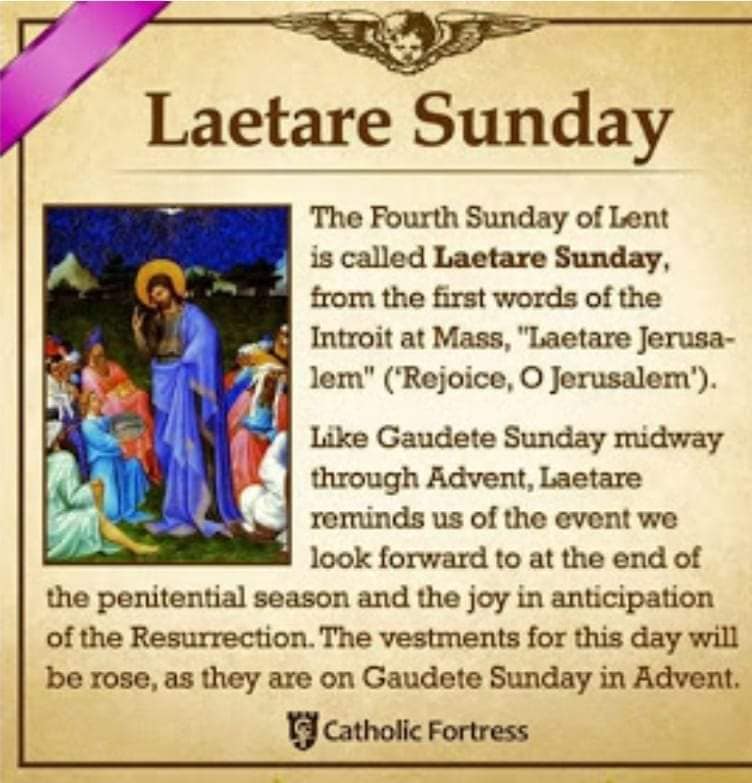
+ Today is Laetare Sunday, also known as “Rose Sunday.”
Laetare, as I remind everyone every year on this Sunday, is Latin for “joyful” and it is called this because on this Sunday, the traditional introit (or the psalm that was said by the priest in the old days when he approached the altar in the old Latin Mass) was “Laetare Jerusalem”—“rejoice Jerusalem.”
It’s also known by other names, such as “Refreshment Sunday.”
And it Britain it’s “Mothering Sunday.”
It is, of course, traditional on this Sunday to wear the rose or pink vestments.
And, in normal years, to have Simnel cake at our coffee hour.
This is our second Laetare Sunday without Simnel cake.
Man, do I miss Simnel cake!
Still, it’s a special Sunday.
It is sort of break in our Lenten purple, so to speak.
Today, we get to rejoice a bit.
Notice how I said, rejoicing “a bit.”
It’s a subdued rejoicing.
We’re still in Lent after all.
We might get a break from the Lenten purple.
But we don’t get a break from Lent.
After all, the purple returns tomorrow.
Also, our rejoicing is subdued due to the anniversary of dark events on this day.
It was one year ago that Covid was really raising it’s ugly head.
And if that wasn’t enough, what’s sadder for me is that tomorrow, March 15, it will be one year since we had our last “normal” Sunday.
We had our last coffee hour on March 15, 2020.
We had our last Children’s Chapel.
It was the last time we exchanged the Peace as we did.
It was the last time we shook hands.
It was the last time we saw so many of our friends and loved ones here, in this building, in these pews.
Last Laetare Sunday—March 22—was our first Sunday closed to public worship.
Let me tell you, there was not much rejoicing last Laetare Sunday, here or anywhere.
It has been a long, very hard year.
But this Rose Sunday feels a bit different.
Yes, of course, we are now passing into the latter days of Lent.
Palm Sunday and Holy Week are only two weeks away and Easter is three weeks away.
And with Easter in sight, we can, on this Sunday, lift up a slightly subdued prayer of rejoicing.
But more than that, it feels like we have definitely turned a corner.
So many of us have received our vaccines.
Many of us who have had our vaccines are feeling more comfortable coming together and being together.
We’re slowly seeing more people coming back to Mass again.
And we are looking ahead to trying to implement some of those things we lost last year.
We are looking ahead to planning some sort of coffee hour in the next few months, for lifting some of our restrictions, for moving cautiously forward and beyond this terrible, ugly pandemic.
We’re not there yet.
But, we’re getting closer.
The Easter light is within in sight, though it’s still feels pretty far off.
Now, I know Lent can be a bummer for us.
I know we don’t want to hear about things like sin.
I don’t want to hear about sin.
I don’t want to preach about sin.
Most of us have had to sit through countless hours listening to preachers go on and on about sin in our lives.
Many of us have had it driven into us and pounded into us and we just don’t want to hear it anymore.
Yes, we know we’re sinners sometimes.
But the fact is, we can’t get through this season of Lent without at least acknowledging sin.
Certainly, I as a priest, would be neglecting my duty if I didn’t at least mention it once during this season.
As much as we try to avoid sin and speak around it or ignore it, for those of us who are Christians, we just can’t.
We live in a world in which there is war and pandemics and crime and recession and division and sexism and homophobia and horrible racism and blatant lying and morally bankrupt people and, in looking at all of those things, we must face the fact that sin—people falling short of their ideal—is all around us.
And during this season of Lent, we find ourselves facing sin all the time.
It’s there in our scripture readings.
It’s right here in our liturgy.
It’s just…there.
Everywhere.
I certainly have struggled with this issue in my life.
As I said, I don’t like preaching about sin.
I would rather not do it.
I’d rather be preaching about peace and looking forward to better times.
But…I have to.
We all have to occasionally face the music, so to speak.
The fact is, people tend to define us by the sins we commit—they define us by illness—the spiritual leprosy within us—rather than by the people we really are underneath the sin.
And that person we are underneath is truly a person created in the holy image of God.
Sin, if we look it as a kind of illness, like leprosy or any other kind of sickness, truly does do these things to us.
It desensitizes us, it distorts us, it makes us less than who were are.
It blots out the holy image of God in which we were created.
And like sickness, we need to understand the source of the illness to truly get to heart of the matter.
Alexander Schmemann, the great Eastern Orthodox theologian, (and I believe he’s echoing the Protestant theologian Karl Barth here) wrote, “Essentially all sins come from two sources: flesh and pride.”
And if we are honest with ourselves, if we are blunt with ourselves, if we look hard at ourselves, we realize that, in those moments in which we have failed ourselves, when we have failed others, when we have failed God, the underlying issues can be found in either our pride or in our flesh.
This season of Lent is a time when we take into account where we have failed in ourselves, in our relationship with God and in our relationship with each other.
But—and I stress this—Lent is never a time for us to despair.
It is never a time to beat ourselves up over the sins we have committed.
It is rather a time for us to buck up.
It is a time in which we seek to improve ourselves.
It is a time in which, acknowledging those negative aspects of ourselves, we strive to rise above our failings.
It is a time for us to seek healing for the “leprosy” of our souls.
The Church is, after all, according to the early Christians, a Hospital.
And, in seeking, we do find that healing.
In our reading from Numbers today, we find a strange story, that also is about healing.
The Israelites are complaining about having the wander about in the desert.
I guess sometimes it’s not a good thing to complain to God, especially when God, in reality, provided everything you need.
So, according to the story, God sent poisonous serpents on the poor, ungrateful people.
The people acknowledge their sin—the fact that they maybe shouldn’t complain when things weren’t really so bad.
So, God tells Moses to “make” a snake, put it on a pole, and raise it up so all the Israelites can see it.
And in in seeing it, they will live.
Now, in case you missed it, for us Christians, this pole is important.
For us, this is a foreshadow of the cross.
If you don’t believe me, then you weren’t playing attention when Deacon John read our Gospel reading for today, which directly references our reading from Numbers.
Jesus then, in that way, turns it all around and makes something very meaningful to his followers—and to us—from this “raising up.”
Just as the poisonous snake was raised up on a pole, and the people were healed, so must Jesus be raised up on the cross, and the people also would be healed.
As you have heard me preach many times, the Cross is essential to us.
And not just as some quaint symbol of our faith.
Not as some gold-covered, sweet little thing we wear around our necks.
The Cross is a very potent symbol for us in our healing.
Gazing upon the cross, as those Israelites gazed upon the bronze serpent that Moses held up to them, we find ourselves healed.
And as we are healed, as we find our sins dissolved by the God Christ knew as he hung the cross, we come to an amazing realization.
We realize that we are not our sins.
And our sins are not us.
Our sins are no more us, than our illnesses are.
Our sins are no more us than our depressions are us, or our disappointments in life are us.
For those of us who have had serious illnesses—and as many of you know, I had cancer once—when we are living with our illness, we can easily start believing that our sickness and our very selves are one and the same.
But that is not, in reality, the case.
In this season of Lent, it is important for us to ponder the sickness of our sins, to examine what we have done and what we have failed to do and to consider how we can prevent it from happening again.
But, like our illnesses, once we have been healed, once our sins have been forgiven and they no longer have a hold over us, we do realize that, as scarred as we have been, as deeply destroyed as we thought we were by what we have done and not done, we have found that, in our renewal, we have been restored.
In the shadow of the cross, we are able to see ourselves as people freed and liberated.
We are able to rejoice in the fact that we are not our failures.
We are not what we have failed to do.
But in the shadow of the cross we see that we are loved and we are healed and we are cherished by our loving God.
And once we recognize that, then we too can turn our selves toward each other, glowing with that image of God imprinted upon us, and we too can love and heal and cherish.
See, sin does not have to make us despair.
When we despair over sin, sin wins out.
Rather, we can work on ourselves, we can improve ourselves, we can rise above our failings and we can then reflect God to others and even to ourselves.
So, on this Laetare Sunday—this Sunday in which we rejoice that we are now within the sight of that glorious Easter light—let us gaze at the cross, held up to us as a sign of our healing God.
And there, in the shadow of that Cross, let us be truly healed.
And, in doing so, let us reflect that healing to others so they too can be healed.
See, it is truly a time for us to rejoice.
Let us pray.
Loving God, we rejoice in you on this Rejoicing Sunday; we rejoice in the fact that you have sent your Son Jesus to lead on the right pathway, on the road that leads us, at times through dark and uncertain places, but leads us always to that place on the other side of the Cross—your Kingdom, that place of unending Light and life. In Jesus’ name, we pray. Amen.
March 7, 2021
3 Lent
March 8, 2021
Exodus 20.1-17; John 2.13-22
+ Lent, as you have heard me say over and over again, is a time for us to sort of quiet ourselves of course.
But, of course, it is so much more than that.
It is also a time to reorganize ourselves to a large extent.
It is a time to put things in order in our lives.
It is also a time to get rid of whatever clutter we might have knocking around inside us or in our lives.
It is a time, in following the Commandments that we, with Moses received at Mount Sinai in our reading from Exodus today, in which we must get rid of the “idols” of our lives—those many things we have and do and believe that come before our worship of God.
The clutter of our lives is that stuff in our lives—and “stuff” is the prefect word for it—that just piles up.
If you’re anything like me, we sometimes start ignoring our clutter.
We walk around and we see it, but we almost become used to the clutter.
The clutter ends up becoming a part of our lives.
We sort of do that too with our own spiritual clutter.
We don’t give it a second thought, even when we’re tripping over it and stumbling on it.
In fact, often we don’t fully realize how much clutter we have until after we’ve disposed of it.
When we see that clean, orderly room, we realize only then how clutter sort of made us lose our appreciation for the beauty of the room itself.
In Lent, what we dispose of is the clutter and “idols” of our spiritual lives.
And we all have spiritual clutter.
And e do have our “idols.”
We have those things that “get in the way.”
We have our bad habits.
We have those things that we do without even thinking we’re doing them.
And oftentimes, they’re not good for us—or at least they don’t enhance our spiritual lives, they don’t bring us closer to God.
Often the clutter in our spiritual lives gets in the way of our prayer life, our spiritual discipline, our all-important relationship with God.
The clutter in our spiritual life truly becomes something we find ourselves “tripping” over.
The clutter in our spiritual life causes us to stumble occasionally.
And when it does, we find our spiritual life less than what it should be.
Sometimes it’s just “off.”
During Lent, it is an important time to take a look around us.
It is important to actually see the spiritual clutter in our lives and to clear it away in whatever ways we can.
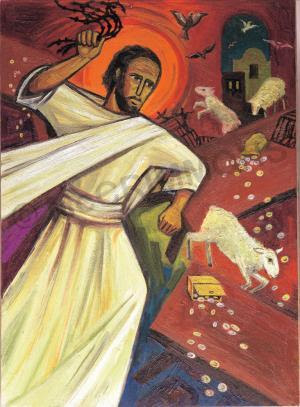
In our Gospel reading for today, we find Jesus going into the temple and clearing out the clutter there.
He sweeps the Temple clean, because he knows that the clutter of the merchants who have settled there are not enhancing the beauty of the Temple.
They are not helping people in their relationship with God.
Rather, these merchants are there for no spiritual reasons at all, ultimately.
They are there for their own gain and for nothing else.
In a sense, we need to, like Jesus, clean out the “merchants” in our lives as well.
We need to have the Temple of our bodies cleaned occasionally.
We need to sweep it clean and, in doing so, we will find our spirituality a little more finely tuned.
We will find our prayer life a more fulfilling.
We will find our time at Mass more meaningful, even virtually.
We will find our engaging of Scripture to be more edifying.
We will find our service to others to be a bit more selfless and purposeful than it was before.
We will see things with a clearer spiritual eye—which we all need.
It is a matter of simplifying our spiritual lives.
It is matter of recognizing that in our relationship with God and one another, we don’t need the clutter—we don’t need those things that get in the way.
We don’t need anything to complicate our spiritual lives.
There are enough obstacles out there.
There will always be enough “stuff” falling into our pathways, enough ”things” for us to stumble over, enough “idols” we find ourselves mindlessly worshipping.
Without the clutter in our lives, it IS easier to keep our spiritual lives clean.
Without the clutter in our life, we find things are just…simpler.
In our Gospel reading for today, we also find that the Temple Jesus is cleaning out and cleansing serves its purpose for now, but even it will be replaced with something more perfect and something, ultimately, more simple.
In a very real sense, our own bodies become temples of this living God because of what Jesus did.
Our bodies also become the dwelling places of that one, living God.
We will become the Temples of the living God.
Which brings us back to Lent.
In this season of Lent, we become mindful of this simple fact.
Our bodies are the temples of that One, living God.
God dwells within us much as God dwelt in the Temple.
Because God dwells in us, we have this holiness inherent within us.
We are holy. Each of us.
Because of this Presence within us, we find ourselves wanting to cleanse the temple.
We find ourselves examining ourselves, looking closely at the things over which we trip and stumble.
We find ourselves realizing that the clutter of our lives really does distract us from remembering that God dwells with us and within us.
And when we realize that, we really do want to work on ourselves a bit.
We work at trying to simplify our lives—our actual, day-to-day lives, as well as our spiritual lives.
We want to actually spend time in prayer, in allowing that living God to dwell fully within us and to enlighten us.
We fast—emptying our bodies and purifying ourselves.
We recognize the wrongs we have done to ourselves and to others.
We realize that we have allowed this clutter to build up.
We realize we have not loved God or our neighbors.
Or even ourselves.
Or we have loved ourselves too much, and not God and our neighbors enough.
Or we have loved “things” too much and not God.
Once we have eliminated the spiritual clutter of our lives, we do truly find our God dwelling with us.
We find ourselves worshipping in that Body that cannot be cluttered.
We find a certain simplicity and beauty in our lives that comes only through spiritual discipline.
So, as we continue our journey through Lent, let us, like Jesus, take up the cords and go through the temple of our own selves.
Let us, like him, clear away the clutter of our lives.
Let us over turn and destroy the “idols” of our lives.
Let us cleanse the temple of our own self and make it like the Temple worthy of God.
And when that happens, we will find ourselves proclaiming, with Psalm 69, “Zeal for your house will consume me.”
For it will.
Let us pray.
Holy God, help us to clean from the temples of our selves the clutter that your Son, Jesus drove from your Temple in Jerusalem. Cleanse us with the breath of your Spirit and let us be presentable dwelling places for that same Spirit to dwell and live within us. We pray this in Jesus’ name. Amen.
February 28, 2021
2 Lent
February 21, 2021
Mark 8.31-38
+ E week, without fail, I stand here and talk about “following Jesus.”
After all, it’s the basis of everything I believe as a Christian.
For me, as you hear me say again and again, being a Christian equals “following Jesus” or being a “disciple of Jesus”
And I believe that with all my heart.
But…but…what I don’t share with you is how difficult it is for me to say that.
Because, in fact, it is not easy for me to “follow.”
I’m not used to following.
I find it difficult to follow.
Following, for me anyway, means having to humble myself, having to slow down. To breath, and to let someone else lead the way.
And I don’t really enjoy that.
I’ll be honest: I kind of like doing my own thing.
It’s like being so used to driving all the time and then finally having to allow someone else to drive you.
You find yourself sitting in the passenger seat being critical of the speed of their driving, how they come up a little too quickly to a stop sign, how they don’t make the turn signal at the right time.
When I let someone else drive, I often find myself pumping that invisible break on the passenger side sometimes.
For me, that is often the way I feel about following Jesus.
I often, when following Jesus and trying to live out his teaching, find myself pumping the invisible break on the passenger side.
“I’m often asking, “Jesus, do you know where we’re going? Because it seems like we’re just circling the block.”
I often find myself thinking, well, I wouldn’t do it this way.
There are plenty of examples in the Gospels.
Turning the other cheek?
I wouldn’t normally be all right with that.
Loving my neighbor as myself?
If I had the choice not to, I’m not sure I would.
Not that one, any way.
But this is what it means to follow.
It means that, pump that invisible break as much as we want, it is not up to us.
We are the followers.
We are the ones who must bring up the rear.
And doing so is humbling and difficult and hard at times.
It means we’re not in control.
And here at St. Stephen’s, where many of us (not just me) have major control issues, that’s hard for a good many of us.
In today’s Gospel, we find Jesus explaining to us in very blunt words what it means to be a disciple.
For him, being a disciple, means being a follower.
A follower of him.
And, as we know, because we’re not the ones in control when it comes to following Jesus, being a Christian—being a follower of Jesus—means that we are sometimes being led into some unhappy circumstances.
Being a follower of Jesus doesn’t mean closing ourselves up intellectually.
It doesn’t mean we get to stop thinking.
Trust me.
I know too many of these kind of Christians.
These are the people who think being a Christian means not having to think anymore.
Just believing that all will be well and there aren’t any problems.
I think we all, at times, find ourselves lulled into a false sense of what it means to be a followers.
We think that being a follower of Jesus means that everything is going to be happy-go-lucky and wonderful all the time.
We think that following means not really having to think about bad or difficult things anymore.
It’s easy, after all, to be a lemming.
But that isn’t the kind of following Jesus wants us to do.
The kind of follower Jesus wants us to be is not easy.
For me, personally, I am not a comfortable follower.
It’s hard to have someone else’s standards essentially be my standards.
It can be depressing.
Now that doesn’t mean we shouldn’t be joyful in our following of Jesus.
Yes, we should be filled with a deep and sincere joy.
But, as the old song goes, no one promised us a rose garden. Nowhere in scripture have we been promised that life is going to be rosy and sweet all the time.
Being a follower is not always so much fun.
Being a Christian means not always strolling around in comfort and joy all the time.
As we are reminded in this season of Lent and especially in that week preceding Easter, being a Christian means following Jesus wherever he goes.
And where he goes is not to the rose garden.
It is to the garden of Gethsemane—to that place where he too would be feeling anguish, where too would sweat blood, where he too would cry out in anguish to God.
Following Jesus means essentially being like him.
And being like him, means having the same relationships he had.
And when we look at the relationships he had, we realize they were not normal relationships.
His relationship with God was intense.
For Jesus, God was a parent.
God was “Father,” “Abba!”
But the relationship was even more than that.
It was also almost like lovers.
Jesus loved God.
God loved Jesus.
And that, too, is what our relationship with God should be like, as followers of Jesus.
We should love God.
Our relationship with God should be intense as well.
It should intimate.
It should be so intense and intimate that other people will say, “That’s really weird!”
My goal in my relationship with God is that people will say, “”That’s weird, that relationship Fr. Jamie and God have with each other.”
I used to joke about getting t-shirts made for people saying, JESUS IS MY

BOYFRIEND.
But there is some truth to that.
We should have a deeply intimate relationship with Jesus, in which such a t-shirt is funny and weird, but kinda true too.
But it should be that intense, because God loves us.
Deeply and intensely.
But it doesn’t end there.
There is also the relationship Jesus had, because of his intense and deep love of God, with others.
Jesus loved others.
Intensely.
Deeply.
He cared for them.
Jesus loves us.
Intensely.
Deeply.
And because he did, so should we.
Because Jesus loves us, we should love others.
In everything we do as followers of Jesus, we should let love always be our driving force.
It is that love that makes us feel the anguish he feels.
It is that love that makes us suffer with him.
It is that love that makes us bleed with him.
Following Jesus means not just following him through the moments of teaching ministry, not just through the miracles he performed.
It means following him through the dark days of his last week, through the blood and excruciating moments of his dying.
It means that, like him, our love for him causes us take up our crosses and follow him wherever he might go.
It means paying the anguished price for love!
Jesus knew, as we find in our Gospel reading for today, that he there were certain things he had to do.
He had to “undergo great suffering,” He had to be killed.
He understood that fully.
He in turn tells us that we too must realize that we will have to bear our share of suffering in this life.
We too will have to take up our own crosses.
The cross is the reminder to us that following Jesus doesn’t just mean following him through the rose gardens of our lives.
It means, following him all the way to that cross.
It means taking up our own crosses and staggering with him along that path.
It means sweating blood with him in the garden of Gethsemane.
It means crying out with him in anguish.
It means feeling with him the humiliation and loneliness of being betrayed—yes, even by one’s own friends and followers.
But, it also means following him to the very end.
Just as the cross is a symbol of death and torture and pain—it is, for us Christians, also the symbol of the temporal nature of those things.
The cross is the doorway to the glory that awaits us beyond the cross.
The cross is the way we must travel, it is what we must carry, it is what we must be marked with, if we wish to share in the glory that awaits us beyond the cross.
I said earlier that no one promised us a rose garden in scripture.
I should revise that.
While we might not have been promised a rose garden, we have been offered glory.
Glory comes to us, when we follow Jesus.
It comes to us when we let our love for God lead us through the dark and frightening places this world can throw at us.
If we let that love guide us, if we let ourselves be led by Jesus, we will find true and unending glory awaiting us.
So, as we encounter the crosses of our lives—and we will—as we allow our love for God to lead us into places we might not want to go, let us do so with the realization that glory has been offered to us.
One day, what seems to us a symbol of pain and loss and failure, will be transformed.
It will be transformed into a crown upon our heads.
And, on that day, there all our pains, all of our sorrows will, once and for all, be replaced with joy.
Let us pray.
Holy God, help us to be faithful in our following of your Son, Jesus. Help us to know that, although the path is often uncertain and frightening, the path we follow leads to you and to the beauty of your Kingdom. This we pray in Jesus’ name. Amen.
February 21, 2021
1 Lent

February 21, 2021
Genesis 9.8-17; 1 Peter 3.18-22; Mark 1.9-15
+ So, here we are.
Lent.
And I know you probably came to Mass this morning thinking, “it’s going to be doom and gloom and sadness” all morning at church.
But, guess what?
No.
If we were expecting doom and gloom and sadness in our scripture readings, well, we don’t get any of that.
Ah, no. Instead, we get… water?
We get Noah and the ark?
We get a rainbow.
And baptism?
(Oh, and also the Devil. And temptations. And the desert. But what did you expect?)
Now, this is my way to begin Lent!
We begin Lent as we begin any important step as Christians—with solid footing in our baptismal understanding.
We begin Lent with a remembrance of our baptismal covenant—that relationship that we formed with God at our baptisms—a covenant that is still binding on us, even now.
This covenant is a covenant very much like the covenant God made with Noah after the waters of the flood that we hear about in our reading from Genesis.
I wasn’t expecting to do it, but here we are on this first Sunday of Lent, and I am preaching about, of all things, baptism.
We don’t even do baptisms in Lent!
As if that wasn’t enough, we also get another special treat.
In our Gospel reading, we get, in a very brief scripture, an upheaval.
What?
You missed the upheaval in our Gospel reading?
You missed the reversal?
You missed, in that deceptively simple piece of scripture, a mirror image of something?
It’s easy to miss, after all.
Our Gospel reading is so simple, so sparse.
But then again, so is haiku.
But let’s look a little closer at what we’ve just heard and read.
In today’s Gospel, we find three elements that remind us of something else.
We find the devil.
We find animals.
And we find angels.
Where else in scripture do we find these same elements?
Well, we find them all in the Creation story in Genesis, of course.
The story of Adam is a story of what? --the devil, of animals and of angels.
But that story ends with the devil’s triumph and Adam’s defeat.
In today’s Gospel, it has all been made strangely right.
Jesus—the new Adam—has turned the tables using those exact same elements.
We find Jesus not in a lush beautiful Oz-like place like Eden.
Rather we find Jesus with wild animals in that desert—animals who were created by God and named by Adam, according to the story.
We find him there waited on by the angels—and let’s not forget that these same angels turned Adam and Eve away from Eden.
And there, in that place, he defeats the devil—the same devil who defeated Adam.
I have found this juxtaposition between Adam and Jesus to be a rich source of personal meditation, because it really is very meaningful to us who follow Jesus.
In this story of Jesus we find, yet again, that it is never the devil who wins.
It always, always God who wins.
God always wins.
That is what the story of Jesus is always about—God always winning in the end.
Jesus tells us again and again that God will always win.
If we lived with the story of Adam, if we lived in the shadow of his defeat, the story is a somewhat bleak one.
There doesn’t seem to be much hope.
The relationship ruined with Adam hasn’t been made right.
But today we find that the relationship has been righted.
The story isn’t a story of defeat after all.
It isn’t a time to despair, but to rejoice.
The “devil” has been defeated.
And this is very important.
We, in our baptisms, also defeat the devil.
Now, by the Devil, I am not necessarily talking about a supernatural being who rules the underworld.
I’m not talking about horns, forked tail and a pitchfork.
I’m not talking about Hot Stuff the Devil. Remember him? (I was once, back in my twenties, going to get a tattoo of Hot Stuff after someone jokingly said that Casper the Friendly Ghost would not look so good on my very white skin).
By Devil I mean the personification of all that we hold evil.
In our baptisms, we renounce all the evil of this world and the next, and by renouncing evil, we are assured that it can be defeated.
By renouncing the devil and all the evils of this world, we turn away from the evil inherent within us.
Our baptism marks us and in that mark we find the strength to stand up against evil.
This time of Lent—this time for us in the desert, this time of fasting and mortification—is a time for us to confront the demons in our lives.
We all have them.
In our wonderful collect for today, we prayed to God to “come quickly to help us who are assaulted by many temptations.”
The poet that I am, I love the traditional language of Rite I better here.
“Make speed to help thy servants who are assaulted by manifold temptations.”
We all understand that term “manifold temptations.”
We all have those triggers in our lives that disrupt and cause upheaval.
Sometimes this upheaval is mental and emotional, sometimes it is actual.
We have our own demons, no matter what name we might call them.
I certainly have my own demons in my life and sometimes I am shocked by the way they come upon me.
I am amazed by how they lay me low and turn my life upside down.
They represent for me everything dark and evil and wrong in my life and in the world around me.
They are sometimes memories of wrongs done to me, or wrongs I’ve done to others.
Sometimes they are the shortcomings of my own life—of being painfully reminded of the fact that I have failed and failed miserably at times in my life.
They are reminders to me that this world is still a world of darkness at times—a world in which people and nature can hurt and harm and destroy.
And that power and influence of evil over my life is, I admit, somewhat strong.
Trying to break the power of our demons sometimes involves going off into the deserts of our lives, breaking ourselves bodily and spiritually and, armed with those spiritual tools we need, confronting and defeating those powers that make us less than who we are.
For me, I do find consolation when I am confronted by the demons of my life in that covenant I have with God in my baptism.
I am reminded by that covenant that there is no reason to despair when these demons come into our lives, because the demons, essentially, are illusions.
They are ghosts.
They are wispy fragments of my memory.
They have no real power over me despite what they make think sometimes.
Because the demons have been defeated by God.
Again, returning to our collect for today, we prayed, “as you know the weaknesses of each of us, let each one find you mighty to save.”
God has been “mighty to save” us.
The demons of our lives have been defeated by our Baptismal Covenant and those baptismal waters.
The real power they have over my life has been washed away in those waters, much as all evilness was washed away in the flood in Noah’s time.
So, as we wander about in the spiritual desert of Lent, let us truly be driven, as Jesus was.
Let the Spirit drive us into that place—to that place wherein we confront the demons of our lives.
But let us do so unafraid.
The Spirit is the driving force and, knowing that, we are strengthened.
Let us be driven into that place.
Let us confront our demons.
Let us confront the very devil itself.
Let us face the manifold temptations of our lives unafraid, knowing full well that God is “mighty to save.”
After all, Easter is coming.
Lent is not eternal.
Easter is eternal.
This time is only a temporary time of preparation.
So, let us wander through this season confident that it is simply something we must endure so that we can, very soon, delight in the eternal glories of a morning light that is about to dawn into our lives.
“The time is fulfilled,” we can say with all confidence.
“The kingdom of God has come near.”
It is time to repent.
It is time to believe this incredibly good news!
Let us pray.
Holy God, bless us. Bless us as we walk this way of self-denial during these days of Lent. Help us to look ahead—toward the Cross, yes, but beyond the cross, to the Light, to your Light, the Light that was revealed in the days following Jesus’ encounter with the Cross. Help us to keep our eyes on your light and, in our following of Jesus, to remember that we are following him not to the death of the Cross but to the eternal life of the Resurrection. It is in his name, that we pray. Amen.
February 17, 2021
Ash Wednesday

February 17, 2021
2 Corinthians 5:20b-6:10; Matthew 6.1-6,16-21
+ Occasionally, I get critiques on sermons that I preach.
And I am not a gracious receiver of such criticisms.
Especially when they involve unconstructive criticism.
Well, one of those criticism many years ago, was when a former parishioner here made known, not to me but through eh grapevine, that she was upset that I was preaching about death on Ash Wednesday when her child was the church.
She felt it was her duty to tell he child about death, and so was upset that so much of my sermon—on ASH WEDNESDAY—was about death.
I kid you not!
Well, I hate to break this to you on this Ash Wednesday, but I am going to preach about death.
And if you don’t like it, I commend you to make it your Lenten discipline to keep your criticisms to yourself.
Because, that’s what Ash Wednesday is all about!
And I’m going to be even more blunt about it with this illustration.
There’s a great meme making the rounds right now.

I know it’s sobering and all.
But that’s what Ash Wednesday and Lent are all about.
Sobering up.
Getting serious about our faith, our lives and, yes, our deaths.
If you’re coming to church on Ash Wednesday expecting a warm, fuzzy message you’re in the wrong place.
There’s some wonderful mega-churches around who can do that for you.
I’m Joel Osteen is not going to preach about death once during Lent.
But, here, tonight, Ash Wednesday, is a time for us to think about that ultimate moment in our lives, that puts all of our failures into keen perspective.
Tonight is the night to think about the fact that we will all, one day, die.
In this service we are reminded in no uncertain terms that one day each every person in this church this evening will stop breathing and will die.
Our bodies will be made into something that will be disposed of—either by being cremated and being buried in the ground.
But, all of this can—and more importantly, should—be something in which we find ourselves opened up to a new understanding and new perspectives on the world and our relationships with God.
That essentially is what Ash Wednesday and the season of Lent are all about.
It is a time for us to stop, to ponder, to take a look around us and to take a long, hard, serious look at ourselves, our failures, and our relationship with God.
It isn’t easy to do.
It isn’t easy to look at where we’ve failed in our lives and in our relationship with others.
It isn’t easy to look at ourselves as disposable physical beings that can so easily be burned to ashes or buried.
It isn’t easy to imagine there will be a day—possibly sooner than later—when life as we know it right now will end.
It isn’t easy to shake ourselves from our complacent lives.
Because we like complacency.
We like predictability.
We like our comfortable existence.
However, we need to be careful when we head down this path.
As we consider and ponder these things, we should not allow ourselves to become depressed or hopeless.
Remembering our failures is depressing and can trigger depression or despair.
Our mortality is frightening.
Yes, it is sobering and depressing to think that everything we, at this moment, find so normal and comfortable will one day end.
But this season is Lent is also a time of preparation.
It is a preparation for the glory of Easter.
It would be depressing and bleak if, in the end, all we are known for our failures.
But, we are an Easter people, not a Lenten people.
And our ultimate goal is unending Life, not eternal death.
Yes, we will hear, in a few moments, those sobering words,
“You are dust and to dust you shall return.”
And those words are true.
But, the fact is, ashes are not eternal.
Ashes are not the end of our story.
Ashes are temporary.
Resurrection is eternal.
Our life in Christ is eternal.
Our failures are temporary.
Our life is eternal in Christ.
All we do on this Ash Wednesday is acknowledge the fact that we are mortal, that our bodies have limits and because they do, we too are limited.
There is a beautiful poem—one of my all-time favorites-written by probably one of my favorite poets, Robinson Jeffers.
In many ways it has a very healthy attitude to the body and the death of one’s body.
Jeffers wrote this following the death from cancer of his wife, Una, in September of 1950.
The poem is titled “Cremation”
It nearly cancels my fear of death, my dearest said,
When I think of cremation. To rot in the earth
Is a loathsome end, but to roar up in flame — besides, I am used to it,
I have flamed with love or fury so often in my life,
No wonder my body is tired, no wonder it is dying.
We had a great joy of my body…
“We had great joy of my body.”
Hopefully, we can say the same of our bodies when the time comes for us to put our bodies aside.
So, it’s not a matter of denying our bodies or seeing our bodies as sinful, disgraceful things.
The same can be said of our failures.
Our failures make us who we are.
But, we are not defined by them.
We are however formed in the fires of our failures and shortcomings.
It is not a matter of dwelling on our failures in this life.
Rather, it is a time for us to look forward, past our failures, to resurrection, to renewal, to rebirth.
As we head into this season of Lent, let it truly be a holy time of preparation for resurrection.
Let it be a time in which we recognize the limitations of our own selves—whether they be physical or emotional or spiritual.
But more than anything, let this holy season of Lent be a time of reflection and self-assessment.
Let it be a time of growth—both in our self-awareness and in our awareness of God’s presence in the goodness in our life.
As St. Paul says in our reading from this evening: “Now is the acceptable time.”
“Now is the day of salvation.”
It is the acceptable time.
It is the day of salvation.
Let us take full advantage of it.
Let us pray.
Holy and loving God, hear the prayers of your mortal children, your children who are mere dust, made from dust and who will return to the dust. Hear us when we pray to you in this time of discipline, as we strive to better ourselves for your sake and for the sake of your Kingdom. Be with us as we journey through these 40 days of mortification, and let us set our eyes on the joyful Light which awaits us all after the time of our tribulation in Jesus’ name, we pray.
January 24, 2021
3 Epiphany
Annual Meeting
January 24, 2020
Mark 1.14-20
+ Today is, of course, our Annual Meeting Sunday.
And let’s just say that we have never had an Annual Meeting like this one before.
And it is the Sunday in which I get to be the head cheerleader for our congregation.
And there is so much to cheer about.
What?
Cheer about?
Fr. Jamie, did you sleep through 2020?
Yes, you heard me right.
There is much to cheer about, even in the midst of a pandemic.
Despite all that has happened, for us it has been a year of growth, of crazy, nonstop activity, of doing and seeing things in a new way.
We have one of our very best years for giving, for budget.
Even in the midst of all the darkness and the strangeness of this past year, St. Stephen’s once again proved itself to be, as it always, a resilient, amazingly strong congregation that steps up the plate.
I am just amazed by it all.
I am amazed at how God has moved in this parish this last year.
God’s Holy Spirit has been truly present here.
But yes, it is a very different Annual Meeting Sunday than in the past.
We will be gathering together by Zoom, rather than in person.
It will be different.
It is painful that we are not all here together.
But, let me tell you, in some congregations, it is much worse, as many of you know.
And I am deeply saddened over that fact.
But for us, we need to be grateful this morning.
We need to truly thank God, for God’s holy Presence among us.
I know you feel it.
I certainly feel it.
And it is that vitality, that presence of the God’s life-giving and amazing Spirit, present among us, that we celebrate today.
So much has happened over this past year.
Yesterday I was talking by phone with Jennifer Tackling.
And she was sharing how important St. Stephen’s has been to her over this whole pandemic and how it was good for her to know that even though she and her family were unable to actually physically BE in church, it was comforting to know that we continued to do what we do, without pause.
And that we have found new ways to “be” together.
I love to hear things like that from people.
And it is because of comments and sentiments like that, that we actually are celebrating St. Stephen’s and who we are, what we have done and what we will do.
I think our Annual Meeting is also a time for us to pause and to actually orient ourselves.
It is important to see where he have been this past year and look forward to where we are going.
And it is a time for us also to “turn around,” to have a moment in which we wake up and see things anew.
In our spiritual lives, we call those moments, “metanoia,” – a Greek word that I absolutely love.
But I will get into that a bit more in just a moment.
For now, this idea of “turning around,”this changing of perspective, is what Jesus calls us to do again and again throughout the Gospel.
And in today’s Gospel is no exception.
In it, we find Jesus essentially doing the same thing.
He’s asking his followers—and us—to turn around, to wake up, to see things anew.
And he does it with one little word.
“Repent.”
I think in our contemporary Christian Understanding, we have found this word hijacked a bit.
Repent is often seen as a shaming word.
We seem to hear it only in the context of “repenting” of our sins.
And certainly that’s a correct usage of the word.
When we turn from our sins—from all the wrongdoings we’ve done in life—we are repenting.
But I think it’s a good thing to examine the word a bit closer and see it in a context all of its own.
The Greek word we find in this Gospel is that word I just shared with you—metanoia μετανοειτε (metanoiein), which means to change our mind.
But the word Jesus probably used was probably based on the Hebrew word, Shubh, which the great theologian, Reginald Fuller, translates as “to turn around 180 degrees, to reorient one’s whole attitude toward Yahweh in the face of the God’s coming kingdom.”
When we approach this word with this definition, all of a sudden it takes on a whole new meaning and attitude.
What is Jesus telling us to do?
Jesus is telling us to turn around and see, for the Kingdom of God is near.
Wake up and look, he’s saying
We must turn round and face this mystery that is God.
We must adjust our thinking away from all the worldly things we find ourselves swallowed up within and focus our vision on God.
Or, rather, we should adjust our thinking, our vision of the world, within the context of God.
Now, I will share with you a moment of metanoia in my own life recently.
As you know, I am watch current events very closely, especially when it comes to Christianity and the Church.
And there have been some things recently that has shaken me to my core.
It is this disconnect that I see so many Christians between their praying to Jesus and their following of Jesus.
I have seen in the news, and especially in our national news over the last few weeks, many people who proudly profess and claim to be Christians, carrying crosses, carrying banners with the name of Jesus, placing memes on their social media of Jesus, and saying loud prayers to Jesus, sometimes after they have violently overrun certain government buildings.
I have been appalled by it all.
I have been appalled by people who so recklessly throw the name of Jesus around, who so blatantly claim that name and worship Jesus, but who also so blatantly do not embody who and what Jesus was and is.
One of my favorite contemporary spiritual writers is Richard Rohr.
He is a Roman Catholic priest, a member of the Franciscan Order.
I have quoted Rohr many times from this pulpit.
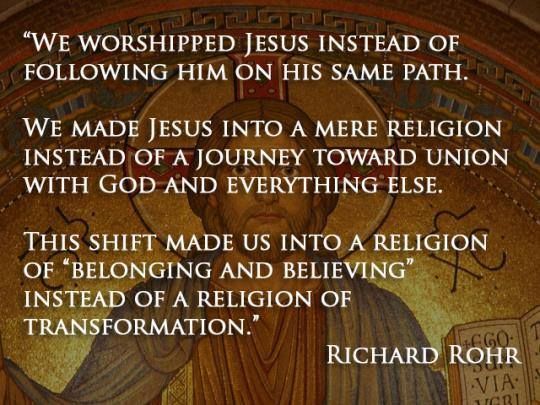
Father Rohr actually addresses the source of my current moment of metanoia when he also talks about Christians who seem to ignore Jesus very clear command to “Follow me!”
Christians instead “have preferred to hear something Jesus never said: ‘Worship me.’ Worship of Jesus is rather harmless and risk-free; following Jesus changes everything.”
Following Jesus changes everything.
It does.
It’s easy to pray to Jesus.
I have seen those Christians in my own life.
Most of the people I have had issues with in the Church, especially those I have known personally, have more often than not been just that kind of Christian.
Bishops who pray to Jesus, but then treat others disrespectfully, even mistreating people.
Clergy who pray to Jesus, but then steal money or use and misuse people over and over again.
Lay people who pray to Jesus, been then backbite and gossip and find something always to complain about.
And it’s hard for me to say this, but I too have done it.
Well, I haven’t stolen money or blatantly mistreated people
But I too have prayed to Jesus and then acted very un-Jesus-like.
I have prayed to Jesus and acted terribly.
I have prayed to Jesus because it’s been so much easier to pray to Jesus than to follow Jesus.
When we do that we become guilty of the heresy of Christomonism, or the belief that Jesus is the only expression of God we need.
Doing so is essentially Jesusolatry—it makes Jesus into an idol that is worshipped.
That is not what Jesus came to do for us.
Jesus did not come to be worshipped.
Jesus came to lead the way—to show us the Way forward, to be Way, the Truth and the Life.
And our jobs as Christians is to follow Jesus.
What does that mean?
How do we do that?
Well, there's a great meme going around that says this:
THIS YEAR I WANT TO BE MORE LIKE JESUS:

- Hang out with sinner.
-Upset religious people.
- Tell stories that make people think.
- Choose unpopular friends.
- Be kind, loving and merciful.
That's how we follow Jesus.
Now, of course, I’m not saying we shouldn’t pray to Christ.
I am definitely not saying that worship of God shouldn’t take precedence in our lives and that, in our worship of God, we shouldn’t acknowledge Jesus’ intercession before God’s throne. Worship of God should take precedence in our lives!
But what I am saying is that our worship of Jesus should not make Jesus into an idol.
Our worship of Jesus should not be an easy way for us to avoid having to follow Jesus.
It’s easy to throw Jesus’ holy Name around.
We all do it.
But when we hide behind our worship of Christ, when we think praying to Jesus and not following Jesus makes us good Christians, we have deceived ourselves, and the truth is not in us.
What Jesus is telling us in today’s Gospel, when he tells us to repent, is, essentially, this:
He is telling us to be mindful.
Be mindful of God.
Be mindful of the good news.
And what is the good news?
The good news is that the Kingdom of God is near.
God has drawn close to us.
God is near.
So, be aware.
Act appropriately.
What we find here is a very simple lesson in how to live fully and completely.
Essentially, Jesus is telling us,
Repent.
Wake up.
Turn around and see.
Jesus is saying to us, Stop living foggy, complacent lives. Repent.
He is saying, Quit being drones, mindlessly going about your duties.
Stop making Jesus into an idol in your life.
Stop hiding behind your worship of Jesus and go out and actually follow him.
Actually embody him and strive to live like him in this world.
Wake up and think.
Open your eyes and see.
God is with us.
God is here, speaking to us words of joy and gladness.
Listen.
Hear what God is saying.
Look.
See God walking in our very midst.
And when we see God, when we hear God speaking to us, we find that we too want to do what those disciples in our Gospel reading for today did.
We want to follow after the One God sent to us.
We want to be followers of Jesus.
And we want to help others be followers of Jesus.
We want to help others see that God is near.
That is what we are called to do on this Annual Meeting Sunday.
That is what we are being called to do in this year ahead of us.
That is what we are striving to do in all we do t St. Stephen’s
Being followers of Jesus means that we are awake and we see.
So let us truly follow Jesus in our lives.
We don’t need to do it in a flamboyant fashion.
But we can do it in flamboyant fashion if that works for us.
But we can also do so in a subdued fashion as well.
We can truly follow Jesus by striving to be spiritually awake.
We can follow Jesus by allowing ourselves to spiritually see.
And when we hear and see—awake, aware, not sleeping spiritually—it is then that we can become truly effective fishers in helping others see as well.
Let us pray.
Holy and Loving God, we thank you. We thank you for this parish of St. Stephen’s. We thank you for who we are and what we are and what we do. We ask you to graciously bless and prosper the work of our hands. Let your spirit dwell with us. And most importantly let us get up and heed the calling of Jesus in our lives. Let us repent, turn around and follow him where he leads. And as we do, help us to further your Kingdom in our midst. We ask this in Jesus’ holy name. Amen.
January 17, 2021
2 Epiphany
January 17, 2021
1 Samuel 3.1-20; John 1.43-51
+ This past week I had a great Zoom conversation with my very, very dear and long-time friend, Leslie Rorabeck.
Some of you may remember Leslie, back when she was a Leslie Flom and was a member of Gethsemane Cathedral.
Leslie was an incredible singer, soloist and was in the choir there.
About 17 years ago, Leslie and her family moved back to North Carolina, and over the last few years, with her children pretty much grown, she decided to heed her life-long calling for ordination as a priest.
She is getting ready to graduate from Virginia Theological Seminary and (God willing) be ordained a transitional deacon sometime this year and hopefully a priest six months after that.
Talking to Leslie this week about her vocation and all the potential opportunities she has as someone about to be ordained, I suddenly had a real warm and wonderful memory of when I was first heeding my call to ordained ministry.
I remember that feeling of the future seeming so bright and so wide open.
And I also was reminded how truly wonderful it is to say “Yes” when God calls, and then to pursue all the amazing opportunities that “yes” to God opens up.
But it also puts into perspective the differences in where we are in our calling.
Leslie is so eager and excited at the beginning of her ordained ministry.
And me, after almost 20 years of ordained ministry and after a very long, particularly difficult year of pandemic, quarantine, political and social division and separation from a majority of my church family, I don’t know if the words “eager” and “excited” are words I use often.
Sadly, my enthusiasm after all these years is not quite as fresh as Leslie’s, I hate to say, especially after this a particular year, (and this close to vacation).
But, after I got off that Zoom call with Leslie, I found myself wondering:
If I could go back and hear that calling anew, even knowing what I know now, even after all the heart-aches, after all the hardships that have come my way in these years of ministry, would I still, in all honesty, say “Yes” again to God?
Without hesitation, I would.
OK. Maybe with a slight hesitation.
But I would say yes.
I would do it all over again.
I might do a few things differently.
I would actually do a lot of things differently.
But I would most definitely do it.
I would definitely say “Yes” again to God.
Which is why, I guess, I really love the story of the young Samuel we encounter in our reading from the Hebrew scriptures this morning.
I, along with Leslie and Deacon John or any of us who do ministry in whatever form we do it, can relate to his calling.
We all understand it in a unique sense.
And my simple, very non-eloquent “Yes” to Go dwas essentially the same as Samuel’s
“Here I am. Do with me what you must.”
And for Samuel, his life changed with that “Here I am.”
Of course, that’s not the only calling we hear in our scripture readings for today.
In today’s Gospel, we also find another calling.
We find Philip saying to Nathaniel,
“Come and see.”
And we find Jesus telling Nathaniel,
“You will see greater things than these.”
For most of us, who are not mystics, we have still seen our share of miracles in our lives—at least if we kept our minds and hearts and eyes open.
No doubt, there have been many miracles in your lives.
No doubt, there have been saints—true, living saints—that you have met—and still continue to meet—and walked beside.
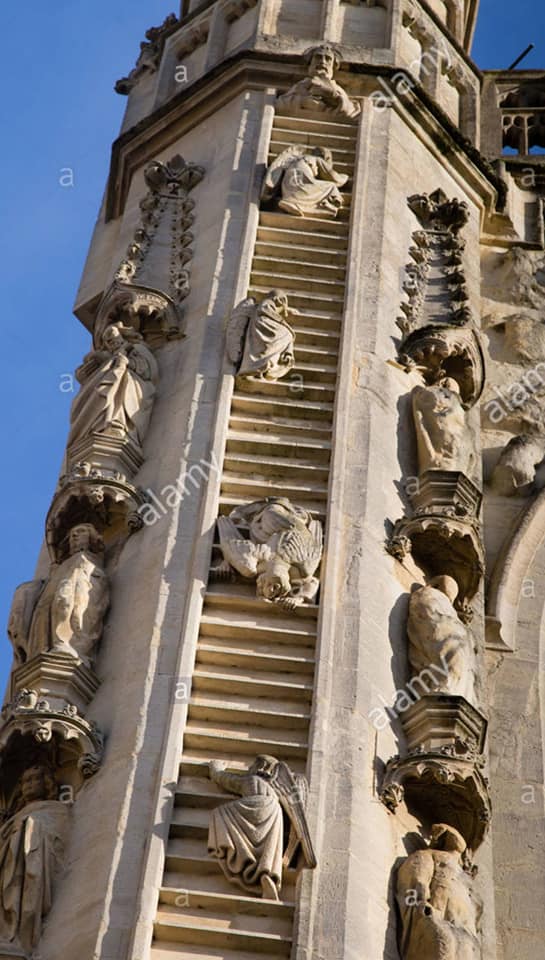
And although you probably have not seen heaven literally opened or angels literally “ascending and descending,” you’ve probably, once or twice, seen the veil between this world and heaven lifted.
I hope you have, anyway.
And you probably have seen angels ascending and descending in the guise of fellow travelers along the way.
Like Nathaniel, who would have a series of low points in his own life (legend says he
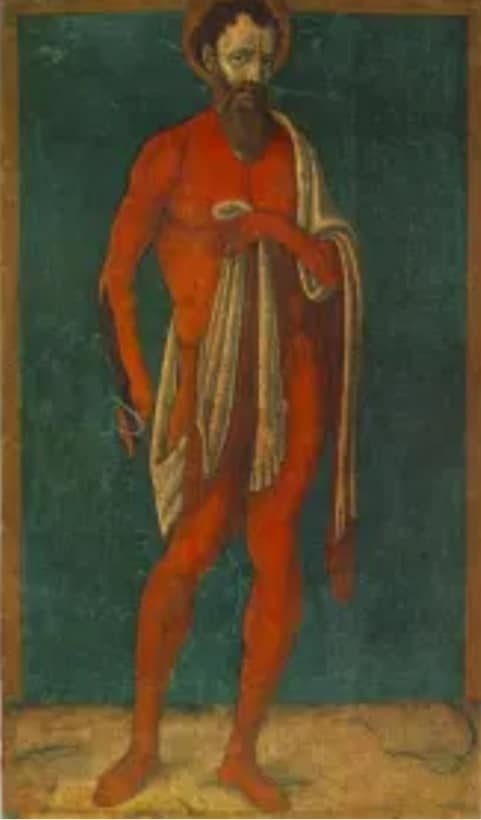
would die a particularly horrible martyr’s death of being flayed alive, forced to walk, skinless in the desert, before mercifully being beheaded), through it all, he kept looking.
And in looking, he saw.
This is what it means to be a disciple—a follower of Jesus.
Despite the setbacks, the illnesses, despite the people who are out to trip you up, there are also the rewards—the high points that are better than any other high points.
Being a Christian—a real, genuine Christian, and not a phony, hypocritical one—is probably our greatest vocation.
Being a Christian means being a follower of Jesus and a loved child of God.
Being a follower of Jesus means being a disciple of Jesus.
Disciple and discipline both come from the same root word.
And being a follower of Jesus, being a disciple of Christ, means we must be disciplined, we must be well-trained and well-versed.
We must be well-informed on who it is we are following and what teachings we are embodying in our lives.
And being a follower, a disciple, is a difficult thing at times.
No one, when we became Christians, promised us sparkling, light-filled moments and rose gardens every step of the way.
If anyone did, sue them!
Because they lied to you!
Actually, when we became Christians, we became Christians—all of us—in the shadow of the Cross.
We need to remember that when we were baptized, as I said last Sunday in my sermon, we were marked with the Cross.
That was not a quaint, sweet little sentiment.
It meant we were baptized into following Jesus wherever he led us in his life and ours—the good times and the bad.
Yes, even to the dark, dank ugly place of the cross.
And as a result, we have faced our lives as followers of Jesus Christ squarely and honestly.
This is no cult we belong to, that promises us that if we do this and that we will be freed from pain and suffering.
We’re not being brain-washed to believe what we believe.
As followers of Jesus, we know that, Yes, bad things are going to happen to us.
There will be illness, there will be setbacks, there will be broken relationships and conflicts with others, there will be despotic, racist leaders in the world who were impeached twice, there will be loss and there will be death.
The last time I preached on these scriptures was on Sunday, January 14, 2018.
For me on that Sunday, life was still somewhat normal.
I was getting ready, just as I am now, for our Annual Meeting and my vacation.
That evening, after Mass, my mother went out for supper as we always did on Sunday evening (we went to Granite City that night) and then to the West Acres Hornbacher’s to get her groceries. As we did every Sunday evening for several years.
What I didn’t know on that Sunday that that Sunday was the last time we would ever do that.
What I didn’t know is that 2 Sundays later, as I stood here at the pulpit preaching, my mother would breathe her last.
See, no one promised us as rose gardens in our following of Jesus.
When we follow Jesus we need to remember that he will not be leading us toward comfortable places.
He’s not leading us to the country club.
He’s not leading us to glitz and glamor.
He’s not leading us to fame and fortune in our lives.
He will be leading us through places that might not be safe.
We need to remember that One leading us came from Nazareth.
Can anything good come from Nazareth?
Well, we know of one good thing that came Nazareth.
But Jesus of Nazareth, Jesus of that place from which nothing good comes, he is leading us.
And we must believe that he will show us greater things than we can even imagine.
Following of Jesus is a hard thing.
We know that there will be many, many people out there who want to trip us up and who want us to fail.
We know that there are people out there who do not want the best for us.
We know that there will be people who are jealous of us and envious of us, and who despise us simply because of who we are.
There’s no way of getting around such things in our lives.
But following Jesus means being able, in those dark moments, to look and to see, like Nathaniel.
When surrounded by darkness, we can see light.
Following Jesus means remember, again and again that, like Jesus, we are loved and beloved children of a loving, living God.
When stuck in the mire and muck of this life, we can still look up and see those angels descending and ascending.
As I look back over these past years of ministry, I realize they have been the most productive and fruitful years of my life.
More than anything, as I look back over these last years, I find God weaving in and out of my life.
As I look back, I find God, speaking to me, much as God spoke to Samuel.
God, whether I was listening or not, was calling me again and again by name.
God is calling each of us also by our name.
God is calling to us again and again.
And what is our answer?
Our answer is a simple one.
It simply involves, getting up, looking and seeing, and saying to God,
“Here I am.”
Here I am.
And when we do that, we will find that, like Samuel, God is with us.
God is with us.
God loves us.
God knows us.
And—in that glorious moment—we will know: this God who does know us, who does love us, will never allow one of our words to fall useless to the ground.
Let us pray.
God of Samuel, you call us, and we must respond. You speak to us and we must heed what you say; bless us as we strive to say “yes” to your voice; bless the ministries we are all called to do in our lives. Bless those we encounter along the way. And let us never forget that you, who know us by name, love us and are with and know us, now and always. In Jesus’ holy name we pray. Amen.
January 17, 20211 Samuel 3.1-20; John 1.43-51 + This ...
January 17, 2021
1 Samuel 3.1-20; John 1.43-51
+ This past week I had a great Zoom conversation with my very, very dear and long-time friend, Leslie Rorabeck.
Some of you may remember Leslie, back when she was a Leslie Flom and was a member of Gethsemane Cathedral.
Leslie was an incredible singer, soloist and was in the choir there.
About 17 years ago, Leslie and her family moved back to North Carolina, and over the last few years, with her children pretty much grown, she decided to heed her life-long calling for ordination as a priest.
She is getting ready to graduate from Virginia Theological Seminary and (God willing) be ordained a transitional deacon sometime this year and hopefully a priest six months after that.
Talking to Leslie this week about her vocation and all the potential opportunities she has as someone about to be ordained, I suddenly had a real warm and wonderful memory of when I was first heeding my call to ordained ministry.
I remember that feeling of the future seeming so bright and so wide open.
And I also was reminded how truly wonderful it is to say “Yes” when God calls, and then to pursue all the amazing opportunities that “yes” to God opens up.
But it also puts into perspective the differences in where we are in our calling.
Leslie is so eager and excited at the beginning of her ordained ministry.
And me, after almost 20 years of ordained ministry and after a very long, particularly difficult year of pandemic, quarantine, political and social division and separation from a majority of my church family, I don’t know if the words “eager” and “excited” are words I use often.
Sadly, my enthusiasm after all these years is not quite as fresh as Leslie’s, I hate to say, especially after this a particular year, (and this close to vacation).
But, after I got off that Zoom call with Leslie, I found myself wondering:
If I could go back and hear that calling anew, even knowing what I know now, even after all the heart-aches, after all the hardships that have come my way in these years of ministry, would I still, in all honesty, say “Yes” again to God?
Without hesitation, I would.
OK. Maybe with a slight hesitation.
But I would say yes.
I would do it all over again.
I might do a few things differently.
I would actually do a lot of things differently.
But I would most definitely do it.
I would definitely say “Yes” again to God.
Which is why, I guess, I really love the story of the young Samuel we encounter in our reading from the Hebrew scriptures this morning.
I, along with Leslie and Deacon John or any of us who do ministry in whatever form we do it, can relate to his calling.
We all understand it in a unique sense.
And my simple, very non-eloquent “Yes” to Go dwas essentially the same as Samuel’s
“Here I am. Do with me what you must.”
And for Samuel, his life changed with that “Here I am.”
Of course, that’s not the only calling we hear in our scripture readings for today.
In today’s Gospel, we also find another calling.
We find Philip saying to Nathaniel,
“Come and see.”
And we find Jesus telling Nathaniel,
“You will see greater things than these.”
For most of us, who are not mystics, we have still seen our share of miracles in our lives—at least if we kept our minds and hearts and eyes open.
No doubt, there have been many miracles in your lives.
No doubt, there have been saints—true, living saints—that you have met—and still continue to meet—and walked beside.
And although you probably have not seen heaven literally opened or angels literally “ascending and descending,” you’ve probably, once or twice, seen the veil between this world and heaven lifted.
I hope you have, anyway.
And you probably have seen angels ascending and descending in the guise of fellow travelers along the way.
Like Nathaniel, who would have a series of low points in his own life (legend says he
would die a particularly horrible martyr’s death of being flayed alive, forced to walk, skinless in the desert, before mercifully being beheaded), through it all, he kept looking.
And in looking, he saw.
This is what it means to be a disciple—a follower of Jesus.
Despite the setbacks, the illnesses, despite the people who are out to trip you up, there are also the rewards—the high points that are better than any other high points.
Being a Christian—a real, genuine Christian, and not a phony, hypocritical one—is probably our greatest vocation.
Being a Christian means being a follower of Jesus and a loved child of God.
Being a follower of Jesus means being a disciple of Jesus.
Disciple and discipline both come from the same root word.
And being a follower of Jesus, being a disciple of Christ, means we must be disciplined, we must be well-trained and well-versed.
We must be well-informed on who it is we are following and what teachings we are embodying in our lives.
And being a follower, a disciple, is a difficult thing at times.
No one, when we became Christians, promised us sparkling, light-filled moments and rose gardens every step of the way.
If anyone did, sue them!
Because they lied to you!
Actually, when we became Christians, we became Christians—all of us—in the shadow of the Cross.
We need to remember that when we were baptized, as I said last Sunday in my sermon, we were marked with the Cross.
That was not a quaint, sweet little sentiment.
It meant we were baptized into following Jesus wherever he led us in his life and ours—the good times and the bad.
Yes, even to the dark, dank ugly place of the cross.
And as a result, we have faced our lives as followers of Jesus Christ squarely and honestly.
This is no cult we belong to, that promises us that if we do this and that we will be freed from pain and suffering.
We’re not being brain-washed to believe what we believe.
As followers of Jesus, we know that, Yes, bad things are going to happen to us.
There will be illness, there will be setbacks, there will be broken relationships and conflicts with others, there will be despotic, racist leaders in the world who were impeached twice, there will be loss and there will be death.
The last time I preached on these scriptures was on Sunday, January 14, 2018.
For me on that Sunday, life was still somewhat normal.
I was getting ready, just as I am now, for our Annual Meeting and my vacation.
That evening, after Mass, my mother went out for supper as we always did on Sunday evening (we went to Granite City that night) and then to the West Acres Hornbacher’s to get her groceries. As we did every Sunday evening for several years.
What I didn’t know on that Sunday that that Sunday was the last time we would ever do that.
What I didn’t know is that 2 Sundays later, as I stood here at the pulpit preaching, my mother would breathe her last.
See, no one promised us as rose gardens in our following of Jesus.
When we follow Jesus we need to remember that he will not be leading us toward comfortable places.
He’s not leading us to the country club.
He’s not leading us to glitz and glamor.
He’s not leading us to fame and fortune in our lives.
He will be leading us through places that might not be safe.
We need to remember that One leading us came from Nazareth.
Can anything good come from Nazareth?
Well, we know of one good thing that came Nazareth.
But Jesus of Nazareth, Jesus of that place from which nothing good comes, he is leading us.
And we must believe that he will show us greater things than we can even imagine.
Following of Jesus is a hard thing.
We know that there will be many, many people out there who want to trip us up and who want us to fail.
We know that there are people out there who do not want the best for us.
We know that there will be people who are jealous of us and envious of us, and who despise us simply because of who we are.
There’s no way of getting around such things in our lives.
But following Jesus means being able, in those dark moments, to look and to see, like Nathaniel.
When surrounded by darkness, we can see light.
Following Jesus means remember, again and again that, like Jesus, we are loved and beloved children of a loving, living God.
When stuck in the mire and muck of this life, we can still look up and see those angels descending and ascending.
As I look back over these past years of ministry, I realize they have been the most productive and fruitful years of my life.
More than anything, as I look back over these last years, I find God weaving in and out of my life.
As I look back, I find God, speaking to me, much as God spoke to Samuel.
God, whether I was listening or not, was calling me again and again by name.
God is calling each of us also by our name.
God is calling to us again and again.
And what is our answer?
Our answer is a simple one.
It simply involves, getting up, looking and seeing, and saying to God,
“Here I am.”
Here I am.
And when we do that, we will find that, like Samuel, God is with us.
God is with us.
God loves us.
God knows us.
And—in that glorious moment—we will know: this God who does know us, who does love us, will never allow one of our words to fall useless to the ground.
Let us pray.
God of Samuel, you call us, and we must respond. You speak to us and we must heed what you say; bless us as we strive to say “yes” to your voice; bless the ministries we are all called to do in our lives. Bless those we encounter along the way. And let us never forget that you, who know us by name, love us and are with and know us, now and always. In Jesus’ holy name we pray. Amen.