
Carl Zimmer's Blog, page 78
November 15, 2010
Robert Sapolsky on the metaphorical brain
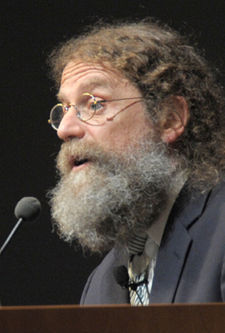 A lovely piece from Robert Sapolsky, one of those scientists who gives us science-writers night terrors that we'll be out of a job soon. It takes a while for Sapolsky to get to the gist, but it's a gist worth waiting for: how we think in metaphor. So is poetry's greatest strength the result of the social evolution of primates? Check it out.


November 8, 2010
What's Next In Science: My interactive feature in tomorrow's New York Times
 This was fun. My editors at the Times asked me to take part in a special edition of Science Times coming out tomorrow, called "What's Next." My own charge was to pick ten scientists from across a wide range of disciplines and get their ideas about what we might expect to be reading about in 2011. It's hardly an exhaustive list–I prefer to think of it as a tasting menu, full of pungent surprises, from stem-cell garage biology to the Indian Ocean's global reach. The piece is set up as an interactive feature, including some additional audio comments from the scientists. Check it out, and check out the other articles in this special section, too.


November 5, 2010
Beer, the foundation of civilization: my new podcast
 On my latest podcast, I talk beer–that marvel of microbiology that people have been swilling for thousands of years. My guide to the brewing cosmos is Charles Bamforth, a professor of brewing science at the University of California, Davis. Check it out.


November 4, 2010
Double reminder: Friday: science book-apalooza; Saturday, Misha Angrist and his genome
Just a reminder to residents of the Elm City and science writers converging here for their annual meeting: here are two public events you don't want to miss…
1. Great Science Writing at Yale. Friday, 4 pm, Beinecke Library. Jonathan Weiner, Annie Murphy Paul, Richard Conniff, Jennifer Ouellette. Details here.
2. A conservation with Misha Angrist, author of Here Is A Human Being. Saturday, 6 pm, Labyrinth Books. Details here.


November 3, 2010
Science and movies: My new essay in Nature
I recently served as a judge for the Imagine Science Film Festival, and Nature (one of the festival's sponsors) asked if I'd write about the experience. I'm pretty suspicious of the whole idea of bringing movies and science together. It can be bad for science and bad for movies. Here's how I put it in my essay:
It is odd that science and films have such a complicated relationship, given that films were born out of science. The invention of photography in the nineteenth century made it possible to capture a series of images and use them to create an illusion of movement. With the development of faster cameras, movies began to seduce the world. Each technical advance has brought change to the cinema, although not every change has resulted in artistic progress — witness Smell-O-Vision and Piranha 3D, for example.
For all that science and technology have delivered to Hollywood, scientists have received little back. Researchers portrayed in films bear scant resemblance to those in real labs. Some on-screen scientists are villains that must be destroyed by common-sense heroes. Others threaten nature with Promethean recklessness. Yet others are mavericks who find cures for cancer single-handedly in jungle tree-houses. And movies often distort science itself. Tornadoes, volcanoes, spaceships, viruses: all obey the laws of Hollywood, not the laws of Newton or Darwin.
Scientists have gnashed their popcorn buckets, wishing for something better. In 2008, the US National Academy of Sciences set up the Science and Entertainment Exchange to bring scientists and Hollywood film-makers together for fruitful exchanges of ideas. Gambis's film festival serves a similar mission: its website announces that it "encourages a greater collaboration between scientists who dedicate their lives to studying the world we live in and film-makers who have the power to interpret and expose this knowledge, ultimately making science accessible and stimulating to a broader audience".
I'm not convinced such collaborations will achieve this goal often, or even whether they should. Exhibit A: Harrison Ford. Earlier this year, he played a biochemist searching for a cure for a genetic disorder in Extraordinary Measures, a fairly accurate story inspired by a book by reporter Geeta Anand. In 2008, Ford also played a scientist in Indiana Jones and the Kingdom of the Crystal Skull, a fairly accurate account of a comic-book fever dream. Extraordinary Measures earned a meagre US$12 million, whereas Indiana Jones and the Kingdom of the Crystal Skull earned $317 million. Hollywood is a place of business, not charity, and the marketplace speaks clearly: people want their scientists with bullwhips, not pipettes.
Even if Hollywood directors dedicated themselves to achingly realistic biopics about Peter Medawar or Henri Poincaré, that might not be a good thing. Films should not be propaganda, bludgeoning us with messages about how valuable certain things or people are. At their best, films embody the conflicts in our societies, and give form to our inner lives in all their ragged glory. They can use real aspects of the world as their raw material, but holding them drearily to account is a mistake. Citizen Kane is about a newspaper editor; it would not have been a masterpiece if Orson Welles had kept asking himself "Does this make journalism accessible to a broader audience?"
But judging these films has let me see how creative people can slip out of traditional traps and find something new and intriguing at the intersection of science and movies. Check it out. (Unfortunately, it's behind Nature's paywall.)


November 1, 2010
Help a science teacher, o mighty hive-mind
Chris Farnsworth, a seventh-grade science teacher with an awesome tattoo, has a question for which I'd also like an answer…
Do you know of a good place to find popular science writing for middle and high school students? I wind up using the same places, like Discover, or The Best American Science Writing, but I feel like I am in hit-or-miss mode. Any ideas?


October 31, 2010
Leigh Van Valen, RIP: The man behind the Red Queen
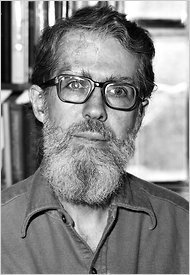 In the New York Times, Douglas Martin has a fine obituary of one of the more intriguing figures in the history of evolutionary biology, Leigh Van Valen:
His beard, it was said, was longer than God's but not as long as Charles Darwin's. Thousands of books teetered perilously in his office, and a motion-sensitive door startled visitors with cricket chirps. He took notes on his own thoughts while conversing with others.
The evolutionary biologist Leigh Van Valen's eccentricities were legend far beyond the University of Chicago, where brilliant and idiosyncratic professors rule. He named 20 fossil mammals he had discovered after characters in J. R. R. Tolkien's fiction, and his most famous hypothesis — among the most cited in the literature of evolution — was named for the Red Queen in Lewis Carroll's "Through the Looking Glass."
That hypothesis helped explain why organisms, competing for survival, developed two sexes. It did not explain why Professor Van Valen gave better grades to students who disagreed with him — provoking an instant evolutionary adaptation in the tone of student essays — much less why he wrote songs about the sex lives of dinosaurs and paramecia.
Be sure to read the rest. (One clarification worth making: the cells Van Valen thought should be named their own species were none other than HeLa cells, derived from Henrietta Lacks, the subject of Rebecca Skloot's recent bestseller.)


October 28, 2010
Medieval scrolls and ebooks: Here's the video of my lecture at the Koshland Museum
Thanks to the National Academy of Sciences and the American Society for Microbiology for posting the video of my recent lecture in Washington DC, in which I consider how revolution in books 500 years ago can offer us some guidance in the revolution we're in right now. Afterwards I had a great talk with the audience and people chiming in on Twitter. Check it out!


My new brain column: Tinnitus, from ears to consciousness
[image error]My new column for Discover is about tinnitus, the ringing in the ears that affects a third of all people at some point in their lives. While tinnitus may seem to like it's in our ears, its source actually lies deep within our brains–possibly spread across the networks of neurons that make us consciously aware of our lives. The better scientists can appreciate its full reach, the better they may be able to treat it. Check it out.
[Update: Link fixed to take you to the first page of the column, not the second.]


October 27, 2010
Teenage turtles on the loose!
 A good end to a stormy day: after the snapping turtles came to our house this summer and laid their eggs, the eggs hatched and the hatchlings became vivacious teenagers. Here's one that turned up by the front door, which we then rescued from the curiosity of our cats.


