
Kathy Howard's Blog: Unshakeable Faith for Life, page 14
February 21, 2022
FREE Bible Reading Plan for Lent
Lent begins next week. Like me, you may not be part of a church tradition that formally observes the Lenten season. But the time period between Ash Wednesday (February 23) and Easter (April 17) is a great time to purposefully reflect on Jesus Christ, His sacrifice for our sins, and His victory over death through His resurrection.
Many of us may love the idea of meaningful reflection on what Jesus has done for us, but not be sure what to do. I want to help! Keep reading to hear about the FREE Bible reading plan I’ve put together that will help you focus on Jesus and what He’s done for us. But I also thought you might be interested in a few other ways we can observe the Lenten season. (For a quick overview of what Lent is and how it came to be, see “When is Lent? What is the Timeline?” or “What is Lent and Why is it Important?”)
Ways to Observe LentCompared to Advent before Christmas, Lent is a somber time. Jesus died for us. Our sin nailed Him to the cross. The activities typically observed during the 40 days leading up to Easter are meant to foster introspection, repentance, self-denial, and a deeper awareness of Jesus’ sacrifice. Here are the primary ways Christians observe Lent:
Fasting – Temporarily giving up something we especially enjoy or something that consumes a lot of our time is a great way to refocus our attention on Jesus. Fasting can mean abstaining from a specific food or stopping an activity like television or social media. Giving – Financially giving to others is another way to deny self and acknowledge Jesus. We may give up something we want or need to provide for someone else. Giving also recognizes the many blessings of God in our lives. Generosity in giving reflects the boundless generosity of Christ toward us. “For you know the grace of our Lord Jesus, that though he was rich, yet for your sake he became poor, so that you by his poverty might become rich” (2 Corinthians 8:9).Prayer – Although repentance may not always be at the top of our prayer list, Scripture emphasizes our need for ongoing repentance. For instance, Jesus included repentance in the sample prayer He gave to His disciples (Matthew 6:12). We can use Scripture to help us express repentance. Psalm 51 is a great place to begin. I also use Psalm 139:23-24: “Search me, O God, and know my heart! Try me and know my thoughts! And see if there be any grievous way in me, and lead me in the way everlasting!” Bible Reading – God has revealed Himself to us in His Word! God wants us to know Him. If you don’t read the Bible regularly, Lent is a great time to begin. If you’re sporadic, you could form a new habit.FREE Bible Reading Plan for LentThe Gospel of Mark makes a great focus for Lent since it tells the story of Jesus, His ministry, and His sacrifice. This plan divides Mark into 40 bite-sized readings. And since Sundays aren’t counted in the 40 days of Lent, the plan includes six resurrection-themed readings for the six Sundays of the Lenten season.
DOWNLOAD THE FREE BIBLE READING PLAN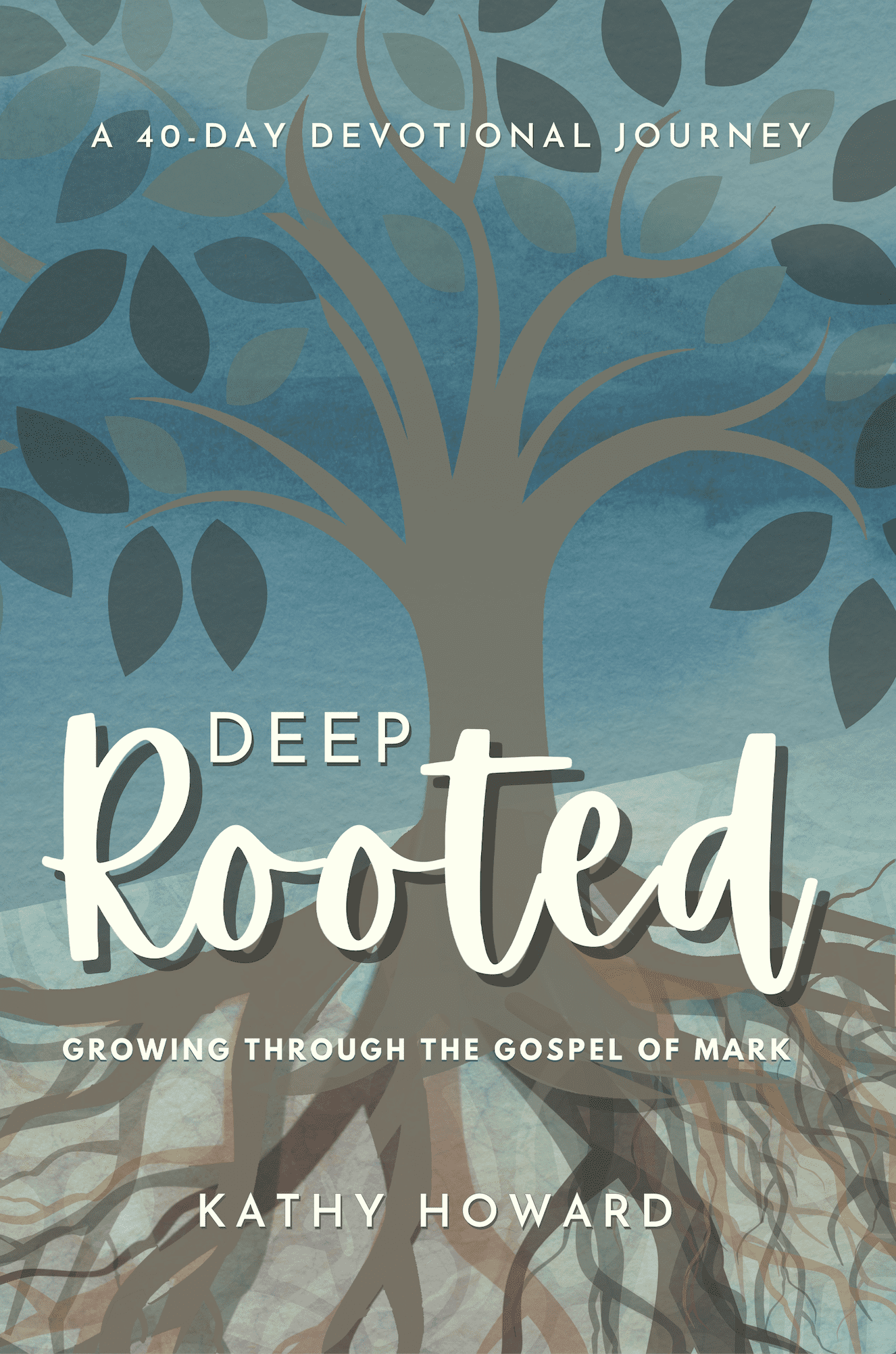
If you’d like to enhance your reading time consider getting a copy of my 40-day devotional book “Deep Rooted: Growing through the Gospel of Mark.” The 40 days correlate with the 40 days of the Bible reading plan. Each day includes inspiration, commentary on the passage, and questions to help you dig deeper, reflect on, and apply what you read.
Find out more about “Deep Rooted: Growing through the Gospel of Mark”
Do you plan to observe the Lenten season? If so, how?


February 14, 2022
We Can Know if We Have Genuine Faith

I’ve often referred to myself as a “cultural Christian.” I grew up in the church, walked the aisle at 8-years-old, said a prayer, and was baptized. Then I spent the next 18 years doubting my salvation and “rededicating” my life again and again. I didn’t have genuine faith. Then, when I was 26, during a women’s Bible study through Romans, I entered into a saving relationship with Jesus. My experience reflects the theme of Denise Wilson’s new book “Seven Words You Never Want to Hear.” I invited Denise to share with you today because I believe this message is important. Thank you Denise for your book and for sharing with my readers today!
I’ve lost count of the number of times I prayed to ask Jesus into my heart. As a child, I used to preface my prayers with the words, “This time I really mean it.” I know I’m not alone. It’s common practice in evangelical Christianity to ask kids to repeat a salvation prayer.
No doubt some kids who ask Jesus into their heart are genuinely saved, but sadly, many aren’t. Despite all my prayers, I wasn’t truly born again until I was fourteen. It happened while attending a Christian youth camp. I don’t look back on a prayer as the proof of my salvation. The funny thing is I don’t even remember praying. I know it was real though because my life began to change.
True Faith Begins with RepentanceFalse conversions are the result of false gospels. “God loves you and wants you to be in his family” is true, but it’s not the gospel because it leaves out the principle of repentance. The real good news of the gospel starts with understanding the bad news of our sinful condition and our need of a Savior. Without repentance there is no salvation.
A.W. Tozer said,
“It is my opinion that tens of thousands, if not millions, have been brought into some kind of religious experience by accepting Christ and they have not been saved.”
Many are self-deceived, believing that they are right with God, when in fact they are not. I can’t think of anything more frightening than standing before God after death and hearing the words, “I never knew you; depart from me” (Matt. 7:23).
In the context of that passage it’s clear that the people hearing those words claimed to be Christians. They call Jesus Lord and even perform miracles in his name. Despite their outward show of faith, the passage makes it clear that they have no real relationship with God.
The concern is even greater when we realize that it won’t be just a few people. The Bible says, “many” will hear those words (Matt. 7:22).
We Can Know if We have Genuine FaithTo know for sure that our faith is genuine we are told to examine ourselves. Paul gave these words to the church in Corinth.
Examine yourselves to see whether you are in the faith; test yourselves. Do you not realize that Christ Jesus is in you—unless, of course, you fail the test? (2 Cor. 13:5)
My friend Nancy told me how when she was twelve years old she doubted her salvation and went to her mother to find assurance. Her wise mom didn’t point her back to the time she had prayed to ask Jesus into her heart. No, what she did is what I would advise anyone who wants assurance of salvation. The mother took her to the book of 1 John and went through the tests of genuine faith found there. (You may also enjoy “7 Biblical Truths that Help Us Understand True Faith.”)
God wants us to know for sure that we are his children. If you want to be sure you are saved, take the test. Do you love the world? Has your lifestyle changed? Do you love and justify your sin, or do you hate it? John Piper said, “The mark of a believer is not the absence of sin, but the fact that we are fighting sin.”
The Bible includes these, and many more tests of genuine faith. We don’t want to wait until death to find out if we got it right.
Thank you Denise Wilson for sharing today!
Denise lives in small-town Ontario, Canada, with her husband, two boys and a whole bunch of chickens. She has been passionate about sharing the gospel ever since her conversion experience as a young teen. This passion led to her first book, Seven Words You Never Want to Hear. The book was written out of concern for the “many” who profess faith yet are not truly born again. Find out more about Denise and the book on her website.
February 7, 2022
How to Discern God’s Will
Do you recognize God’s voice? Do you know how to discern God’s will for your life? Maybe you’re facing a difficult situation or decision or maybe you just want to know God’s direction. You may sense a gentle prodding but you aren’t sure if that’s from God. We’ve all been there.
God wants us to know His will. That’s a comforting truth, but sometimes we still struggle in our day to day lives to know exactly what to do.
We can learn to know God’s voiceJesus said His “sheep” – that’s anyone in a saving relationship with Him – will hear and recognize His voice. We will be able to distinguish Jesus’ voice from a stranger’s. Jesus will lead us and we will follow Him. (See John 10:3-5.)
We have a 14-year-old chihuahua named Cooper. Cooper originally belonged to my father-in-law, but we took him in six years ago when Pappaw passed away. Cooper suffers from degenerative retina disease and is now almost completely blind.
We do have to carry Cooper around some – good thing he’s small – but we also guide him with our voice. Since we have a pool in the backyard, it’s vital for us to stay close to him and for Cooper to listen and obey. After he does his “business” I bring him back to me by calling his name and clapping my hands.
A few months ago, our next-door neighbor got a new dog. They named him Cooper. Several times when they tried to get their Cooper to come to them, he refused. He kept running to the fence between our two houses. Their Cooper was responding to my voice rather than theirs. Next-door Cooper had not yet learned his master’s voice and was easily drawn away by another voice.
5 Helps to Discern God’s WillI long to know God’s voice so thoroughly that I can quickly recognize and ignore other voices. What about you?
In the last few months, I’ve spent a lot of time in the book of Acts. One thing I’ve seen repeatedly is how the early believers recognized then followed God’s leading. They relied on the following five things to discern God’s will.
1. The BibleThe best way to learn God’s voice is to study His Word. God has revealed Himself, His character, and His ways to us in the Bible. If we want to know His will, to know what He would do, we must know Him. We must start with His Word.
Although the Bible may not give specific guidance for every specific life situation, it does teach spiritual truths and principles that can be applied to every possible life situation. (See “What Does the Bible Say about Life in the Womb?” for an example.)
Sometimes, no matter how well we know Scripture, we may still struggle to discern God’s specific will in a particular. What do we do then?
2. PrayerGod often clarifies His will through prayer. For instance, the church in Antioch was praying when God directed them to send Barnabas and Saul off on mission (Acts 13:1-3). The church already knew from Jesus’ last words that they were to take the Gospel to the world (Matthew 28:19-20 and Acts 1:8), but through prayer, God gave specific direction for how to obey.
3. The Holy SpiritOne day, while Peter was praying on a rooftop, God gave him a vision. As Peter pondered its meaning, the Spirit gave him clear direction (Acts 10:9-20). The Holy Spirit resides within every true believer. He is our Teacher and Guide. He helps us understand Scripture and shows us how to apply it to our lives. He gives guidance and clarity as we study the Bible and pray. (You may also find “Discerning God’s Will” helpful.)
4. CircumstancesDuring the first church council – recorded in Acts 15 – the believers interpreted recent circumstances through the light of Scripture. In separate instances, God had worked through both Peter then Paul and Barnabas to bring many Gentiles to saving faith in Christ. This had upset some Jewish believers. But when the church considered the circumstances in light of Old Testament prophecy, they had to accept that “yes” God would indeed extend His salvation to Gentiles (Amos 9:11-12). We certainly cannot rely on circumstances alone to point us in the right direction, but God can use them to confirm His will.
God also orchestrates the circumstances of our lives to put us in the proper position to carry out His will for us. Looking back at where He has brought us can help us see His next steps for us.
5. Godly CounselGod designed us to need other believers. Sometimes we need to talk through things with another person. Another believer, who also prays and studies God’s Word, can help insure you make choices that align with Scripture. Choose you counsel wisely and give them permission to hold you accountable for obedience.
6. The BibleYes, I know. I already mentioned the Bible. That’s where we started. But we must also end with Scripture because God will not speak in any way that contradicts His Word. God will not reveal anything through prayer that contradicts His Word. The Holy Spirit will not teach any spiritual truth that contradicts His Word. Circumstances will not point in any direction that contradicts God’s Word. Finally, any human counsel that contradicts God’s Word is not godly counsel.
January 31, 2022
4 R Bible Study Method for Everyday Use

What Bible study method do you use? Do you feel confident when you open your Bible or a bit unsure? You can approach God’s Word with confidence that you can understand it and with anticipation knowing God will teach you something about Himself.
Although there are numerous good systems for studying Scripture, all of the correct ways will have one goal in common – to discover what God originally meant when He wrote it and how He wants to apply His truths to an individual’s life today. There are infinite ways God may apply a passage to our lives, but only ONE original meaning. The simple inductive Bible study method I share below is essentially what I do every day when I open my Bible, whether I have a few minutes or a big chunk of time. (See also “Only Have 15 Minutes for a Quiet Time?”)
There are some general guidelines to keep in mind in order to properly understand any passage. For instance, we must recognize the biblical genre and the context of the passage. And, to keep the proper perspective, we must always keep in mind that God’s Word is first and foremost about God. (For more info, see “Are You Reading the Bible All Wrong?”)
The 4 R Bible study method is a basic way to dig a little deeper into any biblical passage. Although they can enhance your study, you don’t need extra tools or resources. All you need is your Bible and a humble, teachable attitude. The “R” repetition makes it easy to remember! You can literally take it anywhere! (Click here to get a printable PDF of the 4 R Bible study method.)
My “Deep Rooted” devotional book series is formatted around the 4 R Bible study method. Find out more about “Deep Rooted: Growing through the Gospel of Mark” or “Deep Rooted: Growing through the Book of Acts.”
See this post for a video teaching of the 4 R Bible study Method
4 R Bible Study Method1. READHave a plan– A reading plan will help with consistency and context, cutting down on frustration with your daily time with God. It’s always easier to begin reading if you know where you’ll be reading when you open your Bible. (I have several free Bible reading plans right here on my site. Check out the Free Resources page! And… If you’d like some structure, encouragement and accountability in your daily Bible reading, check out my Facebook group, “Reading the Bible Together.”)Read prayerfully– Before you begin, ask God to teach you. Ask Him to open your mind and heart to not only understand what you’re reading, but also to be willing to apply His truth to your life. Keep praying while you read! Ask God questions about what you’re reading. He wants you to understand.Read multiple times– God’s Word is packed with wonderful things. It’s easy to miss details and even deep spiritual truth with just one reading. Choose a Bible reading plan that has daily readings manageable enough to give you time to read the passage two or three times.Read in different translations – If you have time, reading in different translations will also increase understanding. (Also see “ Why are there so many Bible Translations? ” and “3 Steps to Help You Choose a New Bible.”)2. RECORD (Observation step)Please don’t ask what the Scripture “means to you.” (Major pet peeve by the way…) Every Scripture passage in the Bible has ONE meaning – what God meant when the Scripture was first written. Our goal in this step is to carefully observe the text and record what we find. To see what the passage says. (Side note: Before you begin observing, make sure you understand the context of the passage. If you aren’t sure what this mean, check out this post: “4 Things to Consider for Biblical Context.”)
Things to RecordAlthough you may not find every one of the following in every passage, here are some things you should look for in each passage:
Truths about God– The Bible is first and foremost a book about God. He is everywhere – in every passage, on every page. It may be blatant or subtle, but He will be there. Looks for truths about His nature, His character, His ways, and His purposes.Key Words & Phrases– Repetition in God’s Word is not accidental. If you see words and phrases repeated, take note. God is trying to point to something important.Important facts – Mark any facts you see in the passage that will help you understand what’s happening. Things like people, places, numbers can be key to comprehension.Commands – The Bible is full of commands. Some are one-time commands for specific individuals at a specific time. Others are for all God’s people for all time. For instance, “love one another” is applicable to us today!Spiritual principles– There will be a lot of overlap here with “truths about God.” However, eternal spiritual principles impact our daily lives. For instance, Psalm 1 teaches that those who meditate constantly on God’s Word will thrive spiritually and live fruitful lives for God’s Kingdom.Contrasts, comparisons, & word picture – All these literary devices shed light on the spiritual truths in the passage. Therefore, making a list or a table could help your comprehension.(See “10 Observation Tips“ for a longer list!) Depending on your preference, you can mark these in your Bible, takes notes in a journal, or record them in some other way. I use a journaling Bible with an extra-wide, lined journaling column. I make study notes there and I use a highlighting system to help me observe the passage. (For more on my highlighting method see “Bible Highlighting for More Effective Study.”)
3. REFLECT (Interpretation step)Although God’s Word has endless application, there is just one meaning. Look back over your recorded observations to help you recognize and understand God’s original meaning of the passage. (In some Bible study methods, this step is referred to as “interpretation.”) As you reflect on your observations, also consider how things like the context, literary genre, and the main story of the Bible impacts the meaning. (For more help see “4 Tips to Help You Understand the Bible.“)
4. RESPOND (Application step)Knowledge of God’s Word is never the end game. Application that leads to spiritual transformation is always our goal. So, once we’ve read and understood, let’s ask God to show us how to apply these truths to our lives. The acronym PROBE can help us apply these truths to our lives:
Prayer – Is there something in the passage I can pray for myself or others?Repentance – Is there a sin or area of disobedience I need to confess and turned away from?Obedience – Is there an action I need to take or a decision I need to make?Believe – Is there something I need to believe about God?Express – Is there a praise or thanksgiving I need to voice to God?What’s your favorite way to study the Bible?
January 23, 2022
What does the Bible Say about Life in the Womb?

Sunday, January 23rd is “Sanctity of Human Life” Sunday. This observance emphasizes the intrinsic value of all human life at every age and life stage. It particularly focuses on the value of life in the womb.
A very real battle continues to rage in our country between “pro-life” and “pro-rights.” We are debating the question, “Does life in the womb have any rights, and if so, what and when?” This war is being fought in our courts, in our legislatures, in the news, on social media, and even in our families.
Many heart-breaking circumstances surround this issue. I have friends who’ve had abortions. And I have a dear friend whose birth mother became pregnant due to rape but chose life for her baby. There are millions of stories on both sides and no easy answers. (See “5 Reasons a Christian Woman Might Consider Abortion.”)
I have hesitated to publicly address the topic of abortion. It’s an emotionally charged, very personal issue. Both sides have very strong opinions. The politicians, philosophers, and pundits all have opinions. Everyone sounds right and no one does. So how do we know what’s right?
My Opinion Doesn’t MatterAs a Christian, the way I feel about something must take a backseat to what God’s Word teaches. I must let God’s truth – as He has revealed it in the Bible – inform and shape my opinions, beliefs, and actions.
You may already know that the term “abortion” does not appear in the Bible. But many timeless truths found in Scripture do specifically apply to this topic. In fact, Christians need to use this same process to deal with every issue in our lives and in the world around us today. Even when something is not specifically mentioned in Scripture we will find eternal spiritual truths applicable to every life situation.
Christians must go to God’s Word. This issue is simply too important to make an “uninformed” or even biased decision. As followers of Jesus, let us take the responsibility to do this in every area of our lives. Let us search the Bible for spiritual truth and apply it to our daily decisions, relationships, and society issues.
5 Spiritual Truths to Shape Our Stand on Life in the WombSo, what does Scripture say that we can apply to the issue of abortion? While there are many other passages and truths I could cite here, these five spiritual principles speak most directly to the topic.
God values all human life– Each and every human being has intrinsic value because we God created us in His image. In fact, each person is so valuable to God that He has decreed the death penalty for anyone who takes the life of another human. (Genesis 1:27, Genesis 9:5-6)God purposefully and personally forms the unborn life in the womb – God is intimately involved in the formation and development of unborn life. He sees each life in the womb and knows the number of his or her days. (Psalm 139:13-16, Isaiah 44:24)God knows individuals and establishes purposes for individuals before they are born– God has a purpose and a plan for every individual. God determines these even before we are formed in the womb. He calls us to our purpose before we are born. (Galatians 1:15, Jeremiah 1:5)God considers the unborn child to be a life worth protecting– In the Old Testament Law, if someone’s actions caused an unborn child to be born prematurely and the child died, that person’s life was required as punishment. It was considered murder. “Life for life.” (Exodus 21:22-25)God declares children a gift, a “reward” from Him– Children are not only created and formed by God, they are also given to us by God. From beginning of the Bible to the end, children are considered blessings, not problems. (Psalm 127:3-5)What Should We Do?As believers, let us show the world what we are for, not what we are against. Let us proclaim love, not hate or condemnation. We are not against women who are strangled by their circumstances; we are FOR life. Let us help the unwed mother. Volunteer at a pregnancy help center. Take a pregnant teen into our home. Adopt. Foster. Give. Let us back our talk with our resources. Let us not only stand for life, let us lovingly ACT for life.
What does the Bible Say about Life in the Womb? by Kathy Howard.
January 17, 2022
Only have 15 minutes for a quiet time?

Many Christian women today run hard and fast all day long. Whether you are a full-time mom, have a demanding career, or balance work and family, it can be hard to find even a few minutes to sit with quietly with God, read His Word, and pray. Some days there’s simply no time for a quiet time.
I talk a lot about how to do better Bible study. I teach a simple inductive Bible study method – “4R Bible study method” – and I encourage women to dig into God’s Word for themselves. (Here’s a video teaching on the 4R method.)
BUT… handling God’s Word correctly doesn’t mean you have to spend a long time in the Bible every time you open it.
My first desire for all of us is that we will read the Bible regularly and understand it better – no matter how much time we have to spend in it.
Yes, it’s true that the more time we spend in the Bible, the more we learn about God, and the more we will know Him.
BUT… You can hear from God through His Word in just a few minutes. FIVE minutes reading Scripture is five minutes spent getting to know God. So, never think that five minutes isn’t worth it.
Tips for 15 – or 5 or 10 – minute quiet time:Read the BIBLE – We are blessed with so many Christian resources. There are wonderful devotionals, commentaries, and books written by godly men and women that offer great insight and help. It’s easy and tempting to pick them up first. But if you only have a few minutes for a quiet time, why would you settle for reading what God has said to someone else? Read the Bible; listen to God first. Those other things are supplemental; read them when you have more time. God’s Word is ALWAYS primary. (Note: If you find a devotional or other resource that sends you to God’s Word first and helps you properly interact with Scripture in a meaningful way, then it may be a good choice for a quiet time tool. That was my goal for the “Deep Rooted” devotional series. Katie Orr’s Focused 15 Bible Study method is also a great resource!)Have a PLAN – If we don’t know where we going to read, we waste precious moments trying to decide where to start. You can find all kinds of Bible reading plans online. (I also have several free plans on my Free Resources page.) Many work through a Bible book. Others are topical. But, if you have 15 minutes or less to spend in a sitting, I suggest you pick a book of the Bible and begin at chapter one, verse one. Then work your way through in small increments each day until you finish the book. Then begin another. It may take you weeks or even months to read through a book and THAT’S OKAY! I’d rather you digest what you’re reading than rush through just to check off a box. Spend the first third reading – If you only have 15 minutes, spend 5 minutes reading the Bible, picking up where you left off the day before. (I just set a timer and read slowly for 5 minutes. You should be able to read at least 20-25 verses!) You can spend a little less or a little more depending on where the natural break falls in the text.Spend the second third interacting with what you read – Prayerfully look back at what you’ve just read. Depending on your time, pick one or more things to look for in the passage. For instance, ask God to show you what characteristics it reveals about Him or what truths it teaches about salvation or spiritual growth. (See this post for more about observing a text .) You don’t have to see EVERYTHING that’s there to gain spiritual insight. Simply take advantage of the time you have. OPTION: You could also spend several days in the same passage, rereading each day during the first third and spending the second third observing in another category.)Spend the last third talking about it to God – God wants to take the spiritual knowledge and insight you gained from reading His Word and apply it to your life. Ask Him what that should look like. Ask Him for clarity about things you didn’t understand. Ask Him to give you wisdom and clear direction for your day. Ask Him how you should respond to His truths. ( This post gives tips for asking God to help you respond to His Word.)Yes, more time reading and studying God’s Word is always beneficial. BUT… every minute is valuable. This basic format can be used if you have 10 minutes or 100 minutes. Just spend whatever time you have in God’s Word.
Just do it! Pick up that Bible and read it.
What are some ways you’ve found to make the best use of the limited time you have to spend with God.
January 10, 2022
How to Get the Most Out of Your Daily Devotional

I have mixed feelings about using a devotional. I know, that sounds funny coming from someone who has written several devotional books, so let me clarify. Printed devotionals and daily online devotions can be wonderful guides and supplemental tools, but they should never replace time directly spent in God’s Word.
Sadly, some of us use devotionals as our primary – and often only – source for time with God. If we choose to use a daily devotional, there are some things we can do to get the most out of them.
What is a devotional and what is it not?A “devotional” writing – whether print or digital – uses story, commentary, or illustration to help the reader reflect on selected Scripture from God’s Word. They can include elements like Scripture, thoughts for reflection, and prayer prompts. There is a wide-range of devotional writing with various purposes. Some devotionals focus on a specific topic and are designed to help the reader through a particular period of life (parenting, grief, marriage, etc). Some devotionals seek simply to inspire and encourage. Sadly, sometimes, these are no more than “feel good” thoughts that barely touch on Scripture.
Others, like the classic “My Utmost for His Highest,” seek to guide the reader into thinking on and responding to the deep truths of God’s Word. My goal for the “Deep Rooted” series of devotionals was to create a resource that would increase the reader’s time in God’s Word not replace it. The “Deep Rooted” books send the reader to the Bible and help them learn how to interact with, understand, and apply Scripture. (If you just need some structure, check out the Bible Reading Plans on my Free Resources page.)
There are a lot of good devotionals out there. As long as we use them correctly, they can be great resources. The following tips and suggestions will help us get the most out of your devotional books. (My devotional book “Deep Rooted” is a meaty devotional book that also equips you to study any passage on your own.)
5 Tips to Help You Get the Most out of Your Daily DevotionalRead the daily Scripture from your Bible – Many devotionals have the day’s verses printed out in the book or on the web page. But if we open our Bible and read it there, it gives the Holy Spirit opportunity to guide us to read further, to interact more fully with the actual text. And sitting with an open copy of God’s Word can’t be replicated.Read the selected passage in its greater context – Some devotionals ask you to read just one or a few verses. But that can easily cause us to miss the biblical author’s meaning. So, when you read the selected passage, back up to get the context. (For more on biblical context see “How Literary Context Helps You Understand the Bible” and “Four Things to Consider for Biblical Context.”)Listen to God first – Before you read the devotional author’s commentary give the Holy Spirit a chance to teach you. Observe the text to see what it says. (See “10 Observation Tips for Better Bible Study“) Ask God to give you understanding and to show you how He wants you to apply it to your life. The spiritual insight from someone else can be very helpful, but don’t let it get in the way of anything God wants to show you Himself.Journal your own thoughts – Some devotionals give you space to write. If yours doesn’t, keep a notebook or bound journal with your Bible so you can record any insights, direction, and application God gives you. (For help on reading and studying a passage for yourself see “The 4 R Bible Study Method.“)I would love to hear your thoughts on how you use devotionals and how you work to keep them in the proper perspective.
How to Get the Most Out of Your Daily Devotional by Kathy Howard.
January 3, 2022
What’s your plan for 2022?

Over the last couple of years, most of us have learned to hold plans loosely. While we may still hesitate to plan a big vacation, we must not let the world’s uncertain physical circumstances hinder our intentions for spiritual growth. We need a plan for 2022.
While only the Holy Spirit can grow us up to look more like Jesus, He chooses to do His work through our obedient cooperation. In his first letter to Timothy, the apostle Paul likened our efforts to physical training:
Rather train yourself for godliness; for while bodily training is of some value, godliness is of value in every way, as it holds promise for the present life and also for the life to come. 1 Timothy 4:7-8 ESV
Bible Reading & StudyGod’s Word is the foundation of our spiritual health. The one true God has revealed Himself to us through the Bible. Scripture feeds our minds and nourishes our souls. Being in God’s Word is how we get to know God. It’s how we come to know His purposes for our lives and how we can please Him.
So, here’s the big question: Do you have a plan for 2022 for how you will read and study the Bible?
That old saying is true – those who fail to plan plan to fail. Haphazard Bible reading is hazardous. Hit and miss will be more miss than hit. And the “drop open and point” method usually causes us to miss the point.
What we need is a plan to read and study the Bible. A Bible reading plan removes the first big obstacle in being in God’s word regularly – “what will I read today?” When we know what we are going to read we are much more likely to do it! (Also see “Tips & Resources for Spiritual Growth in 2022.” and “The 4R Bible Study Method” description & video teaching.)
My Bible Reading Plan for 2022There are no “one-size-fits-all” Bible reading plans. For instance, if you have not been reading the Bible with consistency in the past, you’ll want to start with just a few minutes a day. But if you’ve been reading your Bible almost daily for years, you may be ready to read the Bible through in a year! So this new Bible Reading Plan for 2021 may not be the best plan for you. However, I have developed this plan in a way to create as much opportunity for success as possible. This is the plan I use every day.
Five readings per week – this gives us two days per week to catch up if we miss a day. We all have days where we simply can’t get it done. And if you have a fabulous week and don’t miss a day, you can use the extra two days to read in the Psalms or Proverbs!Book by book – This plan works through entire Bible books, alternating between the New Testament and the Old Testament. Reading whole books gives us a better overall understanding of these books. By the end of 2021, we will have read 5 full and 2 partial Bible books. This layout also gives us an opportunity to jump back in when a new book begins if we’ve fallen way behind.Increase our knowledge of God – Studying the Bible teaches us about the Author! If you want to know God more, reading and studying His Word is the way!Opportunity for accountability – I lead a Facebook group called “Reading the Bible Together.” Each day I post the daily reading and some questions to help you get the most out of your reading. I will also post introductions before we begin new books. I would love for you to join!Although I’d love to have you join in the Bible reading group, you don’t have to in order to use my 2022 plan. Download the PDF now, print it, and put it in your Bible! Don’t miss the reading tips on the last page!
An Opportunity for Deeper Study“Deep Rooted” Short-Term Group – This temporary, closed Facebook group will go through my new devotional book “Deep Rooted: Growing through the Book of Acts.” In addition to daily discussion of the 50 devotions, I will do video teaching on Bible study tips and hold weekly live Q&A sessions. There is no cost for the group, but members will need a copy of “Deep-Rooted.” We get started on Monday, January 3rd. Follow the link to the group, request to join, and be sure to answer the three questions.
Do you have a Bible reading plan for 2021? If so, what will you be reading? Do you have a study plan?
December 27, 2021
Tips & Resources for Spiritual Growth in 2022
This week between Christmas and New Year feels like a gift to me. I can catch my breath from the activities of Christmas and thoughtfully consider 2022. One thing I like to do during this time is plan for spiritual growth in the new year.
Although only the Holy Spirit has the power to transform us into the image of Christ (2 Corinthians 3:18), God does expect our obedient and active cooperation (1 Corinthians 9:24-27). He calls us to “train ourselves to be godly” (1 Tim 4:7-8). That means purposeful planning and intent.
This post is full of practical tips and discipleship resources that can help. Check them out. Use a few, none, or all of them!
Planning TipsEvaluate and Set Goals – You’ve heard the old saying: “Those who fail to plan, plan to fail.” If you’re serious about spiritual growth, the first step is to evaluate your current condition, then determine where you want to go. The following posts/discipleship resources can help:
Looking Back and Planning Ahead5 Tips for Setting Spiritual Growth GoalsDiscipleship Evaluation SheetSpiritual Goals Planning SheetCommit to Regular Time with God – Every relationship needs time to flourish. The same is true regarding our relationship with God. If we want to know Him, if we want to foster intimacy with Him, we need to spend time reading His Word and talking to Him. The following resources will can help you do that:
7 Tips to Start of Restart a Quiet Time 3 Steps to Foster a Hunger for God’s Word11 Tips for Spending Quality Quiet Time with God8 Tips for Moving Quiet Time from “Want To” to “Get To” 5 Probing Questions to Help You Meditate on Scripture2022 Bible Reading PlanResources4 R Bible Study Method – The Bible is a book by God and about God. When we read the Bible, our first goal is discover God’s original and only meaning so we can know Him more. And we want to also apply what we learn to our lives. May sound like a big task, but the 4 R Bible Study Method makes it easier. This method will equip you to better study any Bible passage. In fact it’s simple enough to use every day. (You may enjoy this half-hour video teaching on the 4 R Method!)
Read the Bible Together – Maybe you need some direction and help to keep you in the Word all year long. I have a suggestion! For several years now I’ve been leading a Facebook group called “Reading the Bible Together” that provides all that and more! This private group of more than 1,300 women from all over the world, is a place of encouragement and enrichment. We use a reading plan that works through one Bible book at a time. This plan has readings for 5 days a week, giving you two days of “grace” time to catch up when needed. (Here’s the Reading Plan for 2022.) The daily readings and discussion questions are posted at 5:00am each morning, Monday – Friday. Membership approval requires you answer three questions, so watch for that. JOIN US TODAY! READING THE BIBLE TOGETHER!
“Deep Rooted” Short-Term Group – This temporary, closed Facebook group will go through my new devotional book “Deep Rooted: Growing through the Book of Acts.” In addition to daily discussion of the 50 devotions, I will do video teaching on Bible study tips and hold weekly live Q&A sessions. There is no cost for the group, but members will need a copy of “Deep-Rooted.” We get started on Monday, January 3rd. Follow the link to the group, request to join, and be sure to answer the three questions.
“Deep Rooted” devotionals (Mark & Acts) – This two-volume (soon to be three!) series is designed to help you interact with and apply Scripture, not just read it. These meaty daily devotions use a simple study framework designed to help you:
Develop a regular habit of spending quality time in God’s WordLearn how to dig into Scripture on your ownForster a desire to share the gospel with othersDepend on the Holy Spirit as you follow JesusWant to Grow?The new year can be a great time of spiritual growth. But it takes purpose and intent. You ready?
What has helped you most grow spiritually in the past? What new thing do you want to try in the new year?
Tips & Resources for Spiritual Growth in 2022 by Kathy Howard.
December 20, 2021
Christmas Greetings and a Small Gift 🎁

Saturday morning I feasted on Cranberry-Pumpkin bread, peanut brittle, cider, and good conversation. Although I do frequently talk to myself, this time I wasn’t alone. I had invited a few friends over to visit and enjoy some Christmas goodies. And I’m so glad I did. (For the bread recipe see “Pumpkin Bread, Peanut Brittle, and Lies.”)
The Christmas season often flies by in a whirlwind. By the time we slow down to think about what we want to do, it’s over. But I want this year to be different. I want to do a better job of focusing on those I love and remembering why we celebrate.
The Christmas coffee gathering was one way to do that. Another is grabbing some time with the grandkids. Today I will be doing Christmas crafts with four of them. Hobby Lobby was happy to see me walk in the door.
A Small Gift for YouI wish you and I could sit down at my kitchen table with a mug of strong coffee and a slice of pumpkin bread. I’d love to talk with you about what God is doing in your life and how you sense Him leading you into 2022. I would also thank you for the encouraging words you’ve sent throughout the year and the ways you’ve supported God’s work in my life.
But, since that’s not possible today, I’d like to offer a small gift as a way to express my gratitude. As many of you know, in October my new spiritual legacy themed devotional was released. “Heirloom: Living & Leaving a Legacy of Faith” tells 52 inspiring stories of faith from the past that still inspire us today. The most valuable thing we can leave for our families is a legacy of faith. Telling our own story of faith is part of this legacy. (Find out more about “Heirloom” or see it on Amazon.)
“We will not hide these truths from our children; we will tell the next generation about the glorious deeds of the Lord, about his power and his mighty wonders.” Ps 78:4 NLT
My gift to you is a guide to help you write your faith story for your family. The downloadable PDF,“Spiritual Heirloom,” gives question prompts in several categories to help you write about your spiritual journey with Jesus. Download this guide here.
Brief Howard UpdateIf you want to stop reading, you won’t hurt my feelings! But, for those who are interested, I thought I’d share a few family and ministry highlights from 2022:
February Deep Freeze – Texas experienced some historic low temperatures and our power grid was not prepared. At the Howard house we suffered through rolling blackouts and one busted pipe.Spring Fun – Fishing and baseball (t-ball) peppered our spring months. Between times at the fishing camp with family and friends, we plopped down in lawn chairs at ball games for three grandsons.
 Big Birthday – I turned 60 in September. My family made a big fuss over me and planned a beautiful party to celebrate! Then in November, Wayne and I and dear friends continued the 60th celebration with a week in the USVI!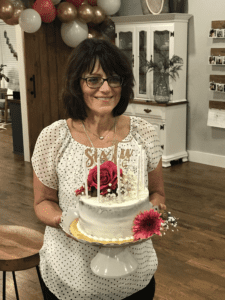
 Summer Road trip – In July, Wayne and I drove from Texas to Iowa for a friend’s wedding. While we were there we visited the “Field of Dreams” farm. That was fun!Bucket List item – Wayne and I love baseball and the Astros are our team. So, when they made it to the World Series, we decided we couldn’t pass up an opportunity to go. It was such a fun experience! AND, it was one of the games the ‘Stros won!
 New Books – This year I wrote one book and launched two. “Heirloom,” which I wrote in 2020, made its debut in October. “Deep Rooted: Growing through the Book of Mark,” which I wrote over the summer, released the end of November. Right now I am working on a Romans volume of the Deep Rooted series that will be released late spring 2022!Remembering Mom – Mom lost her battle with Alzheimer’s late in 2020, so we hit all those “firsts” in 2021.
Although we still felt COVID’s impact this year – Thanksgiving didn’t turn out like we had planned – some things began to look more normal. For instance, I had more “live, in-person” speaking events than virtual this year! And I’m looking forward to a full year of family and ministry in 2022. (Please be sure to check out next week’s blog. I will be sharing tips, tools, and resources to help you launch into a spiritually healthy new year!)
Merry ChristmasI pray you have a joyous time celebrating the birth of our Savior. Whether your Christmas will be small and quiet or loud and rambunctious, may you experience an overwhelming sense of wonder that the God of all creation took on flesh so He could die in our place.
And the Word became flesh and dwelt among us, and we have seen His glory, glory as of the only Son from the Father, full of grace and truth. John 1:14, ESV
Merry Christmas, Kathy


![[image error]](https://www.kathyhoward.org/wp-content/uploads/2022/02/Discern-Gods-Will.jpg)