Jennifer R. Hubbard's Blog, page 103
March 8, 2011
Voice and plot
Today's guest post is by author Janet Fox. How is this process like, or unlike, your own?
Jennifer Hubbard and I are cross-posting on the subjects of voice and plot. I found it so interesting to read her post, because we do have different approaches. I usually don’t have my novels well-plotted before I begin writing; all of my stories start from voice. I hear a sentence or two in my head, and it will be the voice of the character, and often I have no idea what kind of story she is trying to tell me.
That’s when I need to take some pondering time. I’ll write snatches that may (or may not) become scenes; I’ll write the names of other characters and their relationships to the protagonist; I’ll sound out her chief desire; I’ll uncover the antagonist. I spend hours on walks sorting out what I think may be happening and why. I’ll often dream ideas that become important. Finally I’ll sit down and start writing, organically, with the voice of my main character firmly in hand.
This means that my plots are a mess, and my revisions extensive and nasty. And that first-drafting for me is a time-consuming and painful process. But I’ve learned the hard way: if I try to mash out a detailed plot before my story is ready, it falls flat. (For the same reason, I don’t discuss or describe my work in any kind of detail until I have a complete first draft; I don’t bring unfinished first drafts to critique.)
Once I have a messy first draft I can go back and pick through the scenes and find what works and what doesn’t and what’s missing. And at that point I may need to resharpen the voice. What tends to happen as I work is that I start out with a strong character voice, and while I’m crafting scenes the voice disintegrates until it’s my own voice telling the story. In my second draft, I work to be cognizant of the nuances of my main character’s voice again, hearing her tell the story, just as she did when it all began.
I love the fact that there is no one right way to approach crafting voice and plot, that Jenn and I know what works best for each of us.
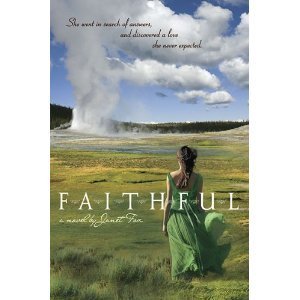
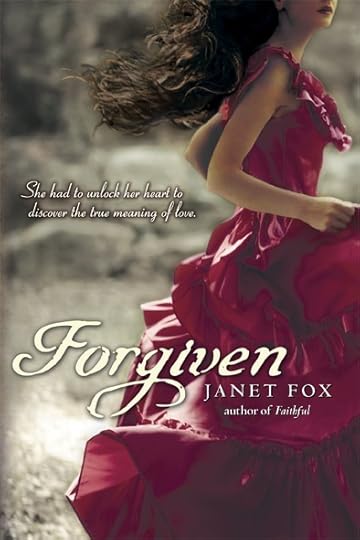
Janet Fox is the author of the young adult historical novel Faithful (Speak/Penguin 2010), and the companion YA Forgiven (2011). Her blog address is www.kidswriterjfox.blogspot.com.
Jennifer Hubbard and I are cross-posting on the subjects of voice and plot. I found it so interesting to read her post, because we do have different approaches. I usually don’t have my novels well-plotted before I begin writing; all of my stories start from voice. I hear a sentence or two in my head, and it will be the voice of the character, and often I have no idea what kind of story she is trying to tell me.
That’s when I need to take some pondering time. I’ll write snatches that may (or may not) become scenes; I’ll write the names of other characters and their relationships to the protagonist; I’ll sound out her chief desire; I’ll uncover the antagonist. I spend hours on walks sorting out what I think may be happening and why. I’ll often dream ideas that become important. Finally I’ll sit down and start writing, organically, with the voice of my main character firmly in hand.
This means that my plots are a mess, and my revisions extensive and nasty. And that first-drafting for me is a time-consuming and painful process. But I’ve learned the hard way: if I try to mash out a detailed plot before my story is ready, it falls flat. (For the same reason, I don’t discuss or describe my work in any kind of detail until I have a complete first draft; I don’t bring unfinished first drafts to critique.)
Once I have a messy first draft I can go back and pick through the scenes and find what works and what doesn’t and what’s missing. And at that point I may need to resharpen the voice. What tends to happen as I work is that I start out with a strong character voice, and while I’m crafting scenes the voice disintegrates until it’s my own voice telling the story. In my second draft, I work to be cognizant of the nuances of my main character’s voice again, hearing her tell the story, just as she did when it all began.
I love the fact that there is no one right way to approach crafting voice and plot, that Jenn and I know what works best for each of us.
Janet Fox is the author of the young adult historical novel Faithful (Speak/Penguin 2010), and the companion YA Forgiven (2011). Her blog address is www.kidswriterjfox.blogspot.com.


March 6, 2011
Seekrit projects
The other day, Nathan Bransford posed the question: "How much can you talk about your idea before you write it?" Some writers are energized by talking about the story; it helps them generate enthusiasm and new ideas. But for me, the answer has always been: Not much. About works in first draft, the most specific I tend to be is, "It's a young-adult novel" or, "I'm working on a short story."
Writing a first draft takes a lot of energy. Creating a world from scratch requires an incredible amount of concentration and tension. I discovered early on in my writing life that if I talked a lot about a story I hadn't finished yet, I tended to lose interest in ever finishing it. I left the fight in the locker room, so to speak. Also, it can take me a while to figure out exactly what it is that I'm writing--the characters surprise me all the time. I may discover in chapter 16 that my main character is adopted and has been wondering about his biological identity all along, and that's what the story is really about.*
The farther along I am, the more I can say about a story. Once it reaches the third or fourth draft, I can squeeze out a one-word description: a topic, perhaps, or even a one-line summary. A few drafts later, it's ready for critique and I not only tolerate, but require, lengthy analyses and discussions of how the book is constructed and what it's about. When it's finished, it's a pleasure to discuss the story with readers--at that point, I could talk about the book all day. But early on, that seed needs silence to germinate.
*Naturally, this is not at all what my current work in progress is about. I don't think.
Writing a first draft takes a lot of energy. Creating a world from scratch requires an incredible amount of concentration and tension. I discovered early on in my writing life that if I talked a lot about a story I hadn't finished yet, I tended to lose interest in ever finishing it. I left the fight in the locker room, so to speak. Also, it can take me a while to figure out exactly what it is that I'm writing--the characters surprise me all the time. I may discover in chapter 16 that my main character is adopted and has been wondering about his biological identity all along, and that's what the story is really about.*
The farther along I am, the more I can say about a story. Once it reaches the third or fourth draft, I can squeeze out a one-word description: a topic, perhaps, or even a one-line summary. A few drafts later, it's ready for critique and I not only tolerate, but require, lengthy analyses and discussions of how the book is constructed and what it's about. When it's finished, it's a pleasure to discuss the story with readers--at that point, I could talk about the book all day. But early on, that seed needs silence to germinate.
*Naturally, this is not at all what my current work in progress is about. I don't think.
They say there are no new stories, but ...
We don't write in a vacuum. Our books don't spring onto the scene uninfluenced by any other book that has ever come before. We are all balancing atop a great stack of the literature that has preceded us.
But sometimes, we intentionally adopt an earlier work to retell, or pay homage to. I'm rereading Braless in Wonderland right now, which includes many references to Alice in Wonderland (starting, obviously with the title). Ash is based on Cinderella; fairy tales are often fodder for retellings. There are multiple retellings of Jane Austen's works out there. Not to mention Shakespeare's.
When I was working on The Secret Year, comparisons to The Outsiders were unavoidable. I wasn't writing a retelling, but I couldn't ignore the fact that there was a huge YA classic out there that had addressed some of the same issues I was writing about. It made me more conscious of some of my book's themes, about where I wanted to cover similar ground and where I was interested in taking a different direction, in focusing on a different angle.
In dealing with a retelling of a classic, myth or folk tale, the author gets to choose where s/he will be faithful to the original, and where to veer away. The author must often decide which version of a folk tale to follow, or whether to combine versions. (It's fascinating to read multiple versions of the same story, and see how they changed over time and across cultures.) In dealing with more recent works, the author often needs to consider the ground that has already been covered by existing books and decide: How is my story different? Where is the fresh plot of earth in this well-known territory? What slant would be unique? What part of this story has nobody told before?
But sometimes, we intentionally adopt an earlier work to retell, or pay homage to. I'm rereading Braless in Wonderland right now, which includes many references to Alice in Wonderland (starting, obviously with the title). Ash is based on Cinderella; fairy tales are often fodder for retellings. There are multiple retellings of Jane Austen's works out there. Not to mention Shakespeare's.
When I was working on The Secret Year, comparisons to The Outsiders were unavoidable. I wasn't writing a retelling, but I couldn't ignore the fact that there was a huge YA classic out there that had addressed some of the same issues I was writing about. It made me more conscious of some of my book's themes, about where I wanted to cover similar ground and where I was interested in taking a different direction, in focusing on a different angle.
In dealing with a retelling of a classic, myth or folk tale, the author gets to choose where s/he will be faithful to the original, and where to veer away. The author must often decide which version of a folk tale to follow, or whether to combine versions. (It's fascinating to read multiple versions of the same story, and see how they changed over time and across cultures.) In dealing with more recent works, the author often needs to consider the ground that has already been covered by existing books and decide: How is my story different? Where is the fresh plot of earth in this well-known territory? What slant would be unique? What part of this story has nobody told before?
March 4, 2011
Streamlining
One of my favorite scenes in the movie Amadeus is when the Emperor, fatigued by the outpouring of Mozart's talent, tells him that his music has "too many notes."
"Too many notes?" Mozart repeats, stunned.
"Yes, it tires the ear. Just--take out a few!" (Or words to that effect. I'm reproducing this scene from memory.)
The implication is that the Emperor is a bit of a fool for not appreciating Mozart, and yet--there's also a point here that sticks with me. It reminds me of the scene in Little Women where Marmee tells Amy not to parade her virtues:
"'These things are always seen and felt in a person's manner and conversation, if modestly used; but it is not necessary to display them,' said Mrs. March.
'Any more than it's proper to wear all your bonnets and gowns and ribbons at once, that folks may know you've got them,' added Jo, and the lecture ended with a laugh."
These quotes spring to mind when I'm thinking about the advice to simplify our writing, especially to reduce the number of modifiers: to replace adverb-verb pairs with stronger verbs; to make adjectives earn their keep. Here's an example:
1. Jasmine walked quietly across the room. She went sneakily to the wall and put her ear flat against it. She tried hard to hear what Sean and Alicia were saying in the next room. At the sound of joyful laughter, Jasmine squeezed her hands tightly into fists. She took a quick glance at the door to make sure nobody could see her eavesdropping.
2. Jasmine tiptoed across the room. She crept over to the wall and pressed her ear against it, straining to hear Sean and Alicia in the next room. At the sound of laughter, Jasmine squeezed her hands into fists. She glanced at the door to make sure nobody could see her.
This is just an example that I whipped up on the spot, and I'm sure I could make it stronger if I tried, but I think it gets the point across. To my ear, #1 has "too many notes;" it's wearing too many bonnets and ribbons. So many of those words are repeating the work of other words ("quick glance," "squeezed ... tightly ... fists," "joyful laughter"), or were inserted to shore up a weak neighbor ("walked quietly," "went sneakily," "tried hard"). Pruning such sentences is like yanking weeds from an overgrown garden: it lets us see the flowers.
"Too many notes?" Mozart repeats, stunned.
"Yes, it tires the ear. Just--take out a few!" (Or words to that effect. I'm reproducing this scene from memory.)
The implication is that the Emperor is a bit of a fool for not appreciating Mozart, and yet--there's also a point here that sticks with me. It reminds me of the scene in Little Women where Marmee tells Amy not to parade her virtues:
"'These things are always seen and felt in a person's manner and conversation, if modestly used; but it is not necessary to display them,' said Mrs. March.
'Any more than it's proper to wear all your bonnets and gowns and ribbons at once, that folks may know you've got them,' added Jo, and the lecture ended with a laugh."
These quotes spring to mind when I'm thinking about the advice to simplify our writing, especially to reduce the number of modifiers: to replace adverb-verb pairs with stronger verbs; to make adjectives earn their keep. Here's an example:
1. Jasmine walked quietly across the room. She went sneakily to the wall and put her ear flat against it. She tried hard to hear what Sean and Alicia were saying in the next room. At the sound of joyful laughter, Jasmine squeezed her hands tightly into fists. She took a quick glance at the door to make sure nobody could see her eavesdropping.
2. Jasmine tiptoed across the room. She crept over to the wall and pressed her ear against it, straining to hear Sean and Alicia in the next room. At the sound of laughter, Jasmine squeezed her hands into fists. She glanced at the door to make sure nobody could see her.
This is just an example that I whipped up on the spot, and I'm sure I could make it stronger if I tried, but I think it gets the point across. To my ear, #1 has "too many notes;" it's wearing too many bonnets and ribbons. So many of those words are repeating the work of other words ("quick glance," "squeezed ... tightly ... fists," "joyful laughter"), or were inserted to shore up a weak neighbor ("walked quietly," "went sneakily," "tried hard"). Pruning such sentences is like yanking weeds from an overgrown garden: it lets us see the flowers.
March 2, 2011
Ramble on
One tool I like to use during first drafts is what you might call stream-of-consciousness writing, or spontaneous writing (a la Kerouac). Quite simply, it involves channeling a voice and just writing down whatever that voice says--not censoring, editing, or judging it. Just letting it flow. Naturally, this style requires a lot of editing in subsequent drafts, but it can be useful for bursting through doubts or hesitations, or for making the most of a short writing session. This is often the style of my first drafts. Later, I go back and cut up all those long rambling sentences, prune out those endless conjunctions. If you've read any of my published writing, you'll know that I actually favor shorter sentences. But something about writing long sentences helps me get into a rhythm.
February 28, 2011
Endless Possibility
As I mentioned earlier this year, I'm fascinated by the second-book process, and I will have several guest posts this year on the topic. The latest one is by a brilliant and witty YA writer whose second book comes out any day now!
Endless Possibility
by Saundra Mitchell
The problem with getting your first novel published is that you have to then write your second novel. I know, a problem most people would like to have. But for many writers, Book 2 becomes the millstone. The albatross. The @#()* piece of @#()&*@ that just won't gel.
I threw away 60,000 words' worth of misbegotten Second Books. And now that I can think about it without rocking and singing lullabies in a dark corner, I think I understand why.
The first publishing experience made me forget that writing is about endless possibility. Because I wasn't yet published, I didn't spend my time writing the first book wondering if first or third person sells better. Not once did I rewrite a section because I knew my editor had just published another book with a similar scene.
Drafting the first novel, I hadn't read any reviews worrying over the lack of character development, or the overdevelopment of the characters to the detriment of the plot, or the strength of the plot overshadowing the setting, or blah blah blah. The only voices in my head when I wrote the first book were my characters'.
I was there, fully in the moment, devoted to writing that book. Everything was possible. Nothing was forbidden. And it wasn't until I believed anything was possible on book two, that book two actually came together.
THE VESPERTINE was, once upon a time, the book I thought I should write. It was set in contemporary Indiana, it had a little magic, a little family drama, and a big romance. It was the appropriate book for my "brand". It catered to the library market.
I was miserable writing it. I hated getting up, I hated opening the file. I hated that I wasn't so much writing a book, as carefully crafting some words to fit a bunch of market considerations.
I got so discouraged, I threw it all away.
Then I wrote the book I needed to write, the one that would make me all kinds of happy. In the beginning, my new version of THE VESPERTINE was a historical (doesn't sell!) serial killing (overdone!) vampire (market's too crowded!) novel.
Ultimately, it became a gothic novel about a young woman who can see the future in the sunset, and a young man who seems to come and go with the wind. No vampires. No serial killers. But nonetheless, the book in my heart, a book I loved writing, whether anyone else would love it or not.
But I hope people do—it comes out in March. I'm trying to remember as I revise Book Three, and start Book Four, all the lessons THE VESPERTINE taught me. Every idea has to have every possibility, if it has any possibility of becoming a novel. Business comes later. Today, it's just about the writing.
Saundra Mitchell has been a phone psychic, a car salesperson, a denture-deliverer and a layout waxer. She's dodged trains, endured basic training, and hitchhiked from Montana to California. She teaches herself languages, raises children, and makes paper for fun. She's also a screenwriter and executive producer for Fresh Films and the author of Shadowed Summer and the forthcoming The Vespertine and The Springsweet. She always picks truth; dares are too easy.
Endless Possibility
by Saundra Mitchell
The problem with getting your first novel published is that you have to then write your second novel. I know, a problem most people would like to have. But for many writers, Book 2 becomes the millstone. The albatross. The @#()* piece of @#()&*@ that just won't gel.
I threw away 60,000 words' worth of misbegotten Second Books. And now that I can think about it without rocking and singing lullabies in a dark corner, I think I understand why.
The first publishing experience made me forget that writing is about endless possibility. Because I wasn't yet published, I didn't spend my time writing the first book wondering if first or third person sells better. Not once did I rewrite a section because I knew my editor had just published another book with a similar scene.
Drafting the first novel, I hadn't read any reviews worrying over the lack of character development, or the overdevelopment of the characters to the detriment of the plot, or the strength of the plot overshadowing the setting, or blah blah blah. The only voices in my head when I wrote the first book were my characters'.
I was there, fully in the moment, devoted to writing that book. Everything was possible. Nothing was forbidden. And it wasn't until I believed anything was possible on book two, that book two actually came together.
THE VESPERTINE was, once upon a time, the book I thought I should write. It was set in contemporary Indiana, it had a little magic, a little family drama, and a big romance. It was the appropriate book for my "brand". It catered to the library market.
I was miserable writing it. I hated getting up, I hated opening the file. I hated that I wasn't so much writing a book, as carefully crafting some words to fit a bunch of market considerations.
I got so discouraged, I threw it all away.
Then I wrote the book I needed to write, the one that would make me all kinds of happy. In the beginning, my new version of THE VESPERTINE was a historical (doesn't sell!) serial killing (overdone!) vampire (market's too crowded!) novel.
Ultimately, it became a gothic novel about a young woman who can see the future in the sunset, and a young man who seems to come and go with the wind. No vampires. No serial killers. But nonetheless, the book in my heart, a book I loved writing, whether anyone else would love it or not.
But I hope people do—it comes out in March. I'm trying to remember as I revise Book Three, and start Book Four, all the lessons THE VESPERTINE taught me. Every idea has to have every possibility, if it has any possibility of becoming a novel. Business comes later. Today, it's just about the writing.
Saundra Mitchell has been a phone psychic, a car salesperson, a denture-deliverer and a layout waxer. She's dodged trains, endured basic training, and hitchhiked from Montana to California. She teaches herself languages, raises children, and makes paper for fun. She's also a screenwriter and executive producer for Fresh Films and the author of Shadowed Summer and the forthcoming The Vespertine and The Springsweet. She always picks truth; dares are too easy.
To write something grand
A while ago, I read a book about Rose Wilder Lane and how much influence she had had on the writing done by her mother, Laura Ingalls Wilder.* Rose was a writer herself, and according to this book, she had a heavy editorial hand in Laura's Little House books.
From what I remember, Rose viewed the Little House books with a rather practical eye. They were nice, of course, and would find a modest audience, but they weren't exactly serious literature. I recall that Rose had a cherished ambition to write a really grand epic novel, or series. It would have breadth and depth, would cover everything: the ups and downs, the bitter and sweet of life.
She never did write that epic. And the Little House books went on to become a phenomenon: still in print decades later, read by generations of children.
Sometimes we think our work has to be so grand and significant, so elegant and high-minded and complex, that we despair of ever writing anything worthy. And all along, something familiar and true may be the story that really resonates with others.
*I believe the book was The Ghost in the Little House: A Life of Rose Wilder Lane, by William V. Holtz, although I'm not 100% sure. I checked out the book in question from the Philadelphia library a few years ago, and I see that the Philadelphia library does have this book.
From what I remember, Rose viewed the Little House books with a rather practical eye. They were nice, of course, and would find a modest audience, but they weren't exactly serious literature. I recall that Rose had a cherished ambition to write a really grand epic novel, or series. It would have breadth and depth, would cover everything: the ups and downs, the bitter and sweet of life.
She never did write that epic. And the Little House books went on to become a phenomenon: still in print decades later, read by generations of children.
Sometimes we think our work has to be so grand and significant, so elegant and high-minded and complex, that we despair of ever writing anything worthy. And all along, something familiar and true may be the story that really resonates with others.
*I believe the book was The Ghost in the Little House: A Life of Rose Wilder Lane, by William V. Holtz, although I'm not 100% sure. I checked out the book in question from the Philadelphia library a few years ago, and I see that the Philadelphia library does have this book.
February 25, 2011
Ripple effect
One thing that's struck me, reading blog posts like this one by Book Chic and this one by Brian Kell and this one by Courtney Sheinmel and many, many, many more like it, is the ripple effect that people have on those around them. Maybe that ripple effect is more pronounced in the age of social networking; maybe it's more pronounced in the lives of writers, whose job is communication. I've now read dozens of stories about the ways in which L.K. Madigan touched her fellow writers, her readers, her agent ... people she met, and people she never met. The outpouring has been so strong that her husband has decided to keep her blog open; please follow this link to read his words.
It emphasizes the effect we have, and can have, on one another. The time taken to share a kind word, answer an email, extend a helping hand, is time well spent. People remember those things and cherish them. I'm a writer, and my main body of work is novels and short stories. But I think the time I spend blogging and commenting on forums and answering email is valuable, too: not because I'm trying to build a "platform" or sell books, but because I'm interacting with people in a way that matters. Sure, internet time can involve some joking around and the sending of silly cat pictures, but 1) there's a lot more than that going on here and 2) sometimes we need silly cat pictures.
Another untimely passing this week was that of a YA writer whom I didn't know at all, but whose novel I enjoyed: Perry Moore. A couple of years ago, Moore's book Hero won a Lambda Literary Award as a best novel for gay and lesbian young adults. I would bet it was greatly appreciated by gay and lesbian teens who hunger to see more characters like themselves in mainstream fiction, in addition to being appreciated by those of us who found it a fun read.
The thing about writing is that we just never know where our words will go. When I was growing up, in the pre-internet age, I rarely had any contact with authors. I think I wrote one fan letter. I couldn't look at my favorite writers' websites, follow them on Twitter, comment on their blogs. I treasured their books, memorized their words, and they never had any idea. Even now, in the networking age, we will only ever see a small portion of reader response to our books and to the things we say online.
Our job is to keep putting out words that say something, that mean something, and hope they find their home.
It emphasizes the effect we have, and can have, on one another. The time taken to share a kind word, answer an email, extend a helping hand, is time well spent. People remember those things and cherish them. I'm a writer, and my main body of work is novels and short stories. But I think the time I spend blogging and commenting on forums and answering email is valuable, too: not because I'm trying to build a "platform" or sell books, but because I'm interacting with people in a way that matters. Sure, internet time can involve some joking around and the sending of silly cat pictures, but 1) there's a lot more than that going on here and 2) sometimes we need silly cat pictures.
Another untimely passing this week was that of a YA writer whom I didn't know at all, but whose novel I enjoyed: Perry Moore. A couple of years ago, Moore's book Hero won a Lambda Literary Award as a best novel for gay and lesbian young adults. I would bet it was greatly appreciated by gay and lesbian teens who hunger to see more characters like themselves in mainstream fiction, in addition to being appreciated by those of us who found it a fun read.
The thing about writing is that we just never know where our words will go. When I was growing up, in the pre-internet age, I rarely had any contact with authors. I think I wrote one fan letter. I couldn't look at my favorite writers' websites, follow them on Twitter, comment on their blogs. I treasured their books, memorized their words, and they never had any idea. Even now, in the networking age, we will only ever see a small portion of reader response to our books and to the things we say online.
Our job is to keep putting out words that say something, that mean something, and hope they find their home.
Remembering Lisa
I'm still valuing a fair amount of silence at the moment, and I'm afraid eloquence fails me when it comes to the loss of L.K. Madigan. When Lisa first went public with her cancer diagnosis, I blogged at that time about my interactions with her, and what she and her writing meant to me.
But I do want to post this, because it is a practical way you can help, if you are moved by Lisa's story (or by the stories she wrote). She established a trust for her son's college fund. Donations may be sent to:
Nathan Wolfson Trust
Becker Capital Management, Inc.
Attn: Sharon Gueck/John Becker
1211 SW Fifth Ave, Suite 2185
Portland, OR 97204
February 24, 2011
Silence
Words fill an empty page (or nowadays, a screen). Writing is about finding a voice and speaking.
Yet sometimes, silence feels right. The silence of contemplation, or planning. The silence of not knowing what comes next--or knowing but not being sure yet how to describe it. There are other silences, too: The silence that follows a major scene. The silence of a character who is about to face her biggest challenge. The silence of contentment, sorrow, puzzlement, anger, longing.
Silence is a rest in music, a pause in an actor's speech. It's the white space between scenes and chapters, the space that counts as much as any sentence or paragraph. Sometimes it's waiting to write the next words. Sometimes it's acknowledging our inadequacy in the face of things that are bigger than words. Sometimes it's the emptiness of having poured everything out, and waiting for the pitcher to refill.
Yet sometimes, silence feels right. The silence of contemplation, or planning. The silence of not knowing what comes next--or knowing but not being sure yet how to describe it. There are other silences, too: The silence that follows a major scene. The silence of a character who is about to face her biggest challenge. The silence of contentment, sorrow, puzzlement, anger, longing.
Silence is a rest in music, a pause in an actor's speech. It's the white space between scenes and chapters, the space that counts as much as any sentence or paragraph. Sometimes it's waiting to write the next words. Sometimes it's acknowledging our inadequacy in the face of things that are bigger than words. Sometimes it's the emptiness of having poured everything out, and waiting for the pitcher to refill.