N.E. White's Blog, page 24
March 17, 2014
The Forbidden Pool
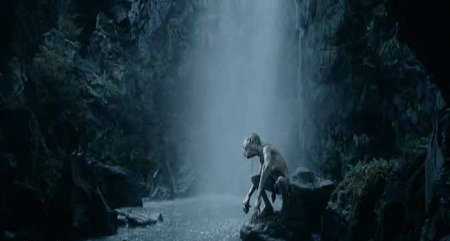
Fish – so juicy sweeeeet!
Frodo saves Gollum, linked hearts;
but fates will differ.
Want to read The Two Towers in Haiku format? Of course, you do! Check out these posts:
The Departure of Boromir (Laith’s Ramblings)
The Riders of Rohan (Cimmorene)
The Uruk-hai (N. E. White)
Treebeard (Rob’s Surf Report)
The White Rider (JudahFirst)
The King of the Golden Hall (JudahFirst)
Helm’s Deep (Cimmorene)
The Road to Isengard (Rob’s Surf Report)
Flotsam and Jetsam (JudahFirst)
The Voice of Saruman (N. E. White)
The Palantír (Laith’s Ramblings)
The Taming of Smeagol (JudahFirst)
The Passage of the Marshes (Cimmorene)
The Black Gate is Closed (Rob’s Surf Report)
Of Herbs and Stewed Rabbit
The Window on the West
The Forbidden Pool (this post)
More coming soon: The Two Towers Haiku Project.


March 10, 2014
Writing Contest!
For all you Mark Lawrence fans out there, Bloody Cake News is having a little writing contest. The prize is an advanced reader’s copy of Mark Lawrence’s Prince of Fools (due out in June).

Read the details here, then hop over to their submittal page and write your 300 word epic.
My story is up there (mistakes and all) for you to gawk at.
Enjoy!


The Voice of Saruman
wizard’s shield and sword. Staff
burned, seeing stone caught
Want to read The Two Towers in Haiku format? Of course, you do! Check out these posts:
The Departure of Boromir (Laith’s Ramblings)
The Riders of Rohan (Cimmorene)
The Uruk-hai (N. E. White)
Treebeard (Rob’s Surf Report)
The White Rider (JudahFirst)
The King of the Golden Hall (JudahFirst)
Helm’s Deep (Cimmorene)
The Road to Isengard
Flotsam and Jetsam
The Voice of Saruman (this post)
More coming soon: The Two Towers Haiku Project.


March 5, 2014
Deconstructing The Road – Part 3
(Yeah, I missed a week, and I thought I would miss this week too, but no such luck for you!)
Unfortunately, I do not have time to delve too deeply in this next section of The Road by Cormac McCarthy, and I’m sort of veering away from the sections broken out by Cliff Notes, but hopefully a quick summary will bring you up to speed on where I’m at. You can also check out this and this post if you are completely confused.
Summary (Pages 1 to ~30)
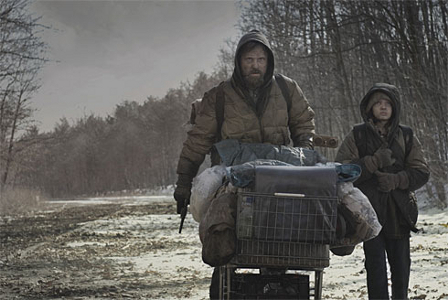
A man and his son are traveling along a road in an post-apocalyptic United States. As they move south to warmer climes, they encounter dead people, raging forest fires, bitter cold weather, a man struck my lightning and sometimes food. Most of their gear is carried in a shopping cart that they push along the road through snow and rain.
When last I summarized the story, they were heading towards a mountain pass. In this section, they summit that pass, and are now making their way down and south out of the freezing weather. They found a waterfall off the highway and spent some time there, but move on because if the site is desirable to them, it will be for others. And the father doesn’t want to meet other people.
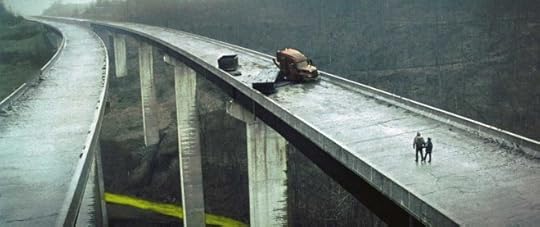
The road passes over a gorge and a semi-truck is jack-knifed across the bridge. The father and son spend a night in the cab only to find out the next morning that the trailer is filled with dead bodies. They move on.
Revelations
Up until now, the reader has not been given too many explanations about how these two have gotten where they are at nor why they are traveling south. Though on a basic level, we know that south means warmer and a better chance of surviving in the blackened world.
But the man is haunted by vague dreams and a decision that he made and up until this section, we really didn’t know what that is. We knew the man was struggling with his faith, but we really didn’t know why.
In this section, it is revealed why.
The boy’s mother* kills herself. And she would have killed their son, too, if the father had let her. She argues that life is not worth living the way it is:
Sooner or later they will catch us and they will kill us. They will rape me. They’ll rape him. They are going to rape us and kill us and eat us and you wont face it. You’d rather wait for it to happen.
Yikes!
The man’s memories and dreams hint at a chaotic end to the world where once the food supply has run low, people have taken to eating other people.
The man must come to terms with the fact that despite the world being a true living hell, he has decided to live in it along with his son. And it doesn’t help that the boy thinks much like his mother:
I wish I was with mom.
He didn’t answer. He sat beside the small figure wrapped in the quilts and blankets. After a while he said: You mean you wish that you were dead.
Yes.
You musnt say that.
But I do.
Don’t say it. It’s a bad thing to say.
I can’t help it.
I know. But you have to.
How do I do it?
I don’t know.
Reflections
I’d like to discuss in detail some of the passages in this section, but I’ll have to save that for later. For now, I’ll just say that this section bugged me as much as it did the first time I read it.
In this section of the book, the mother is painted as the unyielding and irrational partner. She’s given the most dialogue than anyone else in the book up until this point and her speeches sound more like sermons than anything else. Also, she damns herself repeatedly by saying she has a “whorish heart” and is a “faithless slut”.
Because she wants to kill herself?
The language the author uses to describe the mother is relentless and I really felt it was an attack not only on women but on folks who would consider suicide**. Coupled with the religious undertones of the previous sections, I’m beginning to wonder if McCarthy had a certain message he wanted to impart.
Join me next week and we’ll find out what that message might be.
*It is never stated whether the father and mother were married or not. It is possible that they didn’t get together until after the catastrophic event that destroyed civilization.
**Take note, the character, the man, is not so condemning of her, but she is of herself.



March 3, 2014
The Uruk-hai
Orcs’ plunder and prized catch, saved
by the Rohirrim
Want to read The Two Towers in Haiku format? Of course, you do! Check out these posts:
The Departure of Boromir (Laith’s Ramblings)
The Riders of Rohan (Cimmorene)
The Uruk-hai (this post)
Treebeard (Rob’s Surf Report)
More coming soon: The Two Towers Haiku Project.


February 19, 2014
Deconstructing The Road – Section 2
Yikes! Is it Wednesday already? How did that happen?
For those who know my schedule (she has a schedule? yes, I have a schedule), my apologies. I should have had this post complete and posted at dawn. Such is life. Let’s get on with it.
When we left our unnamed hero and his son wandering the blasted lands of America, the duo are traveling along a road. It so happens they are traveling south. The father had decided that going south to a possibly warmer clime is their only hope of surviving the winter.
In Section 2 of The Road by Cormac McCarthy, they do just that. Travel south until they reach a gap in the mountains. As far as plot goes, there’s not much going on here. However, we are treated to a deeper understanding of the man and we soon begin to realize that most of the places we visit are places he has been to as a boy with how own father.
The author is building a relentless portrait of a man losing his faith in his god (and thus humanity), while at the same time contrasting his past experiences with the boy’s current experiences. He sort of supplants his old faith with a new one. This is a theme I definitely did not pick up on during my first read and I am interested to see how it plays out.
Let’s look at how the author does this.
Faith and Fire
Throughout the first and second sections, the man refers to a god and the boy, equating the two, in two places and almost forsaking his old god in one. I’ll give you the lines:
Page 7 (in my digital edition):
He only knew that the child was his warrant. He said: If he is not the word of God God never spoke.
Here, I think McCarthy does an amazing thing. In two short sentences, he tells us exactly how the man feels about his son. The boy is his justification for living, without him, there’s not even a god. In his opinion, there might as well be no world if the boy is not in it.
Page 10:
He descended into a gryke in the stone and there he crouched and coughing and he coughed for a long time. Then he just knelt in the ashes. He raised his face to the paling day. Are you there? he whispered. Will I see you at the last? Have you a heart? Damn you eternally have you a soul? Oh God, he whispered. Oh God.
And in the passage above, the man is admitting to himself (and anyone else who may be around to hear) his doubts about his god.
Page 19:
He dozed in the wonderful warmth. The boy’s shadow crossed over him. Carrying an armload of wood. He watched him stoke the flames. God’s own firedrake. The sparks rushed upward and died in the starless dark. Not all dying words are true and this blessing is no less real for being shorn of its ground.
And here, he even calls the boy an agent of god. And not just any sort of agent, but a firedrake, evoking images of not only a powerful being, but something that burns eternal or at least will tend to a fire eternally. The boy is not only humanity’ s future, but the god’s future as well.
In addition, at several instances, in the language the man uses to describe what he see around him, the author supplants the idea that the world has been forsaken by the man’s god. Like this:
Page 7:
…walked out to the road and squatted and studied the country to the south. Barren, silent, godless.
Page 19:
On this road there are no godspoke men.
All taken together, we get a clear picture of a man losing his faith in his god and shifting that faith over to his son, who will carry the flame into the future.
Old/New
At the same time, the two are traveling through country that is the man’s homeland. They visit the man’s home, and the boy is frightened of the place. But not just of the place, but – it seems – of his father’s memories of the place.
While in the man’s childhood home, we get this:
The boy watched him. Watched shapes claiming him he could not see.
When I read that, I couldn’t help but imagine that the boy might even be jealous of his father’s memories. Maybe, like a jealous god?
Later in this scene, the boy tells his father he’s scared and the father admits that they shouldn’t have gone there. I can’t figure that one out, but I suppose it is because the boy doesn’t want to lose his father to a past that will never be again.
Story Mood
One thing that I admired in this section was the language the author used. Words like gryke and firedrake evoke very specific and powerful images.
Using gryke, natural limestone weathered into a patterns that looks like paved stone, reminded me of a natural altar, where the man has gone to talk to his god. And the firedrake, well, that’s a dragon! And we all know they are one of the post powerful symbols in fiction, often used to convey power, longevity, wisdom, and fire (in this case, fire would be life or life-giving).
Coupled with words associated with religion, the author very clearly sets an ominous, religious mood. And he does so very economically. Like this:
The flesh cloven along the bones, the ligaments dried to tug and taut as wires. Shriveled and drawn like latterday bogfolk, their faces of boiled sheeting, the yellowed palings of their teeth. They were discalced to a man like pilgrims of some common order for all their shoes were long since stolen.
When I first read this, I didn’t know what ‘discalced’ meant, but I knew it had to do with religion. It just sounded like it would and with all the other references, I got a stark picture of what was left of the god’s faithful. Not a pretty picture.
But what I enjoyed with this second reading was how well-chosen Mr. Carthy’s words are: cloven – usually associated with hooves and this made me think of the devil; latterday – coupled with bogfolk, it would seem it is a new faith of the dead; pilgrims and order convey (to me) that the dead have entered a cult of some sort.
However you read those pieces, combined they form a powerful picture of a god turning against his flock and given them up to the devil – in 52 words.
I’m sure it would have taken me a book to say all that.
So far, this section doesn’t really advance the story’s plot much (not that there’s much plot to begin with!), but we do get an overriding sense of how important saving his son is to this man. Humanity hinges on the boy’s survival.
Let’s see if he does.
Until next time, search for words that can efficiently be used to evoke a complex mood or setting.
RELATED ARTICLES:
Section 1 – Deconstructing The Road


February 18, 2014
Lothlórien
company enters Lórien
blinded, blessed dreams
Want to read The Fellowship of the Ring in Haiku format? Of course, you do! Check out these posts:
A Long-expected Party – Laith
The Shadow of the Past – rarasaur
Three is Company – The Indecisive Eeejit
A Short Cut to Mushrooms – N. E. White
A Conspiracy Unmasked – Cimmorene
The Old Forest – Dan Dan The Art Man
In the House of Tom Bombadil – Cimmorene
Fog on the Barrow-downs – Dan Dan The Art Man
At the Sign of the Prancing Pony – Rob’s Surf Report
Strider – Cimmorene
A Knife in the Dark – N. E. White
Flight to the Ford – Laith
Many Meetings – Dan Dan The Art Man
The Council of Elrond – Cimmorene
The Ring goes South – N. E. White
A Journey in the Dark – Rob’s Surf Report (+JudahFirst)
The Bridge of Khazad-dûm – JudahFirst
Lothlórien – N. E. White (this post)
More coming soon: The Fellowship of the Ring Haiku Project.


February 15, 2014
The Ring Goes South
Nine travel to south, through
Caradhras’ snowy pass
Want to read The Fellowship of the Ring in Haiku format? Of course, you do! Check out these posts:
A Long-expected Party – Laith
The Shadow of the Past – rarasaur
Three is Company – The Indecisive Eeejit
A Short Cut to Mushrooms – N. E. White
A Conspiracy Unmasked – Cimmorene
The Old Forest – Dan Dan The Art Man
In the House of Tom Bombadil – Cimmorene
Fog on the Barrow-downs – Dan Dan The Art Man
At the Sign of the Prancing Pony – Rob’s Surf Report
Strider – Cimmorene
A Knife in the Dark – N. E. White
Flight to the Ford – Laith
Many Meetings – Dan Dan The Art Man
The Council of Elrond – Cimmorene
The Ring goes South – N. E. White (this post)
A Journey in the Dark – Rob’s Surf Report (+JudahFirst)
More coming soon: The Fellowship of the Ring Haiku Project.


February 12, 2014
Deconstructing The Road – Section 1
Hello Readers/Writers,
This is the first post of a series in which I will make my feeble attempt to dissect each section of The Road by Carmac McCarthy. I will be concentrating on the dialogue, but will comment on other bits, too (like pacing, tension, story development, etc).
Be forewarned: these will be rather long posts. I won’t hold it against you if you skip ‘em!
But if you would like to follow along, please do! Since the book doesn’t have chapters, I am using the divisions presented over on Cliff Notes.
One final note: the quoted material is from the digital edition and written just as presented in the e-book (sans punctuation).
Section 1 introduces us to a nameless man with his son. They wake to another dreary day in a world shattered by some major event. Everything is destroyed, the sky overcast and dark. Here’s how the novel begins:
When he woke in the woods in the dark and the cold of the night he’d reach out to touch the child sleeping beside him. Nights dark beyond darkness and the days more gray each one than what had gone before. Like the onset of some cold glaucoma dimming away the world. His hand rose and fell softly with each precious breath. He pushed away the plastic tarpaulin and raised himself in the stinking robes and blankets and looked toward the east for any light but there was none. In the dream from which he’d wakened he had wandered in a cave where the child led him by the hand. Their light playing over the wet flowstone walls. Like pilgrims in a fable swallowed up and lost among the inward parts of some granitic beast. Deep stone flues where the water dripped and sang. Tolling in the silence the minutes of the earth and the hours and the days of it and the years without cease. Until they stood in a great stone room where lay a black and ancient lake. And on the far shore a creature that raised its dripping mouth from the rimstone pool and stared into the light with eyes dead white and sightless as the eggs of spiders. It swung its head low over the water as if to take the scent of what it could not see. Crouching there pale and naked and translucent, its alabaster bones cast up in shadow on the rocks behind it. Its bowels, its beating heart. The brain that pulsed in a dull glass bell. It swung its head from side to side and then gave out a low moan and turned and lurched away and loped soundlessly into the dark.
While reading that, did any of you think of H. G. Wells’ Time Machine (those horrid underground creatures called Morlocks) and/or Gollum from Tolkein’s The Lord of the Ring/The Hobbit?
I did.
I can’t help but think that Mr. McCarthy may have deliberately referenced two of the most seminal works (representing both science fiction and fantasy literature) in the first paragraph of his dystopian tale, but who knows.
What I do know is that this is a foreboding start to what I know will be a heart-wrenching tale. The dream described above is how I imagine the man feels about his fate or the fate of humanity; mournful and confused.
From this woeful waking in a dying world, the story moves as the man and his son move. They wake, they walk a bit, they search for food, they find some place safe to bed for the night, they sleep. Throughout these mundane tasks, the author imbues each of their actions with finality, frailty and fear.
For instance, take this first exchange between man and son:
Hi, Papa, he said.
I’m right here.
I know.
Simple, right?
And it is. But those simply words convey so much. Why does the father feel the need to reassure the boy that he’s right there? I imagine it is because the father is afraid. He fears that at any moment, either of them could be lost. He’s not reassuring the boy. The boy is sure, he knows his father is right there, but the father isn’t – so he reassures himself. I think this also shows the reader that maybe the father isn’t quite right in the head. Who would be under these post-apocalyptic times?
This first, introductory section ends with a bit of dialogue and then a memory. I’ll summarize the memory first. The man recollects his perfect day from childhood. A day in which he spent time with his uncle removing a treestump from a lake’s edge.
Again, very simple. But preceding that memory is this text:
They passed through the city at noon of the day following. He kept the pistol to hand on the folded tarp on top of the cart. He kept the boy close to his side. The city was mostly burned. No sign of life. Cars in the street caked with ash, everything covered with ash and dust. Fossil tracks in the dried sludge. A corpse in a doorway dried to leather. Grimacing at the day. He pulled the boy closer.
Just remember that the things you put into your head are there forever, he said. You might want to think about that.
You forget some things, don’t you?
Yes. You forget what you want to remember and you remember what you want to forget.
Re-reading this, I see exactly what Mr. McCarthy wanted to show, that juxtaposition between the man’s memories and what his son’s memories will be.
Another thing that becomes crystal clear after re-reading this introduction is that the man’s only purpose is to care for his son, but he feels he is not up to the task.
Sustained by a breath, trembling and brief. If only my heart were stone.
McCarthy never writes those words (man must bring the child to safe place before death finds them). But through the man’s actions, how he observes the world, and what he says, the reader comes to understand the man knows he is going to die and he fears it will before he can give the boy a chance for a happy childhood.
Until next time, give your kids a kiss for me.


February 11, 2014
A Knife in the Dark
Morgul-blades attack Frodo
Strider fights Nazgûls
Want to read The Fellowship of the Ring in Haiku format? Of course, you do! Check out these posts:
A Long-expected Party – Laith
The Shadow of the Past – rarasaur
Three is Company - The Indecisive Eejit
A Short Cut to Mushrooms - N. E. White
A Conspiracy Unmasked – Cimmorene
The Old Forest – Dan Dan The Art Man
In the House of Tom Bombadil – Cimmorene
Fog on the Barrow-downs – Dan Dan The Art Man
At the Sign of the Prancing Pony – Rob’s Surf Report
Strider – Cimmorene
A Knife in the Dark – N. E. White (this post)
More coming soon! You can sign up, too– just go here: The Fellowship of the Ring Haiku Project.