
M.C. Frank's Blog, page 448
September 7, 2017



Do you have any tips for writing a rivalry between characters?
Writing a Rivalry
1) Keep a consistent reason. There will be a reason why they’re constantly pitting themselves against each other, and you want to make sure that’s addressed and that you keep the story straight. Whether they have the same goal, one wronged the other, or just enjoy competition, readers need to know what that reason is.
2) Have it be an actual competition. Some rivalries consist of one character constantly looking to surpass the other, but can never get anywhere close. That’s not very exciting, in my opinion. If you have the characters becoming better than one another and then having to grow again in order to beat the other, you’re not only going to have room for character growth but a less predictable story.
3) Don’t feel the need to make them hate each other. There’s always this stereotype of rivals hating each other and never stopping. You don’t have to do this. You can have them do their best to destroy each other in whatever they wish to compete over, but they can be good friends or indifferent when not doing the thing. They can hate each other if you’d like, but it isn’t necessary just because they’re rivals.
nalianova:
“It’s their own fault. They should have never given...
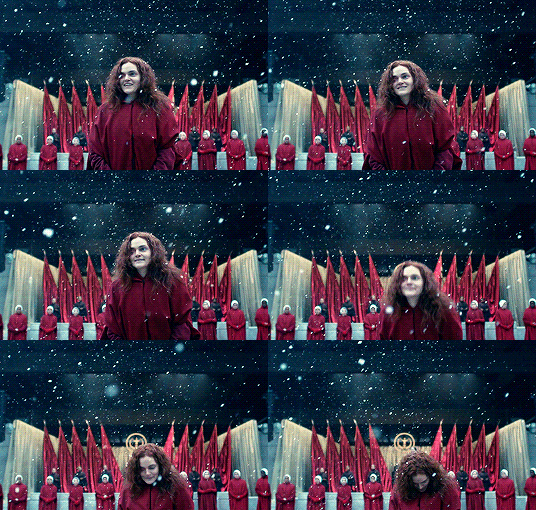
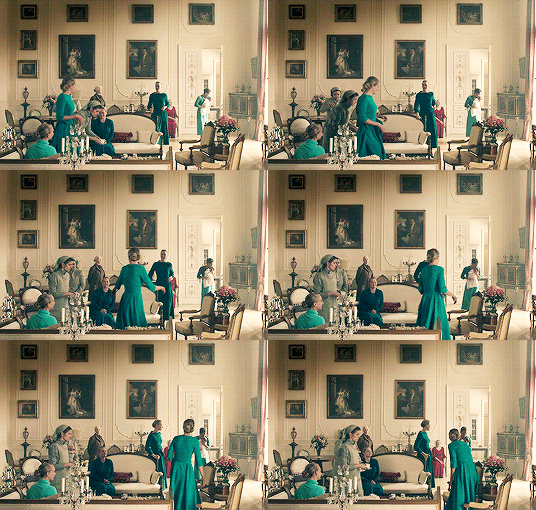
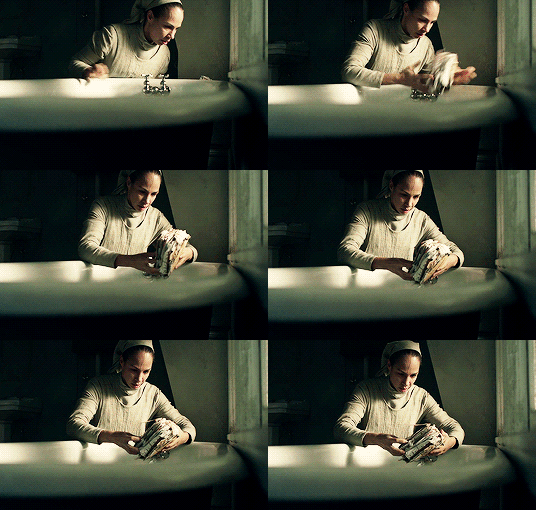
“It’s their own fault.
They should have never given us uniforms if they didn’t want us to be an army.”
The Handmaid’s Tale (2017-)
No Plain Rebel + books ❤
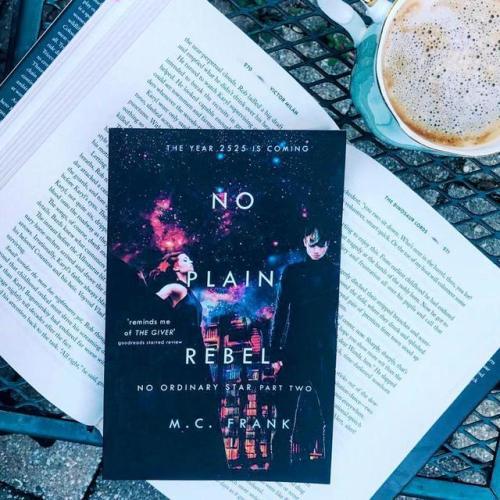
No Plain Rebel + books ❤
September 6, 2017
Writer + letters
#books #book #read #htfla #reading #reader...
Writer + letters
#books #book #read #htfla #reading #reader #page #pages #paper #instagood #kindle #nook #library #author #bestoftheday #bookworm #readinglist #love #photooftheday #imagine #plot #climax #story #literature #literate #stories #words #writer
Robin Hood WIP diaries (2) - diversity

If you are a writer, or a creator of any kind, you must know the huge responsibility that goes hand in hand with the freedom of creativity. And I’m not talking about responsibility to the masses or the future generations. No, I’m talking about the responsibility of a writer towards his or her story.
If you have the freedom to make your story, your setting and your characters whatever you want, what DO you make them? If you are the one who has to dream everything up, then you are the one who has to make your story the best it can be. And what is the best it can be? There’s the catch. No one can tell you that. You have to explore and seek it yourself (and hopefully eventually find it).
Recently, somoene emailed me their thoughts on No Orindary Star, my science fiction novel. They talked about how much they enjoyed different aspects of the story and the world, and they said they had only one complaint: there was no diversity. Both main characters are white (this reader person said) and there was only one dark-skinned boy, Karim.
The reason this stood out to me negatively will be obvious to you if you have been following this blog for any amount of time, as I have hit you over the head with shared my main characters’ profiles time and again. To refresh, your memory, here is Felix, my protagonist:

He’s Asian. (And, as a consequence, so are a few other characters in the book, important ones, who are kind of related to him, but that’s a SPOILER). Anyway, what’s the problem with this whole story? That she didn’t notice? That she was a careless reader, or maybe a bit “tumblr-prejudiced” against all new authors, diversion-wise, or that she was possibly (yes, it does happen, shockingly) sending me this email out of spite?
No. The problem is that she didn’t notice.
You see, I don’t mention it in every sentece that he’s Asian. I mention it in the beginning when he’s introduced, and maybe once more, when his {SPOILER} is introduced and we see his/her features, and they are Asian as well. And that’s it. If you skip a few pages while you read, you might miss it. (Although why would you skip any pages? This is good stuff, people.) And by missing it, I mean that you would automatically assume every character is, like you, white. Now, I know that as a non-white-American myself I can’t speak for a white person, but I can speak for reality. Reality is not everyone being white, much less being the same as you, the reader. I do understand that the audience has to be “trained” in order to recognize and appreciate diversity, meaning we have to have and keep having good books with diversity, until that’s become the norm andthe previous norm (white characters, white saviors, abusive romantic interests, flawless heroes, non-participating MarySue/Frodo cliches, etc) is no longer the standard novel that gets published and read by the millions. (Self publishing is already a HUGE revolution in that aspect, as books that publishers wouldn’t even look at, because of unconventionality or diversity issues, now have a chance to gain a large audience. But more on that later.)
That’s what I meant when I said the writer has to make their story the best version it can be. Would the story be perfect if no one had any flaws, any differences to each other, any diversity? Well, it wouldn’t be realistic or imaginative, that’s for sure. And that, for me, is not a story worth reading, much less creating. Some other witers/readers might not have the same criteria, of course, and there are as many opinions in the world as there are people (maybe even more).
But as far as I’m concerned, here are my reasons for including diversity in my novels (whether you notice it or not):
1. I want everyone to be represented. Have you any idea what it feels like to be suffering from depression and finally read a book where one of the characters is GOING THROUGH THE SAME STUFF you are? It’s heaven. That’s the only way I can explain it. It’s like staring down a dark, lonely tunnel you have to fall through, and suddenly discovering a friend. (Isn’t that why most of us read, anyway? To feel less alone?) If that person who represents you in the story, happens to be the hero or someone who kicks ass, then, I’m sorry, but your brain immediately goes “I can kick ass too, depression and all!” That’s what I’m talking about. Imagine a novel where the day is saved by a bullied girl/a character who is a different race than anyone else/a person who is dealing with a metal or physical disability/a hero who has made some unconventional choices/a woman in a man’s world… and so on. Hard to imagine, right? You haven’t read many books with those themes, I know. I haven’t either. But things are slowly chaning. We need more of that, so let’s create more of that.

2. I want all readers to feel included. Well, not all of them in every book, but in general, my work should include the entire audience of my novels. One of the beauties of self publishing is the in-person communication with all my readers, since there’s no one else to find the betas, send the arcs, recruit the street team. In the past year, I’ve sent my books to the whole world, from California to China, from India (I’ve sent a LOT to India yay) to Australia, from Astria and Poland to Mexico. And the list goes on. I’ve had people read them whose English isn’t the first language, and I’ve had talks with them about different interests, jobs, religions, walks of life. I feel that my life has gotten so much more colorful since being able to connect with so many wonderful people on such a deel level (again, it’s always because of books, mine and other people’s, as we exchange ideas, how AWESOME is that?) and I want their reading experience to include their own lives as well. I know I’ve never read a book that talked about my Greek heritage in a realistic, informed and accurate way, which is why I set Lose Me on a Greek island. And why I’m writing Greek mythology. I need to see myself in a book, finally. I know you do too. I’m working on it.
3. I want all readers to be able to identify with the characters or situations in my books. That’s true whether you’re writing fantasy, historical or scifi fiction. (Contemporary too, of course.) Some white persons, living in a white persons’ world, might find it hard to imagine reading a story/watching a movie where everyone is different from you. Who do you identify with then? When you watch A Secret Life of Pets, the movie cast is all animals, and yet they’re given humanized genders and qualities, so that anyone watching can go, hey this is like my aunt miranda or, wow, that’s totally me when I’m hungry. But how would a reader be able to do that, if there isn’t a single person or situation in your book that you can identify to? And then how would you feel if you went looking for another book and another book, and never found one that included a character with at least some of the same qualities as you? Most of white Americans have been teenagers at a high school with catty cheerleaders. Well, what about the rest of us, who haven’t? Is there a good story we can enjoy by immersing ourselves and possibly recognize ourselves in? Ah, I know what you’ll say. But I don’t know that stuff! How do I know how schools in other lands work? How do I know how a second-generation half Korean kid feels? How do I….? Well, duh. Research.

Yes, really. Writing is hard work. Writing well is even harder. That’s why not everyone does it.
4. Realism. Now, I know, I know. Not everyone is concerned with realism. Pfft. Who wants to read about a world where people are sometimes good and sometimes bad and they change and they grow? That’s for amateurs. Let’s write about a black and white universe where the evil GUY is evil because he’s wearing dark colors and the girl is so cute so it’s ok that she has to be rescued from her own stupidity every second page. But for me, a far less imaginative person, here is what the worlds I want to create look like: people fail and get back up on their feet, heroes sometimes need to be rescued, the good guys go bad and the bad guys have kittens, and there’s a guy from the other side of the world living in a flat underneath me (no, he’s NOT the janitor). Why? Well, because tha’ts life. That’s true. That’s real. And yes, I’ve created a universe with two parallel worlds where one has mermaids and minotaurs and the other is our contemporary world (in Salt for Air, my Greek mythology series) but even in that world, mermaids still have mental issues and horn-sporting warriors are disabled, and some of the mermen have a darker skin than the rest. Why be boring, when I can get my inspiration from real-life people? Why be cliched when I can sit across from a Romanian lady on the train, who has six kids, and is currently nursing one, on her way to music class? Why not make HER a siren in my novel?

We shall.
5. Bonus point: Do not include diversity for the sake of diversity in your novel, it will be obvious and offensive to the reader this diversity applies to. And these readers are more than you can imagine, because for example I’ve never had cancer yet, but I’ve lost family members to it, and I can’t believe that there are people out there who romanticize and make money out of something that ruined my life. The same goes for you, if you add a black character just to stand by and be black, or a disabled character just so that they can conveniently commit suicide in the end. Please don’t.
In conclusion, here are some of the diverse characteristics I have attributed so far to my Robin Hood WIP cast. I did not give them these charactersitics on purpose, it’s just how they appeared in my head once I started brainstorming:
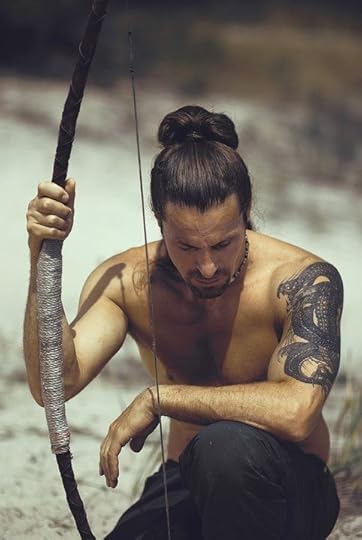
-someone who has had all the fingers of their right hand cut ,and has since taught themselves to write and shoot an arrow regardless
-someone who has been heavily suicidal in the past, and self-harms from time to time (in a medieval way, of course)
-an Arabic character
-a cross-dressing character
-an intellectually challenged character
-a person who has been sexually abused and is afraid of human touch/has no interest in romantic relationships
-a person suffering from PTSD
-a woman who is part of a company of men
These are all I can remember off the top of my head (some of these are part of their backstories, so they are not heavily featured in the story itself, but they are part of what makes a character who they are).
I would love to hear about your opinions or experiences with either writing or reading diverse books.
Have you written a book with diverse characters? Do I need to read it? (I think I do *wink). Let’s talk!
Read all Robin Hood WIP diaries
Robin Hood WIP diaries (1) - the need to write
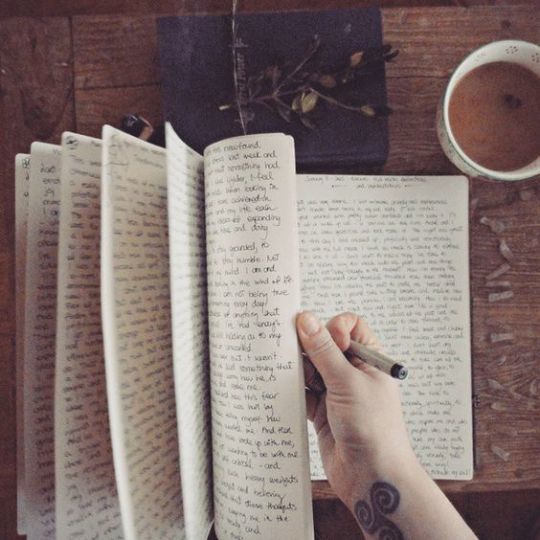
As most of you know, I am really busy author-wise these days. I am doing the edits for my next book, promoting my previous one, and pumping out 5 to 6 articles every month for the magazine I’m working for.
I have been steadily outlining my new Robin Hood story over this past spring and summer, and although by now it’s pretty solid, little snippets of dialogues and scenes come to me every now and then (usually just when I wake up, or trying to sleep, super cool) and I just write them down and insert them into the outline. (Example: “he grabs her and kisses her for 2 pages” lol)
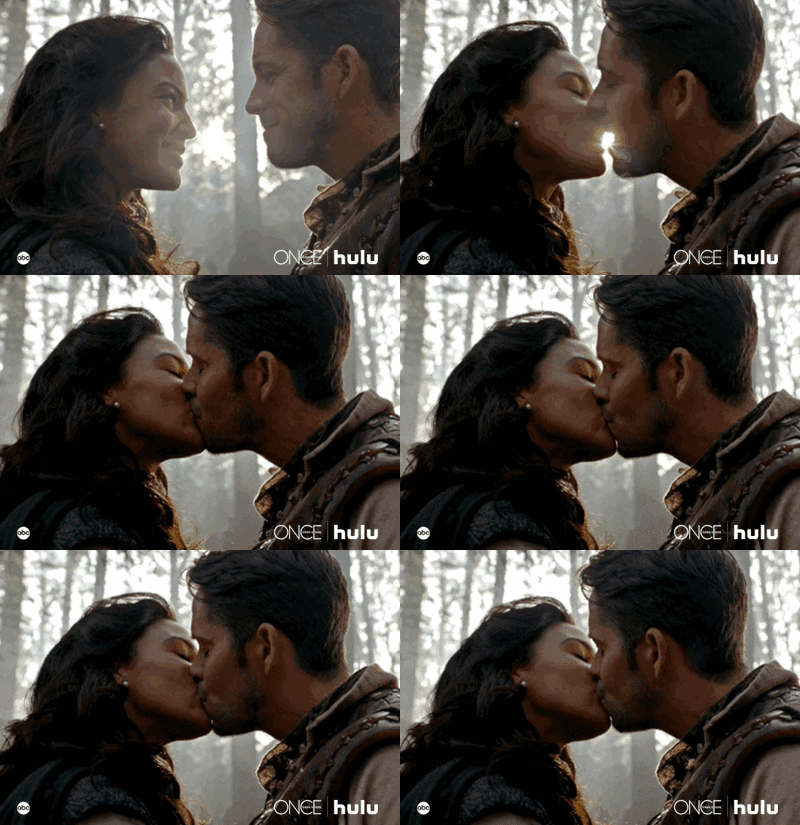
At this rate, the book will have been writen in its entirety by the time I sit down to write it. Which is good, more than good, it’s actually perfect, if you are at all familiar with the writing process. The book is SUPPOSED to have been half-written already by the time you sit down at your laptop/typewriter/notebook.
However, this creates a real problem for me.
You see, I write, because that’s who I am: a writer. Writing is what comes out of me. And when I don’t write, it feels like I’m not me. It feels like I’m not the best me I can be. I’m less, somehow. And much as I enjoy polishing up a story, getting feedback from betas and editors, and putting it out there for lovely readers to find, those things are not why I write. Those things are what I have to do in order to make a living out of storytelling. In order to be able to buy food, put simply. (Like, extremely simply).
But I need to write. Every day, if possible, Twice a day. The days on which I write, even if I’m sad or missing my dad, or crying, or in bed, are always 10 times better than the best days when I don’t write. Why is that? Is it because the writer me is the best version of myself? Is it because whenever I write, something good comes out of me, and that’s therapeutic and fulfilling? Is it because I always, always have something to say, and when I have said even a paragraph of it, I feel a little bit lighter and a little bit more whole?
They say don’t write to say something, write because you have something to say.
All these years, before I started writing and my health improved, I felt trapped. Trapped inside tears I could never cry (even crying all day long wasn’t enough), anger I couldn’t express (everyone else was grieving with me, I couldn’t rage against the unfairness and the insanity of a vain loss, could I?) and questions I couldn’t put into words (why did he have to go? why do I have to keep going now, if he’s not bere?). But now, especially with the Robin Hood story, I feel as if I can express all those things.
Robin has lost his father, too, and he feels as if he is being held underwater, suffocated slowly by the injustice and dissipation of all he sees around him. The first thing that pulls him out, and makes him take a metaphorical gulp of air for the first time, is the friendship of 3 other men who, like him, have lost all hope of happiness. So, before starting to fight for what’s right, he has to live. To stay alive. And to find a way to enjoy that.
So, after all, it’s beginning to make sense. Here they are, everything I need to be talking about, in this story:
My grief, the absence, the loss of all sense of what’s fair and what’s not.
I did channel a lot of those feelings into No Vain Loss (hmm the title is kind of a giveaway, isn’t it?) but I don’t know if one story was enough. Maybe no amount of stories ever wil be.
Maybe, to paraphrase something I saw in the Hitchcock film, Rebecca, I will be “drawing the same tree over and over again, because it’s perfect”. Well, neither my grief or depression are perfect, in fact they are horrible, but those are the monsters I need to leave behind.
And when I write, they never seem to catch me.
“Robin Hood WIP diaries (2) - diversity” is up on my...
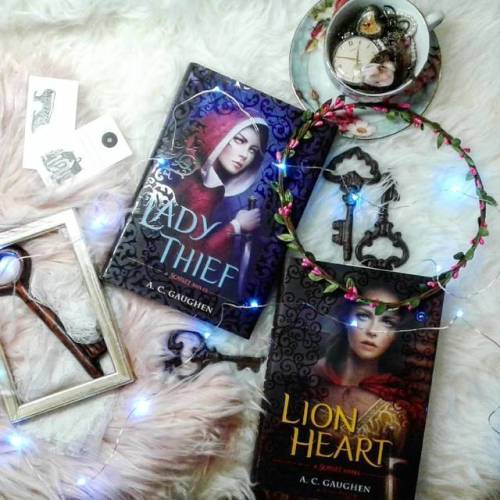
“Robin Hood WIP diaries (2) - diversity” is up on my blog mcfrankauthor.tumblr.com ❤ I worked really hard on this article, for more than 2 days, and it would mean a lot if you read it and shared your thoughts. As a plus, I have included some exclusive info about my new book’s cast. What are your thoughts on diversity in literature? Is there enough representation? Any good books I should be reading?
#books #book #read #htfla #reading #reader #page #pages #paper #instagood #kindle #nook #library #author #bestoftheday #bookworm #readinglist #love #photooftheday #story #literature #literate #stories #words #robinhood #diversity
Me: You have to do it.
Also Me: uuuuuuughhguughhghhhhhhh
Me: You have to physically describe your characters. Just a little. For the reader.
Also Me: But can't they just...know?


