Eoghann Irving's Blog, page 22
January 14, 2015
Book Review: Beastheads by Mike Reeves-McMillan
This is the first review in my year long #GreatIndieReviewProject. The idea is simple. I'm going to post honest in depth reviews of a variety of sci-fi, fantasy (and related genre) books in the hope of bringing them to the attention of people who may enjoy them. Share it, hash tag it, spread the word.
Not every book is for me. Not every book is going to be for you. If you just want to get a quick feeling if this might be your sort of thing then skip down to the end and check out the sections labeled Is This For Me? and Did You Like It? Then click through to read the blurb and other reviews on Amazon.
For those, like me, who enjoy a more detailed analysis. Read on.
What About The Ordinary People?
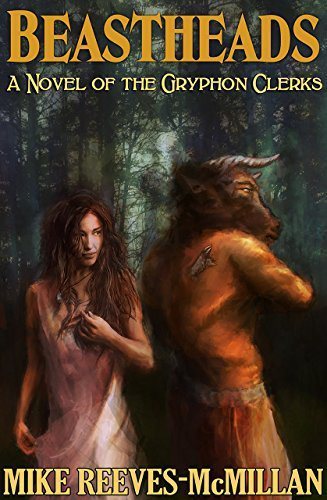

Most fantasy is about heroes. Big muscly barbarian heroes perhaps or wimpy longing but incredibly powerful sorcerors. The point is they are heroes and they do amazing, world changing things. What the author Mike Reeves-McMillan sets out to do with his novel Beastheads is tell the story of the ordinary people in his fantasy world.
The group of characters he gathers are not heroes by the usual definitions. They're not really particularly brave. They're not doing anything incredibly out of the ordinary. They won't be changing the world single handed. But just because they are ordinary does not mean they are boring.
Fantasy (and most genres) tends to be more plot and action based than anything else. Character exploration may well happen, but it is not the driving force of the story. Beastheads reverses that.
There are larger events playing out in this fantasy world and the characters do play a role, it's just not the pivotal one we have come to expect. Rather we are asked to consider the plight of a race that might form part of the background in most fantasy novels.
Okay That's What It's Not About, What Is It About?
Well after the disparate group of characters comes together they have a mission and that mission is to facilitate the negotiation of a treaty. But the negotiations are not what the author focuses on. Instead we follow these various characters (all of them damaged in some fashion by their life to date). We see how they interact with each other, how they interact with the Beastheads themselves and we see how this mission gives them a purpose and enriches both them and those around them.
The Beastheads are a loosely knit grouping of clans comprising of various peoples with different heads (dogheads, catheads, cattleheads). These clans were created by the former Elvish empire for the elves own selfish reasons and have evolved a complex system of rules (vel) to guide their behavior and keep the peace. They exist as an independent entity, but are threatened by the Human Purity movement which is developing in one of the neighboring countries. The treaty would give them protection, but it will also radically alter their way of life.
This is the background to the personal stories that play out. There are several viewpoint characters in the book, but the one we spend the most time with is the former apprentice Shaman Berry and as a result hers was the story I most connected with. Her struggle to find her identity and role in life having broken her bond with her Shaman is an easy one to relate to.
She is also the one who has the most visible opponent in the form of a rather angry and conservative Cattlehead Shaman who speaks out against her. That dynamic gives her story and energy that some of the other stories lack.
No Drama Without Conflict
Conflict can take many forms of course. In fantasy it's most commonly simply battle. But it doesn't have to be as Berry's story shows. The verbal opposition she faces up to gives her story a conflict. That element is somewhat lacking or incomplete for some of the other characters.
For example Breeze and Wave are an interesting pair. Driven out of the university where they studied by the human purity movement they are sympathetic to the beastheads, even though they can pass as human. But while there is a moment of tension where Breeze almost loses control of his wolf-self, it is not followed up on and so their story remains incomplete.
Stone and Vigilant also get some viewpoint time. Their story is simpler, though certainly one people will be able to relate to given that this fantasy world is about as homophobic as our own. But while Vigilant does work through some internal conflict the end result never really seems in doubt.
If I'm going to point to one significant weakness in the story it's that while the author does a great job of presenting all these characters to us and showing us their lives, he doesn't give most of them enough of a challenge to strive against. They've all had worse things happen to them in their past than are happening to them right now.
Structural Passivity
The other thing that I noticed was that because of the way the story is told, there's a strange sense of passivity to many of the events that happen. We are told about them happening, but we don't directly connect with a lot of them.
In some places I think this a deliberate style choice. For example each of the characters is introduced at the very start of their story (generally near the beginning of their life in fact) and their story is told up until they all meet as Gryphon Clerks. As a result the early chapters are in some sense back story. They are relevant because it's the story of what makes these characters who they are. But it's all stuff that happens before the meat of this story, if you see what I mean.
While I'm not a huge fan of relying on the flashback as a storytelling device I do wonder if in this case starting in the present and flashing back when necessary rather than starting in the past might have produced a more dynamic story.
Another area where the book feels passive is that it is actually taking place in a time where big events are happening. These events are, from the afterward, apparently detailed more in some of the other Gryphon Clerks books. Here, however, this stuff comes in as reportage and our characters don't really have an opportunity to react to most of it until near the end.
It's Good to Read About People Doing Good
For all that I may have some issues with the structure of the book, there is a lot to like about it. But perhaps the thing I enjoyed the most is that these are fundamentally decent people. Flawed, sure, but they mean while. And these decent people are trying to do good things here.
It's a fine line to walk between showing people doing good and preaching about that good, but I think Beastheads pulls it off. Yes there are certainly some obvious parallels. Homophobia is touched on, as is rape. Clearly the beastheads themselves are the victims of extreme racism. And the alcohol abuse element immediately made me flash to stories about Native Americans in colonial times.
But the characters don't lecture, or at least not very much. It's more a case of leading by example which stops things from getting too preachy. And the characters are likeable enough that you are rooting for them to improve things.
Fundamentally I think its much more difficult to tell this type of story well than it is to do an action based piece and so while I think there's room for improvement, there's also a lot to like about it.
Is This For Me?
Do you like fantasy stories but are bored of elves and traditional settings?
Does the idea of yet another traditional quest fantasy have you rolling your eyes?
Do you like stories that are driven by emotional stakes rather than battles?
Are you more interested in character exploration than physical exploration or action?
Did You Like It?
Yes I did. Sometimes I have to slog through books just so I can give a fair review. In this case I was happy to pick it up and read the next few chapters each night. At less than three dollars for 283 pages it's a bargain and while there are things that I think could be improved it's a fun read.
My review system insists on whole stars only otherwise I would probably have gone with 3.5 out of 5.
Beastheads (The Gryphon Clerks Book 0)
by Mike Reeves-McMillan [C-Side Media]
Price:
 -
-
 -
-
 -
-
 -
-
 -
-
The post Book Review: Beastheads by Mike Reeves-McMillan appeared first on eoghann.com.


January 13, 2015
Death
You're going to die.
I'm going to die. We are all going to die.
Some of us will die soon, while others will just linger stubbornly. Some will be happy and some will be miserable. In the end they will all be dead though.
Despite this absolute, inescapable, certainty, we don't like to think about death. It's uncomfortable for us I think. Depressing certainly and also sad. If you've reached adulthood then you have been impacted by death in one form or another.
Your first exposure might have been as simple as the death of a pet, or perhaps one of your older relatives.
But as you too age, the deaths start to hit increasingly close to home. I, for example am now at an age where I have seen my father-in-law come so close to death three times, though by good fortune he is still with us.
Even more disturbing is the reality that now my parents have reached an age where the inevitability of what will come cannot be casually dismissed as being decades away. I'm hoping for a number of good years yet, but that number is decreasing.
So for most of us, I think, death is a source of considerable sorrow. Our associations with it are almost entirely negative. Yes, we may have parotted phrases about it being a blessing. But I'm not sure we can actually believe that.
So we push it aside. We deal with it when we have to and ignore it as much as possible.
And yet I find death strangely fascinating.
It's not that I want to die you understand. Despite several run ins with clinical depression I have never actually been suicidal. As much as I can't ignore it, I am in no hurry to rush into its embrace.
I can actually understand the appeal of suicide in some cases. I'm not even convinced it is universally wrong. However, I am not a gambling man. I'll take the situation I know, over the situation I don't every single time.
No, my fascination with death is an intellectual one.
It is in many ways the ultimate, unsolvable puzzle. What happens? How does it work?
Humankind has spent a stupendous number of hours coming up with answers to those questions. It is after all one of the prime functions of religion to explain what happens to us after we pass on. And science has been only too happy to leap into the breach as well. Then of course there are ghost hunters…
But of course they can't answer the unanswerable can they? What happens when you die? You can't know for sure until you die. And maybe then you can't know either. Because you're dead.
When I was younger I actually lay awake at night pondering that particular imponderable. My brain would whirl round and round trying to find an exit to the infinite loop it had fallen into.
If you are dead and your brain no longer functions then you are no longer thinking. But if you have no sensory input any more, how can you know you are dead? You can't.
And what would it be like to be dead? Would it be like sleep?
No, it can't be like sleep because you wake up from sleep. You don't wake up from dead. You know you've been a sleep because you eventually move to a different stage of consciousness and have some memories. You won't have that when you are dead. You'll have stopped.
The world will have stopped. Well, sort of. Because your only understanding and perception of the world is through your eyes to your brain. Which is dead.
How can you not have a thought ever again. How can the only mode of existence you have ever experienced simply not be there? On and on my thoughts would go, becoming increasingly frantic. It is a deeply unsettling notion.
Because we all, whether we are able to admit it or not, exist at the center of our own little universes. We have no other filter for life. We can't perceive it or understand it in any other context. It doesn't matter how empathic we think we are, in the end the only thing we really understand is ourself and our own thoughts. In some fundamental way we are not built to comprehend anything else.
Not that that has stopped people trying. There are forests worth of books on this and related subjects. Religions, cults, philosophy, science, fiction… take your pick. We analyse it, we humanize it, we embody it, sometimes we even worship it.
Humanity has grappled with the puzzle of death forever but it has never solved it.
I don't lie at wake thinking about death any more.
It's not that I've somehow solved the problem. It's not even that I've come up with an acceptable lie to tell myself. I just reached a point where I realized there are more important things to worry about.
 I have a wife, I have kids. I have things I need to do and a few things I want to do. Hell there are several thousand books I haven't got round to reading yet and countless hours of tv shows.
Does that sound trivial when compared the weighty subject of death? It's not. Because death will happen anyway. It isn't going anywhere.
There are relatively few things in life that I am just not smart enough to understand, but death is one of those things. I still want to know the answer to the puzzle, but now I can accept that I probably never will. Spending so much time worrying over the unanswerable and inevitable, it's just a waste of the time between now and then.
The post Death appeared first on eoghann.com.
January 12, 2015
The Great Indie Review Project 2015
I write a lot of reviews. I post more reviews than anything else in fact. And I do it for purely selfish reasons. I like to understand what works (for me) or not and why it works. The reviews help me to do that.
Well it's the beginning of the year and I'm feeling optimistic. Last year I wrote a respectable number of reviews, but this year I want to push that number way up. I plan to continue to read/watch my mainstream books and tv shows (plus the odd movie) and there will be the same reviews of those as always. But now I'm introducing:
The Great Indie Review Project 2015
Or #GreatIndieReviewProject as I plan to tag it.
It is a concerted effort on my part to expose myself to a wider range of media in addition to the mainstream that I am so fond of. There's a lot of activity in independent publishing both in novels, comic books and games. I want to start sampling that. And if I'm doing that, I'm going to be writing reviews. Because that's what I do.
So why bother calling it a project and giving it a hashtag if I'm just going to be doing what I always do?
Because there is a huge visibility problem with self or independent publishing. Yes they are out there on the internet, but unless you know to look for them, you won't find them. But how would you know to look for them? It's a vicious cycle.
Not only is there a lack of visibility but there's also a lack of independent information about indie projects. Mostly what you have is the self promotional pieces and reviews from friends and family. I believe my reviews stand as a more impartial information source.
This is my small, but hopefully useful, contribution to fixing that problem. And I'd invite others to participate in it.
What Am I Reviewing?
Books, Comic books and games (primarily tabletop games most likely) are my focus. And the reason for that is simple. It's stuff I enjoy so there's at least a reasonable chance that I will have something nice to say about them.
The initial book list is already set. Sorry any author who was about to send me a message. I may add to it again later, but I've already got 20 stories on that list and it takes time to read.
The comic book list is wide open so I'm happy to hear suggestions there. I have a few RPG entries on my Games list, but I hope to expand on that one as the year goes on as well.
Don't Buy, Or Do, It's Your Choice
The point of #GreatIndieReviewProject is not to get you to buy any particular book or game. It is simply to make you aware of their existence. To that end we have this post, which serves as the master repository for the books, comics and games that I am looking at and a Google Docs spreadsheet that contains all the information including links to them (and my reviews if I have written them yet).
The blog post is linkable, the spreadsheet is shareable. I want you to link to it and share it.
I will be doing reviews the way I always have. I will give my honest and fairly in depth opinion on the product. I'll say what I like and what I don't like. Again I'm not trying to persuade you to buy any particular thing. Nor will I be feeding into any of that "buy indie" guilt trip crap. I'm just making information available.
How Can You Join In?
Well it couldn't be simpler really. You can share this blog post. +1 it, Tweet it, Like it whatever. You can share a link to the Google Docs spreadsheet and if you do, please use that hashtag #GreatIndieReviewProject
You can also try out the products that I'm writing about. They are all there on the spreadsheet and there are links too. Some are free, some cost money. If you do try them out, post about that, share information about the product and again, use the hash tag.
Or if you're feeling ambitious, write your own reviews. Indie authors, artists and game designers love to get reviews. And again, use the hashtag.
The Great Indie Review Project Spreadsheet
The post The Great Indie Review Project 2015 appeared first on eoghann.com.
January 11, 2015
TV Review: Agent Carter
Two episodes into Marvel's latest TV venture Agent Carter I feel like I have a good enough grasp on the series to pronounce it great.
It's not important or worthy tv. It's not pushing the boundaries or remaking tv drama in any way. But it is wonderfully fun, and that's what I want from a tv series. It's basically a glorious mixture of pulp, noir, comic books detective fiction and James Bond influences.
The Feminist Agenda
By setting Agent Carter in the post war period, the show gets to have its cake and eat it. On the one hand they get to show Peggy Carter as both an extremely capable agent frequently making her male colleagues look like fools (well there's the one competent agent but he has lost a limb so he's sort of treated like another woman).
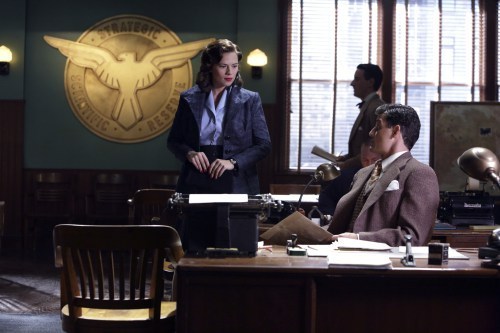 On the other hand we have Carter going full femme fatale right in the first episode so they're more than happy to take advantage of the clichés when they have a chance.
Now they issues they are raising were definitely big ones in that time period, but they are easy ones from a modern perspective. The men are shown to be not only blatantly sexist but also thoughtlessly so and it's perfectly obvious to everyone who we are supposed to be siding with. It feels a bit like show is just scoring cheap points here rather than really addressing an issue. Which wouldn't be a big deal with me, except that the show is making it a central theme.
It also downplays her abilities if you constantly surround her with fools. Honestly I'd rather they just keep the focus on how capable Peggy Carter is and a little bit less on how big of an ass everyone else is.
A Stark and a Butler
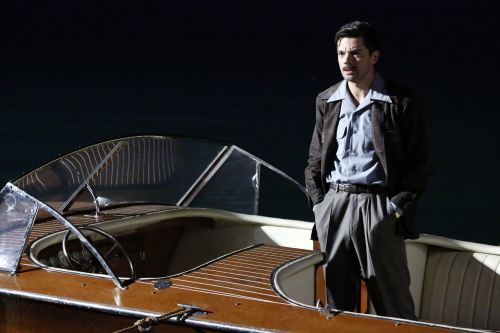 Where character interactions shine most brightly is in the scenes that include Howard Stark, still played by Dominic Cooper who oozes that barrow boy turned playboy charm that he showed in Captain America: The First Avenger. It makes him a logical precursor to Tony Stark, although it does leave me wondering how he moved from that to the more avuncular Walt Disneyesque Howard Stark that we saw in Iron Man II. And when Stark is not available, being only a recurring role, James D'Arcy's fussy Edwin Jarvis serves as an excellent foil to Carter.
One of the reasons these scenes work so well is that neither man dismisses Peggy Carter or her abilities. They approach her as a capable agent, and while she bristles sometimes at any implied limit to her abilities you never get the feeling they are dismissing her. The result is some entertaining verbal fencing.
Jarvis is exactly the sort of prissy English butler that every American seems to picture of course. With just that little bit of attitude that people want to see that makes them more comfortable with the notion of a "servant." But D'Arcy plays the role so well that the predictability of it doesn't seem to register with me while I'm watching.
Serial vs. Series?
Agent Carter occupies an unusual slot on network TV schedules. Basically placed to fill in the winter break for Agents of SHIELD, it's only going to run for 8 episodes. That's exceptionally short for a network drama series.
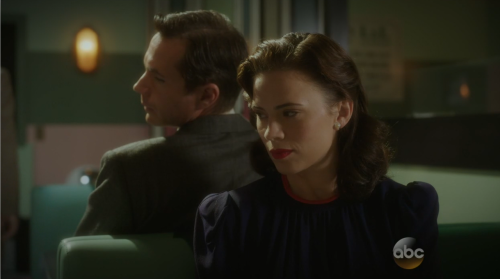 But this isn't exactly a series. It has most of the elements of a serial in fact. Episodes don't end on a full on cliffhanger, but they do end with lots of dangling threads threatening imminent disaster (or at least exposure for Agent Carter).
While each episode does seem to give us a setup and resolution of sorts, a large amount of time is spent on the larger plot elements. As a result this really isn't a show where you're just going to pick out one episode and watch it. You're clearly seeing a segment of an 8 part story.
I'll be curious to see how well that plays out for ABC.
Marvellous Continuity
Agent Carter not only picks up its continuity directly from Captain America (complete with some flashback clips from the movie), it's also deeply entwined and steeped in the continuity of the entire Marvel Cinematic Universe.
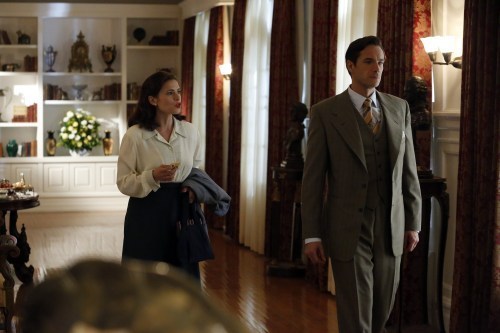 Of course we already knew about the Agents of SHIELD connection due to the flashbacks we got previously. So we get a brief appearance from Anton Vanko as referenced in Iron Man II. And perennial Marvel Universe evil corporation Roxxon Oil makes a substantial appearance as well.
But the big one has to be Leviathan. The way that Marvel have interlinked things and the prominence that Leviathan is being given you just know that Leviathan is going to have some real significance.
The Cold War
Agent Carter wears its spy influences quite openly. If you don't get flashbacks to James Bond or The Man from UNCLE, it's because you're too young to have seen them.
Combining that with the MCU continuity gives us a rather unique cold war settings. Hydra destroyed (they think), the NAZI's are done, but there's Russia.
It's interesting to note that in the comic books Leviathan is essentially a Soviet equivalent to Hydra and even at points co-operated with Hydra.
How does that relate to the MCU? Well we don't know obviously. Up to now they have been happy to pick, choose and modify the elements they take from the comic book universe. But given the time period, I put money on those commies being the immediate threat!
Next Week On Agent Carter — Time & Tide
Is Peggy's secret about to come out? What about Jarvis' secret? Stark is back! He has a secret too?
Related articles
Fan Art Friday #13 — AGENT CARTER (nerdist.com)
TV Club: Marvel's Agent Carter: "Now Is Not The End"/"Tunnel And Bridge" (avclub.com)
Marvel's Agent Carter, review: 'an overwhelming air of fun' (telegraph.co.uk)
The post TV Review: Agent Carter appeared first on eoghann.com.
January 10, 2015
Zombiemart — Part 1) Night Shift
This is post #1 of 1 in the series “Zombiemart”
Zombiemart is weekly serial sequel to The Wolves of West Virginia, which is available on Kindle. Enjoy Part 1) Night Shift.
One of the sucky things about working at a superstore is the night shift. Even if the store itself isn’t open 24 hours a day, there’s still a night shift because someone has to stock those shelves ready for the eager hordes of greedy shoppers the next morning.
And if it is open 24/7? Well then you get to stock the shelves while harassed by said greedy shoppers. Usually not hordes of them though. Most of them like to sleep.
However, if you happen to be in dire need of some money, say to repair a home that was trashed by werewolves (or a demonic creature of some indeterminate nature), in that case night shift is great because they pay you more!
At least that is what I was trying to persuade myself of as I walked under the glowing neon Supermart 13 sign and into the air conditioned sterility of a chain superstore. Honestly it’s not that bad. The pay sucks, of course, but some of the people are sort of nice and it’s the sort of job that doesn’t attract a lot of attention. Which is what I want.
My name is Douglas Brodie. I’m a wizard, I’m Scottish and I live in Charles Town, West Virginia. Why? It’s complicated. Long story short, I’m keeping a low profile. Or at least I was until that werewolf incident. I blame my geas. It has a way of attracting unwelcome supernatural attention towards me.
Right at that moment though, it wasn’t supernatural attention that was worrying me. It was the attention of my manager once she noticed that I was late, again. For some reason she took it as a personal insult every time someone was late. And it had been a rough week.
I was heading straight for the back of the store, hoping to clock in before Marissa noticed when Lucas hobbled into view smiling broadly. I stifled an inward curse and returned the smile, slowing to a stop. Lucas was in the store every night, taking his daily exercise. He knew everyone by name and always wanted to chat. It wasn’t really about the exercise. Some people just need an excuse to get out and be around others. So, I did the right thing.
“How’s it going Lucas?” I asked him, hoping that the answer would be a short one.
“Can’t complain.” Lucas smiled again, showing several missing teeth. The man must have been nearly 80, I’ll be happy if that’s all I’m missing by that age. “Been awful hot lately ain’t it?” The weather was never to Lucas’ satisfaction.
“It’s the humidity that gets me.”
“That’s why I take my walks inside.” Lucas laughed. The conversation would meander on like this forever if I let it. I was paying even less attention than usual though because something was off.
Not with Lucas, he was just Lucas. Something about the store itself felt wrong. Wizards are sensitive. No, not in a new age see the aura's sort of way. It's just that we have trained ourselves to be aware of the interactions of various energy types. Actually… that does sound kind of new agey doesn't it?
Now the energy fields in Supermart 13 tend to be pretty subdued. People who talk about soulless modern superstores may be onto something. But today. I don't know, it just felt different. Perhaps if I'd had more time I could have figured it out, but I didn't.
“Got to get clocked in.” I interrupted Lucas who was still chatting away amiably and gestured towards the back of the store. “See you on the next lap.”
Lucas nodded happily and turned away as I practically sprinted towards the back of the store. I didn’t actually run of course. That would have been against store policy and I am an obedient employee!
It didn’t do me any good mind you. Maggie was waiting for me when I reached the time Clock, and she had one of those looks on her face. The sort that told me no amount of charm would make the slightest difference.
“You’re late.” Was all she said.
I nodded and tried to look suitably guilty. I didn’t have a good excuse, but it really hadn’t been deliberate. Maggie seemed surprised, she was probably used to listening to people blame everything and their dog.
“You can go and help Bethany in the steel. There’s a new shipment of toaster ovens in and we need them out on the floor.”
Now it was my turn to be surprised, I was expecting at least a chewing out. Maggie’s tongue was not something you wanted to be exposed to when she was angry.
“We’re short three people tonight Douglas. At least you turned up.” She massaged her forehead with the tips of her fingers, her face suddenly looking more tired than angry.
Nodding, I turned to go. I was getting off very lightly, working in the back meant I didn’t have to deal with customers for a bit. No need to make Maggie’s life more difficult than it already was.
The “steel” was how staff referred to the small warehouse at the back of Supermart 13. Like most modern stores, they ran a “Just In Time” inventory system so a full sized warehouse wasn’t required, but you needed somewhere to store the stuff that wouldn’t fit on the shelves or for promotions that hadn’t started yet.
As a result it was a cramped area with the space maximised by use of a clever motorized rack system that slid the shelves from side to side and allowed them to fit in far more storage than would normally be possible. So it wasn’t hard to find Bethany, basically she was in the only rack that you could actually reach right now. Well, that and the pallet half stacked with toaster ovens right in front of it was a bit of a giveaway.
I hadn’t worked with Bethany before, though I had seen her about the store in the last few months. She must have started here straight out of school, she couldn’t be more than 18 I guessed. She had that overly confident pushiness that really only comes from being young, blonde, curvy and thus popular.
“Took your time.” Was her greeting to me. “There’s more boxes on the second shelf.” She pointed at them and stepped out the way, clearly expecting me to take care of it. I gave a mental shrug. Work is work, no point in getting all knotted up about who is doing what.
Bethany watched as I stepped on the bottom shelf, boosting myself up a little and grabbed the top box. Toaster ovens don’t weigh that much so I wasn’t too worried about balancing like this. I glanced over at her, planning to throw her the box, but she was leaning against the supports and clearly had no intention of doing any more work now there was someone here to order around. I could feel my good will evaporating.
Biting down on a comment that would only have earned a sullen glower anyway, I stepped back down and added the box to the pallet. Only twelve more to go.
“Ewww. What is that smell?” Bethany complained, her otherwise pretty face twisted up in a grimace. I was about to tell her I didn’t notice anything when the sulphuric odor hit my nostrils. I hopped down from my perch and stuck my head out to look down the warehouse.
You remember that sense of wrongness I was feeling earlier? Well if I had a spider-sense it would have been blowing my head off about then. Even in Supermart 13 there is a natural flow of energy. Whatever was causing that smell was not natural.
“That’s disgusting.” Bethany continued her litany of complaints. She went on at some length but I had largely tuned her out. There was a strange dirty yellow fog spreading across the concrete floor of the warehouse. That could not be good.
It was already large enough that I couldn't pinpoint the exact starting point of the miasma. The color looked deeply unwholesome. The smell was considerably worse. But most disturbing of all, the yellow mist was between us and any of the exits. We were completely cut off.
Zombiemart is weekly serial sequel to The Wolves of West Virginia, which is available on Kindle.

The Wolves of West Virginia (The Case Files of Douglas Brodie Book 1)
by Eoghann Irving [-]
Price:
-
-
-
-
-

The post Zombiemart — Part 1) Night Shift appeared first on eoghann.com.
January 9, 2015
DragonLance Re-Read: Dragons of Autumn Twilight - Part 5
This is post #5 of 5 in the series “Dragonlance Re-Read”
Well how about that? We've reached the halfway point in the re-read covering chapters 17 through 19 and taking me just past the 50% marker in my Kindle copy of the book.
The Story So Far
So having survived, with more than a bit of luck, an encounter with a Black Dragon, the Heroes of the Lance now have a quest to undertake. They need to get deep into Xak Tsaroth and retrieve the Disk of Mishakal. A task that is complicated by the presence of the previously mentioned Black Dragon Khisanth, large numbers of Draconians and Gully Dwarves.
The chapters mainly consist of Tanis and co blundering around rather ineffectively in the tunnels, managing to kill a few Draconians, run away from more of them and be helped by comedy dwarves.
What, More Comedy Dwarves?
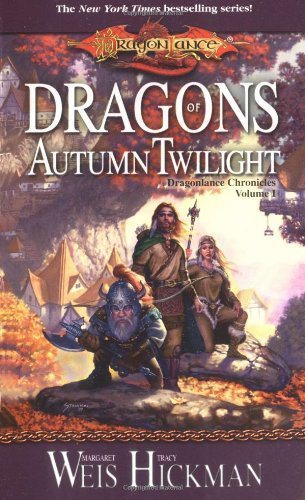

Yes, you may have thought that Flint Fireforge was the designated comedy dwarf for this particular book, and he definitely gets his moments here, but Gully Dwarves take this to a whole new level.
I've seen it suggested before that Kender don't actually make a lot of sense as a race. I mean they lie and steal compulsively. It wouldn't make for a stable society would it? Gully Dwarves have a similar problem. They're just a bit too stupid to actually function without social collapse.
You might think that with all these dumb dwarves around that Flint would get a break but he doesn't. He's actually reduced at one point to being stood on by Caramon and it's revealed he spent three years captured by Gully Dwarves. So while he should be a grizzled veteran, instead he's being portrayed as a grumpy, stubborn, incompetent, blowhard.
"Tanis spun around to fight the draconian that had landed in the pot and fell over Flint, knocking the dwarf off his feet again."
I do rather wonder if Peter Jackson might have read DragonLance before doing the Lord of the Rings and if that explains how Gimli is portrayed.
I'm also, quite frankly, not a big fan of what I term "stupid comedy" and this section of the book was full of it unfortunately so it was a bit of a chore.
Uncomfortable Allegiances
The interactions within the party itself are more interesting. Sturm's ongoing mistrust of Raistlin who, let's be honest, doesn't exactly try to endear himself to anyone, is really bubbling to the surface now. There are several pretty blatant accusations here and you definitely get the feeling that if the party weren't in such a precarious position Sturm would be on his own way.
Sturm glowered at Raistlin, and for a moment Tanis thought he might attack the mage, but then the knight thrust his sword away. "I wish I knew what your game was, magician," Sturm said coldly.
Similarly shaky is the relationship between Riverwind and Goldmoon. The previously loving couple have at this point been reduced to sniping at each other then refusing to acknowledge their existence. It's a relationship on the brink of total collapse.
Those two issues have been building pretty steadily since the story began, but other issues are beginning to surface as well now. The relationship between Caramon and Raistlin is also strained. While Caramon undoubtedly and somewhat irrationally loves Raistlin there's almost a fear at work in their interactions.
And there's the continuing issue of Tanis' half-elven heritage. The authors aren't exactly subtle about this, basically announcing that Tanis has to push the Elven part of himself to the side. But it is a clear foreshadowing of bigger issues to come.
Another relationship tension that is much more unexpected is that between the Dragon Khisanth and the Dragon HighLord Verminaard. It has been assumed up to this point that the HighLord commands and both Draconians and Dragons follow.
"Inform Lord Verminaard?" The draconian asked, shocked.
"Very well," Khisanth responded sarcastically. "If you insist on the charade, ask my Lord's permission."
But the interactions in these chapters show that certainly the Draconians do what their told, but the Dragons… Well at the very least they don't like being told what to do. That simple change to the previously assumed relationship makes the bad guys so much more interesting.
Busy Going Nowhere
These chapters really don't achieve very much in the story as a whole. The pace of the DragonLance books is such that there is plenty of action, but none of it actually matters very much. In the end we leave the party where we found them… searching for the Disks of Mishakal.
If it wasn't for the fact that this section is in the D&D adventures on which the book is based, I do wonder if it would have made it into the book.
Actually the thing I'm surprised at most is that here I am half way through the book and really very few of the things I think of when I think of this book have actually happened yet. As I said there's been plenty of action, but a big chunk of it is really filler. Even this latest quest is really just a small marker on the way to finding out what is really going on.
Indeed two of the companies crucial members haven't even joined yet.
The post DragonLance Re-Read: Dragons of Autumn Twilight - Part 5 appeared first on eoghann.com.
January 6, 2015
Why I Call It Sci-Fi, or Genre Wars Are Dumb
I'm a major sci-fi fan. Over the years I have watched, read, listened to or otherwise consumed hundreds of hours worth of sci-fi. I also spend an unhealthy amount of time reviewing it and talking about it.
Everyone should spend an unhealthy amount of time doing something fun but ultimately unnecessary. What they shouldn't do is spend an unhealthy amount of time arguing over what their hobby is called.
And yet that is what fans of scifi seem to do on the internet.
The Name Won't Change What it Is
There are certainly a lot of different names for sci-fi. Science fiction, fantasy, skiffy, speculative fiction. And then there are the sub-genres, your cyberpunk, steampunk etc.
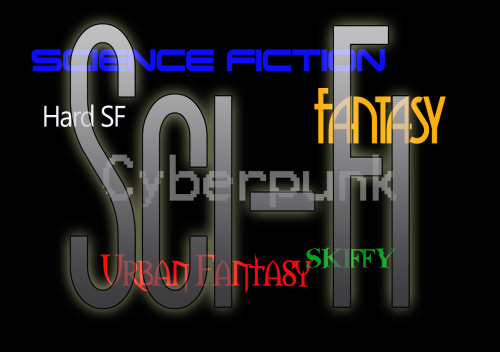 But which particular name is applied to the book your reading won't actually change the book one iota. It won't make it better, nor will it make it worse. The story you are reading will remain exactly the same.
Yet instead of discussing the actual merits of the book/movie in question far too often the conversation derails into a debate on whether something is or is not science fiction.
I've seen this effect quite frequently on my own posts. I tend to use the relatively generic descriptor of sci-fi when I am talking about genre material. Inevitably someone turns up to complain about fantasy or horror being included in my sci-fi list.
So why do people get so worked up that, that's not real science fiction… it's space opera?
What I Like Is Good
Well mostly it seems to be about self-definition. While people are arguing about the definition of the genre and whether you should be including fantasy when you talk about science fiction, what they're actually doing is announcing to the world what they like.
Real science fiction is invariably the stuff they enjoy reading or watching. So they're not actually arguing for any sort of universal definition based on absolute precepts. They're arguing that the genre should be defined to just be the stuff they are into.
It's an ownership thing I think. Fans have a very bad habit of overly identifying themselves with the things they are a fan of. So if you are a science fiction fan but the style changes and suddenly things are being called science fiction that you don't like, it's almost like an assault on you. Someone has taken your thing and changed it!
But that's how the world works. It doesn't stay still and it doesn't care what you liked or how you liked it. You can't go around demanding it do everything your way.
Well, you can. But you'll sound like a 5 year old having a tantrum.
Genres What Are They Good For?
Not much quite frankly. It's quite convenient for book sellers when they want to group books together. It's similarly convenient for book publishers and librarians.
Beyond that honestly they are more limiting than anything else. Genres are just labels and a label's function is to define a thing. Once you define what a story's genre is, you define what it's not allowed to be. And that's not really a good thing.
Yes it's a shorthand to tell you this is something you might like, but it is only a shorthand. Even if something is a real science fiction story, that doesn't actually guarantee you will enjoy it.
Star Wars isn't science fiction, it's science fantasy!
And if you do react negatively to people using the term SF or science fiction to describe something you don't think qualifies you should probably ask yourself a few questions. Starting with why it matters so much to you. And follow that up by asking yourself what you've actually added to the conversation if the entirety of your contribution is querying a definition.
It's All Sci-Fi To Me
As I mentioned early, I use the term sci-fi most of the time (I've been known to generously sprinkle other terms about the place too admittedly) and I use it to refer to fantasy, horror, urban fantasy, space opera, cyberpunk and every other even vaguely related category.
Why do I do that? Well for one thing, I've always thought Speculative Fiction sounded monumentally pretentious and for another the general public already knows what sci-fi is so there's a common understanding of the term whether certain fans like it or not.
For another, I'm not actually interested in which particular sub-genre the work I am reading/viewing falls into . Beyond possibly referencing a few common tropes (which in all honesty is a rather lazy internet habit) it doesn't add to my enjoyment or understanding to be able to name something as Scientific Romance rather than Space Goth (yes, I know those two have nothing to do with each other, if you've fixated on that you've missed the point).
Stop Bloody Whining
All of this is basically a very long winded way for me to point out that I am really tired of hearing people whining about what is or is not science fiction.
Or to put it another way, could we have a different discussion? Something new? Maybe something about, oh I don't know the plots the characters the ideas.
It's all sci-fi. Deal with it.
The post Why I Call It Sci-Fi, or Genre Wars Are Dumb appeared first on eoghann.com.
January 5, 2015
Embrace Error
A far too common mistake that people make is to avoid or delay doing things because they're worried about getting it wrong or making it less than perfect.
I'm releasing a book (you may possibly have heard me mention this a few times). It's currently on pre-release in the Amazon store and it comes out on January 7th. Why do it that way? It's an experiment. It's probably wrong or at least sub-optimal. But at least it will be published before the week is out.
And that's the bit that actually matters
Perfect Is The Enemy of Good
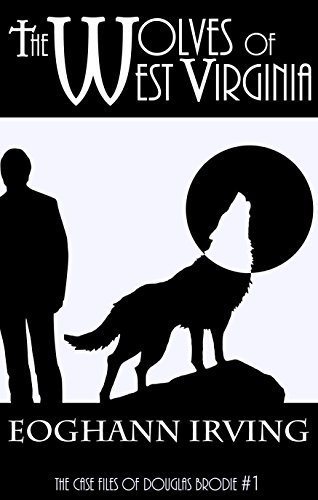
The golden mean can be applied to a lot of things in life, but it most definitely applies here. It is far too easy to endlessly tweak, adjust or study in the pursuit of perfection rather than releasing something because it is good.
I've done my best with my book. I've drafted and re-drafted. I've had other people read and point out errors. I workshopped the cover going through multiple revisions of that.
It's not perfect. In fact I guarantee there are still typos in it somewhere and there's some passages that good be improved. But, I think it's good enough. It's possible I'm wrong in my judgement on that of course. Maybe it's not good enough. There's only one way to find out though isn't there?
And it's time to move forward. If I aim for perfection I will be stuck at this point indefinitely. I won't be the first author to put out a less than stellar first publication. It might even teach me something.
To Err Is Human
Making mistakes is how human beings learn. Watch a young child for a while. They spend an awful lot of time doing things wrong.
By refusing to finish, or in some cases even to start, because of a fear that the results won't be good enough you're actually stopping yourself from getting better. Yes that's a rather trite and obvious thing to say but it strikes me that we tend to forget it a lot.
If you look at your average day you probably spend as much time (or more) getting things wrong as you do getting them right. The thing is that most of those mistakes are made in private. No one sees them because you fix them before you send out the document you were working on.
Intellectually we know it's okay to get stuff wrong, but we really don't want people to see us do it. And certainly it would be better if we were able to identify and fix all our mistakes, make everything perfect, before we shared it with the world. But we can't because unless we share it we have no way of learning what a lot of our mistakes actually were.
But What If I Get It Wrong?
What if you do? Of course I personally am never wrong, but everyone else is all the time, and they seem to survive the experience.
There are certain things where it's probably best to be extremely cautious. Anything involving high voltage electricity for example. Or expensive car parts. But if your project is largely electronic take a moment to assess what the real risk is.
Let's say my book The Wolves of West Virginia turns out to be full of typos that I (and several other readers) failed to spot. Well it's possible that some readers will be unhappy. In which case they can probably get their money back from Amazon.
Or maybe they complain to me in which case I have the opportunity to fix those typos and release an updated version to benefit them and everyone else. That's the nice thing about electronic projects, they can always be fixed. Errors aren't permanent.
Maybe I'll have lost a reader for life though. Only one chance to make a first impression and all that. Well, that's possible, but I wouldn't have had a chance at that reader in the first place if I hadn't published. And let's be a little realistic here. There are a lot of people out there. There's always someone else to make a first impression on. If that reader really is so unforgiving they won't give you another chance, move on.
And in the mean time maybe that one guy didn't forgive me, but 5 other readers did. So when I release the second book, I'm 5 readers up on where I would have been.
Fail Fast
That's a phrase you often here applied to Silicon Valley startups (and sometimes larger beasts like Google). I'm not advocating deliberately doing a bad or even half-assed job. What I am suggesting is giving it a good effort and then moving on to the next project.
Apply what you've learned, hell go back and fix the things you can in the original work (remember it's electronic, it can always be changed), but above all move forward.
I'm talking about writing here, but the same philosophy applies to software, artwork, photography and many other types of projects. I'm a risk averse sort of person, but it's important to recognize when a risk really isn't actually a risk.
What mistakes have you made today?
Oh… and buy my book!
The Wolves of West Virginia (The Case Files of Douglas Brodie Book 1)
by Eoghann Irving [-]
Price:
-
-
-
-
-
The post Embrace Error appeared first on eoghann.com.
January 4, 2015
Book Review: Designers & Dragons — A History of the Roleplay Game Industry
Shannon Appelcline originally published Designers & Dragons as a 300 page book in 2011 via Mongoose Publishing. However since then he has been working on an updated version. The new Designers & Dragons published by Evil Hat has been split into four volumes to cover the decades of the 70's, 80's, 90's and 00's. Presumably once the 10's are finished we can expect a further volume.
Each volume offers encapsulated histories of the companies that were founded in that decade with, detail depending on their level of significance, information on their games and other products.
Since reviewing each volume separately would be largely redundant and repetitive I'm going to review them as a complete set. Honestly I'm not sure why someone would only buy one of them and not get the rest. Either you are interested in the history of tabletop RPGs or you are not.
All Of Roleplaying History
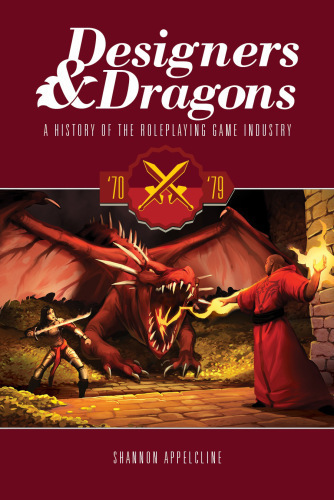 While split into four decade books, Designers & Dragons actually covers the entire 50 or so year history of tabletop RPGs, going back to their pre-origins and also looking all the way to today (well 2014 at least). So if you read all four volumes you will get a good and quite detailed picture of how the RPG industry started, evolved and where it stands now.
When tackling something of this scope there are various ways to approach it and no single best method. Applecline has chosen to present the information he has gathered on a company by company basis. And advantage to that is that if you're just wanting to read about say White Wolf and what happened to them, you can get that information all in one place. Indeed the books are clearly written with that sort of browsing in mind, offering suggestions for what to read next at the end of each section.
The disadvantage of telling the story in this piecemeal fashion is that there is no feeling of through narrative in the books. For example in the 70's book we get the entire history of TSR from its earliest inception through to its implosion and purchase by Wizards of the Coast. That's 20 years of history all bundled together for us. But when we're reading about the collapse of TSR, we're now completely out of sync with what else was going on in the industry because we haven't read that yet.
This shows up most often in frequent references to major impacts on the industry as a whole like D20 or the CCG boom and bust. They get referenced long before we really get to see and assess the cause and effect of these events. Again, I want to stress there isn't a right way to do this. A narrative approach has its own limitations.
The Cycle Repeats
 Several patterns become very clear while reading Designers & Dragons, Appelcline notes them himself. While the tabletop RPG industry has inevitably evolved over the years (frequently kicking and screaming because it had no choice) they also seem to repeat the same mistakes again and again.
What becomes very obvious is that even at its largest (probably during the D&D boom of the 1980's) this was always a very small industry. The titans of the tabletop RPG world and minnows when they set foot outside of it.
It is an industry driven primarily by hobbyists who may or, more often, may not have that good a grasp of business. It's also a remarkably conservative industry where the players react poorly to change, which makes it difficult for companies to evolve their products.
Alternatively Inspirational and Depressing
 Because of the fundamental weakness of the entire tabletop RPG industry the story of the RPG companies tends to follow a similar and rather depressing trend. They arrive on the scene with bright new ideas, have some variable level of success and then it goes sour.
Very few RPG companies last a decade. Even fewer last two decades. And so we read about each of these companies who are always the pet project of someone with the best intentions and a love for roleplaying. And we read about it all falling apart.
There's a sort of inevitability to it, life is like that after all. Things don't last forever, but the repetitive nature of reading these stories one after another can make you a bit blue after a while.
And yet let's look at it the other way around. It's amazing how many inventive, creative people are in this small industry. The indie scene which has blossomed in the last 10 years or so, has allowed a lot of people to worry less about big business and more about their creativity.
Though I'm also left with the worrying feeling that tabletop RPGs are on a slow but unstoppable slide into ever greater obscurity. Catering more and more to the existing fans. Even the great hope that is Kickstarter seems to suggest that may be the case (so many of those successful Kickstarters are revamps of old RPGs or worlds).
Functional More Than Sophisticated
 The writing in Designers & Dragons is not the best I have read. The research work is top notch and unless you've been following the industry closely for its entire length I'd guarantee you will learn some things.
But the writing is more workmanlike. It does its job, it gives you the information, but it doesn't particularly draw you into the events it is describing. There's also an annoying habit of referring to things and telling us how we're going to be told about it later. Either tell us about it or don't!
Given the scale of this project though, picking on some writing quirks seems petty. It's packed with details about all the big companies (Chaosium, West End Games and many more) as well as a lot of much smaller companies that you may or may not have heard of.
Whether you are interested in the business aspects of the industry or just how game design has evolved, you could learn a lot from all four of these books.
Designers & Dragons: The 70s: A History of the Roleplaying Game Industry
by Shannon Appelcline [Evil Hat Productions, LLC]
Price:
-
-
-
-
-

Designers & Dragons: The 90s: A History of the Roleplaying Game Industry
by Shannon Appelcline [Evil Hat Productions, LLC]
Price:
-
-
-
-
-

Designers & Dragons: The 80s: A History of the Roleplaying Game Industry
by Shannon Appelcline [Evil Hat Productions, LLC]
Price:
-
-
-
-
-

Designers & Dragons: The 00s: A History of the Roleplaying Game Industry
by Shannon Appelcline [Evil Hat Productions, LLC]
Price:
-
-
-
-
-

The post Book Review: Designers & Dragons — A History of the Roleplay Game Industry appeared first on eoghann.com.
January 3, 2015
Book Review: The Way of Kings by Brandon Sanderson
This was an insanely large book. It's something like 1,000 pages in length and apparently the first of ten! Which puts The Way of Kings up there with the likes The Wheel of Time when it comes to ridiculously large fantasy series.
It seemed like the never ending fantasy trilogy had finally gone out of fashion and I'm really not sure why Brandon Sanderson, a man who can write a whole story in a single book (if not a short one) feels the need to bring it back. Because as good as some of this book was, I'm really not sure I need a series that may last longer than the rest of my life.
Putting The Epic Into Fantasy
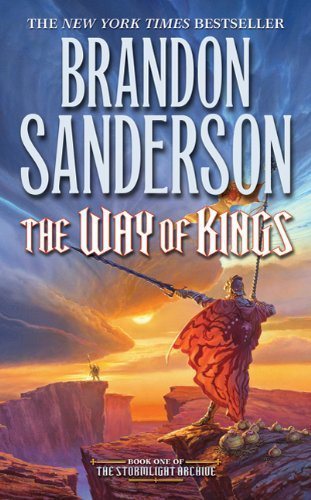

There's no doubt that The Way of Kings, Book 1 of The Stormlight Archive is epic fantasy. It's not just that the word count is big, the story is huge too. There are so many characters that I lost track several times. Even the number of viewpoint characters is crazily large.
Many of them only seem to get one or two scenes (though perhaps they will get more time in future books) and some of them don't at this point actually connect with the main plot at all.
And what is the plot exactly? Well to be honest we're still not clear on all of it, though by the end of the book things did seem to be coming together. The world of Roshar seems to have gone through a series of desolations each of which ravage the world after which it rebuilds. As a result they seem to have lost a lot of their history and remember things only as legends. The strong implication though is that another, probably final, desolation is on its way.
While that element lurks in the background we focus mostly on two areas of the world. On the Shattered Plains, the armies of Alethkar have gathered to wage a war of revenge on the Parshendi for the assassination of their king. Dalenar Kohlin, the former king's brother, is having visions when the High Storms rage and is troubled by the war and the behavior of the other nobles.
Meanwhile former solider and now slave Kaladin struggles to find a meaning in his life where everything he does leads to ruin. He is now reduced to carrying bridges, little more than an expendable target for the enemy to fire on. Can he save himself and his bridge crew?
Largely separate is the story of Shallan, who in an effort to save her own family plans to become an apprentice to Princess Jasnah (the daughter of the assassinated King) and steal her Soulcaster. As events unfold we start to see some links between these stories.
There's a lot more going on too, but even in that little bit you start to see the scale of the story that Sanderson is telling. It spans countries and centuries.
Building That World
As an exercise in world building, The Way of Kings is quite remarkable. Unlike, say Tolkien, Sanderson doesn't show much interest in languages. But most other aspects of history, geography and society are addressed to some degree.
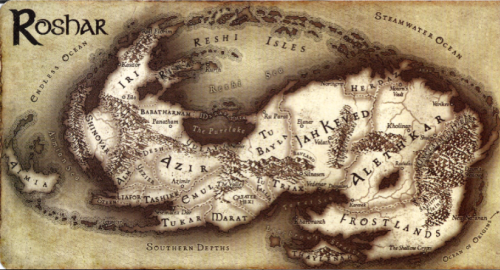 We get images from the history of this world, though somewhat lacking in context, from Dalinar's visions. We get scenes from various locations around the world of Roshar, many of which at this point are not connected to the main plot.
Various social customs of the Parshendi, Parshmen and various countries of Roshar are discussed. Various distinctive animals are introduced along with their ecology. There's even a lengthy explanation as to exactly what Shard Plate is, what it looks like and how you put it on.
If you're the type of reader who just loves to read world building, you should love this book because Sanderson has clearly spent a lot of time putting together all the aspects of it, and now he's sharing them with you.
My problem is that a big chunk of that world building does not actually add to the plot at all. As such it is primarily padding. And as someone who doesn't particularly enjoy world building for its own sake, it got a bit annoying. Particularly the scene about how to put on Shard Plate. No one needed to know that.
There are some really interesting social elements in play mind you. Like the notion of a society where "lighteyes" are rulers and "darkeyes" are followers. Makes a change from skin tone doesn't it? And then there's the whole thing about women's safe hand (their left hand) which is kept covered because to do otherwise would be provocative. The gender split on what is acceptable for women and men to do is interesting too.
And I suspect some of these elements are going to come into play more significantly later in the series (I don't know, maybe book 4). But I'm not going to remember them by then am I?
Mechanistic Magic
While Brandon Sanderson undoubtedly writes fantasy he tends to steer clear of elves and dwarves, going for something more distinctive. His use of magic, however, is a consistent weak point.
Sanderson treats magic entirely mechanistically. The people who use magic tend to do so much like a superhero would. The magic makes them strong, or fast or helps them to fly. It's also completely and logically controllable. I do this, I get that result. The whole thing is extremely mechanistic and lacking any sense of wonder at all.
I've seen this approach quite a lot in modern fantasy so Sanderson is far from the only one doing it, but I find it boring. If I want superheroes, I'll read superhero stories. I want my magic to be surprising and hard to control and dangerous. Here what we get is magic written like science fiction.
Self Indulgence
While I was reading The Way of Kings I found myself very absorbed in the world and the characters. It definitely left me wanting more. I was also, unfortunately, very conscious that it was taking an incredibly long time for things to come together.
The whole thing feels very self-indulgent on Sanderson's part. At this point in his career I suspect editors don't have much authority over him and he gets to write what he wants the way he wants. Which is fair enough I guess.
But while it's a very good story, I think it might have been better at half the length. More is not necessarily better. Particularly when you drown people in details that may not even pay off at all. At least at this point though, it does feel like he knows where he's heading (which is more than could be said for certain other authors of epic series).
All that said, and criticisms still standing. If you like epic fantasy you should read it.
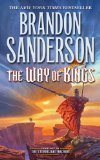
The Way of Kings (Stormlight Archive, The)
by Brandon Sanderson [Tor Fantasy]
Price:
$8.08
£5.52
CDN$ 9.89
EUR 7,75
EUR 6,90
Related articles
Words of Radiance (jamesdcormier.com)
Brandon Sanderson Explains Why Superhero Books Are So Hard To Get Right (io9.com)
Stormlight Shardblade Prop Replica (adafruit.com)
Book Review — Words of Radiance by Brandon Sanderson (wizardstower.co.uk)
The post Book Review: The Way of Kings by Brandon Sanderson appeared first on eoghann.com.