Eoghann Irving's Blog, page 21
January 31, 2015
ZombieMart — Part 4) Cleanup In Aisle 11 (1st Draft)
This is post #4 of 4 in the series “ZombieMart”
At this point I'd like to tell you how, as a skilled wizard, I applied my craft to free myself from the zombie that was currently firmly gripping my leg. And I was going to do that, really. Although, it is surprisingly hard to concentrate when a mindless zombie, in the form of your shift manager, is threatening to eat you.
Fortunately for me there was someone with a little more focus available to save the day. Just as I felt as though I couldn't hold on any longer a can of Best Value Baked Beans slammed straight into Maggie's face, only to be rapidly followed by two more.
Maggie, or former Maggie, slumped to the ground dazed if not unconscious. Can zombies become unconscious? I'm a little vague on the rules for that.
I jumped the rest of the way down and glanced up to see Bethany scowling down at me, another can in hand.
"Well? What are you waiting for?" She gestured with both hands. "Go!" Never underestimate a stroppy teenage girl's capacity for violence. I did as instructed, taking off at a modest run.
Okay, it was a jog. I'd tried to get myself into a bit better shape after the whole being chased by werewolves thing, but I'm still no athlete. Fear is a strong motivator though and I was soon out of the warehouse and into the store itself.
The greenish-yellow miasma was spreading slower out here, perhaps hampered by the sheer size of the store. Yay for big box chain stores! The zombies were not so hindered however and I could see a group of them along aisle 11, meanwhile several unfortunately shoppers lay either injured or dead on the floor.
I paused, torn with indecision. On the one hand, the smart thing to do would be to head for the doors. On the other, there were injured people to attend to. And on the other, other hand, what was that zombie pack doing in aisle 11? Nothing good, that much was certain.
Checking on the injured, or dead, shoppers would be the humanitarian thing to do, but I've seen just a few too many movies and the idea of leaning in only to have my throat ripped out just didn't sit well with me. On the other hand, how many hands is that now, if there was someone on the other side of that zombie pack, well I couldn't just walk away from them.
Cursing my own stupidity I ran headlong towards the zombies.
There must have been at least a half dozen of them all pushing at each other, eager to get at the fresh meat. Whoever it was had gotten themselves thoroughly trapped against the chips and dips with no easy exit. The only thing that had kept them alive this long, I could tell they were alive from the steady stream of curses, was the fact that the zombies were not team players and were spending more time fighting each other than actually going in for the kill.
The question was, what was I going to do about it?
I didn't come to work expecting a zombie outbreak, mainly I was expecting to lift boxes, but being a wizard isn't about being powerful so much as being prepared. Up to now I'd just been reacting frantically, it was time to be a little more aggressive. The problem was, I didn't know what was effective against these zombies. So I went with the basics.
Almost any time you see or hear about a wizard they're throwing things around casual as you please. And moving things is relatively easy. But there's a catch, physics. Newton's Third Law says that for every action there is an equal and opposite reaction. Which basically means if I try to push around something bigger than me, all that actually happens is that I go backwards.
Physics can also work in my favor though. Archimedes knew what he was talking about even if he had never heard of Newton, it's all about leverage.
So rather than try to push the zombies out of the way, I pulled the shelves towards me. It still took some effort, but once I got to the tipping point, over the whole thing went, bags of chips and all.
Of course the shelves would have come down on the unfortunate shopper too, but he was comfortably cushioned by a layer of zombies who, being less than brilliant even before their zombotomy stood there trying to hold up the shelves and wondering what had happened. God help us if the world ever encounters a smart zombie.
I grabbed hold of the shoppers ankles and hauled him out from the mob. Lucas smiled up at me in grateful surprise. I didn't stop to ask him what he was doing there, just yanked him to his feet and set off at a run for the front door.
Priority one was to stop any zombies from leaving this store. Priority two, get the remaining shoppers out of here. Priority three world, or at least Supermart 13, peace.
A quick glance back showed that Lucas had the good sense to follow me, so I kept moving, eventually the zombies would figure out to just step away from the shelves.
My brilliant plan came to an end when I actually reached the doors, or to be more precise slammed into them. Like most shop doors they had sensors and were supposed to slide open as soon as someone got near. Except they didn't.
And they didn't open when I tugged at them either. I was looking around for something to use to pry them apart when Lucas stated what had become disturbingly obvious.
"Somebody locked us in man!"
Next: Part 5) The Source of the Smell
Zombiemart is weekly serial sequel to The Wolves of West Virginia, which is available on Kindle.
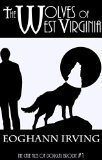
The Wolves of West Virginia (The Case Files of Douglas Brodie Book 1)
by Eoghann Irving [-]
Price:
 -
-
 -
-
 -
-
 -
-
 -
-

The post ZombieMart — Part 4) Cleanup In Aisle 11 (1st Draft) appeared first on eoghann.com.


January 25, 2015
The Origins Of A Story
In which the author, because he cannot imagine people finding him droning on about his process anything less than riveting, proceeds to tell you how he conceived the idea for his first Douglas Brodie story and then executed it.
It all started with the phrase "Shepherdstown is overrun with werewolves."
This fact was reported to me semi-humorously, probably about 10 years ago now, by my father in law as being something that he had been told in deadly earnest. It's a rather unique idea and it stuck with me.
I didn't really have any idea what to do with it, I just loved the notion that a small town in the middle of West Virginia was inhabited by werewolves.
Urban Fantasy In A Rural Setting?
It was a couple of years later that things started to come together. I had read a few Urban Fantasy series by then, enjoying some more than others. Certainly I was easily familiar with their tropes. And most of them are set in a big city.
So the idea of setting a story (it was just one story at that point) in a decidedly more rural environment appealed to me. It was something a bit different.
It also had the obvious advantage of simplifying research enormously. Since I live round here I've already done most of the research I need to do, at least in terms of what things look like and where they are. And since I a very lazy person, this was ideal.
At this point I started to ask myself what the story would be about (aside from werewolves).
Enter The Hero
I 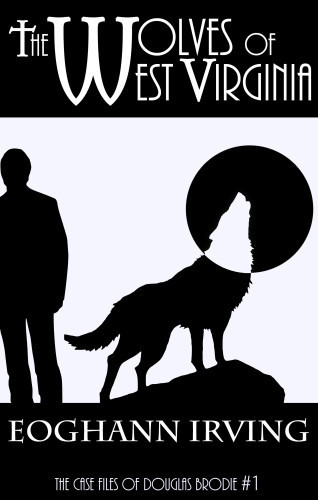 already knew the protagonist of the story would be a wizard and would be male and that he would blunder into this nest of werewolves. Why? Because!
So at that point I was a bit concerned, what with their being a very successful Urban Fantasy series featuring a male wizard, that setting aside the story elements were very generic. For a while my process was all about defining how he was different to wizards called Harry. Notice that Douglas Brodie has no issues with electronics.
Defining characters and stories by what they aren't isn't really a particularly good strategy however, so instead I started looking for something that was both different and also actually something rather than the absence of something.
Which is when I latched on to my own background. Being from Scotland and having moved here about 15 years ago gives me a rather different perspective on the country and, I hoped, a different voice.
Of course that leads to dangerous territory. Douglas Brodie is not Eoghann Irving. He's not even a cooler version of Eoghann Irving. Having appropriated elements of my background for the character I was back to trying to make him not something again.
In the end this was partly achieved by making him younger than me and unattached. This in turn radically altered his reason for being in West Virginia in the first place. Something that I hope to explore in later stories.
By this point I had enough of the story in my head that I could write it, if I could just motivate myself to do it. Which is what NaNoWriMo finally did for me.
NaNoWriMo
 In the somewhat unlikely event that you are on the internet, interested in the process of writing fiction and unaware of NaNoWriMo, here's the short version.
National Novel Writing Month happens every year in November and the aim is to write 50,000+ words in 30 days. With works out at 1,667 words a day. Doesn't sound like that much does it? Try it sometime in between paying attention to your wife and kids and working a day job.
I don't want to get into the debates over whether NaNoWriMo is a good or bad thing here. Suffice to say that I did successfully write more than 50,000 words and pretty much burned out at the same time.
Having succeeded, I didn't write anything else for a couple of years.
Not A Novel, A Series Of Stories
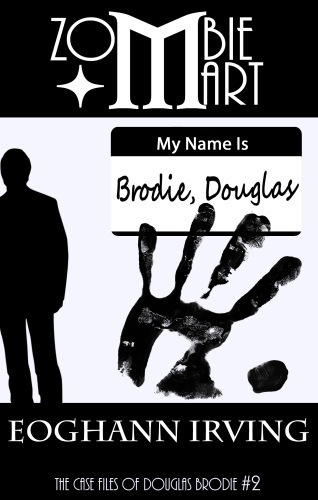 What I'd actually written to meet the 50K word goal wasn't a single story. Instead I had written a series of stories. But the original werewolf story that I had thought up didn't have enough twists or plot elements to support something novel length. In fact at that point it was basically a long short story.
The character and setting, on the other hand, could easily support more stories and so I produced them. A lot of them were junk and were, rightly, junked. It's not that the ideas were bad, but the execution was rushed and not well thought out.
So the idea and the story sat until 2014 when I decided to refocus my blogging and try my hand at writing fiction again. At which point I was faced with a decision. Did I radically re-work The Wolves of West Virginia in an effort to turn it into a full blown novel or did I simply embrace the fact that I write lean.
This is where the indie-publishing revolution really opened up my options. Whereas before short stories were a nice and serialization just didn't happen any more, now I could publish things anyway I wanted.
The Douglas Brodie stories work as a collection of linked short stories and novellas. I'm not going to claim it would be impossible to write novel length stories, but these shorter stories fit somehow. They don't let the idea outstay its welcome.
The Social Experiment
And so I started to redraft Wolves one more time only this time I posted each installment on my blog. This is not how authors traditionally do things. But then, I'm not really a traditional author. In truth, since I'm not endeavouring to make a full time career at this, I am a hobbyist.
Being somewhat freed from the constraints of earning a living, I can experiment or even flat out do things the wrong way if it suits me. In this case I decided to embrace my blogging and social platforms and share my work.
And the reaction has been. Well, mostly apathetic to be completely honest with you. There are a lot of people following me who aren't interested in my (or possibly anyone elses) fiction. They were following because of other things I posted. That's okay, I expected it.
More importantly from my perspective is that those who did choose to give me (unsolicited) feedback were overwhelmingly positive. It's a small number, but a valued one.
Moving Forward
And so, on I go. I've already started sharing first drafts of the second story (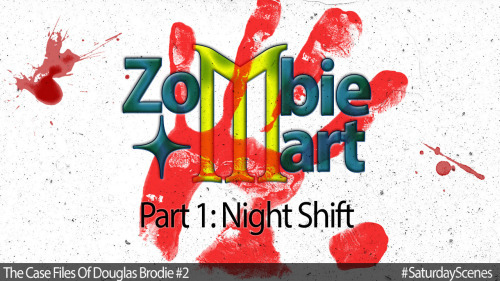 completely re-written and renamed from the original version) and I'm getting a little bit (not a lot) more response. The Wolves of West Virginia got some heavy typo and grammar correction and is now available as an ebook. Some people even bought it.
What I'm doing here is laying foundations. I don't expect to make much if anything at this stage. I want to get some fiction published and available and then I want to use that to build to the point that I am able to afford some professional proof-reading (because I really need professional proof-reading) and maybe some nice cover art. I dont need to earn a living at this, but to do it to the quality I would like to have, I do need to earn a bit.
Because there are a lot more stories to tell about Douglas Brodie. And then, maybe, there are other stories that should be told too.
Tell Me More
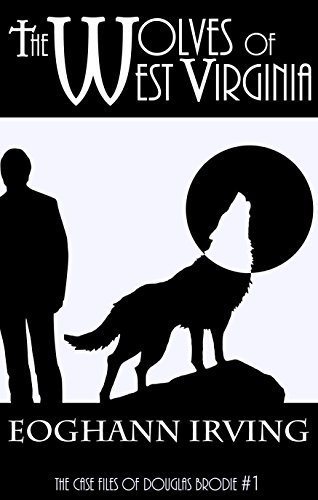
There's not a lot more to say really. If any of the above interested you then you have a few options to check out my work. The Wolves of West Virginia is available at Amazon, or if you are looking for an ePub version you can find that at SmashWords.
Alternatively you can check out the current Douglas Brodie story, ZombieMart right here on my blog. If you like it, let me know. If you don't like it… break it to me gently, I'm a delicate flower.
The post The Origins Of A Story appeared first on eoghann.com.
January 24, 2015
ZombieMart — Part 3) Zombies! (1st Draft)
This is post #3 of 3 in the series “ZombieMart”
If you are looking for good life advice, one thing I can offer you is that you should never let yourself become trapped on top of storage racks in a warehouse while surrounded by stinky, icky colored zombie producing mist.
It's a bit specific I suppose, but I think it holds true for everyone.
While working night shift at Supermart 13 isn't exactly what you'd call fun, I can honestly say it had never been this unpleasant before. Admittedly up here on top of the shelves I was probably fairly safe. I don't imagine zombie training involves much climbing. It's more about biting things and moaning probably.
But I had two immediate worries. The first was that the shelving I was standing on was now completely surrounded by the increasingly foul smelling green mist. The second, was all the screams I could now hear coming from the store itself. If this outbreak wasn't contained we could be talking a full scale zombie apocalypse. And that was not on my list of things to do at the weekend.
Bethany seemed to have been reduced to some sort of semi-catatonic hysteria. Every now and then she would whimper, but she wasn't going to be much use for anything. Since there really wasn't a safer place for her to be right now I decided to leave her be.
If I couldn't climb down from here, my only option was to go across. The warehouse was full of these shelf units so if I could get over to the other side I could probably work my way down to the end and maybe see out into the store itself. If I could get over.
The gap between my shelving unit and the other side looked alarmingly largely. I'm not scared of heights normally, but I don't usually try to long jump while 20 feet in the air either.
If I had been a little better prepared I might have had some magic to give me a boost. There are a few options, it's possible to briefly reduce the effect of gravity and it's also possible to boost strength. Unfortunately I didn't have anything suitable ready to go. I came here expecting to pack shelves, not play Captain America.
Still, who doesn't want to be Captain America? So I took a few steps back, mustered a rough approximation of courage and jumped.
I made it too. Sort of. More precisely, I slammed stomach first into the edge of the shelving and clung on for dear life. Fortunately there's a lot of holes and things for fingers to grip on the shelving so I wasn't in any immediate danger of falling down. Also fortunately I was at least half way onto the shelf itself so I was able to pull myself the rest of the way without too much effort.
At which point I rolled over and considered just closing my eyes and waiting for it to all go away. But the screams weren't going to go away. So I pushed myself back to my feet and walked along to the end of the shelves.
From here I could see out into the store a short way. The green mist was gradually spreading out there too, although more slowly in that much wider space. But it was the zombies that were the real problem. They were attacking unfortunate shoppers like a feral pack. A slow and awkwardly moving one perhaps, but it was effective enough as the surprised shoppers were dragged down and my former colleagues savagely bit and ripped the flesh from their victims bodies.
If I was a positive sort of person I would point out how fortunate it was that it was the night shift and there weren't actually that many shoppers in the store. But that didn't help the ones who were there did it?
I had to do something. The problem was what exactly. An unprepared wizard against a zombie horde is not a good scenario. On the other hand, these creatures were not moving fast. Plus I was much more aware of the situation than the unfortunate shoppers and, I like to think, a little quicker on the uptake.
Besides, it's not like I really had a choice. I cautiously lowered myself over the edge of the shelf and began to climb down. Oddly enough going down was much more unsettling than going up, it's probably because I had to keep looking down to find my footing.
I should have looked down a little more often though. Because half way down I felt the firm but strangely cool grip of a hand around my ankle. Swiftly followed by a sharp tug that almost pulled me clear from the racks.
I admit it, I panicked. I screamed. It was probably a deep and manly scream, but it might not have been. Somehow I managed to cling on to the steel and resist the tugging on my leg. But gravity was against me and eventually the zombie thing would probably realize it could just bite my leg anyway.
I hadn't actually see these zombies turn others by biting them, but I've seen the movies, I know how this works. I tried to pull myself back up again, but the zombie wasn't letting go.
I glanced down thinking that maybe I could kick it and make it let go and found myself staring into the blank and strangely dead eyes of Maggie. And I froze.
It's not that Maggie and I are friends or anything, and one look at her face would tell you that Maggie wasn't even home right now. But, I couldn't do it. I couldn't kick her in the face.
Maggie's face contorted with animalistic hunger and her fingers dug into my ankle as she pulled relentlessly.
Next: Part 4) Cleanup In Aisle 11
Zombiemart is weekly serial sequel to The Wolves of West Virginia, which is available on Kindle.
The Wolves of West Virginia (The Case Files of Douglas Brodie Book 1)
by Eoghann Irving [-]
Price:
-
-
-
-
-
The post ZombieMart — Part 3) Zombies! (1st Draft) appeared first on eoghann.com.
January 21, 2015
Comic Book Review: Star Wars #1 by Jason Aaron and John Cassaday
Ever since Disney bought Lucasfilm comic book fans have been waiting for Star Wars to return to home. The very first licensed Star Wars comics were produced by Marvel so there is a nice symmetry to this, though we shouldn't dismiss the fine work done by Dark Horse with the franchise over the years.
So how does the new Star Wars #1 stack up against previous comics? Is this a must buy, or just another cheap cash in?
A-List Creators Say This Book Matters
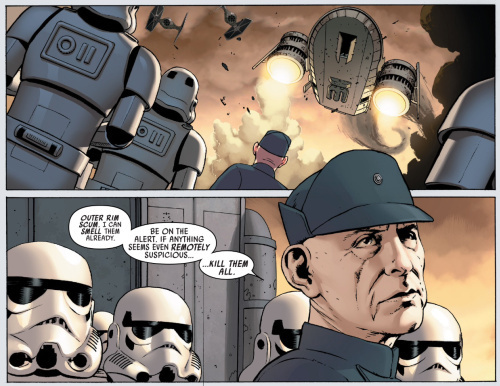 Just based on the talent that Marvel is throwing at the book, I'd say they aren't just cashing in. Jason Aaron may not be a household name outside of comics circles but his work for Marvel on Thor and Wolverine is very highly regarded as is his Vertigo series Scalped. John Cassaday meanwhile is an Eisner award winning penciller. In short Marvel has put A-list talent on a licensed title which is very unusual.
I can't remember the last time Marvel put this sort of marketing or talent behind anything that wasn't a superhero book. It's clear that they are hoping to pull in a new audience, perhaps one who doesn't regularly read comics.
Traditionally that hasn't actually worked. The crossover from movies to comics never happened for example (or Iron Man would be a top seller) but the Star Wars fan base is a little different, so it just might pay off.
Dance With The One That Brung Ya!
 For years now Lucasfilm has focused almost entirely on the Clone Wars era of the Star Wars universe. The Expanded Universe has been able to go broader and cover other eras, but the TV shows and the attention was on the Clone Wars.
Ever since Disney started work on Episode VII though there has been a switch. The new animated show Rebels covers the period after Revenge of the Sith and before A New Hope. And Marvel's Star Wars comic, it places itself directly after A New Hope.
This makes a lot of sense, it's easily the most popular era for Star Wars. It lets them use the classic characters in their prime. It doesn't leave them bogged down with decades of EU continuity. And it lets them tap directly into what people loved about the movies in the first place.
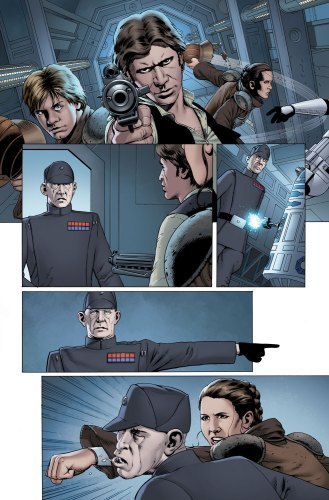
Not only that, but here we get Han, Chewie, Leia and Luke all together (plus C3PO and R2D2) and snarking at each other. Oh and there's a familiar Dark Lord of the Sith hanging around too.
It's not accidental that so many familiar elements are in play at one time, this storyline isn't about pushing boundaries or trying new things, its about giving Star Wars fans their comfort food.
So… Is It Any Good?
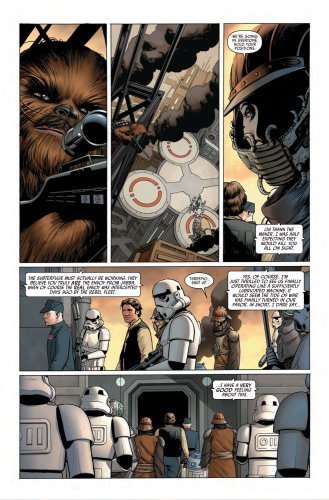 Honestly only one issue in, it's really a bit early to make any final judgements on the series. I think it's a solid start though. The characters sound like they should, they argue like they should and they (mostly) look like they should.
The storyline is simple enough with the rebels engaged in a daring raid on an Imperial facility. It's exactly the sort of thing you would see in a Star Wars movie though which is what the audience is going to want.
Naturally things don't go quite according to plan and we're faced with a situation where Vader may end up facing off with Luke. Which I'm sure they'll have to dance around for continuity reasons, but it does make for a really cool image.
In terms of the art, well Cassaday knows what he's doing. His style is easy on the eye and easy to follow on the page. The fact that he's clearly using photo references to keep the characters faces right is the biggest weakness. It makes them less naturally expressive than they should be.
All in all this isn't going to win converts over to Star Wars, nor is it breaking new storytelling ground, but it does tell a basic Star Wars storyline with gusto.
It's not clear yet how much of a tie in there may be between future Marvel comics and the upcoming Episode VII but at this stage I'd say you don't need to buy this for continuity's sake.
On the other hand if you want a bit of that feeling you had as a kid watching Star Wars for the first time, you may want to give this a shot.
Who Is It For?
Are you a Star Wars fan?
Are you tired of the Clone wars?
Do you prefer stories that aren't wrapped in continuity?
Might be for you.
Did You Like It?
Yes I did. It's playing with my favorite Star Wars characters in my absolute favorite Star Wars era. I feel like it was written just for me.
The post Comic Book Review: Star Wars #1 by Jason Aaron and John Cassaday appeared first on eoghann.com.
January 20, 2015
The History of Science Fiction Part 12: 1960 –1969 — Books
This is post #12 of 12 in the series “The History Of Science Fiction”
We finally reach the 1960s in my exploration of science fiction and again due to the amount of activity I will be splitting this decade up to cover different media, starting here with books.
Beyond Pulp
By the 1960s the pulp magazines that had supported the genre and surfaced so many authors were largely gone. Science Fiction magazines had transitioned to a digest format but there were far fewer of them, around 6 in the US during the decade. They continued to publish significant stories (including the first publication of Dune as Dune World in Analog) but paperback novels were now the primary format for science fiction and fantasy stories.
Though at this point the output was predominantly science fiction. Fantasy had not yet had it's big boom and while there were a number of notable novels, the quantity is extremely small when compared to those on the science fiction side of the fence.
A New Wave Arrives
 During the early 1960s and continuing into the 1970s there was a radical shift in science fiction. While previously the emphasis for sci-fi stories had been action, adventure and science (some of it accurate, some not) this New Wave of science fiction de-emphasized the hard science and took a much greater interest in politics, sociology and all sorts of soft science.
The New Wave also encouraged a greater amount of experimentation and more emphasis on literary merit, though I will leave it as an exercise to the reader to define what literary merit actually is. There's no doubt though that this marked a major change for the genre as well as introducing new voices like Ursula K. Le Guin and Samuel R. Delany.
While some like Michael Moorcock championed this new style other more established writers were much less enthusiastic about it. Inevitably yet another round of genre bickering resulted as fans campaigned for their preferred style. The resulting fiction may not have been universally good but the increased diversity of science fiction writing clearly benefitted the genre as a whole.
The Old Guard
Arthur C. Clarke only published three major science fiction works in this decade. The first was the Hugo nominated A Fall of Moondust (1961) which is essentially a disaster story set on the moon in which tourists "sailing" across a lunar sea find themselves trapped beneath the lunar dust.
He also released Tales of Ten Worlds (1962) a collection of his short stories and 2001: A Space Odyssey (1968) which was both an expansion of his previous short story The Sentinel and a novelization of the Kubrick movie.
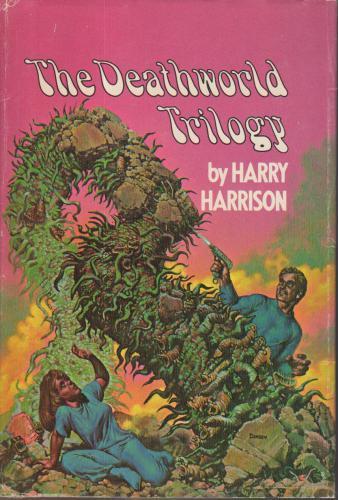 The 1960s were a very busy decade for Harry Harrison as much of his previously serialized work was gathered together and published.
Deathworld (1960) launched his Deathworld series of books. The stories are set on the planet Pyrrus which is the deadliest world ever colonized by humans.
The Stainless Steel Rat (1961) was the start of another long running series, this one featuring James Bolivar "Slippery Jim" diGriz a con-man and thief in what is essentially a succession of heist and caper stories with an SF setting.
Bill, the Galactic Hero (1965) was, yet another, series those most of the later books were not written by Harrison himself. This time taking a much more satirical tone
Make Room! Make Room! (1966) is significant not for spawning sequels, but rather for being inspiration for the movie classic Soylent Green (1973) though it was a loose adaptation. The book is set in the "distant" future of 1999 and depicts a world with a population of 7 billion where resources are strained, infrastructure is crumbling and overcrowding is everywhere.
Genre stalwart Clifford Simak adapted to the changing times with comparative ease, simply moving his magazine output to book form and publishing almost a novel a year, several of which picked up Hugo or Nebula nominations. His work continued in a similar vein to previously and falls firmly in the more traditional SF camp.
The Way Station (1964) brings the Cold War to space and centers on a Civil War veteran chosen by aliens to administer a way station for interplanetary travel.
All Flesh is Grass (1965) - The town of Millville is trapped in a bubble by an alien hive-race of purple flowers.
Goblin Reservation (1968) — In the future Earth has a Time University where it is possible to slip through time and investigate the truth about past events by bringing people forward to interview them. Peter Maxwell forced to investigate his own murder to find out who or what wanted him dead.
 The period of the 60s and 70s is sometimes referred to as Robert Heinlein's middle period. He moved beyond the pulp stories and juveniles into more complex and sophisticated work but these were not nearly so experimental as his last few novels.
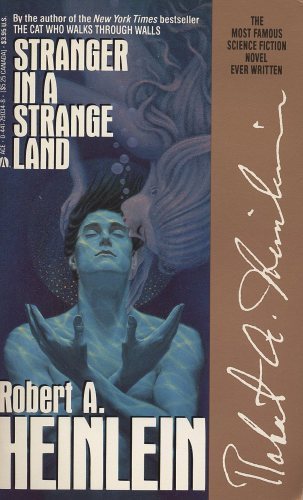
Stranger in a Strange Land (1961) is one of Heinlein's most influential works and was at one point claimed to be the most famous science fiction novel ever written. The story is that of a human, Valentine Michael Smith, raised on Mars by Martians and how he adapts to moving to earth and dealing with human culture. It tackles religion, monogamy and other major social pillars.
The Moon is a Harsh Mistress (1966) is set in 2075 when there are multiple underground colonies on the Moon. Echoing previous colonizations the majority of the colonist population is made up of political exiles and criminals or their descendants. It tells the story of a war for independence and has a very strong libertarian tone.
Glory Road (1963) is something a little bit different for Heinlein being the first full length fantasy novel he wrote. Later work of his would increasingly mix science fiction and fantasy.
Literary SF
The 1961 Hugo Awarding winning A Canticle for Leibowitz (1960) by Walter M. Miller is one of the classics of the science fiction genre as well as being one of the relatively small number that have broken free of the genre to widespread literary acclaim. Set after a nuclear war, the story covers thousands of years showing how an order of Catholic Monks take on the mission of preserving scientific knowledge until civilization is ready for it.
The science fiction genre that I and probably most of the people reading this are familiar with is heavily dominated by US and British authors. Stanislaw Lem is a notable exception to that rule. His novel Solaris has been made into a movie three times. The book was originally published in 1961 though it didn't reach the English speaking audience for some years.
Human scientists in a research station probe the oceanic surface of the planet Solaris and discover that they are themselves being studied by the planet which is sentient. The planet is able to manifest and force the scientists to confront their secret guilts.Solaris looks at the nature of human memory and the limitations of cross species communication.
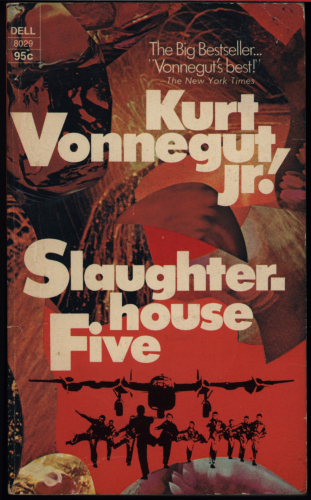 The 1960s were a defining decade for Kurt Vonnegut's science fiction. Cat's Cradle (1963), his fourth novel, touches on religion, technology and science giving us a fictional inventor of the atomic bomb who also invented a chemical capable of freezing the planet. his children are frantically searching the planet to find it before it is used.
Slaughterhouse Five (1969) is also satirical in tone but this time drew on Vonnegut's experience of the firebombing of Dresden. The protagonist is Billy Pilgrim, a man who believes he has been in an alien zoo and that he is experiencing time travel.
Dystopian novels seem to have been particularly popular on the more literary end of Science Fiction during the 60s. For example A Clockwork Orange (1962) by Anthony Burgess is set in a near future England where gangs of youths engage in extreme violence. The book remains highly regarded though it is probably better known for the Stanley Kubrick film adaptation these days.
While Flowers for Algernon was originally published as a short story in 1958, Daniel Keyes expanded it and released it as a novel in 1966 after which it won a Nebula Award. The story is told as a series of progress reports by the first person to have an experimental surgery performed to enhance their intelligence.
New Wave
While some of the New Wave were brand new voices, there were also a number of established authors who either already fitted into the broad New Wave banner or whose style significantly changed from their earlier works.
Brian Aldiss published a considerable amount of fiction during the 1960s. Publication dates are a little confused given the name changes and other edits that often happened between UK and US editions. Of note however are:
Hothouse (1962) (published in the US in abridged form as The Long Afternoon of Earth ) which is a collection of 5 previously serialized novelettes in which the Earth now has one side constantly facing the sun and as a result plants have adapted to fit all the ecological niches and have driven most animal life to extinction.
Greybeard (1964) in which decades after a nuclear bomb tests conducted in Earth's orbit, the population has become sterile and is aging.
Report on Probability A (1968) a story inspired by the Heisenberg uncertainty principle in which everything is observation within observation.
J. G. Ballard's novels in the 1960s shared a fascination with the end of the world The Drowned World (1962), The Burning World (1964) and The Crystal World (1966) form a trilogy of sorts exploring three different ways in which the world might end and perhaps more importantly how people might react to it.
Published in 1965, the 1966 Hugo Award winning Dune by Frank Herbert is one of the landmark books of science fiction. Set in a far future where feudal families control planets it is a story of politics, religion and ecology as factions attempt to wrest control of the planet Arakis, the only source of melange the most valuable substance in the universe.
Dune is of note for several reasons. Firstly the level of world building is well beyond what had previously been seen in science fiction. Secondly as a harbinger of so called soft science fiction (with less emphasis on technological sciences) it was in may ways the totem of the New Wave. And finally it was able to break out of the SF ghetto to be recognized on a literary level.
Philip K. Dick's writing in many ways defies characterization but he can be broadly placed in the New Wave category even though some of his work precedes it. Dick's writing is primarily focussed on identity and what is or is not real rather than on the science.
The Man in the High Castle (1962) is an alternate history where Germany and Japan occupy the United States after winning World War II. However, in a book within the book, a novelist writes about an alternate world where America had won the war.
Dr. Bloodmoney, or How We Got Along After the Bomb (1965) has a protagonist seeking psychotherapy to handle his guilt over accidentally causing a global nuclear disaster
The Three Stigmata of Palmer Eldritch (1965) takes place in a dystopian 21st century future where humans have colonized all the habitable planets and again Dick uses science fiction to explore what is reality.
Do Androids Dream of Electric Sheep (1968) is now best known as the story which BladeRunner was adapted from. But while the plot outline of a bounty hunter who has to "retire" several escaped androids is the same the story itself is radically different. As always Dick is very interested in the question of what it means to be human. In this book empathy is intrinsically associated with humanity, but the story forces the reader to question that assumption.
Roger Zelazny apparently did not care for the New Wave appellation, but never the less his work is generally considered to be part of it. He is best known for his Chronicles of Amber but published several science fiction works prior to that.
Lord of Light (1968) is an interesting combination of fantasy and science fiction featuring a world Hindu and Buddhist mythology but western protagonists.
Creatures of Light and Dark (1969) is a unique story set in the far future where some humans have godlike powers. There's a distinct Egyptian theming. However it was apparently written as something of a writing exercise, done in the present tense with one chapter done as a poem while the final chapter is the script of a play.
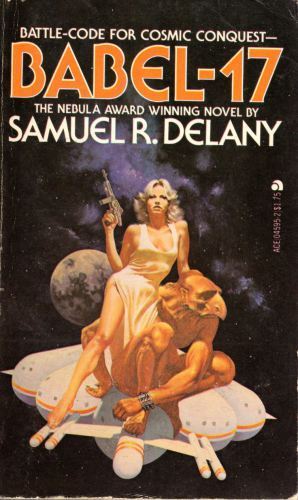
Samuel R. Delany is one of the authors most closely associated with the New Wave. He published novels from the 1960s onwards and often touched on themes of sexuality, memory and language. Like others in the New Wave he used science fiction more as a background to explore his themes rather than a method of presenting scientific concepts. Of particular note amongst his output in the 60s are:
Babel-17 (1966) in which one side of an interstellar war manages to weaponize language. Merely learning the language Babel-17 changes your perception and thought making you a traitor.
The Einstein Intersection (1967) is an exploration both of myths and how people who are different struggle to deal with the dominant culture. In it a member of an alien race who have
Nova (1968) is a space opera in a future where cyborg technology is universal but making decisions involves using tarot cards. Power in the galaxy is split between two factions and a captain from one faction gathers a crew in a bid to permanently shift the power balance.
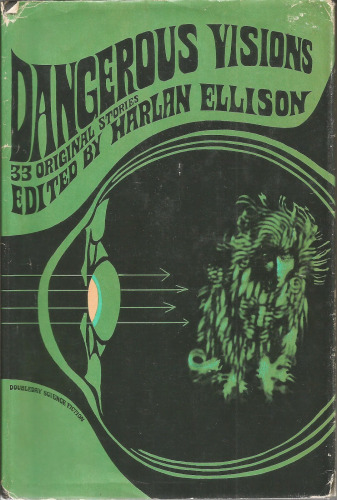 Harlan Ellison was already an established science fiction writer by the 1960s. He produced relatively few novels, but a much larger body of short fiction work. However his association with the New Wave is primarily fueled by his editing of the short story anthology Dangerous Visions (1966). The anthology contained stories from numerous science fiction luminaries and Ellison encouraged them to push the previously established boundaries of science fiction. As a result the anthology is often considered the defining book of the New Wave movement. Looking at his own work however, there are some publications of note:
"Repent, Harlequin!" Said the Ticktockman (1965) a short story set in a dystopian future where time itself is regulated. Being late is a crime.
I Have No Mouth, and I Must Scream (1967) is a post-apocalyptic short story where a computer torments five human beings as revenge for its own tortured existence.
A Boy and His Dog (1969) — a novella (later turned into a film) telling the story of Vic and his telepathic dog who survive together in a post-apocalyptic world.
Another key figure in the New Wave movement was Michael Moorcock, as much through his role as Editor of New Worlds magazine, from 1964 to 1971, as through his own fiction. Perhaps the most notable of his own output during this time was The History of the Runestaff and his first Elric novels.
 The History of the Runestaff consisted of four books The Jewel In The Skull (1967), The Mad God's Amulet (1968), The Sword of the Dawn (1968) and The Runestaff (1969). These told the story of Dorian Hawkmoon (in later stories revealed as an aspect of the Eternal Champion) in his battle against the mad empire of Granbretan. The stories were a blend of science fantasy with a gothic twist.
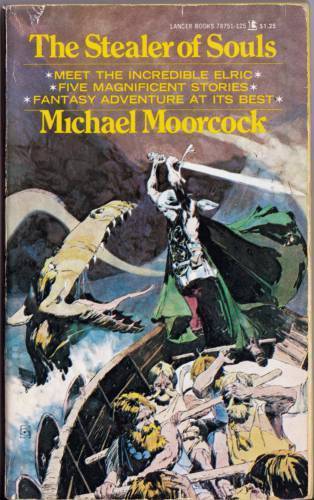
During the same period Moorcock published two Elric novels, The Stealer of Souls (1963) and Stormbringer (1965) which contained several previously published novellas. Though these versions were significantly revised and republished at a later date.
Ursula K. Le Guin may well be the most influential female writer in science fiction to date. While she started writing in the 1950s it wasn't until the 1960s that her work became regularly published. During this time period the majority of her novels were part of the Hainish Cycle which was a series of science fiction stories all set in a world where civilizations of human beings on nearby stars were contacting each other for the first time and setting up diplomatic relationships, all under the guidance of Hain, the oldest of human worlds.
Le Guin published the first four novels in this cycle during the 1960s, of which the best known is The Left Hand of Darkness:
Rocannon's World (1966)
Planet of Exile (1966)
City of Illusions (1967)
The Left Hand of Darkness (1969)
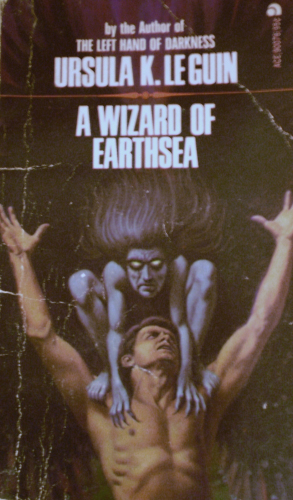 In addition to her science fiction stories, Le Guin also wrote A Wizard of Earthsea (1968) which was the first of several fantasy stories set in the world of Earthsea. While there were many familiar fantasy elements at play this was fantasy with a culture radically different to the usual pseudo-medieval european setting.
Anne McCaffrey is not generally grouped with the New Wave, but her work has at least as much in common with them as it does with older science fiction. She classified herself as a science fiction writer, but much of her work had fantasy elements in play. She released several significant works during the 1960s, one of their distinctive features being strong female protagonists:
Restoree (1967) — the story of a young woman who survives being abducted by aliens and finds a new life on another planet.
Dragonflight (1968) was the first of her extremely popular and long running Dragonriders of Pern series featuring genetically adapted "dragons" who fought off Thread which rain down from the sky causing destruction where they touch.
The Ship Who Sang (1969) — about a cyborg, a human and a spaceship.
Decision at Doona (1969) — In which two civilizations attempt to colonize the same planet. However what they both thought to be nomadic natives are actually more technologically advanced than either of them.
Fantasy
Fantasy and science fiction are genres that have been entwined since the very beginning. Portions of fandom continue to argue bitterly about which story should have which particular appellation. It's not something I spend a lot of time worrying about, but the history of Fantasy does relate to the history of science fiction. While there was flat out fantasy material being published, a significant portion of the fantasy books produced during this time were children's fantasy, which had a particularly strong base in the UK.
Andre Norton's Witch World (1963) was the first in a long running series from the author that has been described as both science fiction and fantasy. It tells the story of a former soldier who, needing to escape, finds himself transported to a world where magic is used and finds himself leading a guerrilla rebellion.
Jack Vance was an extremely prolific author who wrote in several genres, but perhaps his biggest legacy was the Dying Earth series. The second book of which, The Eyes of the Overworld (1966) was a fix up of 5 short stories published in magazines the previous year. While The Dying Earth doesn't get the attention that Moorcock and Tolkien's fantasy worlds do, it has been hugely influential in the genre.
Fritz Leiber released several novels in his Fafhrd and the Gray Mouser series during the 1960s. Swords in the Mist (1968) and Swords Against Wizardry (1968) were collections of previously published short stories (mostly also from the 60s) while The Swords of Lankhmar (1968) was a full novel expanded from the 1961 novella Scylla's Daughter. The stories remain defining examples of the sword and sorcery genre and are still frequently aped by modern writers.
Lloyd Alexander published all four of his Chronicles of Prydain during the 1960s. The five novels in the series were childrens fantasy books following the protagonist Taran from childhood to adulthood. The books are heavily inspired by Welsh mythology.
The Book of Three (1964)
The Black Cauldron (1965)
The Castle of Llyr (1966)
Taran Wanderer (1967)
The High King (1968)
Over Sea, Under Stone (1965) was the first book in The Dark is Rising children's fantasy series by Susan Cooper. The story is primarily a mystery with fantasy overtones and takes full advantage of its Cornish setting.
Author Alan Garner published several children's fantasy novels throughout the decade. They had a theme of modern day (for the time) children being drawn into a darker magical world
The Weirdstone of Brisingamen (1960)
The Moon of Gomrath (1963)
Elidor (1965)
The Owl Service (1967)
Peter S. Beagle's The Last Unicorn (1968) was yet another children's fantasy book. This time following the tale of a unicorn who believes she is the last of her kind and tries to find out what happened to the others.
Ray Bradbury's Something Wicked This Way Comes (1962) could also be broadly categorized as a children's fantasy novel given that it's protagonist is a 13 year old boy. But the story of a traveling carnival run by a malevolent individual who tricks people into binding themselves to him in return for their secret desire, is a much darker story.
Three Hearts and Three Lions (1961) by Poul Anderson draws from many European fables to construct its secondary world. But the story itself covers very familiar territory for the time.
The post The History of Science Fiction Part 12: 1960 –1969 — Books appeared first on eoghann.com.
January 19, 2015
Book Review: Archer: Book One of The Long Game by Richard Rohlin
The second story I'm reviewing for the #GreatIndieReviewProject is Archer: Book One of The Long Game by Richard Rohlin (and edited by Benjamin Feehan). It's a pulp styled superhero novella full of costumed heroes out for justice. It's also the first part of a larger series and as such there are a fair number of unresolved elements, but the story as told here does feel reasonably complete.
Basically what we get is the origin story of Roger Fitzooth and how he changes from a spoilt playboy into a costumed hero driven to bring his father and his company down.
Cliches vs. Tropes
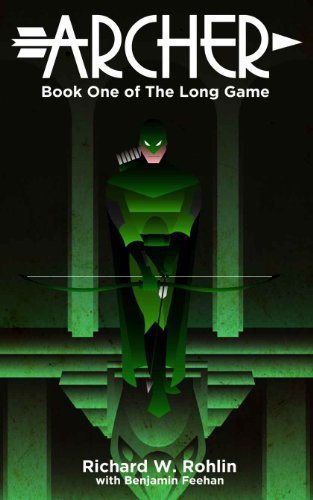

Archer leans very heavily on familiar superhero and pulp tropes. The idea of the superhero whose public identity is that of a playboy is a trope for example, as is the type of hero that Roger becomes, an Archer. These sorts of things are the building blocks on which superhero stories are constructed.
While a vocal section of readers seems to actively dislike tropes, there's a larger (much quieter) group that appreciates them and the familiarity they bring. The trick that a good author has to pull off is to take those tropes and move them around a bit to make them feel fresh. If they don't do that, then we move into cliche territory.
You're definitely going to recognize all the toys that the Rohlin brings out to play with but the particular configuration and the presentation should be different enough.
There were a few places where it felt like maybe the author was trying a little too hard and being more wordy than was necessary or going with an obscure word where a more common one would do, but those were the exception. Mostly this was a quick and easy read.
A Quick Read
See, that was a cliche. It's also fairly accurate, both because at 91 pages this novella is fairly short and also because, true to it's pulp stylings, things move fast in the story.
The writing style is very visual with the action sequences given a lot of detail. I get the impression that a fair amount of research was done to make the fighting styles and weapons realistic. These are things that tend not to bother me too much, but they can be a major distraction for some, so that's a plus.
The majority of the book is from the viewpoint of Roger himself, but we do get a handful of scenes through the eyes of other characters. This not only serves to let us as the reader know some things that Roger doesn't but also gives his opponents a little more depth.
We move pretty swiftly from action scene to action scene and any gaps in our knowledge are effectively filled in by references and without the need to stop the action and narrate the history. Solid showing rather than telling.
I am curious why they chose to start the story in 1976 rather than the present day. To be honest it doesn't really feel like they take that much advantage of the historical setting, though it is possible it plays into the larger storyline. Certainly the setting didn't hinder things at all.
Things Happening Offstage
My biggest criticism reading this was that there were multiple references to events that happened in a time period during Roger's training. But those events weren't explained in the story itself. I understand that there is actually a short story that fills in the blanks.
It's a difficult balance to strike as an indie author. You want to lead readers to your other fiction and one way of doing that is serials and spin-offs. But it's very important that the reader leaves feeling they got a whole story.
And offering additional stories to flesh things out is fair enough, but the number of references to it here did have me feeling like there was an important story element that hadn't been included.
Footnotes!
Something that jumped out at me while reading Archer was the use of footnotes (well technically endnotes I guess). It used to be quite common to include footnotes so the author could provide either context or additional information for the reader, but they are quite unusual these days in fiction. It may have something to do with the costs of formatting and printing them in books.
That's not a problem ebooks have though and Archer takes advantage of it. In some cases it does feel like the note may not have been necessary, but it's not like you have to click on them and in other cases they did provide information I wasn't aware of.
Is This For Me?
Do you enjoy pulp style storytelling?
Are superheroes your thing?
Are you okay with reading a series?
This one might be for you.
Did You Like It?
Yeah I really enjoyed this one. It has the advantage of hitting a lot of soft spots for me. I enjoy superhero stories and I have a particular fondness for pulp styled storytelling, so I admit I may have a bit of a bias towards this. However, I also think it's a well executed example of this sort of story. I came away from it wanting to know more about this universe and the heroes that inhabit it.
Archer: Book One of The Long Game (Grapple Gun Universe 1)
by Richard Rohlin [Grapple Gun Publishing]
Price:
-
-
-
-
-
The post Book Review: Archer: Book One of The Long Game by Richard Rohlin appeared first on eoghann.com.
January 17, 2015
Zombiemart — Part 2) Assault On Supermart 13 (1st Draft)
This is post #2 of 3 in the series “ZombieMart”
I watched the slowly spreading green mist for a moment as Bethany continued to tell me just how unpleasant she found the smell to be. The fog spread out slowly, hugging the ground as it did so. So it was heavier than air then. As the cloud grew, the stench grew stronger confirming the obvious connection between the two.
Several other blue clad employees appeared, no doubt also looking for the source of the smell. They hung around looking confused and useless, probably much like I was, until Maggie arrived to take charge. By this point the fog had grown noticeably, if still very slowly.
“When I find out which of you jokers did this, there will be hell to pay.” Maggie muttered, glaring at each of us in turn. “Now clean it up.”
I felt my mouth go dry. Sure it was probably just some sort of smoke bomb. That made sense, right? But my Spider-Sense was tingling. No, wizards don’t actually have a “spider-sense”. Shame, it would be useful.
“Now!” Maggie grabbed a brush and shoved it into the hands of the nearest person. I’m not quite sure what she thought he was going to be able to do with that. He didn’t really seem to know either, shuffling forward and half-heartedly pushing the brush into the smoke.
Which is when things went straight to hell. I watched as the dirty yellow mist swirled around the shaft of the brush and then surged up it and along the man’s arms. He cried out in surprise, dropping the brush, but by then the smoke was all over him. In seconds he was completely obscured from my sight. He coughed and flailed around trying to wave the gas away, but it didn’t work. Everyone stepped back in alarm.
It’s not very noble I realize, but if you had just seen this you wouldn’t be rushing forward either. Moments later the man slumped to the ground. or at least I assume he did because the smoke settled back down to floor level. We all stared at each other in shock. What was this?
I took a faltering step forward, thinking that I should pull the man out of that stuff, but then remembering what had just happened to him. I was trying to think of a discreet way to try and disperse the gas when the man rose to his feet again. This time the fog stayed swirling around his feet. But that didn’t give me much comfort.
There was a dead eyed look to the man’s stare as he moved towards me. He mouth hung open and I could see drool running down his chin. His movements were slow and strangely stiff, but he was coming towards me at a steady pace. I backed up nervously.
“Hey Dale, you okay man?” A concerned colleague reached out and touched the man’s shoulders. He turned slowly, his attention switching as he did so. I let go of the breath I hadn’t realized I was holding. But my relief was short lived as Dale lunged awkwardly for his colleague, burying his teeth into the man’s shoulder and knocking him backward into the swirling fog.
That was when the screams started.
Almost as though it was reacting to Dale’s attack, the mist surged and spread out suddenly swirling around the feet of several more staff and spreading rapidly up their bodies. I already knew what was going to happen, I didn’t need to stand and watch.
Turning, I grabbed Bethany’s hand and pulled her into the narrow aisle between the racks. She let me pull her, but stared at me in shocked confusion.
“Climb.” I shouted. It’s possible I was just a little bit terrified at this point. I didn’t wait to see if she had understood me, I just started climbing the steel myself.
The racks are so close together that you can actually move from side to side like a ladder and that’s exactly what I did. Working quickly up to the second shelf and then turning round to make sure that Bethany was following. Repeating the process we climbed rapidly up to the fifth and final shelf, a good 20 feet off the ground.
Bethany looked pale and her breathing was ragged. I couldn’t tell if it was from the climb or what she had just witnessed. Fortunately the top shelf was relatively empty and I was able to walk along to the end to get a clear view of the scene below. It wasn’t pretty.
The green fog had now spread across most of the warehouse floor now and wandering amongst it with that stiff legged gate and those blank faces were at least a half dozen of my fellow Supermart 13 employees. As I studied the scene looking for any easy exits I heard screams that sounded like they were coming from the front of the store. Whatever was happening, it was spreading, and I was stuck on an island surrounded by that green fog.
Next: Part 3 - Zombies!
Zombiemart is weekly serial sequel to The Wolves of West Virginia, which is available on Kindle.
The Wolves of West Virginia (The Case Files of Douglas Brodie Book 1)
by Eoghann Irving [-]
Price:
-
-
-
-
-
The post Zombiemart — Part 2) Assault On Supermart 13 (1st Draft) appeared first on eoghann.com.
Zombiemart — Part 2) Assault On Supermart 13
This is post #2 of 2 in the series “Zombiemart”
I watched the slowly spreading green mist for a moment as Bethany continued to tell me just how unpleasant she found the smell to be. The fog spread out slowly, hugging the ground as it did so. So it was heavier than air then. As the cloud grew, the stench grew stronger confirming the obvious connection between the two.
Several other blue clad employees appeared, no doubt also looking for the source of the smell. They hung around looking confused and useless, probably much like I was, until Maggie arrived to take charge. By this point the fog had grown noticeably, if still very slowly.
“When I find out which of you jokers did this, there will be hell to pay.” Maggie muttered, glaring at each of us in turn. “Now clean it up.”
I felt my mouth go dry. Sure it was probably just some sort of smoke bomb. That made sense, right? But my Spider-Sense was tingling. No, wizards don’t actually have a “spider-sense”. Shame, it would be useful.
“Now!” Maggie grabbed a brush and shoved it into the hands of the nearest person. I’m not quite sure what she thought he was going to be able to do with that. He didn’t really seem to know either, shuffling forward and half-heartedly pushing the brush into the smoke.
Which is when things went straight to hell. I watched as the dirty yellow mist swirled around the shaft of the brush and then surged up it and along the man’s arms. He cried out in surprise, dropping the brush, but by then the smoke was all over him. In seconds he was completely obscured from my sight. He coughed and flailed around trying to wave the gas away, but it didn’t work. Everyone stepped back in alarm.
It’s not very noble I realize, but if you had just seen this you wouldn’t be rushing forward either. Moments later the man slumped to the ground. or at least I assume he did because the smoke settled back down to floor level. We all stared at each other in shock. What was this?
I took a faltering step forward, thinking that I should pull the man out of that stuff, but then remembering what had just happened to him. I was trying to think of a discreet way to try and disperse the gas when the man rose to his feet again. This time the fog stayed swirling around his feet. But that didn’t give me much comfort.
There was a dead eyed look to the man’s stare as he moved towards me. He mouth hung open and I could see drool running down his chin. His movements were slow and strangely stiff, but he was coming towards me at a steady pace. I backed up nervously.
“Hey Dale, you okay man?” A concerned colleague reached out and touched the man’s shoulders. He turned slowly, his attention switching as he did so. I let go of the breath I hadn’t realized I was holding. But my relief was short lived as Dale lunged awkwardly for his colleague, burying his teeth into the man’s shoulder and knocking him backward into the swirling fog.
That was when the screams started.
Almost as though it was reacting to Dale’s attack, the mist surged and spread out suddenly swirling around the feet of several more staff and spreading rapidly up their bodies. I already knew what was going to happen, I didn’t need to stand and watch.
Turning, I grabbed Bethany’s hand and pulled her into the narrow aisle between the racks. She let me pull her, but stared at me in shocked confusion.
“Climb.” I shouted. It’s possible I was just a little bit terrified at this point. I didn’t wait to see if she had understood me, I just started climbing the steel myself.
The racks are so close together that you can actually move from side to side like a ladder and that’s exactly what I did. Working quickly up to the second shelf and then turning round to make sure that Bethany was following. Repeating the process we climbed rapidly up to the fifth and final shelf, a good 20 feet off the ground.
Bethany looked pale and her breathing was ragged. I couldn’t tell if it was from the climb or what she had just witnessed. Fortunately the top shelf was relatively empty and I was able to walk along to the end to get a clear view of the scene below. It wasn’t pretty.
The green fog had now spread across most of the warehouse floor now and wandering amongst it with that stiff legged gate and those blank faces were at least a half dozen of my fellow Supermart 13 employees. As I studied the scene looking for any easy exits I heard screams that sounded like they were coming from the front of the store. Whatever was happening, it was spreading, and I was stuck on an island surrounded by that green fog.
The post Zombiemart — Part 2) Assault On Supermart 13 appeared first on eoghann.com.
January 16, 2015
Book Review: The Evolutionary Void by Peter F. Hamilton
I really love Peter F. Hamilton's stories. I've read most of his books and even his short story collection A Second Chance at Eden. So it's probably fair to say that I am a biased reviewer of his books. It's also not a surprise that I enjoyed The Evolutionary Void. But the book (and the trilogy) had some problems.
The Evolutionary Void is the final part of a trilogy of books that Hamilton has written about what's referred to as the Commonwealth Universe. This following on from a duology where he introduced the setting. It's a space opera setting basically with highly technically evolved humans and other races. There's action, there's politics, there's sex, there's absurd numbers of characters. And behind it all there are big sci-fi ideas.
But Is It Hard SF?
Nope it's not. Get over it.
There's no shortage of science in Hamilton's science fiction, but a lot of it is broad extrapolation and some of it clearly veers off into fantasy. This is something that seems to matter an awful lot to a vocal minority of readers. But generally speaking if you enjoy Space Opera and don't mind books the size of a small mountain you should check this out.
Start at the beginning though.
What is Going On?
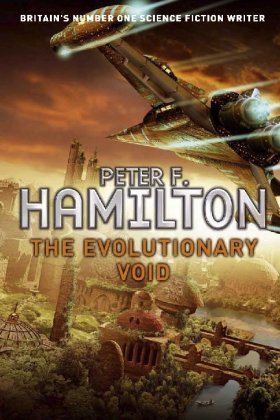

There's actually been a multi-year gap in my reading of this particular series. This book was actually published 4 or so years ago but I'm just getting round to reading it. But I read the previous two volumes before this one was published.
That delay has clearly made the situation worse, but I would argue that even with just the 3 year publishing timeline of the 3 books you would really be struggling to remember all the characters and factions and places and plotlines that are crammed into this story.
I actually had to check wikipedia for this one to clear up a couple of things I just could not remember.
I recently complained about excessive world building in epic fantasy. So it stands to reason I should criticise the exact same thing here. Right? Right?
Actually, it didn't bother me. The story is huge (and thus hard to keep track of) but it really didn't feel bloated. It was big because really big things were happening to a lot of people. But that's the distinction. Things were happening. The story was moving forward.
A Fantasy Story Inside a Space Opera
I'm a big fan of the fantasy genre. I probably actually read that more than I read science fiction. So you'd think that the concept of essentially having a fantasy story embedded inside the sci-fi story would be heaven for me.
Not so much. Honestly Edeard's story is the one that interested me the least of all the characters and plots that were going on, but he got quite a lot of time in this book again as he had in the previous one. The world of the void is sort of technically interesting to me, but I found those characters by far the most shallow and since Edeard's story only tangentially connects with the rest of the story I just didn't care as much as I was probably supposed to.
I had a similar reaction to Ozzie's never ending trek along the Silfen paths in the first Commonwealth books as well.
Wow That Was Sudden!
This was a trilogy of big books. It was a long story. And Hamilton clearly wasn't scared to give it the space he felt it needed. And yet at the end it wrapped up really quickly. So quickly in fact that I thought I must have missed a section.
I mean the major issues are resolved so it's not like I was left hanging. But lots of things are referenced as having happened without us seeing them. Which is weird because up to that point we saw everything. It just felt a bit like the author couldn't be bothered to have to go round and clean up after all his characters now that he was finished playing with them.
Who Is This For?
Do you enjoy space opera?
Do you like galaxy spanning and threatening adventures
The more characters the better?
Do you want big ideas to go with your big adventure?
This one's for you.
Did You Like It?
I loved it. I'm pretty much a fanboy when it comes to Peter F. Hamilton. I'm able to contain to the point I don't actually start drooling when I get a new book of his.
But yeah, buy them all and read them.
by Peter F. Hamilton [Pan MacMillan Paperback Omes]
Price:
$14.68
£13.21
CDN$ 58.36
EUR 5,82
EUR 8,77
The post Book Review: The Evolutionary Void by Peter F. Hamilton appeared first on eoghann.com.
January 15, 2015
Book Review: Show Your Work!: 10 Ways to Share Your Creativity and Get Discovered by Austin Kleon
I'm pretty much going to spend this review telling you everything wrong this book and the whole genre. Because if ever there's a book that embodies the genre Show Your Work is it.
Despite that, you may want to consider buying the book. Because while Austin Kleon really doesn't offer a single new idea, it is possible that his amiable presentation of the ideas will trigger you to act on them. In short, the emperor has no clothes, but it may not matter.
It's a Quick Read
Which translates to, this is a small book. Don't let the 224 pages full you, the book has a lot of illustrations so the pages fly by. I read it in three days in between reading parts of three other books. It doesn't take long at all to consume the information presented here.
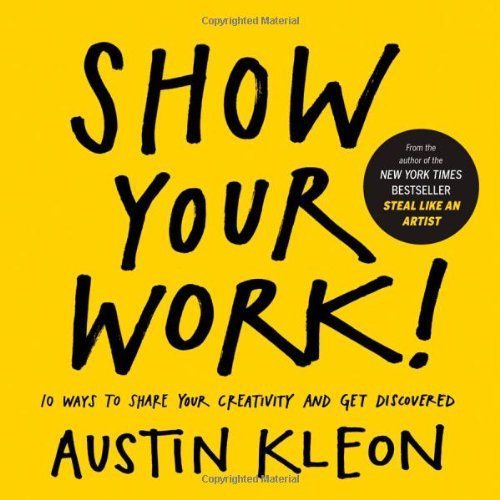

Austin Kleon's writing style is fairly basic but pleasant enough. He does a solid job of explaining what he means, if you were in any doubt about it.
But one of the reasons it's such a quick read is that there is very little substance backing up these basic ideas that he is presenting. He gives you the concept but doesn't present any methods of execution. I guess that is left as an exercise for the reader.
Honestly I've only ever read maybe three how-to/self-help books that I would say actually helped me. In each case those books gave specifics, not generalizations. The industry however is very much built on genericization and that's exactly what we have here.
Quotes From People Who Know
The book is packed with quotes from successful people (who all also happen to be active on the internet) and surprise surprise they generally agree with Austin's approach.
The idea obviously is to reinforce Austin's message. But it's a bit misleading because he never gives an opposing viewpoint any page time. If you read this book you'll come away thinking that all successful creative people take the same broad approach which, factually, they don't.
The other problem is it relies on a popular logical fallacy. The notion that since someone is successful they know why they are successful. In truth though, most do not actually know this. They can speculate but they have no way to know what level of success they would have achieved taking a different approach.
It's a common technique in how-to books and there's a certain used-car salesman feel to this level of hard sell (particularly when I've already got the book).
Where's The Beef?
If you skim the sample available on Amazon (which is very brief and mostly contains the contents pages) you'll see the titles of the chapters (the 10 ways) and those titles pretty much tell you what you're going to get in each chapter.
The problem is there's really not a lot more substance on offer. Kleon explains the why of each idea, but he really doesn't go into how. And for me at least, the how is the bit that really matters. This is the bit where, almost invariably, how-to books fall down.
Instead of wasting page after page with content free quotes, how about actually mapping out some examples of putting a plan into action?
A Collection of Tweets
The author mentions at one point that the origin of this volume is in a series of tweets. It shows.
I don't actually have an issue with any of the ten ideas (though I'm not doing the meet in real life thing ever) but as presented here they are completely unconnected.
There's no flow to the book. No sense of one element building on the next until at the end you have a plan. Instead… here's a thought. Here's another thought. Here's a third thought.
So it's shallow, disjointed and really not remotely original. And yet it's being gushed over. So, if nothing else, it should encourage you that utilizing this approach to publicity can work for a creator.
Who Is This For?
Are you struggling with or new to social media?
Do you want to promote yourself and your creations but have no idea how?
Are you looking for a quick read that hits the high points of the accepted wisdom on how to do this?
Do you just need something to spark your own ideas?
This one might be for you.
Did You Like It?
No, not really. I found it frustrating and overly shallow. I can honestly say there wasn't a single idea in there I hadn't heard before. It's nicely presented, but I don't understand the rave reviews. I might have felt a little more lenient if it hadn't been so heavily recommended.
Show Your Work!: 10 Ways to Share Your Creativity and Get Discovered
by Austin Kleon [Workman Publishing Company]
Price:
$7.56
£6.29
CDN$ 10.60
EUR 8,17
EUR 10,10
The post Book Review: Show Your Work!: 10 Ways to Share Your Creativity and Get Discovered by Austin Kleon appeared first on eoghann.com.