Leonard D. Hilley II's Blog, page 11
October 23, 2018
Niña and Pinta in Marietta, Ohio (10-21-2018)
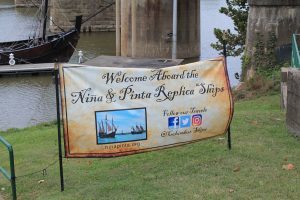
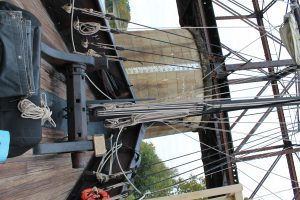
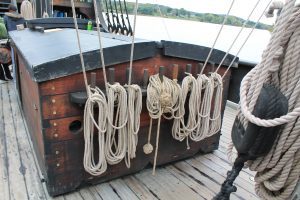
This past weekend in Marietta, the replicas of the Niña and Pinta docked on the Muskingum River. They arrive at Marietta every three years, so while they were docked, we decided to take the opportunity to see them, in spite of the weather. With the windchill, Sunday morning’s temperature was about 20 degrees F. Still worth every freezing moment.
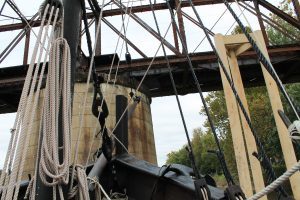
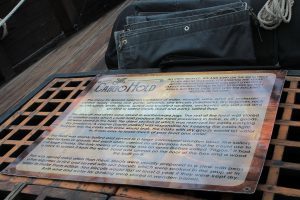
The ships were much smaller than I imagined from how I had envisioned when studying history in grade school. Anyway, I thought I’d share some of the photos. Their next stop is in Charleston, WV.











October 18, 2018
Mrs. Morton
For twelve years, I rode the school bus to Plainview in Rainsville, Alabama. I never regretted the ride, even in high school because I understood that financially I was not going to have my own car until I bought one for myself.
These trips to and from Plainview on the bus gave me time to do my homework before getting home, read books, or allow my imagination to flow while staring outside the bus window at the fields, pastures, and woods passing by.
During the winter, this leisure time, so to speak, gave me the perfect opportunity to scan the leafless trees and spot hanging cocoons. I found a lot of cocoons like this but since I didn’t have a car, I had to hike my way, often several miles, to reach those trees and claim my prizes. I never complained about walking because I enjoyed viewing the Pleasant Hill Community at a slower pace. And sometimes, I found tools and other items that had fallen off of trucks on the side of the road.
When spring rolled around, I paid attention to the edges of the roads, watching for aluminum cans. The only way I made money to get things I wanted during my high school years was by picking up aluminum cans, deposit coke bottles (age-revealing, eh?), collecting/selling old glass bottles, and mowing lawns. As deposit bottles faded from circulation, the use of aluminum cans increased, and I could fill plastic feed sacks of cans in a few hours on a Saturday. So on my Friday bus trips, I paid careful attention to which roads had more aluminum cans and headed out early on Saturday to pick them up.
On one particular day, I knew which roads I’d take, but for some reason, I noticed a dirt road linked into the main road I had never paid any attention to before. I decided to see where this road ended.
The road itself was uneventful and wasn’t nothing more than a dirt road for farmers to drive their tractors to get to their fields. I didn’t find any cans as I walked and about a mile later, I came upon the dead end. The dusty road ended at the edge of a small grove of pine trees. To the right side of the road was a small house that resembled a cottage and a single-wide trailer was on the next lot. Neither of these are there today.
Although I wanted to walk partway into the woods, I decided to head back the way I came. Then the small dog at the house yapped. An ankle-biter usually bites quicker than a large dog. At least, that has been my experience. Believe me, I will never turn my back on a feist again.
Anyway, this dog yapped and the door opened. A short white-haired, elderly woman stepped outside. She asked if I was picking up cans. When I told her I was and had not found any on the road, she said that she might have some, if I wanted them.
Her old dog calmed down and soon wagged its tail, so my ankles were safe.
Soon we discovered that she didn’t have any aluminum cans, but she found old pie tins and scrap aluminum foil–neither of which could be sold where they buy aluminum cans. Then she hefted out an old stainless steel canner pot that weighed at least ten pounds. Even though I told her that they wouldn’t buy it, she insisted I take it, just in case. By the look in her eyes, she genuinely wanted to help and reluctantly, I placed the canner into my bag of cans so I didn’t hurt her feelings. Even if I couldn’t sell it, we could use it as a watering pan for our chickens.
She introduced herself as Gladys Morton, and then she asked if I did lawn work. When I told her that I mowed lawns, she hired me to mow hers after it warmed enough for the grass to grow. I agreed, and then I lugged that heavy stainless steel canner down the road.
What weighs about ten pounds seems like a hundred after several miles of walking. The thought of throwing it in a ditch crossed my mind several times, but I wasn’t one to litter. In fact, picking up cans was quite the opposite, so despite the heaviness of the cooker, I carried it home.
I cut Mrs. Morton’s yard that summer, and by the end of summer, she was attending the church where my family went. We became good friends over the next few years. Right before I left for the Rising Seniors program at Berea College in 1985, she handed me twenty-five dollars, as she knew we didn’t have much money. At the end of summer, when I returned, she told me that she was moving into an elderly apartment complex in Rainsville at her daughter’s insistence. Her daughter worked a lot and often out of state, so she wanted her mother closer to other people. And also because someone had tried to break into her daughter’s trailer on the next lot from her house.
She no longer needed me to mow since the apartments had a maintenance crew to take care of that, but I visited her at the apartment where she had made lots of friends. The good thing about those apartments was the little community center where the residents could go to play games and cards and pass the time.
She still gardened, and to my surprise, she showed me the large nectarine tree at the side of her window. She told me about how she had eaten a nectarine and how sweet it had tasted, so she kept the pit and planted it at the side of her apartment window. Her neighbors had said that it would never grow. That’s not something you tell a lady with a green thumb. They had never seen all the flowers, shrubs, and vegetable plants she had at her former home. In the nectarine tree’s third year, she harvested seven nectarines.
During the times I had mowed her lawn, she learned about my interest in butterflies and moths, so she was always giving me cuttings of heirloom plants, seeds, and sometimes she even divided her plants and bulbs, giving some to me.
She and a couple of her friends traveled to Mexico. When she returned, she brought my sister a little Mexican jewelry box. She gave me a silver tie clip and she handed me several seeds she had taken from a tree similar to the Mimosa tree in Mexico. I had placed those seeds in my pocket but somehow lost them before I got home.
After a couple of years, she had open heart surgery. She recovered quite well, but she became nervous and uneasy around visitors. I visited her a couple of times before moving to Kentucky. After moving to Kentucky, we seldom got to travel to Alabama, and I tried over the years to contact her, but never found where she moved.
But, the best treasure I found in my curious quest to see what lay at the end of the road was the wonderful friendship of Gladys Morton; who had, at the time, lived in partial isolation and loneliness. You never know what awaits ahead unless you take the time to explore.
Blessings to you, Gladys Morton.
September 1, 2018
Toy Story
Almost everyone knows about the movie, Toy Story. While I know the story is purely fiction told from the toys’ point of view, the movie has some emotional bearings for me. Not that the toys ever come to life–though when they somehow disappear, one wonders–but the memories these toys imprint upon our minds stay long after we’ve stopped playing.
From January of this year until early August, our daughter and our grandson lived with us. Our downstairs is a large open room where he kept all his toys and played. He never wanted to play alone, and whether it was me or someone else, he asked the same question constantly. “Will you play with me?”
Of course, each of us spent time playing, but at three years old, he didn’t want to play by himself. He often demanded for us to play, and we did as often as we could. He never fully understood that we had other things we needed to do. Even if you played two straight hours, he’d get mad when you stopped playing.
I enjoyed the time I spent with him, and we played games with Loc Blocs. As a kid, we never were able to afford Legos, so our parents had bought us Loc Blocs instead. One of the things we did to occupy our time had been building Jupitains from the blocks. We used our imagination a lot, and I wanted to pass this on to my grandson. I went to eBay and bought several big sets of Loc Blocs, as they are no longer sold in the United States.
So he and I built a lot of Jupitains, and surprisingly, he loved playing with them. Compared to little action hero characters he has, these Jupitains are rather bland, but he spent hours with me on different adventures.
 Jupitains made from Loc Blocs
He helped build dungeon terrain, and we set up dungeons with the Dwarven Forge dungeon sets I have. We set up various scenarios, but instead of using regular knights to explore the dungeons, he insisted we use our Jupitains, which had to fly from their planet and land outside of the dungeon. They had their little ray guns to use whenever they were confronted by monsters inside the dungeon. He never got tired of setting up different dungeon designs, either.
When we went to a craft store, he’d see something and say, “That would work good in our dungeon.”
About a month ago, our daughter got her first apartment in Kentucky, and we helped them move their stuff in. The apartment is too small for the number of toys our grandson has, so a lot of his toys were left behind in our basement.
For several weeks, I contemplated sorting through his toys and putting them away, but when I looked at them, I simply couldn’t. They were in the last arrangements that he had left them when he had last played. A part of me thought about the movie and how the toys were waiting for him to return and start new games. The memories of the games we had played still lingered, and day after day, I walked past them to get to my office, and the silence of him not there to play haunted me.
About a week after they had moved into their apartment, I chatted with my daughter on Facebook. She said that he had been feeling sad and upset. I figured most of it was due to being in a new place that was unfamiliar to him. So I took pictures of the Jupitains and uploaded them for him to see. Then I took a picture of one of the Fisher Price little people from when we had pretended an area had been flooded near the ocean. All the other little people were on a ship but this one was seated upon a toilet.
On the day when this scenario played out, he had been looking the other direction, and when he looked back, he saw the little person on the toilet. I had the little person sing, “Oh, I’m floating on my toilet in the ocean … I’m floating on my toilet on the sea …”
He laughed so hard that tears streaked his face and he had a difficult time breathing. Seeing him laugh like that tickled me, and we both burst out loud laughing. But then when he tried to sing the song, too, he’d get tickled again. I’ve seen him tickled before, but never like that.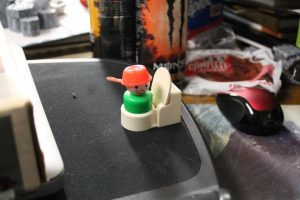
So these were the pictures I sent him. My daughter said that I had made his day. Fond memories are what I hope he always holds about the times we got to play games together. I miss him and his laughter and cannot wait until we get to spend more time playing games.
Today, I finally worked up the courage to sort through his toys and put them away. It was bittersweet and something I wanted to share with others. Spend time with your kids and grandkids. Play games with them. Even if it’s only a half hour a day, the memories last a lifetime.
August 31, 2018
Home Alone
When my younger sister and I were growing up, we seldom had a babysitter. The philosophy seemed to be that children were in more danger staying with strangers than staying at home alone. But another danger of being left alone at home was that we didn’t have a telephone. So if something bad happened, we didn’t have any way to call for help. Looking back, I sometimes wonder how we survived.
I was a good kid, but curiosity can kill you. Well, unsupervised curiosity can. From time to time, I did a few ‘experiments’ that weren’t safe. On one of those days when our parents left us home alone while they went to the grocery store, I got bored.
I was about nine years old, and we had a huge box of matchbooks with different pictures of bicentennial events on each booklet. The box was in the top cabinet above the sink. I climbed onto the counter, and my little sister came into the kitchen and asked what I was doing. Her entrance into the kitchen caught me off guard. I turned and lost my balance, falling off the countertop and onto the floor.
I’m still surprised that I didn’t get hurt or suffer any bruises. I lay there, sprawled out, and for meanness, I closed my eyes and pretended to be unresponsive as she crossed the kitchen. Frantic, she shook me and kept yelling my name. After a minute or so, I opened my eyes. She was relieved, but my attention returned to getting that box of matchbooks.
I don’t know why it is, but I’ve always like the smell of a struck match. Still do. I only use matches to light candles, even today.
After climbing back onto the counter, I reached the matches and took them. I lowered myself to the floor and she asked what I had planned to do. I showed her the various historical scenes on the back of the matchbooks. I kept one booklet out for myself, and she asked me how to light them.
I tore off one of the paper-sticked matches and turned the booklet over and struck it. I blew it out over the sink and ran water over it. She wanted to see me light another one, so I did. But this time when I struck the match, the cover of the booklet came up and the flame of the match touched another match attached to all the others. Immediately the match ignited and all of the matches burst into a flaming fireball. I tossed the burning matchbook into the sink and turned on the water. Smoke was everywhere, and I was fortunate to have been at the sink when that occurred.
After extinguishing the matchbook, I wrapped it inside a wad of paper and hid it deep inside the garbage bag in the kitchen. Then I quickly climbed up and put the box of matches on the top shelve of the cabinet. We opened the door and a window to let the breeze pull the sulfur smell outside. By the time our parents returned home, the smell was gone. Another moment of good luck. I cannot imagine the spanking my father would have given me if he had discovered what I had done.
Besides being left at home alone during the summer, I was a latchkey kid after school. Both my parents worked at the time, and one day the weather became severe. The lightning struck all around our house. The rain was so heavy, I could barely see the road through the front windows. This was before cable television during the days of the towering antennae bolted to the sides of houses, and when, if you were lucky and the wind blew in the proper direction, you could find three television stations to watch. However, the weather was so bad, I was unable to watch anything.
My sister had fallen asleep on the couch. Even the worst of the rattling thunder didn’t awaken her. Without television, my mind remained focused on the storm. I periodically looked out to see if one of our parents was turning into the driveway.
In between those times of looking out, someone pounded on the back door under the carport. I looked out the front window and a white car with its headlights on was parked near the carport. I didn’t recognize the car. The knocking continued. I opened the door and looked out as the lady headed back toward her car. She heard the door open and turned.
“I think a tornado is coming,” she said. “We need to get into the ditch outside.”
The rain poured and lightning flashed around the house. She was drenched from having walked a few feet from her car to the door.
“The ditch is the safest place,” she said.
I glanced toward the living room where my sister was still sound asleep on the couch. I didn’t know the woman, so I replied, “I’m sorry, but my parents told me not to talk to strangers.”
“I understand that,” she said, “but …”
I pulled the door closed, and several minutes later, after the rain slacked, she backed out of the drive and drove away. I later learned who she was and she went to the church down the road. She apparently had known that we were home alone and it had terrified her. She truly wanted us safe.
If there had been a tornado on that day, it missed us.
Thinking about our situation when we had been left alone as kids, and years later, after I have children of my own, there’s no way I could ever have left my children unattended. Regardless of how good a child might be, no one can predict what might happen while parents are away or what kind of mischief a kid can get into.
August 22, 2018
Kudzu Monsters
For those of us who grew up in the South, one cannot escape the sight of the Kudzu that covers the sides of the roads, entire forests, and power poles without prejudice. The thick coarse vines meander like beds of winding snakes. Even more frightening is how fast a vine grows: 12-14 inches PER DAY. On an abandoned road, the vines could hide the pavement within a few days. Cars and trucks on the busy roads are what prevents Kudzu from stretching to the other sides.
Kudzu, once established on a plot of land, is nearly impossible to destroy. Cutting a vine in half only produces two plants instead of one. The chopped vines are quick to root and are problematic.
During my youth and with my creative imagination, these vines took on new forms once the sun began to set. Masses of these clinging vines clumped over trees and on the power poles often looking like hunched monsters ready to attack anyone foolish enough to walk into their reach. While the vines couldn’t do such a thing, seeing their odd shapes actually helped enable my mind for writing fantasy, with many ‘What if’ prompts.
I first noticed their strange changes after sunset when a friend and I were on a wagon-ride and riding horses through Big Wills Valley in Alabama. We had been riding for over twelve hours and were still a couple hours from home if we continued riding alongside all the horse and mule-pulled wagons. We decided to leave the group and head home ahead of the others, so we tapped our horses’ flanks and galloped away.
I suppose we were a few miles ahead of the group by the time night had fallen. The moonlight kept the old chert road lit, but the shadows of the Kudzu-covered trees at the edges of the roads played tricks on the mind. As we rode, the shadows constantly moved, which made the monstrous shapes look like they were alive. My friend was several years younger than I, and when I pointed out my observation of these ‘monsters’, he became nervous. Of course, it didn’t help when I also brought up the supposed sightings of Bigfoot in this particular area (the news had actually interviewed people living there about the sightings). He wanted to get home even faster after that and challenged me to race for a while.
He rode an old mare named Lily, and I rode my stepfather’s quarter horse, Chief, which happened to be an extremely fast runner. Chief left the other horse behind in a matter of seconds. I glanced back and noticed my friend frantically trying to get the horse to run faster, as the trees to both sides of the road were covered with the Kudzu. I laughed to myself for a moment and Chief sprinted from the spooky tree-covered section of the road to an open area.
On both sides of the road were pastures and a few yards ahead were two chicken houses. Chief galloped furiously and had no intention of slowing down. He loved to run and who was I to discourage that?
I was glad that we had gotten away from the wooded area that darkened the road and felt a moment of relief at the safety lights that lit up the road near the chicken houses. No more shadow monsters playing tricks on me.
My friend was pleading for me to slow down because Lily could not keep up. To my surprise, something to my right blurred from in between the two chicken houses and came right at me. At first I didn’t know what it was. I only saw that it was furry and dark and larger than a Saint Bernard.
With the talk of the kudzu looking like monsters and the Bigfoot sightings, seeing this animal alarmed me for a moment until I realized it was a calf that must have gotten out of the pasture. The sound of the horses’ hoofbeats apparently frightened it, and it tore off in front of Chief, which was a problem in itself. Chief hated cows. Not disliked, not tolerated–he hated them. The irony was that my stepfather had sent the horse to be trained at a roping school, and the instructors had told him that Chief was one of the best horses to rope off of because he was bent on catching the bull, even if the rider missed with the rope. They swore the horse would kill a cow if necessary.
And this calf unknowingly challenged Chief to a race on the chert road. I have to give the calf some credit. I’ve never seen a calf run as fast as this one. And if Chief had even thought for a moment about slowing his gait before seeing the calf, he suddenly had gotten a second wind. The chase was on!
At this point, full gallop was no longer exhilarating and fun. Barbed wire fences were on both sides of the road. I had no interest in getting my legs shredded and worried that might just be how my night ended. I pulled back on the reins, but Chief ignored it. He wanted to stop that calf.
The little calf kicked up dust and Chief huffed furiously panted on its heels. The calf couldn’t possibly keep up its pace, and luckily it was smart enough to take a sharp right at the end of the next chicken house, somehow squeezing through the fencepost and the chicken house wall. Chief turned sharply to follow, but I guided him back onto the road and finally coaxed him to slow down. Even though the calf was no longer in sight, Chief kept looking back, hoping to find it.
My friend and I rode at a slower pace until we reached home without incident. The day of riding and the spookiness of the night and the unexpected calf had given me a night worth remembering.
There was something about those days during my teen years that helped shape my imagination. The summer nights held a different sort of pace. Now, time seems to go faster than I wish it did. I find myself outdoors at times thinking about those years, thinking about how growing older was so long away, and now it’s here. Times of reflection soothe the soul. I sometimes sit outdoors and absorb the sounds of nature, the sweet smells of the changing seasons, and these simple things free memories from my youth when I worried less about the hardships of the world and concentrated on the beauty nature has to offer.
July 14, 2018
Setting the Tone of Voice
In my previous post, I mentioned how the reader sets the tone when reading letters/emails. The reader cannot see the writer’s facial expressions or hear the tone of voice, so messages received via email can often be misinterpreted.
Constructive criticism can be mistaken as a brutal attack, so if things aren’t clear, it’s best for the reader to follow up with questions and not to retaliate with insults. Take a breath, reread the message, and if the response still seems as an attack, call them and ask for clarification, if you value the relationship with the person.
Sometimes the writer tells a joke and that, too, can be taken the wrong way. Let me give a personal example.
When I was an undergraduate, I was working on my first sci-fi novel, Predators of Darkness, which has a great deal of genetics manipulation involved. I had taken a genetics course and the professor was a wonderfully great person. He liked to have questions asked that challenged his mind about genetics.
I wrote an email to him one evening, perhaps the next semester after I had taken genetics under his instruction, and I asked him specific questions about what a scientist could do to manipulate the genome is such a way for creatures to alter their appearances. While I knew scientists could never achieve the science of these bloodthirsty beasts in my novel, I mentioned that I wanted the science in the book to be realistic in its approach. I sent the email, eager to get his feedback.
For whatever reason, I was unable to check my email the previous day. This was when the Internet was just being established, and the only way I had to check my email was by going to the campus computer center. Cellphones weren’t yet a common thing.
So two days after I sent the professor the email, I went to the computer lab and logged into my email account. I had two emails from the professor, and I was quite excited. I opened the first email, which had been his reply from the night I had sent my questions, and my heart dropped into my stomach.
The email stated: “I do not like the way that Hollywood and novels use science, and it will be a cold day in Hell before I reply to these questions.”
Wow. I was crushed and now fearful of opening the second email. I wasn’t sure how to handle what I had just read. It just didn’t seem like his typical reply. How bad was his next email?
The second email had been sent the following morning after my queries. I braced myself as I opened it, not certain what to expect. He opened with: “Well, last night was pretty cold (heavy frost since it was winter) … Then he proceeded to lengthily answer my questions with all the possible genetic experiments that could be performed to achieve possible solutions for the science in the novel.
His first email had been a joke. Perhaps my questions had challenged him to figure out an answer to the questions and maybe had him spinning possible ideas? I don’t know. I cannot imagine how I’d have taken the joke had I answered his email the evening he had sent it. The tone was set by me, and even now, there’s no way I would have thought of his first response as a joke. Emoticons didn’t exist yet. I would have been totally devastated until reading his second email the following morning, if I opened it at all. However, the information he gave me in the second email was priceless.
So remember to be careful in how you interpret someone’s email response to your questions or written queries. If you’re a writer, sending out mass queries to agencies across the country, don’t despair when you get a rejection. In fact, if an editor or agent actually gives you a personal response and not a form rejection, rejoice! That usually means they’ve like at least something with your proposal or submission. Lack of time is usually why agencies send form rejections. Another reason might well be that they understand how readers might misinterpret their feedback and don’t want to receive insulting replies.
If the conversation between you and another person is over an important issue or a personal problem, or if you’ve had a heated argument in person and want to apologize and reach out, it’s best to speak in person, so you don’t misunderstand the other person’s response. Call them, visit with them in person, or Skype with them so you don’t have the coldness of an email that you will place the tone upon. Important conversations should always be in person.
Until next time …
Thicker Skin
Time is a precious commodity.
For me to accept an editing job is rare since I write four novel series. So, if I take on the task of editing for a client, it’s because I see potential. It’s not about the money, and usually, I charge far beneath what others with my credentials do.
Rest assured, if you request to hire me to edit your work, and I accept, I’ll invest the time. I’ll work hard to get your script polished and ready to submit to an agent, producer, or publisher. If it’s a novel, I’ll proofread, copy-edit, and even ghost-write when requested. More than anything during this process, I want to see you succeed.
After a recent editing job, I had an epiphany and any future editing jobs I undertake will be studied with greater scrutiny before I offer a contract. But due to several personal life factors–one being our second grandchild being born in another state and us traveling to be there–I failed to notice the obvious with this editing job until after it was too late, which was a combination of excitement and weariness.
Any editing job I perform comes with a contract signed before I start the work. And folks, if you’re an aspiring writer and the editor you consult doesn’t offer you a contract, by all means, run and seek another editor. For me, it’s standard. A contract not only states the charge for editing services, it details what those particular editing services are.
Red flag number one was this writer questioning why we needed to have a contract. I simply replied that a contract protects you and it protects me. With the contract signed and money paid, I went to work.
In particular, the writer wanted the dialogue critiqued and to sound more realistic. The best thing about dialogue, if done correctly, is that it defines the characters. Their personalities are enhanced, and the reader learns more about them. In a screenplay, you don’t have the luxury of shining the spotlight with exposition and excessive description. With a screenplay, every word needs to be top quality. Also, if one word can properly replace two-to-four words, use the one word. Brevity is key in a script.
Only several pages into the script, I noticed a lot of incorrect formatting, consulted the writer, and explained the issues. I was told to make the corrections, as this needed to be the best possible and two other ‘editors’ had worked on this before me (perhaps another red flag?).
Red flag number two: Before I even started the process of editing, I’m asked how I like the story. “Don’t know. I’ve not read it yet.”
Red flag number three: I opened an email with bold, large text that asks if I’ve finished it yet. (The contract stated I had until Friday. This was the Monday before the deadline.)
Red flag number four: “I have twenty-something people who want to read this. When will this be done?” Still days away from promised deadline. Why are you already promising to show this?
Red flag number five: I’m told four days before the deadline that a ‘producer’ wants to read it that night.’ Why, when the edits aren’t done?
Red flag number six: Dangles a half script and an amount to pay me once these edits were done. Sorry, but no. I don’t edit works that aren’t complete. I didn’t bite.
Red flag number seven: Too many complements on my ‘creativity’ without having yet received the edits. ‘Singing praises’ about me to others without yet receiving the edits. Wasn’t flattered.
Red flag number eight: I discovered the writer had been bashing others on a forum, trying to come across as someone with great experience.
With permission concerning dialogue, I broadened the conversations to give better insight. In order to follow the proper 3 ACT structure for a screenplay, I had to rearrange certain elements to correct the proper pace but kept the pertinent information/dialogue as the writer had placed.
Finally, I had everything edited, submitted the edited screenplay, and a 9-page summary of the changes and why certain things needed to be corrected. I breathed a sigh of relief, as I had put my heart into polishing/fixing the writer’s project and waited for the response.
I received an email the next day about how the writer couldn’t find the revisions and had spent hours ‘fixing’ my corrections. I get the ‘new’ screenplay back with what the writer called, ‘a revised version of my revisions.’ What? AND, ‘I need someone to go through it all again.’ By this point, most editors/publishers would view this as a ‘client from Hell‘. I opened the file and on the page that came up, I noticed all the formatting issues I had corrected (and had been asked to fix) had been reverted back to what they were before. Complete sentences had been turned into comma splices, both in dialogue and in Action scenes. Words that I had corrected were misspelled again.
“I’ve decided to use the original ending and dialogue.” I’m fine with that, but the reasons for my edits were to fix the pace in Act 3, work past the climatic scene, and wrap up the main plot and the one massive hole in the subplot, which by the ending had not been resolved. Whatever ‘praises’ for my talent she had expressed were now soured and somehow it was all my fault. I had invested a lot of time, three times what I should’ve spent to correct the screenplay for far less than other editors would have charged. I took some time and researched what other editors would’ve charged and got the average price. For all the work and the time invested, I should’ve charged $550.00. I charged far less than that. Now, this person wanted me to revise incorrect things I had already corrected and this person had made incorrect? No. I had fulfilled my job and my part of the contract. That’s why I have a contract signed before I do any work.
I was done and told the writer so. The next day I received an email that stated I was a ‘haughty person and unkind.’ Hmm. I didn’t reply. Silence is golden and I wouldn’t be baited. I had realized far too late what type of client I was dealing with and knew it was best to sever the ties. If I were ever contacted and asked to edit for this writer again, the reply simply would be that “there’s not enough money you could pay for me to work with you ever again.” I don’t need drama. I write drama, but I don’t star in the production. I’ve better things to do with my precious time.
Optimism I like. Blind optimism, where one cannot see his/her faults, is deadly for one’s aspirations. Unless you’re willing to accept revisions or at the very least, suggestions, you’re not going to learn as a writer. You’ll never mature.
Sometimes, writers take constructive analysis personally and misread intent, thinking the editor is personally attacking them when it’s simply not the case. If you hire an editor, you’re not hiring someone to ‘gush over’ what you’ve written. You’re hiring someone to help you find errors, look for plot holes, and hopefully help you get your script polished to where it’s ready to be submitted. It’s not the time to become defensive and attack the one you hired to critique your work.
A good editor is doing his/her job. Now, does that mean you have to accept everything the editor says? No, of course not. But when a movie script has obvious formatting flaws that need corrected and an editor or reader has corrected and pointed this out, it’s time to reflect on those edits.
Read the comments given. Step back and wait a few days. Reread them and then look at the script with new eyes. We all hold our work sacred, which makes it quite difficult to edit and evaluate ourselves; whereas, others see things we cannot. Family members and friends are not the ones you want telling you ‘how great it is‘. It’s not that they’re going to lie to you, but they don’t want to hurt your feelings (if they don’t really like it), and unless they’re professional editors, they’re simply not qualified.
Another thing to keep in mind. If you hire an editor online and will receive your edits/critique via email, you need to disregard tone. That’s difficult. Emails and forums don’t give you the actual tone. The reader sets the tone, and if one is prone to be offended by corrections, the tone might come across as condescending, even when it isn’t meant to be. Face-to-face, you hear the tone and see the facial expressions, but in an email or letter, those are absent.
My explanations were never condescending, and those I have worked with at the colleges where I’ve taught can verify that I have a genuine concern to help others improve their writing. I have returning clients, because I am thorough and explain the reasonings for changes or give suggestions to better clarify situations or characters.
I was never condescending to this client. In fact, I praised the great logline for the screenplay. The writer had nailed it! I liked the characters but their personalities needed expanded (which I had attempted to fix). The conflict (urgency) and pace needed rearranged in order for the screenplay to flow smoother. Scenes needed to be cut. Scenes need to be added. The size of the script needed to be fifteen pages less. In the 9-page analysis I sent, I explained the details for all of these issues. The words fell on deaf ears. Instead of acting like a professional, the writer emails and insults me, as if I’m the enemy for trying to help you make the manuscript better.
In 1993, when I became serious about my writing, I read about the success stories of other authors. I read interviews with agents and publishers. I read ways to better improve my craft. The majority of publishers, authors, and editors advised writers to grow ‘thicker skin‘ when it came to rejections. It’s simply part of the process and no author is immune to it. And believe me, I’ve received hundreds of rejections (I have kept them, too) over the years, but I kept writing. I never whined. I never blamed anyone else. I studied the craft. I was determined to become an excellent writer.
One thing I’ve never been is a haughty individual. When my first novel was published, I understood that not only is my novel the product; I am the product. I must sell myself along with my book, which made me understand that I didn’t need to burn bridges. I needed to show respect to others, as my reputation is at stake.
Kindness goes a long way, and I guess my skin is thick enough to ignore shallow insults.
Until next time ….
June 21, 2018
Wells Fargo: Robbed by the Stagecoach.
Whenever I think of a western stagecoach, I often think back to the old western movies where the driver and passengers of the stagecoach are being held up by highwaymen, robbed, and sometimes killed. But today the stagecoach, Wells Fargo, is the one doing the fraud and robberies.
In May 2018, Wells Fargo (after several years of scandals, huge penalties, and staggering fines) launched a commercial, which campaigned “Earning Back Your Trust.” This wasn’t something that they needed to prove to us, as we have financed a car through them and never once had any issues. In fact, we trusted them enough to have our furniture financed through them as well.
Imagine our surprise when this past Monday (June 18th), they double-charged our bank account for the furniture payment. I’ve never trusted paying any company via online payments (ours isn’t set up to autopay), and Wells Fargo has reinforced my skepticism. Since the extra payment was not authorized by us, I went online and began searching to see if others had suffered such theft as well. What I discovered was more than I expected.
The previous weekend Wells Fargo suffered another “glitch” and others were double-charged payments like they had been six months previously (almost to the date). We were not part of that first carnage. In addition to this, thousands of their banking customers were unable to use their debit cards and were being declined over this past weekend (https://twitter.com/Ask_WellsFargo/st...). Imagine the humiliation of trying to pay for a meal at a restaurant and having your debit card declined multiple times when you know you have money in the bank.
Thankfully, we don’t personally bank with Wells Fargo and only have an online payment. However, others had suffered the same issue as us by having duplicate transactions taken from their bank. Here’s Wells Fargo’s Tweet:
Wells FargoVerified account @Ask_WellsFargo
The earlier issue with duplicate transactions has been resolved. We apologize for any inconvenience.
4:52 PM – 16 Jun 2018
Note that this “resolved” situation was two days before we were double-charged through their online payment process, so apparently the issue wasn’t “resolved”. I went to Twitter and replied to this and stated they had fraudulently double-charged us. I’m asked to DM and give information so they can “check” the situation, which might take two days.
My wife contacted them via the online payment page and received an email stating that the correction might take place within the “next two billing cycles”. What? Really? You took two payments but don’t want to credit back the extra payment that was taken?
Via Twitter, we’re told that we should hear back within two business days. Yesterday became 3 days and the extra $150.00 they stole still had not been credited back to our bank. We got an apology via Twitter DM and told it might take up to 10 days for a “resolution”:
“Rest assured, please expect a resolution up to ten business days from our receipt date. If our escalation team is unable to reach you by phone, a letter will be sent to your mailing address. Thanks. ^TL”
To put this simply, this is theft. Beware the dangers of paying online via your bank account to Wells Fargo, as they can apparently take whatever amount they want and take their sweet time crediting back the money. This is DAY FOUR and yet, they have not given back our money.
The skeptical part of my nature wonders if there ever was a glitch to begin with. They were recently fined $1 Billion dollars for “unfair insurance practices” (https://www.marketwatch.com/story/wel...). So if you double-charge thousands of customers, set on that money to draw interest, perhaps they earn back some of their losses? Who knows? Speculation on my part, but it almost sounds like money laundering, except it’s their customers they’re robbing and holding the extra money hostage.
In 2016, Wells Fargo was fined $185 Million dollars for fraudulently opening credit card accounts in customers’ names without their knowledge (https://www.nytimes.com/2016/09/09/bu...), which is astounding when you think about the level of fraud that was exposed. And a class-action settlement of $142 Million dollars was awarded to victims of this fraud (http://www.latimes.com/business/la-fi...).
In October 2016, Wells Fargo lost their accreditation with the BBB (https://www.cnbc.com/2016/10/20/wells...) and might well be the largest business to ever suffer such a low approval rating. So, it’s no wonder their new “ad campaign commercial” has disabled the comment section on Youtube, as the complaints against them have escalated to a point that even their loyal customers, like us, who had no previous problems with them, now look at the bank in a whole different light.
Day Four and still they’ve not credited back our money. What more to do? I contacted the FTC yesterday and am filing a complaint via: https://www.consumerfinance.gov/compl.... Today, I’m contacting the BBB, and well, there’s this blog to reveal the theft that we’ve suffered.
Understand something Wells Fargo, nothing’s “resolved” until you give back the money you’ve stolen.
Fatherless Day
On June 1st, if my father was still alive, he would have celebrated his 77th birthday.
Since his birthday coincided with the month when Father’s Day is set aside to pay tribute to our fathers, I spent several days trying to recall the very best memory or experience I ever had with my father. Days? Yes.
I couldn’t recall any particular day that stood out from all the rest. The numerous, bad memories surfaced quite readily. I fought and dug deeper, trying to find a good memory, but nothing ever came.
This isn’t a post to slam my father. It isn’t. This simply is my honest review of his time in my life. A saying that I’ve heard often is “Anyone can be a father. But it takes someone special to be a Dad.” I guess this is true.
He never connected with any of us while we were growing up. In fact, he abandoned his first wife and three children to marry my mother who was pregnant with me. When I was twelve, he left my sister and I’s mother for an underage teenage girl that was the same age as my older sister and only a year older than myself. She was 14. He was in his late thirties.
While he was married to my mother, he constantly belittled us. He was verbally and physically abusive, destroying any hope of self-esteem and if we showed any glimmer of talent, he’d find a way to discourage and bash it. He was a true narcissist and the world revolved around him.
Before he divorced our mother, he never came to any of my basketball games on Saturdays. He never wanted me to play any sports, and in order to try out for football, he ensured a test that he believed was impossible for me to achieve at the time. I had to do twenty-five consecutive pushups when he knew I could barely do one. To his surprise and dismay, I eventually succeeded and got to try out for the team. Before anyone thinks this to be a good thing, a test of perseverance to prove I wanted the goal (as I’ve tried to believe it was), you need to understand that he took the first opportunity he could find to strip this away from me. The incident came by my total humiliation with him throwing my shoulder pads at my coach during a scrimmage game on a Saturday in front of all the players, spectators, and parents. The only game he ever attended on a Saturday, too.
So when they divorced, a part of me was relieved. I didn’t have to face the verbal abuse or the beatings with a belt whenever I didn’t do whatever chores he wanted done by a specific time. But enough damage to my self-esteem had already been done by that point. I never blamed myself for the divorce (which is a normal phase for most children) because I knew the real reasons why they had divorced, which is a different story for a different time. But I questioned, for a time, as to why he’d left and didn’t keep in contact with us, his kids. Letters, phone calls, or an occasional visit was a rarity and often laced with more lies. He didn’t even attend my high school graduation, so he was never there for the important events in my life. Eventually, I stopped caring.
I spent most of my life trying to figure him out. I did a lot of soul searching, and I realized that I didn’t want to be this way with my children. In fact, I wanted a loving wife and a loving home from an early age, which was an environment I didn’t grow up in. I wanted to be a father that my two children would remember later in life as a man who loved them and made their childhoods fun.
As to whether I’ve succeeded or not, that’s for them to decide. But I was there when they grew up. I read to them, played games, and went to any school function they were involved in. We went on adventures at various parks, zoos, and they grew up with a bit of scientific fascination from nature hikes we took.
If they needed advice, I was there for them, and if they chose to ignore my advice, I was there afterwards to help them through. I wasn’t a perfect father by any means. I made mistakes. But, you know what? I never became the mirror image of my father, a man filled with excuses and never owned up to his faults or never apologized for his mistakes.
I chose my pathway, separate from his, and later in life my father laid out his excuse on Facebook as “I wasn’t a good father because I had a bad father.” See? No apology. The blame fell elsewhere. My take is that I had horrible parents but I chose not to be like them. I want my children to know my love for them and have fond memories of their early years. I hope they do.
The choices we make are our own.
June 10, 2018
An Early Father’s Day Gift
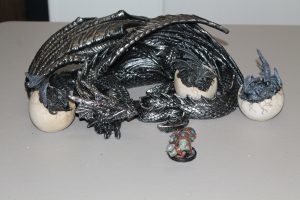
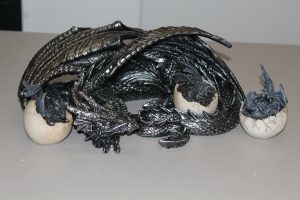 Just wanted to share what my wife bought me early as a Father’s Day gift. We found these at the Flea Market in Marietta, Ohio, last Saturday in the old Rink’s building. Definitely inspirational for writing fantasy or gaming.
I’ll spend some time this week building a dungeon room for these with Hirst Arts Mold tiles. We’ve actually built a good sized set with a lot of neat rooms that our grandson likes to play. I’ll try to update with some pictures soon.