Theodora Goss's Blog, page 51
August 31, 2011
Imaginary Shopping
Status report: I've finished revising Chapter 2 and the bibliography. All I have left is Chapter 3. I'll revise that tomorrow, and then put the entire dissertation together. I'll read it one more time over the weekend, and then I will hand it in. And that will be it until the defense.
I'm so tired tonight that I have no energy to write a post. So instead, I'm going to play a game. This is a game I used to play when I had absolutely no money, which was not all that long ago. Sometimes, to amuse myself, I would go to Newbury Street and look at all the shops. But since I had no money, I couldn't buy anything. I would just pick out what I would buy if I did have the money. I would go imaginary shopping.
I still like that game. Now I have more than enough clothes, jewelery, paintings, all the things a house and I need. I have almost too much. But I still like picking out the things I would buy if I had the space.
We can't go down to Newbury Street, can we? But we can go on Etsy. Let's visit some of my favorite shops. Here are some items for us to buy (mentally, of course).
The first item is a print called Human Nature from Shirae. The links, by the way, are to the places where you can buy these things, if you do actually want to buy them. I'm cheating a little with this first one, because I own this print. I just need to get it framed.

Next, how about this raku-fired vase from Suzanne's Pottery Farm? I think the colors would compliment the print perfectly.

And then we can buy some linen pillows from Cottage and Cabin. To be honest, I never actually buy pillows, because I can make them so easily. But I like these because they're simple and floppy, which is just about what I think pillows should be.

Now let's make sure we're as magnificent as our furniture. We're going to need an Icelandic Poppy hair ornament from The Faerie Market.

Which I think will go with this summer dress from L. Wang.

We still need something to go with the dress. Maybe a necklace from Parrish Relics.

That's probably all we can afford tonight. But it's fun going imaginary shopping, isn't it? I know it used to amuse me, putting things together in my head like that. It helped me to imagine the life I would want for myself, which would have these sorts of things in it.





August 30, 2011
What Bradbury Said
Status report: I'm very tired. But I'm doing very good work. As of today, I have the introduction and Chapter 1 revised and in final form. Tomorrow I will work on Chapters 2 and 3, and the bibliography. It might take me until Thursday to finish everything. Then, I will put the entire dissertation together. And then, I will read it one more time, make any final corrections, print out five copies, and give them to my committee members. It's strange, being so close – and feeling so tired. But it's a good feeling too, like being close to a finish line. Which I am, of course.
I've been thinking about that finish line. For along time, it felt like a cliff, as though once I got there I would somehow drop off. But I realized something. When I finish this project, I will have finished the last academic degree I ever want in my life. A JD and PhD are enough, thank you. (Where would I go from here, anyway?) I will have built the platform I need to do anything I want. So when I get to that cliff, I'm not going to drop off. I'm going to fly.
Anything I want to do will be possible. And what's more, I know exactly what I want. I want to teach literature and writing. I want a little old house with a large garden, with white gauze curtains in the windows, paintings on the walls, comfortable old furniture throughout. Lots and lots of books. I want the people I love around me. I want to surround myself with writers and artists and creative people in general. And I want to write, to tell the stories that are in me. I want one of those lives that are joyful and creative and individual, filled with beautiful things.
I think it's doable.
Today I had to go into the city, which meant the subway, so I brought along Ray Bradbury's Zen in the Art of Writing. I've only read a couple of chapters, but I love this book. I'm going to tell you some of the things Bradbury says. I think you'll find them as useful as I do. Here's one of my favorite passages:
"And what, you ask, does writing teach us?
"First and foremost, it reminds us that we are alive and that it is a gift and a privilege, not a right. We must earn life once it has been awarded to us. Life asks for rewards back because it has favored us with animation.
"So while our art cannot, as we wish it could, save us from wars, privation, envy, greed, old age, or death, it can revitalize us amidst it all.
"Second, writing is survival. Any art, any good work, of course, is that.
"Not to write, for many of us, is to die."
Bradbury is saying that art is a way for us to manage reality. I think that's true, and I know writing functions in that way for me. Writing is a way to process reality, which quickly becomes overwhelming. I walk around each day with a sense of just how overwhelming it is: all the people, all the things they're thinking and doing. The good and the bad of it – the cruelty, the darkness, the fear, as well as the brightness. Writing helps me sort it all out, figure out what is important. Here's what Bradbury says next:
"We must take arms each and every day, perhaps knowing that the battle cannot be entirely won, but fight we must, if only a gentle bout. The smallest effort to win means, at the end of each day, a sort of victory. Remember that pianist who said that if he did not practice every day he would know, if he did not practice for two days, the critics would know, after three days, his audience would know.
"A variation of this is true for writers. Not that your style, whatever that is, would melt out of shape in those few days.
"But what would happen is that the world would catch up with and try to sicken you. If you did not write every day, the poisons would accumulate and you would begin to die, or act crazy, or both.
"You must stay drunk on writing so reality cannot destroy you."
I love that last line. And you know, I think there's a lot of truth in what he says, melodramatic though it is. I don't write stories every day, certainly. But I do something related to writing every day, whether it's writing, revising, whatever. I think even writing this blog has saved me, this year.
Work that interests me, a house I want to live in, the people I love. And writing my stories. Those are the things I want. That's doable, right?





August 29, 2011
What King Also Said
Status report: I still have to read through the introduction, but once I make any final corrections, it will be done. Today I received the final comments on Chapter 1. I'll start on those tonight and finish them tomorrow. Then I'll start putting the dissertation together. It's going to be so exciting, seeing the chapters go together like puzzle pieces.
There are some things that are difficult to explain to anyone who hasn't done them. Writing a dissertation is one of those things. Anyone who has written one will understand immediately where I am, what it feels like. And what I feel like right now, anxious and unfocused and wanting so much just to be done. This afternoon I sent out a bunch of emails, and discovered later that about six of them had never gone through, and honestly, I felt like throwing my computer across the room. Particularly because the university email system doesn't tell me which emails went through and which didn't, so I think some important ones got lost. (It wouldn't have been adequate to throw my computer across the room, would it? I should have driven into the university and thrown the server across the room.)
After finishing my work for the day, I drove to Concord and went to the bookstore and a couple of antiques stores. (The bookstore: in the local authors section, it has Emerson, Thoreau, and Alcott, which I thought was pretty funny.) Then I bought myself some ginger ice cream and wandered around the old graveyard, having all sorts of thoughts about the brevity of life and how we have to hold on to the things we love, that make us feel alive.
Tonight I'm going to finish the introduction and start on Chapter 1. But first, here are some more quotations from King:
"Talent renders the whole idea of rehearsal meaningless; when you find something at which you are talented, you do it (whatever it is) until your fingers bleed or your eyes are ready to fall out of your head. Even when no one is listening (or reading, or watching), every outing is a bravura performance, because you as the creator are happy. Perhaps even ecstatic."
I feel that way about writing. Even if no one were reading this blog, I would try to write as well as I could, because there's a fundamental pleasure in doing it well. And that's more important to me that anything else, than how many people read my writing or how much I get paid for it. One of the problems with real artists is that they don't do it for the money, which means that it can be easy to take advantage of them if they're not as careful as they should be. They do it for the project, to create a particular project. I wrote The Thorn and the Blossom in part because it was one of the most interesting writing challenges I had ever received, and I knew I would probably never be asked to write something like that again.
"The real importance of reading is that it creates an ease and intimacy with the process of writing; one comes to the country of the writer with one's papers and identification pretty much in order. Constant reading will pull you into a place (a mind-set, if you like the phrase) where you can write eagerly and without self-consciousness. It also offers you a constantly-growing knowledge of what has been done and what hasn't, what is trite and what is fresh, what works and what just lies there dying (or dead) on the page."
I think King is absolutely right to emphasize the importance of reading, and honestly, I wish I could read more. I have such a long list of books I would like to read! Well, as soon as this is over. (Around this part of the book, King has a joke you really need to be an English major to understand. He says that Trollope's Can You Forgive Her? should be titled Can You Possibly Finish It? Which I think is incredibly funny, but then, I'm a literature geek. And I've read Trollope.)
"When I'm asked why I decided to write the sort of things I do write, I always think the question is more revealing than any answer I could possibly give. Wrapped within it, like the chewy stuff in the center of a Tootsie Pop, is the assumption that the writer controls the material instead of the other way around."
I think this is absolutely true as well – that the material comes to you, that it determines what you can do. An idea comes and you have to follow it. I've only ever been able to write for themed anthologies when I've already had an idea in mind that I could relate to the theme.
I've been thinking a lot about my life lately, because it's in such a transitional process right now. There are a lot of different directions I could go from here. But the direction I want to go in is toward writing: toward becoming the sort of writer I want to be and think I can be. There are several components to that. One is making sure I have enough time to write. Another is making sure that I have a writing community, that I have writers I can exchange manuscripts and critiques with. And another is making sure that I create a life for myself in which I can be happy, in which I have the people I love around me, and a place that makes me feel as though I belong, as though I can be at peace.
Sometimes I'm terribly impatient for those things to happen. But I do believe in fate, and I do believe it's taking me in the direction I need to go. And that I'll get there.





August 28, 2011
What King Said
Status report: Today, I revised the introduction. Well, most of it. I still have the footnotes to revise, but by the time I go to sleep tonight, they will be done. Then, I'll read it over again tomorrow and sent it to my readers. I don't have any more footnotes to write: I finished writing the last of the footnotes today. So as of today, there's nothing, literally nothing, left to write on the dissertation. It's all revisions. And to be honest, at this point I'm revising sentences for clarity. That's it.
It feels very good to be in this position. (Although my back aches and I can't seem to focus on anything. At all. By the end of this process, I will have been reduced to a wretched specimen of homo academicus. But the dissertation will be done.) I haven't yet received comments on the chapters, but those should come early next week. And once I've revised those, well, that will be it. The whole thing will be put together and in my committee's boxes on the 6th. And then I will collapse.
I did take a short break today to go to the bookstore. I bought Jorge Luis Borges' On Writing and Ray Bradbury's Zen in the Art of Writing. I don't know why all I can focus on now are books on writing. Perhaps it's because I can't actually write, and they keep me going. They give me something without taking effort or a great deal of concentration to read.
But I promised that I would talk about some of the things I liked in Stephen King's On Writing: A Memoir of the Craft. I'll just include four quotations here:
"At its most basic we are only discussing a learned skill, but do we not agree that sometimes the most basic skills can create things far beyond our expectations? We are talking about tools and carpentry, about words and style . . . but as we move along, you'll do well to remember that we are also talking about magic."
I like the idea of the toolbox, of my writing tools. That's how I feel approaching a story, as though I'm using my tools to create something. And yet, I know at the same time that what flows through me, what I have been trained to channel, is a sort of magic. Something that is only partly mine, that flows through me but is also from outside me. That I am a sort of highly trained conduit. And I always hope I have the training, the ability, to get that magic on the page. (Sometimes I don't.)
"There are no bad dogs, according to the title of a popular training manual, but don't tell that to the parent of a child mauled by a pit bull or a rottweiler; he or she is apt to bust your beak for you. And no matter how much I want to encourage the man or woman trying for the first time to write seriously, I can't lie and say there are no bad writers. Sorry, but there are lots of bad writers."
A little later, he says, "Writers form themselves into the pyramid we see in all areas of human talent and human creativity." For King, that pyramid consists of the bad writers, the competent writers, the good writers (which is where I think he places himself). "Above them – above almost all of us – are the Shakespeares, the Faulkners, the Yeatses, Shaws, and Eudora Weltys. They are geniuses, divine accidents, gifted in a way which is beyond our ability to understand, let alone attain."
What do I think of this? After all, I'm a professional teacher of writing, so this is within my area of expertise. I think there are bad writers, but they can be trained to be competent. And competent writers can be trained to be good writers. It's a bit like training a musician: you have to train the musician in technique, but you also have to train the ear, the instinct. I don't think you can train great writers. Greatness is something else, something it's probably better for all of us not to think about too much. It's something we should aim for in a sort of oblique way, never looking at it straight. Realizing it's there, but also realizing that if it comes, in a particular story, it's always a gift. It's a gift you prepare for by training, but not something that training will achieve. The great writers he describes are the ones who were gifted in that way on a regular basis. But they also aimed for it, worked on it, while perhaps focusing primarily on other things, like filling the Globe theater and not angering James I. Writing is not like singing: there are no natural, untrained great writers.
"But if you don't want to work your ass off, you have no business trying to write well – settle back into competency and be grateful you have even that much to fall back on. There is a muse, but he's not going to come fluttering down into your writing room and scatter creative fairy-dust all over your typewriter or computer station. He lives in the ground. He's a basement guy. You have to do all the grunt labor, in other words, while the muse sits and smokes cigars and admires his bowling trophies and pretends to ignore you. Do you think this is fair? I think it's fair."
First of all, my muse looks very different from King's! (Imagine North Wind from At the Back of the North Wind. That's what she looks like.) But one thing I admire about King, in this book, is his dedication to his craft. Despite the fact that he hasn't been taken all that seriously as a writer – something he's very aware of – he takes himself and his craft seriously. I want to be like that too. I think I am like that, or at least I try to be. Because I believe that creating art is one of the reasons we're here, as human beings. To the extent we're doing it, and trying to do it as well as we can, we're doing something noble and worthwhile.
I have more quotations I want to discuss, but they'll have to wait until tomorrow. This blog post is already long enough.
But it's good to think about writing while I'm not able to do it regularly, while I'm so absorbed in finishing the dissertation. Recently, I've been thinking about the past year. Sometimes it seems to me as though it's been a year of stasis, a year in which things didn't happen. But I think what actually happened was internal: I'm a different person now than I was a year ago. I still feel the same way, still want the same things. But now I have the strength and ability to make them happen. So this is going to be the year in which things happen. Just watch!
Oh, and did you want to see what my muse looks like? Here you go:

(This is an illustration for At the Back of the North Wind by Jessie Wilcox Smith.)





August 26, 2011
Chabon and King
Status report: Today I finished the story I needed to send out, and sent it out. So that's done. I received comments from my second reader on the introduction, and you know what? They're not heavy at all. I'll start revising the introduction tomorrow. I doubt the comments on the chapters will be heavy either. I think I can do this, get the whole thing put together by the 6th. I can't tell you how much I'm looking forward to that.
A long time ago, a friend of mine recommended that I read Michael Chabon, and I've been meaning to. But I've been so immersed in the dissertation that I haven't been able to read fiction. For me, reading means going deep, becoming completely immersed in a book. And since I've been immersed in the dissertation instead, since I've gone deep there, I haven't been able to do that. It's difficult to explain, but I haven't had the focus, the concentration, that I usually do. Which is difficult for me, to spend a long period of time not being able to read the way I'm used to reading.
Instead, I've been reading Chabon's essay collection Maps & Legends: Reading and Writing Along the Borderlands. At same time, I've been reading Stephen King's On Writing: A Memoir of the Craft. The funny thing is, Chabon is clearly the better writer. I don't particularly like King's writing. And yet, as an essayist, King has a quality that Chabon doesn't always have: likeability. I never thought likeability would be important, in a writer. And maybe part of me thinks it shouldn't be? I mean, when I read Hemingway or Fitzgerald, I don't particularly care whether or not they're likeable. So perhaps it only matters in essays?
But I found myself, at the ends of both books, liking King very much even though when he included examples of his own writing to demonstrate his principles, I didn't think they were particularly good. But I liked him as a person, and the final section of his book, which describes the automobile accident that seriously injured him, was wrenching. And I found myself having moments when I wanted to say to Chabon, get over yourself already. Stop falling in love with your own prose, because it's not actually much fun for the reader. I'll give you an example of what I mean, from an essay called "The Recipe for Life." I'm giving you this example because in my book, there's a green sticky marking it: that's where I stopped reading and went on to another essay I liked better. Here's what I stopped on:
"Since reading 'The Idea of the Golem,' I have come to see this fear, this sense of my own imperilment by my creations, as not only an inevitable, necessary part of writing fiction but a virtual guarantor, insofar as such as thing is possible, of the power of my work: as a sign that I am on the right track, that I am following the recipe correctly, speaking the proper spells. Literature, like magic, has always been about the handling of secrets, about the pain, the destruction, and marvelous liberation that can result when they are revealed. Telling the truth when the truth matters most is almost always a frightening prospect. If a writer doesn't give away secrets, his own or those of the people he loves; if she doesn't court disapproval, reproach, and general wrath, whether of friends, family, or party apparatchiks; if the writer submits his work to an internal censor long before anyone else can get their hands on it, the result is pallid, inanimate, a lump of earth."
The problem is, I agree with this completely, and parts of it are terrific although they're embedded in parts that are not. Yet I keep thinking: Dude, just write. Is it the fear of expressing this particular sentiment that makes you write as though you were constructing a legal brief? Do all those words protect you? Is it easiest said with generalizations? And what's with the semicolons?
Here is King saying something similar:
"Reading at meals is considered rude in polite society, but if you expect to succeed as a writer, rudeness should be the second-to-least of your concerns. The least of all should be polite society and what it expects. If you intend to write as truthfully as you can, your days as a member of polite society are numbered, anyway."
That packs a punch the Chabon passage doesn't have. And yet, there are places where I love the intellectual games Chabon plays, and I suspect that I would like his novels much better. I read Pet Sematary as a teenager and never read another King novel, mostly because I'm a coward. And yet. Friends have assured me that his short stories are very good.
It's interesting to read writers side by side like this, particularly since both of them are writing about writing. If I had more time tonight, I would include some passages that struck me in King, but I'll do that tomorrow. They're marked with blue stickies.
Do you know what I miss? Having someone to talk to about writing technique at a high level. But until I can reconnect with writer friends again, I suppose this will have to do.





August 25, 2011
Finding Your Family
Status report: I've heard from my second reader about the introduction. A lot of praise and not a lot to change, so it's looking good. I'm still waiting to hear from my first reader, who will be the one with more elaborate comments, not only on the introduction but on the chapters as well. But I'm grateful for this respite.
In the meantime, I've finished my Folkroots column. I'll be proofreading it tonight and then sending it to Doug. I've already sent him the images. This column will be called "Planting a Magical Garden." Remember that if you want to read my column "A Brief History of Monsters," it's in the August issue, and the October issue will include "The Myth and Magic of Narnia."
So here is my schedule for the next week or so. I have to finish revising a story I promised to a magazine, due September 1st. I also need to prepare to start teaching on the 6th. Other than that, it's just the dissertation. Once I get all the comments, I'll revise it one final time and then submit it to the committee.
It's been an exhausting month.
But there was something specific I wanted to write about today. A friend of mine, also a writer, and I agreed recently that we both felt like aliens, as though we were somehow on the wrong planet. We though about building a rocket ship to get off-world, or alternatively hitching a ride with a Vogon megafreighter. We though, if caught and tortured, we could bear the poetry.
I think that's a common feeling among writers and creative people in general: feeling as though you don't really belong here. After all, there are so many things here that don't make sense (the current political and economic situation, to start). So I started thinking, what do you do when you feel like an alien who has somehow, for some reason, been stranded on this planet?
And I went back to all the science fiction movies made for kids in the 70s and 80s. Here's what you do: you find your family. When you crashed on this planet, or were left on this planet, or however you got here, you lost your family. Your family became separated, and different members grew up in different places. You didn't even know you were aliens, although you always felt different, didn't you? But one day, probably around adolescence, you noticed the lizard skin underneath the human surface. And you realized that you were an alien and started wondering, were there others like you? So you set out to find those others. That's what always happens in the movies.
So you had to start out, probably in an old car, probably across a landscape that looked surprisingly like central California, to find the aliens like you.
That's what we have to do.
My biological family is made of up doctors. I look like them, so they think I am like them – they haven't seen the lizard skin underneath. But I also have an alien family. I recognize my family members at once (doesn't that always happen in the movies)? As soon as I see them and speak with them, I know they're like me. (I meet a lot of them at writing workshops or science fiction conventions. Funny how that works, isn't it?)
I made a decision recently. I decided that I was going to gather my family around me, if not physically then virtually. I was going to make a concerted effort to keep in touch with the other aliens. After all, we speak the same language. We understand each other when the rest of the world looks at us as though we're – well, speaking an alien language. And I was not going to let them go.
My life started with so much loss. (I lost a whole country. Family, friends, over and over again.) I've come to an age when I'm determined not to lose any more – particularly not the people who speak my language. I want to gather them around me so we can agree that this place is nuts, build a spaceship, and decide where we want to go. Or, as they do in the movies, build a place right here on earth where the aliens can live, looking human but being lizard-beings all the while.
And no more losing anyone, ever.





August 22, 2011
What We Need
Status report: I did it. Today I turned in the revised Chapter 3 and bibliography. That means my readers now have the entire dissertation. Every part of it, except the introduction, has been revised at least three times. And even significant parts of the introduction come from parts they've already seen, because I moved those parts to the front.
At this point, all I need to do is make whatever revisions they tell me to make. And then, the dissertation will go to the committee. That's supposed to happen by Labor Day.
After I sent it off, I drove into town and bought myself some ice cream. I didn't know what else to do with myself. I couldn't focus on anything. This is the hardest thing I've ever done in my life, and the hardest thing about it is the extent to which I've dropped out of life. I've lost touch with friends. Now that the whole dissertation is put together, now that there's so little left to do, I need to reconnect again. Go out into the sunlight and remember that there's a world out there. A real life to live, although my entire life has been intellectual lately.
I've been thinking recently about what we need to live, and it seems to me that we need three things.
The first of those is work we love. For me, that's writing and teaching, but honestly, it's writing above all. When I have free time, I find myself thinking: Now I can write! I want to be able to combine those things more than I do now, teach more creative writing. And of course I want to write more. Once the dissertation goes to the committee, I should be able to get back to the YA novel. I can't wait.
The second of those things is a place where we feel at home. That's different for everyone, of course. I know a musician who's perfectly comfortable traveling around the country, sleeping in friends' houses. But I need a house of my own, a small house with a large garden, filled with flowers. Especially roses. After eating ice cream, I stopped in the library, where I bought a book about creating a rose garden that looks like it came out of an impressionist painting. It was only $2. I want to find that home for myself.
The third thing is love that comes with no conditions or restrictions. We all need someone who loves us as we are, without wishing that we were somehow different. Who wants us to become what we are meant to become. Many of us get that from parents. If we don't, I think we spend the rest of our lives searching for it. Sometimes we get it from spouses. It's one of the reasons people have pets, because while they can't tell us that we're wonderful writers, for example, they can at least love us without asking us to change.
I think those are the three things we need in our lives.
And now, I have some free time. I've done everything I can, until my readers' comments come in. So guess what I'm going to do for fun? Write, of course! And while I do, I'm going to listen to a lovely, if particularly grim, ballad that I discovered recently:





August 21, 2011
Completely Exhausted
Status report: I'm completely exhausted. As of today, I've sent in penultimate drafts of Chapters 1 and 2. Chapter 2 was the hardest to revise. It takes forever to write footnotes, and I added some long, important footnotes that took a lot of research to construct. Chapter 3 will be so much easier. It should only take me a day, because I'll just be proofreading.
And I sent in the introduction. I want to add a couple of footnotes to the introduction, but those shouldn't be as complicated. So, everything's getting done. But it's taken so much out of me that sometimes I don't know what to do with myself.
Here I am, with all of that taken out of me. I'm looking sort of wan and pale.


And here's my desk, with all the chapters on it. Did I mention that I submitted my formatted abstract for signature? Well, I did. So that's done. You can see the cover sheet on the left.

So there you have it. That's all I have for you today. I'm completely exhausted, and I probably need to take a break, at least for a little while. This is the hardest thing I've ever done, and to be honest, once it's done, I don't think I ever want to do it again. I just want to write about girl monsters.
The plan is to give the completed dissertation to my committee by Labor Day. And then, I can rest for a while, until the defense. That should be in October. And then? Freedom.





August 18, 2011
Something Extraordinary
Status report: Today I worked on the introduction. I thought I was going to work on Chapter 2, but I wanted to get the introduction done first, just to get it to my readers and out of the way. By the time I go to sleep tonight, it will be done and sent.
That's it for today, just the introduction. I have three footnotes to write before I go to sleep.
What I'm longing for, right now, is something extraordinary. Some sort of adventure, some sort of change, some indication that life won't always be like this. I don't even know what it would be. Just something. I don't expect life to be like a fairy tale, but there must be more to it than this, right? All work, all the time. I feel as though I was able to live for a little while, when I was traveling, and now I'm back to just working, existing in front of the computer. I'm starting to feel like a machine.
That's all I have for you today, just my tiredness and my sincere wish that something extraordinary could happen. So I'm going to post a few pictures of my trip to Asheville. Here is Malaprop's Bookstore, from the outside and inside.


I think I must have gone to Malaprop's three times, while I was there. I didn't take many pictures – I was too busy actually doing things. But I did photograph some details that I thought were interesting, my first morning there, when I walked into town and around the downtown area. On the way, I saw the clematis called Traveler's Joy growing over a bush.

This was a bus stop. It looks like public art, doesn't it?

And finally, metal leaves growing over a doorway.

There were so many boutiques, so many coffee shops, so many art galleries. So many things to see and do, and I could only see and do a few of them. But Asheville is one of my favorite towns, and I hope to go back there again soon.





August 17, 2011
Writing Like McQueen
Status report: Today, I sent my revised first chapter to my readers. I'm working on the final revisions to all the chapters now. I should be able to send them the introduction tomorrow, and then the second and third chapters by the end of the week. And that will be it. More revisions, hopefully the final ones, and then the dissertation will go to the committee.
So, I'm feeling all right, although tired of course.
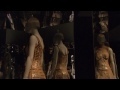
I wanted to write at least a little about the Alexander McQueen exhibit. But because I don't have much time tonight, because I have so much to do, I'm going to post a few videos.
The first one is a video put together by the Met that discusses some of the exhibits. These are the things I saw. They are glorious, aren't they?
The second one starts in a winterscape with some beautiful dresses, but quickly goes to one of his fashion shows, in which a dress is spraypainted by two robots. I saw the dress in the exhibit.
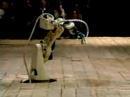
Isn't it a weird, wonderful little ballet? What I love is his imagination, how he creates stories out of clothes. All of his clothes are like stories. You feel that his clothes tell stories about the women who wear them.
And here is a video of a hologram that was also part of the exhibit. It's Kate Moss in one of his dresses, originally shown at one of his fashion shows. Again, you can imagine a story, can't you?
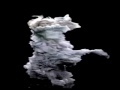
What I can't show you is the exquisite workmanship in the clothes. I saw them from less than a foot away, looked right at the stitching, the beading. And it made me wonder, how can I write the way McQueen created clothes? Because what I saw in the exhibit was glorious and inspirational.
And I thought, I know who writes that way: Angela Carter.
Do you remember when I took photos of the Scaasi exhibit? (There were no photos allowed of the McQueen exhibit.) Well, McQueen is to Scaasi as Angela Carter is to Danielle Steele.
So, how can I be a sort of McQueen of stories, without being Carter, since I am not her and can't be her? I think the key is to write with exquisite craftsmanship and imagination. To take things from the past, strange things, political but also fantastical things, and merge them into a whole, a statement. But also to create something beautiful and entertaining, something that someone might wear or read for pleasure. I don't know if this makes sense to you, but it does to me, and it points me toward a place I want to go with my writing, in terms of craftsmanship and in terms of what I do, how far I want to push myself. Which is far, along a strange and beautiful road.
I hope you like the videos.