Moira Reid's Blog, page 6
December 16, 2021
The Letter by the Chairs
I knew in time you’d come. With time, the smell would come.
It’s no more than what I’ve known. The smell of people alone
Could turn my stomach. That odor, of salt, and wet decay
Makes my flesh crawl. People do not consider it, let Alone
Their actions.
No matter how they try to cover themselves,
No flowery scent can hide from me the truth.
I know what is inside them. I’ve heard the ticking heart.
Seen flowing rivers of mashed fruit, melting into liquid streams.
The gurgling churn as organs move it along the seams, on and on.
Until it does not move, I
Know. I have seen the ticking stop. Heard the gears halt. Felt the end.
Seen them sit where they find themselves, and Melt like fettered wax.
I sit alone.
Time was always the enemy in my work. Decay
Does not wait for man. The office desiccated my heart.
And when white dust waited upon the departed,
I drained them. Suited
Them. Dressed them.
Prepared them for sleep, in starched clothing.
I was efficient. But today, the stiffs gave to Me
The truth. That my heart was a desert.
That my hot air would turn, cold.
Another day I’d never see, even being not that old.
I had worked so long with stiffs I could not see
The difference
‘Tween us any longer. I had played their games.
I had rolled their bones. And shuffled their clubs
And spades. Sought diamonds, yet found no heart,
Only sand. Blasted away. The grind makes
Sand of us all, In the end.
How long can any man make ashen wealth
Of widows’ mites? Some until the time ends.
Me, only until the day before.
My time was sand.
It poured through a glass, many grains, unique
And the same. Unable to change fate. A vacuum
Left behind, of my parts, my palpable memories.
I am the dead. As are we all. And the burden of knowing
Became mine.
I sit alone
In my apartment tomb. There are two chairs; one for me,
One for my coat.
Beside the broken table, fallen a year ago,
I dressed myself. Prepared for the sleep.
My sand ticks it’s last in the glass, where I wait for you,
I watch, as I have always, through the glass
As people pass far below. Uncaring, they drop Remains.
They pull their coats against the cold
And trade their time for pleasure.
I know no pleasure. I
Know not you. I Sit
Beyond the glass. Memory remains, Alone.
I hope you see. Choose to see


December 15, 2021
With All Due Respect,
First I found the fundamental flaw: for thou claim-ed to be mine foster mother.
Mentor, and friend—Yet thine actions instead are an exercise in androgyny.
Thou profess neither hot nor cold, yet thy deceit comes off as a dogs vomit.
Under thine unctuous umbrage I’ve earned unease.
Twain we work, sowers in the field, yet thy seeds are cast upon the sand.
Thy sickle drips, and not with the blood of the vine. I see th’art eager for the kill.
Call me callus. Concoct thy counsel to cast me off, craven carbuncle.
Care I not. For She Who Sits on High knows my worth.
I shall not perish, for thy counterfeit kindness is a mere clot in my tributary.
Keeper of thy brother? Better king of the kappas! Crawl with thy cruel kedge.
For river demon thou art, like Charon who drags his oar upon the keel.
Killer and kindred alike art thou to him who sails the Styx.
Yonder strife of thine be ever behind me.
Over mountains of chastisement I lay thee down.
Upon the blade thou set for me.
December 14, 2021
Meeting a Wizard
I was ten years old before I could read. As I looked at words, they would move. Sometimes they would run together, blurring into new, different words. Other times, the letters would change shape, becoming characters totally foreign to the English alphabet. The longer I looked at the words, the harder it would get to interpret them. I muddled my way through elementary school, embarrassed and mortified by my inability to do what my peers could accomplish without a thought. Reading was easy, I was told by teachers. The issue was simply that I was stupid.
My father did what he could to help me. In the early hours of the morning, before he had to leave for work, He would wake me, and take me downstairs to study the alphabet. We always went into the crawlspace beneath the stairs, a windowless alcove, with low ceilings, barely enough room for the tall body of my father to stoop into. Every time we entered that dark crawlspace, I felt ashamed I wasn’t the son he wanted me to be. No matter how many times we performed this ritual, him withdrawing a deck of alphabet flashcards and presenting them to me, I could not memorize the letters. He would show and I would watch as the letters folded, bent, rotated.
“If I get hurt,” he once shouted as I failed once more beneath the stairs, “and you have to take me to a hospital, how are you going to find it if you can’t tell an H?” Tears streamed down my face as I silently looked at him. He rubbed his eyes in frustration, and left me there.
I was ten when the first teacher discovered my dyslexia. Ms. Papke moved into the city from somewhere out west. She was a short woman, with bright red hair and an energetic personality, her classroom always lively with her passionate lessons. It didn’t take her long to notice I was struggling as the school year took off. She invited me to stay with her after class one day and gave me a test. The yellow brick walls and their posters of the sciences mocked me as I shivered at her desk, looking over the materials she presented me with. She asked me what letters looked like while I read them. She showed me pages with words painted on them in splotchy, familiar messes.
“Do they look like this?” She asked. I nodded.
She taught me that dyslexia affects the way the brain interprets information, especially visual information. By using a colored filter over a page, she explained, my brain could be fooled into allowing the letters to sit still. Filtering out blue light from hitting the page would supposedly give my brain less work to do when looking at the letters; reduce the strain on my eyes, and allow me to see what was really there. I didn’t expect much the first time she placed the faint blue plastic filter over the page of Where the Wild Things Are at her desk in the corner of the classroom. I watched the letters, waiting for them to contort as always. But they didn’t. They held still. Like magic. Still, it took time and practice, and a number of other techniques, but a change had occurred. I could read.
I was starved for stories. I had heard some from my mother when she was feeling well enough to share them. Epic poems like The Odyssey, and Paradise Lost. Fantasy adventures like The Hobbit, and journeys across space with Dune. She was a collector of books, and owned thousands of them, if a child’s memory is to be trusted. They could be found everywhere in the house, bookshelves, in stacks on the floor, with yellowed pages and green and gold embossments. I loved hearing those stories, and always wanted more. Before I could read, I would ask my mother to share these stories with me. Sometimes she would. Usually she would be asleep, or lost so deeply in thought that I couldn’t reach her. Before I could read I would pull the books from the shelves in the living room, just to feel them. I would spend countless hours alone with my mother’s silent books. Run my hands over their surfaces, and imagine what was in them. I would open them, and try to see the letters as words rather than chaos. Every time I lifted the cover of a book, the musty aroma of wet sand or incense washed over me. Surprising what you notice about a book when you can’t read it. It was a lonely time in my life.
One book among her countless literature held my attention more than any other; among the paperback collection: a stylized cover of a scarred man, dark and handsome. His hands were outstretched, holding a crooked staff toward a tower. On the tower, a dragon was unfolding, a tendril of grey smoke coiling from its nostrils. The first time I found it, I took it from the shelf and held it with a kind of reverence. The spine was covered in white striations, and the pages within it hung loosely in some places. Mother had read it so much it was falling apart. No other book in her collection held this appearance. For years I would return to this book, take it carefully from the shelf, and look at the art of it. I was ten when I read the book for the first time. In those pages I met Ged, the Sparrowhawk.
Inside the cover was a map drawn by the author. Ursula K. Le Guin named every island, I remember thinking the first time I saw it. She created those names. The map depicted what was called The Archipelago, over a hundred islands covering a great sea. She called it Earthsea; and Earthsea was a land of wizards. A story of a young boy called Ged, whose father is distant and cold. The only mother he knows is a witch, who makes him sit in her smoky hovel as she prepares her charms, never showing him love or kindness.
Ged’s pride is his greatest obstacle. He gains few friends in his education as a wizard, aside from the loner Vetch, and his professors who saw his potential. One evening, in an act of supreme pride, Ged attempts a powerful summoning spell which unleashes a terrible shadow, nearly killing himself. I returned to the cover, the scars of the man there more clear than they were before on that cloudless autumn day, nestled by the window in my tiny bedroom. I, too, had scars. Though mine were not on the outside. The pains I felt at my father’s disappointment, and my mother’s absence; the pain of my dyslexia, of being told so much that I was stupid by teachers, carved at me in the same way.
My mother was an educated woman. She had a Masters Degrees in fine arts. Her study, as well as the rest of the house, was filled with her sculptures and paintings; bronze statues depicting forlorn women who clutched their bellies as they looked into the distance. Impressionist landscapes, where the limbs of the trees hung limp and low. Her art was beautiful to me; a symbol of her success and creativity. I held no such academic excellence. I had only just learned to read, and my grades in school reflected this ineptitude. If I can just finish this book my mother loves so much, I thought, I will be good enough. As I look back on those days, I see now she and I were so similar. I think she spent so much time with her books, or her art, looking for somewhere to escape to. Father worked long days, often not returning home until well after dark. She slept all day to avoid that loneliness. We were both looking for somewhere we could belong, just as we were. And we both found it in A Wizard of Earthsea.
While I applied what I had learned from Ms. Papke to improve my school performance, I worked the hardest to read that magical book. Dyslexia didn’t only make interpreting letters difficult, it made reading for extended periods painful. An hour of reading, I got light sensitivity. Another thirty minutes, a migraine. Then vertigo. But I couldn’t stop. It felt like there was so much on the line; that I had so much time to make up for. I couldn’t understand why reading, which to me is interpreting the imagination of an author, gave me migraines when my own imagination did not. From a young age I found comfort in imagining stories of my own. I would imagine creatures, friends and enemies, great voyages across eternal seas. In my mind, worlds were born, lived out their natural lifespans, and died in an instant. Reading showed me I was not alone in this creativity. Every book in my mother’s collection had been written by someone. Ursula K. Le Guin had written the incredible book that was in my hands. I wanted to create stories just as captivating as she did.
As I finished A Wizard of Earthsea for the first time, I sat at the old school house desk in my room, a gift from my mother, and pulled out a sheet of yellow construction paper. I drew a map, modeling off what Le Guin had drawn in her own book. The first snow of winter touched the window as my hands groped with a kneaded eraser over the paper. I could see in my mind what I wanted; a world of dragons, a place where a fantastic tale could be woven. I could see adventures being lived in the world behind my eyes, yet the paper before me was just a smudged mess. My mind could now interpret words; my hands were not so easy to train. As I looked at my broken words and messy penmanship, shame weld up in me. Weakly, I held on hope that with enough time it would be good enough. I pulled another sheet of paper from the desk drawer, and began again. I went to bed that night, my hands and nails stained with graphite.
I read A Wizard of Earthsea cover to cover before the end of the school year. Then I read it again. I started reading other books. I read Arthur C. Clarke and Frank Herbert. Anne McCaffrey and JRR Tolkien. But I kept returning to Ursula K. Le Guin’s wizard. I practiced my writing, training my hand to obey my mind, to write the letters into words. When Ged completes his wizard’s training in A Wizard of Earthsea, he went about his duty to serve the people around him as best he could. But the shadow he loosed continued to follow him, bringing danger and destruction to everyone it touched, threatening to destroy him completely. My own shadow of shame followed me in much the same way as I practiced.
When Ged fights the shadow, the harder he fights, the stronger it becomes. I loved him for his tenacity, for his willingness to fight a thing so powerful despite the fear of it. So one day, as I looked over my maps and writings stacked in my desk I swallowed my fear, and went my mother in to show what I had made. It was almost Christmas, my grades had improved marginally, and I was ready for the holiday break. Mother was busy in the kitchen, preparing fudge for a church function, when I asked her to come and see my work. I took her to my room down the hall, the sun setting beyond the neighboring houses past our snow-covered yard, and opened the lid of my desk. I held out my drawings and writings, hoping that finally I was good enough. She sat on my bed and looked through them quietly. Then she handed them back to me with a soft, sad smile. I don’t remember what she said to me. I do remember what I felt. An icy pain ached in my heart as she spoke, pointing at my crooked letters and mishmashes of words. She couldn’t read what I’d written, or maybe she just didn’t want to try. A stab of shame came in like a tide as she gestured to my muddy writings and splotched maps. It was to me a confirmation of what I had known for so long. I was still not good enough. And I believed in that moment I never would be. I knew it was foolish pride to ever consider an alternative could be true.
By the end of Le Guin’s book, Ged defeats his foe. The shadow he lets loose on the world tries to destroy him, nearly succeeds, and then fails. Ged chases his shadow to the edge of Earthsea. There, the spirit world and the world of the living meet with invisible shores. Upon those shores, Ged overcomes his shadow by accepting it as part of himself. The two collide in a blinding light, and he is made whole. Ged was good enough to succeed. But I didn’t understand. Ged was not real. Le Guin set out to write a story with a protagonist who overcame his weakness. There was no one to make my life but me.
I tried to hide my writing my mother after that. It wasn’t hard. Her depression frequently kept her from even knowing to ask about it. Though sometimes she would catch me, and nestle beside me to look at what I was doing. She’d flash her sad smile and let out a long sigh. My father caught me once as well. It was near spring, the school year drawing to a close, and I was at my desk at about two in the morning; I found it the best time to continue my work without drawing attention. That, and there was something about writing by starlight that seemed to connect me to Ged on those nights. I suddenly became aware as I wrote I was being watched, and with a start looked toward the open door of my bedroom to see my father standing there.
“What are you doing?” He asked. I quickly put my things back into the desk, but he came closer, a command in his appearance to present what I had. Nervously, I retrieved the notebook with my writings. As he looked over my sloppy handwriting, he frowned. He was terrifying in the dim light of my desk lamp. Large, with thick muscles and rough hands from his time in the Marine Corps., as well as his work as a cobbler. I knew he wouldn’t shout at me, because it was so late, but he had other ways of making me fear him. I watched his hands for sign of a tightening fist. In the dim light of my desk lamp, he stepped closer. The veins in his feet pulsed as he walked. He sat heavily on my bed, and leaned toward me. I wanted to disappear. But he did not threaten me that night.
“Writing with pen and paper,” he said, “Isn’t ever going to look great. I struggle with it, too. That’s why I like typing. It comes out like book print. Do you want to learn to type?”
I sat frozen with fear in the cold morning air near the dew streaked window. But I liked that idea very much. Typing always be legible, and computers could even catch my spelling errors for me. The following Saturday he took me to the study and booted up a typing program. The computer whirred quietly on the heavy oak desk as he stood behind me. His callused hands gripped my wrists and placed them on the keys. He showed me there were little tabs on the “F” and “J” keys, and placed my hands over them. My fingers rested lightly over the keys as he went through a lengthy laundry list of how to use it: pinky to “A.” Ring finger to “S.” I did my best to follow his instructions, but I still found great difficulty with my hands, unable to learn where to place my fingers or how to get the words from my head and into the keys. These sessions went on for months, even into the summer after the school year had ended, and Ms. Papke was no longer there to help me. He would stand solemnly behind me as I typed, correcting my mistakes as I made them, his patience wearing thin with each error. And the thinner his patience grew, the thicker my shame became.
Through the years, leaving elementary school behind and entering high school, I just wanted to disappear. I could see it, a world where I was not there, a world where everything was better without me. It was a dark shadow over me, whispering what felt like a pure truth: there was no hope. And I believed it. I went to my mother for help, the thought of this gnawing pain burning inside me like a coal in a fabric basket. She sat on the chair in the living room beneath a painting of her grandfather Emery. He sat on his farmstead porch, looking mournfully into the distance. I told her of my pains. She slapped me across the face, yelled about how selfish I was. My cheek smarted as I collapsed under the weight of mounting pain in mind and body. I lay there on the living room rug for a long time. She left me there.
In quiet solitude I honed the skills Ms. Papke taught me, slowly gaining reading comprehension as the years passed. At the time I didn’t realize how much I’d grown and changed by training in those skills. I still thought of what Ged had done as this herculean feat, overcoming his shadow out in the open with powerful magic. Yet over the course of a few years I’d done the same thing. By slowly and carefully facing my dyslexia, making it a part of myself, I learned how to read with it instead of against it. My dyslexic brain interprets things differently; it’s designed to take information in large amounts. I always describe it as seeing the forest, but not the trees. Little pieces of information, like letters, get lost in the big picture. But as I focus, pull my mind toward looking at those little pieces, I see them fitting together not just into words, but entire pages.
I remember one day I was reading in the living room. I sat in a big green chair, beneath the painting of Emery. His listless stare hovered behind me as I read. My fingers glided over the pages of A Wizard of Earthsea, the familiar tale absorbing as if by osmosis, when my father came up to me. He looked tired, his tight military haircut stark against his sharp face and dark mustache.
“You’re turning those pages pretty fast,” He said. “Are you really reading that fast?”
I looked at my father, then back to the text. I was reading that fast. He smiled at me that day. I don’t recall him ever having done that before. A warmth washed over me as he smiled.
It was around that time that a high school English teacher took notice of me. Mrs. Canon asked me to stay behind in her English class one day. Her pale grey eyes matched her grey rimmed glasses as she stared at me from across her desk. I was nervous that my work had lapsed, that she would attack me over my spelling errors or grammar. It was the opposite. She told me she liked my work, and asked if I had ever participated in a competition before. She invited me to attend the next one for our school, and I agreed. Mrs. Canon became a mentor to me. She tutored me in my writing, helping me improve upon what Ms. Papke taught me years before. She introduced me to the academic club in my school, where I made close friends for the first time. They appreciated my awkward humor and morose sensibilities.
One day, while finishing Arthur C. Clarke’s Childhood’s End, I found myself thinking about Ged once more. He had become my oldest friend in the years I spent reading about him. I saw a smile on his face as I thought about him. One that said he believed in me. A silly thought, that a character in a book could be there for me. Yet he was. And has been, ever since I began my journey as a reader. I pondered on what Le Guin was really hoping to do in writing Ged. As have I looked into her life and history, I’ve found she had simply set out to tell a good story. It was the same for many authors I’d grown to love. They each had unique histories, traumas, and fortunes that shaped them into who they were. They were people just like me. Perhaps they didn’t see writing and reading as the same kind of magic as I did. But to me, being a writer and being a wizard are one in the same. With their words, they change the world, and sometimes if they are careful enough, they change themselves.
December 13, 2021
As I Lay Dying: An Allegory of War
In 1930, a man published an unusual book. It used colloquial language of the American south, and followed multiple narrators. The book was called As I Lay Dying, by William Faulkner. William Faulkner lived through perilous times. He served in World War I in the Royal Air Force (William Faulkner Joins the Royal Air Force, 1). Though he never saw combat in the war, it is clear from Faulkner’s writings that the war had an effect on him. Faulkner’s first published novel, Soldier’s Pay, revolves around the aftermath of World War I when a wounded soldier comes home. As I Lay Dying does not hold any direct references to World War I aside from a minute mention of “the war,” by the character Darl near the end (Faulkner, 254). Yet As I Lay Dying is perhaps one of the most potent allegories of World War I ever written. Faulkner’s seminal work is a story of pity and sacrifice by the children of the Bundren family. It is through this telling of pity and sacrifice that the allegory of World War I is made clear throughout the book.
The character of Anse in As I Lay Dying stands as a strong representation of what many readers at the time would equate with governmental overreach. In As I Lay Dying, there is a family called the Bundren’s. As Addie, the mother of the family, dies she makes Anse promise to take her body back to her home town of Jefferson for burial. The father of the family, Anse, does not labor with his children. He is described as being allergic to sweat. This is a symbolic description, meant to show his inability to work, either due to medical restriction or personal laziness. Anse has no teeth; he is unable to bite or chew on his own, and must eat soft foods. While his children give of themselves to fulfill their duty to him and their mother, Anse himself makes very few real sacrifices throughout As I Lay Dying.
Anse sells his son Jewel’s horse to pay for transport of his deceased wife’s corpse. He takes money from his daughter Dewey Dell to purchase new teeth. In fact, the purchase of new teeth, along with the acquisition of a new Mrs. Bundren, are Anses’ ulterior motives in going to Jefferson. Along the route to Jefferson, all five children of Anse and Addie make terrible sacrifices. Cash, the oldest son, breaks his leg as the family attempts to forge a river between them and Jefferson. in that same crossing Darl, the second son, and Jewel, the bastard child of the reverend Whitefield, both nearly drown. Sacrifices, like Cash’s, show the love Addie’s children had for her in keeping their word. Yet Anse is not part of these sacrifices. Throughout the story, he is only ever in the center of attention to be a foil to his family by taking what they have of value for his own purposes.
Professor of history, Michael S. Neiberg, said of citizens during the post World War I era, “For most Americans, going to war in 1917 was about removing the German threat to the U.S. homeland. But after the war, [President] Wilson developed a much more expansive vision to redeem the sin of war through the founding of a new world order, which created controversy and bitterness in the United States.” (Hindley, 2017). In many respects, Anse shadows this expansive vision. He took his family to Jefferson under the guise of burying his wife, only to aggrandize himself with new teeth and a new wife. He gains power at the cost of bitter suffering by his offspring. Much like how the United States gained greater authority in the world at large through its involvement with post war Europe.
Addie then represents the cause of conflict for the story. Her life, and her death, mark those around her in indelible ways. In Addie’s chapter of As I Lay Dying, she says of her career as a school marm, “I would look forward to the times when [the students] faulted, so I could whip them. When the switch fell I could feel it upon my flesh; when it welted and ridged it was my blood that ran, and I would think with each blow of the switch: Now you are aware of me! Now I am something in your secret and selfish life, who have marked your blood with my own for ever and ever.” This mark mirrors the mark left on those who survived the horrors of World War I.
Many soldiers from World War I came home with shellshock, what today is called PTSD, unable to cope with the unending death and fear of death they faced every day. (Butterworth, 2018). The death of Addie acts as the catalyst for the sacrifices of the Bundren family. When she passes, a great storm comes through the county where the Bundren family live, flooding the river, destroying the bridges, and most notably, generating great amounts of mud. Mud is a key element of both As I Lay Dying and the imagery of World War I. “Almost every painting, photograph, poem, diary, or book about the First World War involves mud. It was as much a part of the war as artillery and trenches, barbed wire and machine guns, hopelessness and heroism.” (Leonard, 2012).
Darl describes, after the death of Addie, “Overhead the day drive a level and gray, hiding the sun by a flight of gray spears. In the rain the mules smoke a little, splashed yellow with mud, the off one clinging in sliding lunges to the side of the road above the ditch… About Jewels ankles a runnel of yellow neither water nor earth in swirls, curving with the yellow road neither of earth nor water, down the hill dissolving into a streaming mass of dark green neither of earth nor sky.” (Faulkner, 49). This description as told by Darl echoes the sentiments of the above mentioned mediums depictions of World War I. The muddy nature of As I Lay Dying is likely Faulkner intentionally drawing on the environment of the Great War to further connect the two via allegory.
In considering the presence of World War I in As I Lay Dying, it would be easy to see Darl the primary vehicle for powering the allegory between the two. He is a return soldier from the theater of war in France. He even appears to have some elements of PTSD himself, which could explain his breakdown and attempt to burn the remains of Addie. This would be a misreading, though. It is much more nuanced than this. John Limon, professor of English, said of the subject, “Oddly enough, the hypothesis that the Great War explains Darl is not as convincing as the Great War explains As I Lay Dying, itself—its characteristic images, its form, its style. What is the reason for the sheer muddiness of As I lay Dying, which is perhaps the muddiest book in all literature?” (Limon, 2004).
The children of Addie and Anse give all they have, either willingly or begrudgingly, to fulfill their parents wishes. This act reflects the sacrifices of American soldiers during World War I, in that they gave their lives for what they believed would bring peace, yet instead brought about confusion and continued government meddling in foriegn affairs. As I Lay Dying defines a generation disenfranchised with their authority figures, orphaned by a war that cost more than it was worth.
Works Cited
William Faulkner Joins the Royal Airforce. 2009, History.com. https://www.history.com/this-day-in-history/faulkner-joins-the-royal-air-forceFaulkner, William. As I Lay Dying. 1990, First Vintage International Edition.Hindley, Meredith. World War I Changed America and Transformed its Role in International Relations. 2017, National Endowment for the Humanities. NEH.gov https://www.neh.gov/humanities/2017/summer/feature/world-war-i-changed-america-and-transformed-its-role-in-international-relationsLeonard, Matt. Mud. 2012, Military History Monthly, May 2012 Issue. https://conflictarchaeology1.files.wordpress.com/2011/12/mud-feature-article.pdfButterworth, Benjamin. What World War One Taught Us About PTSD. 2018, Theconversation.com. https://theconversation.com/what-world-war-i-taught-us-about-ptsd-105613Limon, John. Faulkner and War. 2004, Jackson: University Press of Mississippi.
December 11, 2021
In Defense of Fantasy & Science Fiction
In consideration of literature, most readers would agree that classic works, such as those of William Shakespeare, John Milton, or Jane Austen fall into the accepted canon of seminal English works. Works of modern fantasy and science fiction, however, are often not given the same sweeping acceptance. There are a number of factors involved in the general perception of science fiction and fantasy, from critical bias to studies of reader perceptions of genre (Ditrum, Sarah). Regardless of these reasons, there is great power in works of fantasy, especially those aimed at younger readers.
The works of Ursula K. Le Guin have had incredible impact on young readers and adults alike. At the time of her passing in 2018, she was heralded by the literary community as one of the greatest authors of all time (McDowell, Laura-Blaise). And her collection of literary works are predominantly science fiction and fantasy. A Wizard of Earthsea is marketed as a book for young readers, yet even at the time of its publication in 1968, it was received with critical acclaim. The book has never been out of print. A Wizard of Earthsea is just as seminal to the world of English literature as any classic work because it defies the expectations of the fantasy genre to be without substance, both for its time, and still to this day.
A Wizard of Earthsea and InclusionA Wizard of Earthsea defies expectations, and thus roots itself into the canon of literature through the characters and heroes Le Guin chooses to portray. The people of Gont, and nearly all the Archipelago, are “copper-brown” (Le Guin, Ursula. 23) in their skin. In 1968, nearly all central heroes in the literary canon of English were exclusively white skinned, and fair-haired. This homogenous representation acted as a gatekeeper to English literature, and in the 1960’s a cultural renaissance was taking place across the English speaking world. Old world racism was being evaluated by newer generations, segregation laws were being removed, and major strides toward correcting long standing social injustice toward people of color were making headway.
Le Guin, by writing her book with a person of color at its center, firmly places A Wizard of Earthsea on the right side of the social changes of the time. The purpose of literature, especially in the English canon, is to provide essential, ubiquitous influence representative not only of the time of its publication, but applicable to the human experience going forward (Barron, Kaelyn). By subverting the racism apparent to the era of its publication, A Wizard of Earthsea situates itself into the literary canon. Doors of accessibility are opened wide to all English speaking people, not only those who are white, by Le Guin’s seminal work (Bellot, Gabrielle).
Literary Canon and the Impact on ReadersThe impact of a person’s actions is also central to Le Guin’s work. In A Wizard of Earthsea, we learn of their magic from the masters at the school of Roke. Ged asks the master changer in one lesson why he cannot change a stone to a diamond. The master replies with a bit of wisdom that is extraordinarily applicable to all of us. It is what they call the principle of Equilibrium.
“To change this rock into a jewel, you must change its true name. And to do that, my son, even to so small a scrap of the world, is to change the world. It can be done. Indeed it can be done. It is the art of the Master Changer, and you will learn it, when you are ready to learn it. But you must not change one thing, one pebble, one grain of sand, until you know what good and evil will follow on that act… To light a candle is to cast a shadow,” (Le Guin, Ursula 59).
Every action we take has consequences, both good and bad. By taking the time to understand those actions we might take, we can be assured that we made the decision, and the outcome is the one we will live with. We become masters of our fate. To me, that was a beautiful lesson, and one I still struggle to learn even today. Decisions can be hard, but when we come to them with an understanding that the outcome, no matter what it will be, is one that we will live with and use to influence our lives for the better. I know that I take my choices more seriously in light of this truth, and find a sense of comfort and control in doing so.
Conflict in the CanonA Wizard of Earthsea also passes the test of qualifying for literary canon in how it approaches conflict. There are generally accepted to be six types of literary conflict: Man vs. Man, Man vs. Nature, Man vs. Supernatural, Man vs. Technology, Man vs. Society, and Man vs. Self. Man vs. Man is the most common type employed in nearly all literature; the story of good vs. evil often falls into this paradigm (Casscio, Christopher). Le Guin’s story isn’t one of Man versus Man, but Man versus Self. In his pride the protagonist Ged takes a serious risk; he attempts to summon the spirit of a heroine from one of their ancient stories. But as he works the spell, he loses control of it, and brings into his world something far worse. It has no name, but what it is known as when it is able to possess a human body is a gebbeth, or an eaten one.
The attack of his shadow leaves him terribly scared, and even robs him of some of his physical faculties. He is slow of speech for almost a year, and even moves with halting limbs from that time forward. His pride brought him low, and he spent the rest of his youth fighting the terror he had brought into the world by it (Le Guin, Ursula 84). In the end, Ged discovers the only way to overcome his prideful shadow which he brings into the world is to understand how it is a part of him. How he must accept it and move on. We all have negativity inside ourselves. We have aspects to our personalities that are harmful, some may say even toxic. Only by looking inward, and facing what we are and what we want to be, can we accept those mistakes and shortcomings and find a way to coexist with ourselves, and eventually defeat the shadows of our own pride.
Great literary works that are worthy of consideration into the canon are ones that teach principles applicable to the human race regardless of time or place. The inclusion of fantasy or fictional elements is irrelevant in this consideration; Mary Shelley’s Frankenstein is considered by many scholars to be a part of accepted modern canon, and is simultaneously considered the first true science fiction ever written (Fishelov, David). The genre of a piece is not more important than the sum of its impact. This is true of many works of fiction, but especially for A Wizard of Earthsea. The book is a reflection on the human struggle of pride, overcoming self-doubt and personal strife, and creates connective tissue for BIPOC representation in the world of literature.
BibliographyDitrum, Sarah. ‘It Drives Writers Mad’: Why are Authors Still Sniffy About SciFi? 2019, Theguardian.com. https://www.theguardian.com/books/2019/apr/18/it-drives-writers-mad-why-are-authors-still-sniffy-about-sci-fiMcDowell, Laura-Blaise. Neil Gaiman, Margaret Atwood, and More Pay Tribute to Ursula K. Le Guin. 2018, Bookstr.com.https://bookstr.com/article/neil-gaiman-margaret-atwood-and-more-pay-tribute-to-ursula-k-le-guin/Le Guin, Urslua K. A Wizard of Earthsea, 1968. Graphia/Houghton Mifflin Harcourt Publishing Company, 2012 edition.Barron, Kaelyn. The Literary Canon: What’s In It, and Who Makes the List? 2021, TCKpublishing.com https://www.tckpublishing.com/the-literary-canon/Bellot, Gabrielle. How Le Guin’s A Wizard of Earthsea Subverts Racism (but Not Sexism) 2020. Tor.com https://www.tor.com/2018/10/30/how-le-guins-a-wizard-of-earthsea-subverts-racism-but-not-sexism/Cascio, Christopher. Types of Conflict that Can Be Found in a Narrative, 2015. Education.seattlepi.com https://education.seattlepi.com/types-conflict-can-found-narrative-3739.htmlFishelov, David. The indirect Path to the Literary Canon Exemplified by Shelley’s Frankenstein, 2016. Purdue University Press. https://www.researchgate.net/publication/318879438_The_Indirect_Path_to_the_Literary_Canon_Exemplified_by_Shelley’s_Frankenstein
October 11, 2021
Poetry Patterns
Poetry has acted as a window into deeper understanding of language for me. I have dyslexia, which radically changes the way I interpret information, specifically lingual information (written and spoken). But from a young age, poetry and the workings of poetics was a way I could read easily. The patterned setup of Iambic Pentameter, end rhymes, and metaphor somehow fit into my neuro-atypical psyche with greater ease than prose or spoken conversation ever did. Most of my personal journal entries are written in poetic stylings. Even many of my prose in novels and articles frequently employ poetic design elements. Poetry allows for greater passage of information in a contained piece of writing. And by employing these design elements not only in poems, but in all forms of storytelling, I believe a writer can transmit even greater impact to their readers.
I recently participated in a writing prompt based on the Missoula Monster Project, where artists take a monster created by a school age child and reinterpret it into another medium. As I explored the myriad monsters, I came across Monster #35 by Henrik. It was a ragged snake, dripping, with jagged stakes across the tail where a rattle might have been if it were a rattlesnake. I read the description given by young Henrik.
“My monster likes to eat sharks, fish, and chickens,” He wrote. “My monster used to be a rattlesnake. My monster gets slimey in the ocean.”
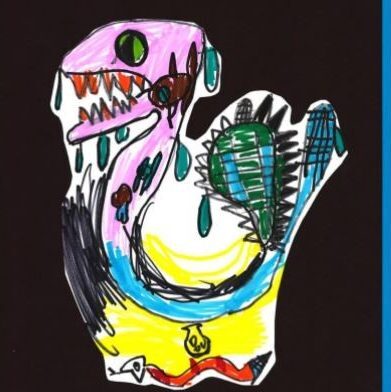 Figure 1. “Monster #35.” Missoula Monster Project,
https://givergy.us/missoulamonsterproject/?controller=lots&action=showLot&id=69
Figure 1. “Monster #35.” Missoula Monster Project,
https://givergy.us/missoulamonsterproject/?controller=lots&action=showLot&id=69
The fact that the monster had once been normal creature like a rattlesnake captivated me. There was a transformation that occurred. Something happened that changed the rattlesnake to a monster. And that got me thinking, why would it stop there? If the creature had changed once before, was it not possible for it to change into something else, something greater? Like the fish nestled just behind the monster’s teeth in the drawing, I was hooked by the grimace of the beast. I had to know more. I had to create more. In my first few attempts at writing a poem about Monster #35, I had trouble deciding on a style. I didn’t want to do it in freeform. I wanted to fit it into a pattern that would reflect what I saw in the picture. It is a serpent. It changed form into something more than it was. That reminded me of something mythological: the Ouroboros.
The Ouroboros derives from Egyptian mythology. It is a snake that eats its own tail, and is generally seen as a symbol for eternity. Sometimes people will associate it with Jormungandr the World Eater, a creature from Norse mythology which was believed to be a harbinger of the end times. In both instances, the depictions of the serpent are of it eating its own tail, either in a circle or an infinity symbol.
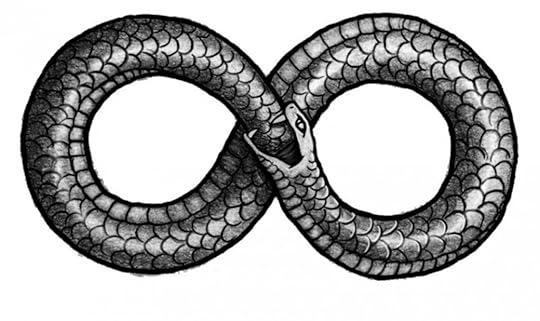 Figure 2. “Ouroboros, The Infinity Symbol.” Mythologian.net.
https://mythologian.net/ouroboros-symbol-of-infinity/
Figure 2. “Ouroboros, The Infinity Symbol.” Mythologian.net.
https://mythologian.net/ouroboros-symbol-of-infinity/
Infinity. The figure eight. That was it. I found my poetry pattern; I would write a sonnet in Iambic Tetrameter, a poetry form which employs fourteen stanzas, eight syllables per line within each stanza. I pulled together the imagery I found in Henrik’s monster, and created a first draft. It was okay. I titled it Changeling, since the monster had altered forms throughout the piece, and saved the document. But as I looked it over, I saw another place I could pull in a poetry pattern: whitespace. By pushing the lines apart intentionally in places, I could restructure the poem to resemble a figure eight, like so:
My crooked teeth and verdent scale
Revealed me time and time again.
A child’s toy upon my tail
Gave warning of my mortal sin.
Through the reeds like emerald sheets
I ate, as was my right, lost chicks.
But men within their strong retreats
Abhorred my great, long rattling clicks.
So to the viridescent sea
I roved. And let loose my sufferings.
The serpent of humanity
Went to greater monstrous stings.
Upon the waves I grew so pale
And shed my skin forevermore.
And fed instead on shark and whale
And forsook the forgotten shore.
All that I was before is gone,
I am all sleek, as a snails gleam.
And eat, and eat, all that is wrong
Along this world’s oiled seam.
My size now dwarfs all men’s fair ships
That sail upon my sea. Poor souls.
I shall now stretch til the earth rips,
And become the Ouroboros.
Eight syllables per line, all organized into a figure eight. It looked nice, but it was only a first draft. I shared it with my peers, looking for ways to improve on the patterns in the poetry. As it was, there were places where the lines didn’t break evenly along the whitespace. With a little reworking, I could balance the word placement and improve the form. The title was also a sticking point. A changeling is a mythological creature, a fairy that replaces human children to torment their parents. Since the piece already dealt in myths, mixing in language referencing other myths seemed to undermine what I was going for. And the poem as it stood did not cover the concepts of eating, growing, or eternity in the ways an Ouroboros should. I took these pointers to heart and approached the poem once more.
As I considered the symbolism going into a piece like this, I thought more about the serpent. In biblical references, the serpent is synonymous with Satan, also known as the Beast. And the symbol of the Beast is a series of three sixes. That was when I noticed how a number of lines in the poem already had six words in them. It was at that moment that I decided to take on another challenge: to make every line of the poem have six words as well as eight syllables. I worked and reworked the language of the piece, including new references to color, hunger, and immortality. After a grueling twenty hours spent on the poem, I reviewed my work. The title of Changeling no longer fit. So I titled it instead, Serpent.
My crooked teeth and verdant scale
Revealed me time and time again.
The clatter of my famished tail
Gave sign of my gluttonous sin.
Through the reeds like emerald sheets
I ate chickens and many things.
But men within their strong retreats
Sought to end my great rattling’s.
Escaped I to the azure sea
And gave in to my anguishes.
The sight eternal I could see
A future out ‘mongst the fishes.
Upon the waves I became pale
My hunger grew six times before.
Feeding anew on shark and whale
And remember not that far shore.
I am eternal on this dawn
And shimmer like a moray’s gleam.
I shall consume each mortal wrong
Along this world’s oil soaked seam.
Tail meets esophagus.
I am Ouroboros.
As I closed out the poem with a couplet, I made a decision to alter the number of words from six to three, and the number of syllables to six. To me, it felt like a natural continuation of the mathematical pattern I had employed, with a symbolic “coming to a head,” much like the tail and mouth of the Ouroboros itself. The poem is not only about the serpent. It is the serpent.
Poetry is all about patterns. Knowing which ones to use, and when, allow the poet to craft their work around particular symbols and feelings. To me, the Ouroboros is both the symbol of eternity and consumption. The simple painting of Henrik is in many ways an Ouroboros for me; it gave me a hunger to create, and fostered in my mind the sense that progression from one state to another is an eternal quest. One that Monster #35 was on.
One that I am on.
September 28, 2021
Poetry Practice
Poetry is an artform which is dear to me. Long ago, I wrote many poems. For reasons I do not yet fully understand, I stopped writing poetry just before I graduated with an Associates degree in 2014. Yet now, as I continue my education seven years later, I have found once again that poetry is a portal to the deepest human expression.
It is my belief that poetry is the earliest form of knowledge transmission employed by the human race. We have anthropological evidence of human beings existing in complex societies as far back as fifty thousand years ago. However, the earliest written languages date back only around seven thousand years ago. How is it, then, that these ancient beings of our species were able to maintain uniformity of culture, language, stories, and histories without written words? They would have needed a system that was easy to remember, one that could be passed on orally for generations. Poetry fits that bill well. All other language art forms, novels, movies, stage theatre, even music, are the direct descendants of poetry.
One of the earliest forms of poetry of which we have record is Sapphic poetry. So named after the Greek poet Sappho, who is regarded as one of the most influential poets of all time (even earning herself the title of “The Poetess” among her people). The pattern employed by Sapphic poetry is that of three lines, broken into eleven syllables, with the fourth and final line composed of five syllables. Also important is the use of the metrical patterns. A Sapphic poem uses both the metrical patterns of trochee and dactyl. Trochee, pronounced troh-kee, means a two syllable piece within the text, referred to as a foot, with the greater vocal stress being placed on the first syllable. Dactyl, pronounced dac-til, means a three syllable foot with the greater vocal stress being placed on the first syllable. An example of a Sapphic poem, therefore, would look like this:
Hold to the spell lest into hell you find gods
Forgotten by hinter sky of lowly fears.
There are forever in us powers ancient
That can save all souls.
Where lies on men of earth an keen wet knowledge
Mired, hardened, eternal worth. In College
Hearts break upon the waking day. When we fail
Forever we cry.
That fearsome creature feasts on flesh and soft bone
Entombed upon an ancient throne where she lies
Cold, forgotten by time. When hearts fail, malign,
She will pass beyond.
Another particularly well known poetic form is the Sonnet. Credited to the bard William Shakespeare, the Sonnet is comprised of four stanzas in iambic pentameter. Iamb are similar to trochee, in that it has two syllables, however the vocal stress in an iamb is on the second syllable. The meter an iamb is set in means how many iambs are present in the line. Therefore, iambic pentameter means there are ten syllables in a line. The first three stanzas of a Sonnet follow an end rhyme pattern of AB AB, CD CD, EF EF. The final stanza of a Sonnet uses the end rhyme pattern of GG. Therefore, a Sonnet would look something like this:
How oft I seek transcendentalism
To become entangled in the Ethos
Yet, fall short of the fell mechanism.
Yes. How could I forget? It is Pathos
Which calls to me. Her light spread out like wheat
To thresh, refulgent in great harmony.
My fellows think it cruel to leave the seat
empty, and supplicate the surgeon’s fee
be met. Though vacancy delivers one
from lies. It is holy smoke, up the flew.
Freedom from vanity of emotion.
My fellows think it cruel to leave them, too.
Apotheosis to escape this earth.
But darkened skies forbid my reasoned mirth.
Both of these poems are original, my own work. It is my belief that by practicing particular styles, and making my best attempt to explain how they are formed, I can increase my own understanding of the craft. Poetry is one of my favorite writing styles. It is far older than the novel, far more refined than the script. And it is, truly, the portal to the greatest human understanding that can be achieved.
July 31, 2021
The Story of Onsen Island
There is an island on the far eastern edge of Tandavar, nearest the Korudo Sea. It is known as Onsen Island, and it is one many imperial colonies of Udai throughout the Tandavaran Archipelago. The island has a long and storied history in the empire, dating back into the Fall Era. Long ago, the colony was abandoned and left to return to nature. Now, in the year 821 of the Modern Era, the empire has again extended its borders to Onsen, and established the colony once more.
In the year 250 FE, the Udaite Empire began expanding into the territories of Tandavar. Under the rule of Emperor Uda Ikari, the empire sent seven ships into the untamed lands, loaded with intrepid adventurers seeking to bring glory to Udai. The vessels landed on seven different islands: Onsen, Pingyao, Kage, Aka Shi, Keshima, Shudao, and Jinzi. Each expedition was lead by a Bushido of a Ju Hachi house, with the goal being to establish an outpost, reconnoiter for resources, and establish a foothold in the area. The expeditions were a success, and over the next fifty years the outposts blossomed into villages, bustling with new life.
However, the islands of eastern Tandavar were not uninhabited when the expeditions arrived. They were home to a large tribe of barbarians, called the Ezen. This tribe commanded a great number of sailing vessels, and had villages established all through Tandavar, including the seven new island colonies of Udai. The Ezen worship battle, and the greatest warrior among them is set as their ruler and their deity. In those days, God King Galam of the Ezen viewed the intrusion of the Udaites as an act of war, and spent the remainder of his life in constant strife with the people of Udai among the islands.
As the conflict with God King Galam dragged on the islands of Aka shi and Shudao fell to his armies. Support from the mainland was too slow, the waters of Korudo proving dangerous for even the most worthy vessels, and the remaining colonies had to defend themselves against the growing onslaught. The Bushido of Pingyao turned their efforts toward the ruins of the ancients upon their island, in hopes that studying the old magic held there would give them an edge over their enemies. Sadly the task proved their downfall, with their efforts instead releasing an incredible surge of untamed earth magic. The entire island was destroyed.
With the loss of Pingyao, the remaining Udaites withdrew from the remaining islands to Onsen, in hopes of holding the village there as a fortress against the Ezen. Over the following 25 years, Onsen held out against the barbarians, suffering only minor losses. But the God King Galam grew restless in his old age. It was his obsession to destroy all the Udaites upon what he saw as his land, and so he turned his attention to the magics of the ancients also. When the Ju Hachi learned of his plan, they remembered the tragedy at Pingyao. Knowing that such an event could happen again, they left their fortress on Onsen to take the fight directly to the Ezen.
In the ruins on the southern end of Onsen Galam established his war camp, in hopes of harnessing the destructive forces of the ancients to win his war. The Ju Hachi warriors launched their assault on his camp swiftly, with thousands of casualties on both sides. Despite the best efforts of the Ju Hachi, however, Galam had created a weapon to channel the ancient magic of pre-Fall humanity stored in the ruins. According to legend, the power he unleashed brought untold destruction and chaos upon the island. The ruins were swallowed up into the earth, taking with them most of God King Galam’s own people. One Ju Hachi warrior, named Ito Kenji, strode forward amongst the chaos, and faced Galam alone. Ito Kenji cast a protective spell on the remaining Bushido, and plunged his blade into the heart of Galam. The energy harness by the God King was released in a sudden fury, destroying Ito Kenji, and much of the island as well. Despite Ito Kenji’s protective spell, many of the Ju Hachi Bushido died in the wake of the devastation. The barbarian tribe of Ezen was all but destroyed as well, leaving only a small remnant of their people to survive.
After the battle with God King Galam, the remaining Udaites were too few to survive another winter on Onsen. The imperial citizens boarded their remaining boats in the year 365 FE. With the provisions they had they sailed for the mainland, heartsick to lose their island home. Over the following centuries of the Fall Era, the empire made no further attempts to expand their hold into Tandavar. Onsen, the last bastion of the Udaite colonies, was slowly reclaimed by the elements.
In the year 790 ME, a petition was put forth among the Ruling Houses of Udai to return to Tandavar once more, and reestablish the colony on Onsen island to preserve and explore the cultural heritage of the ancient, sacred site. House Zhu and House Wei, in an uncharacteristic act of cooperation, agreed that the endeavor was worthy of the empires assets, and sent a colony ship to the island. House Zhu dedicated one of their most trusted Bushido, Shigenori Zhu, to be the Lord and Daimyo of Onsen. Over the decades since the reestablishment of the colony, the citizens of the empire have found prosperity and favor upon Onsen. After their initial arrival, it was found that a small tribe of the Ezen barbarians still remained on the island. They did not have their former prowess, yet they remain a formidable challenge to the peace of Onsen. Lord Zhu has established a tenuous peace with the Ezen tribe. The village of Onsen has been established as a peaceful zone, where citizens of the empire and the Ezen can interact without fear of retaliation.
As time has passed on Onsen in the Modern Era, the village has found stability through the incomings and outgoings of Tandavaran adventurers. Onsen now acts as a major hub for the Tandavaran-Udai trade routes. Traveling adventurers following these routes have provided the breastwork of the reconstruction on the island, providing labor, clearing out infestations of dangerous creatures, and ensuring safe roads for the passage of supplies from Onsen village to the outposts nearer the coasts. Although there is a peace treaty with the Ezen, there are still conflicts with their people from time to time. Rogue groups of the Ezen tribe have been found to waylay adventurers on the roads, robbing them, or in some cases, leaving them for dead with severe wounds. Lord Zhu, in agreement with the current God King of the Ezen, has therefore put forth an edict that anyone traveling on the roads of Onsen is well within their rights to defend themselves from any perceived threat, without fear of compromising the peace treaty. So far, there have been no major conflicts, and the treaty holds.
As the colonists have connected with the island, they too have connected with the history of the place and their forbears who dwelt there long before. With this has come revivals of old traditions, such as festivals, customs, patterns of worship. By far the most prominent festival is the Festival of Masks, a celebration of the spirits of nature and ancestors. The festival is held yearly in the month of August, generally running from the tenth of the month until the close. Many view this time as a time of reflection, seeking hidden knowledge of the past through study of the magical arts and the ancient sites around the island. There are also many challenges held throughout the festival which reward participants with various trophies. The greatest prize, however, is for those who participate in and win the Tournament of Warriors. Whoever comes out as the victor of that challenge is given the opportunity to become a Bushido retainer for house Zhu, in the service of Lord Shigenori Zhu.
In recent years, Onsen has become a place of refuge for people of the empire who are tired of the never ending politics in the mainland. As such, a number of political refugees have come to call Onsen home. They come to the island to escape rebellions in the prefectures, either driven from their lands in the destruction that follows such conflicts, or because their houses were disbanded for their participation in them. Lord Zhu of Onsen holds that the island is a place of peace, where anyone can get a fresh start on life. Most recently, a number of refugees have arrived on Onsen from the Shinrai prefecture, displaced after a rebellion led by a Ryoko-Sha mentor there.
Onsen is no stranger to unusual magical occurrence, as evidenced by the conflict with the God King Galam. Most recently, a magical staff has been discovered rooted in a glade on the island, surrounded by powerful warding spells. The staff has begun to garner great attention from traveling adventurers, as a rumor has sparked up about it that whoever is able to obtain the staff would become a mage of the highest degree. So far, no one has been able to pass the test. The staff has been scrutinized by the local magical authority and have found it to be benign in nature, so the contest to see who is first to claim the staff continues.
The island of Onsen is a place of long and magical heritage for the empire of Udai. Lord Zhu has established peace and prosperity upon the face of the land, and it has brought many people of all walks of life to call the place home, even if only for a short time as they pass through on their journeys. As the Festival of Masks continues on Onsen Island, and more people are drawn there to participate in the many contests, it is likely that soon someone will claim the mystical staff, and usher in a new era of magical prosperity.
July 22, 2021
The Bushido of Udai
The empire of Udai has seen many battles. While there have been several rebellions within the empire, there have been no instances of what would be called a civil war. Most of Udai’s conflicts have been with foreign nations, almost always on the defensive. Udai is a land rich with natural resources, and others have often envied them of these things. Through every conflict of the last thousand years, one thing has become clear: you cannot win a land war with Udai.
There are several reasons for this. Udai is the largest nation by land mass, with a population to match. Udai also hosts what is widely considered to be the most disciplined military force of any nation. In the nation of Udai, there are thirty noble houses. Twelve hold the position of government authority. The other eighteen houses, called the Ju Hachi, comprise the warrior caste of the empire. While there are many roles members of the Ju Hachi can occupy in the empire, from magistrates to land barons known as daimyos, all of them spend at least a portion of their lives as warriors. The Ju Hachi warriors are known as Bushido.
The Bushido are trained from birth in the arts of war. Swordsmanship, archery, martial arts, and discipline of the mind are all studied, with especial focus on protecting the empire from all threats, foreign and domestic. Every being born into the houses of the Ju Hachi go through this training. When they have reached their twenty first year, they are given the choice to leave the Bushido to pursue other life aspirations, or to continue in their service. Very few ever choose to leave.
To be Bushido means more than being a skilled warrior in the techniques of weapons. It means also to be educated in the high arts of magic. While not all Bushido are spell casters, it is required training in their primary education to understand spell casting; this serves two purposes. One, to enable them to use these abilities with greater affect, and two, so they may better understand how to counter spells when they face them in combat.
It is possible to become Bushido if you are not born of the Ju Hachi houses. However, it is rare. For a person to join the Bushido, they must be chosen by the lord or lady of either a Ruling house or Ju Hachi house. To even be considered to become Bushido, a being must be of superior skill in combat, and have proven their worth to the empire in battle.
The first foreign war for Udai was in the year 300 FE. The nation of Mul Debbon, occupying north eastern Filenfoe, began to push their boundaries into the farmlands of western Udai. The war chieftan of the Debbonese forces, Ashtun Voicethunder, believed his god had called him to lay claim to the land. At first, he armies found little resistance. The local rulers and peasants paid him no mind as his armies entered their villages and erected the Debbonese flag over the following year. He established his hold in the town of Oshu, in the western prefecture of Kessho. One night, in the year 301 FE, Ashtun received an envoy from the empire. They informed him that if his did not leave willingly within ten days, he and his armies would be utterly destroyed. Ashtun ignored the message.
On the morning of the eleventh day, the Debbonese forces awoke to the combined force of the Ju Hachi aligned under their banners on the fields of Oshu. Ashtun Voicethunder believed his warriors could handle what he saw; they wore little to no armor, and carried no shields. He also mistakenly believed they had no magicians with them. And he, believing his tonsure of Elkenhammers would be protected by their god, stood his ground. A Bushido came forward from among the ranks of the Ju Hachi. His name was Shujin Kizoku, the commander of all the Ju Hachi in those days.
According to the legend of the Battle of Oshu, Shujin let out a shout that defeaned the Debbonese warriors. He said only two words: “No Mercy.” The following battle lasted only twenty minutes. There were no prisoners taken. Over the course of the next year, Shujin lead the campaign to reclaim the lands of the empire. The remaining Debbonese fought vigorously, but even their mighty Elkenhammers could not withstand the battle; their spells died on their lips, caught in the suppression mastery of the Ju Hachi Bushido. By 302 FE, the occupying forces of the Debbonese were completely annihilated.
The Ju Hachi Bushido are not only fearsome warriors. They act as peacekeepers in Udai, sustaining the empire and dealing justice swiftly in the open. Bushido live by a warriors code, focused on dealing honorably with the citizens of the empire, mastering their emotions, and strengthening their minds. Most Bushido also practice meditative arts, such as origami, poetry, or music. These pursuits give them perspective in their duty; that while they are warriors, peace is the goal. Even during times of conflict, Bushido maintain inner peace through their meditative arts.
Bushido trace their heritage in Udai back even before the first emperor Zhi Tsan established feudal rule. In the early days, when the region was still known by its scarg name of Secuba, the land was covered in roving warbands of men. They fed themselves on the spoils of honest and hard working folk. To ensure the safety of the people, the towns and villages united themselves into kingdoms, and established the hierarchal caste system which still exists today in modern Udai. The peasant caste provided the labor of their hands, the warrior caste defended the kingdom, and the ruling class managed the important issues of law, border safety, and the judicial system.
The twelve ruling houses also retain Bushido in their service. Frequently these Bushido hail from the Ju Hachi houses, but they can also be held under the name of the ruling house who retains them. House Zhu has many Bushido retainers in their service, as well as five Ju Hachi houses who are pledged to them. House Wei also retains a number of Bushido, while having four Ju Hachi houses pledged to their service. The other ruling houses also keep Bushido retainers, and share the remaining unpledged Ju Hachi among them.
Bushido can specialize in any number of martial weapons. The bow, the sword, the spear, and many other weapons are used by the Bushido of Udai. Their minds and spell craft are as keen as their blades, and they serve their empire with a singleness of mind. Through generations, the Bushido have protected the empire from all its foes, and those who would seek to destroy it from within. The Bushido are sworn the protectors of Udai, and are one of the most fearsome societies of all Alteris. So if you find yourself in the empire, be on your best behavior. Otherwise, you could easily end up on the wrong side of a Bushido blade.
July 17, 2021
The Magician’s Crusade
In the last years of the Fall Era, a powerful magician rose up among the peasantry of Silg. This magician went on to nearly conquer the entire known world, until he was stopped by the great hero Alkanet, who came from the islands of Tandavar. This conflict is known as the Magician’s Crusade, and is told among all people of Alteris. Although the stories vary depending on the people telling it, each nation having their own version of events, there are enough similarities in the tellings to drawn a conclusion of what is likely the truth behind the legend.
In the year 760 FE, a boy was born in Silg in the small village of Cloven, Lestmarsh. His birthname is unknown. The boy started his life as many in Silg had, living as a peasant, serving in the fields of his lord. But from an early age, this boy showed a proclivity toward magical abilities. He yearned to study in the arts of spellcraft but was denied; a peasant cannot pursue an education as a magician in Silg until they are of age, and only then if they join with the Royal Guard. He then sought to learn magic in secret, stealing knowledge where he could from the courts of local wizards. He was caught stealing on a spring day in 779 FE, and killed a guardsmen in a fit of passion.
The young spellcaster lived in exile for the next eighteen years, living in hiding in the bogs of Lestmarsh. But at some point, he found an ancient alter to a forgotten god. And as he prayed to this being, it granted him incredible power, if he would serve them. He gave himself in service to this god, and was thenceforth known as Hybris.
Hybris returned from the swamps, and used powerful influence magic to bend the Royal Guard of Lestmarsh to his will. He marched on Wortol, and killed the king of Silg, placing himself on the throne. This action sent terrible waves through the kingdom, but he promised those who would follow him that he would lead their kingdom to a new golden age, with Silg ruling over all the earth.
Over the next year, Hybris conquered Mul Debbon, driving their ruler, the Gold King into exile, and took control of Filenfoe. His armies relentlessly raided the desert lands of the hastu, and sought the total extermination of their race. Among the Filenfoeans in those days was a hastu seer. She had a vision, that a being would come from the north and destroy Hybris. Word of this vision spread among the Filenfoeans, giving them hope. Eventually, word of this prophecy came to Hybris himself. He feared the message, and called on his god for guidance. The god came to him, and commanded him to send his armies north, and destroy the people there.
The northernmost island of Tandavar, Spade, was home to a peaceful society. The people of Spade had lived their since the Dawn Era, practicing ancient magic and continuing the worship of Sherrphoght. When Hybris’ armies came to their shores, they washed over the people like a tide of death. The people of Spade fought hard, but the armies numbers were too great. In the end, only one being stood alive on the shores, among the bodies of his fellow people and the invaders. His name was Alkanet.
Alkanet sailed south on a ship taken from the defeated army, until he came to the shores of Mul Debbon. Legends say that when Alkanet arrived in Mul Debbon he was discovered by the Gold King, near the glacier of Everwinter. They quickly became friends, and the Gold King told Alkanet all he knew about Hybris, his rise to power, and the threat he posed to all of Alteris. Alkanet and the Gold King waged battle with the forces of Hybris across Mul Debbon. But despite Alkanets awesome spellcraft, they could not breach the barrier magic Hybris had errected around Alterwood Keep.
Alkanet and the Gold King then discovered the rumor of a seer in Filenfoe, and made their way south to meet this woman. As they went they found another companion, Thorn the blood prince of the hastu, who joined them in their quest. All through Filenfoe they found the fortresses of the army of the magician. And they destroyed them. Until they found themselves near the Gawir Ruins, where the hastu refugees had been driven by Hybris’ army. There, they found the seer. She knew Alkanet, much to his surprise. He was the one she had prophesized would come. She gave him the blessing of Tset, and called on the spirit of Sherrphoght to guide him in his quest. Alkanet, thus empowered, united the hastu tribes to the call of war, and marched north once more to destroy Hybris.
When they arrived at Alterwood Keep, the army of Alkanet laid waste the army of Hybris, driving his Silgen loyalists to flee in terror, abandoning their king. Alkanet destroyed the barrier around the keep, and waged terrible battle with the magician. In the ensuing battle, the Gold King was struck with a powerful curse, and Hybris escaped.
the Gold King knew he would die, so he promised Alkanet his kingdom; but Alkanet refused. He instead asked that the Gold King do all he could to let the people of Alteris live free. The Gold King, in an act of love for his friend, surrendered his resplendent armor to Alkanet. Thus clothed, Alkanet set forth to follow Hybris, and end his reign.
Alkanet spent several years searching for the disgraced magician. The people of Silg rejected him after his defeat at Alterwood, and attempted to distance themselves from the actions of their treacherous king; but the world did not forget that his armies were Silgen for centuries. Finally, Alkanet cornered the man at his final refuge: the vary alter to his forgotten god where his path toward destruction had begun. Alkanet and Hybris fought with all the power of the harkens of the earth. The force of their combat was so great, it tore a hole between realms, opening a doorway into the dark dimension. A palpable miasma of twisted magic poured from that wound, until Alkanet, mustering all his strength, destroyed Hybris and sealed the opening.
It is unclear exactly what happened to Alkanet after this event. Silgen legends say he continued adventuring across the world, fighting evil and setting things right in the wake of the Magician’s Crusade. Debbonese legends tell that Alkanet returned to their lands, and spent decades in mourning for the loss of his beloved friend, the Gold King. In Filenfoe, the hastu people hold him as the savior of their race, delivering them from the genocidal war of Hybris. There is truth to all these beliefs, and the work of Alkanet did indeed usher in a new era of peace among the people of Alteris. At the conclusion of the Magician’s Crusade, 804 FE, a new era was established: the Modern Era.
There has been a resurgence in interest in this centuries old story of the hero Alkanet in recent years. A fordrin scholar bore record of peculiar events on Spade Island, where some locals claimed to have seen Alkanet with their own eyes. The record indicates that his spirit remained in the world, seeking to finish what he had started eight hundred years ago: the destruction of Hybris and his god. The claims of these adventurers on Spade Island called into question the authority of the ruling magical society at the time, The Coven of Helcrest. But that is a story for another time.