Moira Reid's Blog, page 11
August 29, 2020
Missing Home
Home. The word had lost all meaning. He could barely remember his own name, let alone where he was really from. He clutched his bag of peanuts tighter. “I’ll get out of here someday,” He thought. He was the oldest and greatest among those captives around him. When he was first brought here, most of them were very old, and he was young. Since then he’d seen many born, others brought in as he was—drugged and caged—and he’d seen many die. Age took them, and too young, as he recalled many an elder in his own tribe that were ancient, much older than those who died here.
Out beyond the bars people would pass and mock and squeal with stupidity at his captivity. When the men found him out among the wood, he was a king. His land was rich with fruit, and the air was cool and damp. Here, he was a joke. Food was controlled, and came frequently, but never in abundance. The air was hot, and lacked the moisture of his natal land.
He could recall he had a mate back in the wood. Perhaps she was with child? He wasn’t sure. Here in the cage there were many others, even females, but he’d never choose another. He missed home. He missed her. He missed his pack and the smell of fresh rain on the lush earth. He wasn’t a king among his fellow captives either. He was far below the alpha here.
“I have the peanuts, I have my pride,” he thought, eating the remainder of the bag.
Outside the bars he saw a child standing still, starring. She clutched a red balloon. He went to the bars, pressing his face as close as he could. He reached out his tawny hand. Though he couldn’t speak her language, he used his every faculty to send a clear message: I am a captive here; pity me. Free me. Let me go home. Her mother came and whisked her away. he sat back, grunting, scratching his chest. “Someday, they’ll let me go,” He thought. He looked at the pack of captives huddled around the drinking pool. “Someday. Someday.”


August 28, 2020
The Road to Hell
It is oft times said that the road to hell is paved with good intentions. This statement is one I have heard most often used when someone is attempting to convince themselves that they shouldn’t pursue a goal or desire they have, even though it is good. What sort of discouragement is meant by this statement? It evokes in the mind at first glance the premise that all good intentions lead only to hell. This does not make sense to a logical mind.
As hell exists as the dichotomous opposite to heaven, one could conclude that the opposite of what takes one to hell would therefore take one to heaven. This does not work in the lens of good intentions leading one to hell. For how could bad intentions lead one to heaven? How can evil desires make one happy? It can be said that some people in human history have derived pleasure from the misery of others, but this is not the norm, and closer examination of said individuals would reveal their suffering. So why then do we associate good intentions with suffering, if we too associate bad intentions with the same penalty?
Let us examine the happiest person to ever live. Is there such a person? According to the science of happiness, there is: his name is Matthieu Ricard, a Buddhist monk. Tests on this man’s brain reveal that he experiences an almost constant flow of positive, happy energy in the left brain, generally where the feeling of happiness is linked. According to Ricard, and a number of other monks also part of the test, this control of their happiness comes from the amount of meditation they do daily. They control their thoughts, and cause themselves to be happy.
An intention is a plan. It is something which you decide in your mind that you want to do. In essence, you could say that an intention is a thought. Of course, it is more than just a thought, as an intention is something on which you plan to act. A thought alone can be something which never leaves your head unless you choose to act on it. In that moment of wanting to act the thought becomes an intention, and once the action is completed or begun, it is no longer an intention; it has become tangible, measurable. It has become a result.
So, what does it matter if the intention is good or bad, if both conceivably lead to hell or unhappiness? The answer lies in the action. A bad intention acted upon, or a good intention left undone will ultimately have the same effect. Let us say then that the nature of the intention is not important in the pavement process. Whoever was laying the road when the moral concrete was being mixed probably used both good and bad intentions without regard. Let us say then the road is simply paved with intentions.
So if the road to hell is paved with intentions, what does this mean? Consider again that roads often connect between two destinations. Especially since it can be inferred that the road to hell would be one which you could travel, then it makes since there isn’t a dead end on either side. So for the sake of this argument, let us say that heaven is at the other end of this road. We could say for this instance then that the road to heaven is also paved with good intentions, and bad ones. The important thing about intentions is what to act on, and what not to.
So, therefore, you should act on your good intentions. Even according to the laws of physics like matters attract. Iron atoms hold to other iron atoms. If you act on a good intention, and remain within your moral code in its execution, then you will arrive at a good result. If you act on a good intention, and do anything to achieve it, even hurt others, then the action is bad, and so taints the whole intention. Do not let yourself think it is humble to deny yourself success simply because a good intention is the road to hell. This is not so: the road to anywhere is based on your intentions. Take hold of your thoughts, control them, and direct yourself toward whatever you desire to achieve.
August 27, 2020
Musings on Leadership and Direction
Without effective decisions, a leader is no good to those whom he serves. In fact, he or she will become the opposite of help. This principle can be difficult. It is hard to determine what is the best decision for every situation as often it will affect multiple people of different viewpoints. Keeping in mind the best interests of everyone will help, but it will not remove the stress.Important to Remember:
Decisions determine destinationCounsel togetherCounsel with Purpose
The choices we make every day determine where we will be tomorrow. Whether we choose to get enough sleep tonight will determine our level of rested energy the following day. Whether we eat a good meal, whether we become perturbed at offenses or not, whether we act or allow ourselves to be acted upon. All of these things happen every day. What do we do when the choice is placed before us?
Acting on behalf of others is more difficult still, but the responsibility will fall on each of us eventually. When these opportunities arrive, we must pause, ponder, and prove.
Pause: take the time to think what is best. Depending on the scenario, it could require only seconds. Usually you will have hours, and perhaps even days, but you must take the time to study out the best solution.Ponder: Thinking time is best spent with a pad of paper and a pen. Write down pros and cons. Think out loud, or however you think best. Counsel with others if the possibility to do so exists. Remember you can always counsel with your Higher Power if you have one.Prove: put into practice the best choice you have. Continue to check on progress, and if changes need to be made, do so.
More often than not leadership comes with company. Rarely in the local capacity of leadership (family, social interactions, school, etc.) will you be working alone. It can be bothersome at times to work together, but when done correctly it is far superior than one head on the task. Some things to remember when working together:
Take time to get everyone’s ideas written down. Don’t say yea or nay until everyone has spoken; this is best done with a time limit and with one person speaking at a time.Be the exemplar. Arguments may arise, especially during an open forum style conversation. Do your best to remain non-partisan and ensure that everyone is heard.The final say. If you are the ‘head honcho’ then you will have to make that hard decision of what will be done. Compromise is not a sign of weakness, it is a sign of compassionate leadership. Bring together the best ideas and make them work. If you are only part of the counsel, then be humble enough to accept it if ideas other than your own go on to fruition
Always remember why you lead. Whether you are in a counsel of people or not, you always have a responsibility for your choices as a leader. Having a purpose in your decisions is vital. Remember to serve the best interests of others. Don’t let fear drive you to do things which are objectively wrong. The foundations of truth are those which are true whether people believe them or not, such as doing harm or serving only self interest at the expense of the greater good. We all have some form of moral compass. Let that be your guide.
August 26, 2020
The Read Moore Write Moore Challenge
Hey, Read Moore readers. It’s me, A.C. How are we today? Something that is important to me is being active in what I am passionate about. And not just me; I like to make ways for others to engage in their passions, too. Accountability is a big help in making it possible for myself, and others, to find the drive and energy to create, especially on a time table. That’s why I’m starting the Read Moore Write Moore challenge.
Every November begins NaNoWriMo, the National Novel Writing Month. For the last four years I’ve been participating, and have completed two years of the contest. It has been a wild ride, and a chance for me to stretch myself toward better and better goals. Not to mention it has vastly aided me in improving my skill as a writer. I believe that by participating in this yearly project, I have become more of who I want to be. And I think it can help you, too.
You may be thinking, what does writing a novel have to do with me? Everything. That’s what. The Read Moore Write Moore challenge is all about growing your own sense of self, discovering who you are, and building new skills along the way. Even if you don’t desire to be an author, this project is a great way for you to improve your typing speed, your creativity, or just give yourself an outlet for your emotions. Writing doesn’t have to be a work of fiction; it can be biographical, poetry, a journal, or anything else you can dream up. Read Moore Write Moore is your chance to prove to yourself you can do something big. Something you may not ever have done before. It’s your chance to say to the world, I can accomplish anything.
Here’s how it works. First, you have to decide what sort of writing project you’d like to undertake. If you want something simple, I suggest a journal. Set up your plan starting today of what sort of content you’d like to cover in your project. The start date for Rread Moore Write Moore is November 1st. The goal of Read Moore Write Moore is to write 1,667 words a day for 30 days, ending with a complete manuscript of 50,000 words. As you complete your goal for each day, share to social media using #readmoorewritemoore, so that everyone else who is participating can see your progress and cheer you on. It’s that simple!
To take your Read Moore Write Moore experience to the next level, I suggest you go to NaNoWriMo.com and create an account. There, you can track your writing progress all through the month of November. They also have incredible aids and tips for new writers and seasoned ones alike.
This year I’ll be doing a sequel to a book I wrote in 2018: Outworld. While the first book is yet to be published, I am confident that by year’s end I’ll have the first installment of the Outworld Cycle ready for readers around the world, complete with eBook, and audio book options. I’ll keep you all up to date with how my Read Moore Write Moore is going here, and on my social media accounts. Be sure to follow me there if you haven’t already!
This is your chance to shine. There is no limit to what you can do. All human beings are created equal, with unique abilities and talents that can be fostered into rewarding careers and hobbies. No matter what holds you back, I promise you if you participate in this challenge, you will discover strength inside yourself you never knew you had. You will learn more about yourself than ever before. And you will have a 50,000 word manuscript that is all your own, to publish, put away, or show off as you see fit.
Let me know if you’re planning to participate in the Read Moore Write Moore challenge. Send me a message, or just post to social media using #readmoorewritemoore! I’ll be looking for you there, and I’ll be there to cheer you on every step of the way.
The Man and Himself
It was New Year’s Eve in Germany, 1944. Celebrations were few and far, but the radio broadcast of the midnight advent was clear in Fritz’s basement home. He listened to the count down, poured himself a small glass of bourbon, and pulled a small sepia tone photo from his pocket. It was a portrait of Adalheida. He’d promised to marry her, but fate led him here instead.
“Drei… Zwei…” The radio announcer said.
Fritz threw his glass across the room in a fit of rage; it shattered on the wall, leaving a stain of bourbon on the crackled paint. He couldn’t take it anymore. He had spent the last year and a half in this basement laboratory, expending all his energy on a project he didn’t really think would work.
Whisked away, Fritz thought to himself, to develop a means to help the ‘Father Land’… In that time he’d barely even seen another living human being, just the agents who would stop in periodically and ask for updates on his findings and leave him meager meals.
“This is worthless!” Fritz said loudly, rubbing his calloused hands through his hair. “All this time, and for what?!” He began to pace back and forth through the lab, deliberately knocking over various instruments around him as he went. Some sparked, others flared with spilled phosphorus.
Fritz’s purpose here was to find a form of duplicating soldiers. Something about folding time and snapping it back. Supposedly it would create two from one instantaneously. To him the idea was preposterous. The smell of burning copper components aroused his faculties to what was going on around him; the lab was ablaze from his carelessness. The odor of smoke replaced the stagnant basement air quickly. Fritz went quickly to the door of his prison basement, stumbling over overturned implements on the way. To no surprise its lock held tight against his attempts to open it. He looked back in panic at the room, the paint on the walls blistering from the blazing equipment. The room began to fill with strange light and penetrating vibrations as blue electricity arched from corner to corner, the lab riggings fusing together. The energy struck Fritz, hurtling him into the ceiling. Violent electricity burst from his hands and feet, every extremity sparking and pulsing with sensation; not pain, but discomfort. That was the last thing Fritz recalled before he went unconscious.
Fritz’s eyes opened. He lay flat on his back. Yellow morning sunlight spilled through the small barred window in the corner of the room. He sat up, feeling nauseated. Strangely, he saw his own reflection directly across from him. He stood, his reflection following suit. The two moved in near perfect unison, both dusting themselves off in a similar manner. They looked at each other, slowly realizing that there were in fact two people in the room, each in the image of the other.
They starred at each other for a while, each speechless; each lost in the realization that in their fit of rage they’d accidentally accomplished what their malefactors had wanted.
“I don’t believe it…” Both Fritz’s said in tandem. Fritz noticed his copy had a wound on his head, caked with coagulated blood. He felt the side of his own head, finding it whole and undamaged. He reached for his handkerchief from his pocket to hand it to the other Fritz, but found it missing. The other retrieved a handkerchief from his own pocket and dabbed the wound with it.
“I should be happy I’ve succeeded in creating you,” Wounded Fritz said. “But now that I know I can…”
Fritz cut him off. “You didn’t create me,” he said, “I created you!” Wounded Fritz laughed faintly, wincing as he tended to his head.
“What’s the last thing you remember?” Wounded Fritz said, his hand extended in a questioning gesture.
“The room filling with smoke.” Fritz replied.
“And what’s the first thing you remember?” Wounded Fritz queried.
“My father giving me a wooden horse,” Fritz replied. “The one he played with when he was a boy.” Wounded Fritz nodded.
“I suppose a copy would remember the same as me,” he said.
“I’m no copy!” Fritz shouted. “And I’d appreciate it if you stop calling me that!”
“Stop yelling!” Wounded Fritz shouted back. “Leave it to me to fly off the handle at the first offense.” The both of them stood quiet for a few seconds, and then smirked at each other, leaning against the walls behind them respectively.
“Well,” Fritz said, “I can’t let anyone know I succeeded in these outlandish experiments.”
“My sentiments exactly,” Wounded Fritz replied. “What to do with you…?”
“What to do with me?” Fritz replied. “What to do with you? Since I’m the original I think I should come up with the plan.” Wounded Fritz leered at Fritz, but then his face seemed to fill with confidence.
“Well,” Wounded Fritz said, “What is your idea, then?” Wounded Fritz’s expression seemed almost false to Fritz, but he knew the look well; one of desire to avoid conflict. He had that look many times himself, with his parents and even with Adalheida. She begged him not to go off to the science academy, but his future was calling him.
“Well… Uh..” Fritz wasn’t sure what to do. He was no killer, and even if he was he couldn’t get rid of a body. Fritz felt sick at the thought. He cleared his throat. He closed his eyes, his mind racing over the scenario at hand. After some consideration he deduced that the only way was to get the door open and send one of himself far away from here.
“Very well,” Wounded Fritz said. “Let’s crack this lock and I’ll be on my way.” The two nodded at each other in perfect unison and began to scuttle about looking for any surviving implement worthy to crack the doors lock. As they searched, they both thought over why they had never tried to break the lock and escape before. He’d had plenty of time to do so, but something kept him here; perhaps it was his lust for scientific development. Even though he never truly thought his mission here was possible, part of him wanted to try. He wanted to keep going, searching for the way to do it if it could be done.
Evening light showed through the western window before they discovered a small length of copper wire in the remains of an electrical coil strong enough to undue the latchet.
Wounded Fritz looked back for a brief moment as he started up the stairs. He smiled warmly at Fritz. Fritz waved him on impatiently for fear that at any moment the agents would come for an inspection.
Nerves are shot from the fire, Fritz thought to himself as he closed the door, no ones been here in nearly six months. I’m just being paranoid.
After a while of trying to straighten up the mess he’d made as best he could Fritz reached to in his pocket for the photo of Adalheida. To his surprise it wasn’t there. He searched the room franticly for it, hoping that it had survived the fire. He remembered having put it into his pocket before he threw the bourbon, and found it strange that it was gone. Often in the coming months of trial he’d look back on this time and wonder why he didn’t just leave like the other Fritz had; it was like he had been in that room his whole life, like it was his whole world.
Fritz awoke to a harsh kick. He squinted in the darkness to see two agents standing over him.
“You’ve made a big mistake,” The taller agent said, “destroying this precious equipment.”
“It was an accident,” Fritz tried to explain, but as he spoke again he was kicked.
“We’ve a place for you, you scum,” The shorter agent said. “You’ll beg for this hole when you’ve been there for a day. Ha!”
Fritz tried to stand and flee from the agents, but they were already upon him. They beat him mercilessly with their clubs, their faces stale and cold in the dark. Fritz tried to crawl away, but there was no where he could go. Once again, he was unconcious.
His awareness returned to him off and on for a while after that. Later, he would remember being in a small cold room, huddled with many other people as a monstrous roaring was heard beneath them, myriad pinpoints of light shining through the slat walls of the room; a box car.
Fritz awoke in another strange room, filled with cots and emaciated people. He stood, trying to orient himself in this new cage. It was Sachsenhausen, a concentration camp just outside of Berlin. As he moved about, he felt sick; it was different somehow, as though he could feel the energy of others around him, their life force.
Days felt like months in Sachsenhausen. Fritz was already malnourished from his stay in the lab, and being here was no help to his body. Food was in short supply for the prisoners. After a week, Fritz started to fume against his counterpart, his copy.
Smug missgeburt, he thought. He knew this would happen. He knew and he took my photo with him.
Months past, at least four. Fritz lost track of time after that point. The thought of one day reuniting with Adalheida kept him going. She stood out in his mind; at every meager meal he thought he felt her presence near him, just out of view. When he would turn to look there was nothing. One night, he and a few other prisoners sat around talking of life before the camp. A few directed their questions to Fritz after a while, to his surprise. He hadn’t been much of a talker so far, and most had ignored him all together because of it.
“What did you do before all this?” One man asked Fritz. He didn’t respond immediately, feeling hesitant.
“I am a scientist.” Fritz said.
“Is there anyone you miss out there,” Another man asked Fritz, “beyond these fences?” Fritz sat silent for a while, his eyes oddly glazed. He could feel the feeling again, that tingling of energy from some external source.
“Yes,” He said faintly. “There is someone.”
“Well,” The man said, “Who is she?”
“Who said it was a she?” Fritz asked, more for effect than for actual caring.
“Your words did, friend,” The man replied. “Who is she?” Fritz smiled, the first time he’d done so since he’d arrived here. He looked down at the small coffee can filled with embers to give them light, and retrieved a piece of coal. He went to the wall near by.
“I’ll show you,” Fritz said, quickly and deftly drawing a large portrait of Adalheida. The man laughed faintly as he watched, the others seeming to be in awe.
“I thought you said you were a scientist,” The man said, amused.
“Am,” Fritz said firmly. “And art is a science.” As Fritz finished his work, a guard came into the quarters. He shouted angrily at the small group gathered around Fritz’s drawing, battering a few with the butt of his rifle. He approached Fritz.
“Take this down,” The guard demanded, gesturing to the drawing. Fritz stood defiant, unmoved. The feeling of energy was strong in his body at that moment. He recognized it now: it was the same feeling he had when he was in the lab, when he and himself were separated.
The guard reached out and grabbed Fritz by the collar. Fritz reached up and took hold of the guard by the wrist out of instinct. Blue electricity bellowed out of Fritz as he touched the guard. Both began to scream in fear. Light filled the little shack, blinding all who were present. When the energy faded and sight returned, before the crowd laid the guard. He was in four pieces, each his left half; each clutching his rifle. Each lifeless.
No one dared touch Fritz after that day, or even speak to him. He grew lonely. Off and on he could feel that feeling, like every inch of him was tingling; longing for some kind of connection to a part of himself he’d lost.
At long last the war ended. The German super power was in shambles, and the Russians let everyone leave Sachsenhausen behind them; a scar on their pasts. Fritz longed for home. He traveled as fast as he could to see his family. So much had taken place from the war, Fritz soon realized though. Travel was slow, and arduous. It took nearly a year for him to make the relatively short journey, for his health of mind and body was in shambles too.
Fritz straightened his now thinning hair as he prepared to knock on the door of his mother and father’s home. He hadn’t seen them in nearly eight years now. He devoted himself to science back then, leaving little time for anything or anyone. The rap on the door resounded hollowly through the small familiar halls of his childhood home. The soft pattering of bare feet followed soon after as someone approached the door from within. The door swung open quickly, and there stood his mother. She smiled at him.
“Hello, my boy,” His mother Hilda said. She narrowed her eyes. “Are you ill? You look like you’ve lost fifteen pounds since yesterday.”
Fritz stood still and speechless for what felt like to him an eternity. His mind raced.
“Yesterday?” Fritz finally forced out.
“Yes,” Hilda said with concern apparent. “You were here, yesterday, with your wife.” Fritz’s eyes went blank. Hilda’s concern deepened.
“You remember Adalheida don’t you?” She said.
“Yes,” Fritz said, his expression suddenly changing to that of a composed man. He smiled warmly at his mother.
“Where do I live now?” Fritz said. His mother still looked at him with loving concern. After a moment of silent worry she told him where to find his home. He hugged her, and kissed her on the cheek as he had always done.
“Everything is going to be okay, mother,” Fritz said. He left quickly.
Soon Fritz found himself at the address. He lay in wait in an alley nearby. He wanted to confront his doppelganger. The sun began to set over the sleepy little town. Sleep would have soon overtaken him had not the other self come towards the door when he did. The other self looked pale, but that didn’t matter; Fritz rose from his hiding place and dashed at his other half.
“You dämonisch klönen!” Fritz reeled, taking hold of his other half’s collar and shaking him. Fritz broke free, and threw his assailant to the ground. Fritz, looking up from the dusty street where he now lay, felt very weak; he wept.
“Who the hell are you?” Fritz demanded. Fritz looked up from his disparagement into the eyes of himself. Fritz then realized who had attacked him. He stood speechless, and lifted his hand to rub the scar on his head; where he had been wounded in the lab.
“How did you find me?” Scarred Fritz asked, kneeling down to his destitute self.
“You stole my life,” Fritz said harshly.
“I’ve stolen nothing,” Scarred Fritz replied. “I’ve claimed what is mine.”
“And what of me?” Fritz said, “What about my life? You have no right—”
“And neither do you!” Scarred Fritz said. He pulled his other self to his feet and looked sharply into his eyes.
“I’m dying,” He said. “Some kind of incurable disease brought on by what ever I—we—were exposed to in that dungeon. Leave me to die in peace. Leave me with my wife and never come back.”
Fritz looked at his other self. He could see the reality of his words in his pain filled eyes: this man spoke the truth. Scarred Fritz left himself standing on the cold street. He went into his home and closed the door loudly. It began to snow softly as Fritz stood there, thinking over all that had happened to him. He clinched his fists, and went to the street facing window of Scarred Fritz’s home. He parted the bushes, and saw within Fritz with Adalheida. She cradled him, tears in her eyes. Fritz thought of what she must be going through, her husband not long for this world.
As Fritz stood there watching himself and his wife in obscurity, he felt the surge of energy that had become so common to him since the accident in the lab. He looked at his hands, and fancied he saw thin arches of blue electricity shooting between his fingers. His mind grew clearer. He suddenly knew his purpose, what he had to do to fix everything.
A week passed. Scarred Fritz walked home late one snowy night, along his usual path. His health had continued to deteriorate, now having to walk with a cane. Only Adalheida kept him going; her love gave him power to keep living. As he turned a corner, taking a familiar short cut beneath a bridge, he saw a faint shadow move before him.
“Whose there?” Scarred Fritz said loudly. Out of the shadows stepped Fritz, his face filled with an unnatural determination.
“I figured you would come like this,” Scarred Fritz said, wiping sweat from his pale forehead. His fingers traced the scar on the side of his head. “That’s why I’ve been carrying this.” Scarred Fritz pulled back his coat, revealing a small pistol on his hip.
“You don’t need to be afraid of me, Fritz.” Fritz said calmly, approaching slowly toward his armed counterpart.
“Don’t come any closer,” Scarred Fritz said, unsnapping the holstered weapon.
“I can help us,” Fritz said, still approaching. Scarred Fritz began to sweat more freely, his pale face growing paler. He raised his hand to wipe the sweat from his eyes. Fritz leapt forward suddenly, laying hold of his self adjacent. The tunnel began to fill with strange light and penetrating vibrations as blue electricity arched from corner to corner, the two men fusing together. That was the last thing Fritz recalled before he went unconscious.
Adalheida sat by the door. It was nearly midnight, and she feared something terrible had befallen her dear husband. She heard footsteps approaching the door, and thought it was constables come to tell her the worst. She hurled the door open, and in walked her husband.
“Fritz,” She said, embracing him. “I thought…” They held each other tightly. She looked into his eyes; they seemed whole, fulfilled. He wasn’t pale. He walked without the cane. She kissed his forehead, when to her surprise she found his scar missing.
August 25, 2020
40 Winks
The sudden jolt of atmospheric entry jarred Adam to consciousness. He’d experienced it a number of times in his life as a xenominer, but from what he could tell no one ever got used to it. That life was long gone though. Adam looked at his hands; once the hands of an honest miner, now the hands of a murderer. It was an accident, he reasoned with himself, not murder. If I just went to work sober that day, I never would have… I would do anything to fix my mistake. Anything. Adam looked around to the other pods; beside him, in front of him, all around him, filled with people. They too were coming to their senses, some of them violently thrashing about from the “forty winks”, an illness caused from extended periods in stasis. Adam felt fortunate to have never come down with it.
The large prison vessel slammed vehemently into the surface of New Mumbai, sending up great plumes of the thin, dusty earth that barely supported the stringy grass fronds that dotted its surface. Its doors opened quickly, like the jaws of a great fish bellowing steam. Adam and the other convicts walked out, stretching their legs and straining to see in the low light of the daytime here on New Mumbai. The compound to be their home during their stay here was just to the north of them. Thin smoke trails ebbed out of it, curling across the sky and dissipating in the wind. Adam thought it looked like the pictures he’d seen of nineteenth century London during his studies of human history before his mining career. It even fit the greyscale of the old black and white photos.
“Quite lackluster,” Adam said aloud as he walked with the others, brushing his thin blond hair from his eyes. “If I say so myself.”
“You do,” Said the man just to his left, “I used to be a guard here about ten years ago. I kinda like it. Well, I did, anyways—guess I get to see what it’s like on the other end of the spectrum now eh? Hehe!” Adam looked at the man blankly. He thought about politely recalling his statement, but felt it better to say nothing instead. He couldn’t change how he felt; this place to him was very ugly in comparison to the many other worlds he’d been to; and knowing how all those places looked when the mining crews left, Adam thought the strip mining might actually do this place a favor. As they came closer to the colony, Adam saw the high walls and the heavily armed guards at the gates. He found it odd that a prison world would need walls or guns. The man to his left grinned at Adam’s expression of wonder.
“You’ve got a lot to learn about New Mumbai, friend,” said the man. “A lot.”
The group of convicts was brought into the city by the guardsmen, herding them like cattle. A small man, balding and old came out of a building across from where the convicts stood as they shuffled their light packs which they’d brought with them from the ship. This little man came toward them in a slow and halting saunter. Adam stared at this man with mixed feelings. Pity, for the man was maimed, but also fear, for the man’s face held some kind of anger which Adam had never seen. A murderous rage, so it looked. The man came to a stop just before the convicts and cleared his throat. Adam could tell now from his clothing, that this little man was some kind of warden for this prison. Adam looked at all the guards around him, noticing they had on strange black goggles and a tube coming from their noses going to a box on their belts. He deduced the tube and box must have been a respirator from the fact that he himself was having trouble breathing the thin air around him.
“Ladies and gentlemen,” the little man before them said in a very clear and ringing voice, “I am Colonel Towers. Welcome to New Mumbai. You all know why you’re here. You’re here so that the rest of humanity doesn’t have to worry about scum like you.” Adam felt the words sink into his heart. Silently he agreed to those words. He recalled the face of the man he killed; just another miner, like him. He wondered if the man had a family. Forgive me, Adam thought, or can I even forgive myself? He then realized that Colonel Towers was still speaking.
“… As such you will be issued the equipment you need to survive in this environment,” Towers said. “You only get one set, so take care of your equipment. I’m sure you’ve noticed the walls as well. This is not to keep you in. It is to keep them out.” Adam’s mind raced at the words. Them, thought he, who is them? “On this world is a very dangerous creature. Far worse than any of you, I guarantee it. Folks around here have grown to call them Fiends, because of their bad temper and disfigurement. They can appear and disappear out of thin air. They will kill anyone and anything outside of these walls at sun down. They’re not an animal either. Not by a longshot. These things are very advanced and will hunt you down like a cat with a mouse. Keep that in mind. This is my prison, you are my prisoners. That is all.” Towers wiped the back of his hand under his nose, knocking the tube loose on accident, but quickly replacing it. The other guards forced the convicts on again, feeding them into steel chutes which lead deeper into the facility which was to be their home.
Adam, like the rest, was given a respirator and a pair of goggles.
“What are the glasses for?” Adam asked the guard which gave him his pair.
“It pays to listen to what the warden says, puke,” The guard responded. “They help you see in the lowlight here, and they help you see the Fiends when they’re on the prowl out there in the wastes.”
Adam swallowed hard. He quickly put the goggles on and attached the respirator to himself. Rich air filled his lungs and bright light flooded his eyes. He squinted for a moment, and heard the guard laughing loudly at him. The guard hit him in the back with his baton.
“Move it,” The guard said coldly, hitting Adam again. Adam cringed away and continued down the hall before him. The cells they were assigned were small and cold, one man to each cell. Adam sat quietly in his own cell on the second level, watching as the other inmates were brought in to their own rooms. When the last man was placed, the bars slammed shut in perfect unison. Adam could hear Colonel Towers’ voice again ringing from the floor below. He went to the bars and looked down at the little man.
“Listen up!” Towers yelled, his voice echoing off of the walls of the prison. “We run a very tight ship here on New Mumbai. That being said, you can see we’ve only got a handful of guards on duty. None of us will be here during the night. You’re all on your own until sunrise. Don’t try to get out of your cells though, because we’ll be releasing the Ghoul in here when we leave as well.” Two guards walked in as Towers spoke dragging a creature on a rope. It was as tall as two men, with its hands dragging the ground. It bucked and reeled, trying to free itself from its captors. Adam had heard of Ghouls, but had never seen one. It frightened him, with its pale skin and hairless head. Adam had heard that Ghouls were failed clones of human beings, but that they were disposed of in humane ways. Seeing one like this made all that was good inside him cry out for justice. How could the very system which condemned me rightfully allow such a wrong as this to be done to an innocent life? Adam asked himself as he watched the tormented Ghoul howl and wale below him. Before the guards released the creature from the rope, the beat it with their batons; the warden, Towers, stood and watched with an air of satisfaction as his men brutalized the creature.
When the guards left, the lights went out in the prison also. The quiet crying of the wounded creature below resounded through the halls like wind through the forest in fall. Eventually it ceased. Adam lay awake for many hours in his bed, thinking of his life. Suddenly he had the feeling he was being watched. He sat up in his bed, and there at the bars stood the Ghoul, looking in at him. Its eyes starred cold and black at him, its mouth slung open in a long frown. Adam was frozen with fear.
“You asleep like the others not,” it said. Its voice reminded Adam of a miner who had inhaled dust for a number of years; that hoarse, graveled sound of lung damage. Maybe it was the calmness of its voice, or the sadness thereof, but somehow when it spoke it made him feel at ease.
“No,” Adam replied quietly. The creature began to shed tears, or so it seemed. Perhaps that was only because it had no eyelids.
“You afraid of me anymore not?” It queried.
“I’m not sure,” Adam said in reply. They looked at each other without a word for what felt like an eternity until the Ghoul spoke again.
“You a not murder maker.” the creature said. “It an accident was.” Adam was taken aback by its statement.
“It was an accident,” Adam said in almost a whisper, “a stupid accident… How did you know?”
“I could feel you thinking when I walked,” It replied. For some reason which Adam never could explain, the creature’s statement didn’t frighten him at all. If anything it made him feel as though it was a friend to him.
“Do you have a name?” Adam asked the Ghoul.
“Me Meat, so called I am.” Adam spoke with Meat for many hours after that, and learned much from it. It had been here for many years, and the guards—Colonel Towers especially—beat it often, and withheld food from it. Adam felt compassion for the Ghoul.
Adam awoke the following morning to the harsh buzz of the alarm as the doors opened to the cells of the prison. He rolled out of bed and approached his door, as he was instructed to do the day before. He heard Meat screaming, and looked down to see it being dragged out by a rope of the lower room. Towers then barked orders for every convict to make their way to the mess hall. Adam overheard many of the other prisoners speaking while there, and saw some of them pointing at him. They were talking of how the Ghoul stopped outside of his cell last night.
“Why is that odd?” Adam finally interjected. The more senior convicts looked at him with mocking eyes. They waited a moment longer to respond, enjoying the suspense their hesitation created.
“Because the Ghoul eats convicts, knuckle brains,” one finally said to him, “And it always picks a new meal from the new bunch.” Adam was surprised at that response.
Adam spoke with many of the other convicts during the meal. He learned that most of them hadn’t done anything at all; some of them were just too poor to pay taxes, so their governments sent them here instead. Others had gone to sleep in stasis on their way to vacation, and awoke here. Adam found that troubling. After their meal time the convicts were released out into the dusty plains of New Mumbai. Guards went out with them, each with large rifles. The day went on slowly for Adam. The inmates were given very hard tasks to complete, and it drove many to madness. Adam was used to hard labor from his former employ. At the end of the day, however, he could never recall what it was he and the others had been doing. He knew it was extraneous, but all detail had slipped from him. It was like they were being drugged to keep them in the dark, but he had no way to prove it.
Games and sports were prohibited, and the guards had no qualms with beating anyone who violated the rules. In fact, they had no qualms with beating anyone for any reason; or even no reason at all. Adam was no exception. On the first day he was assaulted by what seemed to be every guard at one time or another. Some of the other convicts told him it was a sort of initiation. As the sun was starting to go down on that first day, a squealing alarm sounded from within the walls of the prison. All the senior convicts ran violently towards the doors of the prison, pressing against them trying to get in as fast as possible. Adam followed suit, and listened to the intercom announce that the Fiends which Towers had spoken of were coming. Adam looked back as he entered the prison, and saw creatures, like men, but squatty, loathsome animals, approaching quickly towards the doors. He knew right then that he never wanted to be outside when the sun went down.
Days passed, then weeks. Adam began to think this place was more an internment camp than a prison. Occasionally Adam would hear the wales of the Ghoul as it was being beaten by the warden or whoever it was doing it. He wanted to help it, but what could he do? Every night, Adam and the Ghoul would talk for a few hours, and every night Adam would see new bruises on its gaunt frame. Adam thought a lot about what the other convicts had said, but didn’t want to believe it. Finally one night as they spoke he worked up the nerve to ask Meat.
“Meat?” Adam timidly asked.
“What is, Adam?” Meat replied.
“Do you… Do you eat convicts?” Adam felt ashamed, and thought it impossible that such an innocent creature could do anything so awful. The reply however filled Adam with dread.
“Who told you?” Meat said, its voice quivering as if it were ashamed of the fact. Adam felt the blood drain out of his face. “I’m… I’m proud of it not. The guards feed so little, and I so hungry that I feel like I to die! I just so hungry. So hungry…” Meat looked down, away from Adam. Then it looked back at him again. Adam was speechless.
“I know what you thinking,” It said to him, pawing at the door to his cell. “I always know what everyone thinking.” Meat walked away, whimpering quietly as it did. Adam was afraid, but felt bad for it. This time he rose and watched as Meat left; he wanted to see where he was going. Meat went down the stairs to the left, to the first level, and stopped at another cell door. It didn’t move at all, it just stood there, looking into the cell below. Adam watched for a while, and then went back to bed.
In the morning, when the buzz sounded and Adam went to his door, he looked down in horror to see bright red blood pooled around the door where Meat had stood. The warden, Towers, approached the door and said loudly, “looks like old Meat got another one boys!” Adam stared at the blood in the cell below, entirely beside himself. Days passed still, but Meat didn’t come to Adams door anymore.
Everything seemed to be getting worse and worse here on New Mumbai. Fiends without the walls, the Ghoul within; and it had taken a liking to him. It sure is hungry, Adam thought to himself, his heart sinking in his chest all the way down to his feet. He didn’t want to die. Coupled with the needle marks he often found on his arms, and have no recollection of where they came from, made him feel he may as well be dead. His head felt clouded, like murky water filled with secrets just below the shimmering surface. Adam found it hard to sleep at night for fear of the Ghoul. He lay in bed, his eyes flashing down to the cell door, always on guard, until he would fall asleep. Every evening Adam would flee before the Fiends, as would all the convicts, and every night he would wait for Meat.
Adam awoke to a rattling at his door. His eye’s quickly opened, and he could tell it was still very late. He looked down, and there stood Meat, peering in at him. Adam rose and cringed into the corner of his room, hugging his thin sheet to his chest in futile defense. Meat whimpered at him.
“I so hungry,” It said to him sadly. “I know you good man, inside, but so hungry.” Meat reached its long arm between the bars of the door, groping for Adam. Adam darted across to the other side of the room, but Meat’s reach was still enough. It ensnared him and began to drag him by his foot towards the door.
“Please,” Adam said, “Please don’t do this! There must be some way I can help you, just please, don’t kill me… Please.” Adam began to cry great tears of sorrow. Meat stopped pulling him across the floor, but let him go instead. It too cried for a short while.
“No,” Meat said, “I eat you not. You heart, you spirit, good man. I hungry, yes, but you help me and I help you.” Adam looked at Meat for a moment longer, then stood and approached it.
“What do you want?” Adam said.
“I see what you never see. I see with my eyes. When sun rise, and go you out to wastes, you see with you eyes too. And when you see, don’t run away. And when you helped, you come back for me?” Adam didn’t quite understand what Meat meant, but he nodded. Meat then smiled, the first time he’d ever seen it smile, and then it left.
When the sun rose that day, Adam still didn’t know what Meat wanted him to do. He wandered around thinking about it over and over, trying to grasp the meaning of its words. The day past quickly to Adam’s dismay, and the alarm sounded of the approaching Fiends. Instinctively, Adam ran with the others, looking back and catching glimpses of the terrifying apparitions behind him. Suddenly it struck him to remove the goggles he’d been given by the guards when he’d first arrived. He’d been wearing them night and day since then. He pulled the goggles off, and looked back again. He stood still, the goggles dropping from his hand as he stared at what was before him; ordinary people, running and yelling for the convicts to follow them. Adam continued to stand for a moment, and then ran towards the multitude of Fiends. One of the guards from the prison shouted and shot at Adam, barely missing him with each shot. The group waved him in, wheeling their arms; they cheered and encircled him as they turned about, running away into the gathering dark of New Mumbai.
Adam awoke in a small room, very much like his cell. At first he thought it all had been a dream. He heard whispering nearby, and sat up to look. There in the room with him were a number of people in white clothing, looking at him with passionate gazes. A taller man came forward and kneeled by the bed where Adam sat.
“My name is Walton,” the man said. “And you are?” Adam told the man his name, and who he was: a convict. Walton looked at Adam for what felt like an hour, but what was only two minutes, at most.
“Who are you people?” Adam asked.
“We’re relief workers,” Walton replied. Adam was perplexed. “That place isn’t a normal prison. It’s… A place where people of demented tastes go, to hurt others. Everything you experienced there was a lie, twisted by the lenses they made you wear. Do you remember anything unusual? Losing whole days, or waking up not knowing what happened to you?
“I do,” Adam said, rubbing his arms.
“We’ve been trying to get people out of there for years,” Walton continued. “Most of the ‘convicts’ in there aren’t even criminals, just people who were unfortunate enough to end up there. It’s an evil place. We’re glad we got you out. We’ll get a shuttle here to take you away from here.”
Walton motioned a nurse to come closer, but Adam protested.
“I have to go back,” Adam replied. Walton looked at him with bewilderment.
“Maybe you haven’t understood what I’m trying to tell you,” Walton said.
“No,” Adam repied, “I’ve understood you perfectly.
“They’d kill you on the spot!” Walton blurted, “You cannot go back there. You’re the first person we’ve ever managed to rescue from that place; you represent the evidence we need to shut it down, for good. You have to understand.
Adam burst into tears; for his freedom and his folly.
“There is a friend in there that I must keep a promise to,” Adam replied as he stood up from the bed, headed to the door.
Meeting Mr. King
The smell of burnt popcorn hung in the air. The office itself wasn’t the finest in New York already, and now the smell made Joseph feel self-conscious. He wasn’t a young man, not any more. That title had left him on his thirtieth birthday, ten years ago. At that time, those who once called him young did so no more, he becoming a man of imminence in the world.
Joseph never considered that the book would become a best seller, let alone the source of social scrutiny and near religious fanaticism. He was a man of simple taste and style, and so he left his office as it had always been: a simple wood-floored loft with brick walls, eclectic furniture and art, and a simple shaggy red rug in the center. That was how it looked when the book was first published, and that was how it’d stayed. The only real difference now was that people would schedule with his assistant just to meet with him in that little room, to hear him speak and scratch hasty notes on a clip board or notepad.
Joseph opened the window to his office, waving a stack of inked pages to waft out the odor. He always liked to have a bowl of popcorn on his desk when he was expecting a guest; it helped to cool the tension. If you feed someone, he thought, they usually feel more at home. Hopefully, the stink would be gone by the time his appointment arrived, and he’d have a fresh bowl of buttery snack ready on the corner of his desk.
His phone buzzed. Joseph turned, fell into his chair, and grabbed the receiver.
“Mr. Caine,” the voice said from the speaker, “your four o’clock is here.”
Joseph looked at his watch. It was 3:35 PM.
“Could you tell him to wait until four? I’m not quite ready.”
Silence on the other end.
The silence became awkward.
Then it became concerning.
“Deborah?” Joseph said.
The door to his office creaked open slowly. Joseph lowered the receiver from his ear and leaned to look at who was coming in. Through the doorway slithered a lithe, green snake. It must have been six feet long, and it continued across the floor, onto the rug, and coiled its way up the leg of one of the chairs until it came to a rest in the seat.
“Sorry I’m early,” the snake said, “but I had another appointment come up, so I needed to come to you sooner.”
Joseph’s jaw hung open. Slowly he returned the phone receiver to its station.
“Y-your Mr. King?” Joseph said. The snake nodded, leaning back in the chair much like a man would. Joseph didn’t know what to do.
“Care for a drink?” Joseph said, too shocked to think of another course of action than he normally followed.
“That would be splendid,” Mr. King replied. Joseph retrieved a bottle from his mini-fridge behind the desk and leaned out handing the drink to the snake.
“Could you open it for me?” Mr. King said, “Thanks.”
Joseph twisted off the cap and handed the beverage to the snake, who took it in his tail and started sipping.
A profound quiet filled the office. Joseph could hear dust settling on the ceiling fan. Finally he broke it.
“Well, Mr. King,” Joseph said, attempting to be nonchalant, “What was it you wanted to discuss? Your agent wasn’t very clear over the phone.”
“Ah, yes,” Mr. King said, “He is a bit of a lout. Well, to put it bluntly, I am here because I need you to make a decision that will change the world forever.”
“What?” Joseph said.
“It may be hard to grasp, but it falls to you. Only you can handle this burden.”
“This is ridiculous!” Joseph said, “That book was a fluke. I never meant to have any effect. I won’t be told I’m responsible—”
“This has nothing to do with the book, Mr. Caine,” the snake said, setting down the soda and wiping its mouth.
“Then why me?”
“Well, it was random, like a lottery drawing. I don’t make the rules, Mr. Caine. I just pull the strings.”
Joseph grabbed his phone receiver and pressed it to his head. He dialed, but found no tone. It was dead.
“That won’t work until I’ve gone, Mr. Caine,” Mr. King said. Joseph ran to the door and tried the handle, but it wouldn’t budge. Then he noticed; there wasn’t any sound outside. He was in downtown New York, there was always noise from the street. He ran to the window and saw cars and people on the road, still as statues Nothing outside the room moved. He fell into his chair.
“What are you?”
The snake said nothing.
“What do you want from me?” Joseph said loudly.
“You must choose. Today, either your life will be changed forever, or someone else’s will be. You have to choose which.”
“Changed how?”
“I can’t say.”
“…Will someone die?”
“I can’t say.”
Joseph rang his hands. Then he stood up quickly, knocking over his chair.
“How could one life change the world forever?” Joseph said. “If I died or someone else, what difference would that make!”
“It would make all the difference. So you must choose.”
“How could you possibly know any of this? You just some snake!”
“I’m a talking snake,” Mr. King said, “I don’t have to prove myself to you!” The snake pointed its tail threateningly at Joseph. “Now choose, or things will become unstable.”
As Mr. King spoke the light in the room dimmed slightly. The desk started to rattle.
“What is happening?” Joseph said, exasperated.
“I can’t hold this moment forever, and at that point, a decision will be made. You have the chance to make the choice. Do it.”
Joseph felt a cold draft, and looked behind him. The back of the room was gone. So was the outside world. It was all swallowed up in a profound darkness, which was still growing, filling the space around him. Everything shook, as if the room was suddenly in a deep sea vessel, tossed on the waves.
“Choose!” Mr. King shouted.
“Take the other man!” Joseph yelled. “He’s the one you want! Don’t take me, take the other man!”
Joseph was huddled on the floor, arms wrapped over his face, cowering. But the shaking had stopped. The light had returned. And faintly, through the window pane, Joseph could once again hear the sounds of the street.
Slowly, Joseph rose from under the desk. Mr. King was still there, coiled in the chair across from him. He wasn’t sure, but Joseph could have sworn the snake was smiling.
“Thank you,” Mr. King said. “I’ll be on my way now. But I’ll be back later.”
“What are you?” Joseph said.
“Just a snake,” Mr. King said, and uncoiled, headed toward the door.
As the snake turned the doorknob, Joseph stood.
“Wait!” he called. The snake stopped.
“Yes, Mr. Caine?”
“Did I make the right choice?” His voice cracked.
The snake paused, swaying slightly in the doorway.
“Perhaps it’s better not to know,” Mr. King said. And with that, he was gone.
4 Reasons You Are Wrong About Skywalker
There are lots of people out there who think Luke Skywalker’s rise to power wasn’t realistic. First off, it’s a movie, so do yourself a favor and suspend your disbelief for two hours. But second off, there is plenty of evidence that suggests Luke had tons of training in the Force before his final face off with Lord Vader and friends. When you bring in a little context and allow for some science to fill in a few blanks, you too will see just how well prepared Luke really was for his encounters with the Dark Side. Here are 4 factors you overlooked in the Star Wars Universe when it comes to Luke’s preparedness as a Jedi.
1: Luke has been training on his own since returning from the Battle of Yavin
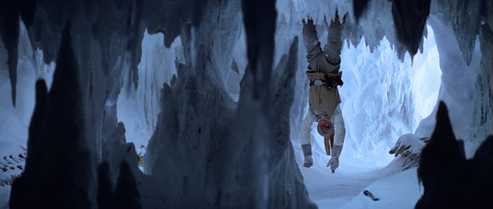
Remember that scene where Luke gets stuck upside-down in the Wompa cave? He summoned his lightsaber to free himself from the ice. We know what the Force is capable of from seeing other Jedi in action throughout the prequels and animated series, but look at this scene through the eyes of context. Luke had never seen the force do anything except trick some incompetent Stormtroopers and let his recently deceased mentor whisper words of encouragement at him. We don’t see Obi-Wan do any telekinesis in A New Hope. So, where’d he pick up this little gem? The only explanation is that he’s been practicing the force on his own. Testing the boundaries of what he was capable of. And if you think it wouldn’t be possible for him to figure out how to ‘Jedi’ on his own, have you ever gone to YouTube to find a tutorial? It’s not too much of a stretch to say Luke could have booted up his Empire Explorer and googled himself some answers.
2: Space is really big. Like, REALLY big
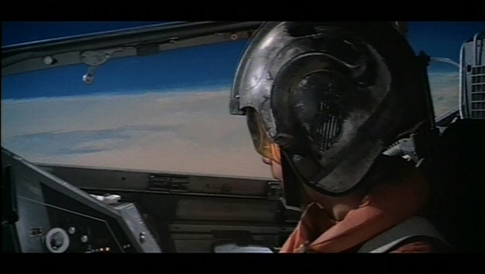
Maybe this doesn’t seem like an important detail, but when we’re talking about how much time Luke spent on Dagobah with his lumpy green mentor, this component is of paramount importance. Many would lead you to believe that mere hours pass as the Millennium Falcon travels between Hoth and Bespin; but for that to happen those two planets would have to be so close to each other that they would practically have to be moons of one another. Also, it’s the Hoth and Bespin systems, meaning they orbit different stars. The journey could have easily taken months without a hyperdrive to speed things up, giving Luke ample time to brush up on his Jedi training.
4: Time is Relative
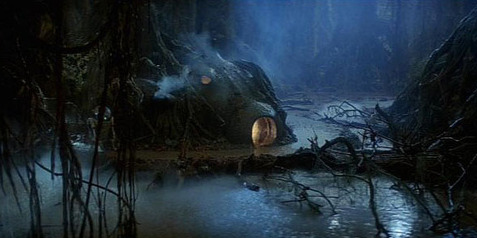
Ever heard Einstein’s theory of relativity? Time passes differently depending on several factors. We don’t get a complete look at the planet where Luke gets his deeper training, but we can draw some conclusions based on context clues from the films. During Luke’s training with Yoda, we are also getting scenes of Han and Leia at Cloud city. For them, it seems only hours are passing. Yet, in one scene of training from Yoda, he said, “no more will I teach you today.” Then, just moments later, we see Luke stacking rocks with the Force as Yoda instructs him. Only hours passing for Han and Leia, but days passing for Luke and Yoda? We can conclude that a lot more time passes for Luke while he’s in the Dagobah system than passes on Cloud City, again stacking the preparation time in Luke’s favor.
4: Saber skills come from the Force
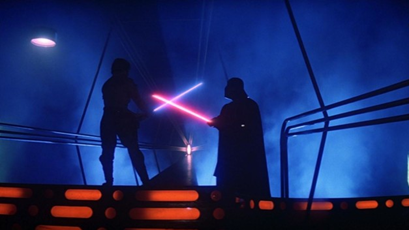
There’s a reason you don’t see everyone and their Wookie swinging around lightsabers in the Star Wars Universe: because a little more skill than knowing how to sword fight is required to compete with one. Lightsabers are the weapon of a Jedi, as we hear time and time again. Even in situations throughout the Star Wars Expanded Universe (Now called Star Wars Legends) we have stories of people who lose their Force sensitivity and along with it goes their lightsaber skills. Why would that happen, unless their saber skills were the result of their connection to the Force? The stronger the connection to the force, the better prepared one is for a fight with a lightsaber. So yes, Luke didn’t have much physical experience in saber fighting, but considering the months of Force training he has had, that really doesn’t matter.
Maybe you’ll think about this next time you hear haters trying to throw shade on our favorite Skywalker.
August 24, 2020
4 Life Lessons From Wizard of Earthsea
When I was a young man I was introduced to LeGuin’s epic fantasy tale, A Wizard of Earthsea. From the sweeping vistas of the Archipelago, to the deep mysticism and authority of the magic in Earthsea, I loved everything I found in her amazing work. But one thing stood out to me above all the rest as I read and reread this incredible series. The lessons I learned that shaped me into the man I am today.
One thing is right in the title. In the series, we follow a boy called Sparrowhawk, who from a young age shows incredible promise toward the high arts of magery. He saves his town from the would-be ravaging of the invading armies from the Viking-esque Kargad Lands. He became a Dragonlord and eventually the Archmage himself, the highest honor a wizard can receive. Yet he is only referred to as “A wizard.” Not “The wizard.” While what he accomplished is no small feat, he isn’t given any special treatment, nor preferential observance in the story that is his own. He is humble from his experiences, and rightly so. In the beginning of his story, Ged the Sparrowhawk is full of hubris. And he pays for it, dearly.
Which takes me to my second life lesson. Ged’s story isn’t one of Man versus Evil, or Man versus Man. It’s Man versus Self. In his pride, Ged takes a serious risk and attempts to summon the spirit of a heroine from one of their ancient stories. But as he works the spell, he loses control of it, and brings into his world something far worse. It has no name, but what it is known as when it is able to possess a human body is a Gebbeth, or an eaten one. The attack of his shadow leaves him terribly scared, and even robs him of some of his physical faculties. He is slow of speech for almost a year, and even moves with halting limbs from that time forward. His pride brought him low, and he spent the rest of his youth fighting the terror he had brought into the world by it. In the end, Ged discovered the only way to overcome his prideful shadow which he had brought into the world, was to understand how it was a part of him. How he must accept it and move on. We all have negativity inside ourselves. We have aspects to our personalities that are harmful, some may say even toxic. Only by looking inward, and facing what we are and what we want to be, can we accept those mistakes and shortcomings and find a way to coexist with ourselves, and eventually defeat the shadows of our own pride.
In A Wizard of Earthsea, we learn of their magic from the masters at the school of Roke. Ged asks the master changer in one lesson why he cannot change a stone to a diamond. The master replies with a bit of wisdom that is extraordinarily applicable to all of us. It is what they call the principle of Equilibrium. He says, “To change this rock into a jewel, you must change its true name. And to do that, my son, even to so small a scrap of the world, is to change the world. It can be done. Indeed it can be done. It is the art of the Master Changer, and you will learn it, when you are ready to learn it. But you must not change one thing, one pebble, one grain of sand, until you know what good and evil will follow on that act… To light a candle is to cast a shadow.” Every action we take has consequences, both good and bad. By taking the time to understand those actions we might take, we can be assured that we made the decision, and the outcome is the one we will live with. We become masters of our fate. To me, that was a beautiful lesson, and one I still struggle to learn even today. Decisions can be hard, but when we come to them with an understanding that the outcome, no matter what it will be, is one that we will live with and use to influence our lives from that point on, I know that I take my choices more seriously, and find a sense of comfort and control in doing so.
Finally, I learned that a man need not fight great battles to do great things. Too many stories, in my opinion, focus on mighty heroes who battle armies, lead battalions, or wage some war here or there. And that’s not such a bad thing! But the common person may never have the chance to do such a thing, and if they find that those are the only heroic acts, they might miss the heroism they engage in everyday. Even Ged did fight a dragon, and was a powerful wizard, sailing Earthsea to help people. But his greatest act is one that isn’t even remembered in the legends that followed him. It was his humility, his kindness, and his wisdom that showed me even a simple act, one that is within yourself, an act of overcoming your own obstacles, that can truly define your life. Ged became a man not through conquering an enemy in battle, but by conquering himself. And we all do that every day, little by little.
As we discover our own traits that we want to foster, and the ones we want to defeat, and we work toward doing those things, we are heroes in our own stories. Because when we’ve overcome what ever little trial we face every day, we become the kind of people who can change the world.Ged the Sparrowhawk inspired me to be my best. I overcame my dyslexia so I could read this book myself, rather than having it read to me. And I’ve read this book every year since then. I read many other books, too, but I always come back to this one. Because the lessons I learned here shaped me into who I am. And continue to shape me into who I want to become.
3 Reasons You are Wrong About Sci-Fi Tropes
Science fiction is often measured by its tropes. Either the critics of the genre are hyper focused on the presence of them, or the absence of them. Hey, they have their reasons, I get it. You wanna see something new, so you bash on something when you see an old trope show up. But just because something is showing up frequently doesn’t mean it’s inaccurate. And no one is immune to the power of tropes either. Even if you think you’re above it all, first of all, slow down there hipster, and second of all, chances are you like something that is riddled with tropes, most likely because of the tropes. Ever watched a Marvel movie and liked it? You like tropes, then. Deal. But back to the topic at hand.
1: The Single Biome Planet
I’ve heard tons of people bemoan the biomes of planets in science fiction. The complaint goes something like this: “It’s stupid that this film/book contains so many planets that are just one thing. The swamp planet. The ice planet. The desert planet. Earth has so much variety, so should the planets in this!” Well, tiger, you may be right that Earth is covered with variety, but have you ever taken a look at what most planets are actually like? Grab a telescope, look at some NASA photos for crying out loud. Even with the Kepler telescope discovering thousands of planets outside our solar system, surprisingly few of those planets come anywhere near the Goldilocks Zone required for a planet to have liquid water and become Earth-like. Just check our own solar system if you need more proof. Mercury is a sun blasted waste land.
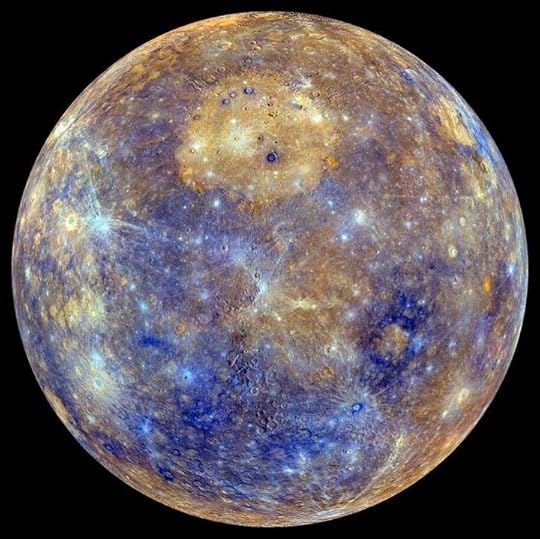 credit NASA
Venus is a toxic wasteland.
 credit NASA
Mars is a cold, desert wasteland.
 credit NASA
Pluto is a frozen wasteland.
 credit NASA
And Earth’s a teenage wasteland.
 In Miami, no one can hear you scream
2: Ancient Aliens
I’ve heard a lot of complaints on this one. Especially in the Alien franchise. With the reboot of the series through Prometheus and later Alien: Covenant, people were up in arms with the idea of ancient aliens in their beloved franchise. But here’s the main problem with that. Ancient aliens are always a part of alien. Ever seen the first film, bringus?
 Dr. Steven H. Brule, PhD
The crew of the Nostromo in Alien touch down on an alien planet in pursuit of a phantom alien signal, where the stumble upon an ancient derelict spacecraft. Keyword ancient. Keyword alien. If a species is sufficiently advanced to have space travel, and has been around for thousands of years, it’s not that much of a stretch that they’ve had some interaction with our own species at some point. After all, we’ve already established the rarity of Earth-like planets. So it’s likely to draw attention. Also, the ancient alien trope is as old as the genre of science fiction. Authors were weaving it into their narratives as long ago as 1887, in J.H. Rosny’s The Shapes. However, maybe I’m not giving the critic enough credit. There’s also the argument, “Ancient aliens as a trope is stupid because it doesn’t surprise me anymore.” Well, to that I still call foul. For this reason: ancient aliens aren’t meant to surprise you. It’s just an element of sci fi story telling that comes up a lot. Would you be mad at a super hero for getting his powers from mutation, or a super insect, or a fancy tech suit? No! That’s what you expect. It’s part of being a super hero. Just like ancient aliens. For crying out loud, ancient aliens are a major part of the Halo game series, and they’re not hiding it! It’s in the title of the frigging game: Halo. Those Halo’s are ring worlds built by the Forerunner, an ANCIENT ALIEN race. Who also had ancient dealings with Earth. It’s normal. Deal with it.
3: Alien Hordes
This one comes up often in the discussion of video games. When there’s a sci fi game, there’s most likely going to be a bunch of bugs. The Zerg from Starcraft. The Flood from Halo. The Xenomorph from such gems as Aliens Vs. Predator II 2001, Alien: Isolation, and from such flops as Aliens: Colonial Marines. They always show up it seems, and they always eat a bunch of people and either cocoon them, transform them, or both. This is one I can understand. In Halo, I didn’t expect the Flood at all. They showed up out of no where and hijacked the game into a new, terrifying direction. And I loved it. It surprised me, even though it was a trope of the genre. Why? Because it doesn’t show up everywhere. It’s been a sci fi trope for longer than many may realize, even going back to such sci fi’s that don’t fit the mold as Invasion of the Body Snatchers. Hordes of creepy crawlies have been around for ages, and they are, in most instances, genuinely scary. So why get rid of it? It works super well. With the addition of Alien to the gallery in 1979, it reinvigorated the trope and reinforced it into the minds of hundreds of young creatives. Which is why, I believe, the trope has endured so well. There are direct references to the film throughout Halo, and many other works of fiction. It’s a love letter to something those creators found pleasure in when they were young. I may understand the desire to shy away from the alien hordes, but I find no fault in using it. It’s a wonderful, goopy, drippy tribute to the macabre.
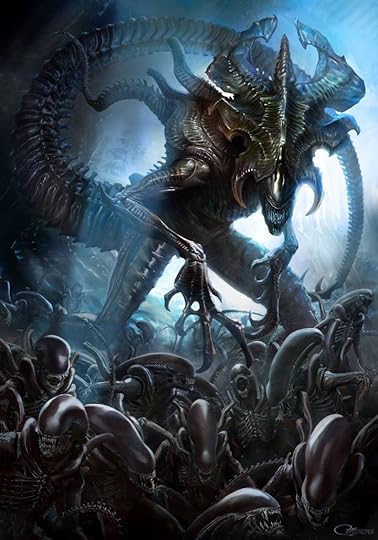 Alien King by Arvalis
Science Fiction is a genre like any other. It has a rich history, going back over one hundred years, and with that comes tropes. You can’t escape them. They’ll slither up to you in the dark and terrify you to your core. And that’s the point. Tropes matter because they are the trail markers of your past. They show where you came from, who you learned from, and what you value. Disliking something because it doesn’t make sense to you doesn’t make you better than the disliked thing. Take some time to get to know your tropes, and I bet you you’ll find far more pleasure in your viewing, reading, and gaming experiences. Thanks for reading.