Rob Kitchin's Blog, page 44
February 12, 2019
Review of The Attention Merchants by Tim Wu (2016, Atlantic Books)
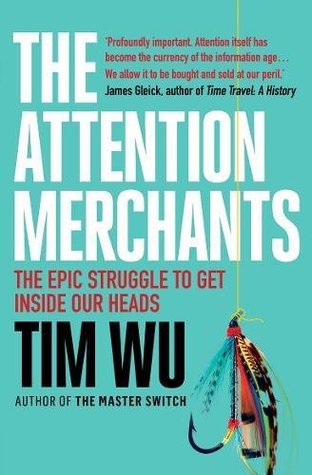 For Tim Wu an attention merchant is a firm that seeks to capture and maintain the attention of an audience and to monetize that attention through advertising. He traces the development of such merchants back to the 1830s and the first adverts appearing in newspapers, which quickly became an important income stream. With the invention of every new media he documents how advertisers found ways to colonize it – magazine ads, sponsoring radio and TV shows, commercial breaks, product placements, celebrity endorsements, ads on websites, etc. – along with other spaces such as posters on streetscapes. He makes the case that we are now constantly bombarded with advertisements and media tricks (e.g., clickbait) designed to nudge us towards consumption. This forced diet of ads has not been accepted without resistance, however, with consumers fighting back in various ways such as switching channels and using ad blockers.
As with The Master Switch – Wu’s history of information industries – the book provides a fairly long history of the relationship of media and advertising through a series of short, accessible chapters full of interesting stories and facts. It’s wide-ranging in coverage discussing a broad sweep of attention merchants and their work, though it’s very US-centric despite a couple of brief forays to the France, UK, Nazi Germany, Canada and Japan. While no doubt the US has led the way in driving the attention merchants business model, media and advertising has been pushed forward elsewhere and also taken different forms and been resisted in varying ways. While up-to-date, including Trump’s use and pursuit of attention, I was somewhat surprised that the present role of data extraction and data brokers in profiling consumers is barely discussed. Overall, an engaging, informative read.


Review of The Attention Merchants by Timothy Wu (2016, Atlantic Books)
For Timothy Wu an attention merchant is a firm that seeks to capture and maintain the attention of an audience and to monetize that attention through advertising. He traces the development of such merchants back to the 1830s and the first adverts appearing in newspapers, which quickly became an important income stream. With the invention of every new media he documents how advertisers found ways to colonize it – magazine ads, sponsoring radio and TV shows, commercial breaks, product placements, celebrity endorsements, ads on websites, etc. – along with other spaces such as posters on streetscapes. He makes the case that we are now constantly bombarded with advertisements and media tricks (e.g., clickbait) designed to nudge us towards consumption. This forced diet of ads has not been accepted without resistance, however, with consumers fighting back in various ways such as switching channels and using ad blockers.As with The Master Switch – Wu’s history of information industries – the book provides a fairly long history of the relationship of media and advertising through a series of short, accessible chapters full of interesting stories and facts. It’s wide-ranging in coverage discussing a broad sweep of attention merchants and their work, though it’s very US-centric despite a couple of brief forays to the France, UK, Nazi Germany, Canada and Japan. While no doubt the US has led the way in driving the attention merchants business model, media and advertising has been pushed forward elsewhere and also taken different forms and been resisted in varying ways. While up-to-date, including Trump’s use and pursuit of attention, I was somewhat surprised that the present role of data extraction and data brokers in profiling consumers is barely discussed. Overall, an engaging, informative read.
February 10, 2019
Lazy Sunday Service
 I'm finally getting round to reading a couple of books by Irish authors who've been on the to-be-read pile for a few months - Black Water by Cormac O'Keeffe and The Defense by Steve Cavanagh. Not quite sure why they never quite reached the top of the pile, but they've fared a better than some. I've a couple of books that have been waiting for a year or more that I still intend to read but I've never quite been in the mood, or I've been saving them as companions for if I ever re-visit a country. I'll get to them eventually ...
My posts this week
Review of Moskva by Jack Grimwood
Review of Corpus by Rory Clements
The shotgun is missing
February 9, 2019
The shotgun is missing
‘Louise!’
‘What?’
‘Can you come here?’
‘What is it?’ Kenny’s wife said from the doorway.
‘Have you been in the gun cabinet?’
‘No. What’s wrong?’
Kenny stood up, opening the cabinet wide.
‘The shotgun is missing.’
‘Missing? But only you have a key.’
‘And the spare hidden in the shed.’
‘The door hasn’t been forced?’
‘No. And it was there yesterday. Do you think … Aidan?’
‘He’s twelve. What would he want with a shotgun?’
‘That’s what I’m worried about.’
A shot blasted in the distance.
‘Oh, God.’
Kenny bolted into the yard.
‘Aidan!’
Crows were rising in the woods.
A drabble is a story of exactly 100 words
‘What?’
‘Can you come here?’
‘What is it?’ Kenny’s wife said from the doorway.
‘Have you been in the gun cabinet?’
‘No. What’s wrong?’
Kenny stood up, opening the cabinet wide.
‘The shotgun is missing.’
‘Missing? But only you have a key.’
‘And the spare hidden in the shed.’
‘The door hasn’t been forced?’
‘No. And it was there yesterday. Do you think … Aidan?’
‘He’s twelve. What would he want with a shotgun?’
‘That’s what I’m worried about.’
A shot blasted in the distance.
‘Oh, God.’
Kenny bolted into the yard.
‘Aidan!’
Crows were rising in the woods.
A drabble is a story of exactly 100 words
February 7, 2019
Review of Moskva by Jack Grimwood (2016, Penguin)
 December 1985, the body of a teenage boy is found in Red Square clutching a wax angel. A week later, Alex Marston, the precocious teenage daughter of the British Ambassador disappears. Major Tom Fox, newly arrived in the embassy after the death of his daughter and a work-related incident, agrees to try and locate her. For Fox the mission is more than simply offering to help, it is a chance to redeem the death of his daughter. It’s soon clear that Alex was taken and is being held against her will, but there is a larger game going on between a senior group of Russian officials that has its roots in the last days of the Second World War. After working undercover in Northern Ireland, Fox is used to moving through the shadows, but navigating the intricacies of Russia’s politics and personal rivalries is a tricky business, especially with a young girl’s life on the line.
 Moskva is the first in the Tom Fox series, following the exploits of a British military intelligence officer at the tail end of the cold war. Fox is a damaged soul, a man who abandoned life as a priest for a wife and family and undercover in Northern Ireland; a man who has recently lost his daughter and is about to be divorced. He’s been shipped to Moscow to keep him out of the way of a select committees questions, but he has a habit of finding trouble. In this case it comes in the form of the kidnapping of the British Ambassador’s daughter. Fox starts his own investigation, which is facilitated by senior Soviet figures, both sides wanting to keep the incident out of the media and political spotlight. Unwittingly he has also stumbled into a wider conspiracy. What unfolds is a cold war thriller set in the early days of Perestroika. Grimwood keeps the pace and tension high as Fox careens from one situation to another, and there is plenty of intrigue and twists and turns. The result is a gripping page-turner, especially towards the end. I was swept along with it, rushing over a number of plot devices used to keep the story on track. I lost the thread a little at the denouement as while most of the elements of the unravelling conspiracy made sense, there were a couple of aspects that seemed a little obtuse. Nonetheless, it was a captivating read and I’ll be reading the next in the series.

February 5, 2019
Review of Corpus by Rory Clements (2017, Zaffre)
 1936. Nancy Hereward, a young woman with communist sympathies, travels to Berlin to deliver papers to a Jewish scientist seeking to escape Nazi Germany. A few weeks later she is discovered dead from a heroin overdose. Despite the police and coroner ruling accidental death, her friend Lydia and her neighbour, Cambridge history don, Tom Wilde think it might be murder. A few miles away, a politician and his wife are brutally murdered, seemingly by communist agents. Wilde visits the scene with Philip Eaton, a Times journalist. He senses that the murders have been staged and that there might be a link with Nancy’s death, given they were the parents of one of her best friends. Old friends seem to be gathering in Cambridge, including a senior member of Stalin’s intelligence service fresh from the civil war in Spain, and an ardent Nazi who is a member of Hitler’s bodyguard. In London, pressure is mounting for the King to abdicate over his affair with Wallis Simpson. Wilde seems to have stumbled into an unfolding conspiracy of some kind, which he’s determined to unravel.
Corpus is the first book in the Tom Wilde series set in the years leading up to the Second World War. Wilde is a history professor at Cambridge University specialising in the key figures and practices of intelligence in the Elizabethan and Jacobian era. He’s somewhat of an outsider, being American by birth and citizenship, with an Irish mother, but has spent a lot of his childhood and adult life in England. He has a kind of Indiana Jones persona, using his knowledge, position and boxing skills to help solve mysteries. In this case he stumbles into a web of conspiracies involving communists, Nazis and British intelligence, and missing Spanish gold, the saving of Jewish scientists from Nazi Germany, and the abdication of King Edward. It’s very much a Boy’s Own tale of adventure, with Wilde pitching his skills against professional nasties of various political hues. The story rattles along with Wilde calmly taking on all-comers as he helps his neighbour Lydia get to the bottom of a trio murders and in so doing prevent a major political incident. The story is populated with a wealth of colourful characters and has plenty of intrigue and escapades. And if one can park the fact that it is largely unbelievable throughout and if pressed some of it makes little sense, it’s an engaging read. (For me, the logic and execution of the conspiracies, in which key actors and acts deliberately drew attention to themselves, ran counter to a secret mission and seemed unlikely, though it did create tension, action and kept the pages turning.) Overall, an entertaining slice of speculative, if fanciful, historical fiction.

February 4, 2019
January reads
 A good month of reading to open the year. Difficult to choose between Dead To Me by Cath Staincliffe and The Devotion of Suspect X by Keigo Higashino for read of the month, but I'm going with the latter for the cleverness of the plot and excellent denouement.
From Doon With Death by Ruth Rendell ***
The Devotion of Suspect X by Keigo Higashino *****
Postmortem by Patricia Cornwell ***.5
Dead To Me by Cath Staincliffe *****
The Book Thief by Markus Zusak ***
Let The Dead Speak by Jane Casey ****.5
Cemetery Lake by Paul Cleave ***.5
All The Light We Cannot See by Anthony Doerr ****
Hidden Figures by Margot Lee Shetterly ****.5
Pieces of Her by Karin Slaughter ****.5
February 3, 2019
Lazy Sunday Service
 A week of running around, meetings and a quick trip to Germany, with a bit of time left over for reading. Now working my way through Jack Grimwood's Moskva set in the city in the mid-1980s.
My posts this week
Review of From Doon With Death by Ruth Rendell
Review of The Devotion of Suspect X by Keigo Higashino
Review of Postmortem by Patricia Cornwell
Forget the plane
February 2, 2019
Forget the plane
‘Bev.’
‘Is Rachel with you?’
‘No. I’m on my way to the airport.’
‘I can’t find her, Tom.’
‘She’s probably with one of her friends.’
‘I’ve rung round. None of them have seen her since yesterday afternoon.’
‘You rang her friends before me?’
‘Now’s not the time! Our daughter’s missing.’
‘Have you spoken to the school?’
‘Yes. Maybe she’s gone to your place?’
‘I’ve just left the apartment; she wasn’t there.’
‘Something’s happened. I know it.’
‘She’s probably just playing silly buggers.’
‘I need your help.’
‘I’ve a plane in two hours.’
‘Forget the plane! Rachel is missing. Your daughter!’
A drabble is a story of exactly 100 words.
‘Is Rachel with you?’
‘No. I’m on my way to the airport.’
‘I can’t find her, Tom.’
‘She’s probably with one of her friends.’
‘I’ve rung round. None of them have seen her since yesterday afternoon.’
‘You rang her friends before me?’
‘Now’s not the time! Our daughter’s missing.’
‘Have you spoken to the school?’
‘Yes. Maybe she’s gone to your place?’
‘I’ve just left the apartment; she wasn’t there.’
‘Something’s happened. I know it.’
‘She’s probably just playing silly buggers.’
‘I need your help.’
‘I’ve a plane in two hours.’
‘Forget the plane! Rachel is missing. Your daughter!’
A drabble is a story of exactly 100 words.
February 1, 2019
Review of From Doon With Death by Ruth Rendell (1964, John Lang)
 When the prim and proper Margaret Parsons disappears Inspector Burden reassures her husband that she will in all likelihood be back by morning. However, the following day her body is found in a nearby wood. The only clues at the scene is a tube of expensive lipstick and a burnt match. At the marital home they find a set of rare books inscribed from a secret lover called 'Doon'. The books date back to when the victim was a local school girl before she moved to London. It seems that her recent move back to the village might have led to a rekindling of the relationship. But who is the mysterious Doon? Chief Inspector Wexford marshals his team and starts to investigate, though their pursuit is hampered by unwilling witnesses.
From Doon With Death is the first book in the Chief Inspector Wexford series that eventually ran to 24 instalments between 1964 and 2013. I’m surmising that the series must be locked pretty much in the time period since Wexford was 52 in 1964. The story is a straight-up police procedural plotting the investigation into the death of a dowdy thirty year old woman. The story sticks to the case, with little elaboration of the policeman’s lives, and might be considered a novella by contemporary standards given my version only ran to 183 pages. The voice is engaging, with Rendell quickly painting a scene and giving a good sense of the characters. The plot is intriguing, but is linear with a handful of potential suspects that are eliminated in turn, and it kind of runs out of steam a little at the end with an unsurprising twist and a bit of a flat denouement. Nonetheless, a nice, tight whodunit.