Rob Kitchin's Blog, page 208
June 21, 2012
Cantemir Prize
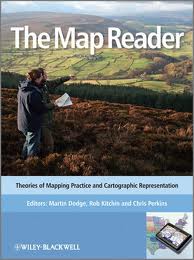 We got a nice email at the weekend informing us that we had won the Berendel Foundation's 2012 Cantemir Prize for our book The Map Reader. We're due to collect the award from HRH Prince Radu of Romania at a conference in Oxford University in September. Looking forward to the trip over to Morse country.


June 19, 2012
Scattered to the Four Winds
 Here's a short yarn submitted to a story competition run in conjunction with Power's Whiskey. Had to be less than 450 words and on the theme of 'Celebrating what truly matters'.
Last through the front door, Conor caught Jack and Siobhan sneaking hand-in-hand up the stairs.
‘Hey, where’d do you think you two are going? Front room for a nightcap. We’ll be scattered to the four winds from tomorrow.’ He looked at his watch. ‘Today.’
The two lovebirds descended reluctantly and ducked into the lounge. The other five house mates were already slouched on the two tatty sofas and two threadbare armchairs.
‘Sarah, see if you can find some candles, will you?’ Conor instructed a waif-like young woman dressed from head-to-toe in white.
‘What for?’ she answered, half-heartedly.
‘Atmosphere. With this lighting we could be sitting in a supermarket. I’ll get the drinks.’
He disappeared through a door into a messy kitchen.
‘Put some toast on, while you’re in there,’ Sean shouted through.
‘You’re like an empty pit,’ Jack said, dropping two slices of thick white bread into the toaster. He retrieved a tray from on top of the kitchen presses and on it placed an odd assortment of glasses.
Back in the lounge the lights were off, the room lit by four candles. Somebody had put on some trance-like, electronic mood music.
Conor slid the tray onto a coffee table, nudging a pile of magazines to the floor. He reached in behind the television and withdrew a bottle.
‘Whiskey?’ Jack said.
‘Powers. Gold label. I’ve been saving it.’
‘You bought it last week!’
‘As I said, I’ve been saving it.’
‘Come-on, Conor, how old are we?’ Charlie asked. ‘Sixty? Sitting around supping whiskey like we’re auld fellas.’
‘For god’s sake, Charlie, you don’t have to be an auld wan to enjoy a drop of the golden elixir. And sitting round swapping stories, taking a wee drop, is part of our DNA. What makes us, us.’
‘You’re a sentimental fool, Conor,’ Aine said.
‘Look, this is our last day together. Jack and Siobhan are heading to Sydney tomorrow night. Brenda’s heading over to London next week. Charlie and Sean are off to Alberta in a month’s time. This is last time we’ll be together in a long while. That deserves a toast and the telling of yarns.’
‘Toast? My flippin’ toast!’ Sean dug himself out of the armchair and headed for the kitchen.
‘Sean, forget the toast! Get back here.’
‘Just give me a minute. We’ve got the rest of the night, haven’t we? Besides, it’s not good to drink on an empty stomach.’
They waited in silence until the big man returned, Conor passing out the glasses.
‘Right then,’ Conor raised his tumbler. ‘To us, to supping whiskey and telling yarns, to the four winds and the future.’
‘To us,’ the others chorused, clinking glasses.

June 18, 2012
Review of The Lily of the Field by John Lawton (Grove Press, 2011)

Vienna, 1934, and ten year old Meret Voytek, a talented young cellist, becomes a pupil of the concert pianist/cellist Viktor Rosen. A Jew, Rosen has fled Germany after a stint in a camp, but the political climate in Austria is deteriorating and he knows that he’ll shortly have to move on. 1940 and Meret is playing in the Vienna Youth Orchestra, shorn of its Jewish players, and Rosen has been detained in London and interned on the Isle of Man, along with an assortment of other European émigrés, including Rod Troy and Karel Szabo, a Hungarian physicist. Whilst some internees stay in Britain, others are sent overseas, Szabo put on a boat to Canada. A couple of months later he is recruited to work on the Manhattan Project. 1944 and Meret is in Auschwitz, trying to survive, playing in the women’s orchestra that greets new arrivals and waltzes them to the gas chambers. Szabo is in Los Alamos, helping to build the atomic bomb and Rosen is delighting audiences at concerts. 1948 and a man is killed on a London Underground platform, shot in the back. A man known to Rosen, who is now reunited with his protege, Meret. Inspector Freddie Troy, brother to MP and government minister, Rod Troy, is put in charge of the case. It doesn’t take him long to realise that there is more to the killing than it would first appear. He’s been warned in no uncertain terms to stay away from anything involving spooks, but Freddie’s always had a problem following commands and it always drops him in hot water.
A Lily of the Field consists of two distinct parts. The first part charts the various strands of Meret, Victor and Szabo from 1934 to 1948, putting in place the contextual back story. The second covers Troy’s investigation into the underground station murder. There’s a distinct contrast in styles between the two parts. The first is light, quick, short scenes that provide insight into key moments and give good, strong pen pictures of the characters. The writing is expressive and Lawton delivers an expansive story, covering a number of characters, places and times, in a relatively short amount of space. The material is also historically rich, detailing key events over a 14 year period without it seeming as if things were skipped over or them dominating the narrative. It is a really skilful and engaging piece of writing. Really top-draw stuff. The second half, the pace drops and the writing becomes a little more leaden, and characters from the first half all but disappear for extended passages. At times, it is seems to become more about Troy and his family than the story. It’s still very good, but it lacks the sparkle and dash of the first part. Even so, the plotting is excellent and there is a satisfying resolution to the story. Overall, a shame that the second half did not have the verve of the first, but nonetheless a well crafted and very enjoyable read that is a cut above normal fare.


June 17, 2012
Lazy Sunday Service
I completely forgot that Patti Abbott was running her Drabble Challenge yesterday. The idea was to write a drabble based on one of three photos. As usual, I posted my Saturday drabble but it had nothing to do with the three pictures. C'est la vie. There are 21 drabbles over at Patti's blog. Check them out.
My posts this week
Review of The Black House by Peter May
Review of The Pistol Poets by Victor Gischler
Aberystwyth haul
Review of The Last Detective by Peter Lovesey
Karma Coma

My posts this week
Review of The Black House by Peter May
Review of The Pistol Poets by Victor Gischler
Aberystwyth haul
Review of The Last Detective by Peter Lovesey
Karma Coma
June 16, 2012
Karma Coma
‘How are you, George?’
His skin was paper thin, tight to his bones, eyes buried deep in their sockets.
‘You’re still in pain?’
He tried to nod his head.
‘Do you want me to make it go away?’
He blinked, thinking that he hated rhetorical questions. Hated this damn hospital. Hated the cancer that had put him here.
She produced a syringe. ‘Morphine. It’ll make it all disappear.’
He watched her roll up his sleeve, the needle being fed into a vein, wondering about the use of ‘all’.
‘The pain will drift away, then a moment of karma, then ...’
A drabble is a story of exactly 100 words
His skin was paper thin, tight to his bones, eyes buried deep in their sockets.
‘You’re still in pain?’
He tried to nod his head.
‘Do you want me to make it go away?’
He blinked, thinking that he hated rhetorical questions. Hated this damn hospital. Hated the cancer that had put him here.
She produced a syringe. ‘Morphine. It’ll make it all disappear.’
He watched her roll up his sleeve, the needle being fed into a vein, wondering about the use of ‘all’.
‘The pain will drift away, then a moment of karma, then ...’
A drabble is a story of exactly 100 words
June 15, 2012
Review of The Last Detective by Peter Lovesey (Time Warner, 1990)
 A young woman is found floating naked in a lake, with no obvious signs as to how she was killed. She seems vaguely familiar to many people but it takes a little while for her to be identified. Detective Superintendent Peter Diamond has been assigned to the case. Diamond believes in old fashioned policing using clues and deduction, not overly relying on forensic evidence and fitting the facts around it. He has a spiky, dominant personality and his staff live in fear of his wrath. He’s also awaiting the report of an investigation into his conduct related to a miscarriage of justice case, and his usual DI has been replaced by a plant from head office to keep an eye on him. As the case unfolds, Diamond feels he is pushing a lonely furrow, his team more interested in seeking a conviction rather than the truth.
The Last Detective is a police procedural in the traditional, British form - think Colin Dexter, John Harvey or Ian Rankin. Lovesey tries to break the form up by varying the point of view, the book divided into parts, with each told from the perspective of a different character. It’s a useful device to add some depth to what is a fairly mundane story. The characterisation is good, although it’s difficult to warm to Diamond until near the end of the book and at that point his personality seems to have been transformed. There is a good sense of place, the story clearly rooted in Bath and its surrounds, and there is nice contextualisation with respect to Jane Austen’s link to the city. The plot works fine, having a couple of twists and turns, some misdirection, and good procedural detail with respect to the case and a trial, but ultimately, the book hinges on two events that both seemed weak to me. Difficult to discuss without giving spoilers, but the dramatic change in Diamond’s life was needed as a plot device but didn’t ring true, and the resolution is based on a confession that comes very easily and seemed very unlikely. Overall, an okay, straight up-and-down police procedural.


June 13, 2012
Aberystwyth haul
 I have finally managed to buy a Reginald Hill book. It took nine bookshops, but I got there in the end. The book I've bought is Midnight Fugue, a Dalziel and Pascoe book. Although I've read a Reginald Hill book before then, it's not been in this series, so I'm looking forward to it. I also picked up Deon Meyer, 13 Hours; Colin Coterill, Love Songs from a Shallow Grave; Patrick deWitt, The Sisters Brothers; John Lawton, A Lily in the Field; and Sarah Helm, A Life in Secrets. A nice little haul.
Review of The Pistol Poets by Victor Gischler (No Exit Press, 2004)
 Wandering professor, Jay Morgan, has landed at East Oklahoma University to teach poetry on a one year contract. Beyond the fact that his students have a distinct lack of talent, within a week of term starting he has major problem - there’s a dead co-ed in his bed, the victim of a dodgy drug overdose, and an overly keen student journalist is tailing him. A potential benefactor to the university and aspiring poet comes to his rescue, helping him dispose of the body and cover his tracks. He has two further problems, however. First, the young woman’s parents have sent low life PI, Deke Stubbs, to find out what happened to her. Second, St Louis drug lieutenant, Harold Jenks, has decided to try and go straight, well kind-of. He’s stolen the identity of a kid who has a scholarship to EOU, skipping town with a hundred thousand dollars worth of cocaine, hoping that stolen rap lyrics and hallmark card greetings will be enough to edge him through Morgan’s poetry class. In his wake he has left a very pissed off drug lord. With the convergence of Jenks, Stubbs, Morgan’s slightly mad colleagues, and a St Louis gang, all hell is about to break loose.
The Pistol Poets is a screwball noir with a healthy dose of mayhem and madness. As with all books in this sub-genre, plausibility is thin on the ground, but that’s hardly the point. Instead, the plot skates the edges of credibility with a series of twists and turns, double-crosses, dead ends, and violent clashes, acted out with a weird and wonderful set of characters who are all slightly larger than life or are kooky in some way. Moreover, the book is written in nice, tight, expressive prose, with a plot that is well choreographed. I was hooked from pretty much the first page and they then flipped over at a steady pace. It would have been quite easy for the various intersecting subplots to drift away into a bit of a mess, but Gischler has a firm hand on the tiller and keeps the whole thing together until the last page. A very enjoyable bit of escapist noir.


June 11, 2012
Review of The Black House by Peter May (Quercus, 2011)
 Detective Inspector Fin Macleod grew up in a remote village on the Isle of Lewis, escaping the cloying, conservative society to Glasgow University when he was 18. Within a year he had dropped out and joined the police. Seventeen years later and his life is in a rut. His marriage is on the rocks and his eight year old son has recently been killed in a hit and run incident. On the verge of leaving the police he is sent back to Lewis to help in the murder investigation of one of his former class mates, killed in the same way as a victim in one of his open cases in Edinburgh. Neither Macleod or the DCI in charge of the case wants him there. As MacLeod starts to investigate he uncovers old memories and encounters ghosts from his past. As the case unfolds, it twists in a sinister fashion, Macleod becoming ever more uncomfortable as his past catches up with him.
 The Black House is written in expressive prose that’s very easy on the eye. The sense of place, the characterization, and the close community relations are very well done, placing the reader into the landscape and society of Lewis. The telling alternates between the present, told in the third person, and flash backs to Macleod’s childhood, told in the present tense. It’s a plot device that works well, providing vital contextual back story. Unfortunately, it is also over elaborated and it would have been possible to trim much of it back in length without losing any important material. Certainly 50 plus pages could be edited from the book without the story suffering in any great way. The other main issue is the telegraphing of the mystery element of the plot. By a third of the way through I’d worked out who the killer was and roughly why; I was holding out for a major plot twist, but although a twist did come it was one that confirmed my deduction rather than challenged it. All in all, a nicely written book that provides an interesting tale with a strong sense of place and community, but is overly long and has a weak plot with respect to the murder investigation though not Macleod’s personal history.


June 10, 2012
Lazy Sunday Service
 I've been trying to buy a Reginald Hill book to read for the celebration of his life that's taking place this month. So far I've been to six bookshops and not found a single copy of any of his books, which has been a surprise. I'm off to Aberystwyth on Tuesday, assuming I can get through the floods (right), to do my external examining gig, and will take a scout round the bookshops there. If I've no joy there, then I'll have to resort to some online shopping. Other than that, it's been business as usual this last week. I did a TV interview for Danish television on Thursday. One of the Irish banks is owned by Danske Bank and they've been burned by the Irish property market. I've also posted on that a couple of times this week (see below).
My posts this week
According the CIF we need to add supply to our oversupply (do we really need more houses?)
May reviews
A couple of interviews
Review of Resistance by Matthew Cobb
Demographic contraction in Ireland's house buying cohort
Review of Kingdom of Shadows by Alan Furst
Nothing under the mattress
If this is the standard of banking analysis no wonder we're in trouble