Michelle L. Levigne's Blog, page 168
February 22, 2014
SPOTLIGHT SATURDAY: The Nun and the Narc by Catherine Castle
 Today's SPOTLIGHT is on Catherine Castle's new novel, THE NUN AND THE NARC.
Where novice Sister Margaret Mary goes, trouble follows. When she barges into a drug deal the local Mexican drug lord captures her. To escape she must depend on undercover DEA agent Jed Bond. Jed’s attitude toward her is exasperating, but when she finds herself inexplicable attracted to him he becomes more dangerous than the men who have captured them, because he is making her doubt her decision to take her final vows. Escape back to the nunnery is imperative, but life at the convent, if she can still take her final vows, will never be the same.
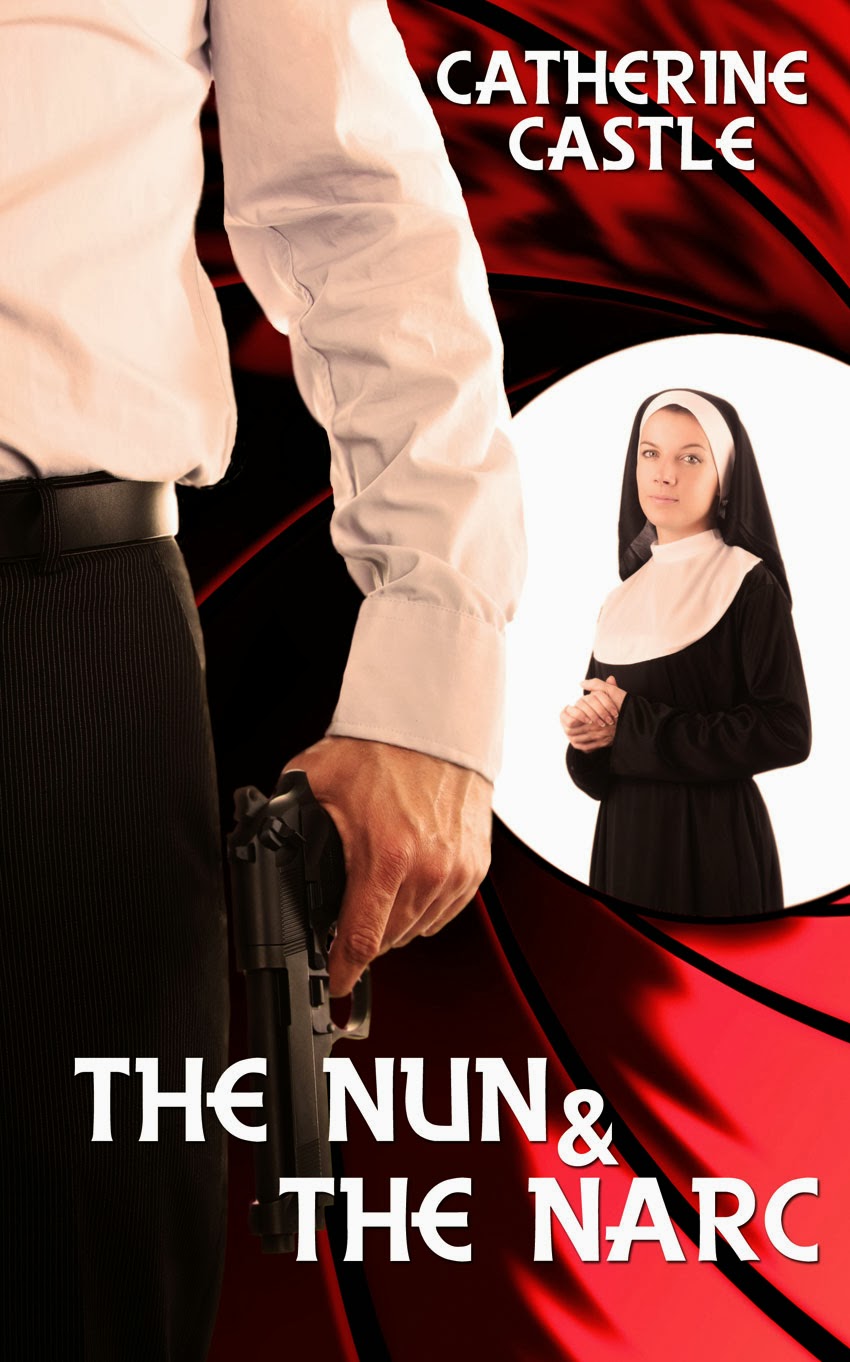
Nuns shouldn’t look, talk, act, or kiss like Sister Margaret Mary O’Connor—at least that’s what Jed Bond thinks. She hampers his escape plans with her compulsiveness and compassion and in the process makes Jed question his own beliefs. After years of walling up his emotions in an attempt to become the best agent possible, Sister Margaret is crumbling Jed’s defenses and opening his heart. To lure her away from the church would be unforgivable—to lose her unbearable.
Catherine Castle is a former journalist and poet. The Nun and the Narc, which was a Dixie Contest finalist, an AFCW Genesis finalist, and is a finalist in the 2014 EPIC awards, is her debut inspirational romantic suspense.
Find Catherine online: Website: http://catherinecastle1.wordpress.comAmazon author page: http://www.amazon.com/author/catherinecastleGoodreads page: http://www.goodreads.com/author/show/7085414.Catherine_CastleFacebook: http://facebook.com/catherinecastleauthorTwitter: @AuthorCCastle
The Nun and the Narc is available at:E-Book: http://www.amazon.com/The-Nun-Narc-ebook/dp/B00CHU9DH2/ref=sr_1_1?s=digital-text&ie=UTF8&qid=1368652543&sr=1-1&keywords=The+Nun+and+the+NarcPrint version: http://www.amazon.com/Nun-Narc-Catherine-Castle/dp/1619352966/ref=sr_1_1_title_0_main?s=books&ie=UTF8&qid=1380639013&sr=1-1&keywords=the+nun+and+the+narchttp://www.barnesandnoble.com/w/the-nun-and-the-narc-catherine-castle/1116942061?ean=9781619352964


February 20, 2014
Letters to KEL: LISTEN TO THE PROS
 Besides learning the mechanics of grammar, spelling, punctuation, sentence structure and POV, the best advice I can give you is to READ books about writing. And not just books about writing, but books written by people who have PROVEN they know what they're doing.
Yeah, there are probably a lot of people out there you can offer you gobs of advice on how to write your book, how to come up with your ideas, how to plot, how to develop characters, how to determine POV, how to market, how to create tension ... but if they aren't doing it themselves, and proving they know what they're doing with actual SALES ... if the only books they've written talk about how to write ... it's kind of like hiring someone who never put on tennis shoes to be your track coach, y'know? Can you really learn to be a painter from someone who never unscrewed a tube of oil paints or picked up a brush, but only sells the supplies at the local craft store?
I just finished reading a book that should be a primer for those starting out, just to give them an idea of what is involved in the writing life -- discipline, differences in approach and attitude, differences in marketing, in creativity, in just the day-to-day drudgery.
SECRETS OF SUCCESSFUL WRITERS, interviews with 50 published, selling authors, conducted and edited by Darrell Pitt. It was an Amazon Kindle book -- and I think it was even free at the time I got it. How can you beat that?
50 writers means 50 different viewpoints and approaches to writing, marketing, craft, art, etc. Read and see how everybody handles their writing, and then use the advice that works for YOU. Never, never, ever let someone tell you that there is only one way to be a writer: their way. Listen to the pros, the ones who are in the trenches and selling and still struggling and learning, think hard, experiment, and apply what works for you.
And let me repeat and re-emphasize -- READ.
February 17, 2014
Off the Bookshelf: WONDROUS STRANGE, by Lesley Livingston
 This was the most recent "Free book Fridays" book from Nook/B&N. I was just in a fantasy mood, so with all the hundreds of books waiting to be read, I opened this one right away.
I was not disappointed. Clever, easy to read, with engaging characters. WONDROUS STRANGE is labeled as #1 in the Wondrous Strange series ... so when I get this to-be-read heap down to size, here is yet another series to follow.
What's it about? Well, not to ruin it too much for you ... the Faerie have been cut off from the Human world for more than a century, after Auberon's daughter was stolen by a Human woman. Well, it was only fair -- he stole her son! Once a year, at Samhain/Halloween, the doorway between realms opens up and the Janus Guards are tasked with keeping the mischievous, nasty, dangerous, rebellious Faerie creatures from escaping into our world. The Janus Guards are Changelings -- Human children stolen to be raised by the Faerie -- and they're kind of ... unpopular now, because their job is to kill Faerie. Not fun.
This year is worse, as the Gate inches open a little more every night for nine days before Halloween. Sonny, our hero, notices a young hopeful actress, Kelly, who doesn't seem to be entirely Human ... and as he gets to know her and more Faerie creatures sneak through into our world, his life and Kelly's life change completely.
And that's all I'm gonna tell you, because if you like magic, and magical creatures interacting with our world, and starcrossed lovers, and dabs of Shakespeare mixed into the story, READ this one.
February 15, 2014
SPOTLIGHT SATURDAY: Casting the First Stone, by Lisa Lawmaster Hess
Today's SPOTLIGHT is on Lisa Lawmaster Hess and her first novel: Casting the First Stone.Angel Alessio and Marita Mercer are linked by only one thing -- the man one loves and the other despises. When Angel’s husband decides to pursue custody of the child he fathered with Marita, both women are forced to consider what they will -- and won’t -- do to protect the lives they have built and the families they have created.

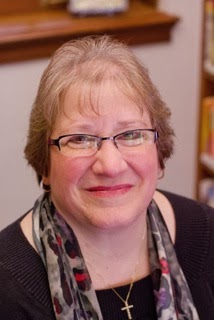
Lisa is a transplanted Jersey girl who has lived in Pennsylvania most of her adult life. A graduate of Bucknell University, Lisa worked as an elementary school counselor for 27 years before deciding to plan her work life around her family life. Now, she works as a writer and community education instructor as well as an adjunct professor of psychology at York College of Pennsylvania.
Lisa is the author of two books inspired by her interactions with her students, Acting Assertively and Diverse Divorce, as well as numerous blogs and articles. Her latest book, Casting the First Stone is her first novel. For more information about Lisa, check out her website, www.L2Hess.com, or read her blog at www.L2Hess.blogspot.com. Lisa is also a community blogger for her local public radio and television station, WITF.
February 13, 2014
Plotter? Pantser? Plontser!
 Ah, yes, the great debate -- should you plot or should you write by the seat-of-the-pants? Both sides of the debate can get rather rabid, even nasty, advocating for what they believe is the right way to write that novel.
You know what? It's THEIR right way, and just because it's the way your favorite writer writes doesn't necessarily mean it has to be YOUR right way.
Plotters: Planning out the sequence of events, the scenes, who is in each scene, what elements of the plot are introduced, complicated, resolved, advanced, whatever, in the scene. Some people are so detailed, by the time they finish their outline, the book is mostly written. Some people have 20-page, even 30-page outlines for their books. Sitting down to write that book without knowing what's going to happen, to whom, and exactly on what page ... it gives them hives.
Pantsers: The seat-of-the-pants writers. The ones who start out with an idea, an image in their heads, or a question they want to explore. They might start with one character or an intriguing scene, and take it from there. They're only a few pages ahead of the readers in knowing what the hey-ya is going on in the book. They couldn't write by an outline -- they couldn't write an outline -- to save their lives. They'd rather chew glass than use an outline.
Okay, if those methods, and the different variations and extremes work for you, then GO FOR IT!
Me ... I'm a plontser. I'm in the middle. I know where I want my book to go, I have some general ideas of the important turning points, the highs and lows, the complications in my book, but very little beyond that, sometimes. Sometimes, if I'm writing in an established universe, I have a lot of details, a lot of background, and I have to write within the lines because I referred to these events or that character's life in a previous book. Sometimes, though, I start off with an outline of less than a page, with very vague details. Maybe I don't even know the villain's name, or the name of the town/planet where the story takes place -- but I learn those things as I go along, like a movie playing inside my head -- and I get a 400-page book after starting out with a one-page outline. I give myself the freedom to go off on tangents, to follow rabbit trails, to explore -- and to rewrite that outline if it stifles me. I definitely have to change that outline if my characters, who are becoming more three-dimensional as I get deeper into the story, suddenly dig their heels in and say, "Nuh uh, ain't goin' there -- I wanna do THIS, not what you have planned for me."
Don't argue with your characters. Change your characters, rewrite your characters, do brain surgery and plastic surgery if necessary, but don't waste your time and energy arguing with them. If you make your characters do and say things that aren't "right" for them, the way you've already written them, your readers will know and they won't be happy.
The point of all this is you have to write by the method that works for YOU, not what other people in your writing group, your critique group, your creative writing class advocate. Do what works for you.
Lots of people will tell you that when it comes to writing, there are no hard-and-fast rules. That's not really true -- the mechanics, the rules of grammar, spelling and punctuation, those ARE set, non-negotiable rules. The standards and guidelines established by the publisher you write for -- those are set and non-negotiable. But everything else? That's up to you. The story is an exploration of your private world, so that means the equipment you take with you, the path you follow through that world, that's up to you. After all, just because your favorite trail guide specializes in desert treks doesn't mean you have to use desert-compatible equipment when you're going through the rainforest -- right? Same with writing. Adapt to suit the story. Adapt to suit YOUR soul. Be a plotter, a pantser, or a plontser, to whatever degree necessary. And don't let anybody tell you you're wrong.
February 10, 2014
Off the Bookshelf: TELLING DETAILS, by Kat Duncan
 Details are important -- otherwise, you get blank-faced, naked characters acting on a white stage. Kind of boring, huh?
Duncan does a great job, exploring all the ways to handle details, painting a picture, setting the scene, creating background, and building the characters themselves. Use your senses -- smell, taste, sound, motion, heat, texture, etc. She discusses telling versus showing, which is always a battle for writers. When exactly is it better to just TELL readers what's going on, versus SHOWING them? When does the pace demand quick imagery, and when can readers spend many long, leisurely minutes exploring the environment where the story takes place?
When is enough enough? When are your lovingly created details too much? That's something that depends on the type of story being told, the pace, the attitude, the genre -- and has to be learned through practice. But this kind of book is a great starting place, helping writers skip a lot of trial and error and wasted time. Another book worth reading regularly, to brush up on things maybe you forgot you need to do.
February 8, 2014
SPOTLIGHT SATURDAY: Annie's Stories, by Cindy Thomson
 Today's SPOTLIGHT is on fellow ACFW Ohio member, Cindy Thomson, and her historical novel, ANNIE'S STORIES.
The year is 1901, the literary sensation The Wonderful Wizard of Oz is taking New York City by storm, and everyone wonders where the next great book will come from. But to Annie Gallagher, stories are more than entertainment—they’re a sweet reminder of her storyteller father. After his death, Annie fled Ireland for the land of dreams, finding work at Hawkins House.

But when a fellow boarder with something to hide is accused of misconduct and authorities threaten to shut down the boardinghouse, Annie fears she may lose her new friends, her housekeeping job . . . and her means of funding her dream: a memorial library to honor her father. Furthermore, the friendly postman shows a little too much interest in Annie—and in her father’s unpublished stories. In fact, he suspects these tales may hold a grand secret.
Though the postman’s intentions seem pure, Annie wants to share her father’s stories on her own terms. Determined to prove herself, Annie must forge her own path to aid her friend and create the future she’s always envisioned . . . where dreams really do come true.
Cindy Thomson is a writer and an avid genealogy enthusiast. Her love of history and her Scots-Irish heritage have inspired much of her writing, including her new Ellis Island series. Cindy is also the author of Brigid of Ireland and Celtic Wisdom: Treasures from Ireland. She combined her love of history and baseball to co-author the biography Three Finger: The Mordecai Brown Story, which was a finalist for the Society for American Baseball Research's Larry Ritter Book Award. In addition to books, Cindy has written on a regular basis for numerous online and print publications and is a mentor for the Jerry B. Jenkins Christian Writers Guild. She is also a member of American Christian Fiction Writers and the Historical Novel Society. Cindy and her husband have three grown sons and live in central Ohio. Visit her online at www.cindyswriting.com.
February 6, 2014
Letters to KEL: The Dreaded Homonyms
 Homonyms: sound-alike words. Using perspective when you mean prospective. Using their when you mean there. It's for its. Adapt for adopt.
Some people may say, "Well, it's close enough to what you mean, people can figure it out, so why does it matter to get the right word?"
IT MATTERS.
To misquote Mark Twain: Using the right word is the difference between lightning and a lightning bug.
If you want to be a writer, you have to get it right -- that means the details, that means the mechanics. If you don't care about the details, why should your readers care about the story you want to tell? If you have a story to tell, and you're going to spend the time getting the rest of it "right," why wouldn't you make the effort to use the right words?
If you're going to take the time to weave together the story so it makes sense, so it catches and holds the reader's attention, so the reader cares about the characters, the conflict, the danger, the goals, the tension -- why would you get sloppy when it comes to the actual words and the meanings of the words you use to tell the story?
It makes me want to pull out my hair, to read stories where the words are so badly chosen, so very wrong for what I know the writer means, that it distracts me from the story. You don't want to frustrate the reader, to the point of putting down the book and not picking it up again, do you?
So learn the difference between affect and effect -- between insure, assure and ensure -- adapt and adopt -- perspective and prospective -- their, they're, and there -- its and it's -- or, are, our, and hour -- fare and fair -- on and on. Learn what the words mean, and use them correctly!
February 3, 2014
Of the Bookshelf: FIRSTS IN FICTION by Aaron D. Gansky
 The sub-title for this book says it all "First line hooks, hints & help."
Anyone who has studied writing and who has written for any length of time will tell you that the opening of a book, especially a novel, is a crucial part of the process. You have to hook the reader's attention and get him interested long enough to keep reading, and reading, and reading.
Gansky deals with many different questions and considerations when fashioning your opening line, opening paragraphs, opening scenes -- the all-important HOOK. Conflict, character, setting and tone, voice, action. Depending on your book, the genre and storyline and approach will all determine the kind of hook you need to craft. This book is a great teacher that anyone serious about writing should read at least once -- and it might just be a good idea to read it on a regular basis, as a refresher course.
February 1, 2014
SPOTLIGHT SATURDAY: Hog Insane by Carole Brown
 Today's Spotlight is on fellow-ACFW Ohio member, Carole Brown, and her new book: Hog Insane
Newly retired, all Denton Davies wants to do is to fish and recapture his wife’s love. Instead, a dead body, a missing motorcycle, a strange key, and dope await them at their first stop in the Smoky Mountains.
.jpg) None of the campground people, or even the sheriff, pretend to like Denton and his snoopy questions, and everyone seems to be lying. Does a missing motorbike hide evidence that might incriminate the murderer?
None of the campground people, or even the sheriff, pretend to like Denton and his snoopy questions, and everyone seems to be lying. Does a missing motorbike hide evidence that might incriminate the murderer?The self-centered campground manager seems greedy enough to have hidden the motorcycle for the murderer. So why doesn’t he know where the bike is now? And why is the sheriff ignoring obvious clues? Why leave a bribery note where Denton’s suspicious eyes can see it?
 Besides being a member and active participant of many writing groups, Carole Brown enjoys mentoring beginning writers. She loves to weave suspense and tough topics into her books, along with a touch of romance and whimsy, and is always on the lookout for outstanding titles and catchy ideas. She and her husband reside in SE Ohio but have ministered and counseled nationally and internationally. Together, they enjoy their grandsons, traveling, gardening, good food, the simple life, and did she mention their grandsons?
Connect with her here:Personal blog: http://sunnebnkwrtr.blogspot.com/ Facebook: https://www.facebook.com/CaroleBrown.author Twitter: https://twitter.com/browncarole212 Pinterest: http://pinterest.com/sunnywrtr/boards/ Goodreads: http://www.goodreads.com/user/show/5237997-carole-brown
She is also part of several other blogs:Stitches in Time: http://stitchesthrutime.blogspot.com/ Barn Door Book Loft: http://www.barndoorbookloft.net/