
Goodreads helps you follow your favorite authors. Be the first to learn about new releases!
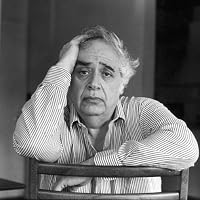
Start by following Harold Bloom.
Showing 1-30 of 242
“Reading well is one of the great pleasures that solitude can afford you.”
―
―
“We read deeply for varied reasons, most of them familiar: that we cannot know enough people profoundly enough; that we need to know ourselves better; that we require knowledge, not just of self and others, but of the way things are. Yet the strongest, most authentic motive for deep reading…is the search for a difficult pleasure.”
―
―
“Real reading is a lonely activity.”
― The Western Canon: The Books and School of the Ages
― The Western Canon: The Books and School of the Ages
“Reading the very best writers—let us say Homer, Dante, Shakespeare, Tolstoy—is not going to make us better citizens. Art is perfectly useless, according to the sublime Oscar Wilde, who was right about everything. He also told us that all bad poetry is sincere. Had I the power to do so, I would command that these words be engraved above every gate at every university, so that each student might ponder the splendor of the insight.”
― The Western Canon: The Books and School of the Ages
― The Western Canon: The Books and School of the Ages
“We read, frequently if not unknowingly, in search of a mind more original than our own.”
― How to Read and Why
― How to Read and Why
“Everyone wants a prodigy to fail; it makes our mediocrity more bearable.”
―
―
“I am not unique in my elegiac sadness at watching reading die, in the era that celebrates Stephen King and J.K. Rowling rather than Charles Dickens and Lewis Carroll.”
―
―
“Read deeply, not to believe, not to accept, not to contradict, but to learn to share in that one nature that writes and reads.”
― How to Read and Why
― How to Read and Why
“We read to find ourselves, more fully and more strangely than otherwise we could hope to find.”
―
―
“We read frequently if unknowingly, in quest of a mind more original than our own.”
―
―
“It is hard to go on living without some hope of encountering the extraordinary.”
―
―
“...the representation of human character and personality remains always the supreme literary value, whether in drama, lyric or narrative. I am naive enough to read incessantly because I cannot, on my own, get to know enough people profoundly enough.”
― Shakespeare: The Invention of the Human
― Shakespeare: The Invention of the Human
“Aesthetic value emanates from the struggle between texts: in the reader, in language, in the classroom, in arguments within a society. Aesthetic value rises out of memory, and so (as Nietzsche saw) out of pain, the pain of surrendering easier pleasures in favour of much more difficult ones ... successful literary works are achieved anxieties, not releases from anxieties.”
― The Western Canon: The Books and School of the Ages
― The Western Canon: The Books and School of the Ages
“We all fear loneliness, madness, dying. Shakespeare and Walt Whitman, Leopardi and Hart Crane will not cure those fears. And yet these poets bring us fire and light.”
― The Anatomy of Influence: Literature as a Way of Life
― The Anatomy of Influence: Literature as a Way of Life
“I am naive enough to read incessantly because I cannot, on my own, get to know enough people profoundly enough.”
―
―
“What matters in literature in the end is surely the idiosyncratic, the individual, the flavor or the color of a particular human suffering. ”
―
―
“Rereading old books is the highest form of literary pleasure and instructs you in what is deepest in your own yearnings.
Reading well is one of the great pleasures that solitude can afford you, because it is, at least in my experience, the most healing of pleasures. It returns you to otherness, whether in yourself or in friends. Imaginative literature is otherness and as such, alleviates loneliness.”
―
Reading well is one of the great pleasures that solitude can afford you, because it is, at least in my experience, the most healing of pleasures. It returns you to otherness, whether in yourself or in friends. Imaginative literature is otherness and as such, alleviates loneliness.”
―
“Dark influences from the American past congregate among us still. If we are a democracy, what are we to make of the palpable elements of plutocracy, oligarchy, and mounting theocracy that rule our state? How do we address the self-inflicted catastrophes that devastated our natural environment? So large is our malaise that no single writer can encompass it. We have no Emerson or Whitman among us. An institutionalized counterculture condemns individuality as archaic and depreciates intellectual values, even in the universities. (The Anatomy of Influence)”
―
―
“I think the Greek New Testament is the strongest and most successful misreading of a great prior text in the entire history of influence.”
―
―
“Greatness recognizes greatness, and is shadowed by it.”
― The Western Canon: The Books and School of the Ages
― The Western Canon: The Books and School of the Ages
“How to read "Harry Potter and the Sorcerer's Stone"? Why, very quickly, to begin with, and perhaps also to make an end. Why read it? Presumably, if you cannot be persuaded to read anything better, Rowling will have to do.”
―
―
“People cannot stand the saddest truth I know about the very nature of reading and writing imaginative literature, which is that poetry does not teach us how to talk to other people: it teaches us how to talk to ourselves.”
―
―
“Until you become yourself," Bloom avers, "what benefit can you be to others.”
―
―
“The art and passion of reading well and deeply is waning, but [Jane] Austen still inspires people to become fanatical readers. ”
―
―
“Originality must compound with inheritance.”
― The Western Canon: The Books and School of the Ages
― The Western Canon: The Books and School of the Ages
“Socrates, in Plato, formulates ideas of order: the Iliad, like Shakespeare, knows that a violent disorder is a great order.”
― Where Shall Wisdom Be Found?
― Where Shall Wisdom Be Found?
“Aesthetic criticism returns us to the autonomy of imaginative literature and the sovereignty of the solitary soul, the reader not as a person in society but as the deep self, our ultimate inwardness.”
― The Western Canon: The Books and School of the Ages
― The Western Canon: The Books and School of the Ages
“All writers are to some extent inventors, describing people as they would like to see them in life.”
― The Western Canon: The Books and School of the Ages
― The Western Canon: The Books and School of the Ages
“Such a reader does not read for easy pleasure or to expiate social guilt, but to enlarge a solitary existence.”
― The Western Canon: The Books and School of the Ages
― The Western Canon: The Books and School of the Ages
“We are destroying all esthetic standards in the name of social justice.”
― The Western Canon: The Books and School of the Ages
― The Western Canon: The Books and School of the Ages


