
 Sign in with Facebook





“There would seem to be only one question for philosophy to resolve: what must I do? Despite being combined with an enormous amount of unnecessary confusion, answers to the question have at any rate been given within the philosophical tradition of the Christian nations. For example, in Kant's Critique of Practical Reason, or in Spinoza, Schopenhauer and especially Rousseau. But in more recent times, since Hegel's assertion that all that exists is reasonable, the question of what one must do has been pushed to the background and philosophy has directed its whole attention to the investigation of things as they are, and to fitting them into a prearranged theory. This was the first step backwards. The second step, degrading human thought yet further, was the acceptance of the struggle for existence as a basic law, simply because that struggle can be observed among animals and plants. According to this theory the destruction of the weakest is a law which should not be opposed. And finally, the third step was taken when the childish originality of Nietzche's half-crazed thought, presenting nothing complete or coherent, but only various drafts of immoral and completely unsubstantiated ideas, was accepted by the leading figures as the final word in philosophical science. In reply to the question: what must we do? the answer is now put straightforwardly as: live as you like, without paying attention to the lives of others.
Turgenev made the witty remark that there are inverse platitudes, which are frequently employed by people lacking in talent who wish to attract attention to themselves. Everyone knows, for instance, that water is wet, and someone suddenly says, very seriously, that water is dry, not that ice is, but that water is dry, and the conviction with which this is stated attracts attention.
Similarly, the whole world knows that virtue consists in the subjugation of one's passions, or in self-renunciation. It is not just the Christian world, against whom Nietzsche howls, that knows this, but it is an eternal supreme law towards which all humanity has developed, including Brahmanism, Buddhism, Confucianism and the ancient Persian religion. And suddenly a man appears who declares that he is convinced that self-renunciation, meekness, submissiveness and love are all vices that destroy humanity (he has in mind Christianity, ignoring all the other religions). One can understand why such a declaration baffled people at first. But after giving it a little thought and failing to find any proof of the strange propositions, any rational person ought to throw the books aside and wonder if there is any kind of rubbish that would not find a publisher today. But this has not happened with Nietzsche's books.
The majority of pseudo-enlightened people seriously look into the theory of the superman, and acknowledge its author to be a great philosopher, a descendant of Descartes, Leibniz and Kant. And all this has come about because the majority of the pseudo-enlightened men of today object to any reminder of virtue, or to its chief premise: self-renunciation and love - virtues that restrain and condemn the animal side of their life. They gladly welcome a doctrine, however incoherently and disjointedly expressed, of egotism and cruelty, sanctioning the ideas of personal happiness and superiority over the lives of others, by which they live.”
―
Turgenev made the witty remark that there are inverse platitudes, which are frequently employed by people lacking in talent who wish to attract attention to themselves. Everyone knows, for instance, that water is wet, and someone suddenly says, very seriously, that water is dry, not that ice is, but that water is dry, and the conviction with which this is stated attracts attention.
Similarly, the whole world knows that virtue consists in the subjugation of one's passions, or in self-renunciation. It is not just the Christian world, against whom Nietzsche howls, that knows this, but it is an eternal supreme law towards which all humanity has developed, including Brahmanism, Buddhism, Confucianism and the ancient Persian religion. And suddenly a man appears who declares that he is convinced that self-renunciation, meekness, submissiveness and love are all vices that destroy humanity (he has in mind Christianity, ignoring all the other religions). One can understand why such a declaration baffled people at first. But after giving it a little thought and failing to find any proof of the strange propositions, any rational person ought to throw the books aside and wonder if there is any kind of rubbish that would not find a publisher today. But this has not happened with Nietzsche's books.
The majority of pseudo-enlightened people seriously look into the theory of the superman, and acknowledge its author to be a great philosopher, a descendant of Descartes, Leibniz and Kant. And all this has come about because the majority of the pseudo-enlightened men of today object to any reminder of virtue, or to its chief premise: self-renunciation and love - virtues that restrain and condemn the animal side of their life. They gladly welcome a doctrine, however incoherently and disjointedly expressed, of egotism and cruelty, sanctioning the ideas of personal happiness and superiority over the lives of others, by which they live.”
―
“One of the commonest and most generally accepted delusions is that every man can be qualified in some particular way -- said to be kind, wicked, stupid, energetic, apathetic, and so on. People are not like that. We may say of a man that he is more often kind than cruel, more often wise than stupid, more often energetic than apathetic or vice versa; but it could never be true to say of one man that he is kind or wise, and of another that he is wicked or stupid. Yet we are always classifying mankind in this way. And it is wrong. Human beings are like rivers; the water is one and the same in all of them but every river is narrow in some places, flows swifter in others; here it is broad, there still, or clear, or cold, or muddy or warm. It is the same with men. Every man bears within him the germs of every human quality, and now manifests one, now another, and frequently is quite unlike himself, while still remaining the same man.”
― Resurrection
― Resurrection
“It is usually imagined that a thief, a murderer, a spy, a prostitute, acknowledging his profession as evil, is ashamed of it. But the contrary is true. People whom fate and their sin-mistakes have placed in a certain position, however false that position may be, form a view of life in general which makes their position seem good and admissible. In order to keep up their view of life, these people instinctively keep to the circle of those people who share their views of life and their own place in it. This surprises us, where the persons concerned are thieves, bragging about their dexterity, prostitutes vaunting their depravity, or murderers boasting of their cruelty. This surprises us only because the circle, the atmosphere in which these people live, is limited, and we are outside it. But can we not observe the same phenomenon which the rich boast of their wealth, i.e., robbery; the commanders in the army pride themselves on their victories, i.e., murder; and those in high places vaunt their power, i.e., violence? We do not see the perversion in the views of life held by these people, only because the circle formed by them is more extensive, and we ourselves are moving inside of it.”
― Resurrection
― Resurrection
“I can't praise a young lady who is alive only when people are admiring her, but as soon as she is left alone, collapses and finds nothing to her taste--one who is all for show and has no resources in herself”
― Семейное счастие
― Семейное счастие
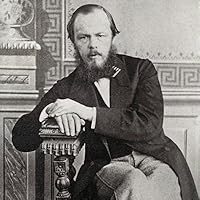
“The world says: "You have needs -- satisfy them. You have as much right as the rich and the mighty. Don't hesitate to satisfy your needs; indeed, expand your needs and demand more." This is the worldly doctrine of today. And they believe that this is freedom. The result for the rich is isolation and suicide, for the poor, envy and murder.”
― The Brothers Karamazov
― The Brothers Karamazov

Daniel’s 2025 Year in Books
Take a look at Daniel’s Year in Books, including some fun facts about their reading.


Favorite Genres
Polls voted on by Daniel
Lists liked by Daniel
