
 Sign in with Facebook
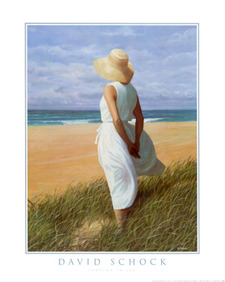


“My young sisters, we have such hope for you. We have such great expectations for you. Don't settle for less than what the Lord wants you to be...
Give me a young woman who loves home and family, who reads and ponders the scriptures daily, who has a burning testimony of the Book of Mormon... Give me a young woman who is virtuous and who has maintained her personal purity, who will not settle for less than a temple marriage, and I will give you a young woman who will perform miracles for the Lord now and throughout eternity.”
―
Give me a young woman who loves home and family, who reads and ponders the scriptures daily, who has a burning testimony of the Book of Mormon... Give me a young woman who is virtuous and who has maintained her personal purity, who will not settle for less than a temple marriage, and I will give you a young woman who will perform miracles for the Lord now and throughout eternity.”
―
“On Writing: Aphorisms and Ten-Second Essays
1. A beginning ends what an end begins.
2. The despair of the blank page: it is so full.
3. In the head Art’s not democratic. I wait a long time to be a writer good enough even for myself.
4. The best time is stolen time.
5. All work is the avoidance of harder work.
6. When I am trying to write I turn on music so I can hear what is keeping me from hearing.
7. I envy music for being beyond words. But then, every word is beyond music.
8. Why would we write if we’d already heard what we wanted to hear?
9. The poem in the quarterly is sure to fail within two lines: flaccid, rhythmless, hopelessly dutiful. But I read poets from strange languages with freedom and pleasure because I can believe in all that has been lost in translation. Though all works, all acts, all languages are already translation.
10. Writer: how books read each other.
11. Idolaters of the great need to believe that what they love cannot fail them, adorers of camp, kitsch, trash that they cannot fail what they love.
12. If I didn’t spend so much time writing, I’d know a lot more. But I wouldn’t know anything.
13. If you’re Larkin or Bishop, one book a decade is enough. If you’re not? More than enough.
14. Writing is like washing windows in the sun. With every attempt to perfect clarity you make a new smear.
15. There are silences harder to take back than words.
16. Opacity gives way. Transparency is the mystery.
17. I need a much greater vocabulary to talk to you than to talk to myself.
18. Only half of writing is saying what you mean. The other half is preventing people from reading what they expected you to mean.
19. Believe stupid praise, deserve stupid criticism.
20. Writing a book is like doing a huge jigsaw puzzle, unendurably slow at first, almost self-propelled at the end. Actually, it’s more like doing a puzzle from a box in which several puzzles have been mixed. Starting out, you can’t tell whether a piece belongs to the puzzle at hand, or one you’ve already done, or will do in ten years, or will never do.
21. Minds go from intuition to articulation to self-defense, which is what they die of.
22. The dead are still writing. Every morning, somewhere, is a line, a passage, a whole book you are sure wasn’t there yesterday.
23. To feel an end is to discover that there had been a beginning. A parenthesis closes that we hadn’t realized was open).
24. There, all along, was what you wanted to say. But this is not what you wanted, is it, to have said it?”
―
1. A beginning ends what an end begins.
2. The despair of the blank page: it is so full.
3. In the head Art’s not democratic. I wait a long time to be a writer good enough even for myself.
4. The best time is stolen time.
5. All work is the avoidance of harder work.
6. When I am trying to write I turn on music so I can hear what is keeping me from hearing.
7. I envy music for being beyond words. But then, every word is beyond music.
8. Why would we write if we’d already heard what we wanted to hear?
9. The poem in the quarterly is sure to fail within two lines: flaccid, rhythmless, hopelessly dutiful. But I read poets from strange languages with freedom and pleasure because I can believe in all that has been lost in translation. Though all works, all acts, all languages are already translation.
10. Writer: how books read each other.
11. Idolaters of the great need to believe that what they love cannot fail them, adorers of camp, kitsch, trash that they cannot fail what they love.
12. If I didn’t spend so much time writing, I’d know a lot more. But I wouldn’t know anything.
13. If you’re Larkin or Bishop, one book a decade is enough. If you’re not? More than enough.
14. Writing is like washing windows in the sun. With every attempt to perfect clarity you make a new smear.
15. There are silences harder to take back than words.
16. Opacity gives way. Transparency is the mystery.
17. I need a much greater vocabulary to talk to you than to talk to myself.
18. Only half of writing is saying what you mean. The other half is preventing people from reading what they expected you to mean.
19. Believe stupid praise, deserve stupid criticism.
20. Writing a book is like doing a huge jigsaw puzzle, unendurably slow at first, almost self-propelled at the end. Actually, it’s more like doing a puzzle from a box in which several puzzles have been mixed. Starting out, you can’t tell whether a piece belongs to the puzzle at hand, or one you’ve already done, or will do in ten years, or will never do.
21. Minds go from intuition to articulation to self-defense, which is what they die of.
22. The dead are still writing. Every morning, somewhere, is a line, a passage, a whole book you are sure wasn’t there yesterday.
23. To feel an end is to discover that there had been a beginning. A parenthesis closes that we hadn’t realized was open).
24. There, all along, was what you wanted to say. But this is not what you wanted, is it, to have said it?”
―

“Suffering has been stronger than all other teaching, and has taught me to understand what your heart used to be. I have been bent and broken, but - I hope - into a better shape.”
― Great Expectations
― Great Expectations

“You did really great up there,” I tell her, because I don’t know how to say what I really want to: that the people you love can surprise you every day. That maybe who we are isn’t so much about what we do, but rather what we’re capable of when we least expect it.”
― My Sister's Keeper
― My Sister's Keeper

“To free us from the expectations of others, to give us back to ourselves--there lies the great, singular power of self-respect.”
―
―

Nancy’s 2025 Year in Books
Take a look at Nancy’s Year in Books, including some fun facts about their reading.

1,126 books
|
108 friends

218 books
|
15 friends

960 books
|
88 friends

382 books
|
138 friends

62 books
|
69 friends

119 books
|
13 friends

112 books
|
18 friends

55 books
|
6 friends
More friends…
Polls voted on by Nancy
Lists liked by Nancy