
Discover new books on Goodreads
Meet your next favorite book


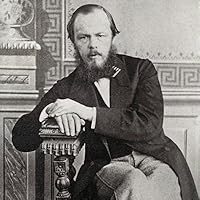
“There is nothing so annoying as to be fairly rich, of a fairly good family,
pleasing presence, average education, to be "not stupid," kindhearted,
and yet to have no talent at all, no originality, not a single idea
of one's own—to be, in fact, "just like everyone else."
Of such people there are countless numbers in this world—far more
even than appear. They can be divided into two classes as all men
can—that is, those of limited intellect, and those who are much cleverer.
The former of these classes is the happier.
To a commonplace man of limited intellect, for instance, nothing is
simpler than to imagine himself an original character, and to revel in that
belief without the slightest misgiving.
Many of our young women have thought fit to cut their hair short, put
on blue spectacles, and call themselves Nihilists. By doing this they have
been able to persuade themselves, without further trouble, that they
have acquired new convictions of their own. Some men have but felt
some little qualm of kindness towards their fellow-men, and the fact has
been quite enough to persuade them that they stand alone in the van of
enlightenment and that no one has such humanitarian feelings as they.
Others have but to read an idea of somebody else's, and they can immediately
assimilate it and believe that it was a child of their own brain.
The "impudence of ignorance," if I may use the expression, is developed
to a wonderful extent in such cases;—unlikely as it appears, it is met
with at every turn.
... those belonged to the other class—to the "much cleverer"
persons, though from head to foot permeated and saturated with
the longing to be original. This class, as I have said above, is far less
happy. For the "clever commonplace" person, though he may possibly
imagine himself a man of genius and originality, none the less has within
his heart the deathless worm of suspicion and doubt; and this doubt
sometimes brings a clever man to despair. (As a rule, however, nothing
tragic happens;—his liver becomes a little damaged in the course of time,
nothing more serious. Such men do not give up their aspirations after
originality without a severe struggle,—and there have been men who,
though good fellows in themselves, and even benefactors to humanity,
have sunk to the level of base criminals for the sake of originality)”
― The Idiot
pleasing presence, average education, to be "not stupid," kindhearted,
and yet to have no talent at all, no originality, not a single idea
of one's own—to be, in fact, "just like everyone else."
Of such people there are countless numbers in this world—far more
even than appear. They can be divided into two classes as all men
can—that is, those of limited intellect, and those who are much cleverer.
The former of these classes is the happier.
To a commonplace man of limited intellect, for instance, nothing is
simpler than to imagine himself an original character, and to revel in that
belief without the slightest misgiving.
Many of our young women have thought fit to cut their hair short, put
on blue spectacles, and call themselves Nihilists. By doing this they have
been able to persuade themselves, without further trouble, that they
have acquired new convictions of their own. Some men have but felt
some little qualm of kindness towards their fellow-men, and the fact has
been quite enough to persuade them that they stand alone in the van of
enlightenment and that no one has such humanitarian feelings as they.
Others have but to read an idea of somebody else's, and they can immediately
assimilate it and believe that it was a child of their own brain.
The "impudence of ignorance," if I may use the expression, is developed
to a wonderful extent in such cases;—unlikely as it appears, it is met
with at every turn.
... those belonged to the other class—to the "much cleverer"
persons, though from head to foot permeated and saturated with
the longing to be original. This class, as I have said above, is far less
happy. For the "clever commonplace" person, though he may possibly
imagine himself a man of genius and originality, none the less has within
his heart the deathless worm of suspicion and doubt; and this doubt
sometimes brings a clever man to despair. (As a rule, however, nothing
tragic happens;—his liver becomes a little damaged in the course of time,
nothing more serious. Such men do not give up their aspirations after
originality without a severe struggle,—and there have been men who,
though good fellows in themselves, and even benefactors to humanity,
have sunk to the level of base criminals for the sake of originality)”
― The Idiot

“I saw my life branching out before me like the green fig tree in the story. From the tip of every branch, like a fat purple fig, a wonderful future beckoned and winked. One fig was a husband and a happy home and children, and another fig was a famous poet and another fig was a brilliant professor, and another fig was Ee Gee, the amazing editor, and another fig was Europe and Africa and South America, and another fig was Constantin and Socrates and Attila and a pack of other lovers with queer names and offbeat professions, and another fig was an Olympic lady crew champion, and beyond and above these figs were many more figs I couldn't quite make out. I saw myself sitting in the crotch of this fig tree, starving to death, just because I couldn't make up my mind which of the figs I would choose. I wanted each and every one of them, but choosing one meant losing all the rest, and, as I sat there, unable to decide, the figs began to wrinkle and go black, and, one by one, they plopped to the ground at my feet.”
― The Bell Jar
― The Bell Jar
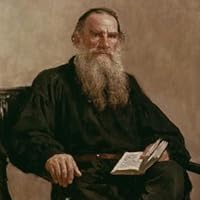
“He soon felt that the fulfillment of his desires gave him only one grain of the mountain of happiness he had expected. This fulfillment showed him the eternal error men make in imagining that their happiness depends on the realization of their desires.”
― Anna Karenina
― Anna Karenina

“To the confusion of our enemies.”
―
―

“In the morning when thou risest unwillingly, let this thought be present,—I am rising to the work of a human being. Why then am I dissatisfied if I am going to do the things for which I exist and for which I was brought into the world? Or have I been made for this, to lie in the bed-clothes and keep myself warm?—But this is more pleasant.—Dost thou exist then to take thy pleasure, and not at all for action or exertion? Dost thou not see the little plants, the little birds, the ants, the spiders, the bees working together to put in order their several parts of the universe? And art thou unwilling to do the work of a human being, and dost thou not make haste to do that which, is according to thy nature? But it is necessary to take rest also.—It is necessary. However, Nature has fixed bounds to this too: she has fixed bounds to eating and drinking, and yet thou goest beyond these bounds, beyond what is sufficient; yet in thy acts it is not so, but thou stoppest short of what thou canst do. So thou lovest not thyself, for if thou didst, thou wouldst love thy nature and her will. But those who love their several arts exhaust themselves in working at them unwashed and without food; but thou valuest thy own nature less than the turner values the turning art, or the dancer the dancing art, or the lover of money values his money, or the vain-glorious man his little glory. And such men, when they have a violent affection to a thing, choose neither to eat nor to sleep rather than to perfect the things which they care for. But are the acts which concern society more vile in thy eyes and less worthy of thy labor?”
― Meditations
― Meditations


Josh’s 2025 Year in Books
Take a look at Josh’s Year in Books, including some fun facts about their reading.


Favorite Genres
Polls voted on by Josh
Lists liked by Josh