Good

Add friend
Sign in to Goodreads to learn more about Good.

https://www.goodreads.com/goodoldneon

The Witches of Ne...
Good is currently reading
by Ami McKay (Goodreads Author)
bookshelves: currently-reading
Rate this book
Clear rating

 
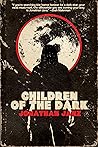
Children of the Dark
Good is currently reading
by Jonathan Janz (Goodreads Author)
bookshelves: currently-reading
Rate this book
Clear rating

 
The Creeper
Good is currently reading
by A.M. Shine (Goodreads Author)
bookshelves: currently-reading
Rate this book
Clear rating

 
See all 30 books that Good is reading…
Loading...
George Saunders
“In the beginning, there’s a blank mind. Then that mind gets an idea in it, and the trouble begins, because the mind mistakes the idea for the world. Mistaking the idea for the world, the mind formulates a theory and, having formulated a theory, feels inclined to act. Because the idea is always only an approximation of the world, whether that action will be catastrophic or beneficial depends on the distance between the idea and the world. Mass media’s job is to provide this simulacra of the world, upon which we build our ideas. There’s another name for this simulacra-building: storytelling. Megaphone Guy is a storyteller, but his stories are not so good. Or rather, his stories are limited. His stories have not had time to gestate—they go out too fast and to too broad an audience. Storytelling is a language-rich enterprise, but Megaphone Guy does not have time to generate powerful language. The best stories proceed from a mysterious truth-seeking impulse that narrative has when revised extensively; they are complex and baffling and ambiguous; they tend to make us slower to act, rather than quicker. They make us more humble, cause us to empathize with people we don’t know, because they help us imagine these people, and when we imagine them—if the storytelling is good enough—we imagine them as being, essentially, like us. If the story is poor, or has an agenda, if it comes out of a paucity of imagination or is rushed, we imagine those other people as essentially unlike us: unknowable, inscrutable, inconvertible. Our venture in Iraq was a literary failure, by which I mean a failure of imagination. A culture better at imagining richly, three-dimensionally, would have had a greater respect for war than we did, more awareness of the law of unintended consequences, more familiarity with the world’s tendency to throw aggressive energy back at the aggressor in ways he did not expect. A culture capable of imagining complexly is a humble culture. It acts, when it has to act, as late in the game as possible, and as cautiously, because it knows its own girth and the tight confines of the china shop it’s blundering into. And it knows that no matter how well-prepared it is—no matter how ruthlessly it has held its projections up to intelligent scrutiny—the place it is headed for is going to be very different from the place it imagined. The shortfall between the imagined and the real, multiplied by the violence of one’s intent, equals the evil one will do.”
George Saunders, The Braindead Megaphone

Richard Powers
“Love for trees pours out of her—the grace of them, their supple experimentation, the constant variety and surprise. These slow, deliberate creatures with their elaborate vocabularies, each distinctive, shaping each other, breeding birds, sinking carbon, purifying water, filtering poisons from the ground, stabilizing the micro-climate. Join enough living things together, through the air and underground, and you wind up with something that has intentions.”
Richard Powers, The Overstory

Richard Powers
“Civilized yards are all alike. Every wild yard is wild in its own way.”
Richard Powers, The Overstory

George Saunders
“His mind was freshly inclined to sorrow; toward the fact that the world was full of sorrow; that all were suffering; that whatever way one took in the world one must try to remember that all were suffering (non content all wronged, neglected, overlooked, misunderstood), and therefore one must do what one could to lighten the load of those with whom one came into contact; that his current state of sorrow was not uniquely his, not at all, but rather, its like had been felt, would yet be felt, by scores of others in all times, in every time, and must not be prolonged or exaggerated, because, in this state, he could be of no help to anyone, and given that his position in the world situated him to be either of great help or great harm, it would not do to stay low, if he could help it.

All were in sorrow, or had been, or soon would be.

It was the nature of things.

Though on the surface is seemed every person was different, this was not true.

At the core of each lay suffering; our eventual end; the many loses we must experience on the way to that end.

We must try to see one another in this way.

As suffering limited beings-

Perennially outmatched by circumstance, inadequately endowed with compensatory graces.

His sympathy extended to all in this instant, blundering in its strict logic, across all divides.”
George Saunders, Lincoln in the Bardo

Richard Powers
“What you make from a tree should be at least as miraculous as what you cut down.”
Richard Powers, The Overstory

44497 The Pale King — 81 members — last activity Sep 04, 2011 08:00PM
Discussions about David Foster Wallace's posthumous release, The Pale King. ...more
8463 David Foster Wallace — 298 members — last activity Oct 15, 2016 07:21PM
A group for the amazing work of David Foster Wallace, now deceased. RIP 1962-2008 Feel free to add his books to the bookshelf for the group.
660 Green Group — 2008 members — last activity 2 hours, 33 min ago
The Green group is about living in a sustainable manner--how human activity affects the environment and how a changing climate/environment affects how ...more
year in books
LL
LL
1,249 books | 87 friends

Lottie ...
729 books | 39 friends

Molly S...
456 books | 9 friends

Jessie ...
111 books | 26 friends

Daria S...
235 books | 94 friends

Amber S...
505 books | 449 friends

Caroline
2 books | 58 friends

Adam Ch...
0 books | 50 friends

More friends…
All the Pretty Horses by Cormac McCarthyInfinite Jest by David Foster Wallace
Best Books of the Decade: 1990s
3,137 books — 3,678 voters


Polls voted on by Good

Lists liked by Good