This will prevent max from sending you messages, friend request or from viewing your profile. They will not be notified. Comments on discussion boards from them will be hidden by default.
“The less you eat, drink and buy books; the less you go to the theatre, the dance hall, the public house; the less you think, love, theorise, sing, paint, fence, etc., the more you save – the greater becomes your treasure which neither moths nor rust will devour – your capital. The less you are, the less you express your own life, the more you have, i.e., the greater is your alienated life, the greater is the store of your estranged being.”
―
Karl Marx
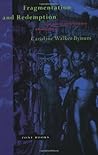
“Thus, by the thirteenth and fourteenth centuries, the emphasis of hymn, sermon, and story was less on the bread of heaven than on flesh (i.e., meat) and blood. To eat God was to take into one's self the suffering flesh on the cross. To eat God was imitatio crucis. That which one ate was the physicality of the God-man. If the flesh was sweet as well as bitter, that was because all our humanness, including our fleshliness, was redeemed in the fact of the Incarnation. If the agony was also ecstasy, it was because our very hunger is union with Christ's limitless suffering, which is also limitless love.”
―
Caroline Walker Bynum,
Holy Feast and Holy Fast: The Religious Significance of Food to Medieval Women
“Since you ask, most days I cannot remember. I walk in my clothing, unmarked by that voyage. Then the almost unnameable lust returns.
Even then I have nothing against life. I know well the grass blades you mention, the furniture you have placed under the sun.
But suicides have a special language. Like carpenters they want to know which tools. They never ask why build.
Twice I have so simply declared myself, have possessed the enemy, eaten the enemy, have taken on his craft, his magic.
In this way, heavy and thoughtful, warmer than oil or water, I have rested, drooling at the mouth-hole.
I did not think of my body at needle point. Even the cornea and the leftover urine were gone. Suicides have already betrayed the body.
Still-born, they don't always die, but dazzled, they can't forget a drug so sweet that even children would look on and smile.
To thrust all that life under your tongue! — that, all by itself, becomes a passion. Death's a sad bone; bruised, you'd say,
and yet she waits for me, year after year, to so delicately undo an old wound, to empty my breath from its bad prison.
Balanced there, suicides sometimes meet, raging at the fruit, a pumped-up moon, leaving the bread they mistook for a kiss,
leaving the page of the book carelessly open, something unsaid, the phone off the hook and the love, whatever it was, an infection.”
―
Anne Sexton,
The Complete Poems

 Sign in with Facebook







 Marxism
— 1101 members
— last activity Apr 16, 2026 12:09PM
Marxism
— 1101 members
— last activity Apr 16, 2026 12:09PM



