
Reading the 20th Century discussion

This topic is about
Lady Chatterley’s Lover
Buddy Reads
>
Lady Chatterley's Lover by D.H. Lawrence (October 2019/November 2025)

 Mod
Mod
 Mod
Mod
But it does have some lovely scenes of tenderness and intimacy.
 Yep, I would agree with that last comment as when I read it a few years ago I was left feeling a little disappointed. All seemed a bit silly at times to me.
Mod
Yep, I would agree with that last comment as when I read it a few years ago I was left feeling a little disappointed. All seemed a bit silly at times to me.
Mod
 I am just over halfway. Elsewhere I have read this isn't Lawrence's best work, to sort of confirm what you've said RC.
Constance is the daughter of an R.A. What is an R.A.?
 Elizabeth (Alaska) wrote: "I am just over halfway. Elsewhere I have read this isn't Lawrence's best work, to sort of confirm what you've said RC.
Constance is the daughter of an R.A. What is an R.A.?"
I am not reading the books (I read it in 1960, but have forgotten most of it). But it may be a Royal Academician - a member of the Royal Academy of Arts, and very prestigious.
Thank you. I suppose that is why Clifford thought that although she was beneath him in class, she was an acceptable wife.I don't often get symbolism and maybe I'm reading more into this than Lawrence intended. It seems to me this is a story of the conflict of the classes. He posits that the upper class is impotent, while showing that members of the working class could rise to be the most potent.
Mod
Mellors is interesting as he's educated and was an army officer but his rejection of that status and deliberate embrace of a vernacular accent is more about rejecting what Lawrence sees as the emasculating condition of industrialization - (view spoiler)
I think it's very much a book about masculinity - Lawrence's gender essentialism is quite disconcerting today.
Mod
Mod
Mod
All I know is that I wouldn't want my wife or my servants reading it
Mod
Hahahaha :))
 Mod
Mod
https://bit.ly/2lUOWss
Not at all relevant to Clifford, but as I like the poem, just thought I would share it.
Mod
I didn't know the Lawrence poem, Judy, so thanks for that.
 I haven’t reread this book recently so can’t quite join in the conversation but I did read it way back when I was 21 or so. At that time, I couldn’t get into it at all. I found the writing and style really difficult and never picked up another DH Lawerence since. I don’t remember liking any of the characters which isn’t always a must but there was nothing in it that made me want to read on.
Interesting that many of you are saying this wasn’t his best book.
Maybe I can try one you all recommend.
I have watched a few tv adaptations. I will watch the one with Richard Madden which is now on Netflix.
With about 75 pages to go, I'm starting to roll my eyes.
Mod
I have always felt we don't glimpse much of what brought Connie and Clifford together in the first place, and this reread is bearing that out again.
 Judy wrote: "I have always felt we don't glimpse much of what brought Connie and Clifford together in the first place, and this reread is bearing that out again."
Shared grief? I just started this myself, for the first time, so I don't know at all. That was just a guess.
Mod
Shared grief?I just started this myself, for the first time, so I don't know at all. That was just a guess."
I think this might be a reason in real life, but I don't see this suggested in the book - I don't think Lawrence gives much idea what attracted Connie to Clifford. I get the impression he liked her looks. Are you enjoying the book, Ella?
Mod
I do love his descriptions of the landscapes, though, which reminds me that I like his poetry.
Mod
https://www.telegraph.co.uk/news/ukne...
This makes it slightly puzzling that he is so unsympathetic to Clifford - I had also forgotten that Clifford is also a writer, though his short stories sound very different from Lawrence's.
Mod
https://www.theguardian.com/uk/2006/o...
https://www.mirror.co.uk/news/uk-news...
Mod
Mod
In fact, the only way I can slightly redeem myself is by reminding you that I have read....
The Trial of Lady Chatterley's Lover by Sybille Bedford
...which we also discussed back in 2018
Here's the thread....
https://www.goodreads.com/topic/show/...
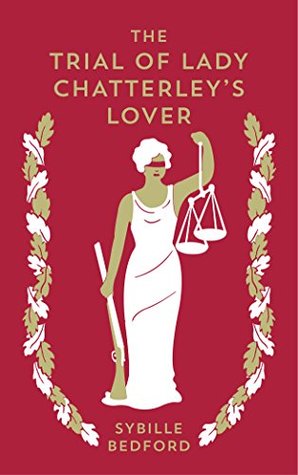
The Trial of Lady Chatterley's Lover by Sybille Bedford
Mod
And all the ranting about the “bitch-goddess” of success is so repetitive and also unclear to me. I can’t really understand Lawrence’s political views.
The writing about wildlife is lovely though.
I had forgotten that the first sexual encounter between Connie and Mellors is almost 40% into the book.
 I gave it 3 stars as I id like the wildlife writing in it , but I thought the people were awful. Connie was never going to be satisfied with her surroundings, Mellors didn't really like anyone, and Clifford was more concerned with his position in life. I just thought I would really feel sorry for any children any of them were to have.
In my opinion, the book's popularity was purely because it had been banned.
Mod
Lady Chatterley’s Lover (1928)
by
D.H. Lawrence
We're doing it all over again in November 2025
It was a controversial and scandalous novel for its time which explores a relationship that defies class boundaries and challenges social norms around love and sexuality.
Feel free to comment on this discussion any time before, during, or after November 2025
One of the most extraordinary literary works of the twentieth century, Lady Chatterley's Lover was banned in England and the United States after its initial publication in 1928.
With her soft brown hair, lithe figure and big, wondering eyes, Constance Chatterley is possessed of a certain vitality. Yet she is deeply unhappy; married to an invalid, she is almost as inwardly paralysed as her husband Clifford is paralysed below the waist. It is not until she finds refuge in the arms of Mellors the gamekeeper, a solitary man of a class apart, that she feels regenerated. Together they move from an outer world of chaos towards an inner world of fulfillment.
 Mod
Mod
All of them feature quivering loins to some extent!
Mod
Mod
I posted this on the DH Lawrence Favourite Authors discussion....
Preparing for our read of Lady Chatterley I am listening to this three part series from BBC Artworks available on the BBC Sounds app...
https://www.bbc.co.uk/programmes/m002...
Here's the blurb....
D.H. Lawrence was, according to EM Forster, “the greatest imaginative novelist of our generation” and while he was undoubtedly one of the most influential writers of the twentieth century, he was also one of its most controversial.
During his lifetime, his books, including Lady Chatterley’s Lover and The Rainbow, were sometimes banned and sometimes burnt… but the incandescence of his writing and its sometimes scandalous subject matter saw him become a beacon of freedom and liberty to his millions of passionate fans. The lifting of the Lady Chatterley ban in 1960 was famously for Philip Larkin a key moment in the dawning of a sexual revolution though the puritanical monogamist Lawrence would have no doubt disliked becoming a poster-boy for free love.
Effectively cancelled following accusations of misogyny levelled by Kate Millett in her 1970 book ‘Sexual Politics’, he is now finally being brought back into the cultural conversation - principally by women. In this new three-part series Michael Symmons Roberts, who came to Lawrence via his poems and the 1969 Ken Russell adaptation of Women in Love, speaks to guests including Joan Bakewell, Robert Lindsay, Alison MacLeod, Lara Feigel, Derek Owusu and Professor Phil Davies in a bid to better understand three key aspects of Lawrence’s life and work - class, nature - and first of all, sex.
 Mod
Mod
One contributor said she felt Lawrence made a good attempt to understand women and femininity (despite the obvious constraints of the era in which he was alive and writing).
This seemed apparent in the rather clumsy opening section about Connie and her sister Hilda and their pre-WW1 experiences of love in Dresden where both fell in love and lost their virginity. It's pretty cringey stuff but Lawrence does seem to be making a sincere effort to imagine their perspectives.
Overall my first impressions are that this novel is well written, perceptive and readable. For some reason I thought the style might be a bit more challenging. I'm looking forward to continuing and getting properly immersed.
Mod
I think he does - however, his understanding might be coloured by an essentialist understanding of gender and the place he allocates to 'masculinity' and 'femininity' in his personal mythology. At least part of his understanding of the feminine is an in-built phallus worship with a desire to be mastered and overwhelmed into ecstasy that Hester mentioned.
But he is complicated and his ideas aren't static across time, and the BBC series points out.
Mod
He didn't like the idea of democracy because he thought it would level society too much and erode distinctions.
It's also worth remembering about Mellors, if I recall this properly, that (view spoiler)
Mod
 Nigeyb wrote: "One thing that came out of the Artworks series was his contradictory nature. He was prone to rants and would later recant on things he had said. I'm not excusing any of comments or opinions but jus..."
This seems very much in keeping with the emotional way he writes. I think based on all of this, I'm not interested in delving too deeply into his biography. I'm glad to hear your description of the novel so far, Nigeyb--readable and perceptive are encouraging!
I very much enjoyed Sons and Lovers, fell in love with his style in The Rainbow, and while I found it often ridiculous, still appreciated Women in Love. So I'm really curious to see where I land on Lady Chatterley. I won't be able to start until next month, but I'm looking forward to it.
Mod
Lady Chatterley appears to be less well regarded than Sons and Lovers and The Rainbow just to manage your expectations
Nigeyb wrote: "Thanks Kathleen - that's greatLady Chatterley appears to be less well regarded than Sons and Lovers and The Rainbow just to manage your expectations"
I appreciate that, Nigeyb!
Mod
Mod
(view spoiler)
Mod
(view spoiler)
Mod
Interestingly immediately prior to their discussion the klaxon for the mine goes off signaling the end of a shift, or a break. Connie hears it but Clifford is oblivious having become so used to it
Mod
Overall I’m still finding more to enjoy than anything else
Mod
Mod
Some of the after dinner conversations seem to reflect the same kind of utopian and dystopian ideas that come up in a lot of books of this era
Mod
All seem to be agreed Connie needs stimulation
Mod
And how Sir Clifford mutates into a crab. The hard shell and soft, pulpy interior.
So much of this is about Lawrence's belief that modern industrial society has alienated people from their bodies and natural instincts, leading to a life that is "all mind." Connie and Clifford's marriage is initially based on an intellectual, "cerebral" connection, which Lawrence seems to suggest is ultimately sterile.
Overall I am still enjoying it but also wondering whether it has to be quite so long. I’m not even halfway and already feel a lot of it could have been streamlined
Mod
But yes, I agree - I feel this book is more polemic than novel. It's interesting and you've put your finger on Lawrence's theory but it doesn't have the same character life as some of the Lawrence books I prefer.
I'm always a little sad that this is often a first read for Lawrence newbies because of the court case and consequent reputation when some of his other books are more emotionally exciting and satisfying.
Mod
I am not surprised to read that this is probably a less satisfying novel than some of his other books despite being his best known.
And of course, contrary to its reputation, the sex is not really a big part of the novel’s content and overall message.
I am glad to be finally reading it though
Mod
Not completely unlike contemporary debates about AI.

Reading the 20th Century
Books mentioned in this topic
Germinal (other topics)Sons and Lovers (other topics)
Germinal (other topics)
Sexual Politics (other topics)
Fifty Shades of Grey (other topics)
More...
Authors mentioned in this topic
Kate Millett (other topics)Pietro Aretino (other topics)
Erica Jong (other topics)
D.H. Lawrence (other topics)
Sybille Bedford (other topics)
More...
A bit of background from a Goodreads blurb...
The novel was first published privately in 1928 in Italy. An unexpurgated edition was not published openly in the United Kingdom until 1960, when it was the subject of a watershed obscenity trial against the publisher Penguin Books. Penguin won the case, and quickly sold 3 million copies.
The book soon became notorious for its story of the physical (and emotional) relationship between a working class man and an upper class woman, its explicit descriptions of sex, and its use of then-unprintable words.