
The History Book Club discussion

This topic is about
An Army at Dawn
THE SECOND WORLD WAR
>
5. AN ARMY AT DAWN ~ October 7th ~ October 13th ~ PART ONE - 3. BEACHHEAD - A Blue Flag over Oran and "An Orgy of Disorder" and Battle for the Kasbah - (124 - 147) No-Spoilers
date newest »
newest »
message 2:
by
Bentley, Group Founder, Leader, Chief
(last edited Sep 19, 2013 11:16PM)
(new)
-
rated it 5 stars
 Mod
Mod
Part One
3. Beachhead
A Blue Flag Over Oran
Oran turned out to be much more difficult to take than had been expected. A French paramilitary force at St. Cloud (on the outskirts of Oran) kept American forces at bay for more than 24 hours before the regimental commander considered bombing the town. After several more failed attempts to take the town, Major General Terry Allen made the tactical decision to bypass the town and proceed to Oran, leaving a surrounding force at St. Cloud. The troops were hailed as liberators as Oran was readied to become a huge Allied supply depot. Together with the taking of Algiers, this greatly strengthened the Allied position in Algeria.
An Orgy of Disorder
The battle for Casablanca quickly became a naval battle as French ships and shore
batteries opened fire on the American fleet. Some of the fighting was long range, with
the foes as much as 10 miles away from each other. American dive-bombers hit the
harbor as French subs were being launched. Vichy destroyers pursued American troop
transports. Vichy fighters were soon downed by American fighters who then strafed
the French ships with devastating results. Sixteen French ships (including subs) were
sunk or badly damaged.
Patton came ashore at Fedala, just north of Casablanca. His 20,000 troops faced a
divided French force of 2,500 men and 46 artillery pieces. Most of the entrenched
French forces were brought to bay by navy firepower. The next day, the sea became
rough and all loading came to a halt. Many badly needed supplies were trapped at sea,
and the attack on Casablanca proper had to wait until November 11. Patton planned to
bombard the city starting at 7:30 a.m. He warned the French that they had three hours
to surrender or face the consequences. The French surrendered some two hours later,
with American bombers already in the air. The newfound allies celebrated with
Bordeaux and Cognac. The Allies now had strong control over the Strait of Gibraltar
area.
Battle for the Kasbah
Taking the small town of Mehdia, north of Casablanca, was also proving more
difficult than anticipated. Nine thousand Allied troops had surrounded the town and
expected the smaller French force to surrender. Of the two emissaries sent to speak to
the French, one was killed and the other captured. The yard thick walls of the fort
nicknamed the "Kasbah" proved very difficult to penetrate. A French counterattack
scattered the Americans and small skirmishes continued to take place into the night.
Eventually, Allied tanks succeeded in repulsing French reinforcements and allowed
the beachheads to be fortified. A U.S. destroyer plowed up the shallow river towards
the Kasbah and released a team of commandos that quickly seized the nearby runway.
Three more infantry assaults on the Kasbah were repulsed before it was heavily
damaged and taken after Navy dive-bombers attacked it.
message 3:
by
Bentley, Group Founder, Leader, Chief
(last edited Sep 19, 2013 11:17PM)
(new)
-
rated it 5 stars
Mod
Here are the rules and guidelines of the HBC:
http://www.goodreads.com/topic/show/5...
Please on the non spoiler threads: a) Stick to material in the present week's reading.
Also, in terms of all of the threads for discussion here and on the HBC - please be civil.
We want our discussion to be interesting and fun.
Make sure to cite a book using the proper format.
You don't need to cite the Atkinson book, but if you bring another book into the conversation; please cite it accordingly as required but you do not have to cite the author Atkinson either.
Also, to make it easier - here are the special citation rules for this book discussion - if the person is mentioned in the assigned pages for the weekly reading - you do not have to cite that person even if he or she is an author of books or other documents. However, if you cite someone who is not part of the chapter readings - then you must cite him or her and you must always do a proper citation if you are mentioning any other book aside from An Army At Dawn.
Now we can begin week five.....
message 4:
by
Bentley, Group Founder, Leader, Chief
(last edited Sep 19, 2013 11:35PM)
(new)
-
rated it 5 stars
Mod
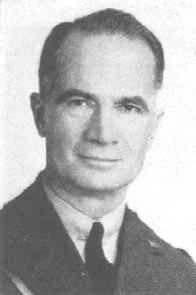
Major General Terry de la Mesa Allen
Terry Allen told Greer - "If we bombard the town (St. Cloud) and then fail to take it by attack, it would be disastrous". (pages 127 - 129)
Allen felt that obliterating a French town "would make a bad political impression and it would use too much ammunition". We don't need the damned place anyway. We can bypass St. Cloud and take Oran by night maneuver. "Leave one battalion as a holding force and then swing the rest of your men wide of the town and get them moving toward Oran."
Discussion Questions:
How was this decision different than the ones that had come before and how did this help Allen and his men? And what were your impressions of Allen at this point?
 I think Allen probably made a better move not to shell the town. The risk at that time was not worth it since you can bypass the town. You have to work with the locals and to shell a town to ruble might not work in your favor.
However, U.S. forces did go in and after 5 hours of bitter fighting, it surrendered.
 I agree with Bryan, the decision to bypass seemed to be the right one, maybe this shows that taking initiative and adjusting according to the situation, rather than just carrying out the original plan led to better results and perhaps fewer lives lost. Plans and objectives are important, but on the ground, there has to be room for adjustments. This was a characteristic of the German forces, and became a doctrine for the Allied forces.
 You have to be adaptable in modern war, and this was one of the strengths of the US Army, when it eventually got it's act together. If the plan does not work, try another one.
 The US seemed to be better than the British at this aspect of tactical management - as someone said, the British Army lost many potential good officers in WW1, so the quality of middle management, and especially higher management, was often unimaginative, and inflexible.
Great point about British inflexibility Jimmy. Your point was driven home time and again in the European theater.
I agree, Tom and Jimmy. I haven't thought about this before, but on a higher level, the British seem to have an idea and try to stick with it even if things go wrong.I also haven't thought about the impact of WWI on the officer corps. Great point.
You get a sense something right was finally happening with the U.S. shelling at Fedala, decimating the French vessels.
 Mod
Good point, Jerome, I agree, I would figure they would learn, and they were fighting the Germans in North Africa.
I am reading the part about the operation at Kasbah. I like this quote: "Truscott suspected that peacetime training has taught them how to surrender better than how to fight." (p. 145)
re: paradoxical
Mod
Good point, Jerome, I agree, I would figure they would learn, and they were fighting the Germans in North Africa.
I am reading the part about the operation at Kasbah. I like this quote: "Truscott suspected that peacetime training has taught them how to surrender better than how to fight." (p. 145)
re: paradoxical indeed Jerome, but viewed in the light of British military tradition, perhaps not so surprising. British high command was rarely challenged in the field and had a long history of sticking to the plan at all costs. Like you, I wonder why they had not adapted more to German tactics...
So, Churchill supported this whole North Africa campaign, in part because he felt the Americans were not ready to fight the Germans in France. After reading about Kasbah and others, does that reasoning make some sense?
Bryan wrote: "So, Churchill supported this whole North Africa campaign, in part because he felt the Americans were not ready to fight the Germans in France. After reading about Kasbah and others, does that re..."
Off the top of my head, I think it does make sense to a point, but perhaps more than American readiness, maybe it had more to do with wearing Germany down a little more, forcing them to stretch farther and making German forces more vulnerable later..then we can go back to previous discussions of air power. The Allies did not have air superiority in 1942, but it was coming.
Thanks, Tom, I think that was part of Churchill's reasoning: hit Germany's under-belly and force them to send troops out of Europe. Stalin had been pushing for another front to help him out.
It is interesting that both Patton and Truscott thought the landings would have been a disaster if they faced well-armed Germans. It feeds into the argument that the Americans needed "practice," real combat experience.What are your thoughts about the French fighting ability?
 Bryan wrote: "Good point, Jerome, I agree, I would figure they would learn, and they were fighting the Germans in North Africa."
I suspect that the British troops were direct from England and there were few African Veterans in their formations. There was probably also not a lot of revamping of training based on African experience. It was not European so therefore of no value.
Bryan wrote: "It is interesting that both Patton and Truscott thought the landings would have been a disaster if they faced well-armed Germans. It feeds into the argument that the Americans needed "practice," r..."They actually fought much better than I thought they would or could. It goes to show that at the sharp end there isn't any real difference between the nations or races. The Americans had the numbers and eventually the equipment but it took awhile for them to learn how to use this advantage.
Great points, Patricrk. It looks like the French also used colonial troops and the snipers were pretty effective.
 Jerome wrote: "It seems a little paradoxical that US troops were more adaptable than the British- after all, the British were at war with the Germans longer than the Americans at that time."
The Americans were/are descendants of people who had the flexibility to come to a new country - to face and overcome new and unknown obstacles. Not such a big surprise to me.
Tom wrote: "re: paradoxical indeed Jerome, but viewed in the light of British military tradition, perhaps not so surprising. British high command was rarely challenged in the field and had a long history of ..."
Possibly the lack of challenging was was the result of the class system the Brits had/ (have?) - the lower classes expected to obey...
Very possible indeed Vince. I bet we could find other influences on the British psyche that reinforced these somewhat negative traits.
Interesting points, Vince. I haven't thought about the influence of British state of mind or psyche as Tom suggests.I sense a dissertation here.
Yes, we need a young impressionable grad student to take this on. I would be glad to read it...
and while we are at it, my son and I were just the other day, discussing how Lord Kitchener adapted against the Boers yet seemed to forget all of it during WWI. Some fathers talk BCS with sons, we talk the British psyche...
Funny you should bring up the Boer War, because I was thinking the same thing. The lessons there proved the British can adapt, but once the conflict is over, forget it...


For the weeks of October 7th - October 13th, we are reading Part One - 3. Beachhead - A Blue Flag Over Oran and "An Orgy over Oran" and Battle for the Kasbah of the book - An Army At Dawn..
The fifth week's reading assignment is:
Week Five - October 7th - October 13th
Part One - 3. Beachhead - A Blue Flag over Oran and "An Orgy of Disorder" and Battle for the Kasbah- pages 124 - 147
We will open up a thread for each week's reading. Please make sure to post in the particular thread dedicated to those specific chapters and page numbers to avoid spoilers. We will also open up supplemental threads as we did for other spotlighted books.
This book was kicked off on September 9th.
We look forward to your participation. Amazon, Barnes and Noble and other noted on line booksellers do have copies of the book and shipment can be expedited. The book can also be obtained easily at your local library, local bookstore or on your Kindle. Make sure to pre-order now if you haven't already. This weekly thread will be opened up on October 7th.
There is no rush and we are thrilled to have you join us. It is never too late to get started and/or to post.
Bentley will be leading this discussion and back-up will be Assisting Moderators Christopher and Jerome.
Welcome,
~Bentley
TO ALWAYS SEE ALL WEEKS' THREADS SELECT VIEW ALL
REMEMBER NO SPOILERS ON THE WEEKLY NON SPOILER THREADS - ON EACH WEEKLY NON SPOILER THREAD - WE ONLY DISCUSS THE PAGES ASSIGNED OR THE PAGES WHICH WERE COVERED IN PREVIOUS WEEKS. IF YOU GO AHEAD OR WANT TO ENGAGE IN MORE EXPANSIVE DISCUSSION - POST THOSE COMMENTS IN ONE OF THE SPOILER THREADS. THESE CHAPTERS HAVE A LOT OF INFORMATION SO WHEN IN DOUBT CHECK WITH THE CHAPTER OVERVIEW AND SUMMARY TO RECALL WHETHER YOUR COMMENTS ARE ASSIGNMENT SPECIFIC. EXAMPLES OF SPOILER THREADS ARE THE GLOSSARY, THE BIBLIOGRAPHY, THE INTRODUCTION AND THE BOOK AS A WHOLE THREADS.
Notes:
It is always a tremendous help when you quote specifically from the book itself and reference the chapter and page numbers when responding. The text itself helps folks know what you are referencing and makes things clear.
Citations:
If an author or book is mentioned other than the book and author being discussed, citations must be included according to our guidelines. Also, when citing other sources, please provide credit where credit is due and/or the link. There is no need to re-cite the author and the book we are discussing however.
If you need help - here is a thread called the Mechanics of the Board which will show you how:
http://www.goodreads.com/topic/show/2...
Introduction Thread:
http://www.goodreads.com/topic/show/1...
Table of Contents and Syllabus
http://www.goodreads.com/topic/show/1...
Glossary
Remember there is a glossary thread where ancillary information is placed by the moderator. This is also a thread where additional information can be placed by the group members regarding the subject matter being discussed.
Glossary - Part One - http://www.goodreads.com/topic/show/8...
Glossary - Part Two - http://www.goodreads.com/topic/show/1...
Glossary - Part Three - http://www.goodreads.com/topic/show/1...
Bibliography
There is a Bibliography where books cited in the text are posted with proper citations and reviews. We also post the books that the author used in his research or in his notes. Please also feel free to add to the Bibliography thread any related books, etc with proper citations. No self promotion, please.
http://www.goodreads.com/topic/show/1...
Book as a Whole and Final Thoughts - SPOILER THREAD
http://www.goodreads.com/topic/show/1...