

Milla
asked:
As far as I know there was no police force in Regency England. Bow Street runners were as close as it got, and AFAIK they were basically hired thugs/muscle. Can anyone with real knowledge of the justice system in Regency England please comment as to the accuracy of these books? I find inaccuracy irritating (when I know enough to notice), and want to know if these books will irritate me for this reason :)
To answer questions about
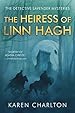
The Heiress of Linn Hagh,
please sign up.

Karen Charlton
Hi Milla,
Author here. Sorry to be late to the party but I've only just spotted your question and thought I would explain myself.
Back in 2005, I made two surprising discoveries while researching my husband’s ancestors. I learnt that he had a convicted felon, a Regency jail-bird, roosting in the branches of his family tree, called Jamie Charlton. Next, I discovered that a Bow Street principal officer (that was his correct title) called Stephen Lavender, had been involved in the investigation which sent our Jamie to trial. Nathanial Ogle, the wealthy owner of Kirkley Hall, had paid for Lavender to come up from London to solve the mystery of the burglary.
Like you, I had no idea that the Bow Street runners had evolved into such an effective and respected private detective agency and I set about doing more research. Particularly useful was: ‘A Certain Share of Low Cunning: A history of the Bow Street Runners 1792 – 1839’ written by David J. Cox.
From this book and other references, I learnt that by 1809, the year of my first novel in the series, the number of officers working out of Bow Street had dramatically increased and a horse patrol had been established to bring some law and order to the crime-infested outlying areas of London. Principal officers had various roles. Apart from supporting their colleagues in the capital, they were often sent out to help magistrates in the provinces with difficult cases. They also took part in undercover work in periods of insurrection, for example, during the Luddite riots in the Midlands and were available to hire by wealthy landowners like Nathanial Ogle.
The principal officers were a policing elite, famous throughout London (Stephen Lavender was frequently referred to as just 'Lavender' by The Times because most of their readers knew who he was) and the aristocracy loved them, especially the Prince Regent. They were the only policemen allowed into Buckingham House, the forerunner of the palace. They did security work for the Bank of England, were called in to assist with the investigation following the assassination of Prime Minister, Spencer Percevel (the subject of my next novel) and on occasions they were even sent abroad to help with crimes and criminals who had spilled out over our borders onto the continent.
Yes, I have taken a liberty styling Stephen Lavender a 'detective' but please be assured that the content of the novel accurately portrays the kind of role these principal officers undertook, that of a detective.
Author here. Sorry to be late to the party but I've only just spotted your question and thought I would explain myself.
Back in 2005, I made two surprising discoveries while researching my husband’s ancestors. I learnt that he had a convicted felon, a Regency jail-bird, roosting in the branches of his family tree, called Jamie Charlton. Next, I discovered that a Bow Street principal officer (that was his correct title) called Stephen Lavender, had been involved in the investigation which sent our Jamie to trial. Nathanial Ogle, the wealthy owner of Kirkley Hall, had paid for Lavender to come up from London to solve the mystery of the burglary.
Like you, I had no idea that the Bow Street runners had evolved into such an effective and respected private detective agency and I set about doing more research. Particularly useful was: ‘A Certain Share of Low Cunning: A history of the Bow Street Runners 1792 – 1839’ written by David J. Cox.
From this book and other references, I learnt that by 1809, the year of my first novel in the series, the number of officers working out of Bow Street had dramatically increased and a horse patrol had been established to bring some law and order to the crime-infested outlying areas of London. Principal officers had various roles. Apart from supporting their colleagues in the capital, they were often sent out to help magistrates in the provinces with difficult cases. They also took part in undercover work in periods of insurrection, for example, during the Luddite riots in the Midlands and were available to hire by wealthy landowners like Nathanial Ogle.
The principal officers were a policing elite, famous throughout London (Stephen Lavender was frequently referred to as just 'Lavender' by The Times because most of their readers knew who he was) and the aristocracy loved them, especially the Prince Regent. They were the only policemen allowed into Buckingham House, the forerunner of the palace. They did security work for the Bank of England, were called in to assist with the investigation following the assassination of Prime Minister, Spencer Percevel (the subject of my next novel) and on occasions they were even sent abroad to help with crimes and criminals who had spilled out over our borders onto the continent.
Yes, I have taken a liberty styling Stephen Lavender a 'detective' but please be assured that the content of the novel accurately portrays the kind of role these principal officers undertook, that of a detective.

Pat C.
I'm sorry I don't have an answer for you but I have noticed the same anachronism as far as both the police and "private detectives” in historical fiction. Robert Peel is called the "father of the British police force" which is where they got their nickname "bobbies". He was prime minister in 1834 and 1841, so I think the reader has to suspend credibility on that front in order to enjoy “The Heiress of Linn Hagh.”
I've run across this predicament in other historical fiction and I would love to discuss it in more depth if anyone is interested.
I've run across this predicament in other historical fiction and I would love to discuss it in more depth if anyone is interested.
About Goodreads Q&A
Ask and answer questions about books!
You can pose questions to the Goodreads community with Reader Q&A, or ask your favorite author a question with Ask the Author.
See Featured Authors Answering Questions
Learn more