
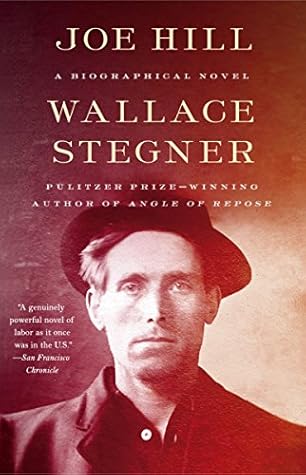
More on this book

Kindle Notes & Highlights

No thoroughly adequate history of the IWW exists. The standard histories are factual and doctrinal summaries, valuable for the record of the IWW’s organization and activities but stopping short of the real climax of the movement just after World War I, and lacking in the kind of poetic understanding which should invest any history of a militant church. From 1905 to the early twenties, the IWW was just that—a church which enlisted all the enthusiasm, idealism, rebelliousness, devotion, and selfless zeal of thousands of mainly young, mainly migrant workers. Its history is a chronicle of strikes,
...more

as of 1950
The IWW now is an exclusive and somewhat mellowed club, but it can still rise up when it is stepped on, it can still muster pickets before the doors of the New Republic when it prints an article by me implying that Joe Hill, one of the great martyrs, could have been guilty. An injury to one is still an injury to all; the union doctrine has not changed by a hair’s breadth. But now it is a church of old men.
The IWW was a fighting faith. It’s members were the shock troops of labor. Its weakness was that it really liked a fight better than it liked planning, negotiations, politicking. It won victories and attracted thousands of new members and let them drift away again for lack of a concrete program. Its ideas were vaguely the anarcho-syndicalist ideas that had stirred France a little earlier; its methods and shibboleths, even the “wooden shoe” symbol of sabotage, were the same. Its membership was an utterly American mixture, with a good percentage of the foreign-born because the foreign-born were
...more
This highlight has been truncated due to consecutive passage length restrictions.
Did this have another title, The Preacher & the Slave, when it appeared in 1950?
he saw that Lund was speaking directly at him. “… what it is that we are after in this life,” the missionary said. “We carry around all our lives a load of bitterness and discontent, pretending that it’s something else than what it is. We hate the rich, or hate the capitalistic system, or hate women, or hate politicians, or hate God. But I’ll tell you what we really hate. We hate ourselves.” Heavy, his chest and shoulders bulky in his too-small coat, his face shining a little in the warmth of the close room, he leaned on the back of a chair and spoke at Joe, watching him steadily and crinkling
...more
Live a Christian life and work hard and develop your talents and stay away from bad companions and turn the other cheek and organize in some good sound AFL union and make well-bred demands and thank the bosses when they raise your wages ten cents a day, or forgive them when they lay you off or cut your pay envelope. Above all, take your licking philosophically when they break your strikes with Pinkertons and gunmen. Be polite and the plutocrats might toss you a bone. Maybe there’ll be a job scabbing on someone less polite. You might get to be Casey Jones the Union Scab, and blow a whistle on
...more
In ordinary times itinerant radical intellectuals and organizers hit the Pedro waterfront as if on a Lyceum circuit—ex-professors and ex-preachers, rebellious college boys, union delegates, professional revolutionaries preaching socialism, anarchism, syndicalism, bimetallism, the single tax. With faces like saints or madmen or prize fighters or farmers or clerks, but always with the eyes of believers, they come and go, leaving a little deposit of their eloquence and fervor and belief among the men who will listen. Now with the waterfront struck they come in greater numbers, and back from the
...more
“I don’t care what flag it marches under. But no class war. No crusades. No inquisition. No riots, no damnation threats, no hellfire. Something that probably sounds funny. Christian love. Human decency. The golden rule.” Joe felt sorry for Lund. As long as he lived he would never know what the world was about. He would go on living with his head in a bag. “The golden rule like the one the lumber trust or the S.P. follows?” he said.
He was no soapboxer, anyway, and it was the soapboxers who dared town authorities in the free-speech fights. He was another kind of organizer: a singer, a player of the piano at local meetings, a maker of catchy rhymes and drawer of cartoons. The name of Joe Hill was better known than the man, for it was signed to cartoons pinned up in almost every hall up and down the coast, and his songs in the Little Red Songbook were the kind that men in a crowd discovered they knew. Any time, at any season, he was likely to drop quietly into town, spend a day or two or three, help out with a meeting, get
...more
This highlight has been truncated due to consecutive passage length restrictions.
only there had been some triumph in it, if the crowd hadn’t quit just when it began to get militant, if it had stayed together and they could all have faced the returning law coolly, with a set of demands and a clear irrefutable statement of how the trouble had started. If it were possible to say that Art died helping three thousand pickers to some of the decencies of life. But you couldn’t say that. You couldn’t say anything but that he got trampled in the mob, unable even to put up the kind of grim slugging battle he was capable of. A stray bullet, a stray rock, a stray blow, and a good man
...more
the slaves won’t organize and fight for their rights, if they fold up just when they should hang together, then there will have to be other ways. The trouble with the soft-pedal wing of the union was that they never carried their logic to its conclusion. They believed in the class war, they swore by the Preamble, but they didn’t admit it was really war. Strikes were okay, free-speech fights were okay, sabotage was fair in a really bitter fight like some of the fights up in the lumber woods, but they tried to stop there, halfway.
Lund was stung. If there was one thing he feared it was the thing he had seen too often in his own profession, the self-righteousness that could creep up on a man like fat or baldness, greasing the mind and clouding the vision and making a good man over into something almost detestable. In an unappreciated profession it was so easy to take comfort and justification from one’s own sense of blamelessness. A hot retort jumped into his mind, but he held it back, glaring across the table into Joe’s narrowed eyes. He saw the amusement there, and after a moment he could laugh. He was being baited
...more
“Well, I’m sorry for all the souls I’ve bribed over onto the boss’s side with coffee and doughnuts.” He was disappointed in Joe. The power to discriminate was no longer there; the hard uncompromising arrogance of the self-righteous was in his voice and in the sterile doctrines he preached. It was as if he looked out on the world through a set of ideas as rigid as the bars on a jail window, and everything he saw was striped in the same pattern.
Lund found himself thinking that Joe could be absurd, as the intelligent but under-educated could always be absurd, and he could perhaps be dangerous, a really deadly partisan, but he would also be something of a seeker always, and something of an artist. He continued to look smilingly into Joe’s face. Finally he said, “Life is a battleground to you.” “It’s always been a battleground. It’s taken the working class hundreds of years to get to the point where they can fight with a chance of winning.” “But you think they’ll win.” “It’s inevitable.” “And after they’ve won, then what? After they’ve
...more
This highlight has been truncated due to consecutive passage length restrictions.
humanity moves both ways on a street with a double dead-end, and that Vengeance sits with an axe at one end and Mercy sits in weak tears at the other, and that only Justice, which sits in the middle and looks both ways, can really choose. He said none of this, though he thought it with a kind of anguish, because he liked Joe Hillstrom and took him seriously both as a man and as a representative. Instead he said placidly, pulling his heavy mustache, “So here we sit cheek by jowl, the Preacher and the Slave.”
Like grains of sand pouring between his fingers the generations came and passed, and centuries after they had passed the dry husks of their names made a forlorn sound in the world in which they and all their works were as grass. This was the stuff millions of good Christians read for gospel. This was the way they built up patience in themselves to accept what they were given and bear the yoke they bore. And one generation of workers worked and got nothing and bore children and died, and another generation labored and was cheated and begot children and died, and all the days of every generation
...more
Joe’s cheeks were emaciated, blackened with a week’s beard. The lips were drawn back wolfishly. Out of hollow sockets the eyes smoldered half-lidded and contemptuous. Joe must have known when the picture was taken that he had a face to scare babies, yet he had turned it straight into the camera in bitterness and contempt. It was the face of a desperado—or of an El Greco martyr before suffering or art or both had refined the passion and defiance out of the eyes and mouth. He tried to read it, to see behind it, but he could not for his life have said whether it was the face of a guilty man
...more
In a place so severe and bare as this the most solemn and deliberate injustices could be done impartially, impersonally, without bias or ill will, because everything in the room, even the expressions on the faces of spectators and bailiffs and attorneys, made it clear that the actors here, judge and jury, prosecutor and witnesses, had ceased to be men and were for the time being mere instruments. Only the accused, in such a room, remained touched by human frailty, and he was reduced to helplessness like a child among grownups.
The Wobblies, Lund was thinking as he went toward his hotel to get his suitcase, were as automatic as a burglar alarm. Touch any part of the mechanism, let one member be misused, anywhere, and they went off in a loud single-minded uproar. An injury to one was an injury to all. They went no further. There was one enemy, the System. No matter what happened, they knew who was to blame. They recognized one virtue, loyalty to the cause, so that their souls and stomachs were not visited by doubt and queasiness. The revolutionary faith was a flux that absorbed moral complexities and even rational
...more
This highlight has been truncated due to consecutive passage length restrictions.
Consider the way circumstance has of taking a man out of his own proper and recognizable character and subtly transforming him, coating him with the ions of a new personality as a lead tray is glazed with silver in an electroplating tank. Two men are on trial before the Third District Court in Salt Lake City. One is the IWW poet and song writer Joe Hill, a name known to many, and now a face that begins to be known too, a sensitive and thoughtful and fine face, with a resolute mouth and eyes like a compassionate Christ. Folders bearing his picture are stuck up in every hall west of the Big
...more
Who can determine how much a man imposes his own myth of himself upon others and how much that myth is created by those who know him? Joe Hill began to be born in his songs and cartoons; certainly he lived, imperfectly realized, in the mind of a Swede sailor sitting on the San Pedro waterfront feeding a rat, or looking down the sad trough of Beacon Street and dreaming a dream of leading thousands. But now he acquires stature and outline through the labors of a committee; he is issued from a headquarters like news bulletins, and the headquarters is not Salt Lake County jail but the IWW hall.
...more
This highlight has been truncated due to consecutive passage length restrictions.
At the center of all this, generating lines of force that went through the whole world, was a sailor friend of his, a Swede with a knack for drawing pictures and writing poems, a man with little education but with a strong inclination toward the arts, a man who used to drop in and drink coffee and argue social rebellion in the mission kitchen. He was as remote now as a vague great name in the papers.
It embarrassed him to watch Joe’s violence, because he could not rid himself of the feeling that the violence was faked. The sudden brief tirade had the artificiality of an act, like his tirade in court when he fired his lawyers. It wasn’t like Joe; right now Joe was breathing harder and faster than he needed to, working himself up to a passion for some obscure reason. And how could it be said to him now, a few hours before his death, that his martyrdom was tainted by the dubious methods his friends had used in advertising or—concede the suspicion-promoting it? Joe Hill as he lived in the
...more
Waiting for the guard, he was drawn up like a prince. The light falling from above poured over his fair hair and his slim rigid shoulders. He was limned with light as he thrust the paper through the bars. Every slightest motion was exaggerated, theatrical, posed—or was it kingly? Inscrutable, wrapped in dignity or clothed in affectation and an actor’s sense of his own conspicuousness, he stood alone under the floodlights of a stage watched by hundreds of thousands, and he spoke his curtain line and it rang like a blow on iron. What was on his conscience would not matter.
image of Joe Hillstrom, full of some ecstatic vision, living out in his last hours not his own life but his forming legend.
