
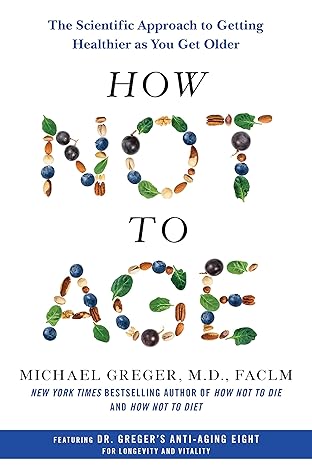
More on this book
Community


Kindle Notes & Highlights


The anti-aging field is said to be a “fertile ground for cons, scams and get-rich-quick schemes,”4
This encompasses everything from wrinkle creams to televangelist Pat Robertson offering “Pat’s Age-Defying Protein Pancakes.” Aging may not be good for health, one economics editorial put it, “but it certainly is good for business.”12
Two of the most prestigious medical journals were forced to retract papers over concerns
of data integrity.31,32 But scientific journals remain the gold standard for establishing the best approximation of truth about our shared reality.
Over the last three years, my team and I read more than 20,000 papers on aging so you don’t have to—but you’re certainly welcome to!
That way, you can download the PDFs and access the original research yourself.
I needed to figure out how to essentially halve the book to meet the publisher’s printing specifications. The problem is there wasn’t any chaff to chop.
From a study of more than 42,000 consecutive autopsies, centenarians—those who lived at least to one hundred—were found to have succumbed to diseases in 100 percent of the cases examined. Though most were perceived, even by their physicians, to have been healthy just prior to death, not one “died of old age.” They died from disease, most commonly heart attacks.34 Similar results were found from other autopsy series of centenarians35 and those over eighty-five, an age bracket referred to in the medical literature as the “oldest old.”36,37,38
Heart disease has been the leading cause of death and disability around the world for most of this century43 and is projected to remain that way in the decades to come.44 But is it really?
Because dodging cancer would just mean delaying death from something like a heart attack or stroke. If one age-related ailment doesn’t get us, another will. Rather than playing “whack-a-mole” by tackling each disease separately, progress in decelerating aging could address all these issues simultaneously.54
Imagine if there was an intervention that didn’t just reduce your risk of the leading killers but also arthritis, dementia, osteoporosis, Parkinson’s disease, and sensory impairments. Because such risks tend to double every seven years, even just slowing aging, such that the average sixty-five-year-old, for example, would have the health profile and disease risk of today’s fifty-eight-year-old, would be expected to cut in half everyone’s risk of death, frailty, and disability.55
You’d think Big Pharma would invest in what would certainly be a blockbuster drug. But why spend the money on research when it can be spent on marketing all the unproven anti-aging products they already sell? Many of the leading lines of dietary supplements are owned by drug companies.59,60 They’re the ones selling “cosmeceuticals”61 and “age reverse” skin creams.62 Drug maker Sanofi even partnered with Coca-Cola to come up with a “beauty drink.”63 They’re already making money hand over fist preying on
the public’s gullibility and desperation for anti-aging products.64 Why waste money on proving anything actually works?
This raises the concept of healthspan, the period of life spent in good health, free from chronic disease and disability.73 No wonder people are skeptical about longevity interventions as we see our lifespans expand but our healthspans contract. “Everyone wants to live forever,” to paraphrase Jonathan Swift, “but no one wants to grow old.”
That is why this book addresses both lifespan and healthspan. What’s the point of living longer if you can’t enjoy it vibrantly? It is my sincere hope this book adds not just years to your life but life to your years.
“MAN WILL NEVER BE CONTENTED UNTIL HE CONQUERS DEATH.” —BERNARD STREHLER
Evolution has produced lifespans in animals that vary more than a millionfold, from mayflies whose adult lives may last only a few minutes to clams clocking in at over five hundred years.77 Just like the Wright brothers may have taken inspiration from birds, we can take inspiration from animals that age slowly, if at all.78
Why can’t we live forever? Some animals do, and I’m not talking about a two-hundred-year-old whale or even a thousand-year-old tree. There are actually species (with names like the immortal jellyfish) who apparently do not age and could technically go on forever.79
I remain agnostic as to whether such a breakthrough is possible, but I hope this book will help regardless, whether you’re striving to live long enough to live forever97 or just trying to die young as old as possible.
My inspiration for writing How Not to Age was a consensus document titled “Interventions to Slow Aging in Humans” that was compiled by the top researchers in anti-aging medicine, the likes of Drs. Fontana, Longo, Sinclair, and dozens of others—nearly everyone who’s anyone in the field. Brought together to identify the most promising strategies for developing drugs to combat aging, they identified a list of “essential pathways,” for example, the pharmacological inhibition of the hormone IGF-1 or drugs to block the enzyme mTOR. As I looked through the list, I realized: Every single one of these
...more
Part I is the nerdy section, and it contains critical concepts and terms that will be used throughout the book.
The media loves stories about hard-living centenarians who attribute their longevity to some combination of lard, vodka, and their favorite brand of cigarette, but how do centenarians and supercentenarians (those older than 110) really eat and live?
In Part II, I delve deep into the behaviors that those in the five longevity hot spot “blue zones” around the world share in common. In constructing the optimal anti-aging regimen, I explore the best and worst foods and beverages. Is red wine deserving of its symbolic status for longevity? What about coffee? I cover the “longevity vitamin” ergothioneine, the vegetarian’s Achilles’ heel, and the best exercise and sleep routine for the longest, healthiest life.
My aim is to cover every possible angle for developing the optimal diet and lifestyle for the longest, healthiest lifespan based on the best available balance of evidence.
In short, only about 15 to 30 percent106 or less107 of our lifespan appears determined by our genes, which means how we live our lives may determine the bulk of our destiny.
The term “anti-aging” has been much abused in popular culture, attached to all manner of unproven products and procedures.
How Not to Diet, there is a section titled Amping AMPK. AMPK (AMP-activated protein kinase)
That’s why AMPK is known not only as the master energy sensor118 in our body but also the fat controller.119
Autophagy is a housekeeping process by which defective cellular components, such as misfolded proteins that had been allowed to build up wastefully in times of surplus, are broken down and scrapped for spare parts.
AMPK induces autophagy, which cleans house, sweeps away accumulated waste, and effectively institutes a sort of cellular reset.123
The loss of AMPK activity as we age fits all three criteria. As we grow older, AMPK levels drop and it gets harder to activate, harder to flip the switch to recharge our batteries.125 When this decline is exacerbated, aging is hastened (at least in mice),126 but when this process is reversed and AMPK activation is boosted, lifespan is extended in model organisms127—by as much as 38 percent in C. elegans,128 a roundworm I profile in see.nf/models.
Up and down the evolutionary tree of life, the most reliable way to extend lifespan may be long-term food restriction.129 AMPK activation is thought to be one of the mechanisms for this longevity boost.
Since AMPK is activated by a fuel shortage, if we don’t want to limit the amount of energy going in through our mouths, then we have to ramp up the amount of energy going out through our muscles. If you put people on bikes and take muscle biopsies while they cycle, a near tripling of AMPK activity can be detected within twenty minutes.132 That’s one way exercise can result in weight loss.
This helps explain why endurance training enables us to run faster and farther over time. So, might an AMPK activator be “exercise in a pill”? Indeed, when sedentary mice were given an AMPK-activator drug for a month, it boosted their running endurance by 44 percent.134 After one such drug was discovered at the famed Tour de France,135 AMPK activators were banned by the World Anti-Doping Agency.136
In his book On Youth and Old Age, the Greek philosopher Aristotle described death as the loss of inner heat.139
So, age-impaired mitochondria don’t just become less efficient—they may become actively harmful. That’s where AMPK comes in.
The way metformin boosts AMPK is by impairing our body’s ability to produce energy by acting as a mild mitochondrial poison,
There’s a type of saturated fat called palmitic acid that suppresses AMPK.159 Although originally discovered in palm oil, palmitic acid is most concentrated in meat and dairy fat.160 Of all saturated fats, palmitic acid appears particularly pathogenic when it comes to metabolic disease, cardiovascular disease, cancer, neurodegenerative diseases, and inflammation,161 which is at least partly attributable to AMPK inhibition. This may be why saturated fat can be so toxic to the liver.162
Excess sugar is often framed as the main culprit, but saturated fat is even worse.
FOODS THAT MAY BOOST AMPK We know of more than a hundred plant products that can activate AMPK,170 but many of them are toxic, to defend against noshing nibblers. Take nicotine, for example. Fat biopsies show that, compared to nonsmokers, those who light up have more than five times the AMPK activation.171 Unsurprisingly, smokers often gain weight when they quit,172 and nicotine gum can blunt that phenomenon.173 Although smoking cigarettes may be one of the worst things you can do to yourself, it’s one of the most reliable ways to lose weight, thanks to AMPK.174 Is there any way to get the
...more
Because AMPK activation leads to weight loss, I cover a number of natural AMPK activators in my book on the subject, including berberine, found in barberries. Rather than reiterate it here, allow me to refer you to the Raising the Barberries section of my Amping AMPK chapter in How Not to Diet.
Black cumin is another plant traditionally used in Middle Eastern cuisines that can boost AMPK.184 Please see the Black Cumin section in my Appetite Suppression chapter in How Not to Diet.
Typical doses used in studies are just 1 or 2 g of black cumin a day, which is about a quarter teaspoon.189
HIBISCUS AND LEMON VERBENA TEA Another AMPK-boosting zinger is hibiscus,196 which delivers the tart cranberry-like flavor and bright red color of Red Zinger tea. Also known as roselle or jamaica, hibiscus tea has been enjoyed around the world for millennia as both a delicious hot or cold drink and an ancient medicinal remedy.197 In How Not to Die, I covered its blood pressure benefits, working as well as,198 or even beating out, some antihypertensive medications in head-to-head clinical trials.199 In How Not to Diet, in the Flower Power section of my Fat Blockers chapter, I describe its role
...more
Vinegar has also been shown to improve artery function218 and to have other AMPK-activation benefits, such as decreasing blood cholesterol and triglyceride levels.219 Can it make you live longer? In C. elegans, vinegar has a “prominent lifespan-extending effect,”220 but it’s never been tested in people.
So, we can use the top-down approach to activate AMPK by consuming vinegar or the bottom-up approach by eating fiber.222
The drug metformin activates AMPK but carries adverse side effects and may not benefit healthy individuals.
To help boost this anti-aging pathway, at each meal, consider: reducing consumption of saturated fat (concentrated in meat, dairy, and desserts) increasing consumption of fiber (concentrated in legumes and whole grains) taking each of the following: 2 teaspoons of barberries a dash (1/12 teaspoon) of ground black cumin ¾ cup hibiscus tea mixed with ¼ cup of lemon verbena tea 2 teaspoons of vinegar (though never taken straight; sprinkle on food or dilute it in the tea)
It clears out the junk and upcycles it, turning it into fuel or new building materials, thereby renewing our cells.
Autophagy is critical for most lifespan-enhancing interventions. Whether through diet, drugs, or genetic manipulations, if autophagy pathways are blocked, so, too, are many pro-longevity effects.
