
More on this book
Community


Kindle Notes & Highlights


In other words, the Bible neither needs nor finds authority outside of itself.
We believe that those Holy Scriptures fully contain the will of God, and that whatsoever man ought to believe, unto salvation, is sufficiently taught therein. For, since the whole manner of worship, which God requires of us, is written in them at large, it is unlawful for any one, though an apostle, to teach otherwise than we are now taught in the Holy Scriptures: nay, though it were an angel from heaven, as the apostle Paul saith. For, since it is forbidden, to add unto or take away anything from the word of God, it doth thereby evidently appear, that the doctrine thereof is most perfect and
...more
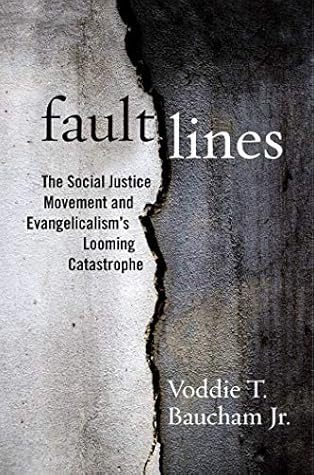
And this is why these fault lines are so critical. Eventually, they shift, and when they do, the results are catastrophic.
One pastor summed it up well: MLK: “Men should NOT be judged by the color of their skin.” T4G: “Pastors should be judged by the color of their congregations.”
The answer is simple: David Platt loves Jesus, loves people, and is passionate about reconciliation. I know this because I know and love David Platt. I also know he started reading and being influenced by the woke canon. Consequently, he began to reach beyond the Bible to find God’s truth regarding race.
I am taking issue with what this list represents: what it means. I am taking issue with the presuppositions behind it. Specifically, 1) its underlying assumption that the Bible is not sufficient to address issues of race and/or justice and 2) its stated assumptions about the very nature of both race and justice. “[W]e are only talking in a circle when we say that we advocate justice, unless we specify just what conception of justice we have in mind,”17 writes Thomas Sowell in The Quest for Cosmic Justice. “This is especially so today, when so many advocate what they call ‘social justice’—often
...more
The general theme of the current CSJ movement within evangelicalism is a covert attack on the sufficiency of Scripture. People are not coming right out and saying that the Bible is not enough. Instead, high-profile pastors get up and speak about the ways in which modern sociology texts have done for them what the revelation of Scripture has been unable to do. My dear friend Paul Washer put it well when he noted, “Five years ago, I was amazed as I saw the young, restless, and Reformed crowd at conferences talking about their latest encounters with Spurgeon, Calvin, Kuyper, and Machen… now
...more
Please hear me well. I am not saying that men should not come to understand more of God’s revelation as they grow. On the contrary, we must always be reforming. Semper reformanda was and is the cry of the Reformation. However, the CRT crowd in evangelicalism are not men who have been challenged on their interpretation of Scripture—they are proclaiming that sources outside of Scripture have brought them to a new, better, and more complete understanding of God’s truth on race.
First, the Bible is the Word of God. Paul says, “All Scripture is breathed out by God.” In other words, the Bible is not merely the words and speculations of men. Nor is it dependent upon the words or ideas of men for its authority. Unlike the texts in the new antiracist canon, the Bible carries the authority of God Himself. Second, the Bible is “profitable for teaching, for reproof, for correction, for training in righteousness” (2 Timothy 3:17). In other words, since race is undoubtably a “righteousness” issue, the Bible is profitable for teaching those who are ignorant about race, rebuking
...more
Third, the Bible is sufficient. The Bible is the only canon through and by which “the man of God may be complete, equipped for every good work” (2 Timothy 3:17). This includes the work of race relations of any and every kind. It is the Bible—not sociology, psychology, or political science—that offers sufficient answers not only on race, but on every ethical issue man has faced, or will ever face.
Also, notice the move away from the human heart right into the public/political sphere. This, by the way, is why CSJ proponents tend to downplay the sufficiency of Scripture: to them, racism is not a heart issue or personal sin; it is a “systemic” problem. Therefore, reform is the solution, not repentance.
But most of the world is monolithic. Zambians are not only people who were born in Zambia, they are black people who were born in Zambia. We have a dear friend whose parents immigrated to Zambia from India. Although he was born in Zambia, he is not considered Zambian simply because he is not black and his parents immigrated from abroad. Say what you will about race problems in the United States, I have never had anyone tell me I cannot be considered American because of the color of my skin!
Whereas in years gone by that would have included all ethnicities, today we just want to know the black-white makeup (because in this climate, other minorities simply don’t matter). In the past, the pastor with the biggest church was the winner; today, it is the one with the best black-white split. In this climate, the pastor with the inferior black-white split not only pastors the inferior church, but he is actually considered the inferior pastor—or, more precisely, the inferior person.
“Where do I start to understand systemic racism?” This is the crux of the matter. This is why we need a curriculum in the first place. The idea, you see, is that the Bible may help you with a number of things, but it simply cannot help you even begin to understand systemic racism. That is because “systemic racism” is a moving target.
As we saw earlier, the term “antiracist” is loaded. It has a very specific meaning—part of which includes the idea of works-based righteousness. White people are not called to look to God for forgiveness. They are not told that Christ’s blood is sufficient. No, they are told that they must do the unending work of antiracism. And this work must be done regardless of their own actions since the issue at hand is a matter of communal, generational guilt based on ethnicity.20
This flies in the face of the clear teaching of Scripture. The Bible makes it clear that God forgives sin. Consider the following passages: And no longer shall each one teach his neighbor and each his brother, saying, “Know the LORD,” for they shall all know me, from the least of them to the greatest, declares the LORD. “For I will forgive their iniquity, and I will remember their sin no more.” (Jeremiah 31:34; cf. Hebrews 8:12; 10:17) And sin, once forgiven, is removed far from us, “As far as the east is from the west, so far does he remove our transgressions from us.” (Psalm 103:12) Who is a
...more
The same can be said of the current fault lines in evangelicalism. Catch a glimpse of a Christian community unstained by racism, classism, sexism, or injustice, and you can see why many are willing to risk everything for the sake of a movement that offers such hope. But what if the movement that purports to have the answers to all these problems is built on a fault line destined to distort the Gospel, cause even deeper divisions, and wreak havoc?
We are right to pursue justice, peace, and unity (Micah 6:8; Romans 12:18; John 17:20–21). That is not the fault line. The fault lies in believing that such a vision can be attained by affiliating with, using the terminology of, or doing anything other than opposing in the most forceful terms the ideology that lies at the root of the social justice movement.
But in the current climate, debate is becoming a lost art—partly because of a general decline in the study of logic and rhetoric, but mostly because of the general feminization of culture and its consequent disdain for open verbal combat.
have often said, “The Eleventh Commandment is, ‘Thou shalt be nice”… and we don’t believe the other ten.”
One of the negative results of this is no longer being able to deal with ideas without attacking the people who hold them. Disagreements quickly deteriorate into arguments and worse. Consequently, taking a position on an issue carries the automatic assumption that one is utterly opposed not only to the opposing view, but to all who hold it. Therefore, we don’t debate ideas at all, but go straight for personal attacks and character assassination. And this debate is no different.
Documents like the Dallas Statement are never meant to be a final word. The Bible is the final word.
Here, dear reader, is the heart of the matter. The environment within evangelicalism is so hostile that it has a chilling effect. In this environment, dissent is not only unwelcome, but condemned. Consequently, many godly, thoughtful, well-meaning, justice-loving brethren are being silenced. As a result, the fault lines continue to shift, and the catastrophe gets ever closer.
WHEREAS, critical race theory and intersectionality are founded upon unbiblical presuppositions descended from Marxist theories and categories, and therefore are inherently opposed to the Scriptures as the true center of Christian union.… WHEREAS, Critical race theory is a set of analytical tools that explain how race has and continues to function in society, and intersectionality is the study of how different personal characteristics overlap and inform one’s experience.…
WHEREAS, critical race theory and intersectionality are founded upon unbiblical presuppositions descended from Marxist theories and categories, and therefore are inherently opposed to the Scriptures as the true center of Christian union.… WHEREAS, Critical race theory and intersectionality alone are insufficient to diagnose and redress the root causes of the social ills that they identify, which result from sin, yet these analytical tools can aid in evaluating a variety of human experiences.…
Original Resolution Final Resolution WHEREAS, critical race theory divides humanity into groups of oppressors and oppressed, and is used to encourage biblical, transcendental truth claims to be considered suspect when communicated from groups labeled as oppressors.… WHEREAS, Critical race theory and intersectionality have been appropriated by individuals with worldviews that are contrary to the Christian faith, resulting in ideologies and methods that contradict Scripture.…
Intersectionality, according to its founder, is inseparable from feminist ideology and identity politics.
One of the greatest tragedies of the Critical Social Justice movement is how it promotes devastation by encouraging people and communities of color to avoid “adopting the dominant culture” by eschewing real data. As Thomas Sowell points out in Discrimination and Disparities, the CSJ crowd “proclaim that statistical disparities show biased treatment—and that this conclusion must be believed without visible corroborating evidence… unless sheer insistent repetition is regarded as evidence.”
And fourth, it feeds into a victimology mindset that teaches disadvantaged people that their only hope is the benevolence, good will, and eventual revolutionary political action of well-meaning white saviors.
One is that systemic/structural racism is not the only, or even the primary, explanation for inequities. If you have engaged in such conversations lately, you have learned there is no such thing as brotherly disagreement on this issue. On these matters, there is right and there is wrong. More accurately, there is the CRT view on the one hand, and some version of white fragility, “privilege-preserving epistemic pushback,”7 or some other modern CSJ disorder on the other. This is where the circular reasoning comes in.
The CSJ view is considered both unfalsifiable and unassailable. Facing off with a true believer is a reminder that “a brother offended is more unyielding than a strong city, and quarreling is like the bars of a castle” (Proverbs 18:19). If you do find someone willing to engage on the topic, you will eventually get to the question-begging spiral. I have had many of these conversations, and they all lead in the same direction: at the heart of every malady is an historic wrong.
However, if you assume that this means the pulpits in black churches don’t address personal responsibility, you are wrong. White liberals like Robin DiAngelo, Jim Wallis, and Daniel Hill may chafe at the idea of black responsibility, but black pastors do not. The internet is filled with clips of black pastors getting standing ovations as they passionately admonish their young members to “pull up your pants, get an education, stop dropping babies all over the place, learn to speak proper English, get all that gold out of your mouth.…” They and their members know that, regardless of what is
...more
I have come to the conclusion that such qualifications do more harm than good. Preachers who spend more time trying to be helpful than they do trying to be truthful are doing a disservice to those to whom they preach. There is a place for nuance, but the clear admonitions of Scripture are not it.
Thomas Sowell is one of the most significant intellectuals of our day. His words are useful here: Disagreements about social issues in general seem to be not only inevitable but even beneficial, when opposing sides are forced to confront contrary arguments that might not have been considered before, and examine empirical evidence not confronted before. Neither side may have taken all the factors into consideration, but having to cope with each other’s different views may bring out considerations that neither side gave much thought to at the outset.
This is why Latzer challenges Alexander’s assessment of the problem: The notion that the buildup of the criminal-justice system, which began in the 1970s but gained steam over the next three decades, was part of a plot to undo the civil-rights movement rather than a response to the massive crime and drug wave that afflicted this country not only is dubious revisionist history, but it overlooks the strong support of black leadership for an expansion of the criminal-justice system.
Planned Parenthood Founder Margaret Sanger started what became known as the Negro Project in order to reduce the black population through birth control.50 Sanger was a Malthusian eugenicist who believed black and brown people were inherently inferior. Her first achievement among the black community came in 1923 when she opened a clinic in Harlem, where she “hired African American doctors, nurses, and an all-black advisory council to help her clients feel more at ease—and more inclined to listen to her birth control propaganda.”51 She also relied on black clergy to advance her message.52 Today
...more
that Christians who adopt its underlying ideologies will not be able to avoid the damage it creates. “The idea that evangelicals can adopt the analysis of contemporary critical theory with respect to race and sex, but not with respect to sexuality, gender identity, or religion is naïve—at best,” writes apologist Neil Shenvi. Shenvi holds a Ph.D. in chemistry, but it doesn’t take that level of scientific acumen to understand the inevitable link between the aspects of Critical Social Justice that evangelicals are eager to embrace and those they want to avoid, because as Shenvi notes, “these
...more
Gnostic Priests: people whose experience of oppression gives them insight that is unavailable to their oppressors Enlightened Saviors: the people from the oppressor class who are exempt from their participation in the oppression and serve as representatives and saviors of the oppressed in order to shepherd them through the revolutionary process of usurping the hegemony (for a not-so-small fee)
However, even if abortion were an example of single-issue voting, I reject the idea that murdering the unborn can be subjugated in favor of social issues that are being promoted through the lens of Critical Social Justice. In other words, if I were going to be a single-issue voter, that single issue would be the murder of the unborn.
A letter signed by seventy-four black church leaders called white evangelicals who voted for Trump a “radical faction.”28 They couldn’t possibly have voted for him out of concerns over Hillary’s radical policies, Benghazi, email servers, the corrupt Clinton political machinery, the desire to have a businessman and outsider who wouldn’t back down against the left or the press, or even sheer pragmatism. It had to be racism! And I say this as someone who supported Ted Cruz in the 2016 primary. I even attended a private Cruz campaign event and lamented the pragmatism of evangelicals who abandoned
...more
This book is, among many things, a plea to the Church. I believe we are being duped by an ideology bent on our demise. This ideology has used our guilt and shame over America’s past, our love for the brethren, and our good and godly desire for reconciliation and justice as a means through which to introduce destructive heresies. We cannot embrace, modify, baptize, or Christianize these ideologies. We must identify, resist, and repudiate them. We cannot be held hostage through emotional blackmail and name-calling. Instead, we must “see to it that no one takes you captive by philosophy and empty
...more
Nevertheless, Critical Social Justice will not have the last word. God’s Church will neither fall nor fail. It is “a pillar and buttress of the truth” (1 Timothy 3:15), and God’s Word “is firmly fixed in the heavens” (Psalm 119:89). So we can hold on to hope because we know that “[t]he grass withers, the flower fades, but the word of our God will stand forever” (Isaiah 40:8). Therefore, I say with the Apostle Paul, “I am not ashamed, for I know whom I have believed, and I am convinced that he is able to guard until that day what has been entrusted to me” (2 Timothy 1:12).
I also know that He will do it through Christians who heed the call to “Remember the Lord, who is great and awesome, and fight for your brothers, your sons, your daughters, your wives, and your homes” (Nehemiah 4:14).
Many modern Christians are uncomfortable with “war” language. Perhaps it is because of the aforementioned Eleventh Commandment: “Thou shalt be nice.” As a result, anything that looks or sounds remotely aggressive, confrontational, or masculine is deemed “less than Christian.” But the Bible is replete with war language (and actual war). And that language is appropriate here because we are at war—but we must not rely on ordinary tactics. For though we walk in the flesh, we are not waging war according to the flesh. For the weapons of our warfare are not of the flesh but have divine power to
...more
I am not at war with the men, women, and ministries I have named in this book. I love them. Some of them are actually long-time personal friends. But I am at war with the ideology with which they have identified to one degree or another. I see Critical Race Theory, Intersectionality, Critical Social Justice, and their antecedents—Marxism, Conflict Theory, and Critical Theory—as “cosmic powers over this present darkness.”
We Fight with the Truth of the Gospel As followers of Christ, we reject the idea that the sin of racism is entirely structural. We believe it is a problem of the human heart—and therefore, its only solution is the Gospel of Jesus Christ. There are most assuredly issues in the culture that are broken, and we should strive to repair them. However, the mission of the Church begins with and works through the hearts of men.
We do not pursue equal outcomes, but righteous application of God’s Law:
We have an opportunity to say to a world seeking the false, inadequate, burdensome law of antiracism, “We have something better; something more.” God’s law in the life of the believer manifests as vertical and horizontal love: We love God, so we keep His commandments, and in doing so, we love our neighbor. This cannot be legislated.
Truth, righteousness, the gospel of peace, the shield of faith, the helmet of salvation, the sword of the Spirit (which is the Word of God), and prayer. If you have been paying attention, you have heard these weapons mocked by big-name evangelicals who call them “simplistic.” These things are all fine, they say, but they won’t cure racial injustice—as though racial injustice is a new sin that escaped God’s attention until now. However, nothing we face today is too powerful for our aforementioned weapons; we just have to know how to deploy them. And that is precisely what comes next.
The truth is not only to be believed; it is to be deployed.
