
More on this book
Community


Kindle Notes & Highlights
by
David Zahl
Read between
February 6 - March 12, 2020

Idleness makes me far more uncomfortable than busyness, a blank to-do list considerably more nerve-wracking than an overstuffed one.

Workaholism is a religion!
enoughness.
What we’re always pursuing
Busy is not just how we are but who we are—or who we’d like to be.
personal enoughness and, therefore, justification.
A secular way to be justified or enough
Busyness has become a virtue in and of itself.
But it’s a delusion
As tired as it makes us, busyness remains attractive because it does double duty, allowing us to feel like we’re advancing on the path of life while distracting us from other, less pleasant realities, like doubt and uncertainty and death.
Ouch
Performancism is the assumption, usually unspoken, that there is no distinction between what we do and who we are. Your resumé isn’t part of your identity; it is your identity.
John Carroll liked this
Expectation and isolation are a fatal combination.
but that inner eighth-grader and his relational performancism never disappears entirely.
All of a sudden, a price tag is dangling off of what was supposed to be a gift. “If I knew that you’d require a ton of affirmation and thanks, or that you’d hold it over my head, I would’ve done the dishes myself!”
look to another person to provide for us what we cannot provide ourselves: not just validation but redemption.
we turn those around us into potential solutions to be leveraged rather than human beings to be loved.
quotidian
A fancy word for daily
Where once we sought someone to meet our material and societal needs, today we seek someone to meet our emotional needs.
“expectation is a planned resentment,”
Lower expectations to reduce resentment
Love without vulnerability is not really love at all. It’s more like mutual objectification,
Vulnerable is transparent
“Compatibility is an achievement of love. It must not be its precondition.”
the two dominant camps went by the names Babywise and Attachment.
Extremes — how we love them!
Both camps have their codes of conduct, both have their cardinal sins.
previous generations would likely classify as paranoia.
Most of these schools of thought position themselves not just as wise or helpful but right, even righteous.
“You’re Kid’s an Honor Student—But You’re a Moron.”
helicopter
What both helicopter and tiger parenting have in common, however, is their unquestioned performancism.
Both are fundamentally future-focused and, as such, posit achievement as the yardstick of human worth.
no child benefits from a parent who’s a nervous wreck all the time.
Another fashionable response involves publicly owning your failures as a parent.
The question, “What kind of a parent are you?” is shorthand for what kind of a person.
In the seculosity of parenting, the threat of judgment looms over the parent’s every breath. Enoughness lies in the balance. Grace, on the other hand, begins from the standpoint that nothing that needs to be done hasn’t already been done. Enoughness is an irrevocable gift of God, secured by Christ himself.
the internet as “just like the real world, but with all the forgiveness vacuumed out.”
now that we can respond to work emails in bed at midnight, we are expected to. As righteousness escalates, so does burnout.
our core pain, which is the pain of not being enough,
We use our phone to shake the bars of a temporary prison cell, to push back “against the indignity of being made to wait.”
our addiction to control ends up controlling us.
“the reason we live in a culture increasingly without faith is not because science has somehow disproved the unprovable, but because the white noise of secularism has removed the very stillness in which it might endure or be reborn.”
Whatever your conviction or interest, no matter how fringe or toxic, a community exists online that will reinforce it. A few clicks are all it takes to find allies who will confirm the righteousness of your opinions, as well as common enemies to fortify your tribe. It’s intoxicating, radicalizing, and more often than not dehumanizing.
us—does
Grammar should that be "we"?
the angrier we get on a particular subject, the less likely we are to be right about it.
our own views are probably not as trustworthy as we think they are. They are being dictated not by truth but by our own drive for justification vis-à-vis our opponent.
Instead of condensing work, they have squeezed out rest. Dramatically so.
“I’m not a workaholic. I just work to relax.”
the United States leads the developed world in untaken vacation days.
our single most enthralling replacement religion, the seculosity of work.
passion and curiosity
Google and Pixar
would be able to bring their pets to work.
In the Bible, Saint Paul often takes issue with those who depend on “good works” for their righteousness. Today we’ve simply subtracted the “good” part.
work has always served as the great American barometer of worth and identity.
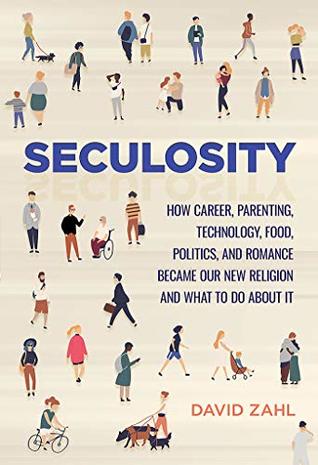
When work becomes the primary arbiter of identity, purpose, worth, and community in our lives, it has ceased to function as employment and begun to function as a religion.
Our work has become our God
Or at least we have made it responsible for providing the very things to which we used to look to God.
