
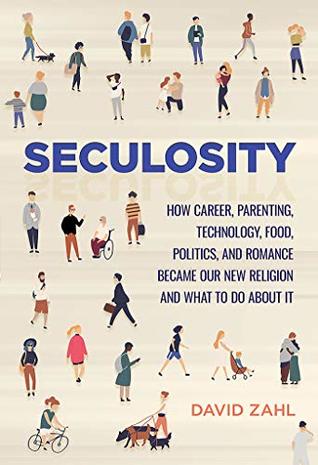
More on this book
Community


Kindle Notes & Highlights

by
David Zahl
Read between
February 6 - March 12, 2020

20 percent of Americans could be qualified as “chronic procrastinators”—a
it would appear that productivity has surpassed goodness as our society’s highest value, our cultural righteousness linked more closely to efficiency than morality.
Because in a proper blizzard, no one is getting any work done—which means that no one is going to overtake us in whatever race we’re running.
No other catastrophe possesses such redeeming magic; no other disaster leaves everything in its wake more beautiful rather than less. Barring Calvary, that is.
Surrender, sometimes willful though mostly not, is the most reliable route.
Erin Callan, who was named “the most powerful woman on Wall Street”
I did not know how to value who I was versus what I did.
mindfulness refers to a proven technique for re-entering the present moment and thereby experiencing reprieve from the mental projections that cause us so much suffering and stress.
meditation has never been more stressful.
The alternative on offer [in the Sabbath] is the awareness and practice of the claim that we are situated on the receiving end of the gifts of God. To be so situated is a staggering option, because we are accustomed to being on the initiating end of all things. We neither expect nor even want a gift to be given, so inured are we to accomplishing and achieving and possessing.
louder, more articulate expression of divinely or culturally mandated rest will not inspire repose in those for whom productivity has become a replacement religion.
the rest Jesus conveys stems from how God sees us, not how we see ourselves.
Before long we’ve moved from the piece of food itself being good or bad, to the person eating it being good or bad, completing the short slide from morality into moralism.
Today, you know someone if you know what they cannot eat, their food allergies and dietary stipulations.
Politics is well on its way to becoming the most entrenched and impermeable social divide in America, surpassing religion, income bracket, and even race.
once upon a time we looked to politics primarily for governance, we now look to it for belonging, righteousness, meaning, and deliverance—in other words, all the things for which we used to rely on Religion.[3]
political commitment, especially on the left, has become a measure of moral character in the way that religious devotion used to be.
divisions arise when people seek differing forms of righteousness.
We are all actively identified with moral narratives that we have a large stake in being true. They are never just stories, they are justifying stories. Otherwise we wouldn’t get so upset when those stories are threatened.
Part of what makes politics such an attractive replacement religion is the community it creates, the love and acceptance it offers.
“The only thing better than being right is feeling wronged.”
Maybe if we shout loud enough about the injustice, some of the victim’s righteousness will transfer to us.
replacement religion
religiosity aimed mostly at living up to the ought of the law produces self-righteousness (if you think your behavior passes the integrity test) or burnout (if you know it doesn’t). Seculosity does the same thing.
No matter the system, the person caught between is and ought—between what they should do and what they actually do—eventually winds up with the same question: “Who will rescue me from this body of death?” (Romans 7:24b). This is where true religion and politics part ways.
politics not only explains everything but can fix everything.
The feminist writer and activist Vivian Gornick
Much of my loneliness was self-inflicted, having more to do with my angry, self-divided personality than with sexism. The reality was that I was alone not because of my politics, but because I did not know how to live in a decent way with another human being. In the name of equality I tormented every man who’d ever loved me until he left me; I called them on everything, never let anything go, held them up to accountability in ways that wearied us both. There was, of course, more than a grain of truth in everything I said, but those grains, no matter how numerous, need not have become the
...more
Politics makes an effective tool for changing people’s circumstances but a considerably less effective one for changing people’s minds, to say nothing of their hearts.
it often resembles its secular replacements more than the Real Thing.
to return to the only source of good writing, which is “the human heart in conflict with itself.”
I’m reminded of a favorite piece of graffiti: on the side of a building, someone has spray-painted “Spread Anarchy.” A second artist has crossed out the slogan, writing above it, “Don’t tell me what to do!”
Religions of law promise wholeness and peace, but as the preceding chapters illustrate, they ultimately deliver anxiety, self-consciousness, and loneliness.
A culture awash in seculosity is therefore a culture of despair.
The law found in Scripture is tough, so tough that the only reasonable response to taking it seriously is desperation.
We may not be able to answer the question of our own not-enoughness, but that doesn’t mean there isn’t an answer.
The seculosity of Jesusland seeps in when church turns into yet another venue to establish our enoughness, rather than the only reliable place to receive it.
what matters more than what God has done for you is what you can and need to do for God.
“Excommunicate Me from the Church of Social Justice,” activist Frances Lee draws
Jesusland Christianity operates squarely within “the immanent frame,” removed from the transcendent realities that have defined the faith throughout the millennia.
Eventually, one starts to wonder if our near-myopic focus on this life masks a faltering confidence in the one to come.
Christianity at its sustaining core is not a religion of good people getting better, but of real people coping with their failure to be good.
In AA, there is only the option of sinner.
