
More on this book
Community


Kindle Notes & Highlights


Ever since she could read, Emer had felt the compulsion to read and even reread—cereal boxes, toothpaste tubes, subway ads. She was a reader. It defined her.
She’d read somewhere that Kafka couldn’t get through a reading of his own work without collapsing into fits of laughter. A deadpan humor born of incomprehensible horror. The literary equivalent of her favorite comedian/actor—Buster Keaton. Kafka was a dark fantasist whose unadorned prose read like newspaper accounts from hell on earth.
It was merely a consequence of the operation the doctors could not explain and Emer, after crying for a week that her symmetry had been ruined (as it turns out, no one ever even noticed), started delighting in the fact that now she looked like David Bowie, and that it represented to her a certain rebellious, schizy nonconformity—as if one eye, with the smaller pupil, was focused on the light of day, while the other, the larger, the right one, was always trained on darkness and night.
I posit to you that those ships that brought immigrants and rats, slaves and cockroaches, to the New World also brought gods and customs, folktales and superstitions. America is the theological melting pot, the universal stew, gumbo of the gods.
You already know that history is appropriation. That our Roman gods first had Greek names. That Jove became Jupiter and Aphrodite, Venus. Issur Danielovitch {slide of Kirk Douglas} became Kirk Douglas became Spartacus. Roberto {slide of baseball card} became Bob Clemente. Albert Einstein became Albert Brooks. {slide/slide, laugh}
The return from the underworld, resurrection, was a tune the world’s people already knew, a tune they loved—so St. Paul and the early fathers were just tossing new names around, new lyrics on an old melody. Saul became Paul, solstice became Christmas, the many became the only. It was a brutal, effective, and glorious restructuring of the soul. The first downsizing.
The genius of Joseph Smith was in the “Latter” of Latter Day—the time of miracles ain’t over, we are not belated. ’Cause isn’t there something depressing about old-world Christianity constantly looking back to the good old miracle days of water to wine? Why did the men of the past get proof and all you get is faith? Joe Smith figured that out. No, Joe said, that crazy shit is still happening.
Because ye olde gods are not dead. They walk among us still, with their pagan ideas and habits, waiting for reanimation. They are lonely. They are bored. And very, very pissed off. They grow tired of waiting, and they sense another historical moment is imminent. There is no wall high enough to keep them out,
They got their music for free—is that why they didn’t care about a creator’s ownership? Was this what rap had done? Emer wondered. With its endless sampling having enacted finally the death of the argument over originality? Aside from the occasional multimillion-dollar lawsuit, who cares where that undeniable hook came from when it’s repurposed by Kanye, Kendrick, or Jay-Z? Wasn’t it stolen from the black man to begin with? Doesn’t everything belong to everyone? Isn’t that a positive, democratic trend? Could you write a check to the man who invented the blues?
No, she remained old school on the issue. She liked attribution and accountability.
When Emer had recognized this forgotten stash, the years of mini-stealing and hoarding, the huge hope and fear it represented packed into neat little rectangles, she fell to her knees keening, as if this was all that was left of her mother’s poor grasping soul, the pretty little packets skittering about her on the kitchen linoleum like bait fish spilling out of a net. There had been enough after all—enough money, love, mayonnaise. She needn’t have worried so hard and so long.
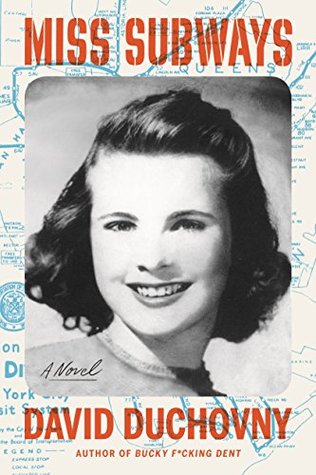
And she thought she knew what she was, neither heroine nor doormat, not a queen, but something in between—a hero-mat. A modern-day Miss Subways, it occurred to her. A new woman in an old mold.
Emer could experience an almost primitive, spiritual fear that she half enjoyed. It expressed for her a yearning she couldn’t quite pinpoint. An emptiness inside her broached and became shadowed, if not filled.
“Is this a telephone call? You’re calling me? What are you, a hundred and three years old?”
“No, that’s how I diagnose Con, as a mild narcissist. On the scale somewhere between Ted and George.” “Ted and George?” “Bundy and Clooney.” “Closer to George, I hope.” “Yes, dear, closer to George. Where most men are, on the spectrum, which is why I am where I am, pitching for the girls’ team.”
Izzy sometimes called Emer “Inersh,” short for “Inertia,”’cause she thought it sounded like a Hindu goddess, like Ganesh. Inersh—the goddess of no change, the goddess of doing nothing.
When you’re around, people see the little woman behind the curtain. No man likes that.”
“Either lie down completely or stand the fuck up. It’s gonna kill you in the middle.
You had to walk on eggshells in this crowded world of men, she thought, with its invisible lines and slights real and imagined. It just never ends.
Thinking on Juno, Emer was surprised to feel a tear on her cheek—daughter of Saturn, sister/wife of Jupiter, mother of Mars and Vulcan—all forgotten now or morphed so many times into meaninglessness. The forgotten Greek goddess, among the legion of discarded deities of Con’s book, but also of this man-made spacecraft. This spectacular contraption made by human hands was now billions of miles away from the place of its conception. So, so far away. Like the goddess, also abandoned by the humans that worshipped her. And like the goddess, destined to get not much closer than 1.7 billion miles from
...more
She was still scared, but felt a sudden calm spreading like cherry-flavored Nyquil—her drug of choice did not exactly walk on the wild side—like whatever was going to happen, she was somehow ready for it, had somehow been preparing for it. And then she thought, This is probably the way a lot of people feel right before they’re murdered.
“The gods of Africa. We came willingly, they were forced. They retain an attitude.
“Because your love is lukewarm and your wish is half-assed and prideful. I’m from another time and place, my dear, when love made the cup run over and love killed. That’s what I stand for. When gods and men wrestled, fought, and fucked; and the offspring of their union was sometimes hideous, sometimes wondrous. Sometimes the Minotaur, sometimes Hercules. Win some, lose some, get mauled, raped, and eaten by some. Your love is the holding of hands, the peck on the cheek, the Cialis couple in matching tubs. Your love is the tepid treacle left on Oprah’s hanky.”
And the truth remains that you humans have become muted, and we gods have become bored. You’re boring! You’re an animal, lass, fucking well live like one. I am not punishing you, I am punishing your life-negating rationality, and your deification of Lord Mediocrity. Nature will not be denied forever, nature will exact her revenge.”
[The walrus came] from “The Walrus and the Carpenter.” “Alice in Wonderland.” To me, it was a beautiful poem … Later, I … realized that the walrus was the bad guy in the story and the carpenter was the good guy. I thought, Oh, shit, I picked the wrong guy. I should have said, “I am the carpenter.” But that wouldn’t have been the same, would it? —JOHN LENNON
you shouldn’t toss something in the garbage just ’cause it’s old and not what it used to be. Even if it cut you sometimes.
She oscillated between the separateness and the oneness—the individual players in the orchestra and the whole. And then she gave up, and let it all wash over her.
And that’s what had injured Emer deep in her soul, this rupture with her dad, in the black and white of her young mind, where she was not good enough for him or God because she was a girl, and she had turned against God in some private, irrevocable, obstinate way. She would not serve, and her non serviam took the form of her dog-eared, yellowing paperback of Edith Hamilton’s Mythology: Timeless Tales of Gods and Heroes, which replaced her Bible.
Were we that feared and hated in the natural world now? she asked herself. Probably so, and probably with reason, as we humans were gods of destruction, we were Shiva, destroyer of worlds, bringing death and extinction wherever we went, she considered, as she looked up in the tree again to see if there was any concern or love at all up there. Mankind. Man not kind. Womankind. Woman kind. She did not come to destroy.
Ever the teacher, Emer reveled in the Latinate poetry of the taxonomical classifications—kingdom/Animalia, subkingdom/Bilateria, infrakingdom/Deuterostomia. What the hell was an infrakingdom? Phylum/Chordata, subphylum/Vertebrata, infraphylum/Gnathostomata, class/Aves, order/Passeriformes, family/Corvidae, genus/Corvus. There. Well, at least we know what we are. She spoke to the bird, “Hello, Corvus brachyrhynchos, I am Homo sapiens, we share kingdoms—Animalia and the Bilateria superphylum as well as the Vertebrata subphylum, obviously, and interestingly the infraphylum Gnathostomata—and I
...more
Emer was troubled at how all interpretation now devolved into matters of race or gender or religion. There was no art anymore, even in children’s stories. Why wasn’t the crow female? Why was the Creator a ‘He’? Wasn’t Bald Eagle insensitive to men with hair loss? This is how we spend our time now.
Yes, these were legitimate questions and deep, worthwhile historical concerns, but she was reminded of Wordsworth and how we “murder to dissect.” Everyone bending over backward to not cross any lines, like a huge game of gender-race-neutral mental Twister.
that’s what part of the story is saying about the power of your mind, it can think things that never were, and once thought, those things are here forever.”
When an inner situation is not made conscious, it appears outside as fate. —CARL JUNG
She thought it might be a good antidote to one of her least-favorite sayings of all time—“it was meant to be.” She hated when people said that. “Oh, I guess it was just meant to be.” Obviously, whatever happened was “meant to be.” It was such a cop-out. But Jung was saying, it seemed to her, that if you didn’t know yourself, shit would happen that appeared “meant to be,” but was really you making it happen unconsciously.
Your unconscious was fate, or God. If you didn’t do your homework and get to know yourself, you would be buffeted by fate, by your own shadow. The world would seem to lack free will, but it was really your own self-ignorance that made you powerless.
Like the thing she recently heard about time, likening it to a guitar string between two points, the past and the future—but the weird thing to her was that a fixed point in this theory was the future, and the present is always vibrating, tuning, and moving to get a fixed past in line with a fixed future. So the past is unchangeable, though somewhat knowable, and the future unknown but set.
It was like Schrödinger’s cat—the cyanide vial is always both broken and unbroken, the cat is always alive and dead until we open the box and look, the looking, knowing itself, being the end of the experiment, the end of life: life is the experiment.
She didn’t mind secrets. The density of secrets would sometimes lend her dimension, make her visible and vibrate in the way she had to conceal, and that density placed her more firmly on planet Earth, in less danger of floating away.
When one has circumnavigated existence, it will appear whether one has courage to understand that life is a repetition, and to delight in that very fact. Repetition is reality, and it is the seriousness of life. —SØREN KIERKEGAARD
Once you opened up so wide, how could you ever close up again? It wasn’t like a zipper on her heart. Her heart suddenly felt like a suitcase into which she was trying to repack the unfolded world. It couldn’t fit, could it? There was so much pain, everywhere.
She felt a part of everything, this big feeling world; she lost herself in the vast ocean of souls, an image of endless space, and stars, and a cold airless wind.
The intellect of man is forced to choose Perfection of the life, or of the work, And if it take the second must refuse A heavenly mansion, raging in the dark. —W. B. YEATS
She marveled that Yeats thought perfection of either life or work was attainable. Wasn’t that the stunning male hubris of this sentiment?
Sin—from the Old English syngian, related to the Greek hamartia, meaning “missing the mark,” from archery. The Old Testament, she knew, from her childhood rebellion, sparked by being barred from the priesthood by her ovaries, used six different nouns and three verbs to describe sin. You can tell what’s really important to a culture by the number of words it uses for a concept. Sin to the Christians, like snow to the Eskimos. Trying to get it right, capture it, this feeling of sin, shadowing it with imperfect words because one word can’t seem to do the trick, can’t imprison the feeling
...more
Forgive me those rough words. How could you know that man is held to those whom he has loved by pain they gave, or pain that he has given—intricacies of pain. —W. B. YEATS
She didn’t have a ton of experience with men, but she knew well enough that a man of a certain age who had not slain a dragon was a dangerous, sad thing.
And she recalled an article in the paper about how little lies make bigger lies possible, that a type of acclimation, or a wearing of a groove is how she envisioned it, happens in the amygdala, the infamous, so-called reptile brain—when a little lie is told, literally paving the way for more, and bigger lies, from dirt paths to asphalt roads to superhighways, just a slippery slope of mendacity.
What if some day or night a demon were to steal after you into your loneliest loneliness and say to you: “This life as you now live it and as you have lived it, you will have to live once more and innumerable times more” … Would you not throw yourself down and gnash your teeth and curse the demon who spoke thus? Or have you once experienced a tremendous moment when you would have answered him: “You are a god and never have I heard anything more divine.” —FRIEDRICH NIETZSCHE
She flitted, hummingbird-like, from one life-changing health fad to the next—from vegan to paleo, from no fat to lots of fat, from statins from heaven to statins from hell. The science behind all these trends seemed iffy, temporary, and possibly manipulated by Big Pharma, swinging like a pendulum. She therefore tended to stick longer with what tasted good.
