
More on this book
Community


Kindle Notes & Highlights
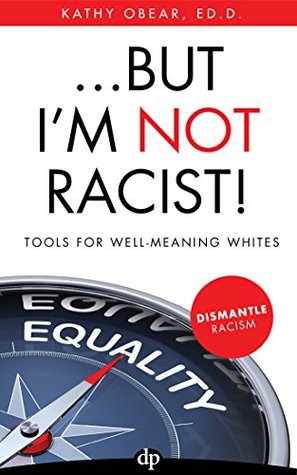
by
Kathy Obear
Read between
January 30, 2017 - February 24, 2018

in to support someone may be more about trying to avoid our own feelings of discomfort; interrupting the learning moment by handing out Kleenex, rubbing someone’s back or challenging the person of color’s comments may deny the white woman a potentially important growth opportunity; and the entire group may benefit from fully experiencing and processing this emotional moment.
I began to care about issues of race and racism differently because now they were negatively impacting people I cared about.
It is not our fault that we learned and believed the underlying racist messages that permeate our society, but we now must take responsibility for what we learned, honestly own and interrogate all that we were taught, and then commit to a daily practice of eradicating these racist beliefs and actions from our lives.
Promoting Diversity and Social Justice, Dr. Diane J. Goodman
As a result, whites often take over or insert themselves into projects or conversations because we think we know more and can do it more efficiently.
It is also ironic how many white people think we are superior to people of color, and yet we expect and demand they teach us about issues of racism and diversity as well as expect them to applaud us and give us praise for our efforts to create racial justice.
Our actions have negative impact whether we are interrupting to explain our intent or to argue our point, or when we defensively criticize people of color for attacking us when they were merely disagreeing, or when, in a patronizing or condescending manner, whites try to teach people of color about racism, sometimes referred to as “whitesplaining.”
Would I ever do to a white person what I just did to a person of color?”
These racist beliefs include believing people of color are not as competent and are hired only because of their race and Affirmative Action quotas.
Many whites believe that if people of color would only work harder, they could pull themselves up by their bootstraps and succeed as easily as whites.
Another example of internalized dominance includes believing that white cultural norms and practices are superior to those of other cultures and, as a result, people of color should conform and assimilate without challenge or question.
One root of this is our white cultural belief in individualism and the subsequent mindset that everything that happens to people is a result of their own individual actions: If something bad happened to a person of color, it was probably because of something they did or didn’t do.
I believe it takes courage to honestly admit we have these racist attitudes and internalized beliefs, and it is critical that we each take responsibility for eliminating all of them from our psyche.
I am far more effective when I simply pause, breathe, apologize, and ask if the person would be willing to share more about the impact I had.
I recognize in myself what they have said or done.
The letters stand for pan, ask, interrupt, relate, and share.
I owe it to other white people to show up in love and compassion as I hold them accountable to change their behaviors.
Yet, there is a powerful negative impact of racism on whites, and until we realize this and see our liberation completely connected with that of people of color, we will continue to drop in and drop out of change efforts to suit our own needs and convenience.
I wonder how many white people are like me, always looking for ways to deny the reality of our racist beliefs?
One of the more painful costs is how white people live in such isolation from people of color and other whites. We tend to keep our distance by always walking on eggshells, avoiding situations where we might feel anxious or incompetent, and staying silent for fear of being called racist. As a result, we do not show up as our authentic selves and often have very superficial relationships with people of color in our organizations and in our personal lives.
It is easy to feel burned out and become less effective over time from having to always compete with other colleagues, hold in your emotions to appear logical and rational, produce vast quantities of work, live with the constant sense of urgency and perfectionism, and always worry that you are not good enough (Okun, 2001).
We lost our true history while we were taught racist information about how whites were the superior race who civilized the world, freed the slaves, and built a country to ensure liberty and justice, peace and prosperity for all. When we begin to learn the truth about how white people intentionally committed genocide and slaughtered people of color while creating racist systems to guarantee whites access to power and privilege, we often lose pride in our country and feel deeply ashamed of being white. We feel lost and powerless and overwhelmed with guilt.
We are weighed down by the illusion of danger and constantly fear for our safety. We limit our choices of where we live and work, who our friends are, where our children go to school, where we worship, what media and news we listen to, and what activities we do. We live in constant fear that people of color will do to us what we have done to them over the centuries. As a result, we create such segregated lives that we wall ourselves off from over 85% of the world’s population.
Research consistently shows that we are more likely to experience violence and crime from people of our own racial background. Yet despite clear data, whites continue to fear people of color and trust whites.
A common trap I fell into as a white ally was wanting to help people of color. For years, I never questioned my motivation or recognized how it was rooted in the racist belief that people of color were deficient and incapable of creating change on their own and, therefore, needed my help.
As long as I could focus on others and judge them, I could avoid focusing on myself.
Delyte Frost and Jack Gant

Research
“Suggested Competencies for White Allies,” on my website, www.drkathyobear.com/racebook.
Research
The capacity to recognize racist comments and actions is a critical competency for white allies. We need to increase our skills and willingness to effectively interrupt our own racist behaviors as well as those of others. In this process, it is important that whites recognize and accept the probable costs we will experience if we choose to use our white privilege to speak up and challenge racist dynamics.
A key skill set is the capacity to recognize and engage whites who use coded language to try to maintain the racist status quo and their privileged positions in organizations. This requires the ability to consistently keep race on our screen in all of our interactions as we analyze programs, policies, practices, and services to ensure they meet the needs of both people of color and white people.
Finally, it is essential that we consistently do enough of our own self-work and healing to engage other whites out of a space of compassion and care while we also hold them accountable for efforts to change their racist values, attitudes, and behaviors.
How could I learn anything without people of color in the room? Whites are so boring! And I probably did waste that experience as I judged other white people and kept myself distant from them and from myself. I stayed quiet and under the radar in hopes that no one would call me out as racist.
I have come to expect the predictable reactions of white fragility, including defensiveness, fear, shame, and resistance to talking about whiteness, white privilege, and our own racist attitudes and behaviors (DiAngelo, 2011).
Each time I name one of these intentions or common dynamics of white people, I ask if people can relate to me, and many often do. This process of “relating in” sets the tone for new ways of engaging as white people that are counter to white cultural norms. Instead of competing to be seen as the most evolved white person or attacking each other to prove we are not racist, I offer a way to connect and relate to each other as we build a community of supportive white colleagues.
I teach and model a tool I call the Ladder of Fear™. When someone seems stuck, I ask, “What are you afraid could happen?” And after their answer, I ask, “And if that were to occur, what else are you afraid of?”
A common deep fear is connected to our concern about losing relationships with friends and family or with colleagues of color and other whites in our lives. If this were to happen, we fear we will be all alone in the world. Another deep fear, that I also relate to, is realizing how incompetent we actually are and how we possibly got jobs and promotions more out of white privilege than our own capabilities.
a very common way white people tend to respond to those who just shared a racist behavior is to assume a “holier than thou” stance and tell them how they should have reacted differently.
In this way, they are offering their experience as a gift for anyone to pick up, not telling others how they should act, think and feel.
I used to believe that all I needed to do as a white ally was to recognize and respond to microaggressions and interrupt racist interpersonal dynamics.
Before this, I knew that people of color were discriminated against but had never considered the fact that, as a result, whites were privileged and that I, as a goodhearted, well-intended white person, received undeserved access and benefits that I hadn’t earned.
White privilege can seem so intangible and invisible that many white people don’t realize it is occurring or how they benefit from it.
As long as I denied white privilege, I wasn’t able to understand the full power and weight of how it positioned me for success and gave me significant advantages that were denied to people of color. I advanced, moved up, and succeeded on the backs of people of color.
I grew up believing in the myth of meritocracy, that if people worked hard, pulled themselves up by their boot straps, they would succeed. In other words, I assumed that success was only dependent on working hard in school and in the workplace and that the game was fair and open for anyone to win.
One aspect of white privilege for me is that I sometimes forget I receive these unearned advantages and privileges and begin to expect them as rights that I deserve.
In reality, white people have a very definitive culture that is so powerful and pervasive that it is often invisible to most of us, possibly even to many people of color. White cultural norms are deeply embedded in the daily practices, policies, programs, and services of almost every organization with which I have worked or consulted. It is hard to recognize because most of us have been taught and still believe that white culture is normal and reflects good business practices, when in reality it can erode morale, productivity, and teamwork for people of color and also for most white employees.
...more
I am deeply grateful to the work of Tema Okun for the essay, “White Supremacy Culture” (Okun, 2001). In the article, Okun describes fifteen key patterns of white culture that can have a negative impact on many employees in the workplace, including perfectionism, a sense of urgency, objectivity, only one right way, worship of the written word, defensiveness, the right to comfort, paternalism, either-or thinking, quantity over quality, fear of open conflict, power hoarding, and individualism.
Institutional racism is insidious and invisible to most whites. Even when we recognize these practices and policies, we can feel overwhelmed and incompetent
Another predictable pitfall in the hiring process that creates racist dynamics throughout the organization involves the persistent practice of using hiring to only change the racial demographics in the organization, instead of also emphasizing the need to increase the cultural competencies of all leaders and employees. As long as the only focus is on hiring more people of color, without a parallel goal of ensuring that every person hired is culturally competent, the pattern will continue of hiring whites without the necessary skills and capacity to work effectively on racially diverse teams or
...more
Many leaders have found the model, Multicultural Organizational Development (Jackson & Hardiman, 1994) a useful strategic road map to envision and implement this level of transformation.
While there is more active recruiting of people of color in a Stage 4 Affirming Organization and a commitment to eliminate discriminatory practices, employees of color are still expected to fit into the white cultural norms (Jackson & Holvino, 1988).
