
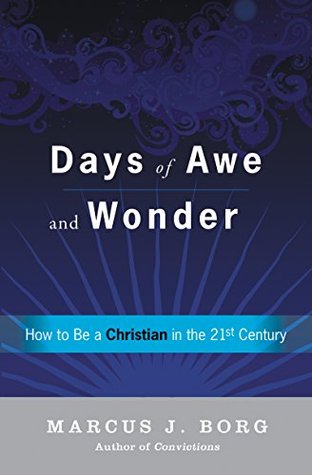
More on this book
Community


Kindle Notes & Highlights

Read between
August 4 - September 2, 2018

The Hebrew word for faith in the Old Testament is emunah. What makes that word interesting is that it’s the sound that a baby donkey makes when it is calling for its mother. To appreciate that, you have to say emunah so it sounds like that. If you want to hear the meaning of emunah, you need to say it like soft braying. The point is that faith in the Hebrew Bible is like a baby donkey calling or crying out for its mother. There’s something kind of wonderful about that. There is an element—I don’t know if you want to say of desperation in it or not, but there certainly is an element of
...more
My religious experiences and conversion also affected my intellectual convictions. I have already mentioned two: they made God real to me, and they changed my understanding of the word “God.” But there is a third: I am convinced that there are no intrinsic conflicts between the intellect and Christianity, reason and religion. When there are, they are the unnecessary product either of a misunderstanding of religion and its absolutization or of the absolutization of a nonreligious worldview. Often both: most of today’s “New Atheists” contrast the least thoughtful forms of religion with their
...more
In a broader sense, theology refers to “what Christians think.” In this sense, all Christians have a theology—a basic, even if often simple, understanding—whether they are aware of it or not. In this broader sense, theology does matter. There is “bad” theology, by which I mean an understanding of Christianity that is seriously misleading, with unfortunate and sometimes cruel consequences. But the task of theology is not primarily to construct an intellectually satisfying set of correct beliefs. Its task is more modest. Part of its purpose is negative: to undermine beliefs that get in the way
...more
A second effect of conventional wisdom is that it tells us how to live. It gets embedded within our minds as we grow up—the central values of our culture. One could make a very good case that the central values of modern Western culture are centered in what I have called the three As—appearance, affluence, and achievement. All of us, at least in the first half of our lives, are to a large extent driven by these values. Driven by these values, we become blind to much else as well as burdened and preoccupied with how we measure up to those values of appearance, affluence, and achievement. The
...more
This way of Jesus has as its central fruit growth in compassion; delivered from the blinders of conventional wisdom, we become more compassionate beings. We see the wondrous creature that each of us is. We are also delivered from the preoccupation with pursuing the values of our culture that beat like a drum in our heads.
The God of the Bible, as we see that God disclosed in Moses, the prophets, and Jesus, is passionate about justice, about social justice, not about criminal justice. Why this passion for justice? Why is the God of the Bible so passionate about justice? The answer, it seems to me, is disarmingly simple. Because God cares about human suffering, and the single greatest source of unnecessary human suffering, of unnecessary social misery, is systemic injustice. By systemic injustice I mean sources of suffering caused by cultural systems, by the structures of society.
The image of God as lover is the central image in the Song of Solomon, that collection of erotic love poetry also known as the Song of Songs. By the way, a phrase like Song of Songs or Holy of Holies is the Hebrew way of phrasing a superlative. The Holy of Holies is the holiest place. The Song of Songs is the best song, understood by Jews and Christians alike through the centuries as an allegory of divine love. It is striking that the Song of Songs was the single most popular biblical book among Christians of the Middle Ages. More manuscript copies of that book survived than of any other book
...more
Yet there is a danger to the divine-lover model. The danger is that it can become too individualistic, too sweet, as it were, as if the focus was primarily on me. We need to guard against sentimentalizing and individualizing this image, for the image of God as lover means that God loves everybody, not just me and not just us, but everybody.
As lover, God is not only compassionate, but also passionate about social justice. God as lover is passionate about social justice with a simple reason that its opposite, systemic injustice, is the single greatest source of unnecessary human social misery, of unnecessary human suffering in history. Social justice is the way our well-being is attained in this world. Indeed, God as lover is “in love” not only with us as human beings, but even with the nonhuman world, with the whole of creation. Thus both a passion for justice and a passion for the environment flow out of imaging God as lover.
There is so much about the Christian right that is modern and has no roots in the Christian past at all, even for many Christians who would speak of themselves as orthodox rather than as part of the Christian right. So much of what passes for orthodoxy today is really the product of the conflict between the Enlightenment and Christianity and the hardening of notions like infallibility and inerrancy, which were not part of the premodern Christian past at all.
The story of the exodus is what the Old Testament scholar Walter Brueggemann calls Israel’s primal narrative—its originating narrative—and also its most important story. And what is that story about? It’s about liberation from economic and political bondage and the creation of an alternative community marked by no monarchy, no elites, and a passion for economic justice as evidenced in the rules about land, among other things.
So what’s the dream of God according to the Jewish Bible? Very simply, a world of compassion, justice, and peace. Compassion and justice, I want to underline, are intrinsically related. Justice is the social form of compassion, and compassion is the heart of justice. This is a political vision. More precisely, it’s a theopolitical vision—not theocratic, but theopolitical. It’s about politics in the most important sense of the word, about the shaping of society, the shaping of the social world in which we live.
The kingdom of God is for the earth; the idea that the kingdom of God is about an afterlife is a very unfortunate notion. There is no denial of an afterlife here, but that’s not what the kingdom of God is about.
And, of course, “kingdom of God” is the most central phrase in all of Jesus’s teaching. All New Testament scholars agree about this. Just to cite one verse, “Strive first for the kingdom of God and God’s justice” (Matt. 6:33). That’s normally translated “righteousness”—“Strive first for the kingdom of God and God’s righteousness”—but it’s really important to realize that most often in the Bible the word “righteousness” means “justice.” It doesn’t mean some kind of individual rectitude that “makes a man so damn righteous he’s no earthly good.” I think that’s a line from Will Rogers. In modern
...more
Does this mean we will stand against the exploitation and degradation of the environment? Of course, for nature, the nonhuman world, matters not just for our future; it matters to God. Here one of the most familiar passages in the whole of the Christian Bible says it so simply: “For God so loved the world” (John 3:16). Not just you and me and us, not just Christians, not just people, but God so loved the world. The world matters to God. “The earth is the LORD’s and all that is in it” (Ps. 24:1). It is not there for us to divide up, so that some people get a lot of it and other people get none
...more
What does Jesus teach us about prayer? We know from the Gospels that Jesus practiced a form of contemplative prayer. We’re not told exactly what kind, but we know that there was contemplative prayer in the Jewish tradition. Contemplative prayer, of course, is the prayer of internal silence; we seek to sit silently in the presence of God and oftentimes experience ourselves descending to a deep level of the self, where we open out into that sea of being that is God. The reason we know Jesus practiced contemplative prayer is because the Gospels refer several times to his praying for a few hours
...more
Those of you who are Buddhists may disagree. About the statement that Buddhism affirms the reality of the sacred, some Buddhists would say to me, “We don’t believe in God.” Fair enough. But I must admit that I find it difficult to distinguish Buddhist such-ness from Christian is-ness. If that’s opaque to you, you can ask about that.
To think of the Bible as a divine product, in the sense of being perfect, infallible, and inerrant, is basically a modern Christian heresy. Nobody’s pronounced it a heresy, but the first time that the Bible was ever spoken of as inerrant and infallible was in the second half of the 1600s.
We all, or at least most of us, have been socialized into modern Western culture and most of us into an American form of modern Western culture. I don’t need to trash modern Western culture or the American way of life, but the central values of Western life over the last hundred years are so radically different from anything that is recognizably Christian that to be Christian means to be resocialized into a different vision and a different way of being. Christian community is a vehicle or agent of that resocialization. I once described the three primary values of the American way of life as
...more
I don’t doubt that a person can be spiritual without being religious, but what I want to challenge is the opposition between those two, because it seems to me—and here I’m indebted to Huston Smith—that religion, still meaning the institution, teachings, tradition, and so forth, is the way that spirituality gets traction within history. Religions are to spirituality what schools, colleges, and universities are to education. You can become a self-educated person by avoiding all institutions of higher learning, but it’s really like inventing the wheel every generation.
So the first way in which I would say the external forms matter is that they are meant to be vehicles of wisdom, vessels through which the Spirit speaks to us and operates within us. A second way in which the external forms matter is when they matter too much. This is the downside, when the external forms are overemphasized; that is, when being Christian or Muslim or Jewish means believing this set of beliefs and not that set of beliefs. When the external forms are emphasized, or made central, then the differences between religions become more apparent than their similarities. And when the
...more
There’s more than one reason I can’t; I mention three. The first reason might be called common sense. When you think about the claim that Christianity is the only way of salvation, it’s a pretty strange notion. Does it make sense that the Creator of the whole world has chosen to be known in only one religious tradition, which just fortunately happens to be our own? Some Christians would make that even narrower, that it’s only their own particular version of the Christian tradition that conveys saving truth. A second reason is that it’s very difficult to reconcile Christian exclusivism with the
...more
This highlight has been truncated due to consecutive passage length restrictions.
One of the best exemplifications of the point I’m making right now about John 14:6 is contained in a sermon preached at Boston University School of Theology, a Methodist seminary, in the 1950s, as I recall this story. A Hindu professor was preaching. He was on the faculty, and the lectionary text for the day that his turn came up to preach in chapel was John 14:1–8. He read the text out loud: “Jesus said, ‘I am the way, and the truth, and the life. No one comes to God but by me.’” Then he looked out at the gathered community and said, “This verse is absolutely true. Jesus is the only way, and
...more
Christians are people who find the decisive disclosure of God in Jesus, just as Muslims are people who find the decisive disclosure of God in the Qur’an and Jews are people who find the decisive disclosure of God in the Torah—that’s what makes them Christian, Muslim, Jewish. We don’t need to water that down at all. We can say Jesus is for us as Christians the decisive disclosure of God without needing to say that he’s the only disclosure of God. We can say decisive—he’s utterly central for us—without needing to deny the other religions.
This is one of the central meanings of the Garden of Eden story, one of the central meanings of the Fall. The Fall isn’t really about disobedience, though it’s there in the story. The Fall is much more about the fact that we begin our lives, each of us individually, with a sense of undifferentiated union with what is. We begin our lives in paradise. But the birth of the separated self suddenly means we live our lives “east of Eden” in a state of separation and estrangement. Let me use the best story I know for making this point, which I’m told is in one of the books of Parker Palmer. It’s a
...more
This highlight has been truncated due to consecutive passage length restrictions.
For a history of Jewish mysticism reaching back to the time of Jesus and earlier, see esp. the work of Gershom Scholem, Major Trends in Jewish Mysticism (New York: Schocken, 1946), and Jewish Gnosticism, Merkabah Mysticism, and Talmudic Tradition, 2nd ed. (Hoboken: KTAV, 1965). A connection between apocalypticism and visions of or journeys into another world is increasingly affirmed in studies of Jewish apocalyptic. See, e.g., John J. Collins, The Apocalyptic Imagination (New York: Crossroad, 1984), which speaks of two strands of tradition in Jewish apocalypses, one visionary and one involving
...more
