
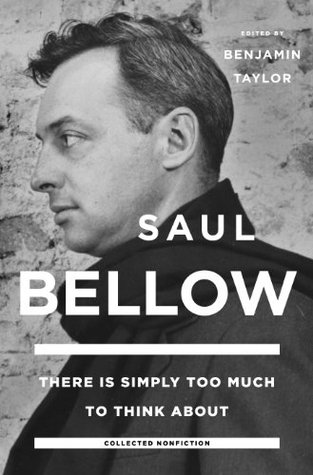
More on this book


Kindle Notes & Highlights


The fact that there are so many weak, poor and boring stories and novels written and published in America has been ascribed by our rebels to the horrible squareness of our institutions, the idiocy of power, the debasement of sexual instincts and the failure of writers to be alienated enough. The poems and novels of these same rebellious spirits, and their theoretical statements, are grimy and gritty and very boring too, besides being nonsensical, and it is evident now that polymorphous sexuality and vehement declarations of alienation are not going to produce great works of art.
Literature is becoming important for what one can do with it. It is becoming a source of orientations, postures, lifestyles, positions. These positions are made up of odds and ends of Marxism, Freudianism, existentialism, mythology, surrealism, absurdism und so weiter—the debris of modernism, with apocalyptic leftovers added.
Coolidge had told us through his New England nose that the business of America was business. We might despise him for saying such a thing, but no one could prove that the proposition was false.
Truck drivers may now be observed sipping martinis while listening to the sophisticated songs of transvestites. Policemen discuss psychology and checkers in supermarkets read John O’Hara and Thomas Altizer and watch cultural TV programs about LSD and religion.
Money, production, politics, planning, administration, expertise, war—these are what absorb mature men.
These officials of high culture write for the papers, sit on committees, advise, consult, set standards, define, drink cocktails, gossip—they give body to New York’s appearance of active creativity, its apparently substantial literary life. But there is no substance. There is only the idea of a cultural life. There are manipulations, rackets and power struggles; there is infighting; there are reputations, inflated and deflated. Bluster, vehemence, swagger, fashion, image-making, brain-fixing—these are what the center has to offer.
What one can do, coming from Topeka or Dallas or Denver, is to lead the life of a poet or a novelist. One can get a pad, go to the bars, wear the clothes and make the scene. This is to poetry what an ad for bread is to nourishment.
The idea of being a writer or of leading the art-life is far more attractive than the perfection of ...
This highlight has been truncated due to consecutive passage length restrictions.
Also we seem to have reached a stage at which any moderately educated man already has all the literature he needs and is not really interested in the novels of his contemporaries.
The literary activity of the country is concentrated mainly in the universities. The university has come to be in the Sixties what Paris was to Fitzgerald and Hemingway in the Twenties. Ann Arbor and Iowa City are not Paris. But then Paris isn’t Paris either. The old glamour is used up. Gertrude Stein is gone. Joyce and Gide are gone. The great national capitals of culture have passed away.
Human life is being radically transformed in university laboratories, but novelists are still thinking of action in terms of the jeep, the gun, the whiskey bottle, the bullfight.
psychoanalysis itself is greatly indebted to literature and is by some people thought to be a German systematization of romantic literary insights into the realm of dreams and unconsciousness.
We have been trained to consume good things, to make them our own. One can see this happening in the literary quarterlies, which have also been drawn into the universities. Like other American magazines they are now mainly attitude-sources. They do for graduate students and young intellectuals what Vogue and Glamour do for working girls and housewives. They instruct them in the in-things and the out-things. They replace art with art-discourse and supply ideas for dress or discussion—ready-made advanced views.
literature really does not interest these people much. They themselves, the literary intellectuals, are what is new. They are the brilliant event, the great result of modern creativity. They are, as it were, clad in art and literature. They wear them as young ladies wear their plastic Mondrian raincoats.
The painters and sculptors seem especially willing to perform various art-stunts and to promote themselves. Inventing novelties, they themselves become news and they keep up the level of art-excitement for those who are, by status, privileged to enjoy it. What suffers in the process is art itself, which cannot be the source of such excitements.
In the radical attitudes of many writers there is evidence of such Weimar fears. Hostile to institutions, anti-authority by tradition, they are not likely to be tranquil in their university sanctuary. Bad conscience leads them to take exaggeratedly radical attitudes. But this radicalism of gesture turns out to be immensely popular.
The feelings of organization men, of lawyers or Madison Avenue professionals, of civil servants at the higher levels—intelligent but powerless people—are not very different, at this moment, from those of writers on whom the shades of the universities have fallen. Such people, often thwarted, resentful, perplexed and fatigued by the incessant demands on the intellect and feelings, respond to the vivid gesture of emancipation, defiance, illusionlessness, the spirit of skepticism and dissent. But it is only the manner that is radical. Few things can be safer, more success-assuring, than this
...more
To people resisting the glib poster-world of packaging and public relations, blood, spittle, excrements and swoons seem to offer a healthy antidote. Defacement and smearing appear to be called for. Blasphemy, if you can still find things sacred enough to blaspheme.
“The acme of the human is that man has come to enjoy it: a search for emotion, fabrication of emotion, desire to lose one’s head, to make others lose theirs, to disturb and be disturbed.”
the middle class did not produce any values by which these young people can live. The fact, of course, that the middle-class parents, like all groups in society, were also caught by surprise in a society continually being transformed and without precedent is not accepted as an excuse or justification. The fact is that they did concentrate on material success and that they offered their children a kind of prosperity and special care but without any particularly spiritual or moral element.
I don’t really know whether art can exist without a certain degree of tranquillity or spiritual poise; without a certain amount of quiet you can have neither philosophy nor religion nor painting nor poetry. And as one of the specialties of modern life is to abolish this quiet, we are in danger of losing our arts together with the quiet of the soul that art demands.
New York is the principal producer and distributor of the mental goods consumed by this large new public. The present leaders of culture in New York are its publicity-intellectuals. These are college-educated men and women who have never lived as poets, painters, composers or thinkers but who have successfully organized writing, art, thought and science in publishing houses, in museums, in foundations, in magazines, in newspapers (mainly The New York Times), in the fashion industry, in television and in advertising. All these things have been made to pay and pay handsomely.
“It has often been suggested,” he says, “that art is a compensation for the deficiencies of the real world; as our knowledge, our power and above all our maturity increase, we will have less and less need for it. If this is true, the ultra-intelligent machine would have no use for it at all. Even if art turns out to be a dead end, there still remains science.”
The giving of weight to the particular and the tendency to invest the particular with resonant meanings cannot be driven out by the other tendency—to insist on the finitude of the finite and to divest it of awe and beauty. . . .
A single standard has been set for novelists and for experts—the fact-standard. The result of this strict accountability has been to narrow the scope of the novel, to make the novelist doubt his own powers and the right of his imagination to range over the entire world. The authority of the imagination has declined.
It is a triumph of the accurate power of innumerable brains and wills acting in unison to produce a machine or a commodity. These many wills constitute a fictive superself astonishingly effective in converting dreams into machines. Literature, by contrast, is produced by the single individual, concerns itself with individuals, and is read by separate persons. And the single individual—this unit of vital being, of nerve and brain, which judges, knows, is happy or mourns, actually lives and actually dies—is unfavorably compared with the fictive superself acting in unison and according to plan to
...more
at the height of technological achievement there blazes the menace of obsolescence. The museum, worse than the grave because it humiliates us by making us dodos, waits in judgment on our ambitions and vanities.
Intellectuals, when they sense the cruel effects of technological progress, try not only to escape oblivion themselves by association with the next necessary thing but also to impose oblivion on others—condemning
Nature governs physiologically,
All artifacts originate in thought. They are thoughts practically extended into matter. Nature governs us physiologically and the unconscious is still its stronghold, but the external world consists entirely of human inventions and projections. Nature has been beaten out of it.
Freud taught in The Psychopathology of Everyday Life that the unconscious did not distinguish between major and minor matters as conscious judgment did
With so much knowledge we are close to chaos. For what are we to do with such a burden of information? Ulysses is a comedy of information.
The man-made world begins, like the physical world, to suggest infinity. The mind is endangered by the multitude of accounts that it can give of all matters. It is threatened with inanity or disintegration.
Ulysses, as Gertrude Stein once said, is not a “what-happens-next” sort of book. A “what-happens-next” story would, like a nervous system, screen out distraction and maintain order.
No, the plan of Bloom’s life is to be planless. He palpitates among the phenomena and moves vaguely toward resolution. Oh, he gets there, but there is a region, not a point.
his stream has no stories. It has themes.
It does, however, appear that Joyce expected the individual who has gone beyond the fictions and postures of “individuality” (romantic will, et cetera) to be sustained by suprapersonal powers of myth.
Myth, rising from the unconscious, is superior to mere “story,” but myth will not come near while ordinary trivial ideas of self remain.
What you feel reading Ulysses today is the extent to which a modern society imposes itself upon everyone. The common man who, in the past, knew little about the great world now stands in the middle of it. At least he thinks he does, as reader, hearer, citizen, voter, judge of all public questions. His imagination has been formed to make him think himself in the center. The all-important story appears to belong to society itself. Real interest is monopolized by collective achievements and public events, by the fate of mankind, by a kind of “politics.”
This is the week’s record of everything of substance relating to the human species. It is about us, our hope for survival, our common destiny. Is it, now? Does this really speak to my condition? Is this mankind, is it me, heart, soul and destiny? No, the nominally central individual studying the record does not feel central. On the contrary he feels peculiarly contentless in his public aspect, lacking in substance and without a proper story. A proper story would express his intuition that his own existence is peculiarly significant. The sense that his existence is significant haunts him. But
...more
Art in the twentieth century is more greatly appreciated if it is directly translatable into intellectual interests, if it stimulates ideas, if it lends itself to discourse. Because intellectuals do not like to suspend themselves in works of the imagination. They prefer to talk.
The desire to read is itself spoiled by “cultural interests” and by a frantic desire to associate everything with something else and to convert works of art into subjects of discourse.
“A million years passed before my soul was let out into the world to enjoy it; and how can I say to her, ‘Don’t forget yourself, darling, but enjoy yourself in a responsible fashion.’ No, I say to her: ‘Enjoy yourself, darling, have a good time, my lovely one, enjoy yourself, my precious, enjoy yourself in any way you please. And toward evening you will go to God.’
things have happened in the twentieth century for which words like war, revolution, even holocaust are plainly inadequate. Without exaggeration we can speak of the history of this century of ours as an unbroken series of crises.
All minds are preoccupied with terror, crime, the instability of cities, the future of nations, crumbling empires, foundering currencies, the poisoning of nature, the ultimate weapons.
Power lies in science, technology, government, business, institutions, politics, the mass media, the life of nations. It is not in novels and poems.
The artist must evidently find in his own spirit the strength to resist the principal alienating power of our time, and this alienating power comes not from the factory or “the fetish world of the market” but from politics.
Europe’s “fat, pale . . . narcissism.”
the imagination is being given up by writers. Embracing causes, they have contracted all kinds of political, sexual, ideological diseases;
The novel is for Tolstoy a method of dealing justly. He subjects his own beliefs and passions to the imaginative test and accepts the verdict of an artistic method.
