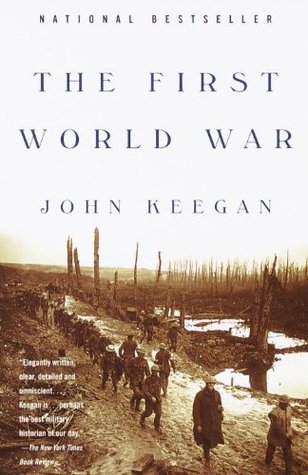
In the west, by contrast, no man’s land was usually two to three hundred yards wide, often less, in places only twenty-five. Intense trench fighting could even produce an “international” barbed wire barrier, mended by both sides. Barbed wire had become plentiful by the spring of 1915, though entanglements, strung on wooden posts, later on screw pickets which could be fixed without noisy hammering, were still quite narrow. The dense belts fifty yards deep were a development of later years. To the rear of the front line, the British made a practice of digging a “support” line, separated from the
...more