
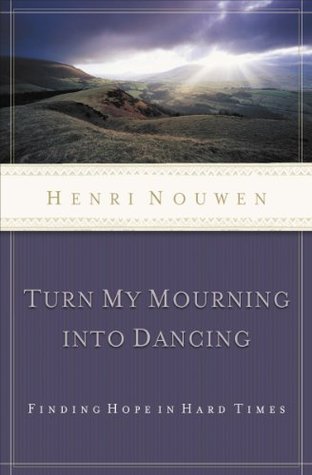
More on this book
Community


Kindle Notes & Highlights

Read between
September 2 - September 23, 2022

When our love grows from God’s love we no longer divide people into those who deserve it and those who don’t. It is this love that allows us to see the enemy as someone loved with the same love with which we are loved. We need no longer define ourselves over and against the other. To love as Christ loved means a participation in the divine love that does not know a distinction between friend and enemy.
A friend of mine is dying. How I wish that he could be healed! But I also know that the final healing for him, for all of us, means something more than a release from physical ailments or a deteriorating body.
Life is a school in which we are trained to depart. That is what mortification really means: training to die, to cut away the enslaving ties with the past. So that what we call death is not a surprise anymore, but the last of many gateways that lead to the full human person.
Why do we not prepare ourselves for death when we live so close to it?
As a small boy I wanted to be an exception. I wanted no death, no suffering. But now I realize that God wants me to partake in the experience of death. As I do he will strengthen my hope in the midst of it.
What is death? I do not know, and you do not know. We find ourselves reduced to admitting that death comes in ways highly unique and individualized. Who can predict? But one thing rings certain: In death we take a jump, we let loose, surrender, give up the safe place we know as comfortable— whether we readily do so or not.
Faith asks us to jump, to surrender and believe that somewhere, somehow, Someone will catch us and bring us home.
If death does not become a part of our present it never will be our exodus to the future.
All because even in the loss of what is dearest, God comes alongside us and becomes our closest companion.
I have a friend who said to me on his deathbed, “The final healing will be that I can hear the voice of love, experience true freedom, and have the deepest desire of my heart fulfilled.”
Dying is about giving yourself away, trusting yourself to God. What we receive has more of the intangible about it than the worldly prosperous. It may look simple indeed.
A woman, hardly able to speak because of disability, came up to me and said, “Could you give me a blessing?” “Sure!” I replied, and I prepared to offer a formal prayer, lifting my hand and arm robed with a long, flowing sleeve. “No,” she interrupted, “I mean a real blessing.” She wanted a hug! She wanted me to put my whole self into it. Of course I obliged, and then told her, “You are the beloved of God. And you are very unique.” That satisfied her. Immediately another member of our community said, “I want that too.” Soon there were others. A twenty-five-year-old man, an assistant who had come
...more
None of us ultimately avoids the reality of death, for all our denial; none of us can undo many of the “givens” we inherit at birth. Someone, not some new thing, has to free us, rescue us. Someone from above. Jesus would say to us, “I want to give you my love, my heart, my breath, the Spirit. I want to lift you into my own circle of love. Not after you are dead, but now, in this life, so that you feel forgiven, loved, free.”
Facing death allows us to experience that life in a way our denial never can permit. Inviting God into our grief will mean we never walk alone.
