
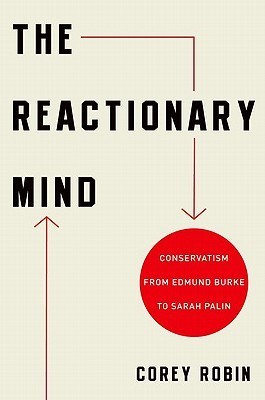
More on this book
Community


Kindle Notes & Highlights

by
Corey Robin
Read between
January 21 - February 22, 2025

For that is what conservatism is: a meditation on—and theoretical rendition of—the felt experience of having power, seeing it threatened, and trying to win it back.
Conservatism is the theoretical voice of this animus against the agency of the subordinate classes. It provides the most consistent and profound argument as to why the lower orders should not be allowed to exercise their independent will, why they should not be allowed to govern themselves or the polity. Submission is their first duty, agency, the prerogative of the elite.
Historically, the conservative has favored liberty for the higher orders and constraint for the lower orders. What the conservative sees and dislikes in equality, in other words, is not a threat to freedom but its extension. For in that extension, he sees a loss of his own freedom.
Conservatism “becomes conscious and reflective when other ways of life and thought appear on the scene, against which it is compelled to take up arms in the ideological struggle.”
the reason the conservative enjoys the present is simply and merely because it is familiar, because it is there, because it is at hand.13
From revolutions, conservatives also develop a taste and talent for the masses, mobilizing the street for spectacular displays of power while making certain power is never truly shared or redistributed. That is the task of right-wing populism: to appeal to the mass without disrupting the power of elites or, more precisely, to harness the energy of the mass in order to reinforce or restore the power of elites. Far from being a recent innovation of the Christian Right or the Tea Party movement, reactionary populism runs like a red thread throughout conservative discourse from the very beginning.
conservatism really does speak to and for people who have lost something. It may be a landed estate or the privileges of white skin, the unquestioned authority of a husband or the untrammeled rights of a factory owner. The loss may be as material as money or as ethereal as a sense of standing. It may be a loss of something that was never legitimately owned in the first place; it may, when compared with what the conservative retains, be small. Even so, it is a loss, and nothing is ever so cherished as that which we no longer possess.
