

How Matt Dinniman Became Master of Unhinged Dystopia
Posted by Cybil on May 1, 2026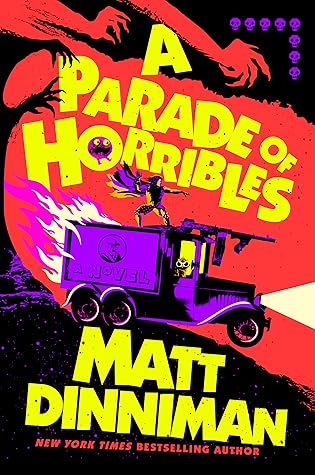
So begins one of the most popular series in LitRPG, once a niche genre of role-playing game and fan-fiction enthusiasts that has jumped to mainstream popularity.
You can find the Carl series online, on audio, and in hard copy. Plus, there’s scuttlebutt of a show on Peacock with Seth MacFarlane’s production company. It has even inspired its own candy bar, Princess Donut’s Virgin Dirty Shirley.
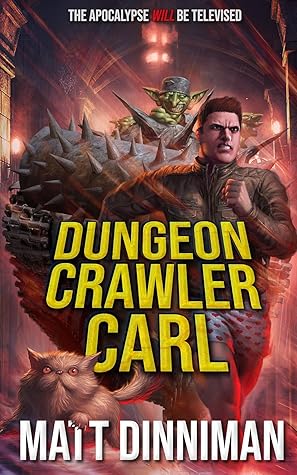
The premise of Dungeon Crawler Carl is simple. Aliens collapse the world, killing most of humanity. Survivors face certain death by staying on the surface of the planet or an uncertain one by entering a video-game dungeon, where subterranean “crawlers” compete against each other to the death for the entertainment of a live intergalactic audience.
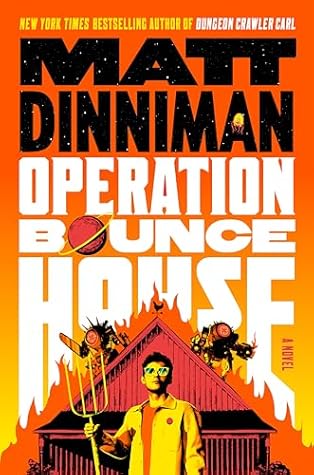
Now on the eighth book in the series, writer Matt Dinniman is back with A Parade of Horribles. Apart from the Carl series, earlier this year Dinniman released his latest standalone story, Operation Bounce House, which tells the tale of Oliver, a man who must fight to defend his planet against invading gamers—this time from Earth—with his robot, Roger.
Dinniman has achieved more conventional notoriety recently, but he’s been writing and self-publishing for decades. With more than a dozen books to his name, he spoke to Goodreads contributor April Umminger about his latest publications and the move to mainstream. Their conversation has been edited.
Goodreads: How did you come up with the idea for Dungeon Crawler Carl?

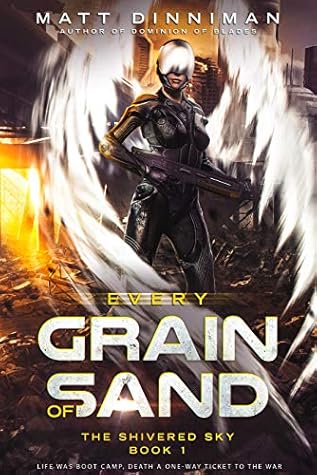
Around the end of 2019, I just finished writing a book called Kaiju: Battlefield Surgeon. I was about to move into the third book in my Dominion of Blades series, and I wanted to give myself a break. I thought, I’m going to write something real simple, real fast, kind of like a palate cleanser. That’s when I started Dungeon Crawler Carl, not expecting it to take off in the way it did.
GR: How would you describe Carl to folks who are new to the series? How did you develop the character across the series?
MD: Carl’s character development has been a slow walk.
I started him off as a regular, everyday guy—just a man living in Seattle. He is an electrician for boats. He lives with his girlfriend in an apartment, goes to work, plays video games, and that’s it. He’s a very calm person.
Once the dungeon starts, he starts to slowly get angry, and angrier at the situation. We start to learn his backstory. He’s had a rough childhood; he was in the system for a long time. His girlfriend wasn’t very nice to him. And he’s fiercely protective of those he loves.
The sense of the unfairness of what’s happening to him and all his new friends is getting to him. It’s a terrible situation: 99% of the Earth is killed in the first paragraph of the whole book, and the few survivors are struggling to make it out of the dungeon. I mean, it’s a genocide.
He becomes a reluctant leader, and he’s angry. It’s difficult to write someone who’s angry and still make them compelling. I did my best to write as many scenes as possible where we see his humanity and have other characters he can bounce off.
I’m working on book nine right now, and we’re getting to the end and his full character arc. We still haven’t figured out how it’s going to land, but it’s been one of the most challenging things I’ve written.
GR: He’s surly, but he’s also incredibly likable. You always get a sense of his humanity. The tension you have set up, where he’s constantly swearing at his cat in this terrible situation, and yet there’s also this reference to Mr. Rogers and finding the helpers. He’s got this responsibility toward staying human, even as humanity is being wiped out.
MD: That particular quote, that’s at the beginning of book eight, A Parade of Horribles, and becomes the theme of that book, where it’s sometimes the people who are behind the scenes—the ones you don’t necessarily see—who are the ones truly propping everything up.
Carl starts to realize that as well. It’s subtle, but he starts to realize he can’t do this all on his own.
There are so many people in this situation with him who are helping him survive, and some of them are getting lost and forgotten along the way. That’s going to take a heavy toll on him as a character and Donut as well.
But it’s also heartening to look back. That’s the purpose of that original quote: When you’re scared, to look and see what else is out there, see you’re not in it alone.



MD: I’m not sure. I’ve always been drawn to big-piece plots that still tightly focus on one character. I like to write in first-person narrative where it’s hyperfocused on one person’s experience. That’s what happens in Operation Bounce House—where we’re in Oliver’s point of view.
Carl’s the perfect example, where we only see his point of view. We don’t know what else is happening outside in the world, and it slowly, slowly, slowly opens into a much bigger story. By the time we get to book eight, it’s the universe as a whole that is being affected by the events that in the beginning were happening just to Carl and Donut through only his point of view.
GR: That makes sense. Now, you spent a lot of time at cat shows, and Princess Donut is based on a real cat that you saw at one, right?
MD: That’s correct. I used to draw pictures of cats and dogs, and occasionally I would go to these small cat shows, and I got to the point where I knew the type of breed a person would be showing based on the person, as opposed to seeing their cats first. A lot of the richer, more well-kept, well-spoken but not necessarily kind people tended to be more of the Persian cat owners. Then the younger punks would be the Sphynx owners and the Lykoi (which is like the werewolf cat) owners, that sort of thing. That aspect has made its way into the books.
GR: How is a cat show like Comic-Con? Do you see similarities in these theme events that seem like they’d have nothing in common?
MD: I do. Things like general craft fairs, which are visited by the general public, are always different than ones that are more tightly focused. You go to a comic convention, and the crowd is the nerds and the geeks of the world. Or you go to a horror convention—which is something I like to go to for fun—and the people are really into 1980s-themed horror, for example, but they’re all tightly focused. And the cat shows, it’s the same thing.
There are people who share an interest, and there’s this hard-to-describe family vibe to these events. You get that sense, even if they don’t necessarily know all the other people there, they know that they all have a common love of something. The people seem more relaxed, and they’re generally happier that they’re at a place they can call home. That sense of family is something that I hadn’t experienced until I started doing shows.
That’s something I wanted to put into my books as well. Like, Operation Bounce House has a tight family vibe to it, and that’s because of these shows I would go to. It doesn’t matter what the show is. If it’s something that’s tightly focused, these people are all warm to each other in a way that you don’t really see in the general public.
GR: I can see that. Did you have any idea that Princess Donut would be such a hit?
MD: No, not at all. In fact, I wasn’t even sure I was going to keep her. I always wanted to write a book with a Persian show cat in it, but my initial plan was to have her enter the dungeon and kind of disappear, and then have her show back up, way later. That obviously didn’t work out, because I personally fell in love with writing her character, almost immediately. Even then, I had no idea how any of this was going to land with audiences. [Laughs.] So it’s a big surprise to me.

MD: I started posting on a free web serial site around January of 2020, Royal Road. I was doing it very casually, and it wasn’t until March of 2020 when my day job selling art went kersplat, along with a lot of other people’s jobs, that I started really pushing the story out onto the web serial site, and I started really pushing my Patreon.
Then I started gathering fans, and I noticed that people seem to fall in love with her character. When the first audiobook came out, almost immediately after, when people heard Jeff Hays’ voice for Princess Donut, is when people started truly becoming fans—like big, big, big fans. And that’s when the fandom just slowly started to grow into what it is today.
GR: I have to ask. Other than Princess Donut, do you ever base your characters on real people—or animals?
MD: I do sometimes. It’s usually more like an amalgam of multiple people at once. It’s rare that I would have one specific person that’s one specific character. It tends to be more like little things I’ve noticed about people, and then those are all smashed together.
GR: You’ve got a lot of corporations depicted in Dungeon Crawler Carl and Operation Bounce House. It feels like the corporations are the bad guys and they’re behind the suffering. Is it easier to have a villain without a face? The “hate the game, not the player” type thing?
MD: I think it’s more realistic. A lot of times, the bad guys don’t consider themselves to be the bad guys. When it’s a corporation, it’s a lot more realistic. It’s not just one person. It’s the whole group of people smooshed together, all with a common goal, which is not to have the person above them fire them. They are just trying to make money, and they’re doing that by doing something not necessarily for the community’s best interest, if that makes sense.
As a result, you come up with these giant machines that are filled with people who aren’t necessarily evil one-on-one, but they create evil. That’s always going to be fascinating to me. I’ll always have individual bad guys, because that’s fascinating, too, but corporate evil feels so inevitable, like realistic cosmic horror.
GR: Excellent. How did you start writing? I heard you started writing fan fiction as a kid, with G.I. Joe and Transformers stories?
MD: I would make up silly stories about my pets and toys and set up these grand scenarios with all my action figures and Legos, and then I would narrate them as they were happening. When they were done, I couldn’t remember exactly what happened, and I started writing them down. That’s what truly happened.
There’s a bad guy in G.I. Joe named Destro, and I always liked his story. He was a mysterious, big jerk, and came in and shouted and blew things up and then disappeared. I wanted to know more, so I would write little scenes. I didn’t know it at the time, but what I was doing was writing fan fiction.
One day I thought, I would like to be able to get a job (doing this) or writing the stories for cartoons and comics. As I got a little bit older and discovered books, that’s when I realized that’s what I wanted to do—be an author, someone who writes novels for a living.
GR: What is your writing process? Your Crawler plots alone are pretty intricate. How do you keep track of what’s happened and not contradict anything?
MD: [Laughs.] I keep track of all the loaded Chekhov’s guns. I have a whole Excel sheet. I have to relisten and reread a lot, and I keep track of every unanswered question. But a lot of times, when I ask these questions in the first place, I don’t know what the answer is.
It’s my favorite part of the process—making it up as I go along. If I know the answer ahead of time for certain, if I have an outline, I’m not going to enjoy the process. So it’s important to me to not know the answer. In book eight, when I started the 11th floor, I had no idea what was going to happen. I just knew the questions I needed to answer.
I like starting off at point A and knowing I have to get to something at point B, but I have no clue how it’s going to happen. Everything that happens at the end of this next book was completely unplanned, off the cuff, written as I go, and it’s my favorite thing to do.
On my Patreon, I have [readers] vote for things that happen in the book. They always screw me over every single time by picking the most bizarre things. [Laughs.]
An example I like to use is they picked Cuba of all the countries in the world for [the characters] to land in for the sixth book (The Eye of the Bedlam Bride). I knew nothing about Cuba. I had to get books. I had to watch hours of YouTube videos, researching everything. They chose The Dungeon Anarchist’s Cookbook, for example, to be the prize [Carl picks]. If you’ve read that far, you know how much of an impact that’s had on the story, and none of that was planned. It’s just my particular style of writing.
GR: Along those lines, like Cuba and, I would imagine, some of the fighting, how do you do your research?
MD: I read a lot. I go down lots of rabbit holes. I like small snippets of research. I’ll start writing something and discover, oh, I need to know about the Queen’s corgis, for example. Then I’ll find a Wikipedia article or a short documentary on YouTube and I’ll watch it while I’m sitting in bed, listening to it while I play a game.
I do what a lot of trivia nerds like to do. You’re constantly reading little things and filing those away. I read a lot of books, from different genres and different types of authors from all walks of a life. That’s really helpful in rounding out all of my characters and the stories.
But all those little trivia facts that the AI likes to drop off [in the Dungeon Crawler Carl series] are all random things I’ve discovered along the way, watching random YouTube and TikTok videos and reading Wikipedia articles about a wide array of things that make up our world.
GR: You’ve mentioned before that you were an Army brat, that you’ve moved around a lot. Did being raised in a military household inform your plots? Does that type of upbringing come through in your fiction?
MD: Moving around a lot as a kid had a major impact on everything. It definitely made me read a lot more. My dad retired right when I entered high school, so I had a normal high school experience. But everything before that was just constant chaos, constant moving, constant recycling of friends, a whole wide array of different people marching in and out of my life.
My own experience was very informed by being a loner and reading a lot, observing people a lot, knowing so many different types of people. Plus, I had a million jobs—I always felt restless because I always wanted to be a writer, and that shaped my writing style as well.
GR: What is your writing and revision process? You’re such a prolific writer—do you have the time to go through multiple drafts?
MD: I do. I’m a big reviser. I’ll write a scene multiple times, changing the point of view just to see how other characters are going to react. I’ll see things that the main character, the point-of-view character, is not going to see. I’ll change up what’s happening, and I’ll write it over and over and over again. This is not a good way to write, honestly. There’s a lot of waste involved. I’ll write several 100,000 extra words for every book I write.
When it’s all put together, then I reread it. I’ll read it out loud. I’ll read it to myself, and then I have the robotic accessibility voice that comes with Word read it out loud, and I get the flow, and then I’ll read it again.
I give it to my Patreon, and then they’ll all read it and give me their feedback—whether I like it or not. I edit it again, before I even send it out to the professionals. Then they edit it.
My process is very, very involved, and I do a lot of changes and moving things around. Those who read it on my Patreon and then read it again once it’s out in physical version or an audiobook, they’ll notice lots of major differences. That’s just my process.
I think a lot of younger writers skip out on that. That’s why so many amazing books never really get the chances they deserve, because the editing process is just as crucial—if not more—than the initial writing process.
Most books just need polish. And most unsuccessful books need a lot of polish from a good editor. That’s how truly good stories come to light: It’s after they’ve been shined a little bit by someone other than the author.
GR: I could not agree more—that your first draft is never your final draft. You were writing Operation Bounce House and A Parade of Horribles at the same time. How could you keep them straight? Did you lose your mind?
MD: I did a little bit. I wrote the end of book seven, which is This Inevitable Ruin of Carl, while I was writing Operation Bounce House. I finished that and then started writing book eight—the one that’s about to come out, A Parade of Horribles—while I was finishing up Operation Bounce House. There was overlap, and that was just pure chaos.
I couldn’t do it very well at the same time. I would write one, then I would separate myself for several hours [before writing the other one]…but still on the same day. I couldn’t switch back and forth. I had to go do something [in between]. Go out in the world.
GR: To most people that would seem like switching back and forth. So you didn’t break up writing them by days or weeks?
MD: No. It’s amazing what deadlines will do to a person.
GR: Have you ever had writer’s block?
MD: Definitely. I used to have a teacher who would say, “There’s no such thing as writer’s block. There’s only not writing.”
I don’t necessarily agree with that, but the way I deal with it is I usually rewrite the scene that I’m working on from a different point of view. I’m going to kill Carl or Donut in the scene—just for fun—and I’ll write something just bonkers cuckoo. That almost always works for me.
The best way to beat writer’s block is to keep writing but do it in a way where there are no obligations, even to yourself. You’re not trying to finish the scene. You’re just writing for the sake of writing.
GR: Then there’s also a big multimedia aspect to Carl with your audiobooks and Jeff Hays doing the narration and voices.
MD: If you are even slightly curious about audio, I would highly recommend trying the audiobook, simply because it’s a different experience than most audiobooks—even if you tried audiobooks in the past. And that’s because Jeff Hays does such a good job of being an immersive reader. He’s one of those people where you listen to him speak, and you don’t realize it’s just one dude. He doesn’t read the book. He acts out the book. It’s almost like a movie, even without there being a whole lot of sound effects and extra cast.
Jeff was doing this with books before we started working together. When I started writing Dungeon Crawler Carl, I knew that he would be the perfect fit. We did a scene on his podcast, which you can still watch on YouTube—it's the juicer scene from the first book—and he did such a fantastic job that it was pretty obvious he was the best possible choice for this.
There’s also a version on Soundbooth Theater. It’s called the audio immersion tunnel, where it’s a full cast, full audio. But even the regular audiobook is unlike any other audiobook you’ll experience.
GR: And you self-published all of these up until recently?
MD: I still self-publish Dungeon Crawler Carl. I have the rights to the ebooks—I self-publish eBooks on Amazon, Kindle Direct Publishing, all by myself, and then Ace at Penguin Random House doesn’t touch it editorially. They license the rights from me to print the physical books. Audible basically licenses Soundbooth Theater’s version from me and Jeff. Unlike, say, Operation Bounce House, which is a truly traditionally published book, Dungeon Crawler Carl is still self-published.
I started self-publishing right around 2017 again, with Dominion of Blades. My previous books had been published with smaller publishers, but I was making a lot more money and [having more success] self-publishing. When you reach a certain level of success, then the publishers will come knocking on your door. They wanted all the rights, and I wasn’t willing to give them to them. We eventually came to the agreement that they could license the physical book rights. That’s what they’ve done, and that’s worked out great for all of us.
GR: How is it different with them versus going it alone?
MD: It’s blown open its popularity—the moment the first Dungeon Crawler Carl hit the bookstores. It was already popular, but kind of in its own little world. Now that it’s traditionally published and available in libraries and bookstores and airports, and people can hold a physical copy, its popularity exploded.
Dealing with Ace, it’s been a great process. They have many, many people working on it. Their editors don’t change the content of the book, but they went through it and put their two cents in on my overuse of commas and stuff like that. They package it, they design their own cover. I’m a bit of a control freak when it comes to my stuff, and that’s a little bit strange for me.
With Operation Bounce House, which is truly traditionally published, they had everything. They went through their editorial process, and we went through the whole marketing campaign, and it was unlike anything I’d ever done. That’s the dream when you’re first starting out to be a writer, you want to be in all the bookstores, and you want to be on The New York Times’ bestseller list, and you want to say, “I have an editor” and all that stuff. It’s significantly different than the whole process of self-publishing. Both sides have their pros and cons, and I’m happy to have my feet in both worlds.
GR: What do you think about Seth MacFarlane and the series on Peacock?
MD: The television series is something we’re still working through. When we first started shopping around the idea of Carl as a film or TV IP, I only had one rule: I wasn’t going to sell it to someone who hadn’t read it and wasn’t excited about it.
The moment we met at NBCUniversal, the person who bought it from us, he was extremely excited about it. He had read the whole series and was enthusiastic about it. Once that happened, we found a production company, Fuzzy Door, Seth MacFarlane’s company. We talked to a few different places, and they were all good, but Fuzzy Door’s level of enthusiasm was the highest by far.
That’s what made me feel the best about finding a home for Carl and company. Now I have a lot of faith in them, because they’re so protective of the story itself.
GR: You said that you’re a big horror fan. Any books stand out or rise to the top that you’d recommend? What books are you reading now?
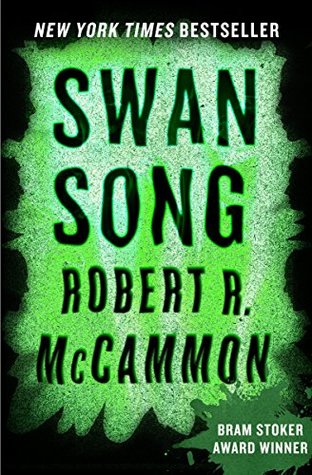
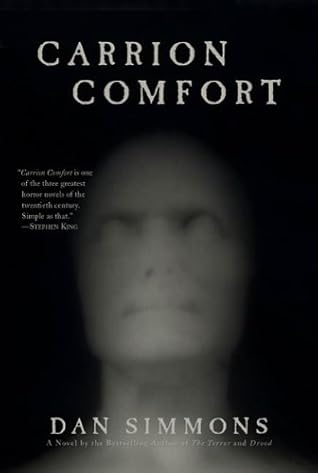
MD: That can be a long conversation; it depends on what you’re looking for. Like ’80s horror: Swan Song by Robert R. McCammon is probably one of my favorites. It’s basically his answer to Stephen King’s The Stand. They’re a similar setup, but very different novels. Carrion Comfort by Dan Simmons, who recently passed away. The Troop by Nick Cutter, if you like squeamish horror. Those are some of my favorites.
I’ve been a horror fan my whole life. I used to rent horror movies when I was much too young at the video store at the base. I would find the weirdest, most gruesome covers and see if I could get my mom to let me see them. And I would do the same with books. I would go to library, and they would have the turnstile with the paperbacks with these covers that had nothing whatsoever to do with the content of the book. But I loved them all. There’s something about horror that feels comfortable to me. It’s where I always go back to, so I’m constantly reading something.
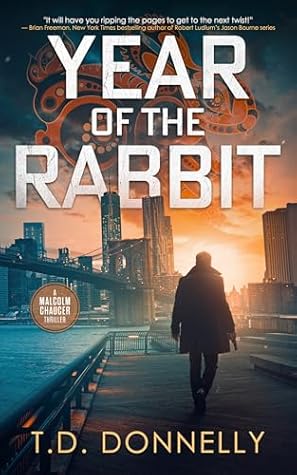
Right now, I’m reading a thriller novel called Year of the Rabbit by T.D. Donnelly, and—I’m always reading two things at once—I’m reading an Adrian Tchaikovsky novel. It’s called Shroud. It’s a one-off by him about a crash landing on an ice planet.
GR: Do you have a favorite book of all the books you’ve written?
MD: That’s a tough one. I think Kaiju: Battlefield Surgeon. It was a standalone and it was written in a tumultuous time. It’s a complicated book, with a crazy twist ending that I didn’t even see coming. A lot of times when you’re in a book and you’re done with it, you’re like, “Oh, man, this is a total piece of crap,” because you’ve been in for so long. That was the one book where I was truly satisfied the moment I was finished with it.
GR: Last question. What’s your favorite animal?
MD: Hippos. Hippos are by far my favorite mammals. I am a big hippo enthusiast. If you look at a physical copy of book one, it’s dedicated to Fiona, the hippo. It looks like it’s a stupid joke, but Fiona, when she was born, everyone thought she was gonna die. She was premature, and the Cincinnati Zoo worked really hard to keep her alive. It became a viral story that everyone was in love with. It was a story of surviving against the odds, and I think Carl is the same thing.
Matt Dinniman’s A Parade of Horribles will be available in the U.S. on May 12. Don’t forget to add it to your Want to Read shelf. Be sure to also read more of our exclusive author interviews and get more great book recommendations.
