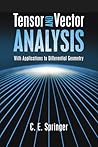
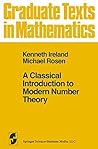
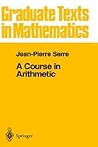
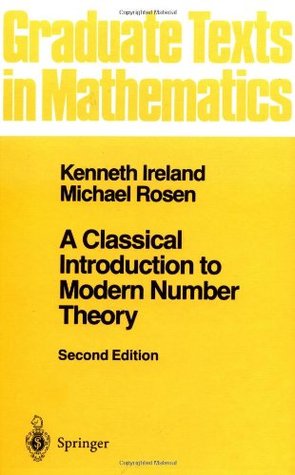
Number theory or, in older usage, arithmetic is a branch of pure mathematics devoted primarily to the study of the integers. It is sometimes called "The Queen of Mathematics" because of its foundational place in the discipline. Number theorists study prime numbers as well as the properties of objects made out of integers (e.g., rational numbers) or defined as generalizations of the integers (e.g., algebraic integers).
Integers can be considered either in themselves or as solutions to equations (Diophantine geometry). Questions in number theory are often best understood through the study of analNumber theory or, in older usage, arithmetic is a branch of pure mathematics devoted primarily to the study of the integers. It is sometimes called "The Queen of Mathematics" because of its foundational place in the discipline. Number theorists study prime numbers as well as the properties of objects made out of integers (e.g., rational numbers) or defined as generalizations of the integers (e.g., algebraic integers).
Integers can be considered either in themselves or as solutions to equations (Diophantine geometry). Questions in number theory are often best understood through the study of analytical objects (e.g., the Riemann zeta function) that encode properties of the integers, primes or other number-theoretic objects in some fashion (analytic number theory). One may also study real numbers in relation to rational numbers, e.g., as approximated by the latter (Diophantine approximation).
The older term for number theory is arithmetic. By the early twentieth century, it had been superseded by "number theory". (The word "arithmetic" is used by the general public to mean "elementary calculations"; it has also acquired other meanings in mathematical logic, as in Peano arithmetic, and computer science, as in floating point arithmetic.) The use of the term arithmetic for number theory regained some ground in the second half of the 20th century, arguably in part due to French influence. In particular, arithmetical is preferred as an adjective to number-theoretic....more
“
It is a matter for considerable regret that Fermat, who cultivated the theory of numbers with so much success, did not leave us with the proofs of the theorems he discovered. In truth, Messrs Euler and Lagrange, who have not disdained this kind of research, have proved most of these theorems, and have even substituted extensive theories for the isolated propositions of Fermat. But there are several proofs which have resisted their efforts.It is a matter for considerable regret that Fermat, who cultivated the theory of numbers with so much success, did not leave us with the proofs of the theorems he discovered. In truth, Messrs Euler and Lagrange, who have not disdained this kind of research, have proved most of these theorems, and have even substituted extensive theories for the isolated propositions of Fermat. But there are several proofs which have resisted their efforts....more
”
―
Adrien-Marie Legendre
This group is for people interested in mathematics at the college level. All are welcome. Profes…more
[close]
This group is for people interested in mathematics at the college level. All are welcome. Professor and students never stop learning mathematics, hence this group is called Mathematics Students.
This global discussion group has been designed to encourage debates about important and underrep…more
[close]
This global discussion group has been designed to encourage debates about important and underreported issues of our era. All you need is an enquiring mind and a desire to gain or share “underground knowledge”. This is also a place to discuss the controversial topics explored in The Underground Knowledge Series (non-fiction books) by James Morcan & Lance Morcan as well as the Underground Knowledge podcast show.
A place to discuss all the unique aspects of Deaf culture as highlighted in the thriller Silent …more
[close]
A place to discuss all the unique aspects of Deaf culture as highlighted in the thriller Silent Fear (A novel inspired by true crimes) by Lance & James Morcan. This group can also be an intersection of sorts where Deaf and hearing people can engage and learn from each other.







 This group is for people interested in mathematics at the college level. All are welcome. Profes…more
 This global discussion group has been designed to encourage debates about important and underrep…more
 A place to discuss all the unique aspects of Deaf culture as highlighted in the thriller Silent …more