Footnotes


Jonathan Strange & Mr Norrell
Babel
The Amulet of Samarkand (Bartimaeus, #1)
House of Leaves
Emily Wilde's Encyclopaedia of Faeries (Emily Wilde, #1)
Nevernight (The Nevernight Chronicle #1)
Confessions of the Fox
The Ring of Solomon (Bartimaeus, #0.5)
S.
An Abundance of Katherines
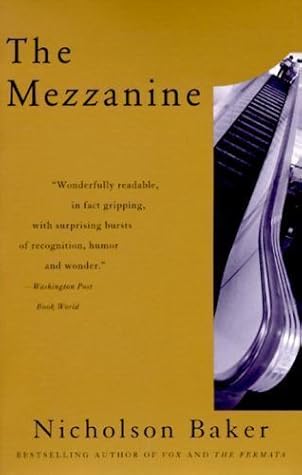
The Mezzanine
The Golem's Eye (Bartimaeus, #2)
Good Omens
Emily Wilde’s Map of the Otherlands (Emily Wilde, #2)
Chain-Gang All-Stars
MASH by Richard HookerThe Boyfriend List* by E. LockhartMVP* by Douglas EvansA Short History of Nearly Everything by Bill Bryson
Asterisk in the Title
4 books — 2 voters
Jonathan Strange & Mr Norrell by Susanna ClarkeHouse of Leaves by Mark Z. DanielewskiGood Omens by Terry PratchettInfinite Jest by David Foster WallaceThe Hitchhiker’s Guide to the Galaxy by Douglas Adams
Footnotes!
102 books — 75 voters

From the Erzgebirge to Potosi by Sean   DalyThe Rape of Europa by Lynn H. NicholasCivil War St. Louis by Louis S. GerteisMetropolis and Hinterland by Neville MorleyConnecting the Dots by Lia Russ
Serious History Books
38 books — 10 voters
Jonathan Strange & Mr Norrell by Susanna ClarkePeter Pan by J.M. BarrieInfinite Jest by David Foster WallaceGood Omens by Terry PratchettPale Fire by Vladimir Nabokov
Novels with Fictional Footnotes
48 books — 26 voters

Farah Mendlesohn
One cannot write about Jonathan Strange and Mr. Norrell without considering the footnotes. The experienced reader is conditioned to see footnotes as dry, as a way of grounding the text in reality. But footnotes are also an intervention, or intrusion into the flow of the text, and Clarke takes advantage of this figuring. In Jonathan Strange and Mr. Norrell, it is in the footnotes that the world of the fantastic slips through to disrupt the meaning or common understanding of the tale told in the m ...more
Farah Mendlesohn, Rhetorics of Fantasy

Keith E. Stanovich
There is voluminous evidence that exclusive reliance on heuristic processing tendencies of Type I sometimes results in suboptimal responding (Baron, 2008; Evans, 2007a; Gilovich, Griffin, & Kahneman, 2002; Johnson-Laird, 2006; Kahneman & Tversky, 1973, 1996, 2000; Koehler & Harvey, 2004; Nickerson, 2004, 2008; Nisbett & Ross, 1980; Tversky & Kahneman, 1974, 1983, 1986) and that such thinking errors are not limited to the laboratory (Ariely, 2008; Åstebro, Jeffrey, & Adomdza, 2007; Baron, 1998; B ...more
Keith E. Stanovich, Rationality and the Reflective Mind

More quotes...