Classical Physics


Classical Mechanics: The Theoretical Minimum (Theoretical Minimum, #1)
How Ben Franklin Stole the Lightning
Blank 133x176
steinmetz, maker of li...
 
by
Sigmund A. Lavine
Blank 133x176
The man who transforme...
 
by
William D Crane
Blank 133x176
Father of supersonic f...
 
by
D. S Halacy
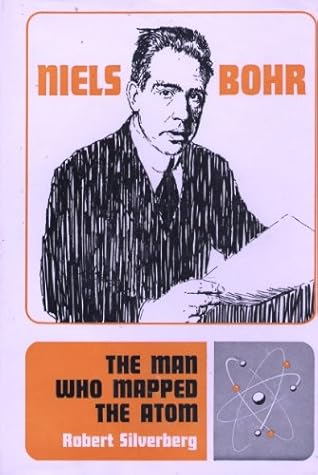
Niels Bohr;: The man who mapped the atom
Blank 133x176
The Little Giant of Sc...
 
by
Dorothy Markey
Blank 133x176
Wernher von Braun
 
by
Heather M. David
The Radar Man: the Story of Sir Robert Watson-Watt
Nikola Tesla: Giant Of Electricity
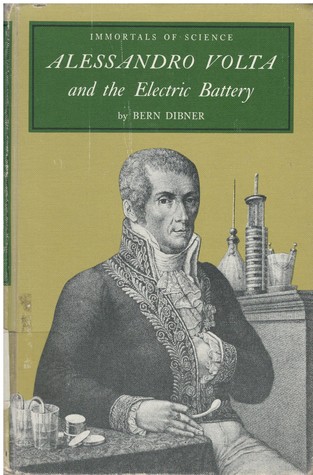
Immortals of Science:  Alessandro Volta and the Electric Battery
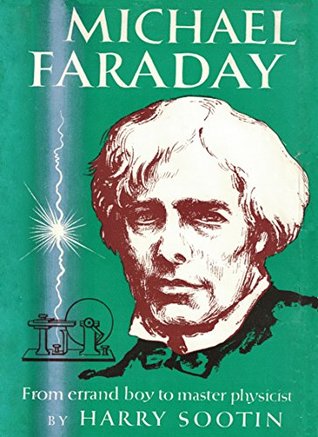
Michael Faraday: From Errand Boy to Master Physicist
Electrical Genius: Nikola Tesla
Blank 133x176
Isaac Newton
 
by
Harry Sootin
Longitude: The True Story of a Lone Genius Who Solved the Greatest Scientific Problem of His Time
The development of quantum mechanics in the 1920s motivated physicists to tackle all the unsolved problems of physics with the new methods and see if they worked (they mostly did). But what was the evidence for any of this new way of thinking? The evidence that was persuasive at the time was a number of rather abstract physics experiments concerning the nature of atomic spectra or the interaction between light and metal surfaces. Each was important in its own way, but what ought to have played ...more
Stephen J. Blundell, Magnetism: A Very Short Introduction

Philip Ball
[Q]uantum physics is not replaced by another sort of physics at large scales. It actually gives rise to classical physics. Our everyday, commonsense reality is, in this view, simply what quantum mechanics looks like when you’re six feet tall.
Philip Ball, Beyond Weird

More quotes...